Subsistence

Gambell teenager leads successful whale hunt, brings home 57-foot bowhead

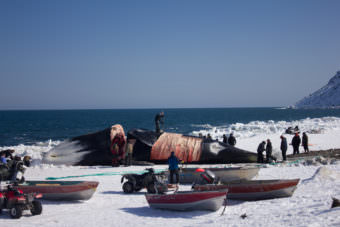
Chris Agragiiq Apassingok was the striker who landed this 200-year-old female bowhead whale Monday, April 17, 2017, for his family and community. (Photo by Karen Trop, KNOM.

Families and community members on St. Lawrence Island will be eating bowhead whale this week after a local hunter caught Gambell’s second whale of the season Monday night.

Chris Apassingok, a 16-year-old who would normally be spending his days in high school, was the “striker,” or hunter credited with catching the 57-foot-long female bowhead whale for the community of Gambell. Apassingok introduces himself by his Yupik name before recounting his successful hunt:

“My Yupik name is Agragiiq. The girls on top of the beach saw a whale, and they thought it was two of them, it was this bowhead whale,” Apassingok said. “(We) went out and chased it for maybe an hour and a half; the other boats could have gotten it, but they never got close enough to strike. It came up right in front of us, and I struck it.”

Apassingok’s mother expressed joy for her son, who, she said, was born to be a hunter.

“My name is Susan Aakapak (which means ‘big sister’ in our language) Apassingok,” she said. “My son has been hunting since he was in diapers and drinking from the bottle, he’s been whaling. His life has been nothing but hunting.”

The Alaska Eskimo Whaling Commissioner for Gambell, and uncle to Chris the striker, is Edmond Apassingok. He says the approximately 200-year-old whale was caught about two miles away from the village, but further out there is significant open water around the island.

“In the past, we have pulled our boats on the ice and went through open water where there are whales, but now, we can’t do either. It’s either too thin or too thick to go through or on it. It’s changed,” stated Edmond. “The winds move the ice more quickly, and it melts just as fast as soon as the wind picks up to 20 or 30 miles an hour.”

Edmond Apassingok believes ice conditions like these have made hunting for whale more challenging over the past five years or so.

According to the International Whaling Commission regulations, whalers in Gambell have six attempts or strikes for whales left in their catch limit, but Edmond Apassingok noted this whaling season is going by quickly, and the bowheads are already starting to migrate.

Karen Trop also contributed to this story.

New book features Arctic indigenous culinary traditions, preparation methods

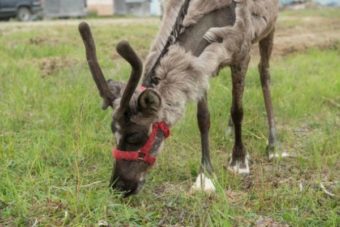
A reindeer ranch in Nome is encouraging a whole new generation of herders. (Photo by Mitch Borden/KNOM)

A unique guide that combines the traditional knowledge of reindeer and caribou food preparation, as well as other Arctic recipes and culinary traditions, is set to be released in a few months. The cookbook may provide Alaskans with new ideas for economic opportunities in a changing Arctic.

Listen to the story about reindeer food guide:


“This is the plate with a lot of reindeer food. And this is very traditional” said ViviAnn Labba Klemensson in her video blog on luckyreindeer.com. “I’m going to tell you what each piece is. This is the tongue from the reindeer. It’s boiled and we eat it like it is. It’s really a delicacy.”

“This is intestines filled with reindeer blood,” said Klemensson, a reindeer herder of the Swedish Sami people, as she described some of her favorite dishes.

Klemensson’s video blog covers topics ranging from reindeer biology and herding techniques to commenting on development that threatens her herd’s grazing grounds and persevering in a male-dominated profession.

“We’re actually doing something really essential,” said Klemensson inside a lavvu or a cone-shaped tent. “We’re smoking the reindeer meat. And this is yum! It’s really a delicious, delicious food when it’s ready.”

For the indigenous people of the circumpolar north, nothing is wasted when harvesting domesticated reindeer or the larger, migratory subspecies known as caribou. Everything from the animal is used.

Sinew is used for sewing. Hide, antlers and bones, of course, are used for clothing and tools.

“The Sami people and the reindeer herding people, they used to use a lot of reindeer skin and hide to make handicraft,” said Klemensson in another segment of her video blog.

Now, possibly for the first time ever, thousands of years’ worth of traditional knowledge is being compiled into a new book about Arctic culinary traditions and indigenous food culture. But it’s not just an ordinary cookbook.

“We call it, rather, a cookbook about people, ” said Anders Oskal, director of the International Centre for Reindeer Husbandry in Norway.

Oskal actually prefers to call it a food book.

“Traditional food, traditional ways of preparing food, traditional dishes, and also modern dishes, newer dishes,” Oskal said. “But we had a steady focus on what we might term the food systems of the Arctic indigenous peoples and the culinary traditions that go with it.”

The project was commissioned by the Arctic Council with youth from the Arctic’s various indigenous groups compiling the traditional knowledge.

“We need to have to some long-term responses to this, which is one reason why it’s very sensible for us to work with youth,” Oskal said. “We have to work on these issues today. If we start working on this in 20 years, 30 years, we’re going to lose out. We’ll be running next to the bicycle, to put it that way.”

Oskal said they want to use traditional knowledge to build local economies from within.

“That’s a pathway by which we can have a development based on own knowledge, our own premises and our own people,” he said. “And trying to make the opportunities of a changing Arctic, opportunities for all.”

James Gamble of the Aleut International Association is one of the indigenous representatives to the Arctic Council called Permanent Participants.

“It’s not just about reindeer,” Gamble said. “In the Aleutians, it’s about pickled seal fin, and it’s about other recipes from other Permanent Participants.”

Gamble sees the food book as key in taking advantage of the latest opportunities in education and entrepreneurship that are opening up with potentially troubling changes in a warming Arctic.

“But can we take advantage of them? ” Gamble asks. “There’s going to be more shipping through the North Sea route. Does that mean that there’s more opportunity, for instance, for bringing food products to different places and having an avenue to transport and sell things?”

Oskal said the food book is now being edited and will be unveiled at the Arctic Council’s ministerial meeting in Fairbanks in May.

Kuskokwim salmon management group wants earlier meeting with state managers on summer king run

Chinook King Salmon Yukon Delta
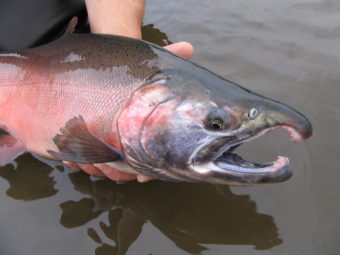
Chinook salmon, Yukon Delta NWR. (Public domain photo by Craig Springer/U.S. Fish & Wildlife Service)

There may be fewer king salmon on the Kuskokwim River this summer than hoped, and some residents want to meet with state biologists now to figure out how best to manage both expectations and the fishery.
“Our preference is that preseason plan doesn’t start being discussed the very last few days of March, or April or May,” said Mary Sattler Petola, one of four members of the Kuskokwim River Salmon Management Working Group who sent a letter to the State Fish and Game Department asking for a meeting well before the season begins. “(In) May we are all preparing for fish camp.”

In the letter, Peltola, along with Fritz Charles, Bev Hoffman and LaMont Albertson, said biologists have the information they need by January to begin a summer management plan and should have been consulting with the working group in February.

Peltola and the other signers of the letter are concerned that state biologists’ estimates of King returns this summer may be too optimistic.

She points to the parents of this year’s kings, which swam up the Kuskokwim in 2013. They showed up in such low numbers that there were practically no late kings to speak of that year.

“We harvested it pretty heavily,” Peltola said. “So I think it would be best if the department did have conversations with us about the possibility about it being another tough summer.”

Nowhere near enough kings made it to the spawning grounds, but luckily for the fishermen, there was a nice silver run to help fill nets and pantries that summer.

Fish are not a small issue for Yupik people.

“Our word for fish, neqa, is our word for food. Our generic word for food; the same word,” Peltola pointed out.

In their letter, the four working group members worry that the projections for the king return may be too optimistic. They point to Fish and Game’s reliance on models that may not truly reflect what is going on in the salmon populations. The members say those models need to be reviewed by independent scientists.

“Getting really solid peer review is important,” Peltola said. “There is this concern that Fish and Game may be having these conversations among just Fish and Game people or retired Fish and Game folks. Maybe the peer review should happen earlier and with a broader group of people.”

The king runs on the Kuskokwim have been struggling for some time.

Peltola, who grew up fishing the river, said that 2010 was the year she first realized that the king run was in major distress.

“When I think about fish camp and king fishing I have the pre-2010 memory, and then the more recent memory after 2010 that has been much much tougher,” Peltola said. “Even with me it was very emotional. Thinking about kings being weak, weak runs, it was like a family member being sick.”

In their letter, the four members of the Kuskokwim River Salmon Management Working Group said they want the state to take a conservative approach and limit fishing on kings to help restore the run to its former strength.

Fish and Game is trying to schedule a meeting of the Working Group in Bethel for the end of March.

Tribe’s Herring Committee drafts proposals to protect subsistence

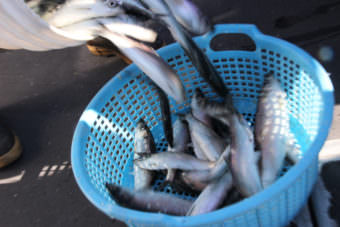
Herring caught during the 2014 Sitka Sound sac roe fishery. A recent study suggests that managers should take a longer view when managing fisheries like this one. (Photo by Rachel Waldholz/KCAW)

The Sitka Tribe of Alaska wants to see more protection for subsistence harvesters when herring season begins next month.

The Tribe’s Herring Committee is recommending a pair of proposals to reserve more areas for subsistence and to cut the commercial harvest by half.

Just a few weeks from now Sitka Sound will flood with commercial seiners and subsistence users all in search of one small fish – herring.

Commercial seiners harvest herring whole and strip the valuable sac roe from the females.

At the same time, subsistence users submerge hemlock branches in the water, which become coated with eggs as the fish spawn.

But Sitka Tribe of Alaska’s Director of Resource Protection Jeff Feldpausch said success rates for subsistence users are down.

“We’re seeing a change in the herring– how they spawn, where they spawn– and it’s making it much more difficult for subsistence harvesters to meet the ANS, or the amount necessary for subsistence,” Feldpausch said.

Feldpausch was speaking at the tribe’s most recent Herring Committee meeting.

He said subsistence needs have only been met half the time in recent years, with 2016 considered one of the poorest subsistence harvests in memory.

From what he’s heard, Feldpausch said it wasn’t always this hard to fill your freezer.

“Back in the ’80s, or earlier in the fishery, there wasn’t really an issue getting your eggs,” Feldpausch said.  “As this biomass as grown you would think it would be even easier, but it’s becoming more and more difficult.”

The biomass, or how much herring are in the water, has fluctuated a lot since the 1980s.

Estimates from the Alaska Department of Fish and Game show spawning biomass ranging between 18,000 tons and 103,000 tons in the last couple of decades.

Fish and Game forecasts a total biomass of 73,000 tons for 2017.

Tribal citizen Tom Gamble said Fish and Game’s forecast model is outdated, that they’re just guessing.

“The 2017 biomass that has been forecast has no scientific proof,” Gamble said.

Gamble told members of the Herring Committee that he’s worried that if the spawn biomass is overestimated, subsistence users will lose out.

But Eric Coonradt, a Fish and Game area management biologist for Sitka, is confident in the forecast model.

“There are going to be skeptics out there, but the data is solid. The methods are solid,” Coonradt said.

The fishery is managed based on a detailed model that accounts for the distribution, size, and age of the herring — and on the success of the annual spawn.

Calculations on the size of the 2017 biomass began last year.

Daily aerial surveys get the length of the spawn and dive surveys get the depth of the spawn.

“We have a total area of spawn,” Coonradt said. “From that, we can calculate how many females would have been able to lay those eggs and you double that to account for males.”

But subsistence users don’t find this data reassuring when they’re pulling up empty hemlock branches.

So, the Tribe’s Herring Committee is drafting two proposals to the Board of Fish.

The first would close off certain areas to commercial fishing, including Katlian Bay, Aleutkina Bay and Nakwasina Sound.

Jeff Feldpausch said the board accepted a similar proposal in the past.

“In 2012 the Board of Fish did grant us a commercial closure zone, or the subsistence zone as we call it,” Feldpausch said. “We got about half of what we asked for. This is basically going in and asking for the whole thing we asked for originally.”

The second proposal asks the Board of Fish to reduce the guideline harvest level – or how much commercial seiners are allowed to catch – to 10 percent of the total spawning biomass, compared to the typical 20 percent.

The Tribe’s Herring Committee plans to review these draft proposals at its next meeting March 6.

Sullivan urges Board of Game to repeal predator control regulations

U.S. Senator Dan Sullivan, R-Alaska, at a press availability fol
U.S. Senator Dan Sullivan, R-Alaska, at a press availability following his annual address to the Legislature, Feb. 29, 2016. (Photo by Skip Gray/360 North)

U.S. Sen. Dan Sullivan is urging the Alaska Board of Game to get behind legislation to repeal a rule regulating predator control on federal wildlife refuges in Alaska.
Sullivan is sponsoring a resolution of disapproval similar to one already passed by the U.S. House that would turn back the Obama-era rule that specifically bans some bear, wolf and coyote killing techniques, including certain aircraft, trap and bait assisted harvests.

Sullivan addressed the Game Board during their meeting Tuesday, Feb. 21, in Fairbanks telling members that he needs their help fighting repeal opponents who he said are mischaracterizing state wildlife management.

”They’re gonna show wolf puppies and leg traps, and they’re gonna make this about cruelty,” Sullivan said. “What we need to be able to do is talk about the science and biology and your record and our state’s record as being able to do this better than anybody — certainly better than the feds.”

The board was receptive to Sullivan’s request for support.

Board chair Ted Spraker said the federal government stands in the way of the board taking action that could help feed more Alaskans.

”We’re tasked with food security,” Spraker said. “We have a subsistence law in our state. There are a lot of places in our state, with a little bit of active management, we could turn some of these declining populations around.”

The state has authority to manage its wildlife, but federal agencies are mandated to maintain natural diversity.

Sullivan said he’s reaching out to U.S. senators from other states for support, trying and explain that the Alaska predator harvest rule is a state’s rights issue.

”It’s an Alaska-only rule,” Sullivan said. “But it’ll have important precedential implications if it stays on the books — for all your states.”

The state of Alaska is already suing the federal government to turn back Alaska predator harvest rules issued by the Fish and Wildlife Service and the National Park Service.

Sullivan cautions that the case could take years.

The resolution targeting the Fish and Wildlife Service rule employs the Congressional Review Act, a time-limited revocation option, and is not applicable to National Park Service predator rule.

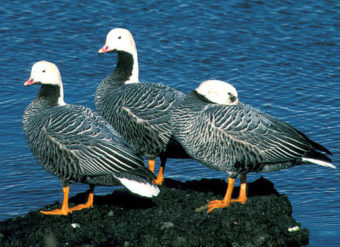
Emperor goose hunt proposed for the first time in decades

Emperor geese at Adak Island.
Emperor geese at Adak Island. (Public Domain photo courtesy U.S. Fish and Wildlife Service)

A subsistence harvest for Emperor Geese has been proposed this spring for the first time in 30 years. The population declined in the early 1980s. The last subsistence hunt took place in 1987. Jason Schamber, who is a wildlife biologist with Alaska Department of Fish and Game, says that the decades of conservation have paid off.

“Over the last 30 years the population has grown slowly at about three percent per year,” says Schamber. “In 2015, it finally reached the level where managers felt that the population could sustain a harvest.”

The Alaska Migratory Birds Co-Management Council developed a management plan for the spring, summer subsistence hunt, and agreed to adopt it for an initial three-year trial period beginning this year. The approved plan is a customary and traditional hunt, meaning that there will be no bag limit.

Still, the population remains susceptible to overhunting. Gayla Hoseth represents Bristol Bay on the AMBCC. She says that education will be key, along with monitoring and potential restrictions, if this trial run is to lead to a sustainable annual hunt.

“In Bristol Bay, we have our Yaquillrit Keutisti Council, and it’s also known as Keeper of the Birds, meeting. We’re going to be having a meeting here before April to talk about these kind of things, education outreach,” Hoseth says. “We don’t want to overharvest.”

Education outreach will include presentations on conservation in some villages that hunt emperor geese and informational mailers.

In addition to the subsistence hunt, there will also be a fall and winter sport hunt. There will be an unrestricted number of permits, but there will be a limit of 1000 birds taken statewide. The specific limit for the Bristol Bay region is 150. The subsistence harvest is scheduled to open April 2 and run through August 31. The fall hunt is set to begin in September.

Proposed changes are open for public comment until March 13.

Site notifications
Update notification options
Subscribe to notifications