Subsistence

Sitkan focuses lens on climate change in Southeast Asia

The Trump administration’s decision to withdraw from the Paris Agreement last week was regarded as a step backward for Alaska.
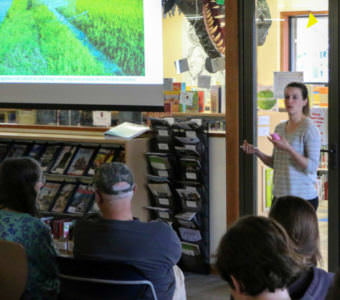
Lione Clare presenting her photo story to fellow Sitkans.
Lione Clare presenting her photo story to fellow Sitkans. (Photo by Cameron Clark/KCAW)

Following the president’s decision, Gov. Bill Walker announced that “Alaskans know our landscape is changing at an accelerating pace. We are experiencing social and economic upheaval caused by shrinking sea ice, rising sea level, increasing intensity of storms, and increasing coastal erosion.” And it’s not just Alaska. A college student from Sitka is exploring how climate change is affecting Southeast Asia too.

Lione Clare has created a climate change presentation entitled, Vulnerable Vietnam: A Photo Story Focused on Climate Change in the Mekong Delta. She gave the show at the Sitka Public Library on June 1, the same day President Trump withdrew the United States from the Paris Accord.

Clare studies Resource Conservation, Climate Change Studies, and Media Arts at the University of Montana.

For the last part of December and January, she traveled Southern Vietnam seeing firsthand what climate change is doing to communities halfway around the world.

“Climate change is obviously a global issue there are some countries in the past that have contributed more to the problem through greenhouse gas emissions, ours being one of them, and it turns out that countries like Vietnam have not contributed as much but are feeling some of the impacts of climate change,” Clare said

Clare focuses on four main themes: food security, coastal forests, renewable energy and migration. All of her pictures were organized into one of these categories.

Clare’s photos are rich with color, capturing the beauty of Vietnam, while also showing often-unseen problems in the region.
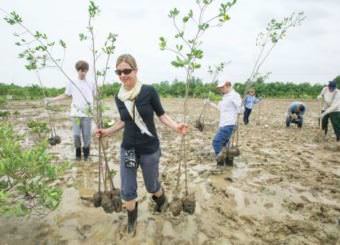
Mangrove forest ecosystems are critical to the coastal zones of Vietnam because they help to sustain food security and ecosystem function. Clare and the rest of her group helped plant some.
Mangrove forest ecosystems are critical to the coastal zones of Vietnam because they help to sustain food security and ecosystem function. Clare and the rest of her group helped plant some. (Photo courtesy Lione Clare)

“This is at Cần Giờ Reserve, we spend half a day here actually participating in a restoration effort that’s been ongoing since the war ended because in this area 20,000 hectares of forest were destroyed to clear war zones during the war. Since then, they’ve been working to rehabilitate the Mangrove Forests,” she said.

The hour-long presentation left members of the audience more interested in the region.

“I was really encouraged by the steps that people in Vietnam are taking to mitigate their problems with climate change, to work with various systems both highly technological and certain basic agricultural systems,” Galen Paine said.

Others in attendance, like Karen Hegyi, can’t wait to see what else Clare will do next.

“I thought she did a great presentation, I’m looking forward to seeing more in the future from her. I think she’s got a great future ahead of her,” she said.

So far, Clare has given her presentation three times at the University of Montana and has a photo exhibit there as well. She will graduate in December and plans to continue her work.

“I’m focused on climate change in school, I’m learning about it, but actually seeing it impact an area in the world and people was pretty eye opening,” Clare said. “Being able to capture that in photos and tell a story was something that was a challenge for me. I never really done it before, but it’s definitely something I would like to do again in the future wherever I might travel.”

Until then, Clare adds Vietnam to her ever-growing list of countries she’s visited and photographed.
Copper river king salmon return higher than expected

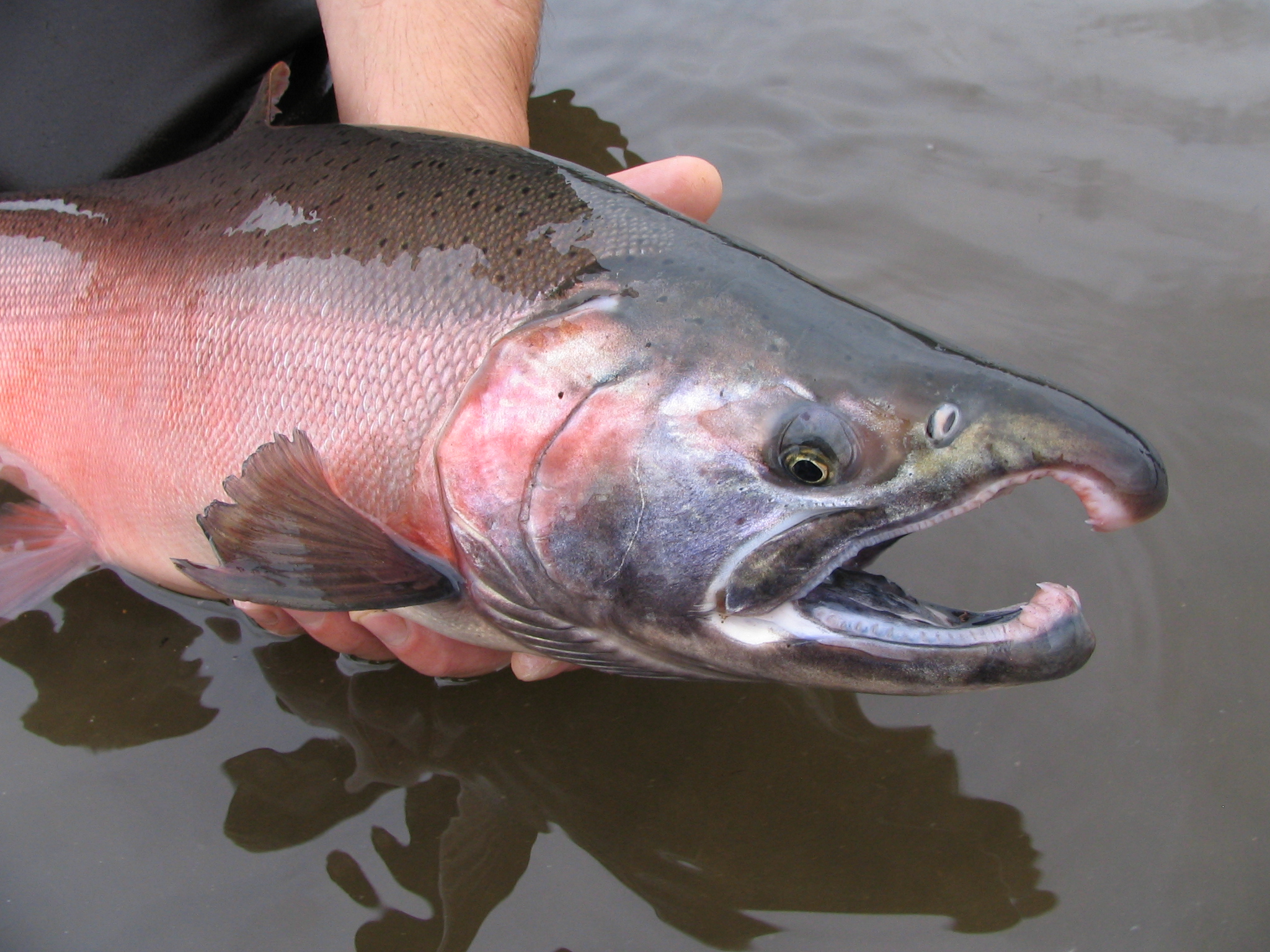
Chinook King Salmon Yukon Delta
Chinook salmon, Yukon Delta NWR. (Public domain photo by Craig Springer/U.S. Fish & Wildlife Service)

The Copper River king salmon return is coming in better than forecast.

Predicted to be the weakest on record, at about 29,000 kings, Alaska Department of Fish and Game Upper Copper River management biologist Mark Somerville said the forecast is being questioned – given recent week’s king harvest by commercial fishers on the river’s delta.

“Even under a restricted area and time the commercial fishery has caught over 8,000 king salmon, which is unexpected and indicates that the return may be higher than we anticipated,” Somerville said.

According to Somerville, the better-than-expected commercial king harvest is supported by data from a mark and recapture project.

The information has resulted in the state beginning to peel back sport and subsistence king harvest restrictions.

“We have rescinded the limits in the subsistence fisheries so that there is currently no limit on king salmon for fish wheels, and we are back to the five fish limit for dip-netting in the subsistence fishery,” Somerville said. “We have also re-opened the sport fishery to an annual limit of two king salmon with only one allowed from each tributary. And we’ve allowed the use of bait in selected waters, say the Klutina, Tonsina and portions of the Gulkana River.”

Somerville said the state has delayed easing a king harvest ban in the personal use dip net fishery at Chitina because of remaining uncertainly about the strength of the run and the fisheries popularity.

“We’re holding off about a week or so because that fishery is a very powerful fishery and can harvest upwards of a thousand king salmon in a week.”

Somerville said if it continues to appear the king run is better than forecast, and that escapement can be met, the state will open the personal use dip net fishery at Chitina to limited king catch.

The personal use fishery opened this morning for sockeye harvest.

The Copper River sockeye return is forecast to come in at about 1.8 million fish, a slightly below average return.

Fishermen are pulling up empty nets from Kuskokwim’s low water

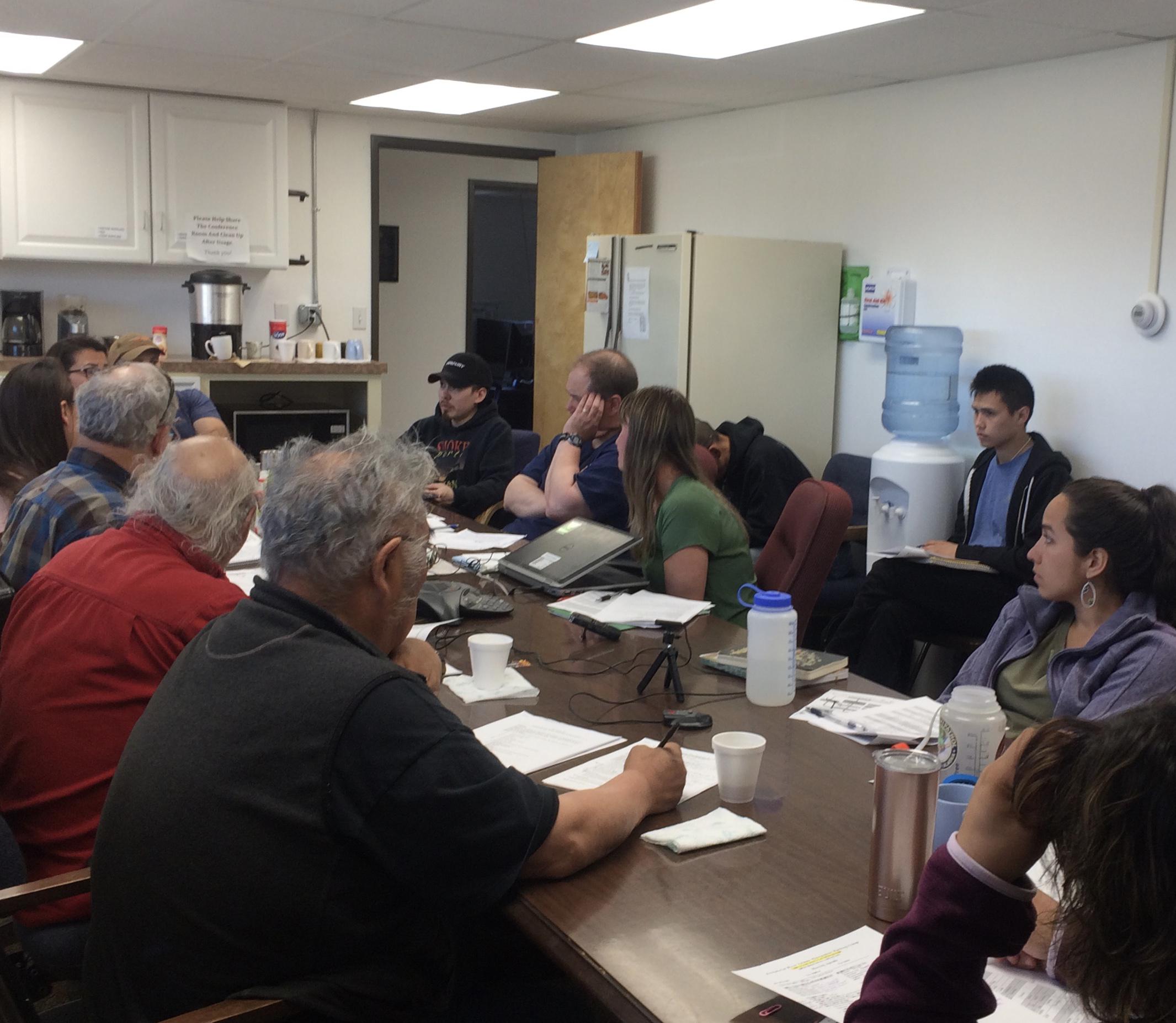
The Kuskokwim River Salmon Management Working Group met for their first meeting of the season on May 21, 2017, where they heard many subsistence fishermen report low water and low harvests. (Photo by Anna Rose MacArthur/KYUK)

Subsistence fishermen along the Kuskokwim River are reporting water on the is low, and nets are coming up mostly empty.

Other fishermen, facing tight restrictions and cultural tension, have decided to refuse to fish.

“I’m a lifetime fishermen. I’m 72 years old,” said John Alegyuk Andrew, a subsistence fisherman in Kwethluk.

He represents the Lower Kuskokwim in subsistence fishing on the Kuskokwim River Salmon Management Working Group.

The group advises the Alaska Department of Fish and Game on management decisions. It held its first meeting of the season Wednesday.

The meeting opened on a solemn note, with a moment of silence for Greg Roczicka, a founding member, who has left a big hole. Roczicka died last week at his home in Bethel at the age of 61. Andrew worked with him for decades on fish and game issues.

“He accomplished a lot in this region. And we just…we’re missing him right now,” Andrew said.

The lower and middle Kuskokwim had its first gill net fishing opening this past weekend: 4-inch mesh, set gill nets; a 12-hour opener from 9 a.m. to 9 p.m.

But, when fishermen pulled up their nets, some came up empty. Many had about three fish. Others had none.

About a dozen subsistence fishermen, representing every section of the Kuskokwim River, called in or showed up at the meeting to report these findings.

And they all said the same thing as Andrew:

“The water is very, very low. The lowest I’ve ever seen in my lifetime.”

Andrew says the water is about 8 feet lower than it usually is this time of year, and that makes fish hard to catch.

“When the water is really low, the water is clear,” he said. “The fish can see the net and avoid it. They can swim under it or on the sides.”

It’s also more difficult to find an eddy to set the net in. With less water, fishermen are noticing that the water is warmer.

The higher water temperature is another problem; the fish die faster in the net.

There was another issue: The fishing opening was on a blue sky, clear day. Not good fishing weather.

“We do our best fishing when it’s a little windy or stormy,” Andrew said.

Even if fishing conditions were good, there still might have been fewer fish caught than normal.

Andrew said some Yup’ik fishermen refused to fish during the opening. The 4-inch gear that was allowed is meant to target whitefish and other non-salmon species.

Managers are asking fishermen to return king salmon alive to the water so that they can reach their spawning grounds during this conservation period.

“That’s more of a cultural slap in the face for my people,” Andrew said. “We the people have a tradition. If we catch something, we bring it home. We bring it home and prepare it to be our food, not the other people’s tradition of catch and release. When we do that, we are playing with our food.”

Many fishermen said that they are waiting until the 6-inch mesh openings begin in mid-June to start fishing.

They’ll be more likely to catch salmon, and they won’t be encouraged to release their kings.

With tug still underwater, Samson develops salvage plan

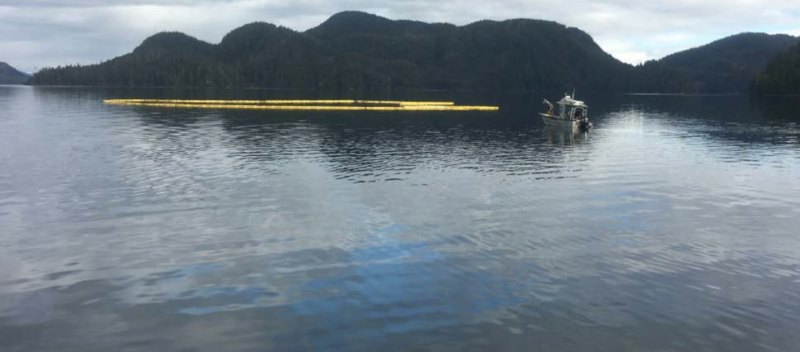
The tugboat Powhatan remains underwater, surrounded by booms to contain the oil spill. (Photo courtesy of SEAPRO)
The tugboat Powhatan remains underwater, surrounded by booms to contain the oil spill in April 2017. (Photo courtesy of SEAPRO)

A Sitka tugboat that sank at the Samson Tug & Barge dock four weeks ago remains underwater at Starrigavan Bay.

According to a situation report, issued by the state Thursday, initial estimates that the vessel contained 340 gallons of oil on board were incorrect.

Divers have found multiple spots where oil could have been released and have since sealed off those locations. The total amount of oil released from the Powhatan is unknown.

The Powhatan is currently surrounded by 1500 feet of containment boom, with sorbent materials inside, and the shore is lined with 1300 feet of deflection boom to protect Starrigavan Bay. Aerial images show decreased sheen within the containment boom and no additional oiling of the shoreline.

State and federal agencies are upholding their recommendation that harvesters do not gather shellfish from Starrigavan Beach at this time. The situation report also states that “there is the potential for [oil] exposure to marine wildlife; however no sea mammals have been observed by response teams or reported.”

Samson has developed a plan for wreck removal and pollution mitigation, which includes recovering fuel from the tug’s tank. So far, 4,335 gallons have been collected. The company also intends to bring a large crane from Seattle to lift the tugboat onto a barge. SEAPRO plans to have the Neka Bay – an Oil Spill Response Vessel (OSRV) with skimming capabilities  – on scene during the wreck.

Samson’s plan is being reviewed by the Alaska Department of Environmental Conservation, the Alaska Department of Natural Resources, and the U.S. Coast Guard for final approval. The date for salvaging the Powhatan has not yet been set.

For the sake of the herring egg harvest, Sitka Tribe calls for smaller fishery

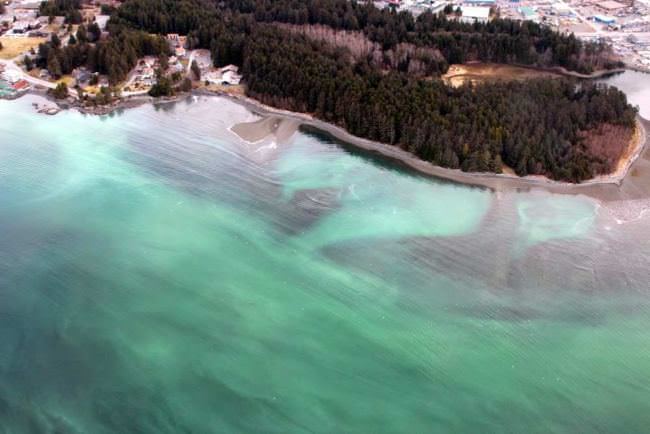
From the air, ADF&G measured 63 miles of cumulative spawn in Sitka. Two years ago, ADF&G measured 84 miles. (Photo by Emily Kwong)

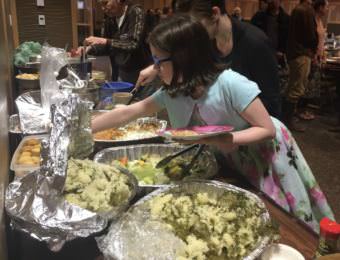
At a potluck in April, organized by Sitka Tribe of Alaska, the star of the show is herring eggs. Some herring fans dunk their eggs in seal oil, while others mix them with mayonnaise. For council member Wilber Brown, the secret is a splash of soy sauce.

“That first herring eggs of the year, when you bite into it, it just feels amazing!” Brown said, adding “It’s just soul food for us.”

Alaska Native people have been harvesting herring eggs for thousands of years, setting hemlock in the water and pulling the branches up days later, bundled with roe. But now, a decades old debate is gaining traction over the stability of Sitka’s herring population.

This year, a lot of people’s hemlock branches came up bare. In the last fifteen years, harvesters met their annual subsistence needs only three times. So Brown isn’t alone in thinking the worst: that Sitka’s herring population is on the verge of collapse.

“I wasn’t able to send any up to my aunties, up to my family,” Brown said. “It’s scary to think it will be gone.”

Gone, or significantly diminished. That’s happened in Hobart Bay, Seymour Canal, or other places in Southeast that were once major spawn sites. In Sitka, the herring population has only grown – at least that’s what the state’s data shows. But locals can’t stop talking about how the spawn has changed: how in the 80s and 90s, every nook and cranny of Sitka Sound would turn milky white, the town wrapped in a band of fish fertility.

That’s how Jeff Feldpausch remembers it.

“It almost looked tropical,” he said.

These days, some areas once considered a herring egg cookie jar see little to no spawn. And that worries Feldpausch, the tribe’s Resource Protection Director.

“It’s been basically one layer of eggs over the needles,” he said. “It’s nothing worth pulling in and bringing to the dock.”

Zoe Trafton piles her plate with herring eggs at Sitka Tribe of Alaska's annual potluck, celebrating the cultural and ecological importance of the forage fish. STA is calling for the Board of Fish to reduce cap the guideline harvest level for Sitka's herring at 10%. (Photo by Emily Kwong/KCAW)
Zoe Trafton piles her plate with herring eggs at Sitka Tribe of Alaska’s annual potluck, celebrating the cultural and ecological importance of the forage fish. STA is calling for the Board of Fish to reduce cap the guideline harvest level for Sitka’s herring at 10%. (Photo by Emily Kwong/KCAW)

Depending on the size of the herring population that returns to Sitka every spring, the State Board of Fish allows the fleet to catch up to 20 percent. Feldpausch thinks that maximum guideline harvest level is way too high. He’s submitted a proposal to the Board of Fish to cap the harvest level at 10 percent and another two that would seal off zones exclusively for subsistence. He doesn’t want the state to close the commercial fishery, just manage it more conservatively.

That job is carried out by the Alaska Department of Fish & Game (ADF&G), and as far as they’re concerned the herring are more abundant than ever.

On Easter morning, fisheries biologist Eric Coonradt with the department is hunting for herring eggs in the front seat of a small plane. He’s clutching a pencil and scanning the water.

As we careen through the air, he marks on a map all the places where spawn is visible. This aerial spawn data will be used to forecast the size of the population — which has grown in size. Twenty years ago, the biomass was around 50,000 tons. This year, it was over 70,000. For Coonradt, that general upward trend is a sign that the ADF&G management plan is sound.

“This is probably one of the most looked at herring populations,” he said. “At least in Alaska.”

Sherri Dressel is ADF&G’s statewide fisheries scientist. She agrees with Coonradt.

“The whole mission of the department is sustainable management and I really do think that’s at the heart of what we’re trying to do,” she said.

But I still want to know: if the biomass has grown, why are subsistence harvesters not able to meet their needs? Dressel says that’s an unanswered question for biologists.

“I’m not aware that anyone has a great handle on why that is yet,” she said.

Since there’s no scientific data proving a connection between changes in herring spawn and the commercial fishery, herring management can only change at the will of the Board of Fish. They meet in Sitka in January.

At the potluck, Jean Arnold piled her plate high with roe on kelp. She hopes the biologists listen to those who struggled to harvest this year after the fishing fleet left.

“I don’t want to see my great-grandson say, ‘Herring, what is that?,'” she said. “That would not be good.”


Stream temperature monitoring could provide insight into important fish populations

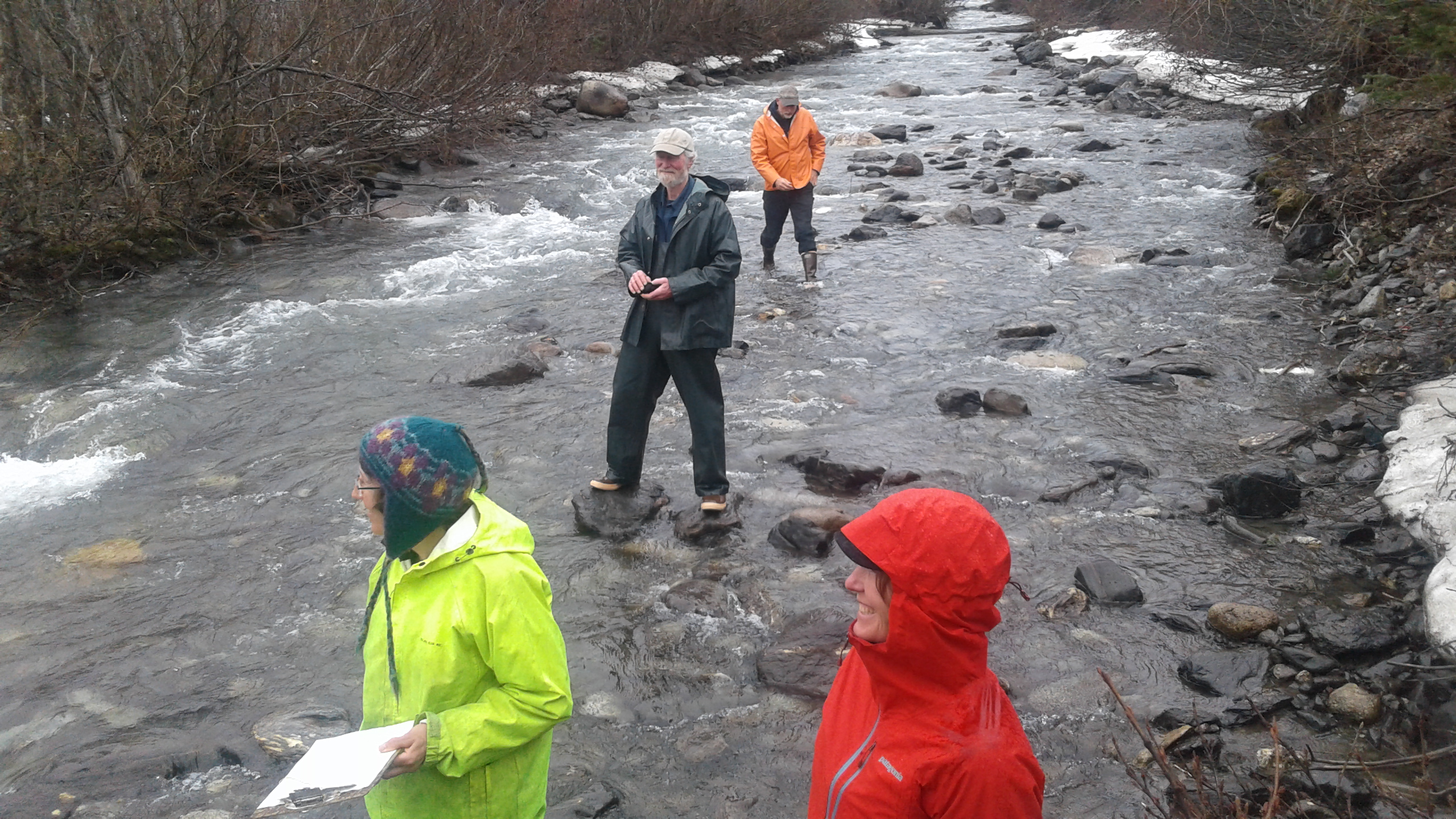
About 20 attendees from Hoonah, Sitka, Skagway and Wrangell came to Klukwan to practice stream monitoring. (Photo courtesy Jessica Kayser Forster)

The Chilkat River and its nearby waters are a major source of food for subsistence fishermen in Haines and Klukwan.

That’s one reason decreased salmon runs are alarming in the Chilkat and other rivers in Southeast.

Tribal leaders around the region are trying to get a handle on one factor that may contribute to declining returns.

The Chilkat River runs past the village of Klukwan, about 20 miles up the Haines Highway.

“Finding our salmon, fishing for salmon, hunting. It’s a way of life and that may disappear if the salmon disappear,” said Kimberly Strong, the Chilkat Indian Village Tribal Council president.

The village hosted a stream temperature monitoring training, in partnership with the Southeast Alaska Watershed Coalition and Cook Inletkeeper.

The training was part of a larger project funded by the Environmental Protection Agency.

For the Chilkat Indian Village, understanding what’s going on with salmon is a major reason to do this work.

The village has seen dwindling returns of several types of salmon, Strong said. That includes alarmingly low Chinook runs in recent years.

“If something happens to the salmon, and they don’t return, the ecosystem is thrown,” Strong said. “The wolves won’t be there. The moose may not be there. The goats, all of them are going to have an impact if our salmon are jeopardized by warming of the water, by contamination of the water, by the environmental impacts that we make as humans.”

About 20 people, including tribal representatives from Hoonah, Sitka, Skagway and Wrangell came to Klukwan to learn and share information about monitoring local waters.

Jessica Kayser Forster, an environmental consultant based in Haines, helped facilitate the training, which also included conversations about climate change and how to adapt to related environmental changes.

“Tribes around the country, really around the world, are taking the lead in monitoring and planning for adaptation because of these impacts of climate change,” Forster said.

So, why monitor temperature?

“The most concern is, is you see throughout the Pacific Northwest, is that streams are warming, they’re getting hotter,” Forster said. “When temps get hotter we see a lot of disease. It effects reproduction. It gets too hot then it becomes lethal.”

Sue Mauger, who led much of the training, is the science director at Cook Inletkeeper, a nonprofit organization based in Homer.

She’s helped set up temperature monitoring programs in other parts of the state.

Mauger explained how to choose sites to deploy data loggers, and how to collect the information they record using a computer program.

“The more information we have and the more places we have information, the more we’re going to understand what it might mean for different salmon populations,” Mauger said.

There are already monitoring networks in Cook Inlet, Bristol Bay and Kodiak.

The Southeast Alaska Watershed Coalition wants to get something similar set up in this region.

Mauger says it’s challenging to collect data in Alaska, given the amount of time, money and resources that go into traveling to different areas.

These networks help with that and the tools they use make the science more available.

“It’s really accessible equipment,” Mauger said. “It’s easy to use and it collects really good accurate information.”

One challenge is money.

Mauger said you need three to five years of data to really understand what’s going on in a particular body of water, which means having a consistent funding source.

In Klukwan, Forster said they have the equipment, but they’re still trying to secure funding to set up the monitoring program.

For Strong, understanding what’s happening in the river is about a way of life.

“I think a lot of people came and want to live in this area because of the abundance of food,” Strong said. “That you can live off the land. And it’s really scary that we can get to the point in the near future that another generations or two generations from now won’t have the opportunity to live the lifestyle that we enjoy.”

Strong said they may not be able to control everything that happens in the environment, or management decisions made by state and federal agencies.

She hopes having more information can help better inform that decision-making.

Site notifications
Update notification options
Subscribe to notifications