Ed Schoenfeld, CoastAlaska

Alaska Marine Highway drops price for Taku ferry

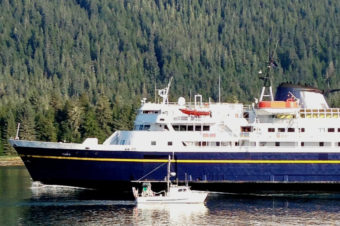
Ferry Taku. (Creative Commons photo by Ted McGrath)
The Alaska Marine Highway System ferry Taku was tied up in 2015. It’s been for sale, but so far no one has submitted a bid. (Creative Commons photo by Ted McGrath)

No one wants to buy the state ferry Taku.

So, officials are lowering its price.

The Alaska Marine Highway System took the 54-year-old ship out of service almost two years ago.

Officials put it up for sale in March, with a minimum price of $1.5 million.

But no one responded by the May 9 deadline.

Spokeswoman Meadow Bailey said the new minimum bid is $700,000. She said officials wanted to cut the price in half, plus a little more.

“This gives people who expressed an interest in the vessel a little bit more opportunity and perhaps makes the vessel a little bit more attractive to them,” she said.

The Taku is about 350-feet long. It can carry up to 50 vehicles and 350 passengers. It has 40 staterooms, a cafeteria, observation lounges and a covered solarium. It sailed mostly Southeast routes.

Bailey said the state did hear from some potential Taku buyers, though they didn’t talk about their plans.

“They’re kind of quiet about exactly what their intentions might be and what would be holding them back. It is a business deal, so there’s a certain amount of reluctance to talk about details,” she said. “But we’ll see if this makes it a sweeter opportunity for people and if we get some responses, which is our hope.”

The new bid deadline is May 31.

Bailey said the state will consider other options if no one expresses interest.

The Taku is moored in Ketchikan’s Ward Cove. A buyer would have to accept it as-is, where-is.

Top state ferry manager resigns

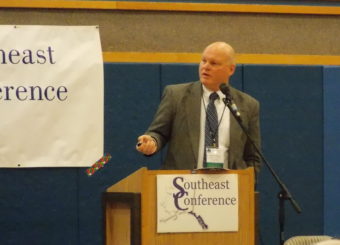
Alaska Marine Highway System Capt. Mike Neussl addresses the Southeast Conference Mid-Session Summit in Juneau on March 15, 2016.
Alaska Marine Highway System Capt. Mike Neussl addresses the 2016 Southeast Conference in Juneau. (Photo by Ed Schoenfeld/CoastAlaska News)

The man overseeing the Alaska Marine Highway System is leaving his post.

Capt. Mike Neussl said he’s departing for personal, not professional reasons. He needs to leave the state for a while to care for an ailing family member.

He said he’ll miss his co-workers, but not the long hours.

“It’s an important job and I clearly enjoyed doing it. But it is a stressful job and these are very challenging times and it’s not been easy,” he said.

That’s because state budget cuts have forced the ferry system to reduce sailings, cut amenities and reorganize some of its services. It’s happened as costs have risen and the aging fleet has needed significant repairs.

“We still provide ferry service to 35 communities and have a fleet of not quite 11 ships, we’re down a couple. But we’ve kept the system going despite some very significant budgetary challenges,” he said.

His final day on the job will be Friday, May 12.

Transportation Commissioner Marc Luiken said a replacement won’t be chosen right away.

“I’m still working with the governor to kind of lay out the plan for leadership of the marine highway system. But at least for the near term, we’re going to operate with the folks we have in the leadership positions,” he said.

Neussl has been a Department of Transportation deputy commissioner for a little more than two years. He also ran the ferry system in 2011 and 2012. He’s a retired U.S. Coast Guard captain who left that post in 2010 after 30 years of service.

Robert Venables, who chairs the state’s Marine Transportation Advisory Board, said Neussl will be missed.

“He obviously had a firm grip on what was happening and he ran the operation as well as one could expect under the circumstances,” he said.

His departure comes as a panel of stakeholders considers alternative approaches to ferry management. So far, it has recommended the marine highway change from a state agency to a public corporation.

Venables staffs that effort. He said Neussl’s resignation could impact the project.

“Perhaps there’s an opportunity to take a look at that position and see what could be done structurally to bring about some changes that have been looked at in this AMHS reform project,” he said.

It’s being done under the auspices of the regional development group Southeast Conference, with support from the state and other entities.

Neussl said changing the organization of ferry management is worth considering if it helps the system survive.

Cultural landscape conference focuses on Native education

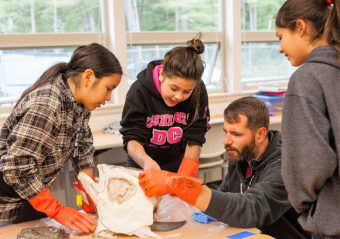
James White teaches a lesson on halibut fishing during Sealaska Heritage Institute’s Open the Box Math and Culture Academy in July 2016. (Photo by Nobu Koch/Sealaska heritage Institute)
James White teaches a lesson on halibut fishing during Sealaska Heritage Institute’s Open the Box Math and Culture Academy in July 2016. (Photo by Nobu Koch/Sealaska Heritage Institute)

Teachers from around Southeast Alaska will gather in Juneau next month to discuss culturally responsive education.

A conference called Our Cultural Landscape will focus on helping educators better teach Native students.

Jackie Kookesh is education director of the Sealaska Heritage Institute, which is organizing the event.

“We think that teachers, when they understand, they begin to understand they’re a part of the cultural landscape here as well. Then they get grounded. And I think it provides a shift for educators to look at their relationship as a teacher in the classroom,” she said.

The conference is June 1-3 and is open to teachers, administrators, classroom aides and those working in early childhood education.

Kookesh said the approach is of use to more than Native students.

“We feel it benefits all the students when you have a culturally responsive classroom and you have a culturally responsive teacher who is aware and knows. We hope that that approach will engage kids,” she said.

Guest speakers include Christopher Blodgett, a Washington State University faculty member and clinical psychologist. He’s known for developing a system to better understand and track childhood and family trauma.

James White shows traditional fishing techniques during a aath and culture academy in July 2016. (Photo by Nobu Koch/Sealaska Heritage Institute)
James White shows traditional fishing techniques during a culture academy in July 2016. (Photo by Nobu Koch/Sealaska Heritage Institute)

Other speakers are Zaretta Hammond, Larry Merculieff and Libby Roderick.

Hammond is a national education consultant and author of “Culturally Responsive Teaching and the Brain: Promoting Authentic Engagement and Rigor for Culturally and Linguistically Diverse Students.”

Merculieff was chosen by elders to serve as a bridge between traditional Aleut culture and the outside world. He established the University of Washington’s first indigenous student education program.

Roderick is associate director for the Center for Advancing Faculty Excellence at the University of Alaska Anchorage and director of its Difficult Dialogues Initiative. She is the editor of “Alaska Native Cultures and Issues: Responses to Frequently Asked Questions.”

Retired Juneau teacher and principal Carmen Mastronardo Katasse, a conference planner, said educators need to know Native culture is not a thing of the past.

“The culture isn’t gone. It’s still here. And so our hope is that teachers leave this conference with a better understanding of not only the local culture, but the art, the history and how place-based education does increase student achievement, decreases dropouts and engages students because they feel connected,” she said.

The conference is an outgrowth of an intensive training program for Juneau teachers.

It will be held at Juneau-Douglas High School and the Heritage Institute’s Walter Soboleff Building.

Federal budget deal maintains Alaska arts funding, state lawmakers OK arts restructuring

The federal budget deal cut by Congress includes some good news for arts in Alaska.
The compromise continues funding for the National Endowment for the Arts. The federal agency provides $800,000, about 30 percent, of the Alaska State Council on the Arts’ $2.8 million annual budget.

Chairman Ben Brown said the deal means the council will continue to pass federal money on to Alaska art programs.

“When the Office of Management and Budget released the so-called skinny budget a few months ago, there was this draconian proposal to eliminate all funding for the NEA. So we’re pleased to see that the NEA is still operating and there is leadership in place there that supports its continued existence,” he said.

While the Alaska Legislature’s budget isn’t complete, House and Senate spending plans keep the council’s funding flat.

Both chambers have also passed an arts council restructuring bill, which awaits the governor’s signature. The measure changes the state agency to a public corporation. Backers say that would help attract additional grants and partnerships.

The state council supports arts education, training and performances, as well as community arts groups and individual artists.

One newer program is called Creative Forces. It brings the arts to service members with traumatic brain injuries and psychological health issues.

Brown said the council and endowment will partner with therapists at Joint Base Elmendorf-Richardson.

“There was a great deal of concern that if anything had been done to implement the elimination of the agency — or even a significant reduction in funding — those plans might have been compromised,” he said.

The Anchorage-area base is one of 11 designated program sites around the nation.

Plan would boost Alaska’s Northwest Coast art

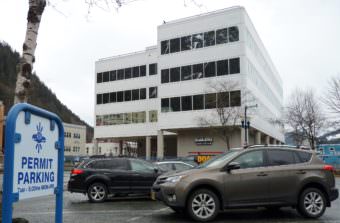
The Sealaska Heritage Institute plans to turn this downtown Juneau parking lot into a Native artists' park and market.
The Sealaska Heritage Institute plans to turn this downtown Juneau parking lot into a Native artists’ park and market. (Photo by Ed Schoenfeld/CoastAlaska News)

A major Southeast cultural organization plans to create a Native arts market and park in Juneau. That, and an advanced education initiative, are part of an effort to boost the region’s traditional arts economy.

A downtown Juneau parking lot is slated to be turned into a Native artists’ park.

Sealaska Heritage Institute President Rosita Worl said it will include totems and other large art objects, plus a tribal house.

“It would look like a tribal house, but it would be enclosed,” she said. “It would be an area where the artists can carve monumental art, as well as other art forms.”

The park is part of the institute’s multi-pronged effort to encourage, promote and sell Native art from Southeast Alaska. It’s branding the style as Northwest Coast Art.

Sealaska Heritage Institute President Rosita Worl is promoting a Native arts initiative in Southeast Alaska.  (Photo by Lakeidra Chavis/KTOO)

“Northwest Coast Art is developed around what we call formline and there are basic components that you have to master,” she said. “It’s a whole different art scheme than drawing naturalistic forms.”

Another part of the effort is an education initiative to develop Tlingit and Haida artists’ skills.

Sealaska Heritage Institute Senior Research Fellow Rick Harris said it starts with a two-year program at the University of Alaska Southeast, which already offers formline design courses.

Harris, a retired Sealaska Corp. vice president, said graduates could continue studies at New Mexico’s Institute of American Indian Arts, which offers degrees in writing, museum studies and studio arts.

“The idea is for students to be able to come to UAS, learn and be skilled and become experienced in Northwest Coast design and then actually be able to go to Santa Fe and to capture some of the additional benefits that they have been able to develop through their Indian arts program,” he said.

The three organizations signed a memorandum of agreement in November.

The Northwest Coast Arts Initiative also would push for federal recognition for formline design and funding to expand its programs.

The initiative is in its early stages.

Haida artist Robert Davidson's metal panel "Greatest Echo" adorns the front of the Walter Soboleff Building. (Photo by Elizabeth Jenkins/KTOO)
Haida artist Robert Davidson’s formline design panel “Greatest Echo” adorns the front of the Walter Soboleff Building. (Photo by Elizabeth Jenkins/KTOO)

Worl, also a Sealaska Corp. board member, said the Juneau arts park and market would cost $7 million to $8 million, including moving parking underground. It also hasn’t yet sought needed building permits.

The university and Indian arts programs would also have significant expenses.

She said it’s worth pursuing.

“What you’ve got to do is take yourself out of Northwest Coast Art and look at it in context of art throughout the world. And then you begin to see how unique and how different it is from other art forms,” she said.

Sealaska Heritage Institute already built the Walter Soboleff Center, which was completed about two years ago. It has archives, a theater, a store and exhibits in a building across the street from the proposed arts park.

Sealaska Corp. President and CEO Anthony Mallott said this will be phase two.

“Adding an outside park where artists are more engaged with the visitors or with residents of Southeast Alaska is a vision that has been put forward and we’ll continue to find ways to see if we can make it work,” he said.

The term Northwest Coast Art also refers to similar work from Coastal British Columbia and Washington state. But Worl said her institute’s efforts will focus on Southeast Alaska.

Southeast Alaska tribal government moves into defense contracts

Central Council of Tlingit and Haida Indian Tribes of Alaska President Richard Peterson, right, poses with delegates during this month’s Tribal Assembly in Juneau. (Photo courtesy Tlingit-Haida Central Council)

Southeast Alaska’s regional tribal government is developing its business side.

Central Council of Tlingit and Haida Indian Tribes of Alaska President Richard Peterson said funding cuts threaten its programs.

He said about nine-tenths of the council’s money comes from federal sources. And most of the rest comes from the state.

“That’s just not sustainable. That’s not sufficient,” he said. “So, we’re working on alternative sources of revenue.”

The Central Council has about 30,000 tribal members in Alaska, the Pacific Northwest and elsewhere in the Lower 48.

Addressing the organization’s recent Tribal Assembly in Juneau, Peterson said it needs to maintain its social-service, justice and training efforts. But that’s not all.

“We want to not just preserve programs that we have, but expand and grow,” he said. “If we’re going to do that, we need that economic self-sufficiency, that economic sovereignty,” he said.

That effort is being spearheaded by Tlingit-Haida’s Tribal Business Corp.

CEO Richard Rinehart said there’s growth because the organization purchased the government-services business KIRA last summer.

Its main customer is the U.S. Department of Defense, he said.

“We are running power plants, water systems, water-treatment plants. We have dozens of electricians, dozens of plumbers and a couple dozen carpenters,” Rinehart said. “We do vehicle maintenance, grounds maintenance. We do complete base operations services.”

KIRA has offices in the Bahamas, as well as Colorado and several other states.

Founder Carlos Garcia, who continues to be its president, said the company has about 600 employees.

He said it’s expanding, because tribal ownership allows it to bid for contracts under the 8(a) disadvantaged-business program.

“We’re going to need good employees, both Native and non-Native,” he said. “And I see in this room many, many people from all over the areas you represent that can help us.”

He asked the hundred or so Tribal Assembly delegates to point potential applicants to the company’s job openings.

But he said KIRA is a business purchased to make money for the Central Council, not an employment program.

Site notifications
Update notification options
Subscribe to notifications