KMXT - Kodiak

KMXT is our partner station in Kodiak. KTOO collaborates with partners across the state to cover important news and to share stories with our audiences.
Alaska’s secret Cold War export? Shellfish toxin for the CIA

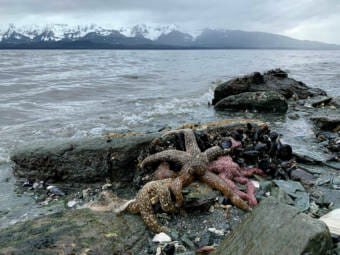
Blue mussels at Nahku Bay. (Claire Stremple/KHNS)

Alaska is well known for its seafood — halibut, cod and salmon destined for the dinner table. But there’s one seafood product that you don’t want to eat. And it may have been harvested for the CIA: a lethal toxin used as an alternative to cyanide.

In May 1960, Francis Gary Powers’ U-2 spy plane was shot down over the Soviet Union during a high-altitude reconnaissance mission. In his pocket was a modified silver dollar containing a hidden needle loaded with a lethal dose of shellfish toxin.

At the Kodiak Area Marine Science Symposium, oceanography Patricia Tester said she might know where the poison, known as saxitoxin, came from.

Saxitoxin causes paralytic shellfish poisoning. It paralyzes muscles by interfering with signals from the body, which can stop respiration.

Tester says she learned about saxitoxin experiments from a trove of documents found in Kodiak that revealed tests on mice in the 1950s involving shellfish toxins. The research was conducted in a facility in Ketchikan that no longer exists.

The documents Tester reviewed include a contract for clams and a shipping receipt to the U.S. Army Biological Warfare Laboratories at Fort Detrick in Maryland.

“In one of the files, there was a Department of Defense contract for toxic shellfish,” she said. “And this is what led to the detective journey that brought us through the Cold War history. The contract was from the Department of Defense and it was for toxic clams written in Oct. 6, 1952.”

The contract was for $10,000 of toxic clams — closer to $100,000 today — to be shipped to the East Coast.
“The department worked with the CIA to actually develop a replacement for the cyanide poison pill that was provided to US covert agents and spies during that time,” Tester said.

Cold War enthusiasts might remember that, under Nixon’s orders, the United States destroyed its stockpile of biological weapons in 1969. But in practice, the CIA interpreted the instructions liberally. During a 1975 congressional committee investigation, the CIA admitted it had kept a small stockpile of saxitoxin. And this was the same saxitoxin that Powers carried on his flight over the USSR.

Tester says it is possible to save somebody who has acute saxitoxin poisoning by putting them on a respirator and giving the toxin time to work its way out of the body. But the amount carried in Powers’ needle would likely be lethal within minutes.

The document Tester found doesn’t determine definitively that Powers carried saxitoxin from Alaska, but Tester says that her research indicates that it’s likely.

“There could have been another order, either earlier or later than the one I found,” she said. “There could have been orders for toxic clams off the East Coast, which happened as well, I think for the first time down in the Woods Hole area in the Massachusetts area about 1972. But that would have been, you know, pretty late in the game for them to have been doing anything like that.”

Powers never used the poison. He was captured after ejecting from his plane and ultimately returned to the United States in a prisoner exchange about two years later.

No other cases of operational use of saxitoxin by the CIA have come to light.

New rules could change how money is spent for Exxon Valdez oil spill restoration

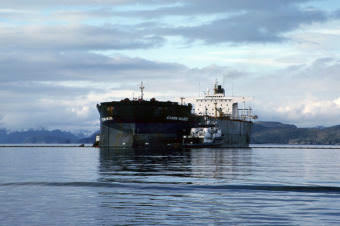
On March 24, 1989, the tanker Exxon Valdez ran aground on Bligh Reef in Prince William Sound, Alaska. Within six hours of the grounding, the Exxon Valdez spilled approximately 10.9 million gallons (259,500 barrels) of its 53 million gallon cargo of Prudhoe Bay crude oil. The oil would eventually impact more than 1,100 miles of non-continuous coastline in Alaska, making the Exxon Valdez the largest oil spill in U.S. waters at the time. (Creative Commons by NOAA Office of Response and Restoration/Wikimedia)
On March 24, 1989, the tanker Exxon Valdez ran aground on Bligh Reef in Prince William Sound, Alaska. Within six hours of the grounding, the Exxon Valdez spilled approximately 10.9 million gallons of its 53 million gallon cargo of Prudhoe Bay crude oil. The oil would eventually impact more than 1,100 miles of non-continuous coastline in Alaska, making the Exxon Valdez the largest oil spill in U.S. waters at the time. (Creative Commons by NOAA Office of Response and Restoration/Wikimedia)

The Exxon Valdez Oil Spill Trustee Council is looking to make major changes. New proposed bylaws would change how it can spend its trust funds and expand the oil spill’s original boundaries to incorporate an ecosystem approach.
Nearly 30 years ago, as part of a settlement arising from the Exxon Valdez oil spill in 1989, the Exxon Corporation paid over $700 million to fund restoration and rehabilitation projects in areas immediately affected by the spill. Today, that fund sits at $140 million. The trustee council charged with managing that fund is proposing changes that would extend the fund’s life and impact.

Alaska Department of Fish and Game Commissioner Doug Vincent-Lang is a state trustee of the fund.

“I think the keyword is that we wanted more flexibility in how to spend the money,” Vincent-Lang said.

To achieve this flexibility, the trustees would need to combine certain trust fund accounts — namely the habitat and research ones — into a single multi-purpose account.

The habitat fund can only be used for projects that work to restore the oil spill impact area, such as the $4 million habitat enhancement project at Kodiak’s Buskin River watershed in 2017. The research fund can only be used for scientific research projects, like the proposed herring disease project for 2021.

“There was a general desire to fund the highest priority work irrespective of whether it was habitat or science-based projects,” Vincent-Lang said. “So we wanted to basically combine them into one account that would give us flexibility in how we could spend money. If the higher priority was habitat, we would have that opportunity to spend on habitat. But if the higher priority was to do scientific or recovery work, we have that flexibility. But right now we are confined to spend x amount of dollars on habitat and x amount of dollars on science.”

The accounts are currently earning good returns with the state Department of Revenue. However, federal legislation would need to be changed to combine those accounts.

To avoid the lengthy process of changing federal legislation, the council is also considering transferring these trust funds to the Department of Interior’s Natural Resource Damage Assessment and Restoration Fund which, according to the trustee council, typically earns minimal returns.

What might be the most significant proposed change to the restoration plan is a redefining of the oil spill impact boundary. Right now, the oil spill area is restricted to the initial impact area which covers much of Southcentral Alaska’s shoreline and Kodiak Island.

But the scope of restoration projects is changing to focus on ecosystem science, mariculture and herring.

“We wanted to utilize some of that existing infrastructure that the trustee council has put in place in the two science centers — Prince William sound Center and SeaLife Center,” Vincent-Lang said. “And basically have a program that incorporated elements of an ecosystem approach that gathered science on the Gulf of Alaska and Prince William Sound over the next 10 years that would basically put us in a position of continuing some of that foundational science that we’ve collected over the past five years.”

For instance, many of the sea birds injured by the spill have had to relocate significant distances away, interrupting their reproductive cycles. Changing the funding structure could allow for more comprehensive projects to study these birds.

“We wanted to try to have an ecosystem approach and a maricultural approach rather than an approach that was individual projects on a piecemeal basis — bird projects, herring projects and everything else. We wanted a more holistic approach at that science gathering,”

While many public comments made so far support these resolutions, some stakeholders are wanting the process to slow down.

In a public comment submitted to the Trustees, the Afognak Native Corporation warns that “any advancement of the agenda that these resolutions represent towards a spend down plan should be postponed until meaningful public participation and review of other options can be considered.”

But Commissioner Vincent-Lang notes that these resolutions are just ideas.

“We are far from a decision,” he said. “We respect the public process as we move forward and give people an opportunity to weigh in. We are going to listen carefully. Decisions have not been made.”

The next trustee meeting will take place on Jan. 19, where they will review the nearly 400 public comments already submitted on these proposed changes. Public comments will also be taken at the meeting.

People who would like to give public comments during the meeting, which are limited to 3 minutes per person, are asked to email Fish and Game.

Correction: A previous version of this story had the incorrect date for the next trustee council meeting. This has been amended.

Fish and Game closes highly successful Afognak Island elk hunt by emergency order

Roosevelt elk, the type of elk found on Afognak Island. (Creative Commons photo by Dan Dzurisin/Flickr
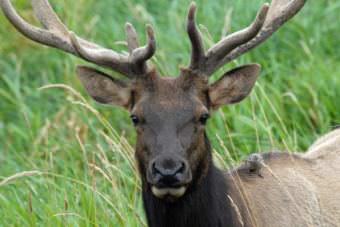
A Roosevelt elk, the type of elk found on Afognak Island. (Creative Commons photo by Dan Dzurisin/Flickr)

After a successful season of elk hunting on Afognak Island, the Alaska Department of Fish and Game has closed elk hunting in the East Afognak hunt area by emergency order.

Nathan Svoboda, area wildlife biologist with the Alaska Department of Fish and Game in Kodiak, says that the unusual closure of the entire island may not be entirely coincidental.

“We typically close down, you know, certain portions of the registration hunt during any given year, this year was kind of interesting. We closed down pretty much the entire island, which I don’t think we’ve ever done before. At least not that I can remember. So that seems to suggest that there’s quite a few hunters out there. And not only that, but they’re also being pretty successful,” said Svoboda.

“I think people are getting tired of being cooped up. So a lot of people are driving down the field, and we were seeing the same thing with our goat hunts, you know, we’re reaching our harvest quarters a little bit earlier than we had in previous years.”

The goal for the hunt is to take about 10% of the overall population, with that demand being lightened across the herds depending on their size, according to the Alaska Department of Fish and Game. A particularly small herd may have little to no harvest quota, while larger herds will have large harvest quotas.

There are eight elk herds on Afognak Island. As of October 30th, hunters reported taking 18 elk from a quota of 24 in East Afognak. A harvest that exceeds objectives could have the adverse effect of reducing future hunting opportunities.

Registration hunts remain open for a portion of the Remainder hunt area on Kodiak and Shuyak islands. Only hunters with drawing permits may hunt elk on Raspberry Island.

Kodiak remembers 101-year-old woman determined to vote

Margaret Hall (Photo courtesy of the Hall family)

Margaret Hall of Kodiak wanted very badly to vote this year. She first saw the voting process up close in Minneapolis, Minnesota.

The year was 1920.  It was the first election since women received the right to vote in the United States. Hall was in a stroller when she watched her mother cast her vote, a moment that stayed with her all her life.

“It’s almost like a duty, that constitutional duties and they support federal … the constitution says ‘we the people,’ it doesn’t say ‘we the government,” Hall said. “It doesn’t say ‘we the president’ or ‘we the Supreme Court or we the Congress.’ It says ‘we the people’ and that’s who we are.”

Even at 101 years of age, she planned to vote in this year’s election but she died peacefully Friday morning.

A week before the election, she looked forward to voting on the anniversary of her mother’s vote 100 years ago. She hadn’t missed many elections since she first voted in her 20s. She said she might have voted in her late teens if she could but before the 1970s, the voting age was 21.

She probably would have voted in the presidential elections she missed in the 1940s and 1950s, but Alaska was still a territory and had no electoral college representation. Voting, particularly in Alaska, was not something she took lightly.

Hall’s friends, like Jenny Stevens, adored her dedication. She says that Hall embodied selflessness in the political process and was a role model to other voters.

From a stroller in 1920 to a wheelchair in 2020, Stevens says Hall has had a remarkable journey. 

“Just determined to go even if she has to go in a carriage again. That determination that, you know, of the Democratic attitude, you know, that this is our right and our responsibility at the same time. So, so inspiring,” Stevens said.

Hall would have joined millions of other Americans and many thousands of Alaskans in casting her ballot this election. Hall’s son, Daniel, said that his mother’s message to voters would be obvious.

“To vote and take that responsibility that, even though she didn’t make it this time to vote, that they could do it for her. Everybody should remember to vote,” Daniel Hall said.

While her passing will greatly affect the Hall family, they are grateful to those in the community who knew her.

“It was always a comfort for us to know that the town was there for her and that so many people looked after her,” he said. “There’s just a lot of people that we are, you know, grateful for. There’s not a lot that I could tell Kodiak about my mom because they probably know her as well as I do.”

Piglets escape Kodiak farm, run wild in street

Screenshot of black-and-brown piglets trotting down Salmon Berry Drive in Kodiak. (courtesy Renee Esham)

Eight little piggies cried “wee, wee, wee” all the way home — back to their Kodiak farm in Bell’s Flat. But not without first generating some excitement on the Friends of Kodiak Facebook page.

Footage of eight black-and-brown piglets trotting down Salmon Berry Drive (at first glance they looked like an unharnessed dog team) had people asking, “Who do those little piggies belong to? And from whence did they make their escape?”

The video gave rise to all kinds of speculation. Were they training for the Idita-hog? Were they being hunted? Or were they just having the times of their lives?

Brittany Keplinger quickly put an end to the guessing game when she posted, “Pig situation is under control. Thank you everyone.”

Keplinger said she got several calls at the Rendezvous restaurant, where she works, saying her pigs were on the run. But by that time, her husband Jacob was close to ending the adventure.

“They’ve never traveled that far,” Keplinger said, “so they were a little out of sorts when they saw a car for the first time and probably a dog or two.”

The 12-month-old piglets are Kodiak born and bred, the offspring of a local sow and boar. As it turns out, Jacob didn’t have much trouble luring them home. He knows what it takes to get a pig’s attention.

“He gives them marshmallows every morning so that they come up close to him,” Keplinger said.


And the old marshmallow tricked worked. Jacob and a friend were able to corral the escapees into a pen.

But how is it that the eight little piggies broke out in the first place? Normally, they’re penned in with an electric fence. But they’ve learned that if they dig and pile enough dirt up against it, they can knock it out of commission.

“They can smell when the electric fence is hot and on, so if they can smell and realize it’s down, because they’ve piled so much dirt on it, they know that they can just run through the netting,” Keplinger said.

Young though these piggies may be, you might say they’re still on the run — from someone’s future dinner plate. Friends and neighbors have already placed deposits to buy them when they’re fully grown.

Kodiak man’s protest ends with no change to hospital visit policy

Marvin Abbott of Kodiak on September 11, 2020, after being denied visitation rights to his daughter due to COVID-19 safety precautions, camps outside of Providence Hospital in Anchorage. (Jeff Chen/Alaska Public Media)

A Kodiak fisherman was in the headlines last month when he pitched a tent in front of Providence Alaska Medical Center.

Marvin Abbott camped out at the Anchorage hospital for more than a month to protest its COVID-19 policies, which restrict patient visits as a safety precaution. His daughter, Rachelle, had been medevaced from Kodiak to Providence after a severe asthma attack left her in a coma.

Rachelle Abbott has since been moved to the Alaska Native Medical Center, where she had been on the waiting list. There are now plans to move her again, into long-term care. Her family says recent tests show she’s had extensive brain damage.

The family says her move out of the ICU might allow more visits.

As for Abbott, he packed up his tent at Providence and moved into an RV, loaned to him by a man who heard his story on the radio. For now, his winter job as a maintenance man is on hold. He remains as determined as ever to stay close to his daughter.

The leaves were green back when Abbott set up a cot near the edge of the street at the start of his protest. Soon he had a tent, given to him by someone who heard his story on the news. Another man, who Abbott describes as a guy with a big truck and a big heart, dropped off a heater.

Since then, the leaves have turned to gold and scattered. And all the while, his daughter Rachelle remained in a coma. The hospital has allowed Abbott to visit her three times, but most days he sat on the curb and looked up at her window

“It makes it easier sitting here for me, being close to her,” Abbott said. “I don’t know. I feel more in touch with her, when I’m sitting here looking across. I think I know I should be up in the room, next to her, holding her hand.”

Most families with loved ones at Providence have not been allowed to visit — part of the hospital’s strict policy to prevent the spread of COVID-19. So how did Abbott get to see his daughter? The hospital says the visits had nothing to do with his protest but were allowed because doctors needed to ask him about his daughter’s care.

Dr. Michael Bernstein is Providence’s chief medical officer. He says the hospital had hoped to relax its visitation policies, but now with coronavirus on the upswing, that’s not likely to happen any time soon.

“It’s all a matter of weighing the risks versus the potential benefits, and they’re tough decisions to make,” said Bernstein, who stressed that there’s a lot at stake.

“We’re also a major trauma center.,” he said. “We’re the largest hospital in the state. If we have an outbreak amongst our staff, as has happened in other places and in one of our skilled nursing facilities, it can devastate our ability to provide any type of care to the community.”

But for families with patients, the hospital’s policy takes a toll. Abbott’s mother, Lydia Olsen, followed her son from Kodiak to Anchorage. Although she stayed with a family friend, she went to his camp every day in support.

“He said, Mom, I gotta go. I gotta do something,” Olsen said. “So, he had a sign made, with a picture of her in ICU and it said, ‘Let me see her.’”

When Abbott visited his daughter in the ICU, Olsen listened in on her cell phone.

“He just talked the whole hour to her,” she said. “Reminded her of what of what a strong person she is.”

Abbott says he constantly told his daughter how proud he was of her — and all that she had overcome.

“When she was 20, she got pregnant in high school and got a kid and you know, she never gave up,” Abbott said. “She graduated at the age of 20 . She never gave up. She’s always fought to the end, you know.”

Abbott says Rachelle had a successful summer working on a fishing boat and at 26 had finally turned her life around. He said he told how her much she has to live for and how much her nine-year-old daughter, Izzy, needs her mom.

“I fully believe that it would be helpful for Izzy and Papa to get into see Rachelle,” Olsen said. “I think their presence and their voices can do things that the doctors can’t do.”

People dropped by Abbott’s tent every day to tell him they thought it was wrong for the hospital to keep him from his daughter. Bailey Klappenbach dropped off a handwritten note to Abbott’s family, one of hundreds of visitors who stopped by to offer encouragement.

Bill Pagaran, a Tlingit drummer, came to sing a song of healing and asked Abbott to beat the drum with him. He also encouraged Abbott to pray out loud, which Abbott said was the most helpful advice he’s had during this whole ordeal.

“The outpouring of love and support and encouragement has been absolutely phenomenal,” Olsen said. “He knows he’s not alone. So, it became that thing about not only doing it for himself but doing it for other people.”

Site notifications
Update notification options
Subscribe to notifications