Krysti Shallenberger, Alaska's Energy Desk - Bethel
Report: Repealing Medicaid expansion would hurt Y-K Delta residents

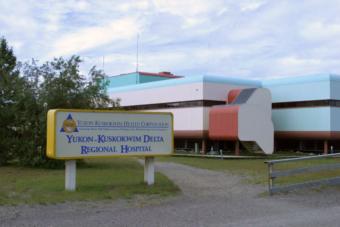
The Yukon-Kuskokwim Delta Regional Hospital. (Photo by Dean Swope/KYUK)

House District 38 Rep. Tiffany Zulkosky and District 20 Rep. Zack Fields released a report analyzing the potential effects on healthcare providers in Alaska should Gov. Mike Dunleavy push to repeal Medicaid expansion. The governor wants to reduce Medicaid spending by $271 million, an action that would potentially reduce what the federal government pays into it as well.

The report looks at what a potential repeal would do to Alaskans on Medicaid, as well as those covered by other health insurance providers. Released by the lawmakers on Feb. 19, the report says if the Medicaid expansion is restricted or repealed, health insurance premiums could rise as a result. Any decision to restrict or eliminate Medicaid expansion must come from the Legislature, according to an opinion from the nonpartisan Legislative Affairs Agency’s Division of Legal and Research Services.

The report notes that health care providers, such as hospitals, have to absorb the cost of any unpaid medical bills. To compensate for those costs, the providers must charge their insured patients more. This, in turn, leads to increased premiums.

Zulkosky vowed to protect Medicaid from budget cuts during her campaign last year. In a press release about this latest report, Zulkosky said that losing Medicaid coverage leaves people without health care options.

“Many delay receiving care because they cannot afford it, causing health conditions to worsen over time. Delaying care may result in an individual finding themselves in an emergency room with no way to pay,” said Zulkosky.

In addition to her legislative duties, Zulkosky is Vice President for Communications at the Yukon-Kuskokwim Health Corporation, the region’s biggest health care provider.

In a statement to KYUK, President and CEO Dan Winkelman said that “YKHC supports Medicaid expansion, and we are still analyzing the governor’s cuts.”

YKHC isn’t the only organization in the region that would feel those impacts. The report says that state and municipal governments could also face higher premiums for their employees. That’s already an estimated billion-dollar cost for state and local governments this year.

Zulkosky received her committee assignments this week. She is co-chair of the Health and Social Services Committee, while also serving on the Education and Energy Committees.

Clarification: This article has been updated to clarify that the decision to restrict or eliminate Medicaid expansion by a legislative effort is an opinion from the Legislative Affairs Agency’s Division of Legal and Research Services.

Can Bethel afford the costs of climate change?

Alaska’s temperatures are warming twice as fast as the global average, and rural Alaska is taking the brunt of the impacts. The costs from dealing with climate change are starting to become more visible in Bethel, a hub town for the Yukon-Kuskokwim Delta. There are also costs to the region’s lifestyle.
Yup’ik Elder Eula David is sewing qaspeqs for her grandchildren. She does this every year, sitting at a vintage Singer sewing machine at her window. David moved to Bethel in 1979 from Nunivak Island, but she was born in Scammon Bay. She has seen a lot of changes in her lifetime, and some of the biggest are tied to climate change.

“And great big change right now on the weather we don’t have, especially right now in December. We would have some 20-some below zero right back then; right now the weather didn’t even reach below zero yet, or zero. It feel like it cold, but it’s always mild,” David said.

Climate scientists in Alaska have documented what Eula David has seen in her life. For the past five years in particular, Bethel has had warmer winters. 2016 was the warmest year on record for the Yukon-Kuskokwim Delta and 2018 was the second warmest. The latest National Climate Assessment says that rural Alaska and Indigenous communities will face the brunt of climate change impacts. That applies to Bethel, the hub of the Y-K Delta, a region that’s home to the greatest number of tribes in Alaska. Peter Williams, Bethel city manager, was not surprised when he saw the assessment.

“When I read the report, I thought it was kind of ironic. Look out the window and thought it was happening here too,” Williams said.

Climate change is bringing new challenges to maintain Bethel’s infrastructure on a lean budget. It currently costs Bethel more than $1 million a year to maintain its gravel roads. That number could rise in the coming years when the longer thaws in winter erode the foundation of the roads faster, making it harder to repair them. And then there are the willow trees.

“I know we don’t regularly cut our willows back from the roads, but it just seems to me like the willows have certainly started to go crazy last three or four years, and I think it is because a longer growing season,” Williams said.

Warmer winters and late freeze-ups are causing expensive problems in the Yukon-Kuskokwim Delta. (Photo by Joey Mendolia/Alaska Public Media)

Other transportation challenges include the ice road that develops on the frozen Kuskokwim River. The river is taking longer to freeze. Mark Leary is a volunteer for Bethel Search and Rescue, and the group measures the ice every winter to make sure that it is safe enough for travel. People are relying more and more on air travel with the ice road taking longer to freeze.

“People stuck for days. Freight and mail is especially backed up. So people are, they have to, pushing the envelope of safety so that they can start traveling by their own means,” Leary said.

At the end of 2017, a family traveling by snowmachine drove into a marked open hole on the river on New Year’s Eve. Five people pulled themselves from the water and survived, but the driver did not. Leary fears that these types of accidents will happen more frequently as winters warm. Williams and Leary say that they haven’t changed how they operate so far, but climate change is always at the back of their minds now. For Elder Eula David, she knows that her descendants will face a different world.

“Maybe some of the animals that used to come around, like our food that used to come around in winter time, caribous and things, maybe it will be too warm (for) them. I don’t know, but it won’t be the same,” David said.

But she also says that part of the Y-K Delta’s way of life is adaptation and resilience. The region’s communities have come together for a series of meetings about climate change adaptation for the past couple of years, and the steering committee for the Adapt Y-K Delta initiative just released a draft of their plan in November. It is unclear when the committee will release its final plan, but when it does come out it will provide a blueprint for how the region plans to tackle climate change.

Additional reporting by Katie Basile and Joey Mendolia.


For more on how climate change is impacting transportation, communication and culture in the Yukon-Kuskokwim Delta, watch these in-depth profile videos of Bethel community members.

Eula David

[nectar_video_lightbox link_style=”play_button_2″ nectar_play_button_color=”Default-Accent-Color” image_url=”177109″ hover_effect=”zoom_button” box_shadow=”none” border_radius=”none” play_button_size=”default” video_url=”https://youtu.be/D7NzAjZJ2hk”]

Mark Leary

[nectar_video_lightbox link_style=”play_button_2″ nectar_play_button_color=”Default-Accent-Color” image_url=”177111″ hover_effect=”zoom_button” box_shadow=”none” border_radius=”none” play_button_size=”default” video_url=”https://youtu.be/jhA4eWgRi3o”]

Shane Iverson

[nectar_video_lightbox link_style=”play_button_2″ nectar_play_button_color=”Default-Accent-Color” image_url=”177112″ hover_effect=”zoom_button” box_shadow=”none” border_radius=”none” play_button_size=”default” video_url=”https://youtu.be/ctXK09sxhCQ”]

NovaGold stakes company future on Donlin Gold mine after major asset sale

The proposed mine could be one of the biggest in the world — if completed. (Photo by Katie Basile/KYUK).

NovaGold Resources is one of two international mining companies that have partnered to develop the proposed Donlin Gold mine, located in the Yukon-Kuskokwim Delta. In its latest quarterly report, NovaGold says that it recently sold a big mining project, which will free up some cash to spend on Donlin.

NovaGold is staking a lot on the success of the proposed Donlin Gold mine after selling a big asset last year: the Galore Creek project in British Columbia. That’s according to its latest quarterly report, which came out last month.
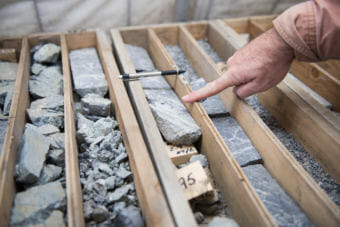
Donlin Gold will do more work to develop the mine this year, like collecting more rock samples — which means that they will need more money. All that comes with a price tag of $26 million for this year, and NovaGold’s share of that expense is $13 million.

Mélanie Hennessy, NovaGold’s vice president of corporate communications, said that by selling the project in British Columbia, NovaGold doesn’t need to raise more money to cover its expenses.

“In a financial market that might be more challenging, it gives us the opportunity to proceed and advance Donlin without having a need to go back to the market. And what that means: without having to issue shares or go back to our shareholders for a need of money,” Hennessy said.

NovaGold and Barrick Gold are the two companies trying to make the Donlin Gold mine happen. NovaGold is the smaller partner that doesn’t have a developed project yet, and the Donlin mine is a huge asset. Barrick Gold is the biggest gold mining company in the world, and it just completed a merger that made it even bigger.

The Donlin project cleared some major milestones last year. It received federal approval for its lengthy and expensive environmental review. It also got major state and federal permits, bringing the mine closer to development. But how close? The details on the timeline to finish all the permitting, technical, and engineering work before operating the mine are fuzzy.

“I don’t have a timeline,” Hennessy said.

It will cost a lot to develop the Donlin Gold mine. A 2011 feasibility study put the price tag at roughly $6.7 billion, but Barrick Gold and NovaGold are trying to bring that cost down. Hennessy said that selling the Galore Creek project, which had more copper than gold in its deposit, made sense for NovaGold and their shareholders. Hennessy said that NovaGold shareholders are more interested in gold investments.

NovaGold also applauded the local support for the Donlin project in its quarterly earnings call with shareholders. In that call, NovaGold Board Chairman Thomas Kaplan made a curious statement: he said that there is no opposition to the proposed mine. Twelve tribes in the Yukon-Kuskokwim Delta passed resolutions opposing the mine last year, but Hennessy said that Kaplan was referring to the tribes that participated in in the environmental review process that had wrapped up last year, as well as Donlin’s outreach efforts over the past decade. From those efforts, there has not been much broad opposition.

The Donlin Gold mine enjoys a lot of political support in Alaska, including from Gov. Michael Dunleavy, who said that Alaska is “open for business” for natural resource development. NovaGold’s top brass echoed Dunleavy’s “open for business” statement frequently in the earnings call.

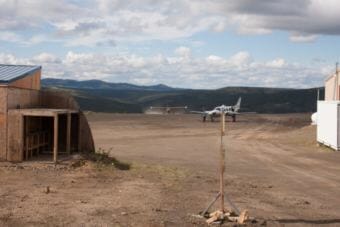
Meanwhile, the Alaska Department of Natural Resources is preparing for public comment and hearings over more permits for Donlin in the next couple of months. Those include permits for infrastructure like a road, fiber optic cable, a port, an airstrip and a 315-mile gas pipeline.

More than 130 Calista shareholder women voice dissent over Donlin mine

The site of the proposed Donlin gold mine would make it one of the biggest ones in the world (Photo: KYUK).
The site of the proposed Donlin gold mine would make it one of the biggest in the world (Photo credit KYUK).

More than 130 Calista shareholders signed a letter sent to the Calista Native Corporation protesting the proposed Donlin gold mine, and they are all women. Calista owns the subsurface rights to the mine, and is the regional corporation for the Yukon-Kuskokwim Delta.
The letter starts like this: “We are Indigenous women of the Calista region with strong physical, emotional, and spiritual ties to the people and the land. We are also Calista shareholders who are concerned with the development of the Donlin gold mine and how that will impact our salmon-spawning river.”

That river is the Kuskokwim, the primary food source for a region that relies heavily on subsistence for its diet. The Donlin mine could be one of the biggest in the world, if developed.

Bev Hoffman of Bethel is a long-time protester of the mine and led the effort to craft the letter and gather signatures. An advocacy meeting with some of Donlin’s critics gave her the idea to have only female shareholders sign the letter.

“Women of the earth have been just in this century, last century I should say, and this new century have been finding the voice. Indigenous people demanding the right. People of all colors and nationalities, and we see it right now today, and then here right along the Kuskokwim river we see it too,” Hoffman said.

Hoffman doesn’t like that Calista signed the lease with Donlin two decades ago without any shareholder input. They say that this letter will show Calista that not all of its shareholders are on board

“They say it’s going to be great for the region; I would welcome a vote from shareholders,” Hoffman said.

Fannie Black grew up in Bethel and also signed her name to the letter. While she doesn’t depend on the river for her dietary needs, she knows that many villages do.

“I don’t want that to risk, any environmental risks that might take those foods away from people. There’s a lot to be lost with that mine. Even if there aren’t any spills or anything, there’s still going to be some kind of environmental impact.”

Black has a degree in mechanical engineering and worked for some time in the oil and gas industry. That experience made her aware of the environmental risks from extraction industries, like oil, gas and mining.

Black also works for a workforce development organization so she also understands the economic opportunities that Donlin will bring to Alaska’s poorest region. But she says that the region could seize other opportunities within communities, such as investing more in local craftmanship like sewing furs or carving ivory.

Bethel is more than 100 miles down from the mine site. So far, many of the protests and resolutions against the proposed Donlin gold mine have come from the Lower Kuskokwim region, but quite a few of the signatures on the letter come from the villages closer to the proposed site: Aniak, Sleetmute, Napaimute, Crooked Creek, Chuathbulak and Stony River.

While Calista owns the subsurface rights to the mine, The Kuskokwim Corporation (TKC), which these villages belong to, owns the surface rights. Esther Diehl lives in Aniak. She’s both a Calista and TKC shareholder.

“It’s like, yeah, the river is a huge concern and anything that happens, the headwaters or the end of the river, it’s still going to affect the wildlife and the fish and game all the way to the ocean. This river may seem big and all, but it’s not all that big if it’s our lifeline,” Diehl said.

Calista defended its support for Donlin. The corporation says that its staff members also practice subsistence and have the same stake in the environmental health of the region.

“We waited until science and data showed that NEPA [National Environmental Policy Act] protections and regulations worked. Further, Calista continues to support the public comment process so that concerns and questions can be raised, and more importantly, be addressed,” it said in a statement.

Donlin Gold has pledged to build the mine as safely as possible. The company declined to comment on the letter, saying that it was between Calista and its shareholders.

A Brazil dam accident sparks questions over the safety of Donlin’s tailings dam

The proposed mine could be one of the biggest in the world — if completed. (Photo by Katie Basile/KYUK)

A tailings dam collapsed last month in Brazil, killing more than a hundred and fifty people. That accident raised fears among some residents in the Yukon-Kuskokwim Delta about the safety of the tailings facility and the dam that Donlin Gold plans to construct for its large gold mine. But Donlin says its design is much safer than the one that collapsed in Brazil.

The dam collapse in Brazil is a nightmare for the communities nearby. Even after the dam is fixed, residents will have to deal with decades of contamination. Articles about that accident made the rounds on Facebook in the Yukon Kuskokwim Delta.

“I watch the film, I watched the flooding, I watched the number of deaths and destructions, and it just sent fear into me because what if that happened and it could so easily happen [here],” said Beverly Hoffman, a Bethel resident who has opposed the Donlin mine for years. In her eyes, this latest disaster is just another example of why the mine shouldn’t be built.

Donlin wants to build one of the world’s biggest gold mines in one of the most remote parts of Alaska. The mine site is 10 miles from Crooked Creek, a village with a population of roughly 100.

The mine site also sits on a tributary of the Kuskokwim River. The river is the biggest food source for the Y-K Delta, where most people rely on subsistence.

And part of that mine would include a tailings dam that would hold the chemical-laced waste forever.

Donlin Gold spokesman Kurt Parkan says the tailings dam the company has planned is safe.

“We want it to be safe, we want to protect the environment, we want it to be absolutely the safest that we can do,” Parkan said.

How mines store waste is always a controversial subject, because that waste never disintegrates. The chemicals carry serious health consequences if released into the water and ground.

But there are a few major differences between the dam in Brazil and Donlin’s proposal. One is the actual design.

The Brazil dam used a design called an “upstream” tailings dam. That type is the cheapest and incorporates the tailings into the design.

Donlin is using what’s called the “downstream” method. It’s more expensive and is considered the safer design among mining experts. The dam is built with rock, instead of using tailings as part of the materials to build the dam. Parkan says Donlin’s design goes another step further..

“Considering the geography and the location and the type of the project, we have included the synthetic liner that’s not required. We’ve also included what we call dry closure which is the draining of the water so that the remaining is dry and covered by rocks and soil,” Parkan said.

Donlin’s proposed tailings dam will hold 412 million cubic meters of tailings, 32 times the amount of the Brazil mine. But the Donlin tailings will look like wet clay — never completely dry.

A Montana-based nonprofit has publicly criticized Donlin’s design in public comment. They think Donlin should use different methods that will dry out the tailings completely and then stack them within the dam. But those methods are even more expensive that Donlin’s current design.

Donlin already has to invest a lot of money into building the gold mine — more than $6 billion. Parkan says he “can’t answer” whether the more expensive methods preferred by the nonprofit were too cost prohibitive.

“There’s so many factors that go into operating the mine,” Parkan says.

The Army Corps of Engineers already signed off on Donlin’s design after its lengthy environmental review that finished last year. But Donlin still has to go through its dam safety certification with Alaska regulators. That will take two years. The state is not required to include the public in the process.

Nonprofit raises questions over recent Donlin state permits

The proposed mine would be one of the biggest gold mines in the world if completed. (Photo by Dean Swope/KYUK)  

Donlin Gold began the new year with two major state permits in hand for its proposed mine. One approves its reclamation plans, and the other is a waste management permit. But a Montana-based nonprofit group that participates in mine permitting across the U.S. thinks the company has room to improve.

These permits are among the last of the major state permits Donlin needs before it can start building its gold mine. The mine could be one of the biggest in the world, and would be located in the Yukon-Kuskokwim Delta. Donlin Gold spokesman Kurt Parkan says they expect to receive more big permits this year.

“We expect to get the right-of-ways [lease for the proposed pipeline] and land use permits. Those are the major ones for this year,” Parkan said.

But a nonprofit group said the design of the mine could be better.

“I do have concerns,” said Kendra Zamzow, who works for Center for Science in Public Participation, which helps communities throughout the mining permitting process.

As part of her job, Zamzow helped the tribe of Chuathbaluk throughout the lengthy federal environmental review for the Donlin mine that wrapped up last year. The nonprofit isn’t for or against the Donlin gold mine, and they say that overall Donlin has done a pretty good job designing the mine. But they’ve also submitted comments critiquing some of Donlin’s proposals throughout the permitting process, including the recently-issued state permits.

The two state permits deal with waste management, which is how Donlin plans to tackle waste rock, tailings, and waste leftover from mining operations. The permits also concern reclamation and financial bonding. Financial bonding is the money Donlin will pay up front for reclamation and water treatment.

Zamzow’s criticism focuses on Donlin’s tailings plan. Donlin will store its tailings in a facility behind a dam while the mine is running. Once the mine closes, Donlin will let the tailings dry out somewhat and then cover them with rocks and vegetation. Zamzow said there are safer, though more expensive, methods that she felt the state didn’t consider, like siphoning the water out from the waste completely before storing it.

“I felt like that could have been explored a little better. If not in the EIS, then the state,” Zamzow said.

Money is another concern for the nonprofit. Donlin had proposed $317 million to pay for clean up and treating the contaminated water at the site after it shuts down. After public comment, the Alaska Department of Natural Resources (DNR) raised the amount to $322 million to maintain an access road to the mine. Around $100 million of that will be put in a trust, similar to the structure of Alaska’s Permanent Fund. The rest of the money will be held in a bond for the state to use for reclamation should Donlin decide to pull out of the mine or declare bankruptcy before operations cease.

Dave Chambers is a colleague of Zamzow, and he says the money that Donlin has to pay for clean up isn’t enough because the state and Donlin didn’t budget enough for the indirect costs. He says that the state could bump the amount even more, by about 15 percent or $35 to 40 million.

Donlin’s Parkan defended the amount the company will pay and added that the state raised the amount of money in response to the nonprofit’s concerns.

“This is the amount that they all agreed was adequate to cover, and it’s going to be reviewed periodically anyway…so it can be adjusted at any point in time. This is not a fixed number that can’t change,” Parkan said.

Meanwhile, DNR opened public comment on some of the company’s infrastructure plans, and its proposal to lease a right-of-way for its 315-mile gas pipeline from Cook Inlet to its mine site. The next big milestone after those permits, Parkan says, is its dam safety certification. That can take as long as two years, and Donlin still has about 100 permits to get before it can began operating.

Site notifications
Update notification options
Subscribe to notifications