KSTK - Wrangell

KSTK is our partner station in Wrangell. KTOO collaborates with partners across the state to cover important news and to share stories with our audiences.

Low Stikine sockeye forecast could mean early subsistence closure

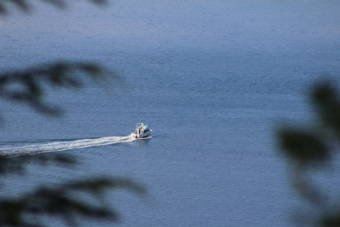
Boat leaving Wrangell, 2020. (Sage Smiley/KSTK)

Federal managers are warning that there may not be enough sockeye salmon to allow a full season of subsistence fishing on the Stikine River. That could lead to a premature closure of an important source of food in the Wrangell area.

Federal fisheries biologist Rob Cross manages the districts near Petersburg and Wrangell. He says the U.S. Forest Service doesn’t take these decisions lightly.

“Our goal certainly isn’t to close the subsistence fishery,” Cross said. “This year, we have a below average preseason forecast for sockeye. So basically, we just want to give harvesters a heads up and let them make an informed decision about where they’re going to focus their efforts this year.”

The preseason forecast for Stikine sockeye is 56,000 fish. That’s less than half of the 10-year average.

Cross says managing the subsistence fishery is a balancing act.

“Our primary goal is to maximize subsistence opportunity for these communities, because they really depend on the Stikine fishery,” he said. “But at the same time, we need to make sure that there’s a healthy stock for fish as well. So we’re basically just letting people know that there’s a possibility of a closure throughout the season.”

An early closure isn’t guaranteed. The Forest Service says it will be working with Wrangell’s tribe, the Wrangell Cooperative Association, to conduct harvest surveys throughout the summer.

This isn’t the first time in recent years that a low pre-season forecast has led the Forest Service to warn subsistence fishermen of a possible closure for sockeye harvest. In 2019, Wrangell District Ranger Clint Kolarich closed the subsistence sockeye fishery nine days before the set close date because of low escapement.

Cross says that possible closures to the sockeye subsistence fishery up the Stikine would not affect the coho subsistence fishery in the area.

The federal subsistence fishery for chinook salmon has been closed since 2017 due to low return numbers and mature fish being smaller than average.

Wrangell tribe helps keep thousands of pounds of toxic e-waste out of landfills

Old televisions await packing at WCA’s e-waste collection event, March 2021 (Courtesy Kim Wickman / WCA)

A Tlingit tribe in the Southeast community of Wrangell — the Wrangell Cooperative Association — has been working to recycle electronics to reduce e-waste. That helps keep potentially toxic materials from becoming hazardous waste on the island.
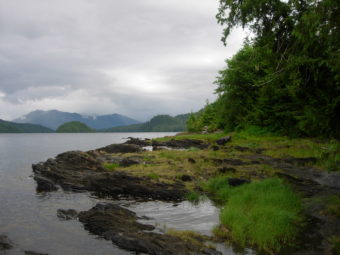
Waste from old laptops, televisions and other electronics can and should be recycled. But in an area like Southeast Alaska, any shipment of heavy old tech costs more than many individuals or companies can afford. Kim Wickman works for the Wrangell Cooperative Association, a federally recognized tribe. She says  piles of old electronics led to some questionable behavior.

“In the past, we’ve seen a lot of computers, computer towers, those type of things being shot at the shooting range, or maybe run over a few times out on a logging road, because people were trying to destroy any information they had on them. They didn’t know what to do with them,” she said.

Electronic waste is chock-full of harmful and toxic chemicals: heavy metals and flame retardants. When obsolete tech ends up in landfills, it harms air, soil and water quality, and it can cause a variety of issues for humans and animals in the area.

So four years ago, Wickman says Wrangell’s tribe began asking people to hand it over for free.

“We realized that this was something we could really pull off in Wrangell, and it could really help us out,” she said.

The collection event they held in March was the tribe’s third in four years.

“In the past,” Wickman said, “We have actually sent out invitations to commercial entities to help them package up their electronic waste separate from the actual e-waste event. And we didn’t do that this year, because we just didn’t have as many volunteers as we normally would, and we just didn’t want to push it with COVID.”

Still, she says they stacked 15 pallets to be shipped off the island. That’s 6,518 pounds of potentially toxic e-waste that could’ve ended up in a landfill — or worse.

Junk electronics are lying around everywhere. Wickman even had some of her own to deal with.

“I had a Kindle I dropped off,” she said. “And I had a printer I dropped off. A few things.”

All the waste gets barged down to Kent, Washington, where it is sorted, stripped, and sent along to other recycling facilities.

Total Reclaim is a firm that recycles e-waste from all over the Pacific Northwest. Gary Smith manages the Alaska accounts.

“Just out of my facility here in Alaska ,you know, what comes in one door it goes out the other that I send down to Kent — we usually average 1.2 million pounds a year,” Smith says.

Smith adds he didn’t think much about recycling before he started working in the business.

“I’ll be honest with you,” he said. “Before I came to work for Total Reclaim, I didn’t know or really wasn’t concerned about recycling and reuse. I was wasteful, just like the general public. But once I saw what was going on, and the amount of rural communities we helped over the years, and basically just learning the science of it — it changed my whole direction on life. I see it as a mission now instead of just a job.”

The tribe isn’t just working on e-waste. It’s also actively working to recycle old fishing gear. Wickman says these efforts cost thousands of dollars.

“One year we’ll do an electronic waste event. And then the following year, we’ll try and do a gillnet recycle shipment. Both are very spendy projects. So we can’t do them every year or do them both in the same year,” she said.

Wickman says not to despair if people missed the recent e-waste collection.

“Hang on for a little while. Just put it in a closet somewhere and hopefully in 2023, we will be having an e-waste event,” she said.

Tongass holds more than 40% of all carbon stored by national forests

Tongass National Forest near Ketchikan, Alaska. (Creative Commons photo by Mark Brennan)

New research reaffirms the global importance of Southeast Alaska’s temperate rainforest for combating the effects of climate change. That’s according to data released Tuesday by a coalition of environmentalists and tribes opposed to old growth logging in Tongass National Forest.

Oregon-based researcher Dominick DellaSala says protecting forests is key to maintaining their function as a carbon sink.

“There’s no magic wand,” DellaSala said. “We only have a big vacuum cleaner that we can [use to] just suck CO2 out of the atmosphere and store it safely. Forests are doing that for us.”

He and his colleagues at the Woodwell Climate Research Center analyzed carbon data and found that the Tongass National Forest holds 44% of all the carbon stored by the United States’ national forests.
“Basically, when you go through an old growth forest, you’re walking through a stick of carbon that has been built up into the forest for many, many decades. Centuries,” DellaSala said. “And the largest trees in those forests store about 50% of the above ground carbon, so they are enormously important from a carbon standpoint.”

Trees store carbon by using photosynthesis to transform carbon dioxide from the air into food, which then fuels tree growth.

DellaSala introduced the findings Wednesday at a press conference organized by the Southeast Alaska Conservation Council, a Juneau-based conservation group opposed to clear cuts.

Exempting Tongass from the Clinton-era Roadless Rule was widely supported by state leaders and Alaska’s congressional delegation, who say it hindered resource development on federal forestlands. The state of Alaska recently joined a federal lawsuit seeking to oppose efforts to overturn the Trump administration’s exemption for the Tongass.

But tribal president Joel Jackson of the Organized Village of Kake added that the erosion control that healthy forests provide is key to sources of subsistence food from fish to wild game.

“My focus has always been the protection of the Tongass old growth — the remaining timber — for providing shade and pristine water for our salmon to return to the streams,” Jackson said. “That’s the most important thing to me because our life is salmon. We rely on being able to put away enough salmon for the winter — for a whole year until the salmon return. That’s our people’s main staple.”

Salmon returns to Southeast Alaska have plummeted in recent years. Last year’s commercial harvest was one of the lowest on record.

DellaSala was one of 111 scientists to sign a letter earlier this month urging the Biden administration to protect old growth and roadless areas of Tongass National Forest as part of its climate plan expected to be presented at the United Nations 2021 Climate Change Conference in November.

In Wrangell, Kaats’litaan Dancers honor Vietnam Vets

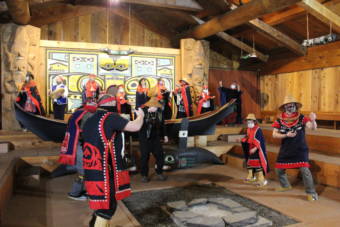
The Wrangell JOM Kaats’litaan Dancers perform in Chief Shakes House. (Sage Smiley / KSTK)

This week marks 48 years since the last U.S. combat troops left Vietnam after the Vietnam War. A Native dance group from Wrangell joined a virtual event to honor veterans of the conflict.
Wrangell’s Johnson-O’Malley Kaats’litaan Dancers emerged, back-first, from behind the decorated cedar curtain at the front of the Chief Shakes Tribal House.

Arms bent, they swayed and stepped in time with the drums and rattles of their accompanists, the Wolf Troupe.

This was their entrance dance, part of a performance by the Wrangell dancers to honor military service members on Vietnam Veterans Day.

Luella Knapp is a council member of Wrangell’s local tribe, the Wrangell Cooperative Association. She said she saw this performance as a way to honor veterans of the Vietnam War who were not given a proper welcome home.

“Today with this ceremony,” Knapp said, “We are given the chance to open our hearts to you — you have always been in our hearts and prayers. We wanted to show you our utmost respect by performing for you today.”

The Wrangell dancers joined other Native groups from around the state — and as far away as Standing Rock, North Dakota — in an all-day virtual event recognizing Vietnam vets with Native drumming, song and dance.

The event was organized by the Southeast Intertribal Collective.

As part of their presentation, Wrangell’s dancers performed the welcome song. Women in the group moved their hands in half-circles, palms up, gesturing towards their hearts — welcoming the vets into their hearts.

While the dance group often performs Tlingit songs and dances, dance troupe members come from a variety of Indigenous backgrounds. The name of the dance troupe — Kaats’litaan —  means “Old Willow Town” and refers to the old Wrangell village site about 15 miles south of present-day Wrangell.

Before their exit, the dancers also performed a Tsimshian war cry, which they performed with the permission of Angoon elder Matthew Fred.

Other full performances from the event can be seen at the Southeast Intertribal Collective page on Facebook.

State data shows 2020 Southeast salmon harvest was among worst on record

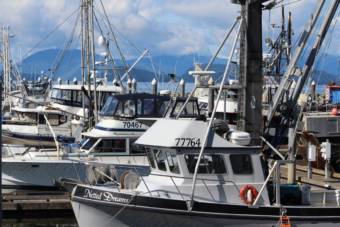
Boats in Wrangell’s Heritage Harbor.(Sage Smiley / KSTK)

special report released in March paints a stark picture of 2020’s salmon harvest in Southeast Alaska.

“Overall, it was one of the lowest harvests we’d seen, I think since the 70s,” says Lowell Fair, the Southeast regional supervisor for the state Fish and Game department’s commercial fisheries division.

It was already clear from preliminary reports that last year’s salmon season was a rough one. But just how rough?

For sockeye, the harvest was the second lowest since 1962 — that’s just a couple of years after Fish and Game was formed and started collecting data.

The king harvest was among the bottom five harvests since the early 1960s as well.

Coho and pink harvests came in stronger than kings and sockeye, but were still among the lowest years in recent memory, ranking 48th and 53rd since 1962, respectively.

Fair says Fish and Game doesn’t have an answer for the almost 60% drop in salmon harvest between 2019 and 2020. It could be any number of factors, at any part of a salmon’s life cycle.
“Marine survival [issues] is what our biggest guess would be,” Fair explains, “But that’s always hard to pinpoint, because we just don’t have the funding to do the research to really look at those kinds of studies.”

If there’s a silver lining, it might be the department’s forecast for 2021 pink harvest, which is projected to be average. In its report, Fish and Game doesn’t forecast salmon returns to the region for any species besides pinks.

That’s because pinks are the only species Fish and Game has enough data on to make a forecast.

“There’s just so much uncertainty already in survival, then when you have uncertainty in the data, that makes it just problematic to begin with,” Fair says.

He adds that Fish and Game manages all five species based on what comes back.

“We just don’t have the money to research why that amount came back,” Fair said.

But the numbers Fish and Game does have say pinks should come in a bit better than last year.

“Overall, we’re expecting a better return — better run next year to just Southeast,” Fair explains.

With some digging, putting together forecasts from hatcheries, sport fisheries, and intergovernmental partnerships with Canada, he adds that 2021 might just be better for all five species.

“I mean, it was one of the lowest overall salmon salmon harvests we had seen since I think the early 70s,” Fair said. “So I would hope so. And not only was that the case, but prices were down. And so it was really tough on fishermen.”

Fish and Game hasn’t finalized ex-vessel prices for salmon in Southeast last year. Preliminary reports show about a 30 percent decrease in per-pound price for sockeye, pink, and chum compared to 2019, and a slight rise in price for kings and coho. The combined low catches and low prices led Southeast communities to seek a disaster declaration for the 2020 salmon season.

Update: Human remains found in Port Protection man’s burned home

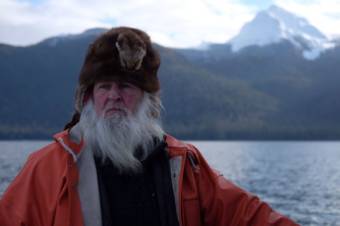
Gary Muehlberger (Courtesy Mickey Ramos)


Update — March 26, 2021, 1:54 p.m.

The State Medical Examiner confirmed Thursday that Gary Muehlberger died in the fire that consumed his home earlier this month. State trooper dispatch adds that the 75-year-old’s next of kin have been notified.

Updated story — March 23, 2021, 7:57 a.m.

Alaska State Troopers have sent human remains found in the burned-out home of Port Protection resident Gary Muehlberger to the state medical examiner’s office for identification.

A trooper dispatch Monday said the state’s deputy fire marshal ruled the blaze that destroyed Muehlberger’s home was an accident. Muehlberger has not been seen since before the fire.

He was featured as a cast member of the National Geographic reality TV show “Life Below Zero: Port Protection,” which chronicles daily life for residents of the remote community on the north end of Prince of Wales Island in Southeast Alaska.

Residents of Port Protection reported 75-year-old Muehlberger’s death Thursday (March 18). “Port Protection” show producers and the official show page offered condolences Thursday afternoon as well.

A spokesperson for the State Troopers added Monday that next of kin are being kept apprised of the situation.

Original story — March 19, 2021, 2:22 p.m.

A Port Protection man is feared dead following a fire on Wednesday that destroyed his home on Prince of Wales Island.

State troopers said Friday that rough weather has delayed their investigation into the fire that consumed the home of Gary Muehlberger. They have not confirmed his death or released details of the fire.

Muehlberger was featured as a cast member of the National Geographic reality TV show “Life Below Zero: Port Protection,” which chronicles daily life for residents of the remote Southeast Alaska community of around 60 people. The season finale of the show aired the day before Wednesday’s fire.

Site notifications
Update notification options
Subscribe to notifications