Northwest News Network

These priests abused in Native villages for years. They retired on Gonzaga’s campus.

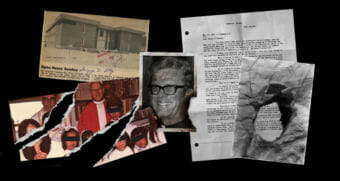
(Illustration courtesy of Reveal)This story was produced by Reveal from The Center for Investigative Reporting, a nonprofit news organization. Get their investigations emailed to you directly by signing up at revealnews.org/newsletter.

This story was produced in partnership with the Northwest News Network.

Part 1: The Story

On the surface, Father James Poole seemed like the cool priest in Nome, Alaska. He founded a Catholic mission radio station that broadcast his Jesuit sermons alongside contemporary pop hits. A 1978 story in People magazine called Poole “Western Alaska’s Hippest DJ … Comin’ at Ya with Rock’n’Roll ’n’ Religion.”

Behind the radio station’s closed doors, Poole was a serial sexual predator. He abused at least 20 women and girls, according to court documents. At least one was 6 years old. One Alaska Native woman says he impregnated her when she was 16, then forced her to get an abortion and blame her father for raping her. Her father went to prison.

Like so many other Catholic priests around the country, Poole’s inappropriate conduct with young girls was well-known to his superiors. A Jesuit supervisor once warned a church official that Poole “has a fixation on sex; an obsession; some sort of mental aberration that makes him see sex everywhere.”

But the last chapter in his story reveals a new twist in the Catholic abuse scandal: Poole was sent to live out his retirement years on Gonzaga University’s campus in Spokane, Washington.

For more than three decades, Cardinal Bea House on Gonzaga’s campus served as a retirement repository for at least 20 Jesuit priests accused of sexual misconduct that predominantly took place in small, isolated Alaska Native villages and on Indian reservations across the Northwest, an investigation by the Northwest News Network and Reveal from The Center for Investigative Reporting has found.

A trove of internal Jesuit correspondence shows a longstanding pattern of Jesuit officials in the Oregon Province—an administrative area that included Washington, Oregon, Montana, Idaho and Alaska—privately acknowledging issues of inappropriate sexual behavior, but not releasing that information to the public, which avoided scandal and protected the perpetrators from prosecution.

When abuse was discovered, the priests would be reassigned, sometimes to another Native community.

Once the abusive priests reached retirement age, the Jesuits moved them to Cardinal Bea House on Gonzaga’s campus or another Jesuit residence, to comfortably spend the rest of their lives in relative peace and safety. The university administration did not respond to requests for an interview to answer whether the administration or student body were aware of the presence of known sexual offenders on campus.

Situated on Gonzaga’s campus, between the university’s business school and the St. Aloysius Rectory, Cardinal Bea House played host to at least 20 Jesuit priests accused of sexual abuse.
Situated on Gonzaga’s campus, between the university’s business school and the St. Aloysius Rectory, Cardinal Bea House played host to at least 20 Jesuit priests accused of sexual abuse. (Photo by Emily Schwing for Reveal)


The last known abusive priest was moved out of Cardinal Bea House in 2016, Jesuit records show. 

Father John Whitney, the former leader of the Oregon Province who ordered Poole to move into Cardinal Bea House, said the Jesuit order is obligated to provide for priests in retirement. He said it was the only facility in the province where past offenders like Poole, then in his 80s, could be contained effectively while also receiving necessary medical care. 

Poole resided at Cardinal Bea House from 2003 to 2015. If he had been allowed to live independently, without church oversight, he surely would have abused more people, even at his advanced age, Whitney said in an interview.

The house, Whitney said, was “a retirement community where he could be monitored.”

In a pair of depositions in 2005, Whitney said he did not inform Gonzaga administrators or police in Spokane about Poole’s history after moving him into Cardinal Bea House. A Spokane Police Department spokesperson said they had not received any reports, either from Gonzaga or the Jesuit order, about allegations against any residents of Cardinal Bea House.

Non-abusing Jesuits also lived at Cardinal Bea House, but there were specific “safety plans” for abusers that banned sexually abusive priests from commingling with students. The Oregon Province would not release copies of the plans. While we learned of no reports of residents abusing Gonzaga students, the restrictions were not rigorously enforced. 

In a deposition in one of the several lawsuits filed against him, Poole said he regularly went to the school library and basketball games. Poole said he met with a female student alone in the living room of Cardinal Bea House when she came to interview him for a report on Alaska. Student journalists and filmmakers in 2010 and 2011 were also permitted to interview residents, including Joseph Obersinner, who worked in Native communities in Montana, Washington and Idaho. He was accused of sexual misconduct against a minor.

“We love being right in the middle of campus,” Obersinner told the school’s student newspaper. “It’s a blessing to see the active energy and happiness of youth every day.”

A view of the Gonzaga University campus from Cardinal Bea House.
A view of the Gonzaga University campus from Cardinal Bea House. (Photo by Emily Schwing for Reveal)


Cardinal Bea House is a modest low-rise brick building, with large windows in front and a small carport behind. It resembles an unremarkable office building, save for the white statue of an angel-winged saint standing guard over the front entrance. On a recent crisp autumn day, a prankster had slipped a hand-rolled cigarette between the statue’s fingers.

While the building appears on campus maps and is listed in the campus directory, it’s not officially part of the private Jesuit university. Cardinal Bea House is owned by the Jesuit order of the Catholic Church.

Poole was joined at Cardinal Bea House by other priests whose abuse was known, often for years, by the Jesuit order.

Father James Jacobson, sent there in the mid-2000s, was accused of sexual abuse by members of the Alaska Native community of Nelson Island. He claimed he never forced anyone to have sex, saying in a deposition that he had consensual sex with seven Native women. He admitted to fathering four children and using church funds to hire prostitutes in Anchorage and Fairbanks when he was principal of a Jesuit boarding school in Glennallen.

Another priest, Henry Hargreaves, accused of sexually assaulting young boys, was sent to Cardinal Bea House by 2003, and subsequently allowed to lead prayer services in at least four Native American communities on two reservations in Washington state.

While Cardinal Bea House appears on Gonzaga campus maps and is listed in the campus directory, it’s not officially part of the private Jesuit university.
While Cardinal Bea House appears on Gonzaga campus maps and is listed in the campus directory, it’s not officially part of the private Jesuit university. (Graphic by Gabriel Hongsdusit/Reveal)


The abusive Jesuits at Cardinal Bea House were part of the Oregon Province’s outsized problem with sexual misconduct. The province had 92 Jesuits accused of sexual abuse, by far the most of any province in the country, according to data we compiled from church records, a database maintained by advocates for sex abuse victims, and information released earlier this month by the Jesuits. In addition, about 80 percent of accused abusers worked in Native communities in the Oregon Province.

Poole has been described as charismatic, outgoing and narcissistic, so he was perfectly suited for his role as the voice of KNOM, the radio station he founded in 1971. Elsie Boudreau, an Alaska Native, was a station volunteer and one of Poole’s victims. From the time she was 10 until she was 16, she volunteered at KNOM.

Boudreau said in an interview that when she was 11 or 12, during a Saturday music request show in which they were alone in the studio, Poole would kiss her on the lips and fondle her, something she didn’t realize was wrong until she was much older. He also made her sit on his lap and lie on top of his body.

For Boudreau, it was a slap in the face that Poole lived out his retirement comfortably until he died early this year. “To me, what that says is they are taken care of,” Boudreau said. “They are protected by the Catholic Church, when the victims were never protected.”

Continue to Part 2: The Reveal

Part 2: The Reveal

(Graphic by Reveal)
(Graphic by Reveal)


The Jesuits’ deep roots in Native communities

The Catholic Church was deeply embedded in the Native communities of Alaska and Indian reservations in the Northwest. In the early 1900s, the Jesuits had established a school and an orphanage in Elsie Boudreau’s hometown, the predominantly Alaska Native community of St. Mary’s in the Yukon-Kuskokwim Delta.

Jesuits, officially called the Society of Jesus, are a Catholic religious order founded in the 1500s. While Jesuits can work in various roles from parish priests to teachers, the order is known for its academic and socially conscious bent. There are more than 100 Jesuit high schools, colleges and universities in North America.

Jesuit priests were formidable figures in small Native villages, presiding over daily life from Mass to marriages, baptisms to burials; even teaching catechism lessons, where some of the abuse of the youngest victims took place. Boudreau said she viewed her Catholicism as more central to her identity than being Yup’ik. That religious identity was shattered by her abuse.

“The whole premise behind the Catholic Church and their mission with the Native people, with indigenous people, was to strip them of their identity,” Boudreau said. “And so sexual abuse was one way. I think it’s intentional when you have an institution that is aware of problem priests, perpetrator priests, and moves them to places where they believe that people are ‘less than,’ where they believed the people there would not speak out.”

In 2002, two other abuse victims in Boudreau’s community filed a lawsuit against the church. Learning of the suit from a news story, Boudreau, then in her early 30s, had a shock of recognition. She, too, had suffered abuse, and no longer wanted to remain silent.

After going public with her story of abuse, Elsie Boudreau (center) became an advocate for other survivors in Alaska Native communities through her nonprofit Arctic Winds Healing Winds. (Photo by Emily Schwing for Reveal)


Boudreau reported her abuse and was deeply unsatisfied with the response. The region’s presiding bishop eventually invited her to a meeting, but Boudreau said he didn’t seem to understand how the abuse had affected her life.

“It was very clear he didn’t care about what happened to me,” Boudreau said. “He didn’t acknowledge that little girl who was hurt and say, ‘I’m sorry this happened to you, what can I do?’ Instead, I became a liability.”

Yet, Jesuit leadership had known about James Poole’s behavior for longer than Boudreau had been alive. In a 1960 letter to a Jesuit official, local Jesuit leader Segundo Llorente fretted over Poole’s conduct. Poole regularly had long, one-on-one conversations with young girls about sex, Llorente wrote. Llorente’s letter speculated that Poole, “has a fixation on sex; an obsession; some sort of mental aberration that makes him see sex everywhere. Some think that may be (sic) he is projecting outwardly what is eating him inwardly … he is deliberately placing himself at all times in dangerous situations.”

There might have been some personal insight in those words. The names of both Llorente and the Alaska church official with whom he was corresponding, Father Paul O’Connor, appeared on a list released by the Fairbanks Diocese in 2009 of priests accused of sexual misconduct.

Despite Llorente’s warning, Poole’s abuse of minors and young women in Alaska went on for decades, according to attorneys who represented clients, as well as letters from church officials and other court documents. At least one victim accused him of rape.

In another letter from 1986, which has not previously been made public, Bishop Michael Kaniecki of Fairbanks wrote to Archbishop Francis Thomas Hurley of Anchorage: “Hopefully, my letter will nip this mess in the bud. Tried to cover all bases, and yet not admit anything.”

In 1988, Poole was removed from his position at KNOM after young women who had volunteered at the station wrote letters to the bishop in which they accused Poole of sexual misconduct.

The following year, Father Frank Case, the head of the Oregon Province, endorsed Poole for a new position. Case is currently vice president at Gonzaga, an adviser to the school’s president, and chaplain for the school’s nationally ranked men’s basketball team, the Bulldogs.

He wrote a letter to the Catholic chaplains association backing Poole’s application to become a chaplain at St. Joseph Medical Center in Tacoma, Washington.

“(Poole) is a Jesuit priest in very good standing, and it is my strong expectation that he will serve in such a ministry in a manner that is both generous and effective,” Case wrote. Poole got the job, working at the hospital until 2003.

In a 2008 deposition, Case said he did not review Poole’s personnel file before writing the letter because he had no indication of misconduct. In a statement through Gonzaga University’s public relations office, Case said he did not have access to Poole’s personnel file.

It wasn’t until 1997, 37 years after Llorente’s letter of caution, that church officials finally came to see their Poole problem as critical. That December, the bishop of Fairbanks sent a letter to the head of the Oregon Provinceat least the third provincial to deal with Poole’s sexual misconduct. “Unfortunately, more skeletons keep falling out of the closet … if we do not make a clean cut with Poole, it could jump up and bite us,” he wrote, noting a potential whistleblower was threatening to publicly expose the extent of Poole’s wrongdoings.

The following year, the bishop sent another letter to the province head urging Poole’s old sermons and ministerial messages be removed from the KNOM’s airwaves entirely. “(We could) end up with a public scandal and a possible law suit (sic),” the letter reads. “It is my fear … that if the wrong person hears Jim’s voice anywhere, it might just be the straw that breaks the camel’s back.”

Those fears were prescient. In 2003, the same year Poole was forced to retire to Cardinal Bea House, Boudreau became the first person to sue Poole and the church and not withhold her name from the public.

It was Boudreau’s only avenue of redress since the statute of limitations had run out on prosecuting her claim in criminal court. At the time, Alaska had a five-year time frame for prosecuting sexual abuse of minors. She’s one of over 300 Alaska Native victims of child sex abuse by clergy.

In a deposition for the lawsuit, Poole admitted abusing Boudreau. He denied ever raping anyone. He justified his actions with Boudreau and other victims because they fell short of sexual intercourse. “I thought I was bringing love into the life of other persons,” he said.

Gravestones at the Mount St. Michael cemetery in Spokane, Washington, where James Poole is buried amid 54 other Jesuits also accused of sexual abuse.
Gravestones at the Mount St. Michael cemetery in Spokane, Washington, where James Poole is buried amid 54 other Jesuits also accused of sexual abuse. (Photo by Emily Schwing for Reveal)


Boudreau’s suit was settled in 2005 for $1 million. It was followed by at least five other lawsuits specifically naming Poole and accusing him of widespread abuse.

Hundreds of other suits followed, naming dozens of other sexually abusive priests active in the Oregon Province. The Jesuits settled all of this litigation for a reported $166 million, the costs of which forced the province to declare bankruptcy in 2009. It was the third-largest settlementin Catholic Church history.

Stories like Poole’s echo across Alaska Native communities. St. Mary’s has just 500 residents, but at least 15 priests accused of sexual abuse were stationed there between 1927 and 1998. It was so pervasive that Boudreau says at least two of her seven siblings and two of her cousins were also sexually assaulted by Jesuit clergy.

The names of religious and lay people accused of abuse who lived in Alaska at some point in their tenure with the church must be listed and published every year by the Fairbanks Diocese as part of the 2010 bankruptcy settlement. As of late October, the diocese listed 46 people.

One man on the list is the aforementioned Father James Jacobson, accused of abuse in 1967 by members of the Alaska Native community of Nelson Island. In a letter at the time, the Jesuit superior in Alaska, Jules Convert, said he wasn’t sure of the veracity of the allegations against Jacobson because the people of Nelson Island “are not yet advanced enough to give impartial and true testimony.”

Jacobson was sent into retirement at Cardinal Bea House by 2005. Convert was also accused of sexually abusing over a dozen young boys in Alaska.

Continue to Part 3: The Coverup

Part 3: The Cover-up

(Graphic by Reveal)
(Graphic by Reveal)


‘I have to take responsibility for this’

In 2002, John Whitney was installed as the leader of the Oregon Province. He had to deal with a flood of accusations against priests in the province, starting days after taking the position. It was a situation, he said, for which his prior training had not adequately prepared him.

A year later, Elsie Boudreau filed her lawsuit, and Whitney took action against James Poole. He immediately ordered Poole to stop celebrating Mass and sent him directly to Cardinal Bea House. “You are not to have any unsupervised contact with any minors nor are you to meet alone with any women,” Whitney wrote.

Whitney said Cardinal Bea House was the only place where Poole could be monitored, but Poole moved freely throughout campus and, at least on one occasion, met alone with a female student.

Whitney told us in a recent interview that the order didn’t contact the local police department because Poole, and other priests with accusations against them, had not been criminally charged.

Gonzaga University wouldn’t answer questions about whether top officials knew about abusive priests at Cardinal Bea House. University officials declined multiple requests for interviews over a six-week period. Several top university officials, however, held leadership roles in the Jesuits’ Oregon Province as the sex abuse scandal unfolded.

Now a self-described “simple parish priest” in Seattle, Whitney is still processing his role in the crisis.

“I think some of the people deserved to be in jail,” Whitney said. “We knew we couldn’t put them in jail. I felt we had a responsibility to watch over them and that’s what we tried to do. Now, were sometimes the jailers overly beneficent, overly kind? Maybe. I don’t know. It’s hard to be a jailer.”

Whitney was candid about what he owed to survivors and their families. “I have to take responsibility for this, personally. It can’t be something that is delegated to someone else,” he said. “They deserved to confront me.”

The marker for where James Poole’s remains are inurned at Mount St. Michael in Spokane, Washington. Over the course of his life, Poole was accused of sexually abusing at least 20 women. (Photo by Emily Schwing for Reveal)


Asked if he thinks Poole is in hell, Whitney said he believes Poole is in a sort of purgatory. “What I believe purgatory to be is that we all have to be purged of the things we hold onto,” Whitney said. “In being purged of those things, we have to experience what we put others through.”

Whitney said the church needs to come to a public reckoning, an opening up of the archives to show it is serious about stamping out abuse. The recent grand jury report out of Pennsylvania, which showed decades of abuse kept hidden from public view by the church, is work that should have been done by the church itself, he said.

Earlier this month, Jesuits West, the new province created with the 2017 merger of the Oregon and California provinces, voluntarily released the names of priests accused of sexual misconduct with minors or “vulnerable adults.” But the new list omits at least 13 priests previously accused publicly in lawsuits and bankruptcy documents.

Tracey Primrose, a spokeswoman for Jesuits West, said more names could be added in the future after an external review due to be completed by spring, but did not explain the omissions.

Continue to Part 3: The Aftermath

Part 4: The Aftermath

(Graphic by Reveal)
(Graphic by Reveal)


The Jesuits have a new place to send abusers

There are no longer any known abusive priests at Cardinal Bea House. In the past couple of years, they have been relocated south to the Sacred Heart Jesuit Center in Los Gatos, California.

Sacred Heart is a former training school, where some of the abusive priests began their preparation for Jesuit life decades ago. The facility is hidden behind a hilltop winery, which also used to be owned by the Jesuits and was used to produce Communion wine. The order stopped its wine production in 1986 and the winery is now operated by a secular company.

The goal of the reshuffling, John Whitney said, was to place the priests in a more secure and isolated location. Since many of the offending Jesuits are older and declining in health, Sacred Heart was also a place where they could receive better medical care.

But Sacred Heart has problems of its own. By moving admitted sexual offenders into a facility that also services vulnerable people, it created an environment where predators had space to commit abuse.

In 2002, two mentally disabled men working as dishwashers at the facility received a combined $7.5 million settlement from the order for decades of sexual abuse by Jesuit priest Edward Thomas Burke and Brother Charles Leonard Connor. After a friend of one of the victims went to police, both men were convicted and required to register as sex offenders.

The abusive priests of Cardinal Bea House have been sent to Sacred Heart Jesuit Center in Los Gatos, California. But Sacred Heart has been the site of sexual misconduct.
The abusive priests of Cardinal Bea House have been sent to Sacred Heart Jesuit Center in Los Gatos, California. But Sacred Heart has been the site of sexual misconduct. (Photo by Emily Schwing for Reveal)


The Jesuits also settled a separate lawsuit for $1.6 million after an abused priest, James Chevedden, killed himself.

He, too, was sexually abused by Connor when he was sent to Sacred Heart after suffering a mental breakdown. When Chevedden learned Connor was returning to Sacred Heart, and that other abusive clergy were going to be sent there, he asked to be moved. When his request was denied, he killed himself, according to the lawsuit filed by Chevedden’s father.

California’s database of sex offenders only lists one person residing at Sacred Heart, Gary Uhlenkott, a Jesuit priest and former Gonzaga University music professor who was sentenced to six months in jail in May after pleading guilty to possessing child pornography. However, the list released earlier this month of priests accused of sexually abusing minors shows at least seven currently living at Sacred Heart.

James Poole died in March at Sacred Heart. His remains were sent back to Spokane, where they were inurned at the Jesuits’ grassy cemetery on the outskirts of town.

While he was stationed at Cardinal Bea House, Poole’s sole responsibility was to maintain the cemetery grounds.

There, Poole’s remains rest amid 54 other Jesuits who were also accused of sexual abuse. They’re outside the gate of a K-12 school.

The carefree voices of children the same age as Elsie Boudreau when she was abused float over the grounds during recess.

This story was edited by Andrew Donohue and Narda Zacchino and copy edited by Stephanie Rice.

Emily Schwing can be reached at emily@nwnewsnetwork.org, Aaron Sankin can be reached at asankin@revealnews.org and Michael Corey can be reached at mcorey@revealnews.org. Follow them on Twitter: @EmilySchwing, @asankin and @mikejcorey.

Hackers are selling Alaska Air, other airline miles for cheap on the dark web

Tech writer Paul Bischoff learned the extent to which this is happening when he went looking for black market airline miles and points in the anonymous, hidden part of the internet known as the dark web.

“It’s basically like Craigslist,” Bischoff explained. “There are a bunch of listings for all kinds of stuff.”

Bischoff discovered that piles of Alaska Airlines miles could be bought in exchange for bitcoin or another difficult-to-trace cryptocurrency called Monero. Hackers most commonly listed Delta SkyMiles and British Airways points.

“Usually, people won’t find out that their accounts have been hacked until many months after when they are ready to spend down those points,” Bischoff said in an interview Thursday.

Bischoff, based in Victoria, wrote about how you can protect yourself in an article for the online site Comparitech. He advises you choose a strong, unique password for your frequent flier account and follow common sense cyber hygiene practices.  He also suggested protecting your airline loyalty account number by shredding boarding passes after flights and not using public wifi hotspots to access your account.

In a brief emailed statement, the PR department at Seattle-based Alaska Airlines said the carrier is aware of unpermitted trafficking in mileage plan miles.

“Our fraud team monitors the dark web and takes action to protect our customers’ accounts whenever possible,” the statement read. “This is a good reminder for our customers to monitor their frequent flier account and if you ever see unusual or suspicious activity, contact us right away.”

The fine print of all major frequent flyer membership agreements includes a clause that prohibits selling miles for cash. If an airline discovers you using stolen miles or selling miles, it reserves the right to wipe out your entire account balance.

In 2015, American and United Airlines notified thousands of customers that their frequent flyer accounts may have been compromised by hackers. Airline spokespeople said the carriers would replace any stolen miles in those cases.

Bischoff said he doubts the buyers of stolen air miles redeem them to book flights or hotels because those purchases require a person to show picture ID when checking in.

“Usually they are used to redeem different types of rewards,” Bischoff explained. “Gift cards are especially popular because they are difficult to trace.”

Bischoff was not able to confirm how the individual purveyors he found on three dark web marketplaces obtained the air miles they offered for sale. His leading theory is that hackers take over personal accounts by tricking owners to reveal their account numbers and passwords with “phishing” emails (i.e., a fake email inquiry from airline) or through a wholesale data breach.

“Some of these vendors have miles in such great quantities that we think that there might be some other means that they’re using to get them,” Bischoff said. “Maybe they have some back channel through the frequent flyer programs because they seem to just have an unlimited amount.”

He said dark web vendors sell credentials to access individual frequent flyer accounts or may choose to transfer miles to a newly created mileage account advertised as “clean.”

A table published on the Comparitech website showed a wide range of prices for the stolen loyalty points. Fifty-thousand Alaska Airlines miles could be bought for the equivalent of about $96, a fraction of how much it would cost to buy that many miles legitimately from the carrier. Forty-five thousand Delta SkyMiles ranged from $101 to $884 after converting the price listed in cryptocurrency.

Pacific Northwest cities outsource policing of Airbnb-type rentals

Listings for short-term vacation rentals in Newport, Oregon, are proliferating, as is the case for the Pacific Northwest at large. (Photo by Tom Banse/Northwest News Network)

Several startups in the Lower 48 see a business opportunity amidst the proliferation of short-term vacation rentals. They’re offering to help cities root out unlicensed or tax-dodging Airbnb-type rentals.

The cities of Portland and Salem made eyebrow-raising discoveries earlier this month when they compared the number of formally licensed short-term rentals with actual listings scraped off of the Airbnb platform. Around 80 percent of the listings appeared to be unregistered.

Now, cities are finding a new way to monitor unregistered listings: third-party vendors with names like Host Compliance and STR Helper.

Those two startups see a business opportunity in the proliferation of short-term vacation rentals. So they are offering to help Pacific Northwest cities root out unlicensed or tax-dodging Airbnb-type rentals.

“It helps with room tax collection because we can compare who we have records of,” said city of Newport community development director Derrick Tokos. “And then they’ll say, ‘Well, here’s some others that appear to have been rented. You may want to check it out.'”

Tokos said Newport hasn’t decided whether to sign a contract with either vendor, though both have pitched their services. He said a “courtesy scan” shared by Host Compliance estimated roughly 20 percent of the short-term rentals available in the Oregon beach town were unlicensed.

Tokos said one service that piqued local interest was the possibility of creating a 24/7 complaint hotline for neighbors to report problems. The city might pair that with a “three strikes and you’re out” policy for yanking the permit of a vacation rental unit, he said.

Eugene, Lake Oswego, Seaside, Gearhart, Hood River and Rockaway Beach in Oregon, as well as Vancouver and Nelson in British Columbia, have all signed up for short-term rental compliance support.

The vendors say they can do remote compliance monitoring and initial outreach to short-term rental proprietors listed on platforms such as Airbnb, Flipkey and HomeAway on a more cost-effective basis than if a city worker were assigned that task. The cost of the monitoring contract would ideally be covered by increased permitting fee revenue and lodging tax collections.

“We’re scraping data every night,” said STR Helper co-founder John Spuhler in an interview Wednesday.

Spuhler said Rockaway Beach collected $50,000 in back taxes within a couple of months of signing up for the software-based service earlier this year.

In an interview, League of Oregon Cities policy specialist Wendy Johnson said estimates for missed lodging tax revenue vary widely. She suspected the state may be “leaving money on the table.”

“It’s also fair to say that the sharing economy keeps evolving and it has been challenging for local governments and the state to enforce their respective lodging taxes within it,” Johnson said Wednesday. “Most don’t have the staff, resources or technology dedicated to monitor all the short term rentals that have proliferated in the last few years. They are not like the hotels that are obvious in a community.”

Portland audit of short-term rentals released this month noted that while large numbers of short-term rentals are not licensed, Airbnb, VRBO, Vacasa and other intermediary platforms are remitting lodging tax revenue.

The Portland city audit and Johnson both mentioned how the big online companies that facilitate rentals won’t disclose the addresses of hosts, making it difficult to verify whether taxes and code compliance are fully in order.

Airbnb did not immediately reply to an emailed request to elaborate on its regulatory compliance policies.

A public relations manager for the national vacation property management company Vacasa said it has remitted lodging tax revenue since its founding in 2009.

“It is our top priority to ensure that all short-term rentals managed by Vacasa adhere to market-specific rules and regulations and pay the required taxes,” wrote Vacasa’s Tracy Anderson in an email.

As wildfire seasons worsen, scientists point to summer precipitation as major driving factor

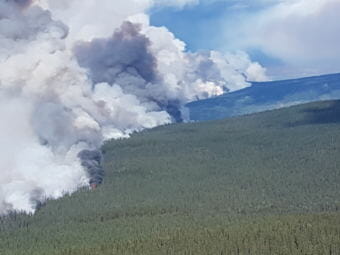
Wildfires near Telegraph Creek in northwestern British Columbia burn out of control Wednesday, August 8, 2018. (Photo courtesy British Columbia Wildfire Service)

Wildfire activity in the American West is likely to get worse in coming years.

A new study out in the Proceedings of the National Academy of Sciences points to the lack of precipitation in the summer as the major driving factor when it comes to increasing fire severity.
For decades, scientists believed a combination of warm temperatures, declines in winter snowpack and dry conditions in summer made for severe wildfire.

All three of those things do contribute to the fire season, but now researchers believe it’s summer moisture that drives fire activity most.

“We’re losing moisture when we need it the most: in the summertime. And that really does have consequences for things like agriculture (and) forest productivity,” Zack Holden said.

He works for the U.S. Forest Service in Missoula, Montana.

Holden and colleagues compared nearly 40 years of satellite maps of burned areas in the West with summer precipitation data between May and September for years 1979 to 2016.

They found that precipitation declined by up to a third, and in some cases 45 percent.

“We know that snowpack is affected by warming temperatures, and we’ve seen snowpack declines, and that’s really well documented and that does genuinely impact our fire seasons,” Holden said. “It makes fire seasons a little bit longer and it contributes to soil moisture deficits later in the season.”

“But at the same time, we are seeing these really dramatic changes in summer precipitations,” Holden said, pointing out current trends.

For example, Missoula, Montana’s second largest city, hasn’t seen a major rain event for close to 50 days.

“We’re sitting on a record of rain-free days. And that’s true of a lot of the Northwest right now,” Holden said.

Spokane went 80 days without rain last summer.

According to the U.S. Drought monitor, the entire state of Washington is abnormally dry, with some parts experiencing drought this year.

In Oregon, the majority of the state is currently experiencing some level of drought.

Oregon Gov. Kate Brown declared emergencies because of drought conditions in multiple counties.

In Pendleton, measurable rain hasn’t fallen since June 21.

“I hate to say it, but for me, this study really seems like a bit of bad news for fire management,” Holden said.

In the last decade, predictions about summer fire season have been made based on winter snowpack.

“In the past when we’ve had a really great snow year, and there’s a lot of snow high up in the mountains, some folks have said ‘hey, we’re going to have a pretty mild fire season,’” he said.

He points to just last year as an example, where there was a near-record snowpack, “but found ourselves, toward the end of the summer in one of the worst fire seasons that we’ve ever seen,” he said.

The 2016-17 winter was the second snowiest in close to 30 years for cities like Salem, Oregon, and Seattle, Washington.

Wildfires the following summer dropped ash on Seattle and Portland.

Holden said the study, which was funded with help from NASA, shows predicting wildfire seasons depends less on what happens in the winter, and more on what the summer could bring.

“You know, it’s really hard to forecast summer moisture,” Holden said.

In the future, fires are expected to continue to get more severe, and forecasting them might become more difficult.

Scientists sunk a rare blue whale skeleton. Now they need money to bring it back up

A set of massive whale bones rests on the bottom of the Newport, Oregon, bay.

Scientists from Oregon State University put them there with a plan for a future display on shore.

But they’re having trouble finding the money to retrieve the rare blue whale skeleton from beneath the waves.
“It’s a whale of a problem, but it’s a great idea,” OSU Marine Mammal Institute director Bruce Mate said.

He and a team of volunteers salvaged the bones from a nearly 80-foot-long blue whale that washed ashore dead near Gold Beach.

The team bundled the bones in fishing nets and dropped them on the bottom of Yaquina Bay more than two years ago for crabs and other scavengers to pick clean.

“Basically, we’re ready to bring it up and start putting it together,” Mate said.

But before the team can do that, Mate said they need to secure the funds to prepare and reassemble the skeleton.

One of the complicated remaining steps is to chemically extract the stinky, residual oil in the whale bones.

Blue whales swim offshore of the Pacific Northwest every summer but are rarely seen from land.

Mate said the carcass that washed ashore in Oregon in late 2015 was an extremely rare event.

“As near as I can tell, this is the first blue whale on the Oregon Coast since the Lewis and Clark Expedition reached the coast and found Native Americans taking flesh off of a blue whale,” Mate said.

Mate first put out a call for $125,000 in donations in late January. Some volunteered offers to help, but Mate needed more money.

So the call goes out again now with a little more urgency.

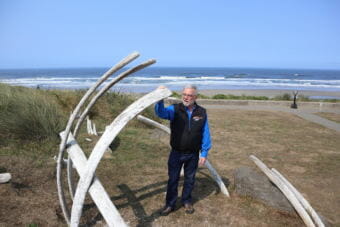
Oregon State University Marine Mammal Institute Director Bruce Mate posed Thursday beside a sculptural installation mimicking whale bones in Newport's Don Davis Park. (Photo by Tom Banse/Northwest News Network )
Oregon State University Marine Mammal Institute Director Bruce Mate posed Thursday beside a sculptural installation mimicking whale bones in Newport’s Don Davis Park. (Photo by Tom Banse/Northwest News Network )

Oregon State University has reserved a spot for the whale skeleton in front of its new Marine Studies Building at the Hatfield Marine Science Center in Newport, a building is currently under construction. The opening date is about one-and-a-half years away.

Mate does not want to retrieve the bones from the bottom of the bay until he knows his team has the funds to carry the project all the way through.

“We feel pretty confident we can get the job done in six to nine months,” Mate said. “We want to get it done before the opening of the building.”

A major cost driver for the project is the expense of retaining a crane and barge for the retrieval of the bone bundles from an undisclosed location in the bay. Then there are the costs of the hazardous chemicals and facility needed to leach the oil from the skeleton before it is assembled.

Mate raised the possibility in a Thursday interview of raising money by selling naming rights to the monumental display.

“You could park a Volkswagen in the shade under the fluke of a blue whale,” he said. “I mean, it’s very, very impressive.”

The OSU Foundation set up a “Blue Whale Articulation Fund” for donations.

No state or federal funding could be located for this endeavor, according to Mate.

Washington sent brain injury patients to Oklahoma — then all but forgot about them

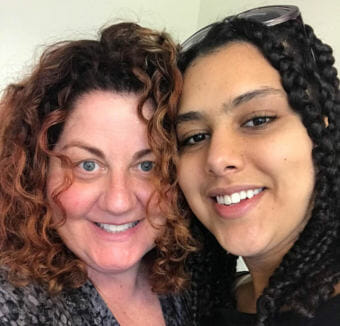
Regina Ibrahim and her daughter, Nadja, take a selfie together during a recent visit at Western State Hospital (Photo courtesy Regina Ibrahim)
Regina Ibrahim and her daughter, Nadja, take a selfie together during a recent visit to Western State Hospital (Photo courtesy Regina Ibrahim)

On the evening of August 14, 2010, Steve and Laurie Jenks were returning to their motel from a wedding in Walla Walla. It was dark and Steve, who was driving, had been warned to watch for deer along Highway 124.

Just outside the town of Prescott, Steve said he thought he saw a deer coming out of the ditch onto the two-lane road. As he slammed on the brakes, the car veered across the center line into the path of an oncoming Jeep.

The two vehicles smashed nearly head-on — glass, metal and plastic exploding the quiet summer night.

Everyone survived, but Laurie would never be the same again. She had suffered a severe brain injury that left her in a coma-like state for nearly a month. When Laurie emerged from the coma, her personality had changed — a common effect of traumatic brain injuries. According to Steve, Laurie became erratic, angry and difficult to control. She would yell and swear and also bite, kick and slap.

Because of these behaviors, Steve struggled to find care for his wife. He quickly discovered Washington state lacks facilities to treat brain injury victims with behavioral issues — especially those like Laurie who are on Medicaid, the state’s insurance program for the poor and disabled.

By 2015, nearly five years after the accident, Laurie had cycled in and out of several group homes and was placed in a hospital unit where older patients with mental disorders are treated.

Desperate to find Laurie help, Steve heard about a neurologic rehabilitation facility called Brookhaven Hospital two-thousand miles away, in Tulsa, Oklahoma. Washington’s Medicaid program, he discovered, would pick up the $1,000 a day tab.

“I really wanted to get her out of hospital, but I didn’t want her halfway across the country either,” Jenks said.

Laurie Jenks was not the first, nor the last Washingtonian to go to Brookhaven. Between 2014 and 2017, Washington’s Medicaid program sent 16 brain-injured patients to Oklahoma. In each case, the patient flew by air ambulance at a cost of $230,000 per flight.

But there was one problem. The state didn’t have any plan to get them back.

In fact, once the patients got to Brookhaven they fell between the cracks of two state agencies. As a result, some of them stayed in Oklahoma for years during which time no official from the state’s Medicaid program went to visit them. In the end, what began as hospital-level rehabilitation care morphed into a very expensive form of long-term care. It wasn’t until a doctor at the state’s Medicaid program sounded the alarm that efforts began to bring the patients home.

The ‘total package’

In 2014, Washington’s Medicaid program had signed a contract with Brookhaven to provide care to hard-to-place brain injury patients.

According to Nancy Hite, a nurse with the Medicaid program, Brookhaven offered a “total package” to help these clients with their neurobehavioral needs. They would get one-to-one care and access to five to six hours a day of therapy.

Jenks was under the impression Laurie would stay at Brookhaven for a few months and then return to Washington more stable and ready for a long-term placement. But months stretched to years. Laurie Jenks is one of three patients from Washington who remain at Brookhaven — although all three are expected to be relocated to other facilities this month.

While at Brookhaven, Jenks said Laurie’s behavior improved. But physically, she declined. When Laurie first got to Brookhaven she could walk with help. Over time, she became confined to a wheelchair.

Several months ago, Jenks said Brookhaven staff informed him they didn’t expect to see any significant progress in Laurie’s condition.

“They’ve told me they’ve given up on trying to do any substantive rehab, they’re just basically trying to keep her from declining, which they’re not really doing all that well,” Jenks said.

Brookhaven CEO Rolf Gainer declined to comment on Laurie Jenks, citing patient privacy, but said it’s common for people with brain injuries to age more quickly.

“They’re going to experience some deterioration in their functional skills at an earlier rate than individuals without a brain injury,” Gainer said.

Jenks isn’t the only relative to question the quality of care at Brookhaven.

Nadja’s story

In March 2016, Regina Ibrahim traveled with her then 22-year-old daughter Nadja via air ambulance to Tulsa from Seattle. Like Laurie Jenks, Nadja, who had suffered an infection after brain surgery, had been approved by Washington’s Medicaid program to go to Brookhaven Hospital.

But when they arrived by ambulance at the single-story facility in east Tulsa, Ibrahim said she was told she couldn’t accompany Nadja past the front lobby. It was not the welcome she had expected.

“I looked at the lady, I said, ‘Do you really think that I’m going to take my kid someplace and drop them off and not see where they’re going to be living? Are you kidding me?’” Ibrahim said.

Steve and Laurie Jenks at a wedding in 2010 shortly before a head-on car crash left Laurie severely brain injured. (Photo courtesy Steve Jenks)

Gainer, the Brookhaven CEO, said visitors generally are not allowed on to the treatment units for privacy and confidentiality reasons.

Eventually, Ibrahim said, they relented and let her into the locked unit. Ibrahim helped Nadja get settled, filled out some paperwork and met with the director of neurologic rehabilitation. When it was time to say goodbye, Nadja didn’t want her mother to leave.

“She goes, ‘You can’t leave me here, you can’t,’” Ibrahim recalled in a recent interview. “And I said ‘Nadja.’ I said, ‘I have to leave you here,’ I said, ‘because we have to get you better’ and I left.”

Nadja’s case was complex. Beginning at 19, she’d experienced delusions and been diagnosed with schizophrenia. Later, doctors discovered a benign brain tumor. But after she had surgery to remove it, Nadja developed an infection. Her mother believes that infection caused permanent damage to Nadja’s brain, although she’s never been formally diagnosed with a brain injury.

It was Nadja’s history of hospitalizations and increasingly difficult to manage behaviors that eventually resulted in her going to Brookhaven. Six months after she arrived, Ibrahim returned to Tulsa for a visit. What she found alarmed her.

“It wasn’t the child that I left there, let’s put it that way,” Ibrahim said.

She said Nadja was aggressive and erratic. She would yell expletives and wouldn’t let her mother touch her. “She was like animalistic, in survival mode,” Ibrahim said. “Nadja was not like that before.”

When Ibrahim returned home after visiting Najda, she said she called Washington’s Medicaid program.

“I said, ‘I’m not really sure what’s going on down there,’ I said, ‘But I’m telling you there’s something not right going on down there and I think you guys need to go pay attention to it and look at it,’” Ibrahim said.

Quality of care

Brookhaven Hospital describes itself as a “comprehensive mental health center” that serves patients with psychiatric diagnoses, chemical dependency, eating disorders and traumatic brain injury.

The Neurologic Rehabilitation Institute at Brookhaven is an accredited, 36-bed unit in a separate wing of the facility that offers a range of services to severely brain-injured patients with “neurobehavioral, psychiatric or substance abuse problems,” according to Brookhaven’s website.

Brookhaven offers its brain injury program to state Medicaid administrators as a solution for the hardest-to-place patients.

“Often, these individuals have long histories of violent and aggressive behaviors,” reads a promotional page on the NRI website. “Many of them have had numerous encounters with law enforcement — or may even be currently incarcerated.”

According to brain injury experts, the best outcomes are achieved when a severely brain-injured patient receives inpatient, acute care rehabilitation immediately following their hospitalization for their injury. But Brookhaven targets a different clientele — individuals who are often many years past their injury but have not been successful in community-based settings.

“The type of patients that we see at (Brookhaven) are unique and there’s a real gap in services for these individuals,” said Gainer, the CEO of Brookhaven, during a May visit to Tacoma to attend the Brain Injury Alliance of Washington annual conference.

Because of patient privacy, Gainer wouldn’t speak directly to the care Regina Ibrahim’s daughter Nadja received at Brookhaven. But he defended his program’s track record, noting that the hospital is required to document all care and services provided and files monthly progress reports on each patient.

Rolf Gainer, Ph.D, the CEO of Brookhaven Hospital, says his facility has a track record of good results with patients and positive ratings with families. (Photo by Austin Jenkins/Northwest News Network)
Brookhaven Hospital CEO Rolf Gainer said his facility has a track record of good results with patients and positive ratings with families. (Photo by Austin Jenkins/Northwest News Network)

“We provide a very high level of service,” Gainer said. “We have an outcomes study that’s been running for many, many years tracking our outcomes and comparing it to benchmark studies and our outcomes are consistently very, very high.”

Gainer added that Brookhaven earns “high and positive” ratings with families and referral sources.

One person offering praise for Brookhaven: Paul Linnes, whose longtime partner Michael Oakley was the first Medicaid patient from Washington to go to Brookhaven.

In November 2013, Oakley had collapsed at home. Linnes called 911 and began CPR before the paramedics arrived and took over. During the several minutes it took to get his heart beating again, Oakley’s brain was deprived of oxygen resulting in what’s known as a severe anoxic brain injury. As a result, Linnes said Oakley was often disoriented and could be aggressive. Oakley wound up in the hospital because no long-term facility would take him because of his behaviors.

Linnes found Brookhaven Hospital while doing an internet search for neurologic rehabilitation facilities that took Medicaid. And it was Michael Oakley’s case that led Medicaid to meet with Brookhaven representatives, and ultimately sign the contract to send patients there.

Linnes said once Oakley was approved to go to Brookhaven, things moved quickly. In March 2014, Oakley was discharged from the hospital and put on the medical flight to Tulsa with Linnes at his side.

“The hardest day of my life was having to fly home from Tulsa the very first time,” Linnes said.

But he took comfort knowing Oakley was now at a facility where he would get one-on-one care for his brain injury and related behaviors. It didn’t take long to see signs of progress.

“Michael began to thrive,” Linnes said. “He really, really took well to their therapeutic techniques.”

Paul Linnes, left, and his partner Michael Oakley, a patient at Brookhaven Hospital, at a Tulsa, Oklahoma, restaurant they often frequented for lunch. (Photo courtesy Paul Linnes)

Oakley stayed at Brookhaven the longest of all the patients — more than three-and-a-half years. He returned home last November after developing serious medical complications related to his injury. In May, six months after returning home to Washington, Oakley died.

“I look at those months as a gift,” Linnes said. “I used to tell him, ‘You’re back home now and I’m so happy you’re closer to home and I get to see you more often and that makes me really happy.’”

Once Washington’s Medicaid program had a contract with Brookhaven, word got out in the brain injury community. One of the people spreading the word was Janet Mott, a clinical case manager on contract with the Brain Injury Alliance of Washington State. Mott said until that point there were few, if any, options for brain-injured patients with severe behavior issues. Now there was a place to go.

“People began to say, ‘Oh there is some hope,’” Mott said.

Janet Mott of the Brain Injury Alliance of Washington visited Brookhaven Hospital several times and was impressed with the care. (Photo by Austin Jenkins/Northwest News Network)

Later, Mott became a regular visitor to Brookhaven. In fact, between 2014 and 2017, Mott said she made at least half a dozen trips to Tulsa. She’d become a guardian for one of the Washington patients.

Like Linnes, Mott was impressed with the care.

“I observed staff being respectful and appropriate with the patients and in general people were making progress, but slowly,” Mott said in an interview.

Mott said she didn’t expect the patients from Washington to remain at Brookhaven forever, but she wasn’t alarmed that their stay extended from months to years. “I never anticipated that they’d be back home to the state of Washington quickly,” Mott said. “These were people with multiple needs, complex needs, very severe limitations or deficits.”

If anything, the fact the Washington patients stayed in Oklahoma so long was, from Mott’s perspective, a commentary on the lack of brain injury care back home. “We have a long ways to go to offer the full spectrum of needed services for people with traumatic brain injury in the state,” Mott said.

The final flight

The final patient to go to Brookhaven departed Washington aboard an air ambulance flight in February 2017. A couple of months later, Dr. Shanna Johnson, a rehabilitation specialist with Washington’s Medicaid program began to look more closely at the Brookhaven patient charts.

“I started seeing things that didn’t make sense to me,” said Johnson, who had recently been promoted into more of an oversight role.

As she studied the patient charts she realized most of the patients were receiving one-to-one care and were scheduled for multiple hours of therapy per day.

“So then I started being like, ‘Why are we sending these chronic patients to acute, inpatient rehab in another state?’” Johnson said.

As Johnson continued to review the patient charts she discovered something else.

“Nobody was ever being discharged, and there was no discharge plan,” Johnson said.

That’s when Johnson said she realized the state had a problem.

As she explained in a March email to her bosses, “There is no process for discharging post-acute patients … which is resulting in length of stays months longer than necessary which is driving up the cost of care at this facility.”

Johnson noted that the state was paying Brookhaven $1,000 a day, per patient while a skilled nursing facility back home would cost $200 a day.

It turned out, the patients at Brookhaven had slipped between the cracks of two massive state agencies—Washington’s Health Care Authority, which runs the Medicaid program, and the Department of Social and Health Services which manages long-term care.

In the end, it cost Washington’s Medicaid program more than $12 million to send the patients to Brookhaven.

By summer 2017, getting the 11 remaining patients at Brookhaven back home to Washington had become a top priority at both agencies. But it wasn’t going to happen overnight.

That July, there was a growing concern within the Health Care Authority about how long it was taking to develop a discharge plan.

“[T]his is money we should not be spending,” wrote a Medicaid official in an email obtained through a public records request. “What can we do to move this along?”

At the Department of Social and Health Services, the job of finding placements in Washington for the Brookhaven 11 had fallen to Betsy Jansen, a program manager in the Aging and Long-Term Support Administration who had a background in working with brain injury clients.

“My first reaction was surprise,” Jansen said of learning the state had 11 patients at Brookhaven. “And then my second was, ‘Why do we need to send people out of the state of Washington?’”

Betsy Jansen of the Department of Social and Health Services was given the job of bringing home the remaining 11 patients at Brookhaven Hospital in Tulsa. (Photo by Austin Jenkins/Northwest News Network)

The first thing Jansen did was contact the families and guardians of the patients.

“Everybody wanted their loved one to come home, but didn’t quite know how to make that happen,” Jansen said.

In August of last year, Jansen and a colleague flew to Tulsa to evaluate all of the patients to find out what their needs were.

As the first state official to lay eyes on Brookhaven, Jansen said her impression was that it felt institutional. She noted that the patients had to be escorted in and out of the locked units. But she said the staff was helpful and she and her colleague were well received as visitors.

“I did not have any concerns at the time at all of what I saw or what I heard,” Jansen said.

After she returned to Washington, Jansen began the arduous process of trying to find long-term placements for the Brookhaven patients. As had been the case when the patients first went to Brookhaven, good options were few and far between.

Now, a year later, Jansen said she’s been able to bring eight of the 11 patients back to Washington.

“I’m really glad that we can bring people home and serve them here,” Jansen said. “That was my primary goal and mission and we’re in the process of doing that and I feel really proud of that work.”

According to Jansen, four of the eight have gone into one of two adult family homes that specialize in managing difficult behaviors. Another patient was discharged back into the community, but with support from the Developmental Disabilities Administration.

Regina Ibrahim’s daughter Nadja returned to Washington in January. She immediately went into Harborview Medical Center’s psychiatric unit. In May, she was moved to Western State Hospital—the state’s largest mental hospital. Her mom is trying to open a group home in southwest Washington to care for brain-injured patients, including her daughter.

Steve Jenks’ wife Laurie is one of the three patients still at Brookhaven after he rejected the state’s plan to put her in an adult family home in Spokane. Since then, he’s been looking for long-term care facilities in the Northeast where his daughter lives. In a recent email, he said he was days away from getting Laurie moved to a nursing home in Massachusetts.

Lessons learned

The return of the Brookhaven patients signals the end of an unsettling chapter in the story of brain injury care for Medicaid clients in Washington state. Patients were moved thousands of miles away from their families and placed in a locked-down facility, some for years. While they were there, the state didn’t have the systems in place to adequately monitor their care and progress. And there was no plan or mechanism in place to eventually bring them home.

“It’s just crazy,” said Dr. Kathleen Bell, a brain injury rehabilitation specialist at the University of Texas Southwestern Medical Center upon hearing about the Brookhaven patients. “Somebody obviously lost track of what was going on.”

Previously, Bell was the medical director of the Brain Injury Rehabilitation Program at the University of Washington. While she couldn’t comment specifically on the decision to send Medicaid patients from Washington to Brookhaven, she could see how it happened.

“Washington state has never had a good system for taking care of people with severe behavioral problems,” Bell said.

That was the gap Brookhaven filled.

But this past March, more information about Brookhaven’s quality of care came to light. The Oklahoma Department of Health conducted an unannounced inspection of Brookhaven Hospital and found serious deficiencies regarding patient rights, nursing care and quality performance.

In one instance, the report found that Brookhaven’s failure to maintain an ongoing quality improvement program may have resulted in delayed “care decisions” for a 34-year-old patient who died unexpectedly in February of this year. That patient was in Brookhaven’s behavioral health unit, not the neurologic unit.

In an interview, Gainer said he was confident the issues identified in the report had been addressed and that the hospital would pass its next inspection.

Gainer stood by the care the Washington patients received at his hospital and said their length of stay was not unusual for his program.

“We served patients, we provided the services they needed,” Gainer said. “I wish there were community services that we could have moved them into at an earlier time.”

Site notifications
Update notification options
Subscribe to notifications