
Alaska's Energy Desk

After decades of research, Steller sea lion decline still puzzles scientists

Steller sea lions captured by a hexacopter. (Photo courtesy NOAA Fisheries)

Every summer, biologists visit Alaska to count Steller sea lions. The western stock of the population has been in decline for nearly 40 years — hitting a low in 2002. The count helps determine whether sea lions stay on the endangered species list, which puts costly restrictions on the commercial fishing fleet. Even after decades of research, the reason for the decline is still a mystery.

It’s 10:30 at night and the Tiglax has just pulled into Dutch Harbor. Biologist Tom Gelatt is finishing up a two week stint with his team. They visited 35 sites to count sea lions from the furthest west point on the Aleutian chain to Unalaska.

A map of survey locations. (Courtesy NOAA Fisheries)

“My job is to try and figure out how many there are, where they are, and if there are declines, where are those threats? What are the things that are limiting the recovery of Steller sea lions?” Gelatt said.

He collects data the old fashioned way, by hand counting sea lions. But Gelatt prefers using aircraft — high tech drones or a twin otter plane — to capture photos of rookeries and haulouts. His big question: Why is the population of Steller sea lions in the western Aleutian Islands declining while the animals are doing well in other parts of the state?

“We honestly do not know why because the animals that we see out there appear to be quite healthy,” Gelatt said. “They’re quite large. We don’t see dead, dying animals on the beach. We just don’t see the numbers. They just aren’t there.”

The decline of Steller sea lions dates back to the 1970s. Over 24 years, the population of the western stock plummeted 75 percent. In 1997, the federal government listed Steller sea lions west of Kayak Island, near Cordova, under the Endangered Species Act.

Today, the eastern stock is rebounding — at a rate of about 3 percent a year since the 1980s — and those sea lions are no longer on the endangered species list. But sea lions in the west are still struggling. And Gelatt says the count is a factor that determines whether the animals stay endangered.

“Under the Endangered Species Act, there are some pretty stiff protection measures in place to protect Steller sea lions which often compete with the fishery,” Gelatt said. “So everyone wants to know how many there are.”

Until the population rebounds, federal restrictions — like prohibiting fishermen from harvesting the full allowable catch — will stay in effect.

According to John Gauvin, with the Alaska Seafood Cooperative, those restrictions have a big financial impact on fishermen in the region.

“The measures in place are in the tens to 20 million dollars of revenue reduction, (that) would be my guess,” Gauvin said.

Gauvin says the fisheries that take the biggest hit are for Atka mackerel and Pacific cod. He says the fishing industry is not opposed to restrictions, but he also says right now there isn’t a lot of evidence that fishing is having any negative impact on sea lions.

Holding a hexacopter (or drone) before it takes flight. (Photo by Kristen Campbell/Courtesy NOAA Fisheries)
Holding a hexacopter drone before it takes flight. (Photo courtesy Kristen Campbell/NOAA Fisheries)

For the most part Gelatt agrees; Gauvin is probably right. There is no hard evidence commercial fishing is to blame for the sea lion decline. He says lots of factors could play a role.“The fishing industry will do what it can to protect Steller sea lions, but at the same time we aren’t convinced that fishing is what’s affecting sea lions out there and the science is hardly straightforward on that,” Gauvin said.

“Obviously there are predators like killer whales that take Steller sea lions,” Gelatt said. “There’s also issues with perhaps climate change and the change of habitat, and the availability of prey, the warming of the oceans — something that may have nothing to do with commercial fisheries.”

And it’s hard to pinpoint a culprit because all those threats may be acting separately or together. But Gelatt says the mystery keeps him coming back.

“It’s interesting that we have an animal that has been studied for a long time and we know a lot about,” Gelatt said. “Yet because they’re so difficult to work with and so far away, some of the basic ecology questions that we know about other large mammals are really difficult to get.”

On this trip, Gelatt’s team has amassed vast amounts of data, including more than 300,000 photos, that they have to sift through.  So for now, he says we all have to stay tuned.

Correction: A previous version of this story indicated that the count of Steller sea lions was the only factor in their status under the Endangered Species Act. The count is one of many criteria that are important, not the only one. 

As energy prices drop, Alaska’s inflation rate follows

Richard Carrillo, of Juneau, gases up his suburban on July 7, 2016, in Juneau, Alaska. State economists said low energy prices caused a slower growth of inflation in Alaska last year. (Photo by Rashah McChesney/KTOO)
Richard Carrillo of Juneau gases up his suburban on July 7 in Juneau. State economists said low energy prices caused a slower growth of inflation in Alaska last year. (Photo by Rashah McChesney/KTOO)

As oil prices have dropped and the state has struggled to pay its bills, Alaskans saw one benefit. The cost of living in Anchorage increased by the smallest amount in nearly three decades.

At a Tesoro near downtown Juneau, Tim Young makes a quick stop to put a few dollars’ worth of gas in his SUV.  When he pays less to fills up his tank, he said it’s easier to afford other essentials, like food and rent.

“When it goes down, it helps tremendously,” Young said.

The price on this day: $2.78. 

Damien Thorne pulls up in Jeep Liberty, which he describes as getting less than stellar gas mileage.

“I gotta fill it up at least two times a week and spending about 50 bucks every time,” he said.

When gas prices dropped, Thorne said he and his wife noticed the extra money in their monthly budget. But, he’s not sure he’d trade higher energy prices and a balanced state budget, for the money he saves when gas is cheap.

“I would just rather just have just regular gas prices, you know?” he said.

Thorne, who’s spent time living in Ohio, said a regular gas price for him is $1.65 a gallon. 

Still, Thorne said a high price at the pump wouldn’t stop him from buying gas, just like the high cost of living in Alaska wouldn’t stop him from living in Juneau.

“It’s gas, so we need it. I’m going to get it if it’s $4 a gallon, ‘cause I got to get around. So it’s just, yeah, supply and demand,” he said.

Alyssa Rodrigues is an economist with the state’s Department of Labor.

She said the average cost of living — that’s the amount of money it takes for Alaskans to buy milk, put fuel in their cars and pay rent or for healthcare — still went up last year. But that increase was slowed significantly by a 10 percent decline in energy prices in Anchorage 2015.

“Because, energy factors into other things that we spend our money on and one big piece is transportation, it brought the price of transportation down and we spend a lot of our income on transportation,” Rodrigues said.

Anchorage is the only city in the state where inflation is measured. Last year, Anchorage’s inflation rate went up half a percent, according to Department of Labor data. That’s the lowest recorded increase in 27 years.

This isn’t the first time that energy prices have dropped. Rodrigues says they’ve been dropping for the last four years – though last year’s was the largest drop in nearly a decade.

And, in Alaska’s off-the-road system communities, energy costs dropped, but they’re still extreme.

“It might have one effect on Anchorage but when you look at a place like Arctic Village or something  that has to have all of their fuel flown in, obviously that cost is going to be magnified because you have additional costs for the fuel just to get the fuel to you,” Rodrigues said.

In Arctic Village, residents are paying $10 a gallon at the pump.

Clarification: Where Damien Thorne is from has been clarified. He spent time living in Ohio, but is from Juneau. 

Video: A recent college grad lands a job but worries about the future

The last decade saw a remarkable run-up in oil and gas employment as high oil prices led to record numbers of energy industry jobs in Alaska. That meant young people had an easier time getting started in oil and gas.

Hannah Vuppula was lucky enough to land an engineering job last year at an Anchorage firm that works on the Trans Alaska Pipeline. She had just graduated from college in Texas.

But now that Alaska is in its first real recession in nearly three decades, Vuppula doesn’t know what the future holds.

This week, Alaska’s Energy Desk is spotlighting those who have been affected by the downturn, as part of the series An Uncertain Future.

Video: Tom Walsh is confident things will turn around in Alaska’s oil industry

Alaska has lost more than 2,000 jobs in the oil and gas industry since last year, as the state faces its first real recession in nearly three decades.

This week, Alaska’s Energy Desk is spotlighting those who have been affected by the downturn, as part of the series An Uncertain Future.

Tom Walsh is a founding partner of Petrotechnical Resources Alaska, an oil and gas consulting firm.
The company has lost about half its workforce in the last year.

Obama administration announces new rules for Arctic drilling

Shell Polar Pioneer
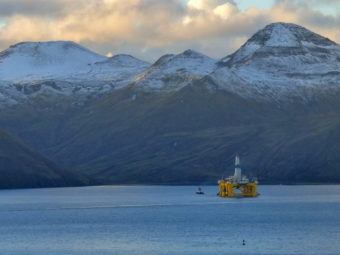
Shell’s Polar Pioneer leaving Dutch Harbor on Oct. 12, 2015, heading for Washington state. (Photo by John Ryan/KUCB)

The Obama Administration on Thursday issued new regulations covering offshore drilling in the Arctic.

The new rules will hold oil companies in the Arctic to a higher standard than those drilling in other regions, including the Gulf of Mexico.

But currently, there are no companies with plans to drill in the Arctic Ocean off Alaska — and that seems unlikely to change any time soon.

The Department of the Interior began formulating the regulations after Shell’s first effort to drill in the Arctic in 2012 resulted in a series of serious mishaps.

Speaking on a conference call with reporters on Thursday, Assistant Interior Secretary Janice Schneider called the new rules “world class.”

“This rule seeks to set the highest safety and environmental standards for companies interested in Arctic exploration,” Schneider said.

The regulations essentially codify the rules imposed on Shell during its 2015 drilling season, including a requirement that companies keep a second rig available at all times to drill a relief well.

Shell called those regulations a contributing factor in its decision to pull out of the Arctic last fall.

But Abigail Hopper, Director of  the Bureau of Ocean Energy Management, said the rules were prompted by mistakes that Shell itself made in 2012.

“We realized that one of the challenges was a lack of contractor oversight, and a deficit in planning the entire operation,” Hopper said. “So we have required…what’s called an integrated operations plan. That is a plan from the very beginning of the program, all the way through demobilization at the very end.”

The Interior Department is also deciding whether to include the Arctic in its next round of offshore lease sales. That is a separate decision, expected later this year.

The new regulations only cover floating operations, not near-shore projects like Hilcorp’s Northstar unit or its proposed Liberty project, which drill from man-made gravel islands in the Beaufort Sea.

The regulations prompted predictable reactions from industry and environmental groups.

The Center for Biological Diversity emailed out a statement saying, simply, “Arctic drilling can’t be made safe, period.”

But other environmentalists called the regulations a good first step.

“If, in fact, companies ever do want to come back and explore in the Arctic Ocean, they’ll know what the basic safety and prevention requirements are, and they’ll be substantially improved over what they used to be,” said Michael LeVine, of the conservation group Oceana.

But, Levine said, he doesn’t believe any company is truly prepared yet to deal with risks like oil spills in Arctic waters.

Meanwhile, Kara Moriarty of the Alaska Oil and Gas Association repeated her organization’s warning that regulations will slow Arctic development.

“Obviously we’re still trying to sift through all 348 pages,” Moriarty said. “But at first blush, it does appear the federal government is creating additional cumbersome regulations that will make it more challenging to entice companies back to the Arctic when oil prices rebound.”

It remains an open question what it would take to entice companies back to the Arctic, regulations or no regulations.

With the exception of Hilcorp’s near-shore operations, no company currently has any plans to drill in the Chukchi or Beaufort Seas.

In the nine months since Shell announced it was abandoning its nearly decade-long quest in the region, several companies, including ConocoPhillips, Norway’s Statoil, and the Spanish company Repsol have relinquished leases: of more than 700 leases purchased in the Arctic since 2003, only 43 are still held by companies.

Site notifications
Update notification options
Subscribe to notifications