Alaska's Energy Desk

St. George considers applying for national marine sanctuary status

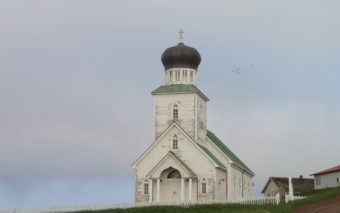
The Russian Orthodox Church in on St. George Island, Aug. 8, 2012. (Creative Commons photo by D. Sikes)
The Russian Orthodox Church on St. George Island in August 2012. (Creative Commons photo by D. Sikes)

St. George Island is taking steps to protect the marine environment in their backyard. The city council passed a resolution earlier this month that could establish a National Marine Sanctuary. Eighty people live on the island of St. George. They’re primarily Unangan and many rely on ocean resources for subsistence.

Mayor Patrick Pletnikoff says over the past five years the community has noticed a significant decline in the population of fur seals and seabirds and they need to take action now.

“There is no need to extract everything in the Bering Sea or get it down to the point where animals such as seals and seabirds can’t sustain themselves,” Pletnikoff said. “I mean, when you start seeing these kinds of die-offs you wonder if we may have allowed it to go too far without saying anything about it.”

Pletnikoff says the first step is to raise money and hire experts who will help decipher research done in the area by government agencies like the U.S. Fish and Wildlife Service and the National Marine Fisheries Service.

Then, the city will look at how best to safeguard the ocean resources. Right now, they’re considering applying for federal marine sanctuary status that would offer the area some level of protection.

“It at least makes all stakeholders have a seat at the table,” Pletnikoff said. “Everybody that has any interest in what we’re thinking about doing is welcome to that table to sit down and discuss it with us.”

The transparency of applying for marine sanctuary status appeals to Pletnikoff. Plus, he says it would protect the marine environment without automatically prohibiting fishing or reconstructing the island’s port.

Juneau utility installs $22 million diesel turbine

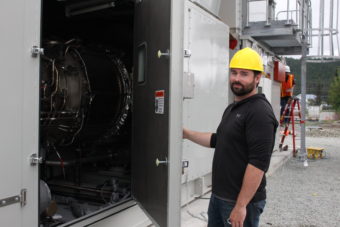
Bryan Farrell, an engineer at AEL&P, hold open the hatch the diesel fired turbine. (Photo by Elizabeth Jenkins/KTOO)
Bryan Farrell, an engineer at AEL&P, holds open the hatch to the diesel turbine. (Photo by Elizabeth Jenkins/KTOO)

Juneau’s privately owned electric utility, AEL&P, has already broken ground to build an industrial diesel plant to meet growing demand. And for the city’s residents that means the price for electricity is likely to go up. Before the development goes any further, some community members are asking the state’s regulatory commission to take a closer look.
Bryan Farrell, an engineer for Juneau’s electric utility, asks me to put on a blue hard hat before showing me around his work site.

Construction on the $22 million project began in January. And already, there are two 50,000-gallon tanks installed that will feed a diesel turbine.

“A diesel turbine is exactly what is sounds like. It is a combustion turbine that compresses air, injects diesel fuel as a fuel source and ignites that to turn another turbine which then turns a generator,” Farrell said.

A backup generator, according to AEL&P. It could also run off liquefied natural gas. Something that parent company Avista has been looking at bringing to Juneau.

Right now, on a normal day, the city runs entirely off hydro. But when something goes wrong, like an avalanche takes down a power line, that service can be disrupted. That actually happened in the spring of 2008. And Farrell says when that occurs, the diesel is the backup.

“We have diesel strategically placed throughout the system, and this spot is going to add greatly to that strategy,” Farrell said.

The location for the diesel plant is in a Juneau area called the Mendenhall Valley, and the electric company says growing demand is the reason. In other words, more people powering their homes and businesses in that area.

Farrell says if another catastrophe happened:

“I do not have enough diesel generation in the valley to pick up all the valley in that situation,” he said. “What that would turn into is rotating blackouts for different areas in the valley.”

The exhaust stack for diesel turbine. (Photo by Elizabeth Jenkins/KTOO)
The exhaust stack for the new diesel turbine. (Photo by Elizabeth Jenkins/KTOO)

But Danielle Redmond, a Juneau climate change activist, thinks there has to be a better way.

“Why would we bring in a new fossil fuel monopoly when we have local, clean abundant energy in the form of responsible hydropower?” Redmond asks.

She sent a letter to the Regulatory Commission of Alaska asking for community input. To pay for the new diesel plant, the electric company will have to increase rates, and that’s when the regulatory commission gets involved.

On top of that, Redmond thinks the diesel plant doesn’t reflect the city’s overall values.

“For me, its more of an issue that if we continue to build infrastructure, we’re not going to make investment in clean renewable alternatives,” Redmond said.

Recently, the city drafted an energy plan outlining goals for moving away from burning fossil fuels, like diesel. But Tim McLeod, AEL&P’s president, says investing in renewable energy for an emergency situation doesn’t make sense.

“First off, diesel generation for backup is a fraction of the cost to our customers as building a new hydro would be,” McLeod said.

In 2010, after the company completed the Lake Dorothy hydro project, McLeod says Juneau’s electric rates went up nearly 20 percent. He thinks backup hydro doesn’t pencil out and would wind up costing customers more. As to how much the diesel plant will raise rates, he thinks it will be “much less” than that.

“But I don’t know what the numbers are,” McLeod said.

AEL&P has yet to file paperwork with the regulatory commission about the rate increase.

For Danielle Redmond, the problem isn’t about being stuck with the bill.

“It may well be the case that Juneau ratepayers would be willing to pay a little bit more for additional hydropower capacity in favor of keeping new fossil fuel projects out of town.”

Redmond says she certainly would. But she might not have much choice in the matter. AEL&P expects to have its new diesel generation plant operational by this winter. 

Gov. Walker adds cabinet level oil and gas adviser

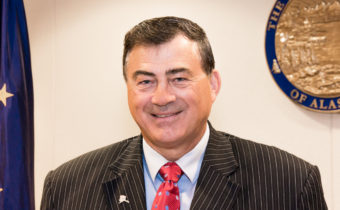
John Hendrix is the state's new oil and gas adviser. (Photo courtesy of Gov. Walker administration)
John Hendrix is the state’s new oil and gas adviser. (Photo courtesy Alaska Governor’s Office)

Gov. Bill Walker created a new cabinet level position Monday in his administration, an oil and gas adviser. He appointed John Hendrix to the job, who most recently worked as general manager for Apache Alaska, a company that pulled out of the state this spring, citing low oil prices.

Walker made the announcement during a speech Monday at an Anchorage Chamber of Commerce lunch event. He said he has long believed the state needs a good working relationship with the oil and gas industry.

“I’ve created a new cabinet position — working within our budget, we’re not adding anything to our budget — to bring a person on that would act as my liaison and my adviser on all oil and gas issues,” Walker said.

Walker said Hendrix understands Cook Inlet, where Apache mainly operated, as well as the North Slope. Walker angered many in the industry last month when he vetoed more than $400 million in tax credit payments the state-owed companies.

Monday is Hendrix’s first day on the job.  His annual salary is $185,000. Hendrix is an adviser, not a commissioner, so he doesn’t have a department.

EPA fines BP, Hilcorp for spills on the North Slope

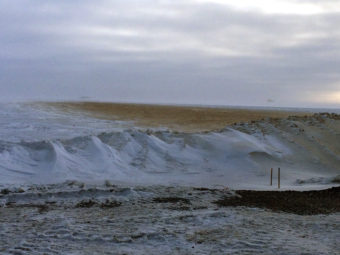
Contaminated snow-covered tundra on April 29, 2014 from a BP Exploration Alaska spill in Prudoe Bay, Alaska. (Photo/ADEC)
Contaminated snow-covered tundra on April 29, 2014, from a BP Exploration Alaska spill in Prudoe Bay. The EPA fined the company $30,000 for the spill, the state of Alaska fined it an additional $100,000. (Photo courtesy ADEC)

BP Exploration Alaska and Hilcorp Alaska have agreed to pay fines after spilling oil and waste on the North Slope.

The Environmental Protection Agency announced the companies will pay $130,000 in federal penalties.

According to the EPA, the Clean Water Act violations by both companies affected Arctic wetlands that support wildlife like caribou, ptarmigan and geese.

EPA spokesman Mark MacIntyre said the North Slope is one of the harshest environments where companies operate in Alaska. It’s also one of the most ecologically sensitive.

“We know that the tundra is kind of like a big sponge and is completely overlaying water that drains off and runs to various tributaries to rivers and then rivers to the sea,” he said.

Hilcorp had a breach in a production line in its Milne Point field. The leaky pipeline caused nearly 10,000 gallons of crude oil and water to spill onto about an acre of land. The company will pay $100,000 to the EPA.

Piping showing oil from the BP spill in Prudhoe Bay on May 2, 2014 in Alaska. (Photo/John Ebel-ADEC)
Piping showing oil from the BP Exploration Alaska spill on May 2, 2014, in Prudhoe Bay. (Photo by John Ebel/ADEC)

BP will pay $30,000 in federal penalties for spilling 700 gallons of waste onto 33 acres of tundra and gravel pad. That spill was caused by a frozen rupture in one of the company’s lines in Prudhoe Bay.

MacIntyre said spill cleanup on the North Slope can be complicated by winter weather. Hilcorp response crews had to struggle through blizzard conditions while BP workers had to remove acres of contaminated snow.

“A lot of times, frankly these spills happen at the worst time of the year, when it’s the coldest, when it’s the darkest, when (it) really puts people at risk in terms of responding and trying to fix things when they spill,” MacIntyre said. “So it’s really in nobody’s interest to have anything spill.”

Neither company agreed to interviews about the incidents. Both sent prepared statements.

Hilcorp spokeswoman Lori Nelson said it is proud of its response to the spill and inspected other similar pipeline sections as a result of the incident. While BP spokeswoman Dawn Patience said the company has worked to strengthen safety and risk management.

EPA relies on the companies to report spills. After the agency notifies a company it is considering a fine, MacIntyre says the companies can weigh-in.

“They come in and negotiate with us and we end up with a final penalty,” he said.

Each case is resolved differently. Sometimes the money goes to the state, sometimes to the federal government. In BP’s case, the company will pay $30,000 in penalties directly to a federal fund that is used to pay for cleanup when spills occur and the responsible party is either unknown, or refuses to pay.

BP also settled its case with the Alaska Department of Environmental Conservation after its spill. It will pay the state $100,000.

Hilcorp could still face further fines from its Milne Point spill. A spokeswoman from DEC said the state is investigating the incident and its case is still open.

Both companies have reported dozens of spills in Alaska since 2014, but most of the discharges are minute amounts of fuel or oilfield chemicals.

Oil on exhibit: What Alaska’s past says about its future

Steven Henrikson has worked at the state museum since 1988. (Photo by Elizabeth Jenkins/KTOO)
Steve Henrikson has worked at the state museum since 1988. (Photo by Elizabeth Jenkins/KTOO)

The State Library, Archives and Museum opened recently in Juneau with a new display that includes a piece of the trans-Alaska pipeline as part of an exhibit on the oil industry. But the drama of the state’s current fiscal crisis puts that history in a new light.
Steve Henrikson tells stories with things. Sometimes those objects go way back, like woven baskets from 6,000 years ago. But part of Henrikson’s job as a museum curator is also collecting items from this century, and that can take some guesswork.

“Trying to figure out, what in 100 years from now will be significant to people then that speaks to our time in history,” Henrikson said.

And when it comes to significant events that happened recently — or relatively recently — Henrikson says there was something missing in the museum’s permanent collection: the development of the trans-Alaska pipeline.

So, the museum went to work to curate pieces for its new building from that point in history. Now behind glass, there’s a drill bit, an engineering uniform worn on the North Slope and much more.

Under the dim museum lights, the section of pipeline looks like a rusty football goal post with a circular tube balanced on top. Bob Banghart — the museum’s deputy director — says other collectors have a piece of it. But he doesn’t think anyone has a part that’s standing 18 feet off the floor.

Three years ago, Banghart says the museum approached Alyeska Pipeline Service Co. which runs the pipeline.

“At first, they were kind of, ‘Well, hmm.’ And we explained our intent,” Banghart said.

Banghart says they wanted to show a continuous theme with the whole museum collection: “the human mind’s creative adaptability.”

The defunct piece of the pipeline weighs about 3,000 lbs. It takes a special reinforced floor to stand. (Photo by Elizabeth Jenkins/KTOO
The defunct piece of the pipeline weighs about 3,000 lbs. (Photo by Elizabeth Jenkins/KTOO)

If you look back in history, the development of the pipeline helped solve a huge problem. How do you transport valuable crude from the North Slope down to the Lower 48? Do you try to float it on an icebreaking tanker through the Northwest Passage? That’s something the oil industry actually tried and it worked once, but that was deemed impractical.

The pipeline — on the other hand — made transporting the oil much easier. Banghart says you can see that same ingenuity in other items, like the spear point.

“So, we felt that the corollary between the pipeline and spear point was established that we wanted a piece of the pipeline,” Banghart said.

But there’s another recurring theme in Alaska’s history that keeps coming up inside the museum.

“The state’s economy came to rely largely on oil revenue, but oil is not a sustainable resource and is running out,” Steve Henrikson reads off a plaque in the museum called Timber, Oil and the Quest for Sustainability. He says you can see a boom and bust cycle in other time periods — in displays about the fur trade, the gold rush and logging in the Tongass National Forest.

“If people went to exhibits like this and paid more attention to human history, I think we could avoid some of those problems,” Henrikson said. “But we’re all human beings and humans sometimes don’t make the best decisions.”

For the museum itself, the current fiscal crisis has meant scaling back. Henrikson is doing double duty — working his job as a curator and filling in at the front desk. The museum hasn’t been able to bring on seasonal workers, due to the state’s hiring freeze.

But Henrikson says he doesn’t mind. He likes the opportunity to mingle with visitors and talk with them about what they’ve learned — even though some of the history behind the exhibits isn’t always a happy one.

“We’re not trying to tell a feel good story here. We’re trying to put the facts out there and people can decide for themselves what it might mean,” he said.

As for what’s going to happen in Alaska’s future, Henrikson says he’ll be watching and collecting.

Inside a display case, clothing worn during the construction of the Trans Alaska pipeline, a drill bit, and a soaked pom pom from the Exxon Valdez oil spill. (Photo by Elizabeth Jenkins/KTOO)
Inside a display case, clothing worn during the construction of the trans-Alaska pipeline, a drill bit and a snare used to absorb oil from the Exxon Valdez oil spill. (Photo by Elizabeth Jenkins/KTOO)

Former commissioners, lawmakers criticize Walker’s oil tax credit veto

Lt. Gov. Byron Mallott & Gov. Bill Walker - budget vetoes
Gov. Bill Walker announces line-item budget vetoes at the Atwood Building on June 29, 2016, in Anchorage. Lt. Gov. Byron Mallott is also pictured. (Photo by Rachel Waldholz/Alaska’s Energy Desk)

Two former commissioners and several lawmakers are criticizing Gov. Bill Walker’s decision to veto more than $430 million from the state’s budget. The money would have gone to pay tax credits to oil companies.

Former Department of Revenue Commissioner Patrick Galvin and former acting commissioner of the Department of Natural Resources, Marty Rutherford, are encouraging state lawmakers to override Gov. Bill Walker’s budget veto that would delay hundreds of millions in oil tax credit payments to companies.

They say Walker’s decision destroys the state’s credibility with the industry it depends on to develop oil and gas resources.

“What seems to have developed in this particular moment is the governor having to kind of take hostages in order to get the legislature to act on what he wants them to act on with regard to a fiscal plan,” Galvin said.

He’s currently the chief commercial officer for Great Bear Petroleum, one of the independent producers that’s waiting on those payments the state is putting off.

Deputy Commissioner of the Dept. of Natural Resources, Marty Rutherford, gives an overview of the Alaska Liquefied Natural Gas Project in House Finance, Feb. 23, 2016. (Photo by Skip Gray/360 North)
Former Deputy Commissioner of the Dept. of Natural Resources, Marty Rutherford, gives an overview of the Alaska Liquefied Natural Gas Project in House Finance, Feb. 23, 2016. Rutherford and a former revenue commissioner weighed-in on Gov. Bill Walker’s budget veto of oil tax credit payments. (Photo by Skip Gray/360 North)

Galvin and Rutherford, wrote an editorial in the Alaska Dispatch News saying the state’s refusal to pay its tax credit bill could have a chilling effect on development.

The governor’s veto will be felt not just by companies like Great Bear, Galvin said, but by all of the businesses that support the oil and gas industry in the state.

“It has an impact down the chain for all of the business that company wanted to do and they were expecting to get these payments and now they’re basically stuck waiting to see when the state will ultimately pay its bill,” he said.

Rutherford has not returned repeated calls seeking comment since she stepped down as acting DNR commissioner in late June.

Lawmakers have also pushed back against Walker’s veto. Members of the Senate Finance Committee grilled tax division director Ken Alper on the veto during a special session meeting in Anchorage on Wednesday.

Alper told legislators that the governor’s decision to veto the credits is necessary without a comprehensive fiscal plan to bring the state out of its budget hole.

“In the absence of that, suddenly the governor’s larger concern is, how are we going to keep the lights on two or three years from now? We’re on a path to deplete the constitutional budget reserves a year from now,” he said.

Alper’s explanation, and his presentation on the hundreds of millions in deferred credits that will hang over the state in future budget years, drew the ire of Fairbanks Republican Sen. Pete Kelly.

trans alaska pipeline taps 2010
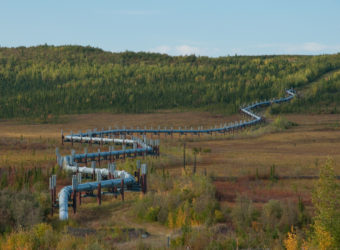
The Trans-Alaska pipeline along the Dalton Highway in August 2010. (Creative Commons photo by Timothy Widley)

“Yeah Ken, what you’ve done, it appears to me, is you’ve put together a slide that essentially cries out, ‘Help. Stop me before I make another irrational veto.’ Because as Sen. MacKinnon said, you created a problem and now you’re saying that somehow the problem — that the governor created with the veto — that we have to make a complete fix, or a complete change to our oil taxing regime rather than just have him start acting a little more savvy,” Kelly said.

The state House invited the Senate to meet Friday to discuss voting to override the tax credit veto and the more than $1 billion Walker stripped from the budget. That includes a $1,000 per-person reduction to Permanent Fund dividends this year.

Senate President Kevin Meyer told the Juneau Empire late Thursday that they would not accept the invitation.

Site notifications
Update notification options
Subscribe to notifications