Curious Juneau

Juneau’s concrete blocks spark tall tales about their origins 

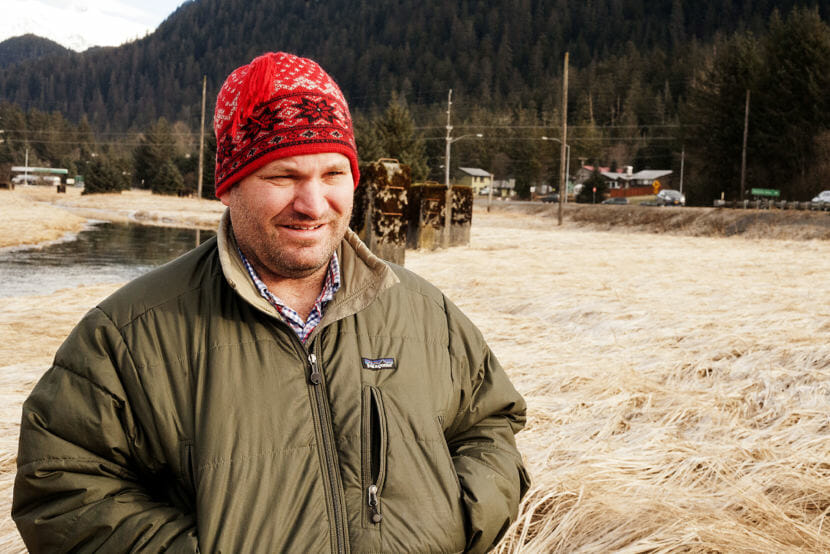
Douglas resident Mark Calvert wants to know what the concrete blocks in the Lemon Creek area were for. (Photo by Tripp J Crouse/KTOO)

Tall tales abound about the mysterious blocks near Lemon Creek: Ancient monoliths, hatches for alien spacecraft, White Alice — even cow graves.

But nothing really, so to speak, concrete.


Curious Juneau stars you and your questions. Every episode we help you find an answer. Catch up on past episodes, or ask your own question on the Curious Juneau page.

Mark Calvert was one of the first to ask one of our most frequently asked questions: What are those blocks along Vanderbilt Hill Road? We took a walk around the wetlands.

“It’s a nice cold, clear day out here — sun kind of shining through, but shining through enough,” Calvert said. “We’re in the wetlands, right at the turn off, off of Egan right by the Pioneer Home. … The creek coming out and all these concrete pilings, and traffic going by.”

The blocks stand taller than a person. With a friend, you might be able to wrap your arms around the skinnier ones.
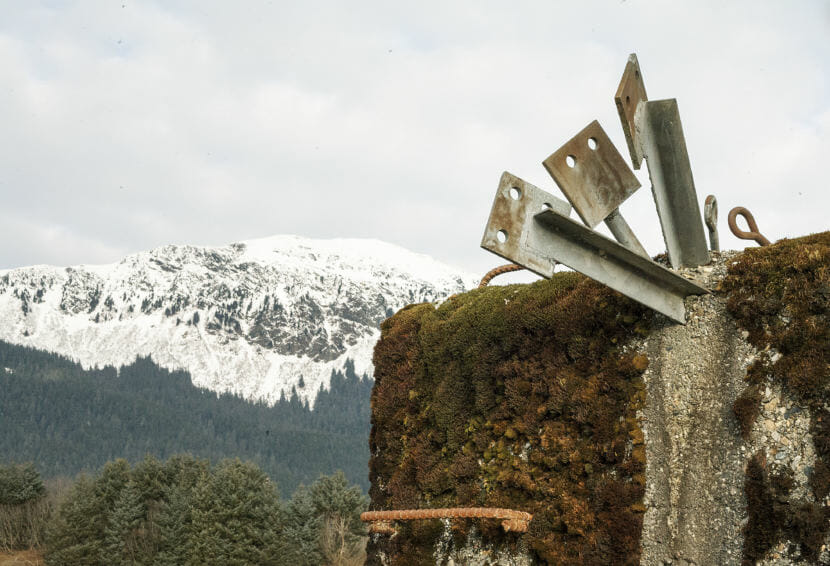
Moss grows over one of the concrete blocks in Lemon Creek. (Photo by Tripp J Crouse/KTOO)
Moss grows over one of the concrete blocks near Lemon Creek. (Photo by Tripp J Crouse/KTOO)

Moss has grown over the tops and sides. They’ve been there for decades. Some blocks sport rebar handles to climb up. On one, three pieces of rebar poke out the top. Perhaps they had anchored something larger?

“They’re in some type of pattern out here and I have zero idea why,” Calvert said. “So trying to figure out what the pattern is and why they’re here instead of somewhere else.”

A blog about Alaska’s Cold War-era early warning radar system led me to a military connection.

In 1992, the U.S. Army put together an inventory of debris at the site. Army documents note a 28-by-73-foot building, a 10-by-17-foot building — and 40 concrete antenna footings — our blocks!

A cartographer for the city and borough of Juneau found an aerial photo from 1962 showing the site.
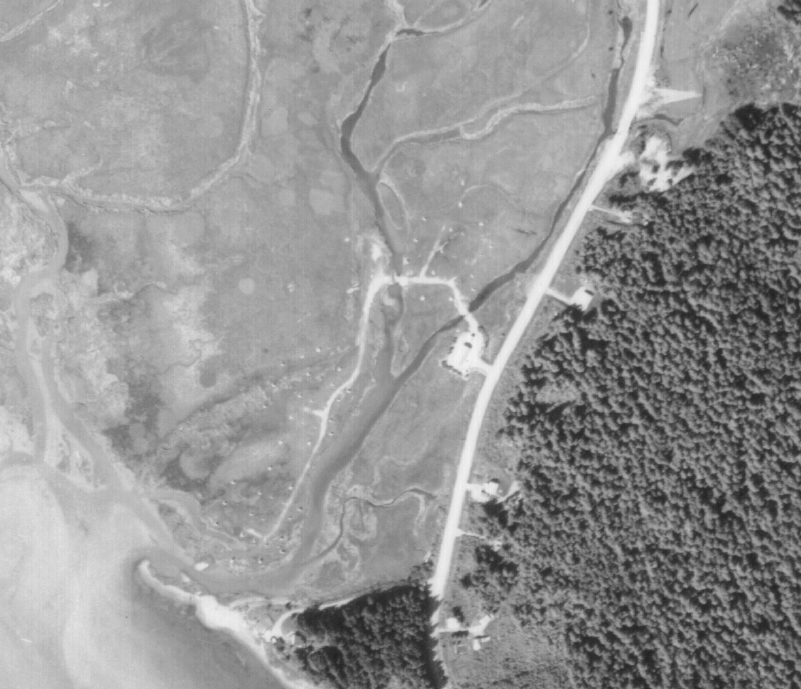
An 1962 aerial image shows a distinct footprint of the concrete blocks. (Photo courtesy City and Borough of Juneau)

The antennas are already gone. But the footprints of the blocks are clear, including some smaller ones that have long been removed.   

It’s another piece of the puzzle, from a very specific point in time and perspective.

The U.S. Army Corps of Engineers had more. The Corps documented that the Army originally obtained the site by special use permit from the Department of Interior in July 1954.

Richard Ragle is a project manager in the corps’ Alaska district. He works in a program that focuses on cleaning up formerly used Department of Defense sites.

“Most of these sites were used briefly by DOD and then turned over to other federal or private entities,” Ragle said. “This is one of the early projects that the Alaska district worked on.”

Ragle said that in 1985 the Corps hired a contractor to perform a site assessment, which included digging into some historical records about the site.

A 1986 report prepared for the Army identified the site as the Juneau Alaska Communication System Five Mile Station. That report includes a brief military history that says it was used as a “Juneau-Kenai VHF scatter circuit project and storage site.”

That’s a way to send radio signals farther without line of sight. By bouncing signals off a layer of the atmosphere, it could theoretically bounce to Kenai.

Corps documents show the U.S. Coast Guard and Bureau of Land Management took possession in 1959.

This is where the Corps’ paper trail went cold.

Former Juneau resident Kathleen “Teeney” Metcalfe was born in the mid-1950s and remembers asking her dad about the blocks. (Metcalfe moved to Anchorage about 25 years ago, but still has family in town.)

“He said that they were the bases for communication towers,” she said. “I don’t remember towers being on them, even when I was a kid, I just remember the concrete blocks.”

In the mid-1970s, Metcalfe worked as a janitor soon after graduating from high school. She remembers cleaning a telecommunications building in that area.

“It was a little tiny building, and it was somewhere near where the pioneer home is now. For whatever reason, in my mind the Coast Guard ran it,” Metcalfe said. “I remember that when you went inside there was just a bunch of radios, but that were built into the walls.”

Metcalfe says there was also a telephone operator’s headset and a switchboard.

That fits with the 1986 Corps report, Ragle said.

“The Coast Guard was using the buildings on the site and had no concerns about anything, and if I really remember correctly the state wasn’t interested in the former antenna anchors being cleaned up that were in the wetland.”

Army documents say removing the footings would be more harmful than letting them stay.

“You’d have to take a fairly big excavator into the wetlands, which would be fairly destructive,” Ragle said.

Today, online property records show Alaska Department of Natural Resources owns the property on the north side of Vanderbilt Hill Road, about 26 acres. U.S. Coast Guard owns about 5 acres on the other side.

The blocks are still there to this day. But that doesn’t keep people, like Mark Calvert, from guessing what they are.

“You never know in this town why somebody does something,” Calvert said. “You see the aftermath of a lot of crazy ideas around town sometimes.”
Juneau’s forgotten pedestrian tunnel carries water, power through Telephone Hill

(Video still by David Purdy/KTOO)


Curious Juneau stars you and your questions. Every episode we help you find an answer. Catch up on past episodes, or ask your own question on the Curious Juneau page.

Ever notice a set of doors on either side of Juneau’s Telephone Hill? There’s one next to the State of Alaska Facilities Center. The other one’s next to the parking garage at Second and Main.

Guess what? They connect.

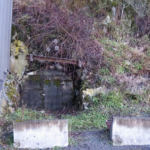
City Manager Rorie Watt graciously unlocks the set of doors that cover exposed rock next to the transit center parking garage.

“Welcome to a little-known but infamous piece of our transportation infrastructure in downtown Juneau,” Watt says as he swing the doors open. “This is the Second Street Pedestrian Tunnel.”

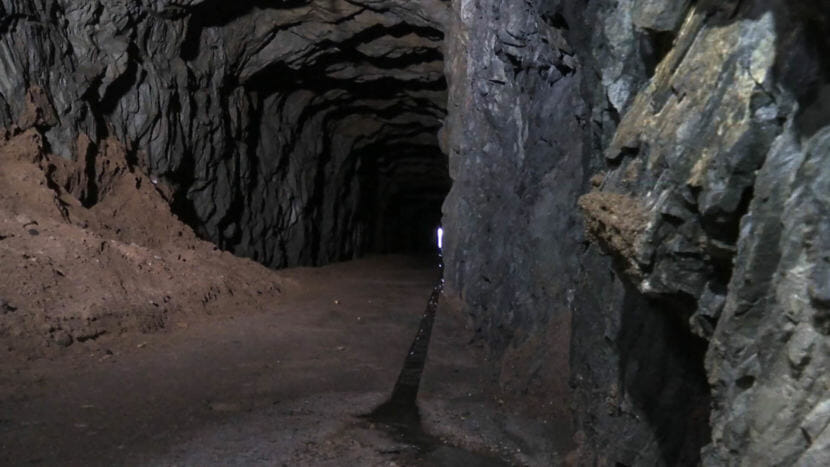
The tunnel resembles a historic mine shaft. There are timber cross-braces shoring up the entrance. But this isn’t from mining; it’s actually a lot newer.

Watt ventures inside.

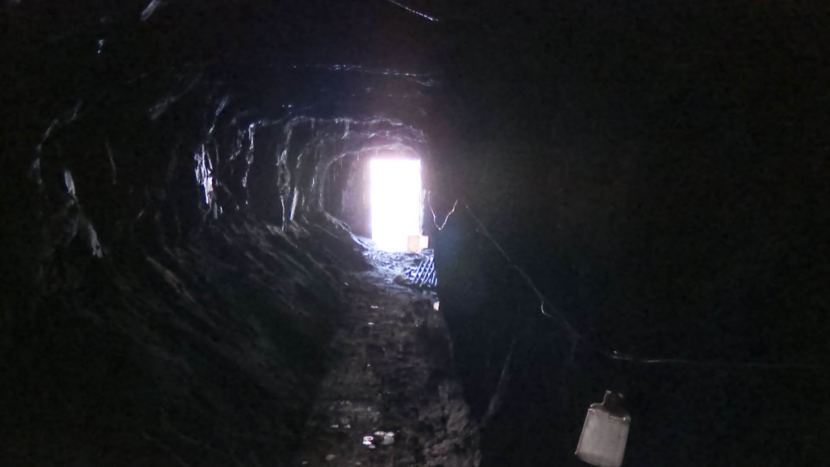
“I think the idea at the time is it would make a nice connection,” Watt said, using a flashlight to trace the edges of the 7-foot-by-10-foot opening. “But when the tunnel was built, you can just see that this is maybe eight feet, rough finished. It’s not exactly inviting to the public.”

The tunnel runs about 350 feet. The other end is barely visible in the inky blackness. We’re underneath what’s known as Telephone Hill. This tunnel’s actually a continuation of Second Street, which abruptly ends at Main Street. But it follows the street’s legal right-of-way to connect Main Street to Willoughby Avenue.

It’s what the original planners had in mind back in the 1970s.

“They thought it would be interesting and a short cut to go through there,” recalled Don Gotschall, an 83-year-old retired civil engineer. He said the brainchild of the tunnel was Hugh Macaulay, chief engineer at Alaska Electric Light and Power.

“He liked to do things the hard way,” Gotscall said.

In a March 4, 1976, letter to the city, Macaulay pitched the tunnel idea.

The letter survives in AEL&P’s archives.

“I’ve heard some rumors floating around and I was a little curious myself, so I went back to our files and archives and came across a folder of the tunnel down there on Second Street,” Eric Eriksen, the power company’s head of transmission and distribution, said in a phone interview.

Macaulay wrote that the power company planned to bore a tunnel for a high-voltage power line.

He proposed making it large enough for pedestrians.

“He described the project and some potential benefits and in that he went on to inquire if the city would be interested in partnering with the project,” Eriksen said.

Macaulay wanted the city to split the estimated $60,000 cost of the tunnel.

That dollar amount is what Eriksen finds amusing.

“You know, I don’t think we’d probably even get started boring for $60,000 today,” he said.

Minutes from a 1976 meeting record naysayers on the Assembly balking at the expense. They were overruled and the funding was approved on a 5-3 vote.

(Video still by David Purdy/KTOO)

From here the record gets murkier. It’s not clear when exactly the tunnel was opened to the public or for how long.

Gotschall says it couldn’t have been for very long.

“As I recall, what they did was they opened it up and they found that the rock is so fractured under there that it leaked water and wasn’t real attractive for people going through,” Gotscall said. “You had to wear rain gear.”

The tunnel was quietly sealed. Wags referred to it then and now as Overstreet’s Underpass after Bill Overstreet, the mayor at the time.

Juneau’s current Mayor Ken Koelsch was hired as a high school teacher in the late 1960s by Bill Overstreet, then the school superintendent. Koelsch recalled there were always doubters and it wasn’t surprising when the tunnel was boarded up.

“It was just one of these pipe dreams and it was like, ‘OK, great you’re going to put in an Overstreet Underpass, it’s going to get a lot of use and it just faded after that and we haven’t come back to that,” the mayor said. “But it’s always in the memory bank of a lot of people here.”

Koelsch says he’d entertain reopening the tunnel, especially if the city ever decides to build a new city hall over the parking garage next to the Second Street entrance.

“I think it’s a great idea,” he said. “I would like to see us actually consider it. But I think the momentum will come when we start with the new city hall.”

The tunnel continues to serve AEL&P’s purpose: a 69,000 volt power line connects its two downtown substations, making the downtown grid more reliable.

And 25 years later, the city was finally able to capitalize on its investment. In 2001, a 16-inch water main was installed.

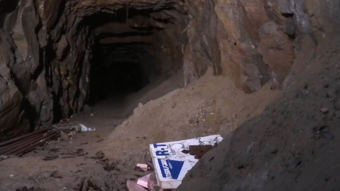
The piles of dirt cover a water line to insulate it and keep it from freezing in Juneau’s Telephone Hill (Video still by David Purdy/KTOO)

City Manager Rorie Watt says proposals to reopen the tunnel to the public are sometimes floated, but he’s skeptical it could ever work.

“I think there’s a charm to the idea that will never go away,” Watt said. “But it’s balanced out by the practicality of what it actually is.”

So for now the Second Street Tunnel – or Overstreet’s Underpass if you prefer – continues to convey water and power, but not people, through the rock beneath Telephone Hill.

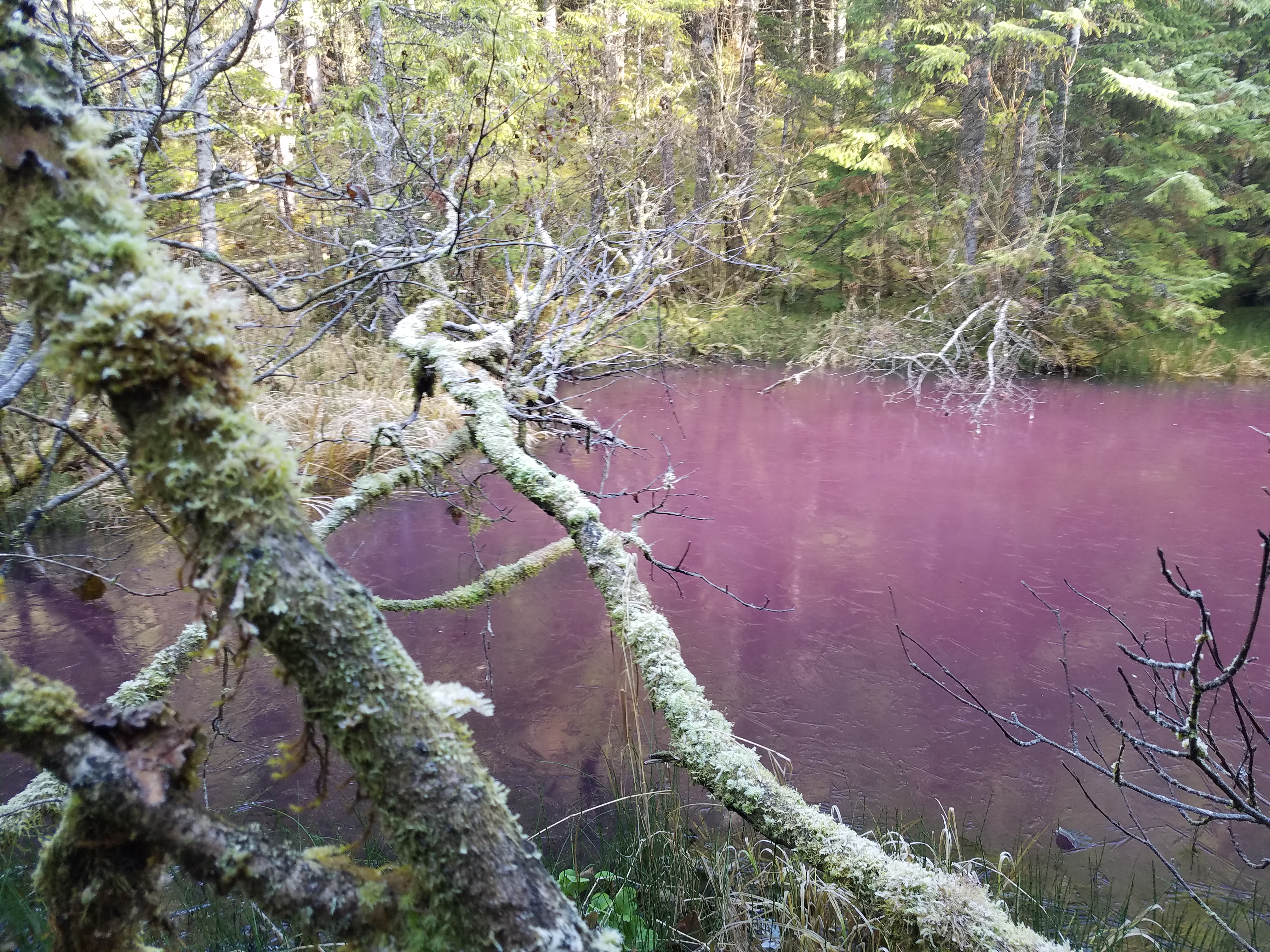
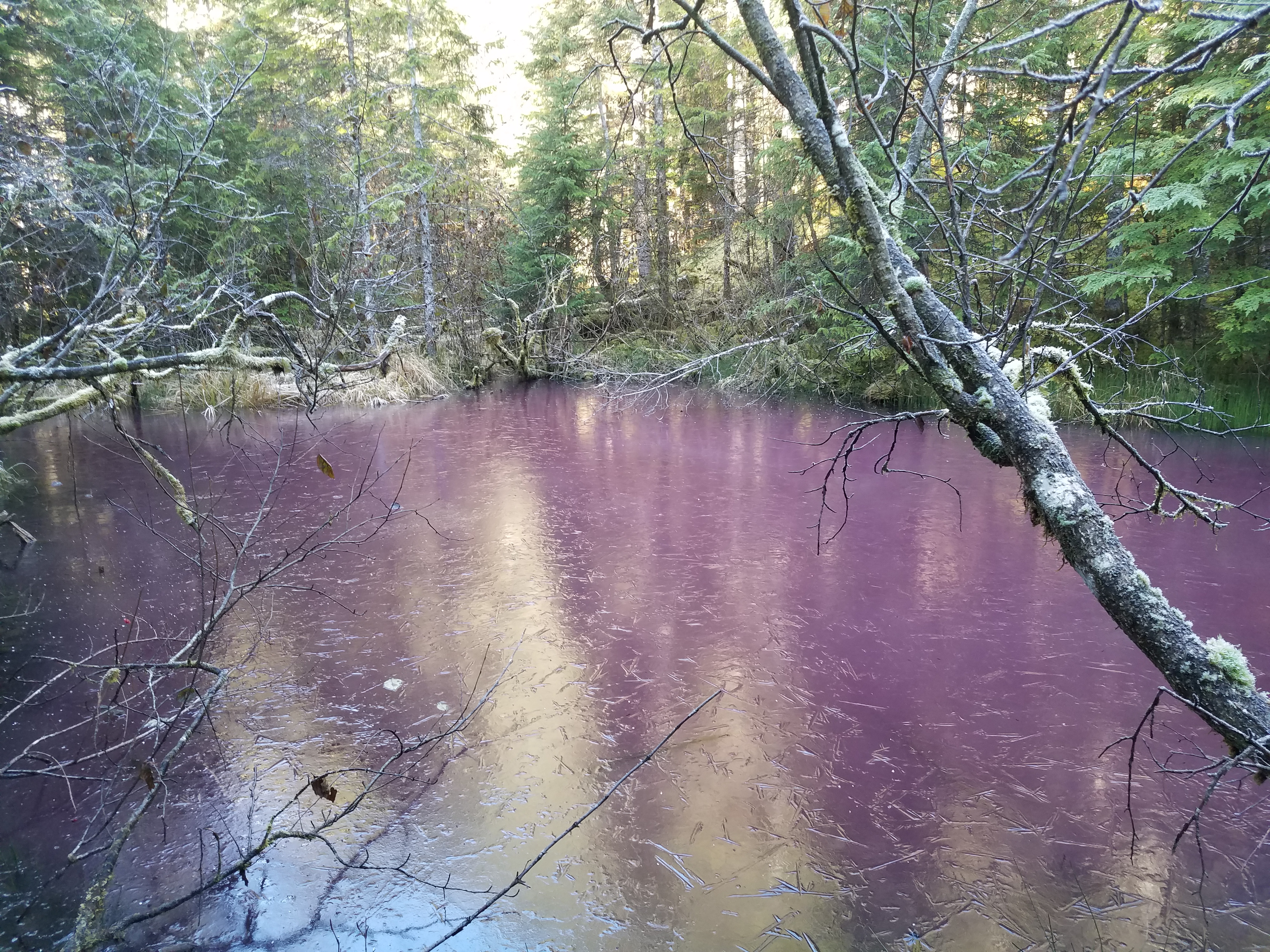
Mysterious pink pond prompts a question and a quest

The ice cracks under my feet, and I realize that is probably one of the scariest sounds in the whole world.

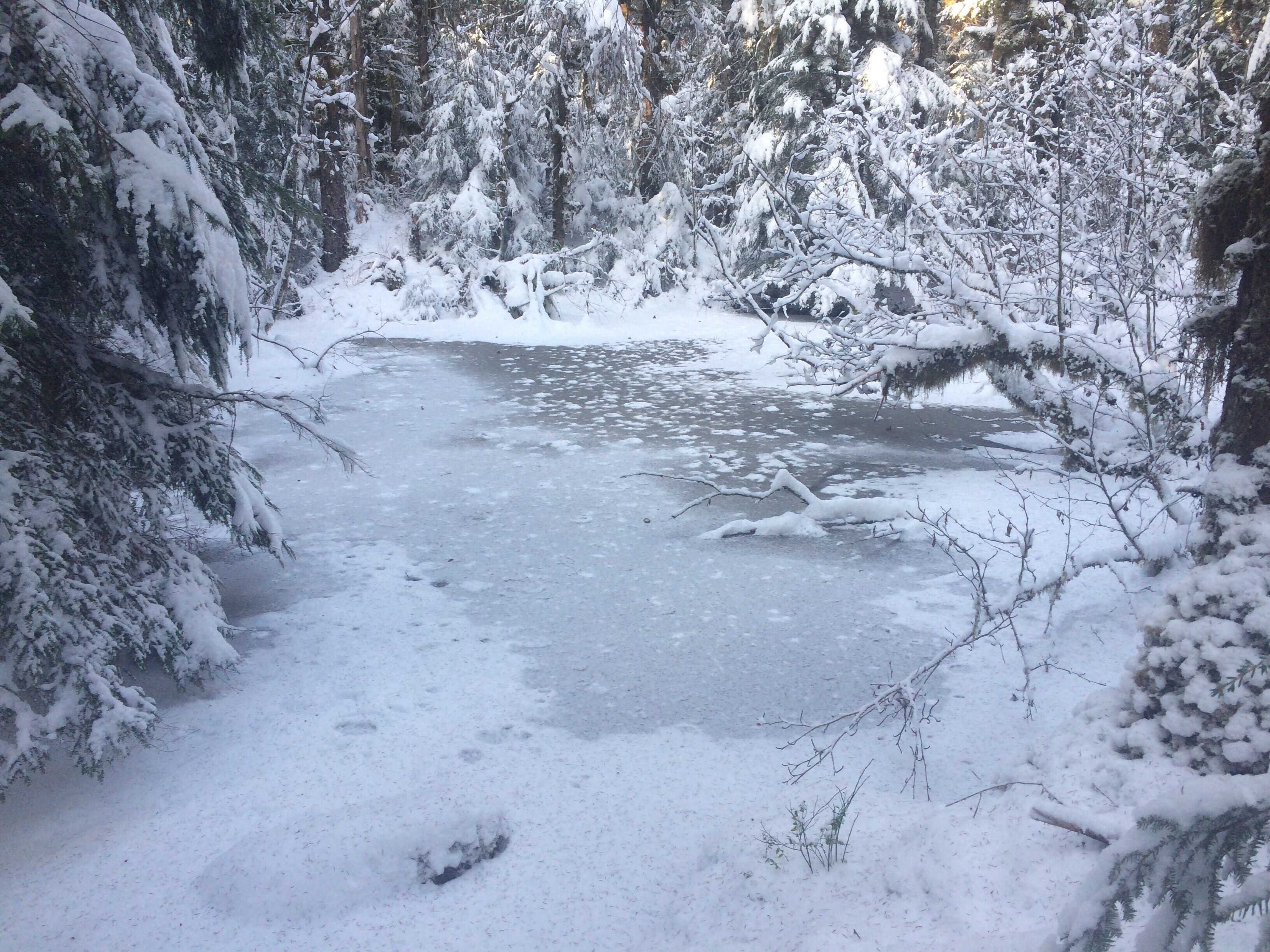
I’m on thin ice, really. I’m gingerly stepping along the edge of pond ice just off the Herbert Glacier trail. Big mistake. I can’t tell what’s ice and what’s firm ground until I step on it.

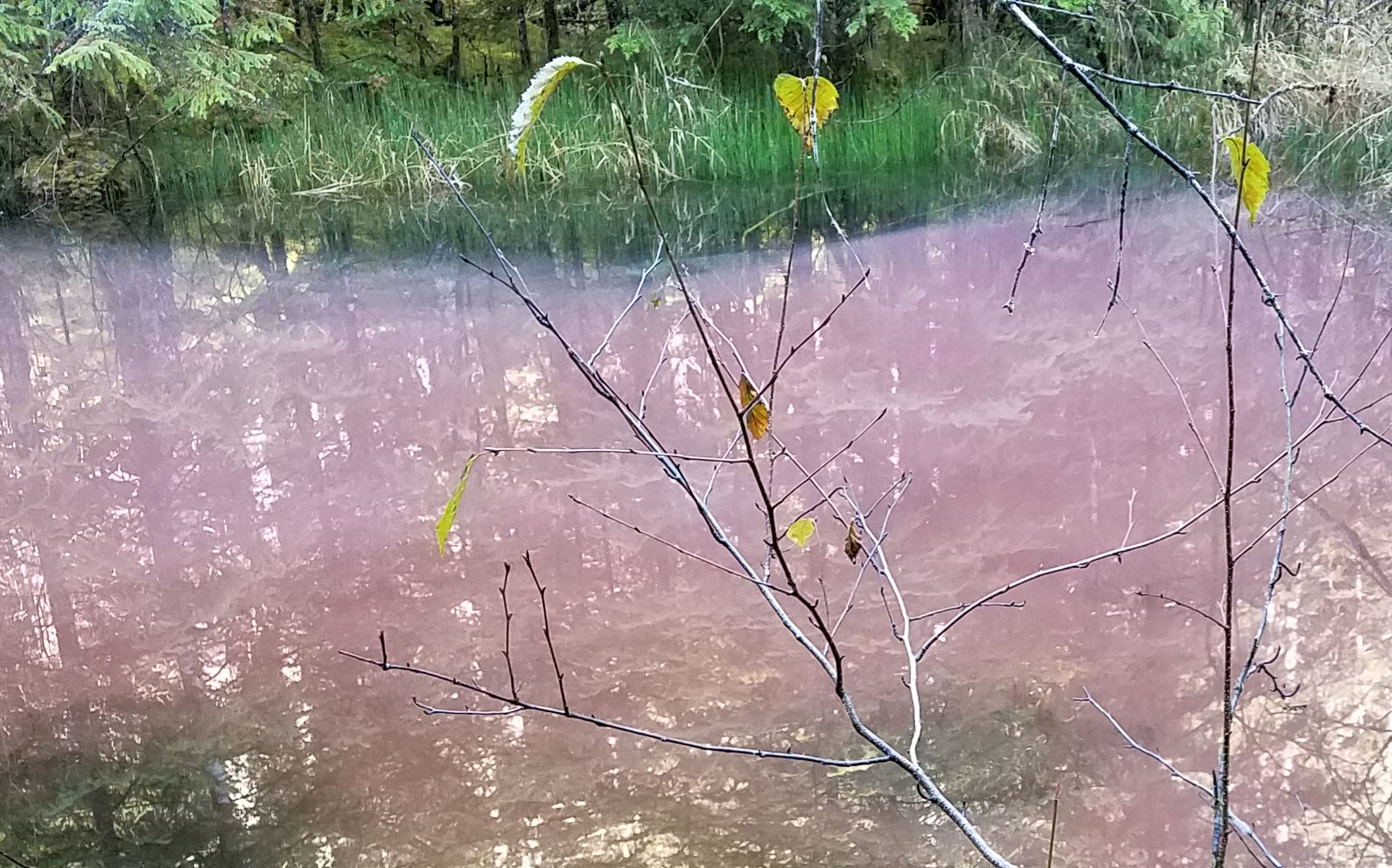
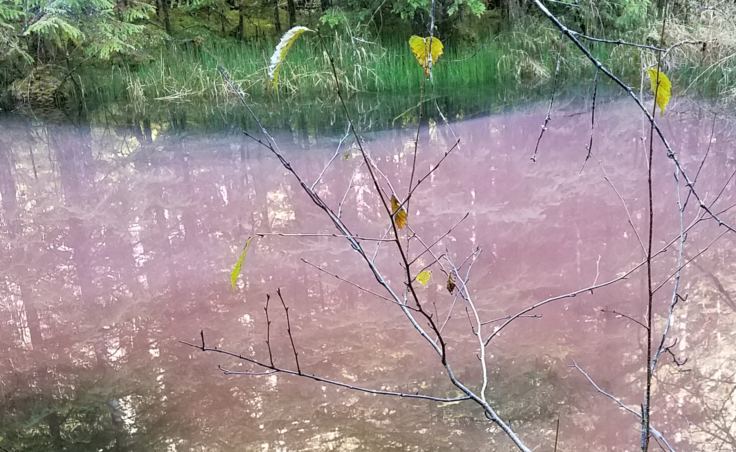
It’s November, just after the first big freeze and snowfall of the year. I’m checking out reports of a pond that looks like it was just visited by French environmental artist Christo. Or, maybe somebody dumped a case of Pepto Bismol in it.


Curious Juneau stars you and your questions. Every episode we help you find an answer. Catch up on past episodes, or ask your own question on the Curious Juneau page.

What caused the weird pink color?

Listener Bill Johnson sent me some pictures of the pond taken before the snowfall. Listener Karen Hutten also sent a picture, saying the unusual “coloration was concentrated more at the back of the pond rather than right by the trail.”

“The reflection kind of screws things up a little bit because the texture that you’re seeing is from the branches above it,” Hutten said. “Really, it looked very wispy. But it could’ve been particulate matter in water.”

Local scientists suggest several possibilities for the pink or lavender color, but they say the only way to know for sure is to examine the water under a microscope.

Jackie Timothy, Southeast supervisor of the Alaska Department of Fish and Game’s Habitat Division, told me her colleagues were curious, too. But they weren’t able to get out and collect any water samples this year.

That’s why I was literally risking my life — for science!

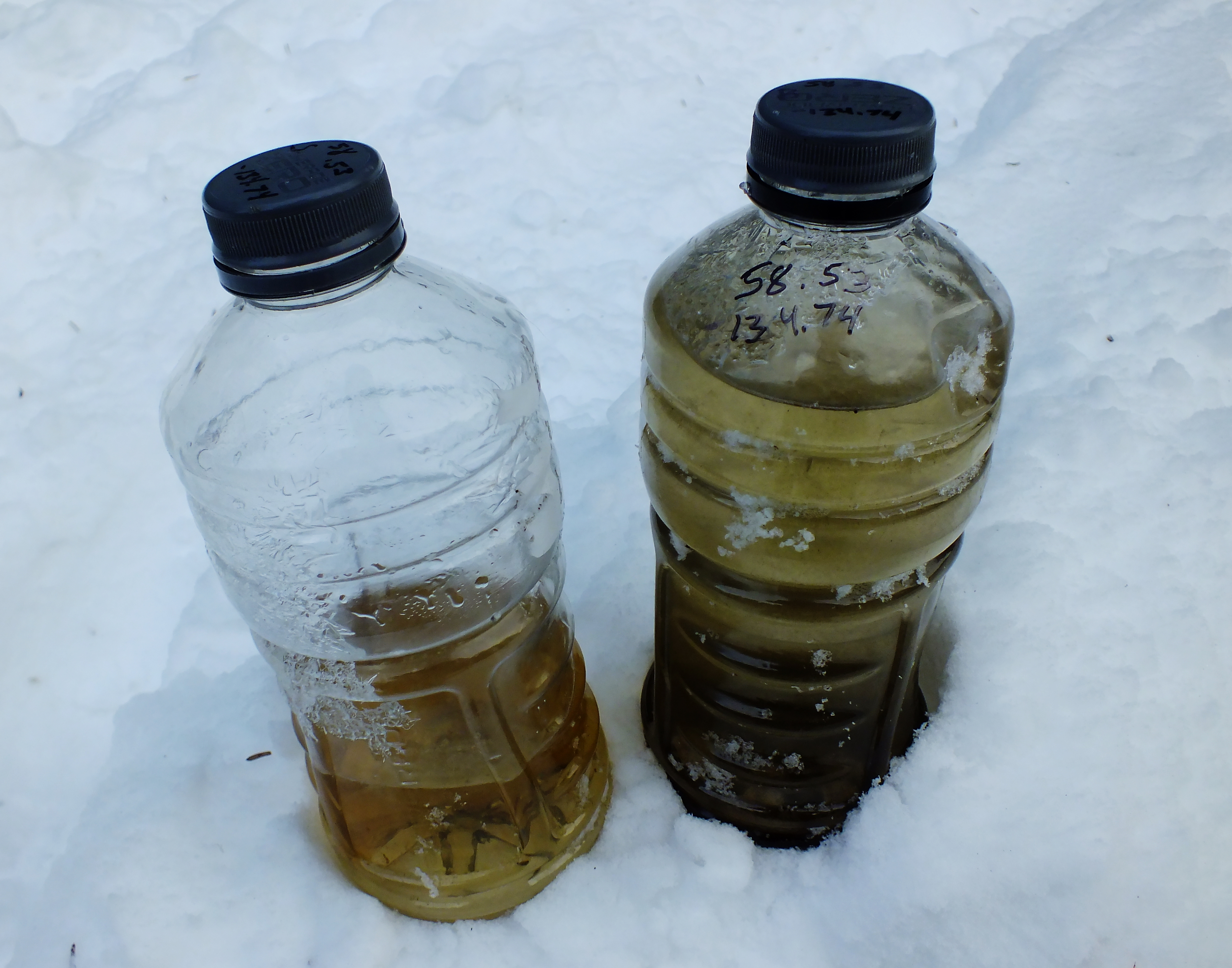
Carrying empty plastic bottles and armed with some ice-cracking tools, I head about 3 miles up the trail to find three ponds buried underneath several inches of ice and snow.

But the water I collected was not pink. Later, I learned that I was at the wrong set of ponds.

“There are two (wooden) benches along this trail,” Hutten explains. “You go way past the first bench.”

“Ohhh!” I said, realizing that I made a huge blunder. I should’ve hiked another mile down the trail.

“You get almost to the second bench, but not quite. But really close,” Hutten explained. “It’s the pond on your left.”


The GAIA GPS app generated this map, which shows where I sampled water along the Herbert Glacier trail. The actual location of the pink pond was likely about a mile further east.


I also fumbled my role as a citizen scientist. Timothy reminded me that my sampling bottles should’ve been sterile.

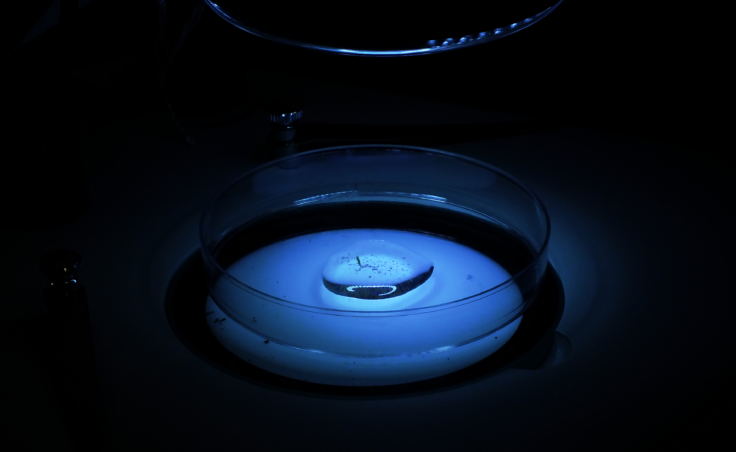
Still, I take my light yellow, mostly clear water samples to the U.S. Forest Service’s Pacific Northwest Research Station in Juneau.

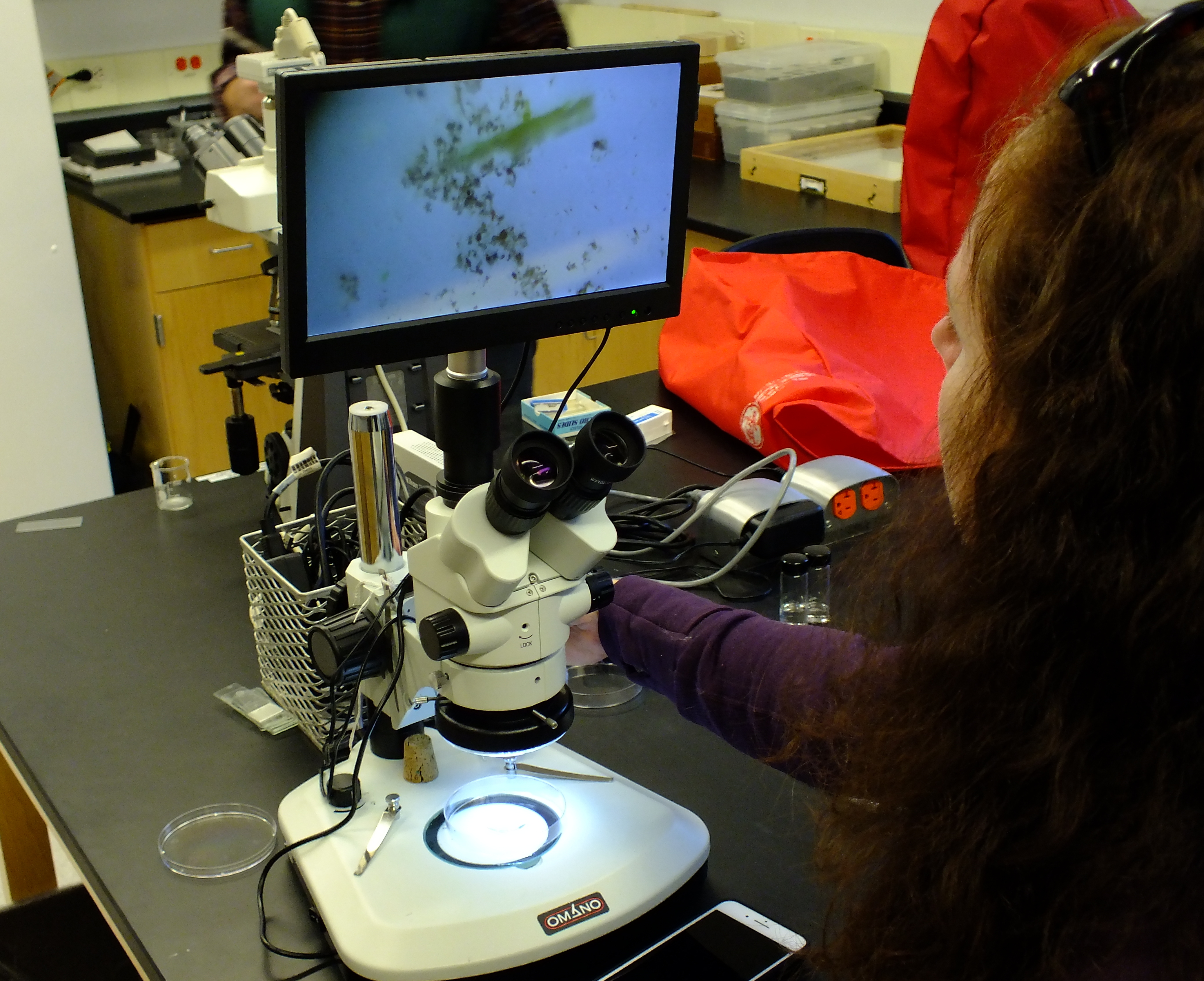
Stream ecologist Rick Edwards and entomologist Elizabeth Graham use a microscope to look at my samples.

“Just looks like normal algal flock with organic matter. I don’t even see any –” Edwards said.

“Ooop! There’s someone moving through,” Graham exclaims.

“Oh, yeah?”

“There’s a green guy just slamming on by,” Graham said. “Oh, now I lost him.”

All they see is some pond debris, a couple of little bugs commonly known as water boatmen, and a very energetic form of plankton called a copepod.

Still, I’m curious. I ask Edwards what could’ve caused the pink color shown in the pictures?

Maybe a fluorescent marker dye used by hydrologists to track water flow in the area? He said it’s unlikely, especially for floodplain ponds. And, he’d likely hear about other scientists doing such research in the area.

Habitat Division’s Jackie Timothy also remembered reports of pink water years ago, long before mining exploration even started upstream on the other side of the Herbert River.

Edwards refers to Hutten’s wispy description as a possible indication of a fungus.

“Long filamentous strands of something, and there are several microbes that grow in filaments,” Edwards said. “Obviously, fungi, the hyphal threads are filaments. That’s quite visible under a microscope, if it were a fungus.”

The coloration could also be from sulfur bacteria that feed on decomposing pond debris and give off a rotten egg smell.

Maybe it’s iron bacteria, but Edwards said that’s usually found in the sediment and shoreline, not the water column. It also generates more of a rusty, orange-red tint.

Edwards said the coloration could also be caused by blooms of algae called dinoflagellates.

While red tide-like blooms of marine dinoflagellates have been reported, Edwards said there are no reports, yet, of red or pink blooms from freshwater dinoflagellates.

I was probably just too late. In addition to making it difficult to find the ponds, Edwards said the snowfall and freezing temperatures likely altered or ended any process that generated the pink color.

“If it is a biological explanation, it’s a microbe of some sort in all likelihood,” Edwards said. “That’s all controlled by temperature.”

“It’s possible that would’ve turned all that off, and they would’ve died and been flushed out,” Edwards said. “On the other hand, there are things that grow in quite cool temperatures.”

So, the mystery of the pink pond will remain a mystery, at least for another, warmer day.

“It might pop again when the ice melts,” Edwards speculates. “In which case, we got to go out there and get a sample now.”

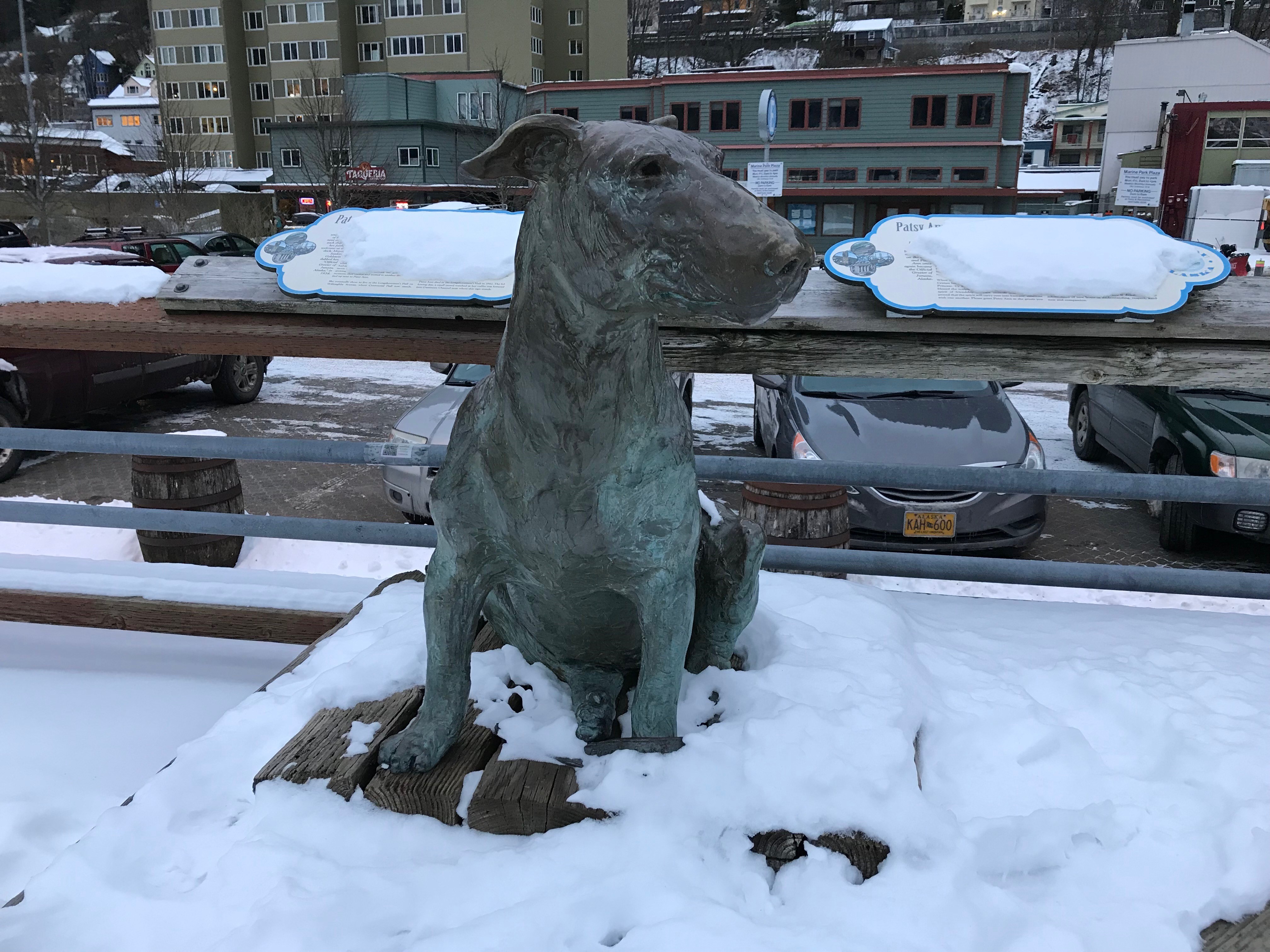
Long ago, Patsy Ann left her mark on historic Juneau, but where?

The statue of Patsy Ann, once Juneau's official greeter, watches downtown Juneau's waterfront in December 2017. The Friends of Patsy Ann commissioned the famous bull terrier's statue, which was presented in July 1992. (Photo by Julia Caulfield/KTOO)
The statue of Patsy Ann, once Juneau’s official greeter, watches downtown Juneau’s waterfront in December 2017. The Friends of Patsy Ann commissioned the famous bull terrier’s statue, which was presented in July 1992. (Photo by Julia Caulfield/KTOO)

Brooks Pinney, 7, and his 4-year-old brother Bridger love learning about the bull terrier Patsy Ann. They love listening to their mom, Amy Pinney, read them the children’s book “Patsy Ann of Alaska: the true story of a dog” by Tricia Brown.

“The kids got super into it. They read it over and over and over, and we took a pedi cab around downtown this summer and learned a little bit more about the sculpture and then it just made it even more fascinating,” Pinney said.

On one page the book reads:

“She walked the aisles of the theater while string musicians played Beethoven. She warmed herself by the hotel’s wood stove as gold miners swapped tall tales. She pressed her paw prints in the fresh cement of a new sidewalk.”

Where are those paw prints? Pinney and her kids wanted to know.


Curious Juneau stars you and your questions. Every episode we help you find an answer. Catch up on past episodes, or ask your own question on the Curious Juneau page.

Born in 1929 in Portland, Oregon, Patsy Ann moved to Juneau with her owners as a puppy.

Several authors have written that she hated staying indoors, and often wandered around downtown. She would wait on the docks for the ships to come in.

Despite being deaf, she became famous for knowing exactly when the ships would arrive. By 1934, the mayor named her the “Official Greeter of Juneau.”

So those paw prints would’ve been set about 80 years ago.

“Who knows where they would have been downtown, because downtown was so different when Patsy Ann was alive … so maybe nobody even knows where they are. Other than the author, and maybe the author doesn’t even know,” Pinney wondered.

That seemed like a good place to start. So I called up Tricia Brown, author of “Patsy Ann of Alaska.”

“What I remember is when I read about it, I wish I knew when it was because it didn’t say and that was, you know, it sparked my interest as well, so I’m not surprised it’s also inviting somebody else’s curiosity. I just didn’t, I don’t know,” Brown said.

Brown thought she read about the paw prints in a short book by Carl Burrows published in 1939.

I found it in the Alaska State Library’s historical collections. Burrows’ book is actually a red, 8-page booklet. A sketch of Patsy Ann is on the cover, but there wasn’t a word about paw prints in cement.

But Historical Collection library assistant Jacki Swearingen had a lead.

“It’s the Kinky Bayers collection, and he wrote down a lot of newspaper articles,” she said. “I’m going to look and see if maybe he has specific references to Patsy Ann.”

Swearingen came back with list of dates and brief descriptions of newspaper articles.

At the bottom of the page one description began, “Patsy Ann leaves her footprints for posterity …”

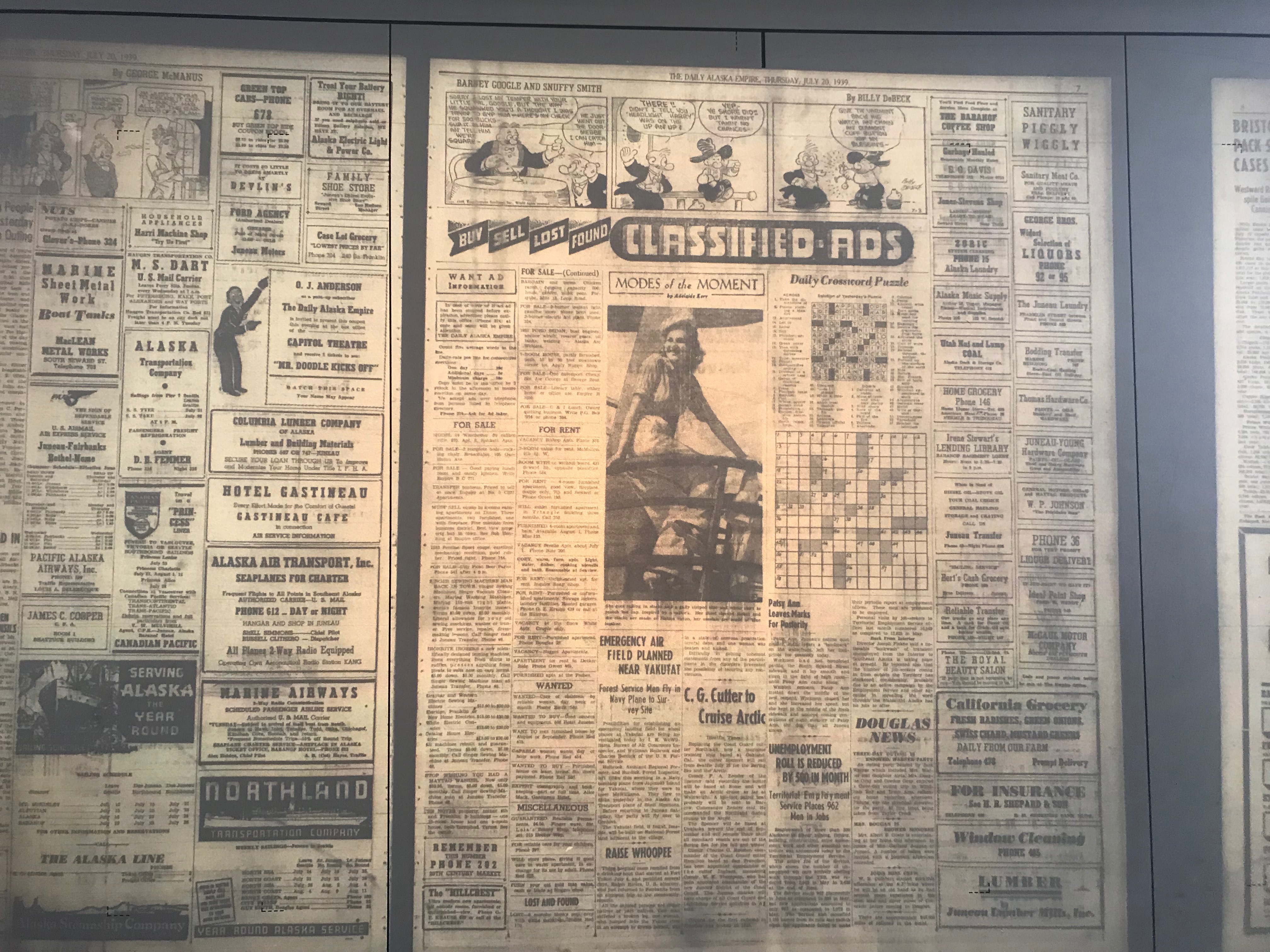
“I think this probably says ‘July 20, 1939’ and maybe that, the seven might mean seventh page of the newspaper,” Swearingen added.

Soon I was scrolling through copies of old Daily Alaska Empires on microfilm.

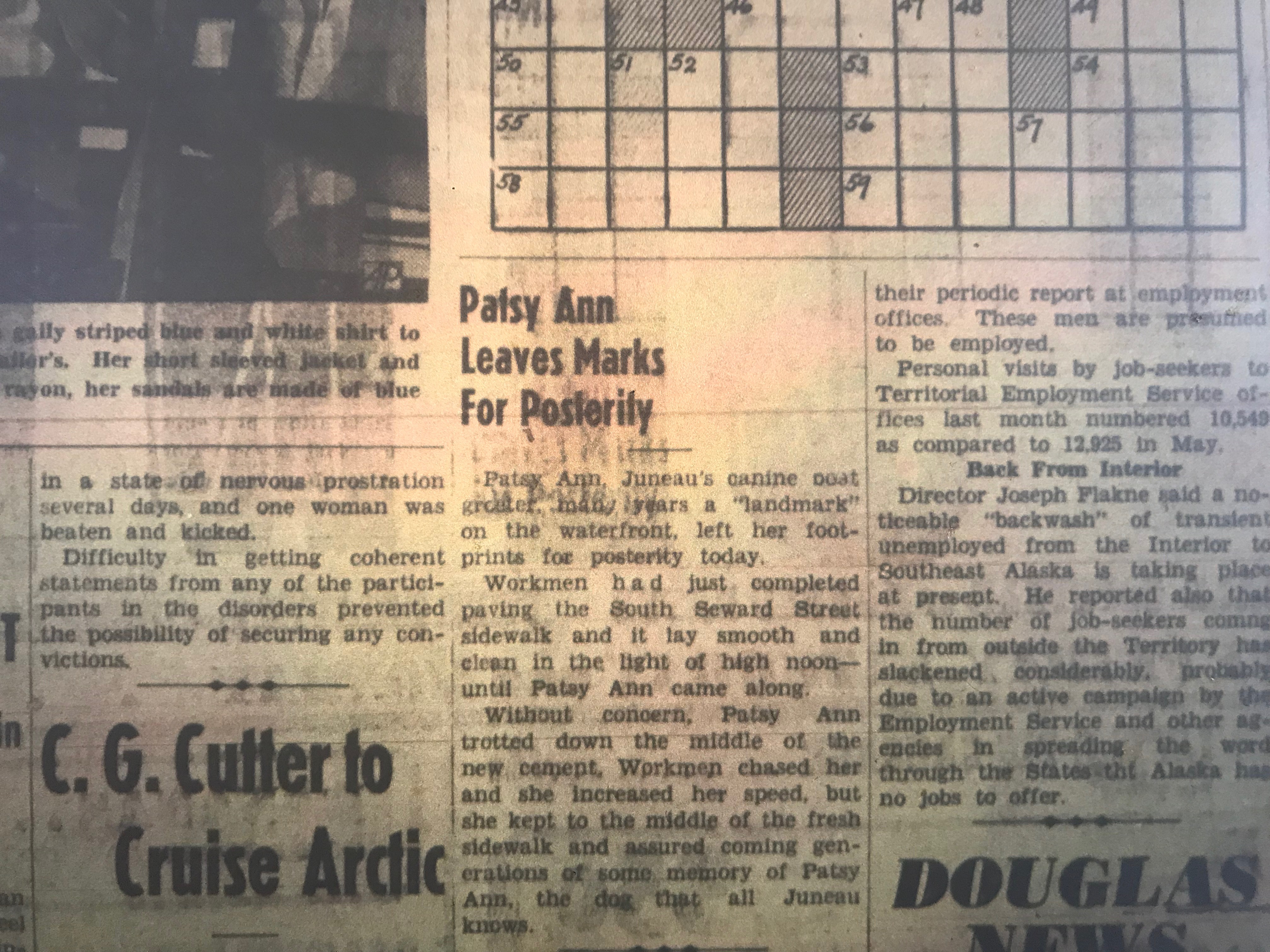
July 20, 1939: Below a crossword puzzle and comic strips, I spotted the article: “Patsy Ann Leaves Marks For Posterity.”

The article reads:

“Patsy Ann, Juneau’s canine boat greeter, many years a ‘landmark’ on the waterfront, left her footprints for posterity today.

“Workmen had just completed paving the South Seward Street sidewalk and it lay smooth and clean in the light of high noon — until Patsy Ann came along.

“Without concert, Patsy Ann trotted down the middle of the new cement. Workmen chased her and she increased her speed, but she kept to the middle of the fresh sidewalk and assured coming generations to some memory of Patsy Ann, the dog that all Juneau knows.”

So that’s that. Patsy Ann left her paw prints on a South Seward Street sidewalk.

Someone from City and Borough of Juneau Public Works told me that the sidewalk had probably been through two to four iterations since then.

I met with Amy Pinney and her kids on a snowy, windy day on South Seward, to share with them what I had found.

But seven-year-old Brooks still had a question.

“Why did they have to rip apart Patsy Ann’s track?” he asked.

His mom chimed in.

“I guess back then when they tore up the first sidewalk they wouldn’t have known what kind of a mascot she would have been for the town,” Pinney said. “But it should have been known since the mayor named her ’official ship greeter’ … and it just seems so romantic. If we get a dog we’ll have to get one just like Patsy Ann.”

Patsy Ann passed away in 1942, but you can still see her statue on the downtown Juneau waterfront. Even though her paw prints are gone, her story is still capturing Juneau kids’ imaginations.

Even with nowhere to go, Juneau car thieves are a growing problem

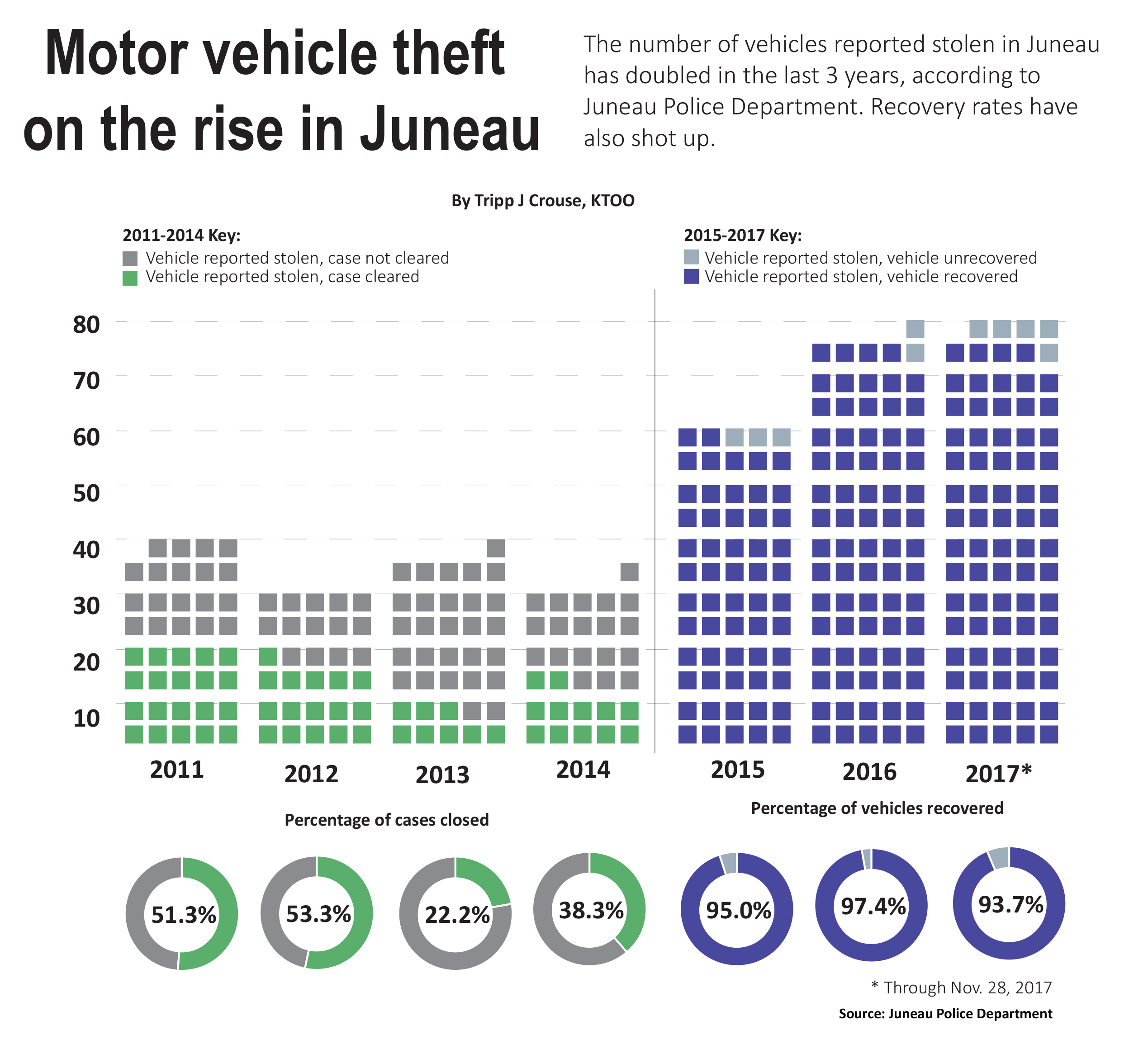
Statistics for 2011 through 2014 are from a 2016 Juneau Police Department annual report. Statistics for 2015-2017 were provided directly by JPD. Cases are cleared when there's an arrest in the case. (Graphic by Tripp J Crouse/KTOO)
Statistics for 2011 to 2014 are from a 2016 Juneau Police Department annual report. Statistics for 2015 to 2017 were provided directly by JPD. Cases are cleared when there’s an arrest in the case. (Graphic by Tripp J Crouse/KTOO)

Juneau isn’t on the road system, yet car thefts in the de facto island city are on the rise. In fact, 2017 has already surpassed the number of stolen motor vehicles reported in recent years, and more than doubled since 2014.

Adam Savage moved to Juneau this spring. Originally from Seattle, the 35-year-old appreciates Juneau’s small-town vibe. Even getting his car stolen reminds him of how close his adopted community is.

“I thought that in a little community like this there wouldn’t be a big theft problem, just because where are you going to take a car?” Savage said. “You can only go so far – there’s only 50 miles of road.”

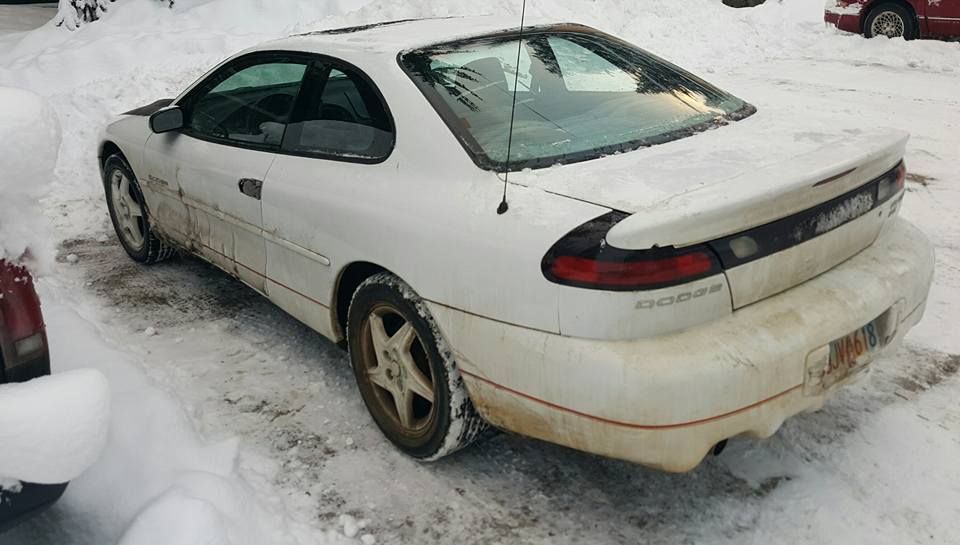
After the brakes went bad in Savage’s 1998 Dodge Avenger, he left it in a restaurant parking lot in the Mendenhall Valley.

“I just probably got complacent thinking that it’s a small town that I could trust everybody in town,” he said.

But when the parts came in a couple weeks later, the car was gone.

“I don’t know what the actual statistics are. I thought I was the only car that probably ever got stolen in this little town,” he said, laughing.

Savage reported the car stolen. And then a lucky break. The next day, Nov. 21, authorities said Angelo Lerma, 22, tried to register the Avenger at the Division of Motor Vehicles.

DMV employees notified the authorities. Lerma was arrested on an outstanding warrant stemming from DUI and reckless driving charges earlier this year.

But the car wasn’t there. Savage called around and posted on the Juneau Community Concern Facebook group. The response overwhelmed him.

“Then all of a sudden I get a response of 200 people,” he said. “It’s really just kind of a close-knit. Everybody has everybody’s back around here, which is a really cool thing.”

Savage said a friend found his car and “stole it back.”

Angelo Lerma attempted to register a stolen 1998 Dodge Avenger in his name at the Juneau DMV. He was arrested on an outstanding warrant after the authorities were alerted. (Photo courtesy Adam Savage)
Authorities say Angelo Lerma attempted to register this stolen 1998 Dodge Avenger in his name at the Juneau Division of Motor Vehicles. He was arrested on an outstanding warrant after the authorities were alerted. (Photo courtesy Adam Savage)

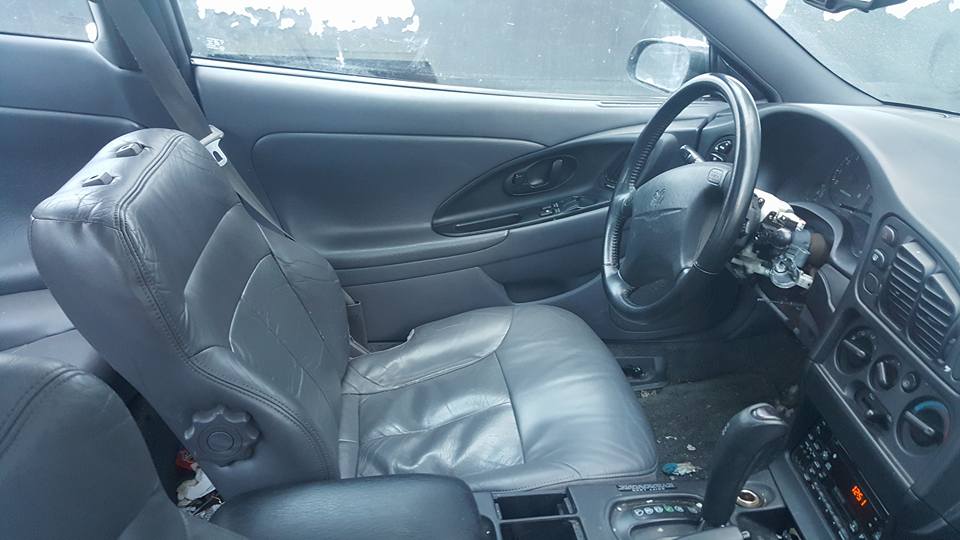
“From the outside it didn’t look bad, just a spray-painted hood,” Savage said, describing the car. “But then there were hypodermic needles in there. There were little bags for some sort of drugs all over the place. The headrest from the driver’s side was gone. Somebody’d need a headrest that bad, you know, to steal a whole car for a headrest?”

The door handle was removed and the gas cap was missing, too. Someone tore up the trunk, and also tore the ignition lock out of the steering column, so the car could be started with a screwdriver.

Adam Savage recovered his car that was stolen from a restaurant parking lot in Mendenhall Valley. But it wasn't it great shape. Someone had tore out the ignition switch and trashed the interior. (Photo courtesy Adam Savage)
Adam Savage recovered his car that was stolen from a restaurant parking lot in Mendenhall Valley. But it wasn’t it great shape. Someone had torn out the ignition switch and trashed the interior. (Photo courtesy Adam Savage)

“Needless to say, my key didn’t work when I got there,” Savage said, laughing.

According to the Juneau Police Department, Savage’s Avenger was one of about 79 vehicles reported stolen so far this year.

The Juneau Police Department reports all but five of the vehicles reported stolen this year have been recovered. It’s likely to be at least the third year in a row that the department logs a recovery rate above 90 percent.

As for the Avenger, Savage would like to sell it. But with all of its problems, including the bad brakes, it’s been a hard sell. He’s had a couple of offers to take the car for free.

What’s the history of the Quonset huts on Atlin Drive?

Two Quonset huts at the corner of Mendenhall Loop Road and Atlin Drive are among the last remnants of Juneau’s history during World War II. Skip Gray, a crew chief for Gavel Alaska, asked about the huts’ history for this edition of Curious Juneau. If you’ve driven on Mendenhall Loop Road, you may have seen the huts. The rusted steel half-circles look a bit like mini-airplane hangars. I didn’t know much about Quonset huts, so I called Julie Decker. She’s the director of the Anchorage Museum – and co-edited the book “Quonset Hut: Metal Living for a Modern Age.” Decker described a Quonset hut as “a temporary structure, born of war and expediency, and ended up becoming a permanent fixture on our landscape.” The huts were named after Quonset Point, Rhode Island, near where they were first built at a naval air station. The military developed them at the start of World War II as solid, inexpensive structures that were easy to ship and build. They were used around the world as places for soldiers to eat, sleep, work, and heal. Decker said that after the war, the military and local governments, including Anchorage, had to decide what to do with them. Many were sold off. “They tried everything from banning Quonset huts from our downtown to using them for railroad housing,” she said. “And, instead, they became permanent fixtures and got used as artists’ studios and garden spaces and sheds and restaurants. And I just kind of loved the way these things got adopted and became part of the fabric of our lives.” They remained more common in Alaska than they were in other places after the war. In part, that’s because it was more expensive to remove them here. So people had to find ways to use them. Many of the modest structures became houses. I told Decker about one in Juneau’s quirky Starr Hill neighborhood. It’s currently listed at $179,000. Decker asked if I was kidding. I wondered what it was like to live in one. It doesn’t look like the Quonset huts on Atlin Drive have been lived in for a long time. But a coworker let me know that North Douglas resident Paul Disdier still lives in one, so I stopped by his house to find out what it was like. Disdier said: “The roof that was on this house, the steel was so thick, you actually wouldn’t even need to paint it. It would still be here. You know, I think the ones that are out in the valley have the original roofs on them and they’re unpainted still. It’s so thick it would take forever to rust through them.” There are odd parts to living in the structure. The metal roof can make it damp. But one problem for today’s residents wouldn’t have affected the soldiers in the war. “This house has a lot of steel in it,” he said. “I have not very good cellphone reception when I’m in the house and that’s just what you have to live with.” At this point, I knew about the Quonset huts in other parts of Juneau, but I was stuck on Atlin Drive huts. I went back to Skip Gray for help. “I had heard stories of Quonset huts in the Mendenhall Valley much of my life it seems like, off and on, just various people talking about them,” he said. “I think I’d noticed them in the woods before, but they had become much more visible, because some trees have been cut down around them. … I knew they were related to the military somehow, but I didn’t know how.” Skip gave me a lead that led to Mary Lou Spartz. She’s a spry 86-year-old who has vivid members of life in Juneau during World War II. “It was intended to be a big base,” Spartz said. “And it was camouflaged from the road, so we never saw any of it.” Like other civilians, Mary Lou wasn’t allowed on the base. But she remembered there was a full hospital on it. “The thinking was, (if) there was a major invasion of Alaska, and there were wounded, and people had to be brought somewhere, they would come here for medical attention,” she said. Spartz said Juneau residents were worried that the Japanese military would invade the city. “We just didn’t have any idea,” she said. “As you understand, we’re close enough that it wouldn’t have been that hard.” Her father made concrete using a gravel pit he owned that was behind where the Quonset huts stand today. “He was pretty much put out of business by the Army,” Spartz said. “They were going to expand the airport. And they just gave him a price that was way under what it was valued, and said take or leave it, but we’re going to take it.” She recalled that the base had many Quonset huts, which were sold and spread around town after the war. “They were substantial,” Spartz said. “If you look at the Quonset hut that is out there at Atlin, you can tell that it’s meant to last.” I stopped by the Juneau-Douglas City Museum to see if they had information on the huts. The staff found a description of the Army post written during the war by its commanding officer, Lt. Col. Roy Riegle. You get a sense of his proper personality from his report. He proudly writes that the post didn’t have a single case of venereal disease. When the soldiers left their Quonset huts, Riegle ordered them not to visit the legal brothels on South Franklin Street. The Army post covered 500 acres along what is now Mendenhall Loop Road. It housed 2,000 soldiers – more than a third of the city’s entire population in the census taken the year before the war. The post was self-sustaining, with its own laundry, shoe shop and bakery. A farm along Eagle River plowed by the soldiers provided potatoes, radishes, lettuce and cabbages. Many of the soldiers’ jobs were to guard the airport, which was under construction immediately before the war. It served as a link between the Lower 48 and air bases in western Alaska. The post also provided basic training to soldiers drafted from Southeast Alaska. Riegle mentions the post’s Quonset huts, saying that their dark interiors were painted white to make them appear brighter. I didn't have to go far to find more. Next door from KTOO, Anastasia Tarmann, a librarian at the Alaska State Library, remembered an oral history interview she did with Gus Mohr, who died in 2016. Mohr was a sergeant who arrived in Juneau about a week after the attack on Pearl Harbor. He and the other soldiers slept in tents the first winter. Then the pieces of the Quonset huts arrived. “We actually built the Quonset huts,” Mohr said. “They had wood floors that were shipped up from the United States.” Mohr said the post wasn’t a bad place to live. “We had a beautiful camp there, well maintained,” Mohr said. “And we built a big kitchen, hot showers and everything. We used diesel oil, fuel for the hot showers and everything like that.” Mohr said the soldiers ate well, including food they got from fishing and hunting. “We weren’t hurting,” he said. “We shot bear. Bear meat’s pretty stinky, but deer is pretty good, so we had all fresh food and everything like that.” I never found information about the use of these exact huts in the war. One source says he heard the larger one served as a laundry. A Juneau Empire story passed along a legend that Bob Hope – the country’s most popular comedian -- performed in it. We do know from Riegle’s account that Hope visited the post. That Empire story said the Forest Service used the huts after the war, to store firewood and as a space to paint signs and benches. Fast forward to 2010. Developer Richard Harris bought the huts. To find out what’s happening in them these days, I called Harris’s office. The person who answered the phone says one’s being used as a paint shop. While the huts may not have much of a future, they’ve had an interesting past. I reported back to Skip Gray. “I think it’s cool that you found out so much about the military complex,” he said. “I’d never heard how big it was, or why they were there, what they were doing there. … I asked if he’d think of this information when he drives past them in the future. He replied: “Yeah, every time I drive past them, it just kind of plants that little question in my mind of what they were all about. And I’m thankful you were able to dig up some great information on it.” Gray said he used to live in a Quonset hut at the top of 6th Street, adding that it was “Cosy. It was a pleasant place to live.”
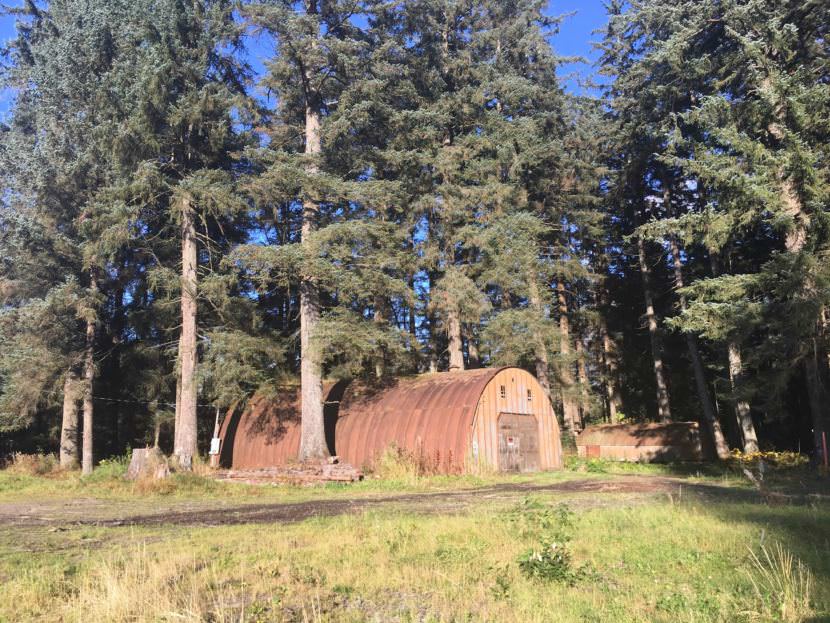
Two Quonset huts on Atlin Drive are among the last remnants of World War II in Juneau. (Photo by Andrew Kitchenman/KTOO)

Two Quonset huts at the corner of Mendenhall Loop Road and Atlin Drive are among the last remnants of Juneau’s history during World War II.

Skip Gray, a crew chief for Gavel Alaska, asked about the huts’ history for this edition of Curious Juneau.


Curious Juneau stars you and your questions. Every episode we help you find an answer. Catch up on past episodes, or ask your own question on the Curious Juneau page.

Listen to the extended podcast version here:

If you’ve driven on Mendenhall Loop Road, you may have seen the huts. The rusted steel half-circles look a bit like mini-airplane hangars.

I didn’t know much about Quonset huts, so I called Julie Decker. She’s the CEO of the Anchorage Museum – and co-edited the book “Quonset Hut: Metal Living for a Modern Age.”

Decker described a Quonset hut as “a temporary structure, born of war and expediency, and ended up becoming a permanent fixture on our landscape.”

The huts were named after Quonset Point, Rhode Island, near where they were first built at a naval air station. The military developed them at the start of World War II as solid, inexpensive structures that were easy to ship and build. They were used around the world as places for soldiers to eat, sleep, work and heal.

Decker said that after the war, the military and local governments, including Anchorage, had to decide what to do with them. Many were sold off.

“They tried everything from banning Quonset huts from our downtown to using them for railroad housing,” she said. “And, instead, they became permanent fixtures and got used as artists’ studios and garden spaces and sheds and restaurants. And I just kind of loved the way these things got adopted and became part of the fabric of our lives.”

They remained more common in Alaska than they were in other places after the war. In part, that’s because it was more expensive to remove them here. So people had to find ways to use them.

Many of the modest structures became houses. I told Decker about one in Juneau’s quirky Starr Hill neighborhood. It’s currently listed at $179,500. Decker asked if I was kidding.

I wondered what it was like to live in one. It doesn’t look like the Quonset huts on Atlin Drive have been lived in for a long time. But a coworker let me know that North Douglas resident Paul Disdier still lives in one, so I stopped by his house to find out what it was like.

“The roof that was on this house, the steel was so thick, you actually wouldn’t even need to paint it,” Disdier said. “It would still be here. You know, I think the ones that are out in the valley have the original roofs on them and they’re unpainted still. It’s so thick it would take forever to rust through them.”

There are odd parts to living in the structure. The metal roof can make it damp. But one problem for today’s residents wouldn’t have affected the soldiers in the war.

“This house has a lot of steel in it,” he said. “I have not very good cellphone reception when I’m in the house and that’s just what you have to live with.”

At this point, I knew about the Quonset huts in other parts of Juneau, but I was stuck on Atlin Drive huts. I went back to Skip Gray for help.

“I had heard stories of Quonset huts in the Mendenhall Valley much of my life it seems like, off and on, just various people talking about them,” he said. “I think I’d noticed them in the woods before, but they had become much more visible, because some trees have been cut down around them. … I knew they were related to the military somehow, but I didn’t know how.”

Skip gave me a lead that led to Mary Lou Spartz. She’s a spry 86-year-old who has vivid memories of life in Juneau during World War II.

“It was intended to be a big base,” Spartz said. “And it was camouflaged from the road, so we never saw any of it.”

Like other civilians, Mary Lou wasn’t allowed on the base. But she remembered there was a full hospital on it.

“The thinking was, (if) there was a major invasion of Alaska, and there were wounded, and people had to be brought somewhere, they would come here for medical attention,” she said.

Spartz said Juneau residents were worried that the Japanese military would invade the city.

“We just didn’t have any idea,” she said. “As you understand, we’re close enough that it wouldn’t have been that hard.”

Her father made concrete using a gravel pit he owned that was behind where the Quonset huts stand today.

“He was pretty much put out of business by the Army,” Spartz said. “They were going to expand the airport. And they just gave him a price that was way under what it was valued, and said take or leave it, but we’re going to take it.”

She recalled that the base had many Quonset huts, which were sold and spread around town after the war.

“They were substantial,” Spartz said. “If you look at the Quonset hut that is out there at Atlin, you can tell that it’s meant to last.”

I stopped by the Juneau-Douglas City Museum to see if they had information on the huts. The staff found a description of the Army post written during the war by its commanding officer, Lt. Col. Roy Riegle. You get a sense of his proper personality from his report. He proudly writes that the post didn’t have a single case of venereal disease. When the soldiers left their Quonset huts, Riegle ordered them not to visit the legal brothels on South Franklin Street.

The Army post covered 500 acres along what is now Mendenhall Loop Road. It housed 2,000 soldiers – more than a third of the city’s entire population in the census taken the year before the war. The post was self-sustaining, with its own laundry, shoe shop and bakery. A farm along Eagle River plowed by the soldiers provided potatoes, radishes, lettuce and cabbages.

Many of the soldiers’ jobs were to guard the airport, which was under construction immediately before the war. It served as a link between the Lower 48 and air bases in western Alaska. The post also provided basic training to soldiers drafted from Southeast Alaska.

Riegle mentions the post’s Quonset huts, saying that their dark interiors were painted white to make them appear brighter.

Anastasia Tarmann with the Alaska State Library and Historical Collections gives a presentation at Sharing Our Knowledge: A Conference of Tlingit Tribes and Clans on Oct. 29. (Photo by Matt Miller/KTOO)
Anastasia Tarmann

I didn’t have to go far to find more. Next door from KTOO, Anastasia Tarmann, a librarian at the Alaska State Library, remembered an oral history interview she did with Gus Mohr, who died in 2016.

Mohr was a sergeant who arrived in Juneau about a week after the attack on Pearl Harbor. He and the other soldiers slept in tents the first winter.

Then the pieces of the Quonset huts arrived.

“We actually built the Quonset huts,” Mohr said. “They had wood floors that were shipped up from the United States.”

Mohr said the post wasn’t a bad place to live.

“We had a beautiful camp there, well maintained,” Mohr said. “And we built a big kitchen, hot showers and everything. We used diesel oil, fuel for the hot showers and everything like that.”

Mohr said the soldiers ate well, including food they got from fishing and hunting.

“We weren’t hurting,” he said. “We shot bear. Bear meat’s pretty stinky, but deer is pretty good, so we had all fresh food and everything like that.”

I never found information about the use of these exact huts in the war. One source says he heard the larger one served as a laundry. A Juneau Empire story passed along a legend that Bob Hope – the country’s most popular comedian — performed in it. We do know from Riegle’s account that Hope visited the post.

That Empire story said the Forest Service used the huts after the war to store firewood and as a space to paint signs and benches.

Fast forward to 2010. Developer Richard Harris bought the huts.

To find out what’s happening in them these days, I called Harris’s office. The person who answered the phone said one’s being used as a paint shop.

While the huts may not have much of a future, they’ve had an interesting past. I reported back to Skip Gray.

“I think it’s cool that you found out so much about the military complex,” he said. “I’d never heard how big it was, or why they were there, what they were doing there.”

I asked if he’d think of this information when he drives past them in the future.

“Yeah, every time I drive past them, it just kind of plants that little question in my mind of what they were all about,” he said. “And I’m thankful you were able to dig up some great information on it.”

Gray added he used to live in a Quonset hut at the top of 6th Street. He described it as a cozy, pleasant place to live.

Site notifications
Update notification options
Subscribe to notifications