Aleutians

Gas shortage on St. Paul Island causing days-long detours for crab boats

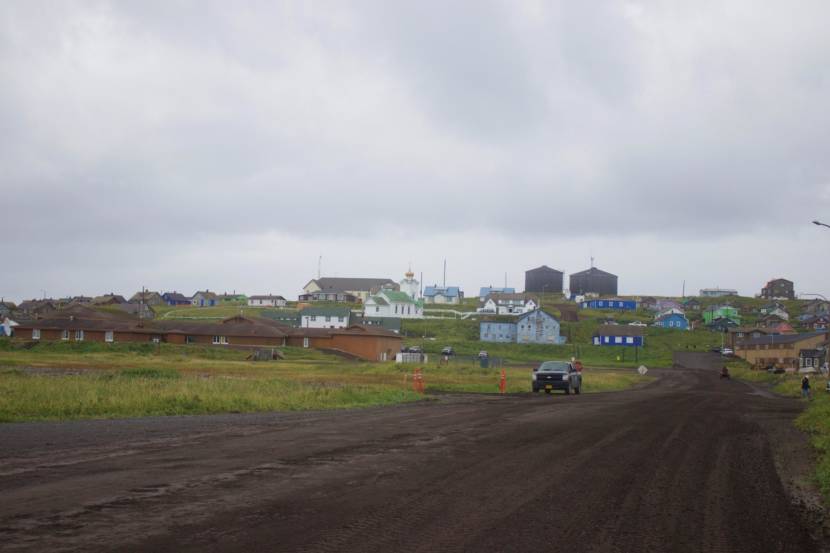
St. Paul announced a gas ration on Feb. 22 after bad weather canceled the arrival of a fuel barge. (Hope McKenney/KUCB)

The COVID-19 pandemic has already disrupted Alaska’s winter Bering Sea fishing seasons, closing plants and adding quarantine-related complications for crews.

Now, some boats are contending with a shortage of fuel at a key island port, leaving them with less time to catch their quota.

The Bering Sea community of St. Paul, one of the Pribilof Islands, announced the gas ration late last month after bad weather canceled the arrival of a fuel barge, and fishermen say it’s forcing them into days-long detours for refueling.

“I seem to remember we had some rations, years back, but it was nothing like this,” Oystein Lone, the captain of a 98-foot crab boat, said in an interview over a satellite phone.

He and his five-person crew on the Pacific Sounder just started fishing for bairdi — also known as tanner crab — on the eastern side of the Pribilof Islands in the middle of the Bering Sea.

Lone and his crew are prepared to deliver their catch in nearby St. Paul. Normally, they’d unload crab and resume fishing immediately.

But this year, after unloading, they’ll have to run more than 250 miles south to Dutch Harbor, in the Aleutian Islands, to refuel before heading north again. Some of the other four dozen crab boats currently fishing for snow and bairdi crab are more than 500 miles away from Dutch Harbor, Lone said.

“I don’t think we’ve ever seen anything like this, where the vessels are having to offload and run to Dutch Harbor to fuel up and then run back up to the grounds, adding three to four days onto their trips,” Lone said. “And that’s getting to be the normal this season.”

The refueling trips are required because of St. Paul’s gas ration. The remote island of 375 residents has been expecting its fuel barge for more than two months, but it hasn’t arrived.

That’s because of weather and other logistical delays, said City Manager Phil Zavadil.

It’s not the first time in Zavadil’s more than 20 years in St. Paul that the fuel barge has been late.

“I remember one year, they flew in drums of gasoline and it was like $13 a gallon, we were rationing at five gallons a week,” he said. “Throughout this, we’ve kept the price the same. We’ve been lucky enough to do that.”

The ration has affected residents as well as fishermen, Zavadil said. Those living on the island can’t buy more than five gallons of gas per vehicle each week.

That’s made it hard for many people to do more than the essential tasks of driving their children to school, the post office or the island’s grocery store, Zavadil said.

Boats, meanwhile, can get just 3,000 gallons of diesel fuel per trip.

Lone, the crab fisherman, said that 3,000 gallons is almost nothing.

He carries about 18,000 gallons of fuel per trip when he leaves port. But after his latest delivery in St. Paul, he only has about two thirds of that, and plans to ease up on the throttles to make it through his trip before heading to Dutch Harbor to refuel.

“If you ran out of fuel, that would be devastating,” Lone said. “You don’t push it close to that at all. But I’ve got a feeling some guys are probably pushing it a lot closer than they’d like this year because of the fuel restrictions.”

With the gas ration preserving St. Paul’s supplies, the island will manage for a bit longer, Zavadil said.

But if the barge doesn’t come soon, its infrastructure — including Trident Seafoods’ fish processing plant, which nearly doubles the island’s population — could be forced to shut down, Zavadil added. The island could even go dark, because it depends on diesel for power generation, he said.

“So we’re all kind of in the same boat together,” Zavadil said. “We’re all waiting on the fuel barge to come.”

Zavadil said North Pacific Fuel — the company that serves St. Paul and other areas in the region — has told him they expect the barge to show up in the next couple of weeks.

Officials at the company declined to comment.

Pen pal program encourages Alaska Native youth and elders to share stories between generations

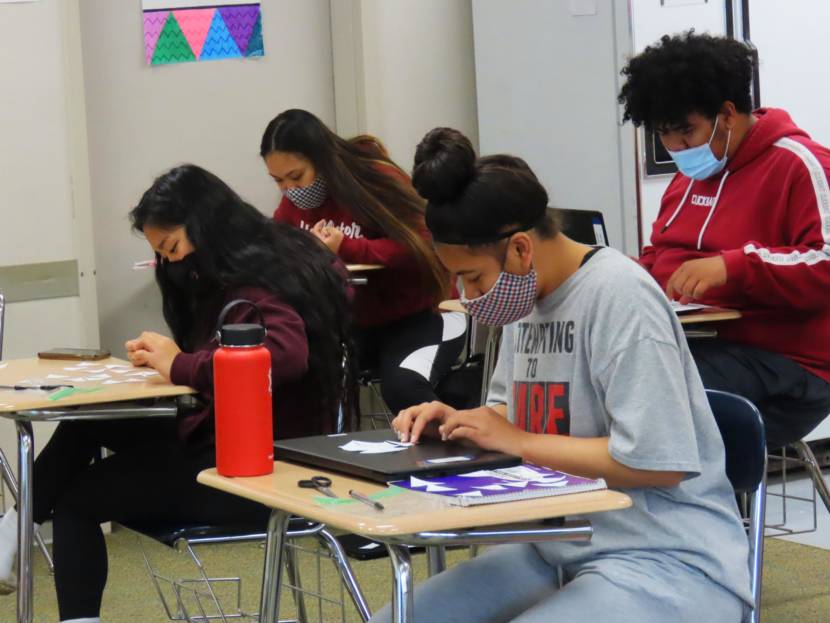
Jenna Larson and other APIA program coordinators are hoping to use this pen pal project to prevent unhealthy habits from forming, while fostering cultural knowledge and growth. (Image courtesy of Dustin Newman)

Last month, the Aleutian Pribilof Islands Association launched a pen pal program for Alaska Native youth and elders in the region.

It’s meant to create a space — amidst the coronavirus pandemic — where different generations of Alaska Natives can safely connect, according to APIA Youth Services coordinator Jenna Larson.

“We want to see the youth learning from the elders, and the elders passing on their knowledge and their favorite things about their culture,” Larson said.

Sharing culture and gathering together is an important part of staying healthy — mentally, physically, and spiritually, she added. And now, because people haven’t been able to gather as much due to public health guidelines meant to limit the spread of the virus, Larson and other APIA program coordinators hope to use this letter writing project to prevent unhealthy habits from forming, while fostering cultural knowledge and growth. She hopes it will help with the isolation that many may be feeling during the pandemic.

“When we incorporate culture, when we learn from our elders and gain the wisdom that they have, it works to prevent that feeling of loneliness that can contribute to feeling depressed, that can contribute to substance abuse,” she said.

Any Alaska Native youth or elders can participate, but APIA is hoping to specifically connect Alaska Native youth from the Aleutians and Pribilofs with elders who are also from the region.

People can participate via email or through handwritten letters or cards, according to Larson. APIA has some letter templates younger kids can use. For the older youth, Larson suggested they build a relationship with their elder pen pal, then ask them to share a story.

She said she hopes this experience will be memorable for everyone involved and will allow youth to find healing and security through cultural storytelling.

While they’ve received a lot of interest from youth who want to participate, program coordinators are in need of elders to connect them with, and they encourage anyone interested to reach out.

For more information, visit APIA’s website or email Jenna Larson.

Court case on King Cove road continues; Biden administration policy on road is to be determined

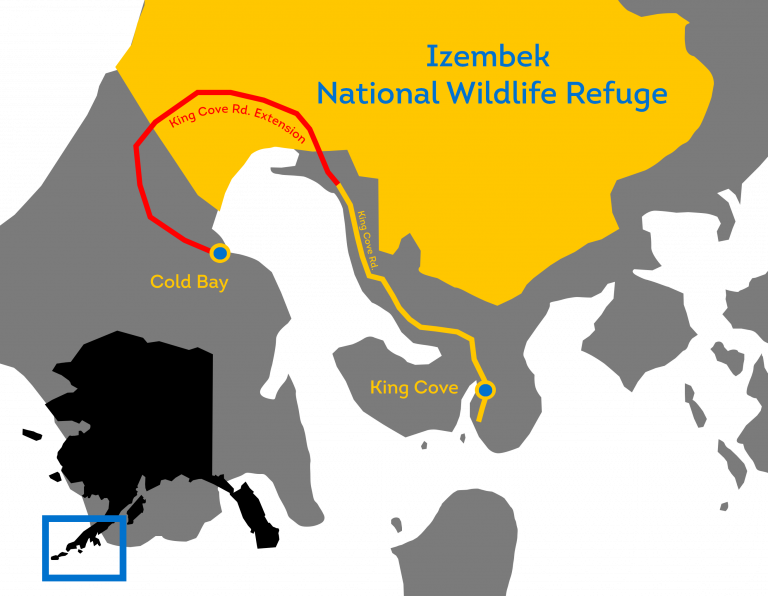
Map: Shiri Segal/Alaska Public Media

The Biden administration is continuing, at least for now, to defend the Trump administration’s land swap in the Izembek National Wildlife Refuge.

The swap is intended to allow for a road through part of the refuge, to link King Cove and Cold Bay. King Cove residents have for decades pushed the Interior Department to allow the road, and it’s been a top priority of Sen. Lisa Murkowski. They say the road could save lives in a medical emergency, by providing access to Cold Bay’s large runway.

Environmental groups argue that a road would threaten bird populations and other wildlife that depend on the refuge. The groups, represented by Trustees for Alaska, filed a lawsuit and won a court ruling last year that halted the land swap.

The Trump administration appealed, and this week the Biden administration filed another brief in that appeal. But the legal filing does not necessarily mean that the Biden administration will come out in favor of the swap or the road. An Interior department spokesperson said the policy is under review.

Deb Haaland nominated to be Biden’s Interior secretary. At her confirmation hearing last month, she told Murkowski she’s willing to meet with the people of King Cove.

Sometimes a bird gets into your store. In Unalaska, sometimes the bird is an eagle.

Waving long PVC pipes and tossing blankets and pieces of cardboard, local law enforcement, store employees and volunteer Brie McGrath pursued the eagle through the store for over an hour. (Maggie Nelson/KUCB)

On Thursday evening, around 9 p.m. a bald eagle made its way into the Alaska Ship Supply grocery store in Unalaska.

From outside, the store appeared closed and quiet — the lights were off, and the parking lot was virtually empty except for two local cop cars. But on the inside, store employees, police and a volunteer were chasing the unwelcome guest, waving long PVC pipes and tossing blankets and pieces of cardboard, trying to flush the bird out of the large building.

The eagle had gotten in through the back of the building, according to Karl Cristobal, who’s been working at the local store for about three years. He said he’s heard of a few eagles getting into the Alaska Ship warehouse, located at the back of the store, in the past. But since he’s been working there, he hadn’t heard of any actually getting inside where customers shop.

“It’s happened like four times, I guess,” said Cristobal. “This is just the first one inside.”

After over an hour of being chased up and down aisles by two police officers, store employees and volunteer Brie McGrath — a fisheries biologist with the local Department of Fish and Game — the bird finally tired out and fell to the ground. McGrath then gently but quickly trapped it in a fleece blanket, carried it outside and set it free near Margaret Bay.

Despite a minor talon injury, according to volunteer Brie McGrath, the eagle looked good overall and should be just fine. (Maggie Nelson/KUCB)

This wasn’t the first time in her three years on the island that McGrath has helped rescue a trapped eagle. She’s volunteered to help with several “eagle wranglings.” She said she enjoys helping her feathered friends. This time, though, McGrath said she was worried about how long it was going to take to get the eagle out of the store.

“We’ve had one that was in a frozen warehouse similar to this — like the same size — and they couldn’t get it out for three weeks,” she said. “They got it out eventually, but it’s hard to get them out of those rafters.”

By the end of the night, the eagle wasn’t the only one that seemed exhausted. As McGrath struggled to catch her breath while carrying the large bird outside, it was clear that this was also a battle for her.

“I’ve never had one fight that hard,” she said. “It was struggling, but I think it’ll be okay now.”

McGrath said that despite a minor talon injury, the eagle looked good overall and should be just fine.

February was Black History Month, but Unalaska teachers are sharing Black stories year-round

High school teacher Hannah Vowell said she consistently seeks out work and examples from diverse voices and authors, no matter what subject she is teaching — whether that be math, science, Spanish or photography. (Photo courtesy of Hannah Vowell)

February was Black History Month, a time when schools, libraries and organizations across the nation often pause to celebrate Black history and recognize the United States’ violent and unjust treatment of Black people.

But in Unalaska, many teachers didn’t do anything special in their classrooms last month because they are working to include Black history and perspectives in their lesson plans year-round.

“It’s kind of like we’re saying your history isn’t history, and your literature isn’t literature, and your art isn’t art unless it’s February — the shortest month of the year,” said fifth and sixth-grade teacher Greta Eustace. “And that just never seemed right to me.”

Eustace teaches language arts and social studies on the island, and while she acknowledges Black History Month with her students, she said she tries to consistently highlight work from Black Americans throughout the year.

According to Eustace, one month of recognition is not sufficient, but she said the month is necessary to help ensure that people acknowledge Black history and that teachers include Black voices in their curriculum.

“I just don’t think [Black History Month] should be a necessary thing and unfortunately, it is,” Eustace said.

Discussing Black history and racial inequality, as well as including diverse voices are all inherent parts of her classroom and teaching style, she added.

“It’s important to consider the fact that social justice belongs in every classroom and that cultural sensitivity in classrooms promotes connection and equity with students,” she said. “And you have to consider presenting the world from the perspective of your students and the perspective of underrepresented people, in addition to what we would call the classics.'”

Eustace calls this approach “decolonizing” her curriculum. By providing her students with diverse texts from diverse writers, she’s giving them the tools they need “to form an educated opinion of the world around them and not just regurgitate what they’ve been told over and over in their lives.”

High school English teacher Jacob Collins-Wilson echoed Eustace’s sentiments and agreed that Black history should be included year-round.

“Isolating it, I don’t think is the healthy way or the way that I want my classroom, or my life, or the world to be,” said Collins-Wilson. “Black history is not isolated to one month, or one subject, or one kind of conversation. I think it’s inherent in everything no matter what we’re reading or writing.”

Excluding Black history throughout the year and then highlighting it in his lessons in February feels like a “cop-out,” he said. Instead, Collins-Wilson makes sure to include essays, stories and ideas from people of diverse backgrounds from the beginning of the year.

My whole teaching from the get go has been much more infused with women and people of color and a big focus on international writers as well,” he said. “Basically, to use English class as a way to explore not only language or writing but also identity and culture.”

The recent Black Lives Matter movement has helped facilitate more conversations with his students about racial injustice, police violence and Black history in general, he said. The movement and its social media presence have encouraged people — his students included — to think more diversely.

“As an English teacher, I love that because then we get to read such different stuff,” Collins-Wilson said. “And it’s harder for a student to say, ‘this is irrelevant.’ When, if we look at our nation right now, we’re having tons of conversations around race and identity and culture and language and equality and treatment and power dynamics. So it’s really important to talk about that and to read different perspectives that relate to those different topics.”

English and social studies teachers are not the only ones incorporating discussions about race dynamics and injustice into their classrooms. Hannah Vowell said she consistently seeks out work and examples from diverse voices and authors, no matter what subject she is teaching —whether that be math, science, Spanish or photography.

While she has included some specific lessons in both her Spanish and photography courses this year to celebrate Black History Month, Vowell said she considers it her general responsibility to make time in her classroom to address conversations about things like diversity and culture.

“I think it’s my job to lead discussions and provoke critical thinking about what’s happening in the world,” she said.

In a school district with a teaching staff that does not mirror the diversity of the student population, these teachers — who are all white — recognize that conversations about race and inequality can be very complicated.

While Eustace said she finds the lack of diversity in the teaching population on the island disappointing, she considers it her responsibility to provide kids with a diverse education that always includes Black voices and perspectives.

“The kids who need you the most are the ones who need an activist, ones who need people to fight for them to be represented and heard and seen in the world,” she said. “And if you’re not an activist, you’re not really helping the kids who are most in need.”

Since 1976, every U.S. president has officially designated the month of February as Black History Month. Other countries around the world, including Canada and the United Kingdom, also devote a month to celebrating Black history.

‘It’s better than nothing:’ Another year of reduced ferry service in Aleutians

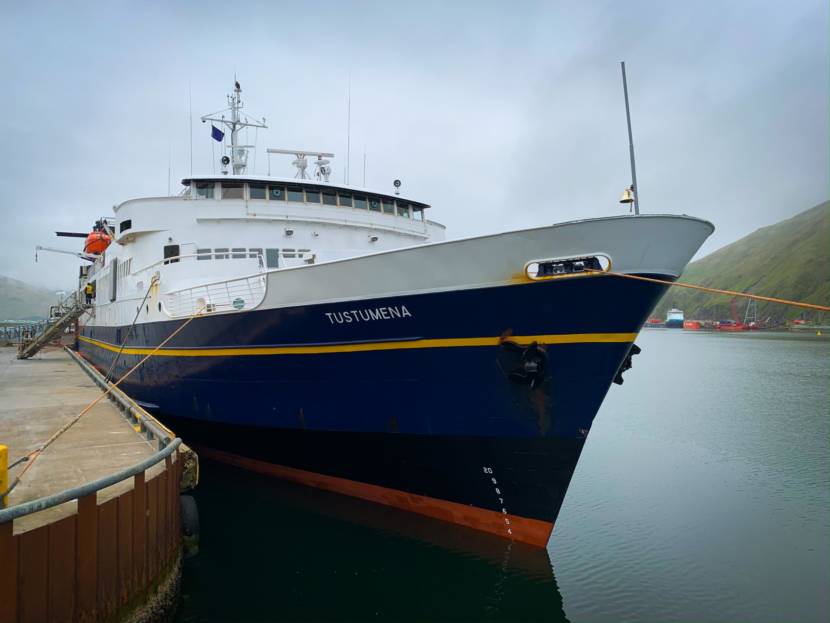
Prior to 2020, AMHS had been calling on Unalaska twice monthly May-September, with an occasional early October call. (Hope McKenney/KUCB)

Ports along the Aleutian Chain between Homer and Unalaska will see only five visits of the ferry Tustumena this summer, down from the twice-monthly service that was the norm through 2019.

On Wednesday, the Alaska Marine Highway System released its summer schedule, which covers state ferry travel from May through September.

The M/V Tustumena is scheduled to sail only once per month, or a total of five times, along the Aleutian route.

This lighter schedule is on par with last year’s calls to Unalaska, according to Ports Director Peggy McLaughlin. Prior to 2020, AMHS had been calling on the island twice monthly from May-September, with an occasional early October call.

“The reduced schedule is better than nothing, but will not meet the historic demands of the AMHS users,” McLaughlin said. “The AMHS truly operates as a highway for the Aleutians and provides communities up and down the Chain affordable means for travel, for relocating professionals and families — teachers, medical workers, construction workers — and operates as a means to ship vehicles, household goods, and construction equipment.”

Attempts to eliminate the Aleutians from the AMHS route have been ongoing for about two years, according to McLaughlin. Those efforts included eliminating the replacement vessel for the aging Tustumena, which would effectively reduce the ocean-class vessels in the AMHS fleet to one, she said.

Early drafts of the state budget completely eliminated the Aleutian route. But municipal advocacy organizations like the Alaska Municipal League (AML) and Southwest Alaska Municipal Conference (SWAMC) have been strong supporters for continued AMHS service.

Local entities like the Unalaska Visitors Bureau and the Department of Port and Harbors, along with local residents, called in to testify on the need for service along the Aleutian route during the Alaska Department of Transportation’s public hearings in September, after which the department published a proposed schedule with once-monthly service.

“The community and the city will need to continue to advocate for this and any desired increased service,” McLaughlin said. “With the elimination of the replacement vessel, the Chain will likely lose service once the 57-year-old Tustumena has aged out.”

Information on fare and sailing schedules is available at FerryAlaska.com.

Site notifications
Update notification options
Subscribe to notifications