Aleutians

King Cove road advocates take plea to Washington, D.C.

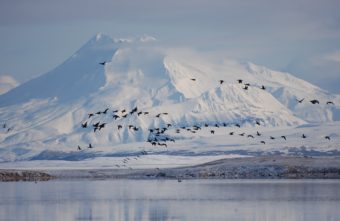
Brant geese in front of Mount Dutton and Izembek Lagoon in the Izembek National Wildlife Refuge
Brant geese in front of Mount Dutton and Izembek Lagoon in the Izembek National Wildlife Refuge, Nov. 7, 2008. (Public domain photo by Kristine Sowl/USFWS)

Lt. Gov. Byron Mallott joined residents of King Cove in Washington, D.C. Thursday morning to make another plea for a road between King Cove and the all-weather airport in Cold Bay.

Mallott likened the struggle to other public land-use controversies, in which, he said the federal government puts another concern ahead of local Alaskan needs.

“Our lives are minimized, marginalized and in many ways consciously, consciously, determined to be unimportant, to the point where we become faceless,” he said.

Mallott spoke at a hearing called by Sen. Lisa Murkowski. Alaska’s congressional delegation has tried for decades to get the government to agree to a road. They say residents need a way out in a medical emergency.

But 11 miles of the road would have to be built in the Izembek National Wildlife Refuge. Interior Secretary Sally Jewell ruled out a road in 2013, citing in part the area’s importance to waterfowl and other species. Jewell said she’s trying to find an alternative.

Aleutians East Borough Mayor Stanley Mack says other alternatives make no sense, given King Cove’s often harsh weather and the realities of boat travel.

“Strapping an injured patient in a gurney and hoisting them up to the dock on a boat, which can be as much as 25 feet, is always a scary situation,” Mack said. “This is basically what we have to do. Or putting elders in a crab pot and using a crane to hoist them to the top of the dock is frightening.”

Sen. Murkowski said she’s not giving up. She didn’t say what her next move will be, but she noted that Jewell won’t be Interior secretary much longer.

Speaking to reporters after the hearing, Alaska Congressman Don Young said the secretary is valuing geese over people. Young threatened to bring in the heavy equipment and build the road himself.

Power Cost Equalization Fund could pay for community assistance

The Senate Finance Committee is looking to re-route money from the Power Cost Equalization Endowment Fund to replace the Community Revenue Sharing program that the state government started when oil prices were higher.

The concept arose from a concern over Senate Bill 210, which would reduce the amount that municipalities receive in revenue sharing. Without a source of revenue other than the state’s annual budget, this program – which legislators want to rename community assistance – would disappear.
That’s where the second Senate Bill 196 comes in. The bill originally was written to use excess money from the Power Cost Equalization Endowment Fund to offset some of the state budget. But under a new version, this money would instead go to assist communities.

Sen. Mike Dunleavy, March 14, 2016
Sen. Mike Dunleavy, R-Wasilla, speaks during a floor debate last month. (Photo by Skip Gray/360 North)

Some legislators wanted to use more — if not all — of the fund this year. Wasilla Republican Sen. Mike Dunleavy asked why this isn’t happening.

“We’re experiencing a $4 billion hole. There’s a billion dollars in this fund,” he said. “Why wouldn’t we use this fund to at least backfill some of the deficit?”

However, under the latest versions of both bills, the $930 million PCE fund would continue to be used primarily for a program to help rural electric ratepayers. In years when the fund earns more than the roughly $40 million that’s needed for that program, up to $30 million would go to community assistance and up to $25 million would go to rural, bulk fuel and renewable energy programs.

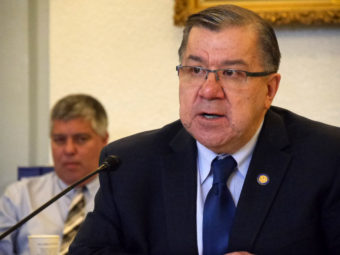
Bethel Democratic Sen. Lyman Hoffman supports both bills. He doesn’t want to spend the PCE money all at once on the budget.

Hoffman said the fund could provide a lasting source for both power cost equalization and community assistance – as long as the main PCE fund remains intact.

That will help communities that have come to rely on revenue sharing while taking pressure off the state budget.

“If the dollars were taken, there would be a one-time use, and people in rural Alaska would end up paying substantially more in electric costs,”

But not all municipalities are happy about the change. Anchorage would receive $5.7 million in the coming year, which is $9 million less than the revenue sharing in the past. In future years, Anchorage would receive no more than $2.3 million.

Anchorage Mayor Ethan Berkowitz’s chief of staff Susanne Fleek-Green says it will cost residents more in taxes or reduced services. The municipal government had budgeted for a $5 million reduction, and must make up the gap.

Sen. Lyman Hoffman, D-Bethel, during a Senate Finance Committee meeting, March 29, 2016. (Photo by Skip Gray/360 North)
Sen. Lyman Hoffman, D-Bethel, during a Senate Finance Committee meeting on March 29. (Photo by Skip Gray/360 North)

“To counteract the effects of this legislation, the municipality will have to add to the additional burden being felt by property owners in the municipality,” she said. “This bill effectively is shifting an additional $4 million to property taxpayers in Anchorage, Eagle River, Chugiak, Girdwood and all other parts of the municipality.”

Under the latest changes, municipalities would receive $30 million in community assistance, compared with $50 million in Gov. Bill Walker’s budget.

Rural communities are largely protected from community assistance cuts. An extreme example is Aleutians East Borough, which receives nearly $10,000 for every one of the 39 residents who lives in unincorporated areas.

Every community with fewer than 500 residents would receive at least $400 per person in state assistance.

Alaska Municipal League Executive Director Kathie Wasserman says she’s can support using the Power Cost Equalization Fund for community assistance. But the reduced amount of aid – combined with a formula that benefits some place more than others – puts her in a difficult position.

“I’ve just had trouble with the formula that’s presently in place,” she said. “No matter which direction the Alaska Municipal League goes, whether to support the formula or not support, I throw a number of my municipalities under the bus, so that’s why we’re just not taking a position on the formula at this point.”

Both houses have until Sunday to act on the bills.

Correction: A previous version of this story misstated the amount Anchorage would receive under the legislation.


Lawmakers eye earnings of rural energy endowment to fund state budget

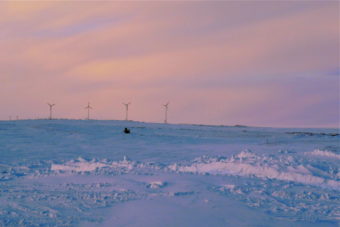
Wind turbines in Chevak
These four wind turbines in Chevak, pictured in March 2012, provide some renewable electricity to the village, but residents still pay high rates. (Creative Commons photo by Joseph)

Rural Alaskans can pay three to five times more for electricity than those in urban areas. That’s why the state launched the Power Cost Equalization Endowment Fund in 2000. It’s paid roughly $40 million annually to subsidize rural energy bills.

But some are questioning if the fund, now worth $900 million, should be committed to benefit only about one in nine Alaskans.
Senate Finance Committee Co-Chairpeople Anna MacKinnon and Pete Kelly discuss the budget. (Photo by Andrew Kitchenman)
Senate Finance Committee Co-Chairwoman Anna MacKinnon alongside Sen. Pete Kelly. (Photo by Andrew Kitchenman/KTOO)

Senate Finance Committee Co-Chairwoman Anna MacKinnon, an Eagle River Republican, said the state government could consider tapping the fund.

“You’ll see Power Cost Equalization come before us. There’s a billion dollars in that fund,” she said. “That billion dollars has been benefiting a selected group of Alaskans with Power Cost Equalization. But is that the highest and best use of those dollars now?”

MacKinnon is a sponsor of Senate Bill 196, which would rebudget fund earnings for other purposes. In years where fund earnings are greater than what’s needed for the Power Cost Equalization program, 60 percent of the excess earnings would go to the state government, 30 percent would go to renewable energy projects, and 10 percent would build up the endowment.

The fund lost money this year, so no excess money is available. It’s not clear whether MacKinnon and other lawmakers are looking beyond Senate Bill 196, to use the fund itself to help close the state’s budget shortfall.

Bethel Democratic Sen. Lyman Hoffman – another sponsor of the bill – sees Senate Bill 196 as a way to protect the fund’s principal while helping the state.

“So what we’re trying to do with this bill is to assure that during those high years, the fund only pay for its intended purpose – and if there are excess earnings, that those earnings be sent back to two different programs,” Hoffman said.

Rep. Bob Herron, another Bethel Democrat, said power cost equalization is fair to rural residents. He notes the endowment was started after the government paid for dams that provide power to cities.

Gov. Bill Walker wants to make sure that if changes are made to the fund, they’re considered along with his plan to close the budget shortfall. He wants to ensure everyone in the state shares the burden.

Walker expressed concern that the combined impact of Power Cost Equalization changes with Permanent Fund dividend changes would put too much of the burden on rural Alaskans.

“That’s why we have focused on a sustainable plan that is a broad-based plan, so that we take into consideration rural Alaska’s situation, which is unique versus urban Alaska,” Walker said. “We’ve tried to take all of that into consideration. That’s why one piece at a time doesn’t really work.”

The Senate Finance Committee heard testimony supporting Senate Bill 196 on Wednesday, but didn’t vote on the bill.

As first legislative budget cuts emerge, some question rural impact

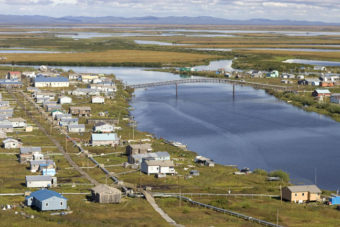
The community of Selawik, near the mouth of the Selawik River, is home to over 800 people. The site of the village, spread between riverbanks and an island, is also called Akuligaq, meaning "a river fork." (Photo by Steve Hillebrand/USFWS)
The community of Selawik, near the mouth of the Selawik River, is home to over 800 people. The site of the village, spread between riverbanks and an island, is also called Akuligaq, meaning “a river fork.”
(Photo by Steve Hillebrand/USFWS)

Legislators are looking to cut the state budget deeper than Gov. Bill Walker’s proposal to reduce spending by $100 million.

But some lawmakers – especially those from rural areas — are raising concerns about where these cuts will fall.

More than five weeks into the legislative session, House finance subcommittees recommended the first cuts to the budget for the fiscal year that starts July 1.

They include $9.8 million in cuts to education programs, as well as cutting all $2.7 million in state funding for public broadcasting.

Rep. Daniel Ortiz, a Ketchikan independent, says eliminating the $2 million for a prekindergarten program is a mistake.

“It’s about investing now so that you don’t have higher costs later,” Ortiz said. “And it just makes good economic sense to do this. Yeah, we get the $2 million reduction but, you know, it’s going to be hard for anybody to chart the costs to the state later on down the road.”

Other proposed cuts include eliminating state funding for rural schools and libraries to increase broadband internet access. As well as a state program to fund mentors for teachers, which is aimed at retaining new teachers in rural Alaska.

Wasilla Republican Rep. Lynn Gattis says none of the cuts are easy, but they’re necessary. That’s because the state has a $3.5 billion budget shortfall.

“There’s nobody sitting here, and I suspect nobody in the audience, that’s very comfortable with any of these cuts,” Gattis said at an education subcommittee hearing. “Somebody said to me, ‘You’re making me make a choice: the right arm or the left arm. And the unfortunate part is — which arm do you write with — is where we’re at in making these cuts.”

Juneau Democratic Rep. Sam Kito says the state should be looking for new revenue, like Walker has proposed, before cutting programs that disproportionately benefit rural areas.

“The libraries in many of these communities become the focal point in trying to maintain connections with the outside world to try and engage students with technology,” Kito said.

For Anchorage Republican Rep. Mike Hawker, the debated education cuts are a small fraction of the overall cuts that are needed to close the state’s budget gap. He contends that the state expanded programs during oil boom years that it can no longer afford.

“The decisions that I want to see coming out of this Legislature are the difficult decisions to reduce our spending to a level that is sustainable,” Hawker said. “To do that, there is no question that we are going to have to be reducing programs in areas across the state that are good, that are desirable that people want but that respectfully we just can’t afford these days.”

Nome Democratic Representative Neal Foster says he hopes, before the budget is completed, the effects of the cuts are geographically balanced.

“I agree that cuts have to be made,” Foster said. “I’m sad to see that so many of these cuts are being made out of rural Alaskan programs. And so, I know it’s the beginning of the process, so I’m hopeful.”

Subcommittees are completing their work on the budget over the next week.

Ferry chief: Design of Tustumena’s replacement is ready

Tustumena ferry replacement design
A rendering of the ferry designed to replace the Tustumena. (Image courtesy Alaska Department of Transportation & Public Facilities)

The state Department of Transportation has a design for the ship that will replace the ferry Tustumena.

DOT Deputy Commissioner Mike Neussl said the new design focuses on two key issues. First, to make the new ferry carry as many people and vehicles as possible. The second goal was to make it small enough and shallow enough to use all the docks and shore side infrastructure used by the Tustumena right now.

“Both of those design criteria were put in. The design is complete but the process going forward is to get that design into construction, build a vessel, put it into service and replace the existing Tustumena on its runs with a new more capable vessel,” said Neussl.

The Tustumena has served communities in southcentral and southwest Alaska for a little more than 50 years. The ferry’s home port is in Homer and it regularly travels to 13 ports between Homer and Unalaska.

Neussl isn’t sure when construction will start on the new ferry or how long it will take. He said a vessel of that size typically takes at least two or three years to build. He said it depends on contract terms with the shipyard doing the work.

“As a comparator, the Alaska Class Ferries being built out in Ketchikan … the construction period was intentionally lengthened to drive the cost of those ferries down. Instead of having three ship builders working around the clock to try and build it as fast as possible, you work on it at a slower pace,” explained Neussl.

Neussl said none of those decisions have been made for the Tustumena and the construction contract has not been opened up for bidding.

He said the new ship is estimated to cost around $237 million and about 90 percent of that money is expected to come from the federal government through Alaska’s Statewide Transportation Improvement Plan or STIP.

“That is the mechanism by which all projects compete for those federal funding dollars. … That provides millions of dollars for the State of Alaska for federal aid projects. Highway projects, marine highway projects, dock replacement projects,” Neussl said.

The rest of the money would come from the state. He said the vessel is listed among the projects seeking STIP funding but it’s listed in fiscal year 2019.

“Which is quite a ways down the road. Our job now is to pull that forward through the amendment process to get it funded through that process and out for construction … hopefully sooner rather than later. That’s where the project currently stands,” said Neussl.

Neussl said once the new ferry is built, the old Tustumena will be sold to either continue sailing under a new owner or it will be used for scrap.

Oil spill response barge near Unalaska breaks loose

The bright orange Resolve Ibis (far left), an oil spill response barge capable of sopping up over 20,000 gallons of fuel, has a five-year mooring permit from the Alaska Department of Natural Resources. Photo by Ethan Nichols)

The 200-foot-long oil spill response barge Ibis, anchored near Unalaska in Iliuliuk Bay for the past several months, came off its mooring Saturday afternoon in rough seas and drifted onto Front Beach, requiring a coordinated response effort.

The barge is operated by Resolve Magone Marine Services. As of Saturday evening, a crew was able to tow the barge off of the beach.

The Ibis is a relative newcomer to Unalaska; It got its permit in May from the Alaska Department of Natural Resources to moor the barge off the beach for the next five years. The bright orange barge is the most visible element of a private effort to improve shipping safety along the Great Circle route across the Pacific. The Ibis can be used to store oil that’s been offloaded, or lightered, from a ship in trouble, before the oil spills into the sea.

According to Environmental Spill Response Supervisor Jay Brost, a dive team is doing a survey to determine the cause of the incident and will have more information later this week.

Site notifications
Update notification options
Subscribe to notifications