Arctic

Weekend storms pummel Arctic coastal villages

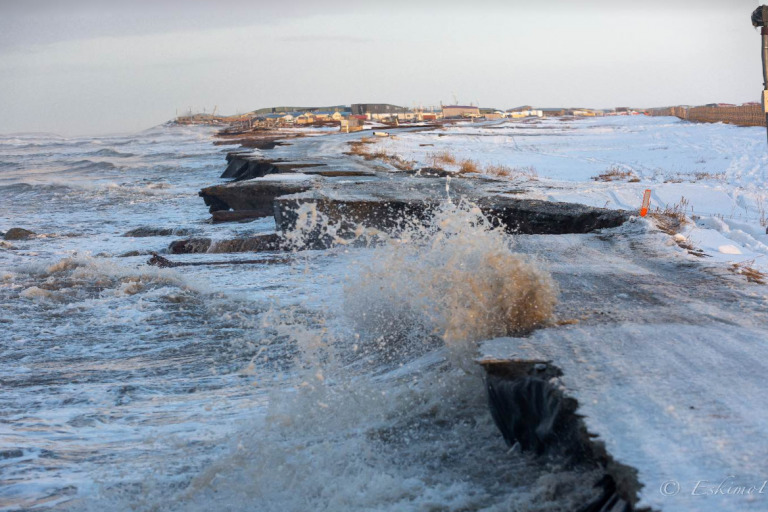
Shishmaref coastal erosion after a storm in November 2020. (Dennis Davis)

Over the weekend, much of the state saw snowfall, icy roads and the first wintry conditions. Photos from Shishmaref, a small village along the Chukchi Sea coast, show a large swath of road that leads from the community to the sewage lagoon has been completely washed away by waves. A number of other villages were also battered by high seas and gusting winds.

Meteorologist Jonathan Chriest said the National Weather Service office in Fairbanks had received a number of reports from communities along Alaska’s west coast. He said villages from the Yukon River Delta north to Kivalina reported severe weather, including high seas.

“Sections of the road between Nome and Council were washed out,” said Chriest. “Golovin reported some erosion. At Unalakleet, water was estimated at about eight feet above the normal high tide line, it approached the Alaska Commercial store there, but it did not flood and we heard that the community was prepared and there were no major impacts and the same was true at Shaktoolik,” he said.

“One of our residents locally has said that the storm on Friday was so powerful that an estimated 20-40 feet of infrastructure was lost,” said Twyla Thurmond.

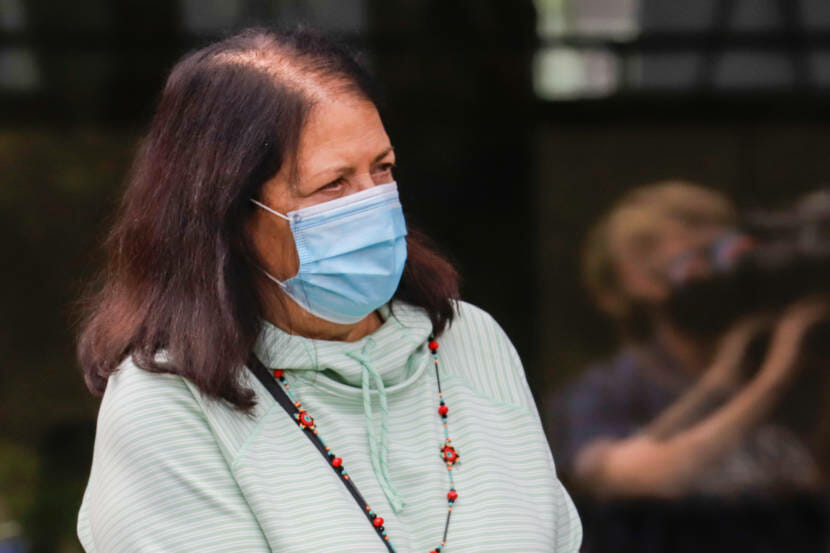
She’s the local coordinator for the Native village of Shishmaref. She works on community expansion and protection efforts.

“Another local resident had commented that it was the worst that they had seen in the past 20 years,” said Thurmond.

The infrastructure she mentioned is actually a road that connects Shishmaref with its dump and sewage lagoon and the state estimates that the loss more likely totals a quarter to half a mile.

Thurmond said winter weather means residents may be able to find a temporary work-around, by breaking a trail with snow machines and ATVs, but she said that’s not a permanent fix.

“Without having access to the dump, the community would be overloaded with garbage and human waste, so it creates a really big sanitation hazard overall,” said Thurmond.

Residents in Shishmaref voted to relocate due to severe coastal erosion back in 2016. On Monday, Shishmaref’s Mayor was working on a disaster declaration with the hope of freeing up emergency funds from the state for assistance. A spokesman with the state Division of Homeland Security and Emergency Management said it’s unlikely the road will be rebuilt this winter, so they are exploring alternate means of transportation for residents.

Further north, winds gusted up to 50 miles an hour at times, battering the tiny village of Kivalina. The community sits on a barrier island along the Chukchi sea coast. With no shore-fast sea ice yet formed to protect the coastline this fall, every storm that pummels Kivalina’s west-facing beach could be the island’s last. Climate change driven sea level rise and coastal erosion may eventually wash this island away, entirely.

“Well, I’ve been documenting because it was pretty — the storm surge was pretty bad and the water was very high,” said Janet Mitchell. She grew up in Kivalina.

She spent much of the weekend driving around the island on her four-wheeler documenting the storm. Her short video clips show fierce and giant waves slamming against a rock revetment built a decade ago by the U.S. Army Corps of Engineers to protect the island. Kivalina is one of nearly three dozen communities deemed in imminent danger of complete destruction due to climate change according to a 2009 report from the government accountability office.

Mitchell also captured a video of her Aunt, Lucy Adams, an 87-year-old elder in the village. The video shows Lucy, walking with a cane, in her handmade mukluks, out to the rock revetment.

Mitchell said her Aunt looked concerned, so she decided to stay nearby. “I asked her if she was ok,” said Mitchell. “She said, ‘oh yeah I’m ok, I’m just walking.’”

In the video, the elder woman stops when she gets to the pile of dark gray rocks and then she just stands there, looking out over the angry, roiling Chukchi sea.

“She’s like the stronghold of Kivalina,” said Janet Mitchell. “She’s very faithful and she prays a lot and it’s like you feel safe knowing she’s praying for Kivalina, for our safety.”

Nearly every day, Lucy Adams sends a prayer out to her village over the local VHF radio. Mitchell said her Aunt Lucy also said her radio prayers this weekend.

By Sunday, skies over Kivalina had cleared, but only briefly. Winter weather and high surf advisories are in effect for the region until Tuesday.

Correction: A previous version of this story stated Shishmaref is located in the Bering Sea. It is in the Chukchi Sea.
Fall storms set back Bering and Chukchi sea ice formation in already delayed season

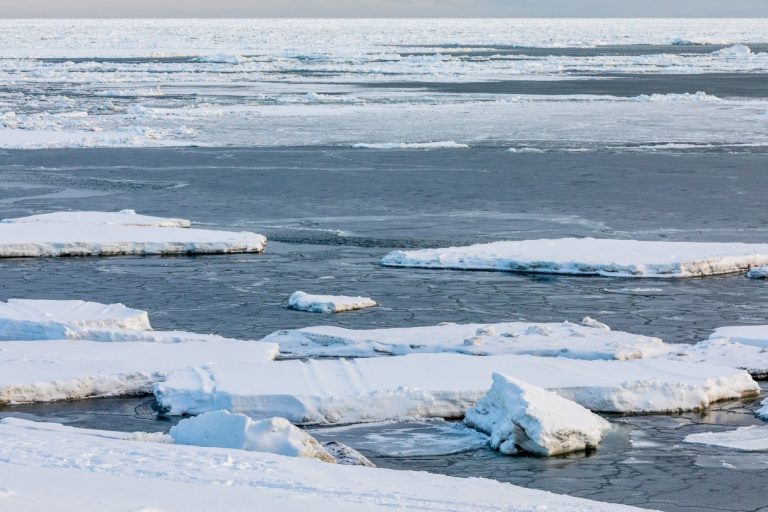
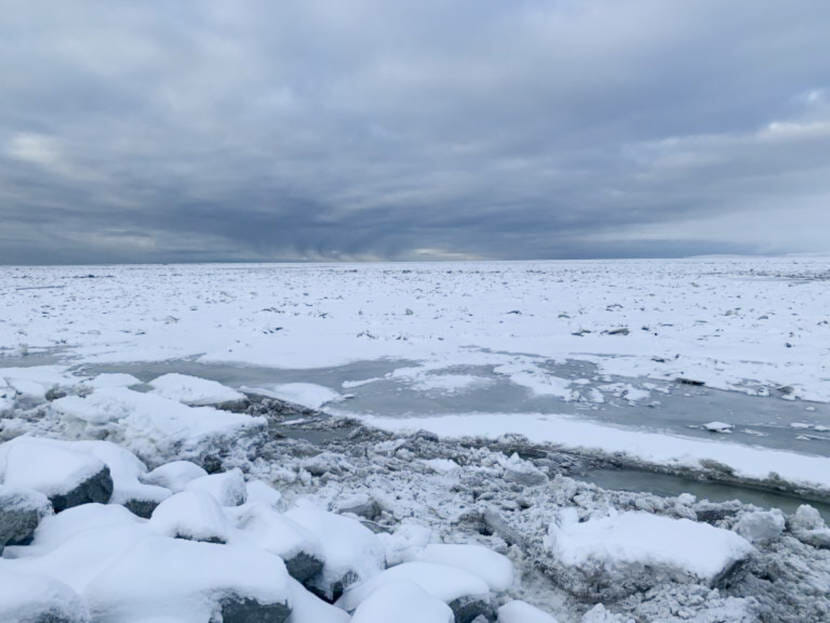
Scattered sea ice near Nome, Alaska, March 15, 2019. (Photo courtesy David Dodman via KNOM)

As of Nov. 3, sea ice in the Bering and Chukchi Seas is the lowest on record for the last five years, even with tiny bits of ice starting to form in Norton Bay and Kotzebue Sound. One climatologist forecasts that sea ice will form late, the extent will be below average, and it will be similar to last year’s.

The Bering Strait region is on track to have the lowest sea ice extent on record for early November, based on a 15-year dataset.

It started this summer, when May through September again featured some of the warmest ocean temperatures on record. Climate specialist Rick Thoman, with the Alaska Center for Climate Assessment and Policy (ACCAP), said the good news is that summer 2019 was still significantly warmer than this summer.

“In Eastern Norton Sound, in Kotzebue Sound, those are temperatures that are seven degrees Fahrenheit or more above average for that entire five months. And you can see the entire Chukchi Sea, almost all of the Bering Sea in 2019 was significantly warmer than normal. That’s not the case this year, well actually it kind of is, in that most of the Bering Sea for those five months, did end up warmer than normal,” Thoman said.

Thoman points out that in the northern Bering Sea, sea surface temperatures have gone from 42 degrees in the early 1900s up to about 45 degrees today.

“That doesn’t sound like much to most folks, but three-to-four degrees warming of a five-month average, in the ocean…is really just incredible,” he said.

As the average temperature in the Bering and Chukchi Seas continues to climb, and with the La Niña conditions this year, sea ice extent is expected to remain below the historical average. However, Thoman says sea ice in the Bering Strait region most likely won’t be as poor as last year. Nome didn’t see sea ice offshore until late November 2019, and even then the quality was poor.

“It’s still below the recent years’ average, but not as low as last year, but that is a bad comparison for our part of the world,” Thoman said. “Even though the Arctic-wide sea ice extent average for September was the second-lowest on record, the Beaufort Sea kept our area from being as low in sea ice as we saw in 2019.”

Thoman warns that from January to March, if there are strong swings of weather patterns across the Bering Sea, those will absolutely affect sea ice growth.

“This really seems like the kind of situation where we might get three weeks of really cold weather and then the pattern changes and boom — it’s storm after storm after storm. With water temperatures above normal, if ice extent is not much better than normal, then these storms could produce a lot of precipitation,” he said.

Today, according to the National Weather Service and Thoman, a “big Bering Sea storm and associated fronts” are expected to bring a mess of snow and rain along with winds up to 40 mph to the Bering Strait region.

This storm could also raise water levels in the Norton Sound, setting sea ice development back a week or more in the Bering and southern Chukchi seas.

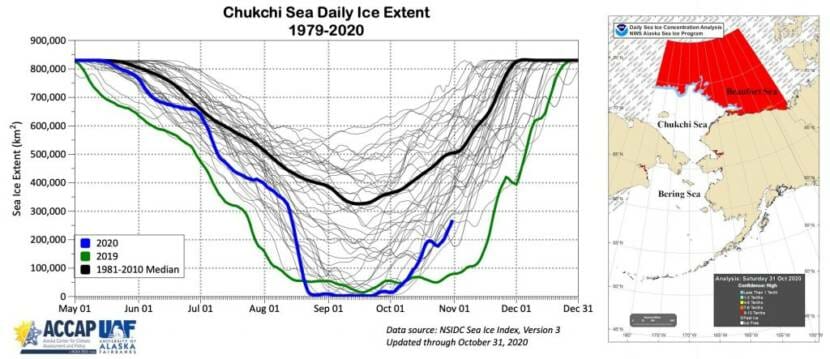
There’s more sea ice in the Chukchi Sea than last fall, but it’s still historically low

Snow piles on sea ice in the Kotzebue Sound. (Wesley Early/KOTZ)

Researchers track the extent of Arctic sea ice every year — essentially, how far it extends from the North Pole. The Arctic sea ice pack is smallest in the fall, after melting and receding all summer and right before it starts growing again through the winter.

There’s more sea ice this fall in the Chukchi Sea than there was at this time last year. But the ice closer to Alaska’s shores is lagging behind.

Rick Thoman, a climatologist with the International Arctic Research Center in Fairbanks, broke the news about the amount of ice in the waters off the coast of Northwest Alaska this year.

“We have much more, about three times more ice in the Chukchi Sea than we did last year,” Thoman said.

Last year saw the lowest fall sea ice extent in the Chukchi Sea on record. Thoman says this year’s sea ice extent is still way below the historical average, and most of this year’s ice is in waters north of Alaska.

(Courtesy of Rick Thoma/International Arctic Research Center)

“When we talk about the Chukchi Sea here, we’re talking basically to about 78 North,” Thoman said, “so that’s hundreds of miles north of Utqiagvik.”

In the southern Chukchi Sea, Thoman says there’s still a lot of open water. In fact, even though there’s more ice across the entire Chukchi, the ice near Kotzebue and Point Hope is actually weaker than last year.

“Kotzebue Sound is mostly open water at this point,” Thoman said. “So especially on the Russian side, we have even less ice than we had last year at this time.”

Thoman says this year’s forecast calls for storms throughout the coast of Northwest Alaska. Stormy seas make it difficult for sea ice to form.

“We’re going to have a turn towards warmer stormier weather in the Bering and Southern Chukchi Sea,” Thoman said. “We’re going to be very late with starting to form ice south of Point Hope. And we could easily be looking at no ice in the open Chukchi Sea, north of the Bering Strait, well into December.”

Thoman says historically, that ice was formed by mid-November or even as early as October.

Alaska Federation of Natives stays mum about progress on climate change task force

Alaska Federation of Natives President Julie Kitka on August 26, 2020. Kitka told Alaska Public Media that AFN is working with the National Science Foundation and the Nature Conservancy to secure funding for a climate task force. (Jeff Chen/Alaska Public Media)

The Alaska Federation of Natives Convention came to a close Friday with little discussion about how to respond to climate change. This year, the convention’s third day — when resolutions are openly debated — was eliminated.

Various Native organizations submitted 30 resolutions for consideration. There is no open resolution debate this year. Only one resolution briefly mentions climate change. It’s very much unlike last year when a resolution calling on AFN to declare a climate change emergency took center stage for hours during the convention’s final day.

From the convention floor in Fairbanks, 15-year-old Nanieezh Peter explained to AFN leadership why it was necessary to declare a climate change emergency. “It’s all of our futures and it’s all of our traditions and rights and cultures to keep this land healthy and to keep our people happy and economic growth and money is not a part of that conversation,” said Peter.

She and 17-year-old Quannah Chasinghorse Potts had a memorable back and forth with Crawford Patkotak, Chairman of the Arctic Slope Regional Corporation. Patkotak warned of a slippery slope. He worried that if Alaska Native leadership starts to take on climate change policy, it could inadvertently restrict access to resources.

“We’re fighting the critical habitat area now that the environmentalists say this is gonna help our subsistence rights, when in fact, it does not. They start to use that critical habitat as a way to regulate our hunting. We’re seeing it already with the polar bear…” he said.

In the end, AFN did declare a climate change emergency and they agreed to establish a leadership task force that would advocate for strong climate change-focused policies.

Two months later, Arctic Slope Regional Corporation announced its board had voted unanimously to leave AFN. The state’s largest Alaska Native Corporation cited lacking alignment on policy, although there was no specific mention of the climate change resolution. In the past, ASRC and AFN have diverged on the issue.

Two weeks ago, Nanaieezh Peter said she was still waiting to find out how AFN would proceed.

“Well, not a lot has happened, not nearly as much as we wanted to have happen,” said Peter on a Zoom call from her home.

Resolution authors sent an email to AFN Board President Julie Kitka last March.

“We wrote them a letter earlier this year asking them to keep us updated, putting ourselves out there asking them to put us on the task force, even,” said Peter.

“We want to make sure they are doing something, like there’s action,” added Quannah Chasinghorse Potts. And they did get an emailed response from AFN Board President Julie Kitka on March 3.

“The AFN Executive Committee has taken on this resolution,” Kitka wrote “They have had one meeting on this,” she wrote. “The first action they have taken is to urge the AFN staff to line up funding support for the effort.”

AFN declined multiple requests for comment on the progress they’ve made to establish the climate change task force since last year. In her email, Kitka wrote that AFN staff was considering approaching the National Science Foundation to secure a multi-year planning grant and that the Nature Conservancy “has offered to lend support.”

But, Quannah Chasinghorse Potts says the clock is ticking. “We’re being as patient as we can be,” said Potts. “Yeah, it’s been a year,” added Peter.

Potts stepped up her emphasis on the urgency of the situation, as she sees it. “In our title is ‘state of emergency,” said Potts. “Like, you would think that that would just click in their head that we can’t wait more years and years as our way of life is being threatened every day.  We can’t keep waiting. Like, it’s a crucial time. We can’t wait anymore.”

To further complicate things, this year’s AFN convention was entirely virtual due to the coronavirus pandemic. The online format meant there was no open debate on resolutions submitted to AFN for consideration. But Peter said she has ideas for how to get her Alaska Native peers on board. “We could have youth send in videos and it doesn’t have to be long, but it’s just powerful,” she said.

Various Alaska Native organizations submitted about 30 resolutions to AFN for consideration this year. Only one resolution briefly mentions climate change. It calls on AFN to utilize the leadership task force — the same task force that hasn’t yet been established.

After early containment, COVID-19 spreads rapidly in rural Alaska

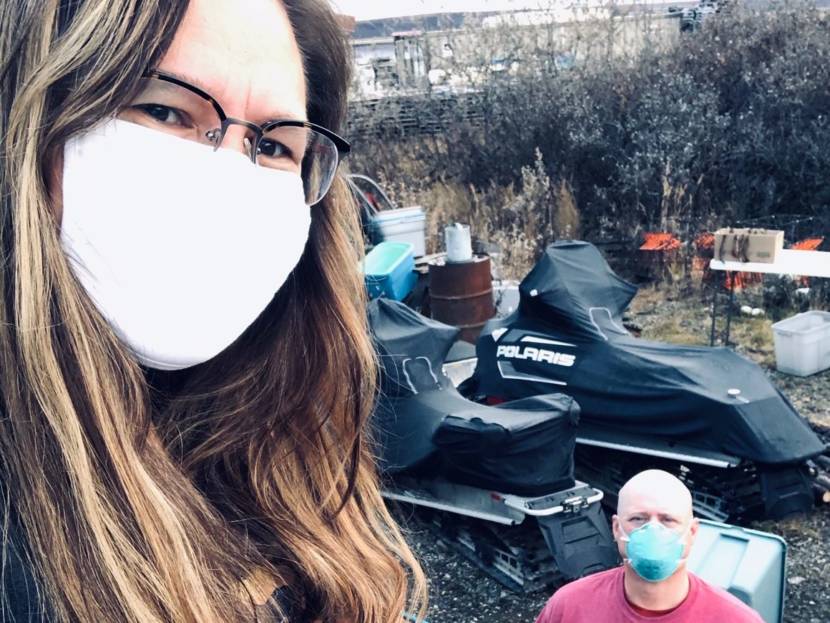
Maija Lukin during her self-isolation in Kotzebue. (Photo courtesy of Maija Lukin)

At the beginning of the coronavirus pandemic, many rural communities acted quickly to impose strict quarantine measures to keep the virus out of their towns. That was largely successful in stalling the spread of COVID-19.

But over the past several weeks, that’s started to change. Clusters of cases have flared up in dozens of villages across the state.

Gambell, Quinhagak, Stebbins, Buckland and Utqiagvik have all reported recent outbreaks. Some of those villages had case counts that grew quickly to dozens of people. Rural cases still make up just over one in 10 reported cases statewide, but the sudden, rapid growth is a worrying sign.

“It’s a building crisis, but it’s not as loud as when you see 100 cases a day in Anchorage or 60 cases a day in Fairbanks,” said Christina McDonogh, a law student originally from Perryville who has been tracking rural COVID-19 cases on a Facebook group.

Northern and Northwest Alaska, where all villages are off the road system, now have the highest case rates — the average number of daily positive cases per capita over the last week — in the state. Crowded housing makes containing the spread especially difficult.

Kotzebue resident Maija Lukin was diagnosed with COVID-19 about two weeks ago.

She got a rapid test in town and returned home. About 45 minutes later, she got a call from the clinic informing her she was positive. Without saying a word, her husband put on a mask and held one out for her to do the same She put it on while still on the phone. They had recently lost a friend to the virus, so fear of it was still raw.

“I just started crying and (my husband) was like ‘you’re not positive, you’re not positive’ and I was staring at him with tears running down my face,” she said.

But Lukin and her family were fortunate: they had a large house with their kids’ empty bedrooms, which allowed them to isolate within the same home. She hung up a blanket as a divider wall, so she could use the lower part of the house, which had its own kitchen and bathroom, as well as a separate entrance.

“I was packing things like packing clothes for myself to go into the other side of the house,” she said.

Her husband and 3-year-old granddaughter, whom she takes care of, would stay on one side of the house in the hopes that they wouldn’t catch the virus, while she isolated in the other. But separating a three-year-old from her grandmother wasn’t easy.

“Our granddaughter freaked out. And she was like, ‘Where’s my ana, don’t leave me!’” said Lukin.

Multigenerational households and extended families living nearby are much more common in rural Alaska than in the urban parts of the state, making social distancing especially hard. Some communities have imposed harsh lockdowns, and families are having to make tough decisions to stop seeing elders or kids. But that’s not always enough to keep the disease out, . And the virus has found a way to sneak into dozens of rural communities, where it can spread quickly.

“When you’re living in a rural place, you’re used to stopping by people’s houses. That’s how you pass the time, you stop by your grandma’s house, you stop by your uncle’s house, usually don’t even knock on the door. But with that being unsafe now, it’s very, very difficult to feel feel like yourself, and to feel connected to who you are,” said McDonogh.

McDonogh said that after many medical appointments were delayed early on in the pandemic, she’s heard of a new vector of transmission: medical transports.

“For people to receive routine medical care, they have to fly to Anchorage or to Fairbanks. And these are the two huge hot spots in the state,” she said.

Of course, she says, medical care shouldn’t be delayed. But she’s hoping that residents and officials keep paying attention to making sure people have places to quarantine when they return to their villages.

State officials say they’ve been working with tribes to plan for large outbreaks. They have conducted staged exercises for how to respond if there is one, according to Tim Struna, Chief of Public Health Nursing for the state of Alaska.

“It is a concern for everybody, and everybody is passionate about making sure that as soon as a case is identified, that there’s this, this team that is going to surround it and do everything they can to keep it as contained and as small as possible,” he said at a Thursday press conference.

Despite their best efforts, many worry that if cases around the state continue to rise, it could mean trouble for rural communities who rely on cities for their healthcare.

“If Anchorage is full, where are they going to send people? They can send people to Seattle, where they have their own number of cases? It’s a really big problem,” she said.

So far, Anchorage’s ICU capacity has been within a normal range for this time of year, according to Jared Kosin, president of the Alaska State Hospital and Nursing Home Association. But he warned that could change soon following a spike in cases that began over two weeks ago. Normally, it takes about two weeks for a surge in cases to manifest as more filled beds.

“It’s really important to remember that hospital capacity, the number of beds you have available is a lagging indicator. So if you’re trying to use capacity as a measure for the pandemic, you’re getting the wrong indicator,” he said at a Thursday press conference.

That’s why officials are renewing calls on city-dwellers to mask up and take other precautions to make sure that rural residents have access to the hospital beds they’ll need.

As for Maija Lukin’s granddaughter – Lukin decided that living at different ends of the house was worse than the increased risk of her catching COVID. Lukin is wearing a mask at home and letting her granddaughter sleep with her, but in a different bed on the other side of the room.

Without ice, killer whales are preying on bowheads in Alaska’s northern seas

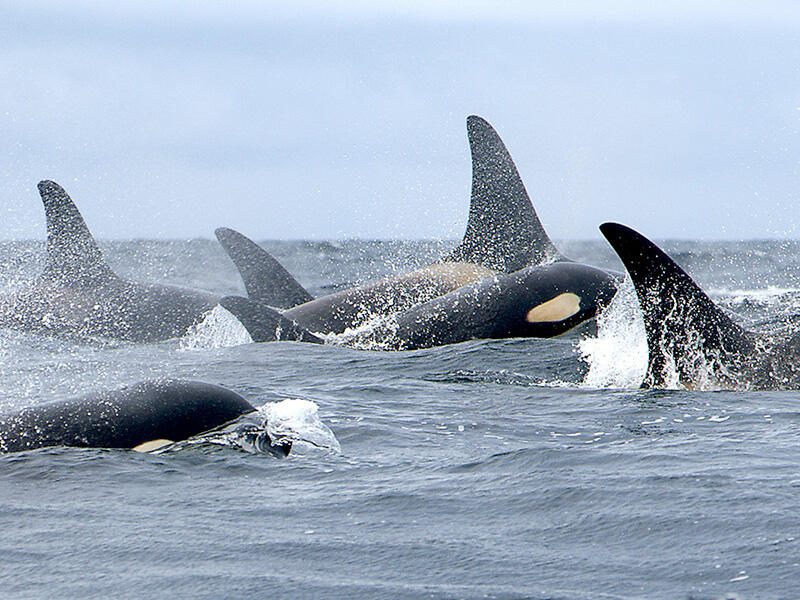
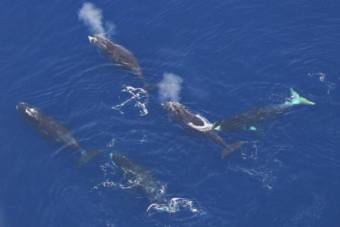
The population of endangered southern resident killer whales has dwindled to 76 individuals. (Holly Fearnbach/NOAA)

For subsistence hunters in the northern parts of Alaska, the bowhead whale has been a part of their diet for generations. However, scientists have found that as sea ice has dwindled in Arctic waters, a new predator has moved in to feed on the marine mammals: killer whales.

It’s not unheard of for killer whales to feed on bowhead whales in subarctic waters. Amy Willoughby is a researcher with the University of Washington specializing in aerial surveys of Arctic marine mammals.

“Killer whale predation on western Arctic bowhead whales has been documented in the shores of Russia and the Bering Sea,” Willoughby said. “For example, the St. Lawrence Island.”

However, in the colder waters north of Alaska, like the Eastern Chukchi and Western Beaufort Seas, sea ice becomes more plentiful, and it was thought that bowhead whales were better protected from predators.

But Willoughby says that sea ice has gotten thinner as Arctic temperatures have risen in recent decades.

Bowhead whales (Photo courtesy of NOAA Fisheries)

“Bowhead whales are thought to have an avoidance strategy to predation by evading predation and hiding out in thicker sea ice,” Willoughby said. “And without that sea ice there, bowhead whales don’t have anywhere to retreat to.”

Willoughby says scientists documented the first direct evidence of killer whale predation in those traditionally sea-ice-rich waters in 2015.

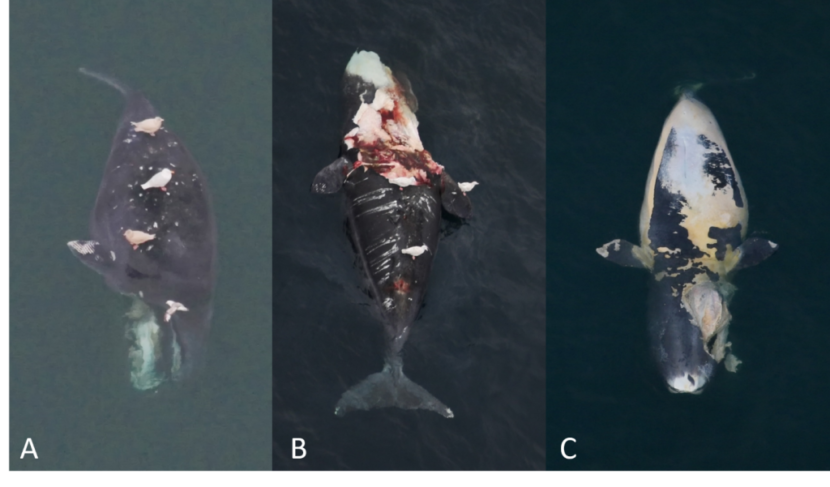
“The mouth was missing. The tongue was missing. The jaw was broken. And it also had healed rake marks on its flipper,” Willoughby said. “And that was kind of the ‘Aha!’ moment where we realized that killer whales might be predating on bowhead whales.”

Researchers began examining bowhead whale carcasses found from 2009 to 2018. Of the 33 whales observed by scientists, 18 of them had evidence of killer whale predation.

(A) The 2015 bowhead calf carcass that provided the first evidence of killer whale predation on a bowhead whale in the U.S. Pacific Arctic. Note rake marks on the calf’s flipper, mouth and jaw. (B and C) Carcasses of young bowhead whales with lethal injuries to the mouth and jaw from killer whale attacks. (Photo courtesy of NOAA Fisheries)

“We can’t technically say that there’s been an increase because there can be a lapse in data and information from years prior,” Willoughby said. “But when we look at the years from 2009 to 2018, killer whales are the primary cause of death.”

Willoughby says scientists don’t know for sure what the long-term effects of killer whale predation on bowhead whales could be, but she speculates bowhead whales may change their migration patterns in response to predation. Additionally, their feeding opportunities could change as a result of killer whales moving in. That could have repercussions on the 11 Inupiat whaling communities that subsist on bowhead whales.

“The Indigenous people that hunt these whales for subsistence have hundreds of years of traditional ecological knowledge to base their efforts off of,” Willoughby said. “And killer whale presence might negate that knowledge that they hold.”

At the very least, she says it’s now more important than ever for scientists to continue to keep an eye on killer whales as they expand their hunting grounds into the coldest parts of the world.

Site notifications
Update notification options
Subscribe to notifications