Interior

Sobering center considered as an alternative to prison in Fairbanks

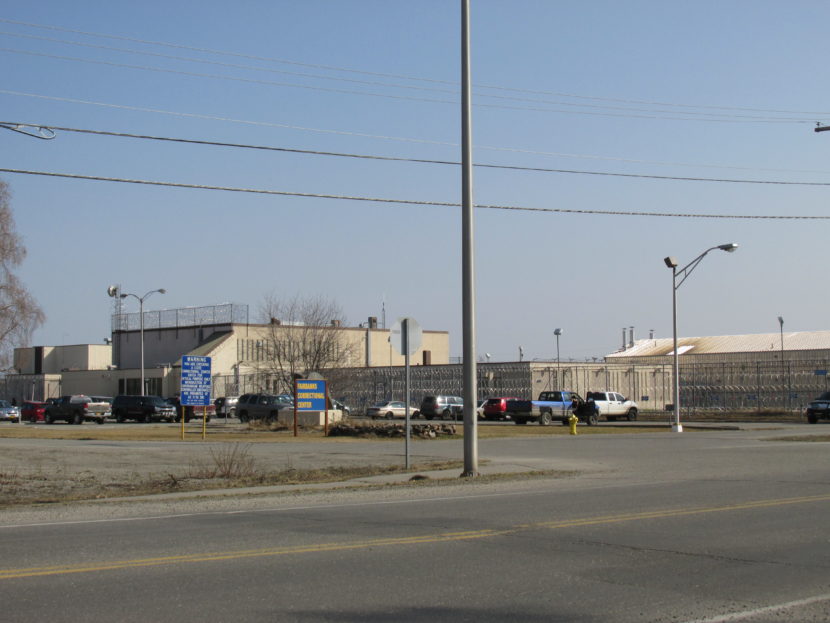
Fairbanks Correctional Center in Fairbanks, Alaska. This is the city's combined jail/prison. (Creative Commons photo by RadioKAOS)
Fairbanks Correctional Center in Fairbanks, Alaska. This is the city’s combined jail/prison. (Creative Commons photo by RadioKAOS)

Recent deaths in Alaska prisons have underscored problems with jailing severely intoxicated individuals, pointing to the need for an alternative approach. Bethel operates a sobering center, where care and treatment are the focus, and a similar facility is being explored as an option in Fairbanks.

State Title 47 requires temporary protective custody of an individual incapacitated by drugs or alcohol in public. It’s motivated by a public safety issue Fairbanks City Mayor John Eberhart says is elevated in Fairbanks.

“Where are we going to take them,” Mayor Eberhart asked. “What do you do if it’s 30 or 40 below zero without a sleep-off center? It’s time to do that; it’s time for a sleep-off center.”

Currently, the city works with the Fairbanks Downtown Association to run a community service patrol, to transport intoxicated individuals home, to jail or to the Fairbanks Memorial Hospital.

Mayor Eberhart says he’s trying to bring together local groups and agencies to talk about opening a sleep-off center in Fairbanks.

“I put out an email to try to organize a meeting of hopefully the hospital, Tanana Chiefs Conference (TCC), the police chief, myself, and others to start talking about a sleep-off center,” said Mayor Eberhart.

The sleep off center approach is successfully employed in other Alaska communities. Kevin Tressler manages a sobering center in Bethel.

“Prior to this program starting, you’d see a lot more intoxicated individuals around town,” Tressler said. “If you had to go to the (emergency room) for any particular reason, the waiting room was packed full it took a really long time to get in to get triaged.”

The 16-bed center provides a place for inebriated individuals, who are triaged by staff, and then allowed to stay for up to 12 hours.

Richard Robb, Director of Residential Services at the Yukon-Kuskokwim Health Corporation (YKHC), says there are several ways to measure the success of the program and the center.

“A lot of it is what we can do to help people,” said Robb. “One of the ways we have really increased in the past year is we’ve measured and we’ve pushed the intervention of SBIRTS. That’s Screening Brief Intervention and Referral to Treatment,”

The program, which Robb refers to as a “harm reduction model,” is a partnership between YKHC, Alaska Mental Health Trust and Bethel Police Department. Robb says after patients sober up, center staff ask them about their drinking, and whether they’d like to be referred to longer term treatment.

“It’s better for everybody and it’s a cost saving measure too,” Robb said. “Because staying a night here is a lot cheaper for the taxpayer than staying the night in the ER.”

The Bethel center is an attempt to avoid what happened to Fairbanks resident Gilbert Joseph last summer. Joseph who was picked up intoxicated and brought to Fairbanks jail died in his cell at Fairbanks Correctional Center. The Title 47 protection case gone wrong is one of several highlighted in a recent Department of Corrections report.

Rhonda Pitka, the first chief of the village of Beaver, where Joseph was a tribal member, wants to work with Tanana Chiefs Conference in Fairbanks to make sure the state is accountable for their actions.

“I feel like that contributed a lot to his death. He would probably still be alive,” said Pitka. “If he wasn’t in prison that night, if wasn’t in the jail that night. If he had gotten medical care he would probably still be alive,”

A local resident has reached out to Mayor Eberhart about a possible sleep off location in South Fairbanks. But Mayor Eberhart says he just in the early stages of trying to find funding for a project to address these issues here in Fairbanks.

“It’s a question of how do you it and who pays for it,” Eberhart said.
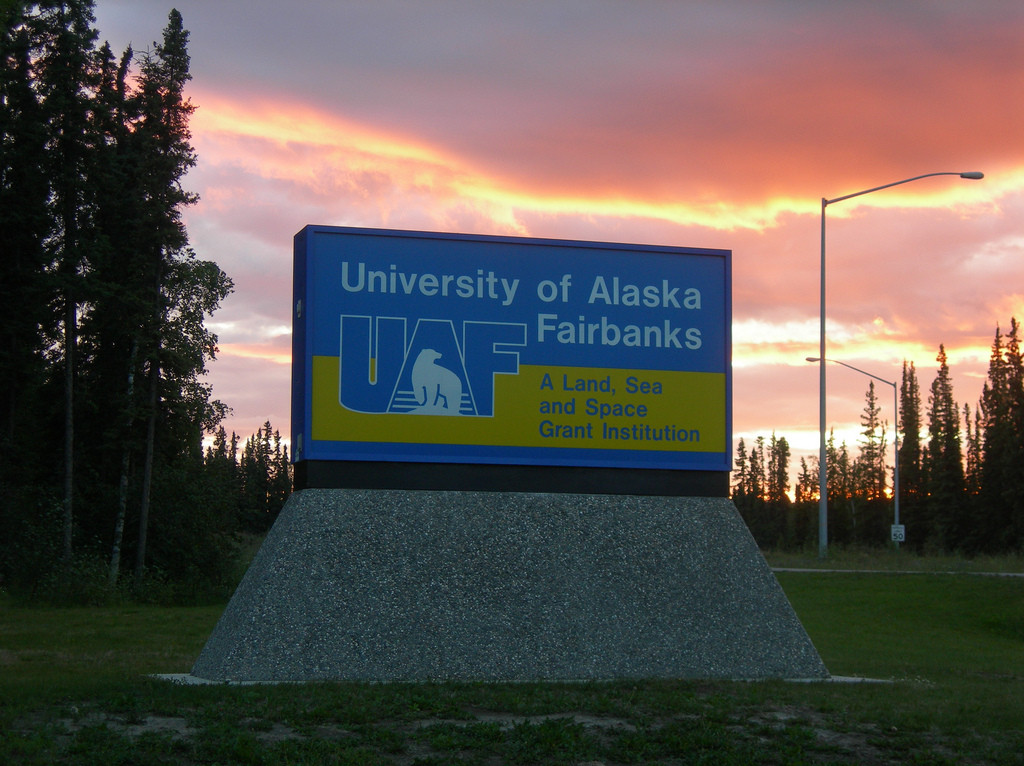
UAF makes effort to combat failures in sexual assault cases

UAF is one of a few Land, Sea and Space Grant universities in the U.S. (Photo by Jimmy Emerson)
UAF is one of a few Land, Sea and Space Grant universities in the U.S. (Creative Commons photo by Jimmy Emerson)

It’s been more than four months since the University of Alaska Fairbanks announced it failed to follow its own procedures in disciplining students accused of sexual assault. At the time, an independent review of the UA system was ordered.

UAF said it now has transparent procedures and software in place to prevent similar lapses, but the review is delayed.

Last week UAF student and sexual assault survivor Amy Cross testified before University Board of Regents. She applauded UAF’s efforts to be more responsive to assault victims and raise awareness about campus sexual assaults. But she said more could be done, even in times of financial hardships.

“As you consider the budget, I ask that you remember that Title IX is not just a trending topic,” Cross said. “Sexual harassment, assault and stalking are serious problems that will not be resolved unless we can change our rape-supportive culture.”

UAF Vice Chancellor Mike Sfraga said the school has new tracking software installed that flags any reports of Title IX violations. And all procedures have been reviewed and toughened.

“The bottom line is we have this triangle of checks and balances,” said Sfraga. “It ensures that practices and policies and procedures are being followed the way the Board of Regents mandates us to, the way the law mandates us to. It’s just completely tracked.”

Sfraga says based on the review, administrators decided to reverse an earlier decision to hire a temporary outside professional for the critical Dean of Students position and have hired internally.

Laura McCollough, former Director of Residence Life has been tapped for the post.

Meanwhile, an independent review of UAF’s lapses has seen delays. Roberta Graham, a representative for the University Statewide System said she hopes an executive summary will now be available at the end of March.

As first legislative budget cuts emerge, some question rural impact

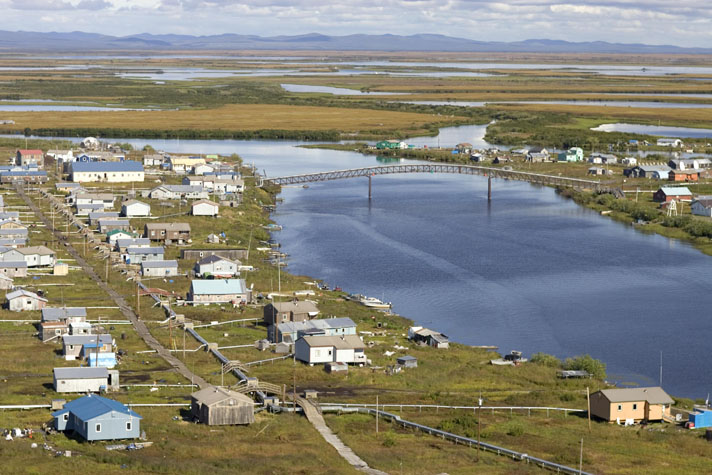
The community of Selawik, near the mouth of the Selawik River, is home to over 800 people. The site of the village, spread between riverbanks and an island, is also called Akuligaq, meaning "a river fork." (Photo by Steve Hillebrand/USFWS)
The community of Selawik, near the mouth of the Selawik River, is home to over 800 people. The site of the village, spread between riverbanks and an island, is also called Akuligaq, meaning “a river fork.”
(Photo by Steve Hillebrand/USFWS)

Legislators are looking to cut the state budget deeper than Gov. Bill Walker’s proposal to reduce spending by $100 million.

But some lawmakers – especially those from rural areas — are raising concerns about where these cuts will fall.

More than five weeks into the legislative session, House finance subcommittees recommended the first cuts to the budget for the fiscal year that starts July 1.

They include $9.8 million in cuts to education programs, as well as cutting all $2.7 million in state funding for public broadcasting.

Rep. Daniel Ortiz, a Ketchikan independent, says eliminating the $2 million for a prekindergarten program is a mistake.

“It’s about investing now so that you don’t have higher costs later,” Ortiz said. “And it just makes good economic sense to do this. Yeah, we get the $2 million reduction but, you know, it’s going to be hard for anybody to chart the costs to the state later on down the road.”

Other proposed cuts include eliminating state funding for rural schools and libraries to increase broadband internet access. As well as a state program to fund mentors for teachers, which is aimed at retaining new teachers in rural Alaska.

Wasilla Republican Rep. Lynn Gattis says none of the cuts are easy, but they’re necessary. That’s because the state has a $3.5 billion budget shortfall.

“There’s nobody sitting here, and I suspect nobody in the audience, that’s very comfortable with any of these cuts,” Gattis said at an education subcommittee hearing. “Somebody said to me, ‘You’re making me make a choice: the right arm or the left arm. And the unfortunate part is — which arm do you write with — is where we’re at in making these cuts.”

Juneau Democratic Rep. Sam Kito says the state should be looking for new revenue, like Walker has proposed, before cutting programs that disproportionately benefit rural areas.

“The libraries in many of these communities become the focal point in trying to maintain connections with the outside world to try and engage students with technology,” Kito said.

For Anchorage Republican Rep. Mike Hawker, the debated education cuts are a small fraction of the overall cuts that are needed to close the state’s budget gap. He contends that the state expanded programs during oil boom years that it can no longer afford.

“The decisions that I want to see coming out of this Legislature are the difficult decisions to reduce our spending to a level that is sustainable,” Hawker said. “To do that, there is no question that we are going to have to be reducing programs in areas across the state that are good, that are desirable that people want but that respectfully we just can’t afford these days.”

Nome Democratic Representative Neal Foster says he hopes, before the budget is completed, the effects of the cuts are geographically balanced.

“I agree that cuts have to be made,” Foster said. “I’m sad to see that so many of these cuts are being made out of rural Alaskan programs. And so, I know it’s the beginning of the process, so I’m hopeful.”

Subcommittees are completing their work on the budget over the next week.

University of Alaska regents hear pushback on restructuring plan

Last week, the University of Alaska Board of Regents released a plan to reorganize the UA system into three focused campuses and heard reaction from the public.

In light of state budget cuts, the draft Strategic Pathways plan released Tuesday is meant to cut costs by focusing each of the three main UA campuses into certain disciplines.

The proposal defines the University of Alaska Anchorage as the “metropolitan university,” responsible for health, policy and social sciences. The University of Alaska Fairbanks would be the “research university” for science, engineering and rural development. The University of Alaska Southeast is labeled the “liberal arts and sciences” university, focused on fisheries, mining, and interdisciplinary environmental studies. The plan also retains a few core programs, namely education and management, across all campuses.

While the draft plan offers few details about which non-core degree programs would be eliminated, more than a dozen people expressed concerns in Fairbanks on Thursday that their area of interest could be impacted.

“I believe the presence of a robust music theater and fine arts curriculum at the University of Alaska Fairbanks has been a foundation upon which the arts community in Fairbanks has been built,” Jack Wilbur of Fairbanks told the Board. “And I’m concerned that the Strategic Pathways concept as presented might undermine that foundation.”

Others were concerned that narrowing UAF to an engineering school would harm other research areas.

“UAF is not an ivory tower,” said Douglas Cost, a doctoral student with the International Arctic Research Center. “It is a location of real-world problem solving by faculty, adjuncts and graduate students in their research and teaching. In order to help Alaskans deliberate, debate and shape the next 25 years, the importance of interdisciplinary collaboration and outreach must be supported.”

The Strategic Pathways draft doesn’t give estimates of cost savings. But it does contain some specific and ambitious goals for student achievement, including increasing the proportion of Alaskans hired into Alaska teaching positions from 30 percent to 90 percent. The plan also seeks to increase the percentage of graduates in STEM fields from about 4 percent to 6 percent, as well as boost the number of graduates in health occupations.

The plan imagines three phases of restructuring, beginning this spring and finishing around 2019.

In a letter sent to UA faculty and staff Tuesday, President Jim Johnsen said the Board of Regents wouldn’t make any final decisions in their meetings for the week.

GAO: Rush imperils missile defense

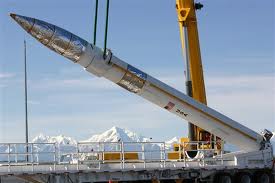
A missile is loaded at Alaska's Fort Greely. (Photo courtesy Missile Defense Agency)
A missile is loaded at Alaska’s Fort Greely. (Photo courtesy Missile Defense Agency)

A new report raises doubts about whether the missile defense system housed largely at Fort Greely can protect the U.S. from a North Korean attack.

The Government Accountability Office says the Missile Defense Agency is compromising reliability with a rushed schedule as it expands the number of ground-based interceptors in Alaska to 40.

Cristina Chaplain, the report author, says the problem is the missile agency’s acquisition process. Chaplain says the agency overlapped the testing and production phases for its new missiles, to meet a 2017 deadline for installing them in the field.

“In essence, the Missile Defense Agency was buying, producing and emplacing these interceptors without really knowing whether they could work as intended,” she said. “And as you can imagine that caused a number of problems.”

Among the problems is a series of failed tests, which can cost more than $200 million apiece. Chaplain says the agency’s approach to developing ground-based missile defense has contributed to a cost increase of $1.75 billion and a delay of more than six years.

“So even when you’re in rush and you’re trying to get something in quickly, you may end up waiting longer for it because you’re continually in a cycle of correcting problems and testing them again,” she said. “And you’re also in a continual cycle of having to pay for tests when they don’t work, and they’re very expensive.”

The Missile Defense Agency did not issue a response to the GAO report when it came out Wednesday. A spokesman said Thursday they’re still reviewing it.

2016 Iron Dog race expected to be faster, riskier

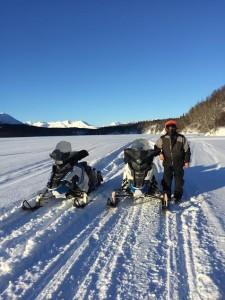
Joe Cleaver and the team’s snowmachines on a recent training run near Puntilla Lake. (Photo courtesy of Bobby Frankson)
Joe Cleaver and the team’s snowmachines on a recent Iron Dog training run near Puntilla Lake. (Photo courtesy of Bobby Frankson)

The 2016 Iron Dog Snowmachine Race gets underway this weekend. The ceremonial start in downtown Anchorage begins Saturday morning, and then the green flag officially drops at the Big Lake starting line on Sunday at 11 a.m.

A lack of snow on the north slopes of the Alaska Range and Farewell Burn presented a big challenge to racers last year, prompting many to add supplemental radiators or fans to their machines to prevent overheating. Even then, the racers were forced to reduce speed and travel as a pack over more than 50 miles of bare ground. Iron Doggers are expecting a better trail than last year.

Despite Alaska’s below-average snowfall totals, the trail appears to be snow-covered for almost all of its 2,000-mile length from Big Lake to Nome and then to Fairbanks.

Iron Dog Executive Director Kevin Kastner is expecting a fast race.

“Once you get past Skwentna and up to Shell Lake it gets better and better, and even sections out of Rohn and over the [Farewell] Burn are about as fast as they’ve ever been,” Kastner said. “The prediction is for a fast race, and a fast race can also mean more accidents. So we are hoping that they keep it under control. But so far, so good, and the overall trail should be a good one.” 

Like last year, the usual race trail on the Yukon River between the Kaltag and Galena checkpoints will need to be rerouted due to open holes around Koyukuk. Iron Doggers will take the overland portage trail on the north side of the river between Koyukuk and Galena.

That area is the home turf of Iron Dog Team 27 – Bobby Frankson and Joe Cleaver. They’ve entered the race twice before as partners – in 2006 and 2009 – but have never finished.

Speaking from the safety inspection in Anchorage on Wednesday, Frankson said that the week before the race is a relentless push to get ready.

“Countless hours of turning wrench and dialing in,” said Frankson. “I drove into Anchorage at 4 o’clock in the morning and got up at 7. And here I am at the Expo, and apparently I am not the only one.” 

Forty-one teams are signed up in the competitive Pro Class, and seven more are in the non-competitive Recreational Class.

Polaris is the most popular make of snowmachine in the race, with 19 teams signed up. Ski-Doo is second with 12 teams. Eight teams are riding Arctic Cats and only two have chosen Yamaha.

Polaris machines have crossed the finish line first two years in a row, and five out of the last seven years.

A first place prize of $65,000 is up for grabs as part of a $260,000 purse. The winning team is expected to arrive at the finish line in downtown Fairbanks around noon on Feb. 27.

Site notifications
Update notification options
Subscribe to notifications