
Northwest

Whale butchered, meat distributed to villages surrounding Kuskokwim River

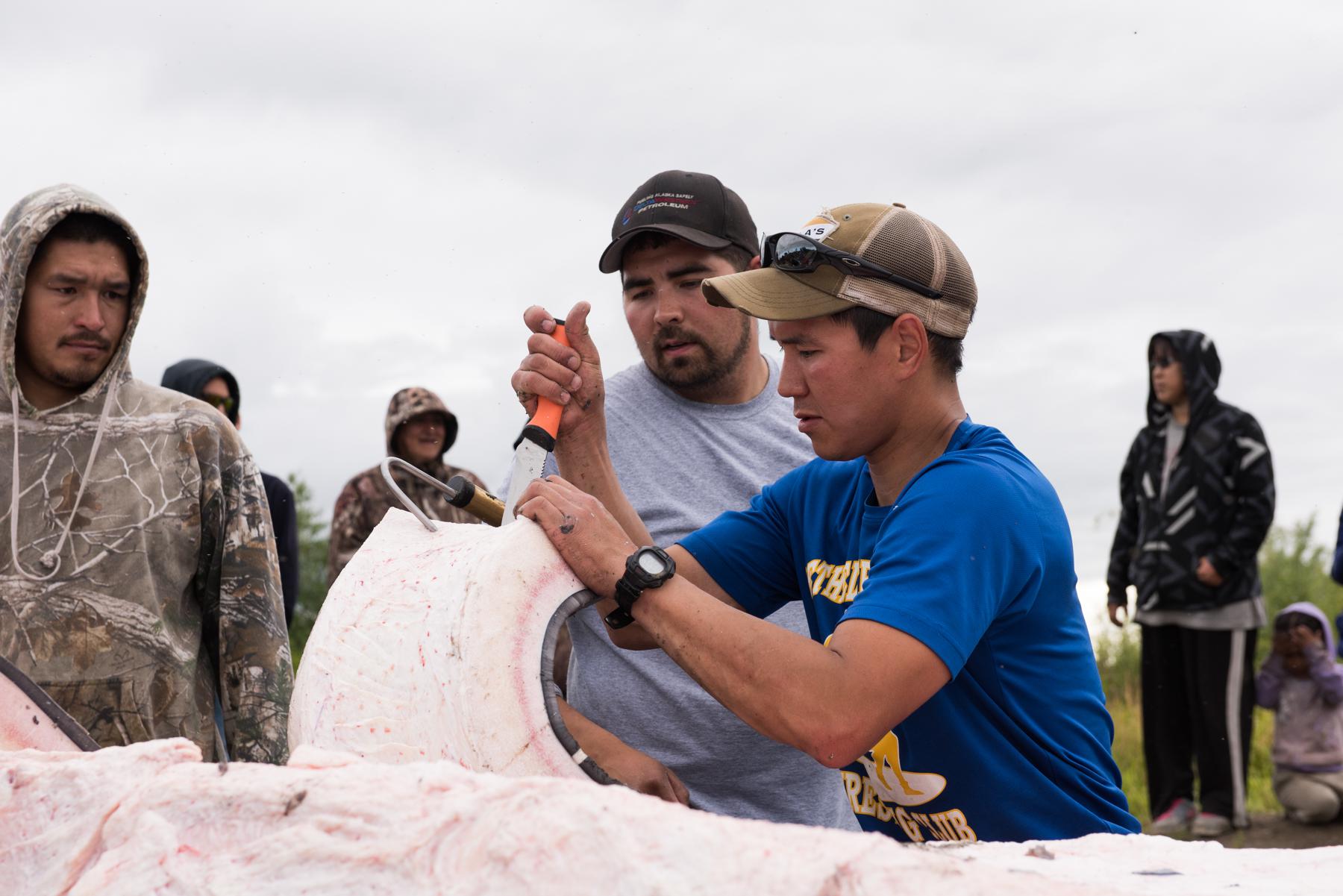
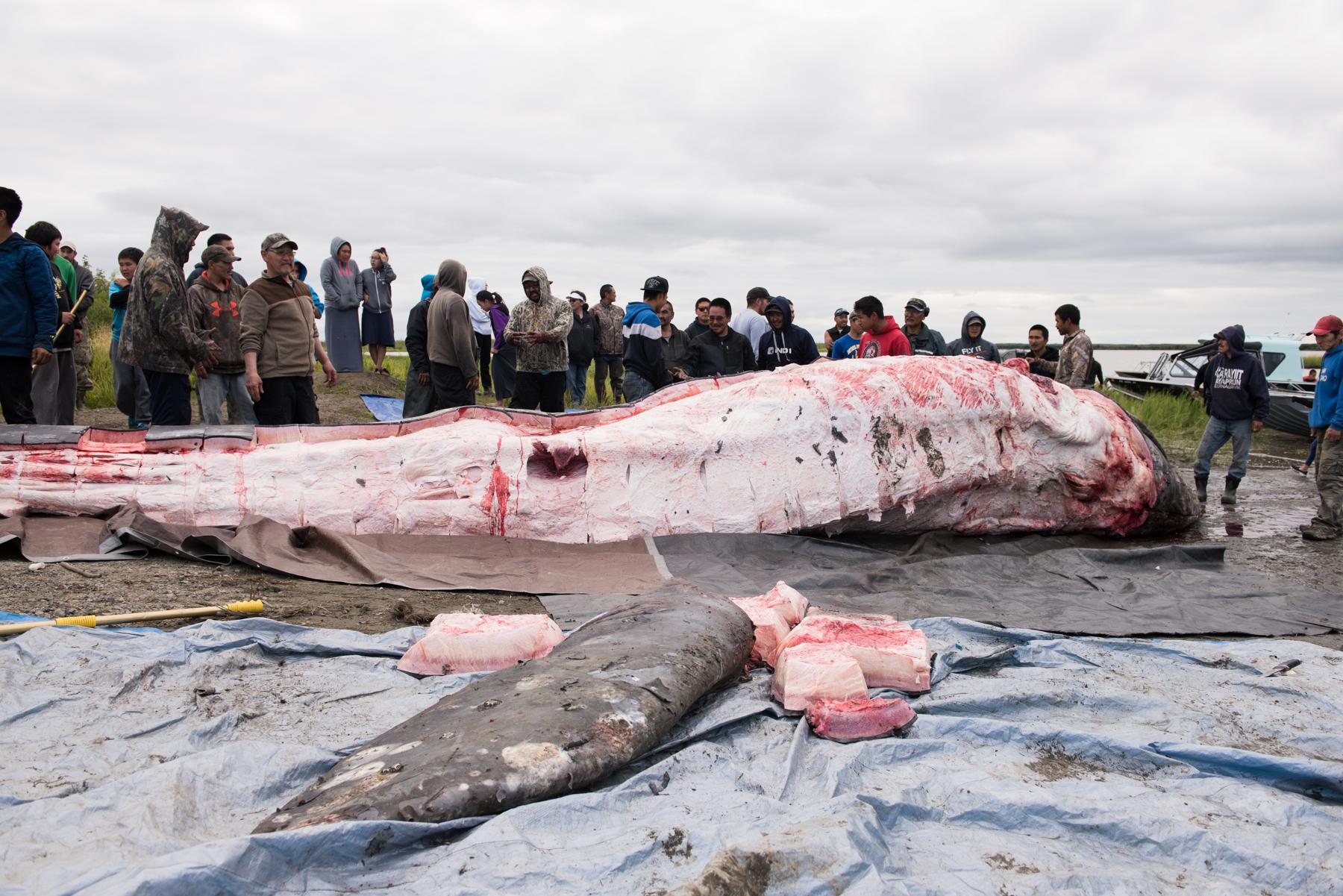
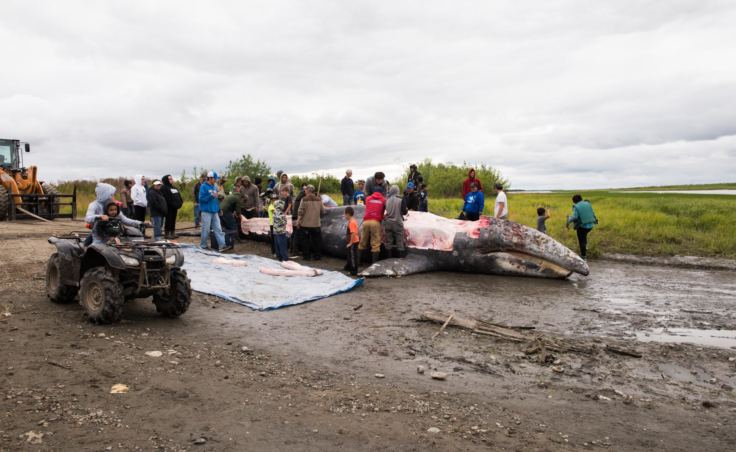
Meat and blubber from the whale killed Thursday evening in the Kuskokwim River is currently being distributed to surrounding villages. Six boats dragged the 37-foot long whale to shallow water between 6 p.m. and 7 p.m. on Saturday. A yellow front-end loader then carried the carcass to the Napaskiak shore.

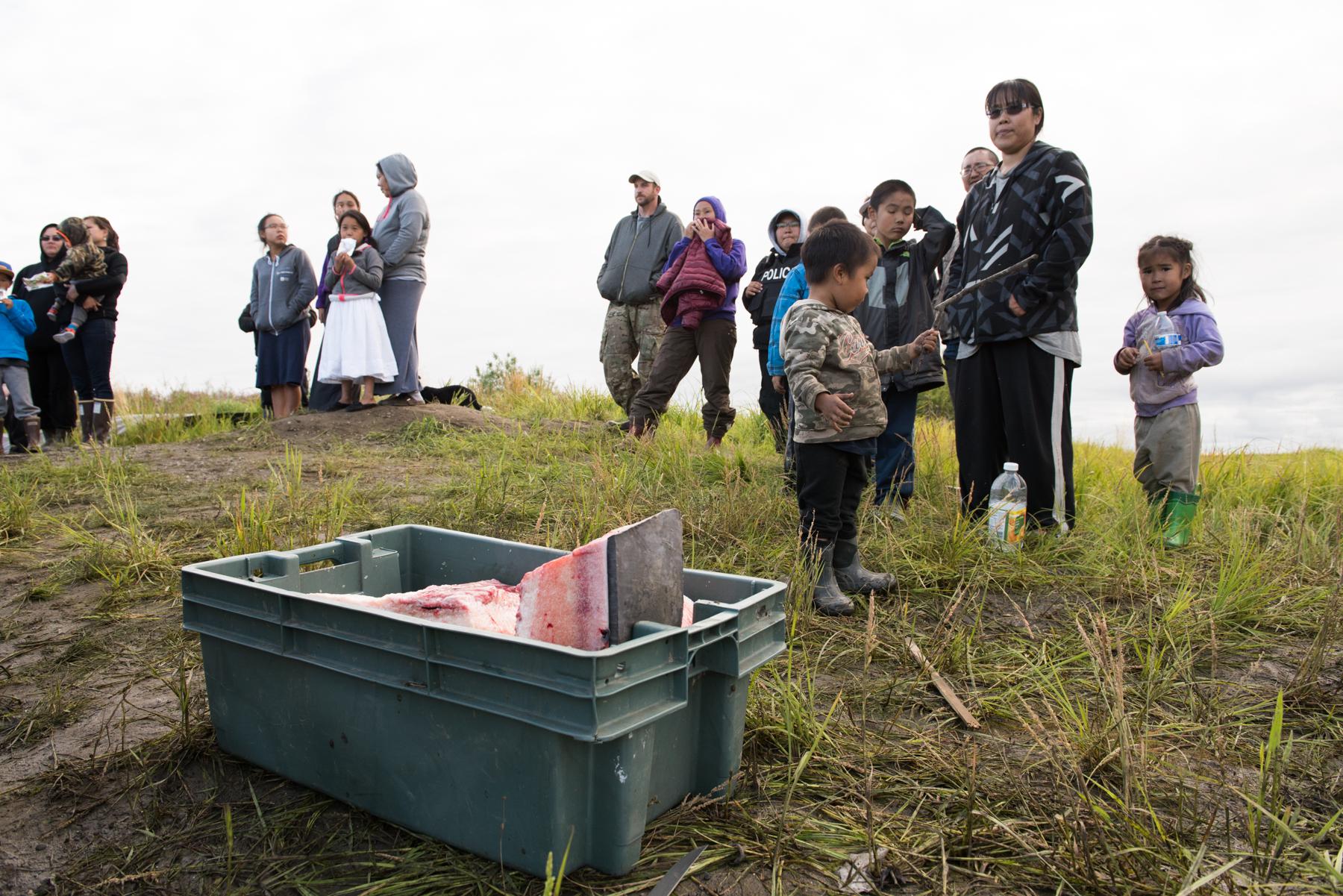
As of 7:45 p.m. Saturday, about 40 people, including elders, adults, and children, surrounded the whale while several people worked to butcher the meat.

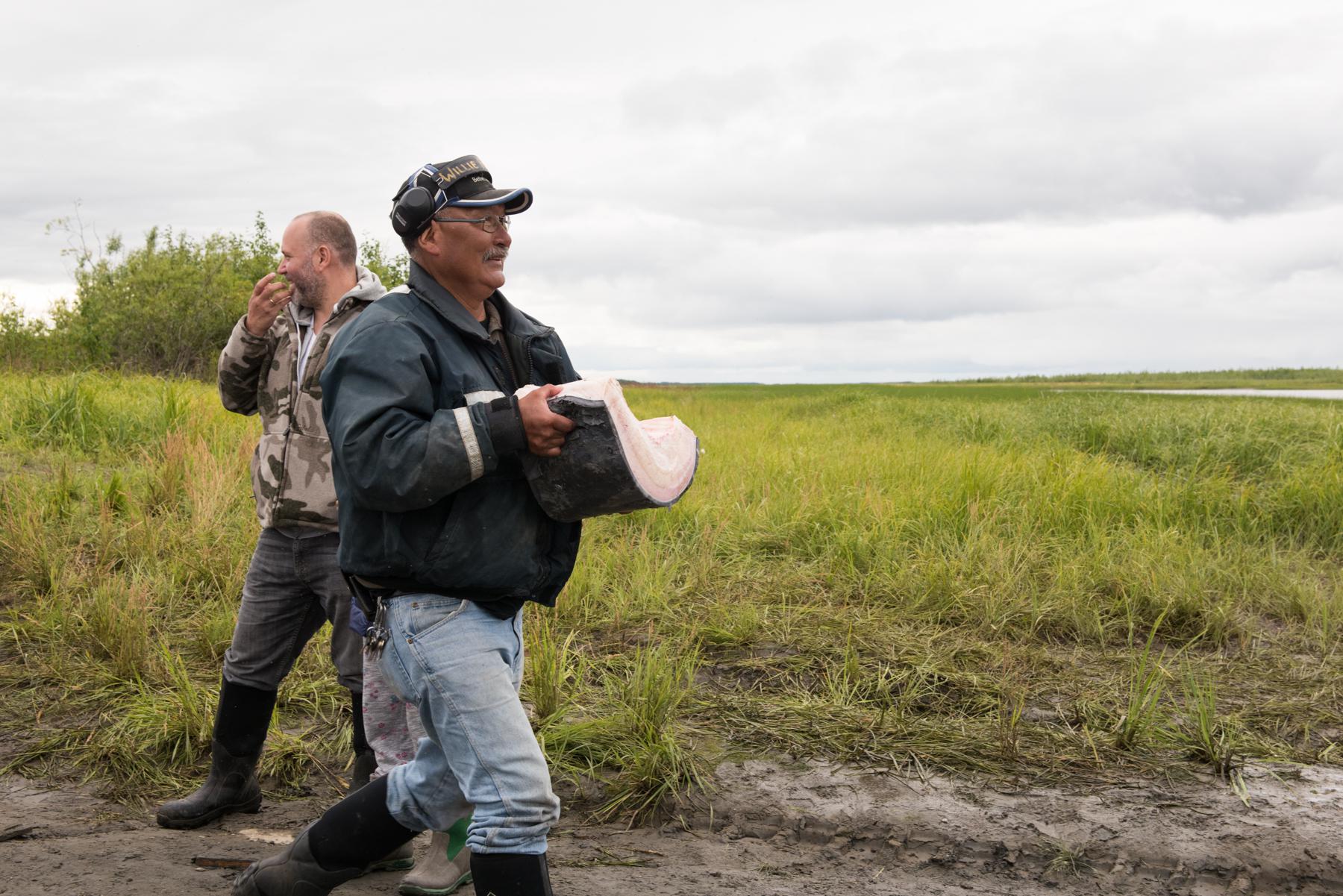
The meat was first distributed to elders, who were seen driving away on four wheelers, carrying pieces of white blubber in trash bags.

Around 9 p.m., sections of the whale had been given to community members from Napaskiak, Atmautluak, Bethel, Akiachak, Tuluksak, and Akiak. Meat and blubber from the whale is expected to travel throughout the region.

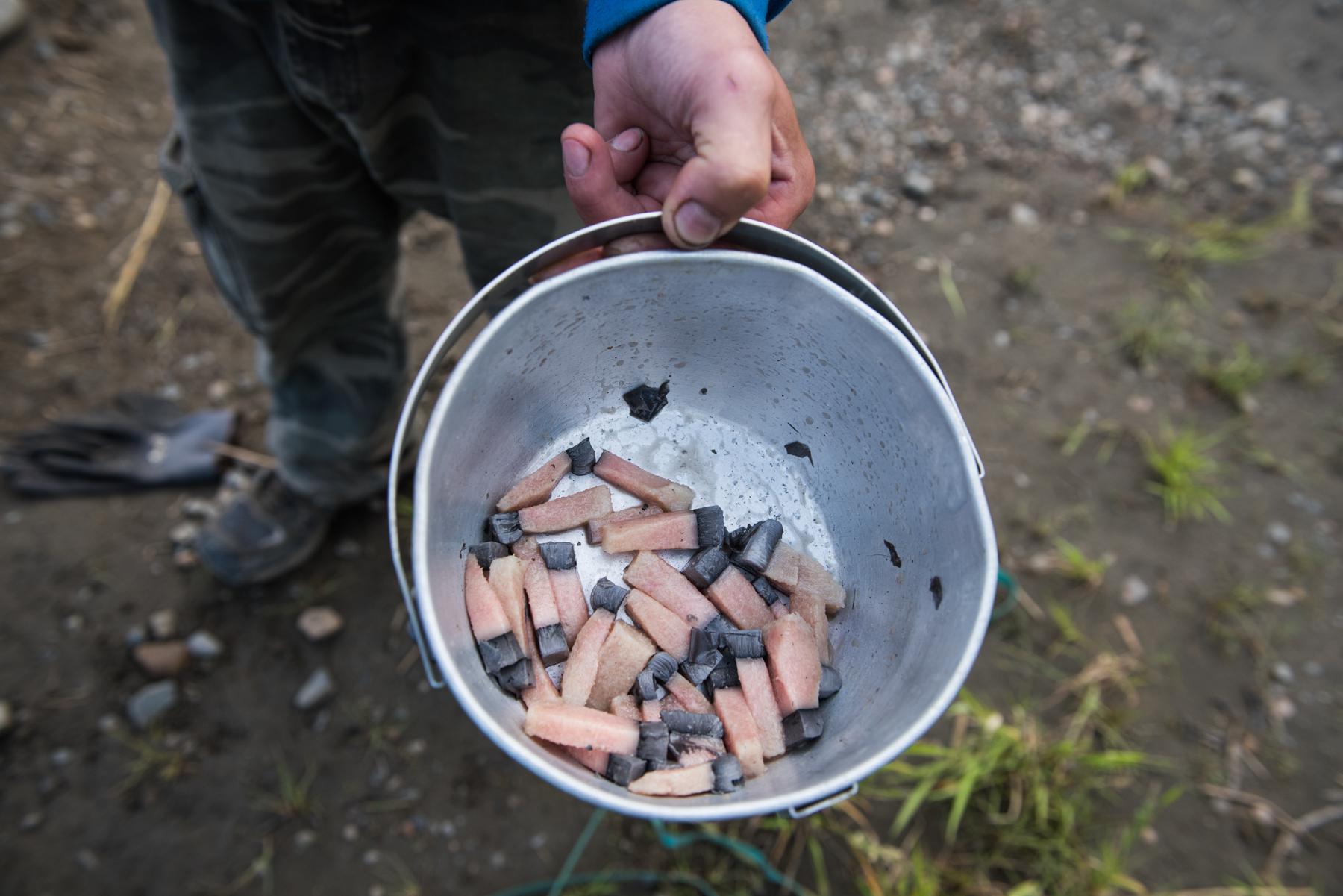
Bethel Fire Chief Bill Howell runs a meat cutting and processing business in Bethel called Bill’s Meats. A friend asked him to come to help with the butchering. He soon arrived with knives and began carving whale steaks.

Before the whale was cut, Napaskiak Honorary Chief Chris Larson said a prayer of thanks. Then the whale was given fresh water.

Larson says the whale will be enough to feed the village, especially after a summer of low king salmon. However, there was an abundance of red and chum salmon this season.

Even though the whale has been sitting dead at the bottom of the river for several days, bystanders are saying that the meat is edible.

One woman, when asked how she would prepare the meat, said, “I’m not sure. I’m gonna start with Crisco.”

Others are Googling how to prepare the meat, or saying that they will call their friends and family up north for advice.

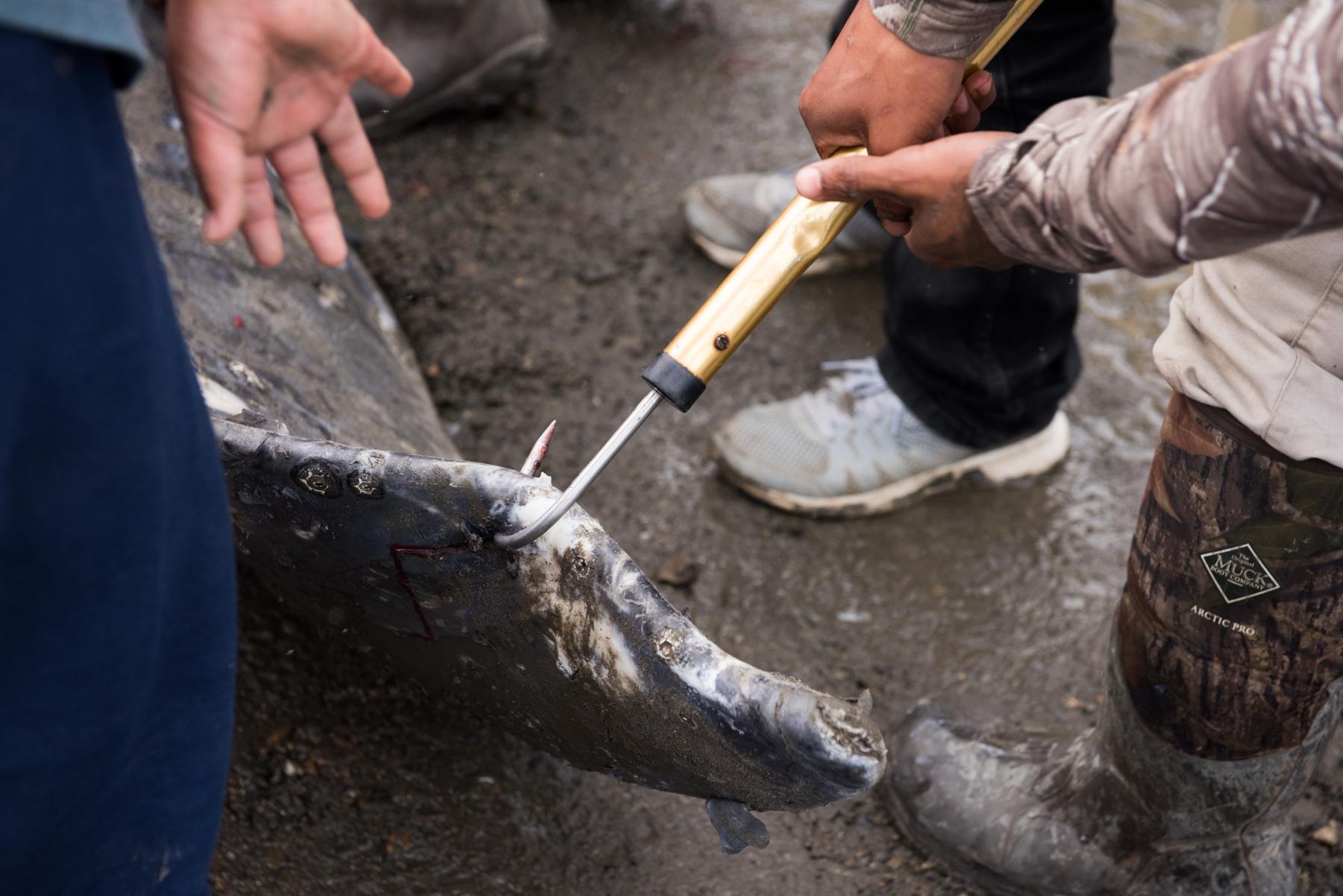
Whales coming up the Kuskokwim are rare, and a whale of this kind has not been seen this far inland in living memory. The whale is grey and covered in barnacles. It is not a beluga, as some earlier claimed. It may be a gray whale, but that is unconfirmed. The legal ramifications of the incident are unknown. Whales are protected under federal law and international treaty.

The killing of the whale has drawn a broad controversy that has largely played out over Facebook. Opponents say that whales are not a traditional food for the area, and that the locals who spent 90 minutes using guns, seal harpoons, and whatever they had on hand were unequipped to kill an animal of this kind.

Others have supported killing the whale, saying whatever the river brings them is subsistence food.

To avoid negative attention, many people involved with killing and/or salvaging the whale are choosing to remain anonymous.

Many people have worked around the clock since Friday morning to bring the carcass ashore. The Napaskiak Tribal Council voted to donate $500 of gas to boaters who helped with the recovery. Welders fashioned custom, four-barbed hooks from scrap metal. Ropes broke and hooks were lost as the weight of the animal overwhelmed the homemade equipment.

When it was killed, an estimated 40 to 50 boats were seen chasing and surrounding the whale. Only six to eight boats at any given time were helping to salvage it.

Joe Evon with Napaskiak Search and Rescue led the recovery effort. Mid-day Saturday he said, “Everybody that participated in taking that animal’s life should be out there helping us.”

After two days of trying, innovating, developing tools, and trying again, hooks caught deep enough in the carcass lying under 30 feet of river water. It took a half dozen boats joining the strength of their motors to finally drag the giant animal from the bottom of the Kuskokwim.

Napaskiak Tribal Administrator Sharron Williams says that the recovery was a group effort and that she’s proud of those who helped.

GCI tells customers “No Worries” increases data plan for “rural hub communities”

Alaska’s largest telecommunications company, GCI, has rolled out a new internet plan for customers in hub communities, like Nome and Kotzebue, which will decrease customers’ rates and increase data amounts.

Heather Handyside, senior director of corporate communications with GCI, says the new coverage option is meant to eliminate customer’s worries.

“People were going over their limits inadvertently and unless you really carefully monitor it, it can be hard to not go over your limit. So with the No Worries plan, it takes the worry out of things for you. So what happens is when you reach the 80% threshold of your data usage for the month, GCI will send you an email letting you know you’re getting close and then once you’ve reached that limit, we’ll slow down your ability to surf the net.”

Once the data limit is reached, customers then have the option to continue using the internet at a reduced speed for the remainder of the month, or they can purchase additional data for $10.

And speaking of money, one of the No Worries Plan options will cost almost half as much as GCI’s current 100-gigabyte plan while also providing more data.

Handyside explains that Quintillion’s fiber optic project had no impact on GCI’s upgraded plan, but more data usage is available thanks to the Terrestrial for Every Rural Region in Alaska network or TERRA.

“We’ve had TERRA in the works for over ten years and because we thought about it, and we were willing to make the investment and we were shovel ready when the American Recovery and Restoration Act funding became available, we were able to leverage a little bit of federal funding to build out this network, which by the time that we complete it, will serve 84 communities at a cost of $300 million.”

As of Tuesday, customers in Nome, Kotzebue, Bethel, and Utqiagvik, were automatically upgraded to the No Worries Plan. Handyside says the hope is to expand the No Worries plan to other rural communities as well.

“We don’t really have the technology right now to deliver that type of service and data to some of the more rural communities that aren’t right on the hubs. But we are looking for the technology that will make the investment and then do the upgrades as it becomes available. There are no definite plans right now or no definite timeline at this time.”

According to a company announcement made in April, GCI is expected to be acquired by Colorado-based Liberty Interactive Corp by early 2018.

Legislature passes capital budget in one-day special session

Rep. Neil Foster, D-Nome, and Rep. Chris Tuck, D-Anchorage, talk before the vote on the capital budget. The budget passed, 27-13, July 27, 2017. (Photo by Andrew Kitchenman/KTOO)
Rep. Neil Foster, D-Nome, and Rep. Chris Tuck, D-Anchorage, talk before the vote on the capital budget on Thursday. The House voted for the budget, 27-13. (Photo by Andrew Kitchenman/KTOO)

The Alaska Legislature passed the state’s capital budget today, allowing road projects and other construction to move forward.

It was the only piece of business for the third special session, which lawmakers called themselves. It came and went in about six hours on Thursday.

The capital budget is $1.4 billion, the lowest amount in 17 years. Most of the funding is from the federal government.

Nome Democratic Rep. Neal Foster said the budget bill, Senate Bill 23, was a compromise.

“We wanted to make sure that construction projects moved forward without delay this summer,” he said. “We wanted to bring in over a billion dollars in federal matching funds back to Alaska. And we wanted to see that thousands of Alaskans continue to work in good-paying construction jobs.”

The budget included $20 million  for oil and gas tax credits, $8 million for community assistance and $7 million for a new school in Kivalina in the Northwest Arctic Borough.

The community assistance allows every municipality and borough to receive at least as much from the state this year as it received last year. Anchorage Democratic Rep. Les Gara said this aid is important.

“For a modest $8 million, we said let’s keep that at last year’s level and not keep doing damage to communities,” Gara said. “It’s a good thing for public safety. It’s a good thing for taxpayers.”

Perhaps the most controversial piece of the capital budget was a decision to move half of the funding the state set aside for a Juneau road extension toward other projects.

Anchorage Republican Rep. Lance Pruitt said funding projects like the road would contribute to ending the state’s recession.

“That’s showing the business community, that’s showing the international community, that we are willing to pay our debts,” he said.

Pruitt proposed an amendment to keep the money designated for the road. The proposal was defeated in a conference committee meeting.

Some members of the Republican House minority caucus criticized the process that led to the capital budget. They said it didn’t allow for their input. The compromise bill was released Wednesday, and went through the entire process in Thursday’s one-day session.

“Red Horde” swims through Nome escapement goals; managers predict strong silver run

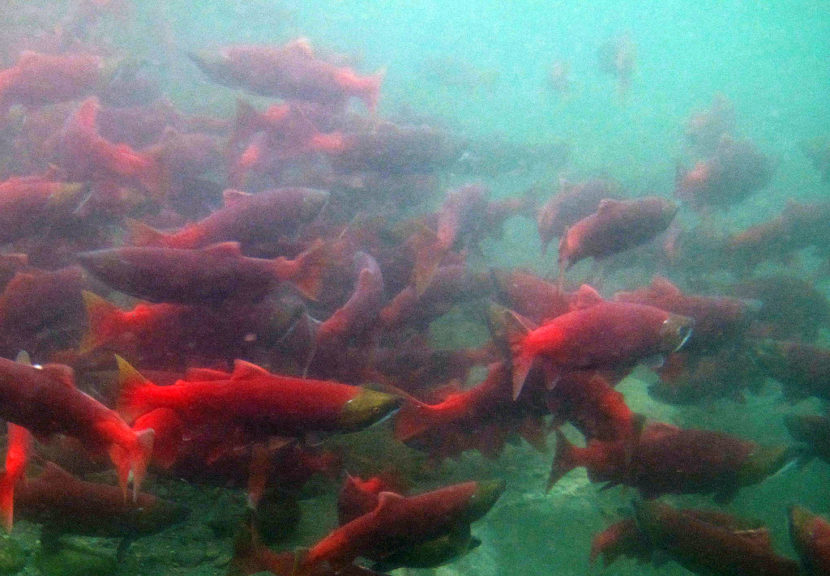
Sockeye salmon
(Photo by Katrina Mueller/USFWS)

Following a record number of sockeye salmon swimming through Pilgrim River this past weekend — over 5,000 in two days — the Alaska Department of Fish and Game in Nome waived all catch limits for the red fish.

As of Thursday morning, an additional 3,700 sockeyes were reported through the Pilgrim River.

Area manager for the Norton Sound and Kotzebue, Jim Menard, says he and his staff are encouraging subsistence fishers to get out there and stop the “red horde” before it overtakes Salmon Lake:

“We will reach, definitely exceed our escapement goal range, but as long as we don’t go over about 20,000 into that lake (Salmon Lake), we should be okay. One year, we put 80,000 in the lake; a couple years, we put 50,000 into the lake, and we had a big crash come about. What happens is when the fry come out, there’s just not enough feed for them, so some of those age classes started to crash.”

About 380 permits have been given out by Fish and Game in Nome so far this season, and Menard expects last year’s record of more than 500 permits will be reached again this year.

For most of these fishers with permits, Menard says there’s only one question on their minds: “the sockeye run is good, the chum run is good; now, what’s going to happen with the silvers?”

Menard says, for now, his estimate is that the run of silver salmon will be above average this year, but warmer ocean temperatures during the past few winters could further increase the number of 4-year-old silver fish coming through Nome’s rivers:

“The difference between silvers and chum and pink are chum and pink immediately go to sea as fry, whereas the silvers are going to over-winter two years in the fresh waters. We’ve had warm winters starting with that 2013 age class, so we know we didn’t have too many issues with eggs freezing, that sort of thing. So, we think the egg survival rate was very good. The fry salmon are coming out, so the silver salmon had a lot to eat.”

It’s possible, Menard says, that the numbers of silver salmon will start to rise significantly in the fourth week of July as they replace more of the chum salmon being caught.

Fish and Game’s expectation is that the run could be even better than their current projection, but only time will tell.

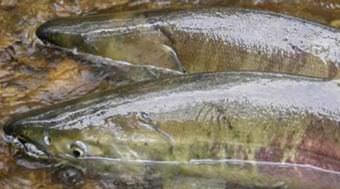
Recent Kuskokwim openings leave boats heavy with chum

Summer chum.
Summer chum. (Photo courtesy U.S. Fish and Wildlife Service)

The numbers are in from the two recent gillnet openings on the Kuskokwim River. Although Monday’s opening stretched twice as long as Saturday’s, more people fished during the weekend window.

From Tuntutuliak to Akiak on the Kuskokwim main-stem, an estimated 320 drift boats fished on Saturday, compared to 250 boats on Monday. The difference showed in the harvests. Approximately 30,190 salmon were taken on Saturday, compared to 17,950 on Monday.

Chum salmon dominated the catches with about 19,640 netted Saturday and 11,990 Monday.

Reds followed with about 9,550 harvested Saturday and around half that, about 5,270, on Monday.

Kings made up the smallest portion of the catch: 990 on Saturday and 690 on Monday.

These estimates come from a collaboration between the U.S. Fish and Wildlife Service, the Bethel Orutsararmiut Native Council (ONC), the Kuskokwim River Inter-Tribal Fisheries Commission, and the Bering Sea Fishermen’s Association.

Reactions to the abundance of chum varied. Some families told ONC that they witnessed “chum chucking” during the openings. Others said that they had stopped fishing because of too many chum in the water. Some said they were waiting for silvers to begin fishing again.

However, many people told members of the Kuskokwim Salmon Management Working Group that they were grateful for the chance to fish with gillnets.

Fishery managers say that the chum and red salmon are running strong on the Kuskokwim. Both are tracking along the state’s 10-year historical average. Meanwhile, the kings are running below average and have a low chance of meeting drainage-wide escapement goals.

Norton Sound beluga whale population is ‘abundant,’ new survey suggests

A recent aerial survey of the eastern Bering Sea suggests the Norton Sound beluga whale population is abundant in number.

The National Oceanic and Atmospheric Administration Fisheries has spent more than two weeks counting belugas in collaboration with the Alaska Beluga Whale Committee.

According to their latest numbers from last week, 917 whales have been seen in the Norton Sound.

In a NOAA Fisheries news release, The surveyors said these numbers “put us well on track to being able to update the abundance estimate for this population of belugas.”

NOAA said the majority of these whales were sighted offshore of the Yukon River Delta.

The final results from the Norton Sound beluga whale survey have not yet been released at this time.

Site notifications
Update notification options
Subscribe to notifications