Northwest

Native artisans worry ivory bans in other states could reverberate in Alaska

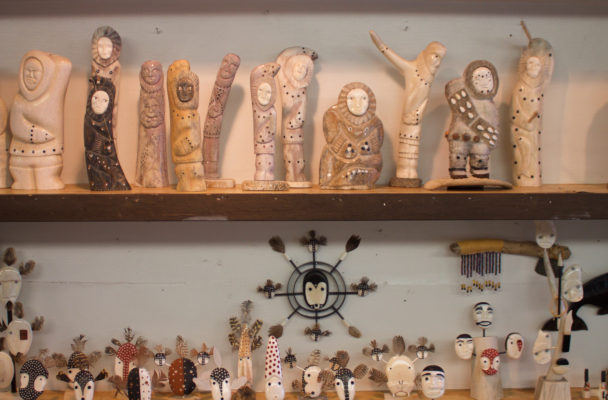
Walrus ivory carvings and masks, like these on display at Maruskiya’s in Nome, may be threatened by other states’ bans on the sale, purchase, and trade of various types of ivory. (Photo by Emily Russell/KNOM)

In June, the federal government instituted a near-total ban on the domestic commercial trade of African elephant ivory.

Many Alaskans are concerned the backlash from this ban is affecting other ivories.

St. Lawrence Islander Susie Silook is the author of a petition to protect walrus ivory and other marine mammal byproducts from various states’ legislation that would see it banned as a response to the federal ban.

With close to 1,000 signatures, Silook sent the petition and a letter to President Barack Obama, which she read from the main stage at the Alaska Federation of Natives convention in Fairbanks last week.

“Dear Mr. President,” she said, “I write as a sculptor of walrus ivory and bowhead whale bone from the food sources. I was raised on and as founding member of Sikuliiq, Alaska Native artists’ advocacy group.”

At the AFN convention, during a field hearing focused on protecting walrus ivory, Sen. Dan Sullivan recognized that this federal ban does not affect Alaska Natives and their ivory work.

However, the Senator spoke about how individual states have proposed or passed their own ivory bans that extend beyond the federal one.

“By including walrus, mammoth and whale among the species subject to the ban, states like California and, now, New Jersey, and others are starting to get in line, have gone well beyond the federal standard and created an environment that’s having a chilling effect on the Alaska Native handicraft market that we see is so vibrant just outside the halls of this hearing,” Sullivan said.

Silook also spoke at the hearing about the differences in markings between walrus and other types of ivory.

“They’re saying that a lot of the illegal elephant ivory is coming in disguised as mammoth ivory, and there might be something to that, because I’ve never seen elephant ivory,” Silook said. “You have to remove walrus ivory from those descriptions, because it is visually distinguishable, it doesn’t have a cross hatching, it’s got the cracks on it. When you open it up, there’s a core inside that’s different from other ivories.”

One of the other speakers during the hearing was president of Sealaska Heritage Institute Rosita Worl.

She says even though she doesn’t have data to support it, Native artists’ ivory work is valuable to the art world.

“We know that ivory plays a significant role in Alaska small scale subsistence economies and the annual arts and crafts tourist market that is well over $32 million,” she said. “We know that village artisans can make up to 35,000 to 50,000 dollars annually.”

Vera Metcalf, director of Kawerak’s Eskimo Walrus Commission, said the impacts of states banning walrus ivory could affect more than just the ivory handicraft business.

“If walrus is listed on ESA (Endangered Species Act), it will make it much harder to make the case for walrus ivory based on only the artists’ viewpoint. … But it includes food security concerns that we have because we are so reliant on marine mammals for our subsistence resource.”

Hawaii is the latest state to enact legislation banning the sale, purchase and trade of walrus ivory, whale ivory and mammoth ivory, along with other types as well.

Their state’s ban will take effect Jan. 1, 2017.
Man sentenced for 2014 sexual assault of partially-disabled woman

A Kotzebue man has been sentenced to 36 years in prison for sexually assaulting a partially disabled woman.

John Douglas, 30, was arrested in May 2014 after grabbing the victim, attempting to pull down her pants, and trying to force her into the stairwell of a downtown Anchorage office building, according to a Department of Law news release.

The assault was thwarted by nearby office workers, who heard the victim scream and chased Douglas as he attempted to flee the scene.

At the sentencing, the victim says she suffered from abdominal bleeding and pain for weeks after the assault.

Douglas is convicted of second-degree sexual assault.

Superior Court Judge Michael Wolverton handed down the sentence, after taking into account Douglas’ record, which includes animal cruelty, a jailhouse assault, a juvenile record, and a first degree sexual assault conviction in 2005.

Douglas is sentenced to 36 years in prison and 10 years on probation.

Kongiginak tribal police officer charged with assault after drinking confiscated alcohol

A tribal police officer from Kongiginak was charged with two counts of assault after he allegedly had a party with confiscated alcohol from the police station.

Scott Hill, 25, a tribal police officer from Kongiginak, fought with Derek Black, 26, from Kongiginak while they were drinking alcohol that Hill took from the Tribal Police Station, according to a trooper dispatch.

Black had to be treated at the Yukon Kuskokwim Health Corporation in Bethel for injuries sustained during the fight, troopers said.

The alcohol had been confiscated in a case being prosecuted at Kongiginak’s tribal court.

Hill was arrested and charged with assault in both the second- and fourth-degree.

Troopers rescue stranded campers after river freezes

Three hunters were stranded at their campsite after the river they used to get there froze over while they were camping.

Lester Pavila, 27, Gerrett Kashatok, 32, and Eugene Chadwick, 36, were stranded at their camp and had to be rescued, according to a Trooper dispatch.

All of the men were from the village of Kipnuk.

The river they traveled to get to their campsite froze over, and they were no longer able to use their boat.

State Troopers picked them up by helicopter the following day.

The report says that the three were returned home in good health.

Nome City Council set to pass seasonal sales tax increase

Two ordinances regarding Nome city sales tax are in the second reading phase for tonight’s City Council meeting.

One ordinance would amend the deadline to apply for a sales tax exemption, and the other would increase the seasonal sales tax.

In front of the Council for the first time is a non-code ordinance to approve the Nome Joint Utility System’s water and sewer tariff rate increase.

During the last NJUS meeting, the Utility Board passed a resolution to increase water and sewer rates by 10 percent; now, the City Council must approve that amended resolution.

Also on the Council’s agenda is a resolution opposing the inclusion of walrus, mammoth, and mastodon ivory within the African elephant ivory ban laws throughout the country.

Before the meeting adjourns, Mayor Richard Beneville is expected to appoint John Odden to his expiring seat on the planning commission.

Alcohol tax revenue higher than expected in Bethel

BNC Liquor Store
BNC Liquor Store (Photo by Dean Swope/KYUK)

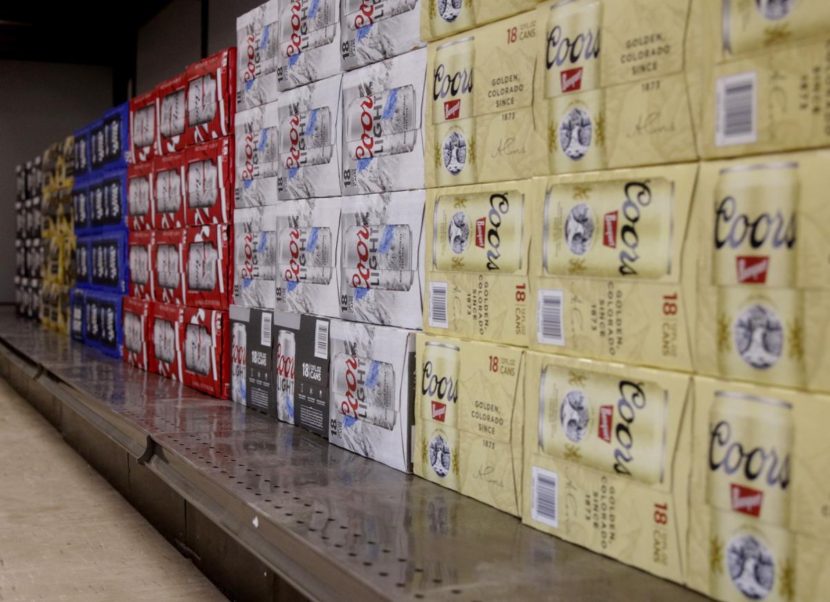
The city of Bethel has had some trouble collecting taxes in recent months, but one tax they’re not having trouble collecting is the 12% sales tax from alcohol.  Since the city sold its first legal alcohol in April, Bethel has collected over a quarter of a million dollars from Bethel’s two alcohol vendors. A third vendor recently opened but those numbers were not included. .

At 5 p.m. you can see people stopping at the city’s new liquor store on their way home to pick up a six pack or bottle wine. Each purchase includes a bit to pay alcohol taxes to the city.

AC Quick Stop, which opened in May, paid $271,652 to the city in alcohol taxes. That means the store sold about $2.5 million from sales before taxes. The city is well on its way to meeting and possibly exceeding former Bethel City Manager Anne Capela’s estimated alcohol tax revenue of about half a million per year. She made that prediction based on the amount that the city brings in from cigarette sales tax.

Though most of the alcohol sales took place at the AC Quickstop liquor store, Fili’s Pizza paid the city $5,606 which means they made about $47,000 before taxes.

The city’s tax revenue reveals that the two vendors combined made almost $2.4 million since the first beer was sold on April 8, 2016.

But is it worth it? In other words — does the money the city makes from alcohol taxes help… more than it hurts by increasing the rate of alcohol-fueled crime? District Attorney for Bethel, Michael Gray, thinks it does help because he hasn’t seen any increase in crime, at least in Bethel.

“We were really expecting to see a real significant uptick. And so far, in terms of the cases referred to us, we just haven’t seen it,” Gray said.

The Association of Village Council Presidents recently passed a resolution condemning the effect of alcohol sales on the villages. Gray says the villages are another matter that’s difficult to measure, though he suspects legal sales may have caused an increase there.

“In August and September, we were noticing a significant uptick in the referrals for sexual assaults in the river villages. I can’t say that that’s related but I certainly suspect that it may be,” Gray said.

Gray says the additional revenue should be used to help Bethel’s police department.

“For years they’ve been understaffed, they have a hard time. Bethel’s a hard town to recruit people to come and live in.” Gray said.

Though Gray doesn’t explicitly support a liquor store, he thinks the income will make a positive difference if it’s used for law enforcement.

Site notifications
Update notification options
Subscribe to notifications