Southcentral

Man with autism pinned down, pepper sprayed by Kodiak police

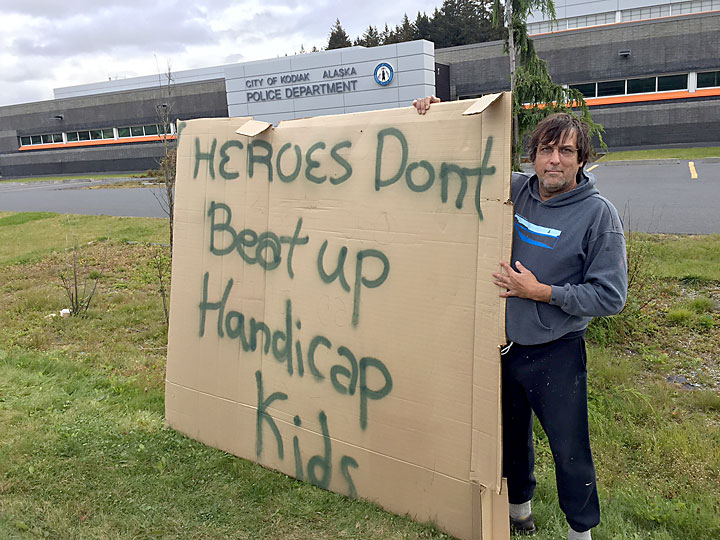
Kodiak resident Brent Watkins silently demonstrated outside the Kodiak Police station Friday, Sept. 18, 2015, two days after a friend with learning disabilities was contacted by three Kodiak police officers. (Photo by Jay Barrett/KMXT )
Brent Watkins silently demonstrated outside the Kodiak Police station Friday, Sept. 18, 2015, two days after a friend with learning disabilities was contacted by three police officers. (Photo by Jay Barrett/KMXT )

Last week an autistic 28-year-old Kodiak man walked down his quiet neighborhood street to check the mailbox, as he does most days. His condition is such that it’s one of the few tasks that he’s comfortable executing and is allowed to do unsupervised.

It’s unclear what happened next, but when Nick Pletnikoff’s mother found him, he was surrounded by three Kodiak Police officers who had pinned him to the ground and pepper sprayed him from point-blank range.

In a very short statement faxed to media Monday, the Kodiak Police Department defended the actions of the three officers, saying they were responding to a 911 call that someone was trying to steal something from a car parked along Steller Avenue, the street where Nick Pletnikoff grew up.

His mother, Judy Pletnikoff, demanded answers as to why her son had been assaulted, and the only thing she was told by the police was that he refused to answer their questions.

“I said, ‘He has autism. He would really struggle to answer your questions. He lives right there,’” she said. “And I saw they had his ID and could see where he lived.”

Pletnikoff was not charged with any crime and was released.

The KPD’s official statement regarding the incident stated that the use of force against Pletnikoff was, “minimal and necessary under the circumstances in order to maintain officer and community safety.” The department did not elaborate what kind of threat Nick Pletnikoff was to them or the community, or why he was pepper sprayed while pinned to the ground by the three police officers.

Judy Pletnikoff found her son handcuffed, bloodied and bruised, and like any mother, she wanted to know what happened.

“I didn’t get any answers, and I asked maybe three or four times who had their hands on his neck,” she said. “But he had been pepper sprayed and he was crying and he said, ‘I’m so sorry, I’m so sorry.’”

Chief of Police Ronda Wallace’s office only referred to the incident in its daily police blotter as: “Suspicious circumstances, all OK.”

The event might have blown over without much notice, but an eyewitness posted a description of what he saw on a Kodiak-centric Facebook page, generating hundreds of angry comments. It prompted another local man, Brent Watkins, to stage a silent vigil in front of the police station on Friday. He held a sign that read “Heroes don’t beat up handicap kids.”

“Oh, he’s a heck of a kid. Always pleasant, always ready to say hi, greets you if he knows you,” Watkins said. “But he can’t express himself really well, and that’s where things went south.”)

Dissatisfied with a lack of response from the police department, the Pletnikoff family retained Kodiak defense attorney Josh Fitzgerald, who, in conjunction with Angstman Law Office of Bethel, are investigating the incident.

“We think that these three officers that had him down on the ground and then pepper sprayed him were likely not justified in doing that,” Fitzgerald said. We think that there aren’t facts that support that kind of conduct. But we are waiting to see the video, which we understand has been preserved, and audio recordings and things that were at the scene, but we think that this young man did not deserve to be injured at all, and certainly not in the way that he was.”

Since they are public documents, KMXT has filed a Freedom of Information Act request for the audio and video recordings from the officer’s body cams and recorders as well as their squad car dash cams.

As for Nick Pletnikoff’s condition, his mother says he’s had trouble sleeping and now fears those in uniform.

“You know he hasn’t slept a night through since then,” Judy Pletnikoff said. “He’s afraid. Definitely afraid of figures of authority and figures in the police. He’s definitely changed by it. But my biggest concerns is how to get him back to his former considerate, reasonable, happy self.”

The family has hired an autism specialist to work with Nick and help him process what happened to him and help speed his emotional recovery, she said.
Anchorage painter dispels trauma through art

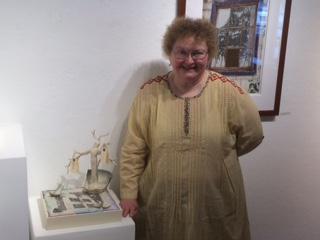
KN Goodrich poses next to her work. (Photo by Quinton Chandler/KBBI)

KN Goodrich has been painting for years and she took up art full time back in 1996. For her art is an escape.

“I started painting when I was a sophomore in high school and I’m sure that the practice of painting is a meditative practice,” Goodrich says.

She says painting played a role in her ability to survive a harsh childhood. She says stories like hers are common in Alaska.

“If you can make it through and survive it’s a beautiful thing. Unfortunately, we also have a really high rate of suicide. I have to weep for the people who didn’t make it through and didn’t survive,” she says. “The ones who do, may show their scars but it’s so beautiful to have made it through.”

Capturing the beauty of those emotional and physical scars is one of the goals Goodrich aims for in her art. Her primary medium is pastels. She says it’s a pigment that is mixed with water and gum Arabic to make a paste. The paste is rolled into sticks and then air died.

“When the artist gets it, it’s a little stick of pure pigment that you can make wonderful marks onto paper with,” Goodrich explains.

Goodrich sits next to two of her pieces as she describes the medium. They are pictures of old windows set in the side of a building in Seward.

“There’s a window that’s been painted with a pale yellow paint but overtime it has cracked and chipped so the wood shows through. In a salt-moist environment like Seward, wood tends to silver. So a lot of the wood showing through in these paintings is silver,” says Goodrich. “The windows symbolize people so when a person is a little bit broken and has survived a great trauma they’re still beautiful.”

Women’s traditional chin tattoos are making a comeback in Alaska


More and more Inuit women are getting face tattoos.

The traditional practice dates back centuries but was banned by 19th and 20th-century missionaries. Now it’s coming back. Though the techniques and customs were nearly lost, a new generation is using tattoos to reclaim what it means to be a Native woman in the 21st century.

In the backroom of a small Anchorage tattoo parlor, Maya Sialuk Jacobsen uses a thin needle to pull an inky thread through the skin on her friend’s wrist.

“I use the exit hole as the entrance for the next stitch,” Jacobsen explained, bent over her work as a small crowd observed.

The friend is Holly Mititquq Nordlum, organizer of a weeklong series of tattoo-related events called Tupik-Mi. Compared to the sting of a tattoo gun, the stitches hardly register, and Norldum looks unfazed, greeting and bantering with observers cycling in and out of the cramped room.

“It’s loose,” Nordlum said, nodding at the flesh on her arm. “I put on a few pounds so she’d have something to work with.”

“Her skin is so much better than my husband’s skin,” Jacobsen laughed. “She has really lovely skin to tattoo.”

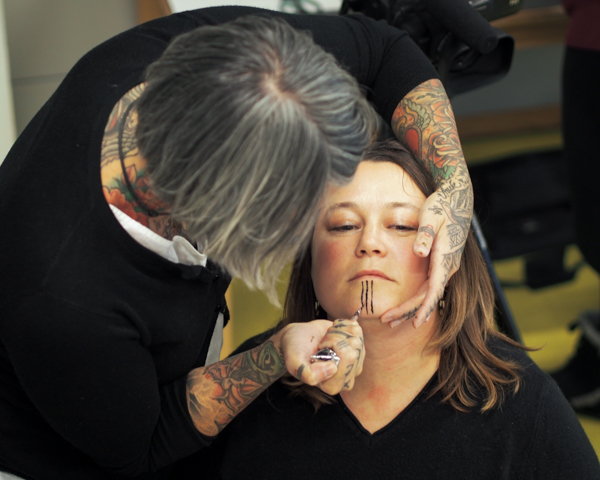
Maya Sialuk Jacobsen of Greenland gives a henna tattoo to a friend’s chin during an event at the Anchorage Museum, part of the Polar Lab’s Tupik-Mi series on traditional tattoos. (Photo by Zachariah Hughes/KSKA)

Jacobsen is one of the few Inuit women who knows how to give tattoos through traditional methods like sewing and poking in dabs of dye. She’s candid about the fact that the equipment has changed. Instead of whale sinew, she uses cotton thread; rather than coloring with soot, she uses tattoo ink. But much like rifle hunting compared to harpooning, she sees her modern tools simply as superior means towards traditional ends: inscribing the skin with meaningful marks.

Jacobsen has spent years cobbling together a body of knowledge about what the practice meant before Danish colonization in her native Greenland almost three centuries ago.

“There is no short answer,” Jacobsen says, adding, “it’s also a very Western, academic way of thinking.”

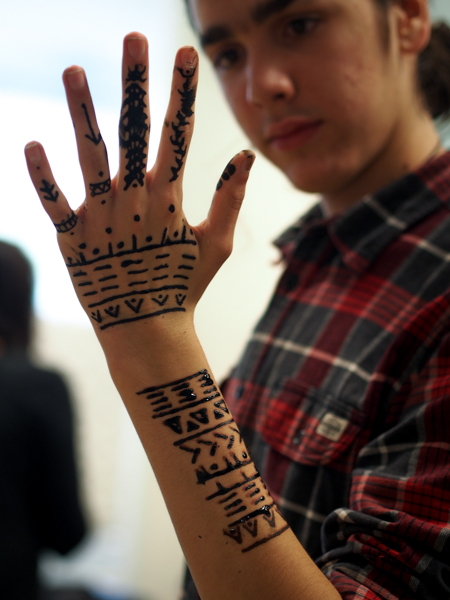
Jacobsen’s son Benjamin came with her from Greenland, and shows off self-administered henna designs made of different traditional patterns, but reconfigured. (Photo by Zachariah Hughes/ KSKA)

Outsiders have looked at Inuit tattoos as having legible meanings embedded within stable rituals, like clear markers signifying marriage or adulthood. But not only did those cultural foreigners import concepts of their own–like marriage–but also a sense of fixity to a practice Jacobsen says was much more fluid and interpretive. “I can’t tell you a triangle means an iceberg,” she explained dryly. That’s partly because the historical record is unreliable, but also because symbols were not nearly so firm.”

You can’t understand tattooing, she believes, without understanding the lives of Inuit women.

While working as a tattoo artist in Europe, Jacobsen was diagnosed with fibromyalgia, which made it difficult to wield the heavy, vibrating drill that is the trade’s standard instrument. So she started poking, and from there stitching. But as she tried learning more about how Inuit women had traditionally been marked, the few historical accounts all came from European adventurers and missionaries.

“I assure you, they did not really know what tattooing was,” Jacobsen says with a wry smile.

But then came the mummies. A group of 15th century Inuit women discovered during 1972 at the Qilakitsoq (“little sky”) grave-site in Greenland, preserved tattoos and all. Jacobsen found a book about them, studied the designs, and realized the marks on their foreheads, cheeks, and chins were similar to the tight stitches she’d learned as a girl. It was her first primary source.

“I have, like, literature, and then I have, what I call ‘from the horse’s mouth,’” Jacobsen says, “and that is the mummies.”

Tupik-Mi, Jacobson and Norldum’s project, is part of an effort within the Urban Interventions series in the Anchorage Museum’s Polar Lab.

“Tupik means tattoo,” explained Nordlum, who is Inupiaq, “and then ‘mi’ is a shortened version of muit, which means ‘people.’ In Kotzebue, we say ‘Qikiqtaġrumuit’ which means, ‘We’re the people from Kotzebue.’”

Nordlum was introduced to Jacobsen over Facebook after she couldn’t find anyone to give her a traditional tattoo in Alaska. A friendship blossomed, and they arranged the first in what they hope will be yearly Tupik-Mi events.

In addition to a lecture and live tattooing demonstration, the women also hosted a light explanation of traditional tattoos for high schoolers before letting them apply tube after tube of henna to their appendages.

Nordlum squeezed a tight formation of dots and lines onto the back of an 11th grader’s wrist.

“She’s making my initials with the Inuit designs,” says Ben Hunter-Francis.

The West High junior says he has plenty of time to decide whether or not he’ll get a tattoo. But if he does, he’d like it to be attached to his Yup’ik roots in the Lower-Yukon community of Marshall.

“Just to make my heritage proud, and make my family proud,” Hunter-Francis says, “that I’m connected with my heritage in some way.”

Traditionally, tattooing was the province of women. They were the ones who wore them, and exclusively the ones to administer them. But as Nordlum finished Hunter-Francis’s wrist, she explained that the practice isn’t bound in place by history.

“In modern culture, men getting tattoos is not a rarity. We are contemporary people working in modern times, so although it was a rarity traditionally, now it isn’t,” Nordlum says, not letting up her hold on Hunter-Francis’s arm.

“Culture is not a set thing, it is a living breathing thing that changes as time goes, and we’re just adapting … like skin.”

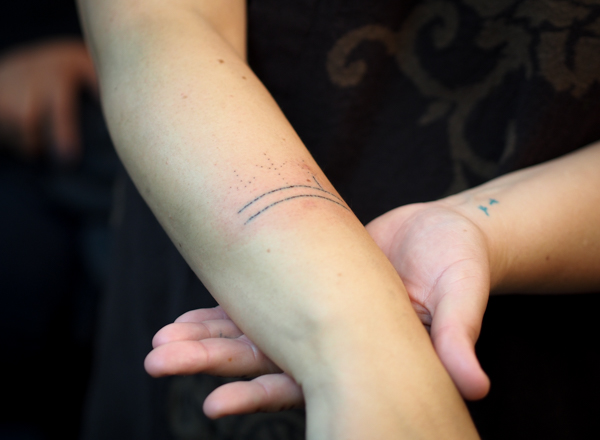
Holly Mititquq Nordlum shows off her partially complete tattoo during a live demonstration at Anchorage’s Above The Rest studio. Each horizontal line is 40 individual stitch marks through the first layer of skin. Before starting the stitches, Jacobsen poked the basic design of three bird feet rising from the lines. Nordlum’s Inupiaq name, Mititquq, means ‘a place where birds land,’ and she celebrates big life goals with bird feet tattoos, like the two on her opposite wrist, done with a tattoo gun. (Photo by Zachariah Hughes/ KSKA)

If plans go ahead, Tupik-Mi will expand next year to train a handful of Alaskans in traditional tattooing methods. By the third year, the hope is to hold workshops in Canada and Greenland, growing tattooing capacity across the high north.

“The idea,” Nordlum explains, “is for Iñupiaq, Inuit, Yup’ik women to feel proud of who they are. To feel strong. To create a sisterhood. To belong to something bigger than yourself, so that you’re safe and you’re supported by all these other women.”

Nordlum was a few days away from getting lines tattooed on her chin, one of the most visible and common styles across a wide array of indigenous Arctic communities. She says more women in Alaska are opting for chin tattoos, to the point where she brushed off the suggestion it was a bold decision to get one

“I don’t feel very brave here because there’s so many of us,” Nordlum says.

Permanence is part of why tattoos carry so much weight, and Nordlum sees the resurgence in women’s chin tattoos as putting forward a permanent, proud Native identity for all to see.

Jacobsen had her own chin lines laid down by her partner just two months ago. Soon after the process began, she felt a visit from her late mother.

“My mind was just wrapped around all of these thousands of fore-mothers I must have had that had tattoos,” Jacobsen says, her words growing softer. “My heart was beating so hard, and I cried, and I was shaking.”

Four thin lines that would have normally taken a few minutes took hours. “It was definitely very, very emotional,” she says.

Jacobsen is sharing that intimate experience with Nordlum, dot-by-dot, as she pokes a tattoo into her friend’s chin.

Feds announce plan to reduce food waste, some Alaska stores are a step ahead

The meat display at Fred Meyer in southeast Anchorage. What doesn’t sell will be donated. (Photo by Anne Hillman/KSKA)

More than 130 billion pounds of food ends up in landfills in the United States every year. That’s 31 percent of the country’s food supply. To curb that, the federal government recently announced its first-ever food waste reduction goals. Agriculture Secretary Tom Vilsack says the plan is to reduce food waste by 50 percent by 2030.

Some stores in Alaska are already doing what they can to reduce their waste and feed hungry Alaskans.

Stephen Longnecker, a director for a Fred Meyer store in Anchorage, knows what’s going to sell in his grocery store and what’s not.

“In our business, Back-to-School season, overnight, with the flip of a switch you may go from selling one unit of pint-sized milk to a hundred units in a day.”

Longnecker steps into the massive dairy refrigerator and slips into back office business speak. There are sales histories, metrics and data that help him order the right amount of each product for each season. But the calculations aren’t perfect. Sometimes cranberry sauce just isn’t popular that year, or they have a couple of random items that just won’t be bought before they expire. Sometimes a pallet full of bananas is still good enough to eat but not pretty enough to sell.

“That banana’s traveled a long way by the time it gets to Alaska, and at times you will find we have some product that we’re not going to be able to sell our way out of,” Longnecker says.

Instead, it’s donated to the Food Bank of Alaska. Anchorage Fred Meyer stores donated 283,000 pounds last year. Longnecker says they started donating the perishable food instead of throwing it away about five years ago. Since then, Kroger, the company that owns Fred Meyer, has reduced their costs for disposing of waste by 70% nationwide.

“That’s pretty revolutionary for all of us because it cut the costs of expenses in a big way, and it also really benefits our communities,” Locknecker says.

In 2014, Alaska’s food industry donated nearly 4.9 million pounds of food to the food bank. Almost 30 percent of that were fruits and vegetables. That’s a big change from nine years ago when the food bank couldn’t offer individual families much in the way of fresh produce. Development Director Karla Jutzi says that’s what people want to buy to stay healthy, but they can’t afford it.

“People in need tell us they know they are buying high calorie, highly processed food that’s not very good for them, but they can buy more of that for their dollar than they can of healthy fresh food,” she explains. “So that’s why having fresh produce and other fresh food available from our food industry partners makes a huge difference for folks who can’t afford it themselves.”

Jutzi says even community gardeners are bringing in fresh produce; it’s distributed through the mobile food pantries. Jutzi says they do receive some donations that are too far gone to give to people, so they try to give as much as possible to local pig farmers.

Other stores donate directly to food pantries such as St. Francis House, giving about 25 grocery carts full of food and bread every week.

Back at Fred Meyer, Longnecker says they do have to throw away some unsafe foods. A composting system is still a few years away.

Heading past the towering shelves of goods in the storage area and back into the main store, Longnecker walks over to visit food manager and former butcher Anthony Gurule. He slices into a stack of short ribs, the massive saw screeching like an angry bird.

He starts trimming the sides of the meat. Bits of the red flesh are tossed into a pile to be ground into burgers. The rubbery white fat is set aside in a box. In the Lower 48, it’s sold to companies that render it into makeup and other goods. In Anchorage, “we will sell all of this right here to a lot of hunters in hunting season,” Gurule explains. Hunters add it to ground moose and caribou to help make sausage and burgers.

“We do our best to be as streamlined as best we can and keep waste as minimal as possible. Somebody will buy something. They’ll all buy something,” he says.

With that, he lines up the ribs on a white Styrofoam tray to be packed up and put them on the sales floor. If they don’t sell, they’ll be frozen and put aside to be donated to the food bank.

Public testimony closes on Anchorage anti-discrimination ordinance

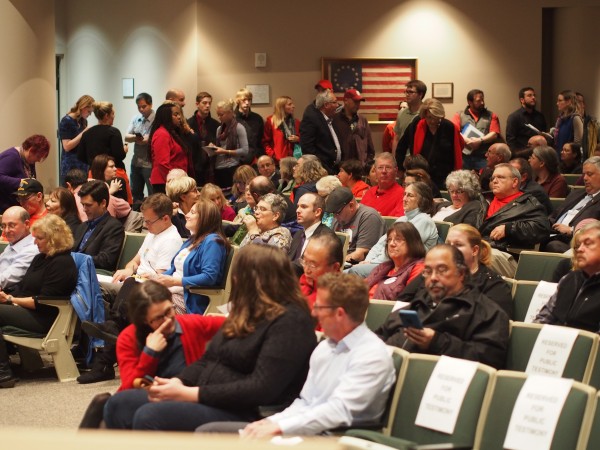
Members of the public line up to testify before the Anchorage Assembly on an anti-discrimination ordinance. Public testimony will continue Wednesday night, Sept. 16. (Photo by Zachariah Hughes/KSKA)

Public testimony is closed on a controversial Anchorage ordinance that could extend legal protections to residents on the basis of sexual orientation and gender identity. But the measure’s final form isn’t yet clear.

After extending the public commenting period to accommodate overflow, final action on the measure was postponed until the Assembly’s Sept. 29 meeting. That was in part because Assembly Chair Dick Traini wanted to make sure all members of the body were present for voting, and Vice Chair Elvi Gray-Jackson is currently out of state for a White House event.

When the Assembly resumes discussion it’ll be over proposed amendments. Some will be minor tweaks to language, particularly on the wording around ministerial exemptions that give hiring latitude to religious organizations. But conservative Assembly Member Amy Demoboski says she plans to introduce multiple amendments that are aimed at better protecting religious freedoms.

Most of those watching the measure expect it will pass. If so, Anchorage would become the first city in Alaska to extend full legal protection against discrimination on the basis of gender expression and sexual orientation.

Alaska composer collaborates with Juneau jazz trio

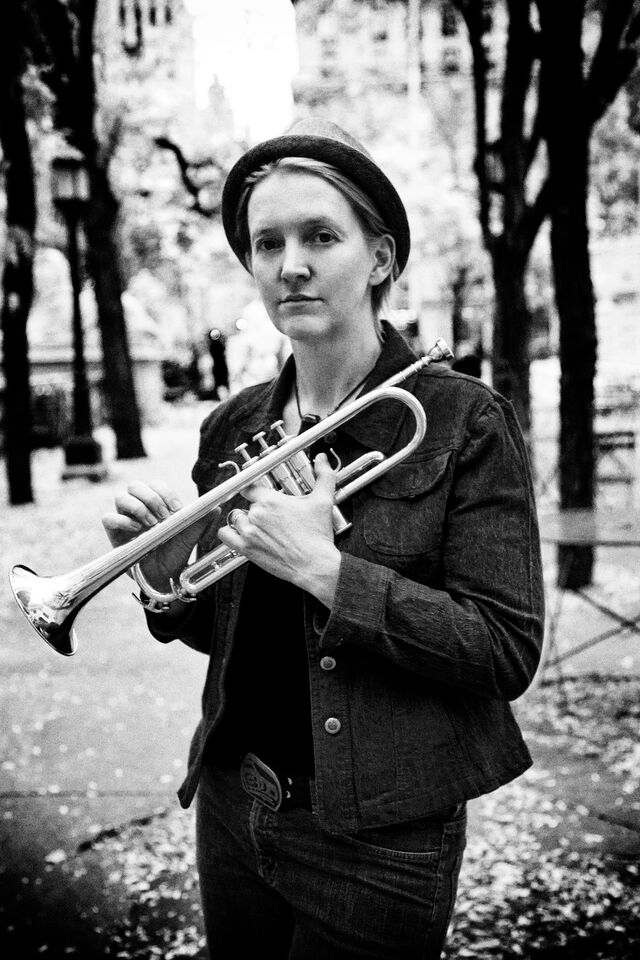
Yngvil Vatn Guttu kicks off 360 North's concert series, Alaska Originals, Thuesday night at 7 p.m. @360. (Photo courtesy Yngvil Vatn Guttu)
Yngvil Vatn Guttu kicks off 360 North’s concert series, Alaska Originals, Thuesday night at 7 p.m. @360. (Photo courtesy Yngvil Vatn Guttu)

Alaska jazz composer and trumpet player Yngvil Vatn Guttu kicks off the Alaska Original concert series Thursday @360. She’ll be joined by the Rob Cohen Trio, which includes Juneau’s Rob Cohen on piano, Alexei Painter on bass and Clay Good on drums. Guttu says she is excited to play with the guys.

“We agreed that we’re going to really go for it. We’re going to be fearless but not stupid, as in the sense we’ll just want to play together,” Guttu said.

Guttu was born in Oslo, Norway, but has lived in New York, London and Toronto, and now calls Homer and Anchorage home. She says her jazz has been affected by all of these places. Drummer Clay Good says collaborating with Guttu and her eclectic style has been fun.

“Here we are faced with some really great compositions — really challenging compositions that we’ve had a chance to run through before Yngvil got to town, but mostly just to scare ourselves by trying to play them. Her pieces are formidable and it’s really exciting to be given the opportunity to take a stab at them for sure,” Good said.

Not only will the concert be a collaboration with the band, Guttu says the audience is in on it too.

“I think this is a cool chance for everybody to get together and try to experience being in the same space together when we make music. And that’s what we need an audience for — we need people to come and give us nonverbal feedback. When you listen you’re doing a lot more than you think. You know, we who play music we feel how our music strikes you and it’s a kind of nonverbal feedback,” Guttu said.

Listen to Guttu’s full Juneau Afternoon interview with examples of her music here:

The concert begins at 7 p.m. Thursday in the @360 studio at KTOO.
Tickets at KTOO.org.

Site notifications
Update notification options
Subscribe to notifications