Southwest

2 families moved to Karluk after its viral ad for expense-free living. They’ve already left, and the school is closing

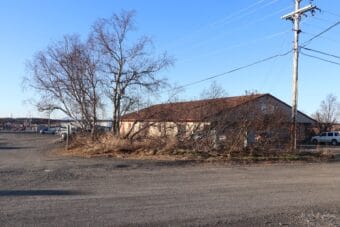
Staff said the building needed some maintenance before reopening like changing locks as well as converting it to a suitable dwelling. (KMXT photo)

The Native Village of Karluk on Kodiak Island went viral this summer for an ad offering cost-free living in an effort to reopen its school. But just a month after classes started, that school is closing again. The school’s student enrollment is back down to just two kids after both families chosen to move there left the village.

The decision to close the Karluk school was unanimous at an emergency school board meeting on Oct. 24.

“It’s a sad day when you have to close a school,” said Cyndy Mika, the Kodiak Island Borough School District superintendent. “And it’s not anything that I ever wanted to do in my tenure – it’s nothing that I want to ever repeat again. It weighs heavy on your heart when you have to close a school.”

Reopening the school was a huge effort for all the parties involved.

Karluk had just a few dozen year-round residents, with only two of them being school-age kids. The village advertised free living expenses for two families to move there over the summer. The state requires 10 students to be enrolled in order to receive funding.

The ad worked; two families with eight kids between them moved to Karluk in September, and the district’s board of education voted to reopen the facility.

But as of Monday, both of the new families had left Karluk.

Alicia Andrew, a Tribal Chief for the Tribal Council, said in an email Tuesday that it was a blow to the community.

“It’s so disappointing, we thought we picked the right families,” she wrote.

The Wilkinsons were one of the families chosen to fly to the village. When reached via social media, they said they were back in Kentucky but had no comment at this time. The other family could not be reached for comment.

Mika said the district will still support the kids still in Karluk, even though the school is closing.

“We’ll be transitioning those students and providing them education via our AK Teach homeschool and correspondence program,” she said.

She said part of that support will be to offer counseling as needed and provide some internet connection as well.

October is when the Alaska Department of Education and Early Development does a headcount of students for funding. But since the families left before the count was finished, Mika said it’s unlikely the district will be able to recuperate the investment the district made to open the school.

“We didn’t make it through the count and that’s predominantly the reason why — that is the really, solely, the only reason why we are closing.”

Between renovating the school building so a teacher could live there and getting curriculum and tech supplies to the village, and now, getting those supplies back, the district is out about $80,000 in an already tight budget.

District staff are currently making plans to retrieve appliances like a refrigerator, a freezer, and a starlink satellite dish as well as student tech like iPads and computers. Mika said they will probably need three or four chartered Cessna Caravans to get everything back to Kodiak.

The district is currently working with the state to try to get prorated funding for serving the 10 students for the weeks they stayed in the village, but otherwise that money will come out of the district’s fund balance, or savings account.

While it didn’t work out, Mika said she still stands by her recommendation and the Board of Education’s decision to reopen the school in the first place.

“We knew it was in the best interest of the students to open the school as a learning site and I think we did the right thing,” she said. “It was a risk – it didn’t pay off. But we did our best while we had the school open.”

The representative for the Karluk Tribal Council said in an email they may look for other families to try again. If they do find new families, the school board would have to vote to open the school again, even if they had enough students again.

Legally, the district had to notify parents 10 days ahead of a school closing, so the building will officially close on Nov. 2, exactly one month after it opened.

Mika said the school district’s next steps will be to give the Karluk facility back to the borough.

Longtime fisherman reflects on his career in Bristol Bay

Dan Barr while fishing. (Courtesy of Dan Barr)

Dan Barr is eighty-one and a half years old. He fished Bristol Bay for just about half his life.

“It’s been just such a great part of my life,” he said. “Every year I came home, it was like [I got] to live out something new that got loose in me.”

Barr spent much of his career finding ways to connect different people with each other. For over two decades, he was president of the Bristol Bay Driftnetters Association — an organization formed in the 1980s that aimed to unify the fleet. There, he helped publish newsletters about issues around the fishery, like practices in the Pacific Ocean that affected Bristol Bay.

Throughout the 1970s, 80s, and 90s, vessels in international waters cast nets that were up to 40 kilometers long, collecting millions of salmon that were otherwise on their way to the region to spawn. This is called high seas interception. The practice also results in high levels of bycatch. Nets can trap everything from whales and sharks to seabirds.

Barr worked with interest groups and pushed for federal legislation to address the problem.

The fishing vessel the Slam Dunk. (Courtesy of Dan Barr)

In 1992, he formed a coalition that helped pass the High Seas Driftnet Act, which aimed to restrict large-scale driftnet fishing in international waters.

He said he worked with dozens of conservation and user groups like Greenpeace as well as sports and other commercial fishers.

“And so I dreamed up the issue of: ‘let’s get a coalition of sports, environmental, and commercial’ and we got 29 organizations to sign on. And we wrote a letter to each U.S. senator,” he said. Barr said that despite some initial pushback, they garnered the support to pass the act.

The act restricts net size at sea and makes it illegal to import fish harvested with large drift nets. It has brought more visibility to both the bycatch and fish interception issues that affected the health — both ecological and economical — of the fishery.

Barr attributed their success to collaboration. He said he coordinated with people who traveled around the country and internationally to help document the extent of the bycatch and overfishing problem, and later, enforce the act. Barr said team members did everything from discussing the issue with Russian border guards to identifying pirating vessels in Kodiak.

“We live in a world that’s made some gains in some constructive things they’re doing,” he said of the act. “And it’s one of the things that came out of Bristol Bay.”

Barr also worked within Bristol Bay. He started an open radio channel for the Ugashik district where fishers could talk to each other about important issues during slow hours.

“We got on one of the local VHF frequencies and said, ‘spread the word,’” he said. “Every night we’d go through and talk about what we knew about Bristol Bay, what we knew about what was happening in the north Peninsula, what we knew about the high seas, what about safety…”

Barr (center) with his sons, Daniel and Kieran, who now run his vessel, the Slam Dunk. (Courtesy of Dan Barr)

He said some discussions on the radio lasted three hours.

Barr also helped secure an exception to Coast Guard regulations in Bristol Bay, so that people could substitute personal emergency beacons for regular ones. He said the change made carrying a beacon more accessible, due to its lower price. Personal beacons are registered to an individual.

“It meant that people might buy one where they otherwise wouldn’t just for the extra safety,” he said.

Barr says nearby communities later started using the beacons on snowmachines.

Through it all, Barr said his favorite part about fishing in Bristol Bay was spending time with his family and connecting with friends.

“The greatest part was fishing with my family. We had ten members fish in Bristol Bay,” he said.

Now, he reflects on the people he met here.

“I mean, the amazing people there, and the people that have retired have become longtime friends that are really quality people. It’s the people aspect first,” he said.

Today, Barr is battling cancer in Seattle. His son fishes on his former vessel, the Slam Dunk.

Suicide prevention program teaches Alaska students how to identify their own strength

Students connect over a game at the Sources of Strength training in Bethel, Alaska on Oct. 10, 2023. (Photo by Katie Basile for the Alaska Beacon)

Student leaders from 18 communities in the Lower Kuskokwim School District gathered in the Bethel Cultural Center on Tuesday to talk about a subject that isn’t usually the focus in a classroom: the students’ strengths.

Everyone was a little quiet at first — the students had flown into Bethel from all over a region of the Yukon-Kuskokwim Delta that is roughly the size of West Virginia.

But they started to open up when the instructor, Robyn Weiner, split them into groups with poster paper and markers and asked them to draw things that give them strength. A group from Kasigluk, a village to the northwest of Bethel, filled the poster paper with dance fans, boats, fishing nets, basketballs and berry picking.

The students were all from grades 6 through 12, and they were there because their communities had identified them as leaders capable of learning the lessons of a suicide prevention program called Sources of Strength. They will be responsible for bringing the lessons of the day home to their peers.

Participants at the Sources of Strength training brainstorm ways to cope with anxiety, anger and sadness on Oct. 10 in Bethel. (Photo by Katie Basile for the Alaska Beacon)

The program teaches students to identify the factors that make them resilient, and shows them how to create their own pathways to healing in times of stress or trauma. The program is in its third year in the district, and administrators say it addresses the hardest issues youth face with positivity.

The program’s aims are weighty, but the word suicide was not mentioned at all in the five-hour session. The material focuses instead on resilience and personal values. Students got to share the things that bring them joy and make them feel supported. They laughed, and even played games that had the whole room smiling and cheering. That joy was the program’s medicine, and the fact that it came from the students themselves was the point.

Grief

Jim Biela, an itinerant social worker for the district, has traveled to several villages in the region regularly for the past 19 years. And in his counseling sessions lately, he said, there’s been a concern among his students that stands out.

“Grief. The past couple of years it’s been more grief. Understanding grief. They’ve all been affected by death,” he said.

Biela said some students have lost parents to murder and suicide: especially difficult deaths to process. But he said he worries about the effects of losing a parent for any student.

“They don’t have anybody to show them the culture and traditions. And they struggle with their identity,” he said.

Jim Biela, an itinerant social worker for the Lower Kuskokwim School District, sits in his office on Oct. 9 in Bethel. (Photo by Claire Stremple/Alaska Beacon)

The wall above Biela’s desk is covered in artwork and pictures of students he has counseled and befriended. He pointed out several who have died from suicide, then pulled one image off the wall and looked at it for a moment: “I knew him since he was one year old,” he said, before gently laying it down on his desk.

Alaska has the third-highest suicide rate in the nation; youth who are exposed to suicide are more likely to attempt it. Suicide was the leading cause of death among Alaska Native and American Indian people between the ages of 10 and 24 years old in the state, according to the most recent two years of data from the Centers for Disease Control and Prevention.

Biela said he has seen Sources of Strength work to ease the effects of grief in the region — the district began offering the program to all schools after it was successful in Nightmute. Biela said last year, after the program, the Nightmute students’ grades even shot up.

Biela largely credits two students, Cory and Colby George, with leading Nightmute through the program after a tragic loss. The brothers are now about to graduate high school and they came to the training in Bethel.

Community change through youth leadership

Sources of Strength is so named because its premise is that a path to healing can be found through eight factors: Mental health, family support, positive friends, mentors, healthy activities, generosity, spirituality and physical health.

As Weiner, the instructor, explained each source and gave examples, Lillian Kiunya, another itinerant social worker from Bethel, translated them all into Yup’ik. After each strength was explained, the students were invited to share what part of their lives corresponded to it.

Students connect over a game at the Sources of Strength training in Bethel, Alaska on Oct. 10. (Photo by Katie Basile for the Alaska Beacon)

Physical health meant basketball and Native Youth Olympics for many students. For one young woman, mental health was berry picking. For another, family support was the grandmother who adopted her after her mother died. For Colby George, he last found the strength of his spirituality in seal hunting: “I was scanning the water and I felt instant calm before the negativity comes,” he said. “Then I was enjoying the view and the sun.”

Two years ago, when he and his brother Cory brought Sources of Strength to Nightmute, they used the mental health example of Cory’s guitar, his source of strength. “I was trying to calm my mind and drawing a guitar and it really helped me,” he said.

He said the program gave them hope. “We were going through a tragic event and we found a way, like, how to be with it. And it really helped us, it made us be confident,” Cory said.

He said after the presentation, people in their village rallied around them. “After that, everybody was coming to us, talking positive to us, making us laugh,” he said.

Colby said the community response was impactful for him as well: “People that had brighter smiles than before came up to me,” he said. “Even other villages, they were coming up to us and saying quyana for bringing this up.”

Brothers, Cory and Colby George, attend the Sources of Strength training in Bethel on Oct. 10. The twin brothers are from Nightmute and have been involved with Sources of Strength since spring 2022. (Photo by Katie Basile for the Alaska Beacon)

The brothers even started a basketball team at the school — physical health — that went to district finals in its first year. “I saw that the kids were getting on track,” Cory said.

The brothers are 19 now, so they can’t play in games with the team, but they can practice with the others. For Colby, basketball is another source of strength.

“I love how basketball could tickle my heart,” he said, with a big smile.

“This is really powerful”

Meghan Crow, the lead social worker for the district, said the program is a good fit for the area. It is aimed at suicide prevention, but Crow said that the resilience building students learn is applicable in other areas of their lives as well.

“We deal with a lot of crisis,” she said. “And we have a lot of really isolated communities. There’s just been a lot of assimilation, cultural change imposed upon communities. I think that’s something that our communities have struggled with.”

She said the school district is also an organization imposed on communities, so she wants to make sure it promotes strengths that exist within them already. She said the Sources of Strength curriculum allows youth to match sources of strength to Yup’ik values.

“It’s very open to cultural interpretation, and to use those strengths and match them to strengths of our culture and our communities here,” she said.

Lower Kuskokwim Superintendent Kimberly Hankins spent the morning at the training. The district began the program in 2020, when students could not travel.

“But even though it was on Zoom, we saw the response. And we thought, ‘This is really powerful.’ And so we’ve been continuing to invest in it and grow it over time,” she said. The district had its first in-person training last year.

Only a handful of schools in the district have not yet had training. At the end of the day, as students ate lunch and began to gather their overnight bags for the flights home, Hankins and Crow huddled with the instructor to figure out how to bring the program to the schools that were left.

Heft, fluff and salmon: Katmai’s Fat Bear Week finals are upon us

Brooks Falls at Katmai National Park and Preserve (Brian Venua/KMXT)

Voters from around the world will decide the winner of Katmai National Park’s Fat Bear Week. Returners and newcomers alike spent the summer catching salmon and packing on pounds before hibernation.

Park staff don’t measure bears with a scale though. Park spokeswoman Cynthia Hernandez says that like beauty, fatness is in the eye of the beholder.

“We rely on visitors and viewers of the bears to decide who is the fluffiest, who has put on the most weight since July,” Hernandez said. “You can compare who looks to be the heaviest right now, who looks to be the most round, or who you think is the cutest.”

Fatness, Hernandez says, is a measure of survival success before bears hibernate, when they sometimes lose up to one-third of their body weight. Female bears, too, are more likely to have cubs if they gain enough weight during the summer.

On Monday the park’s bracket was down to its final four, with votes being taken until 5 p.m. Alaska time to determine Tuesday’s competitors for fattest bear.

This year’s contenders included newcomer Bear 806, a year-old cub who won the Fat Bear Junior contest earlier this month. 806 went against Bear 32, Chunk, who has a distinctive muzzle scar and hefty hind quarters. Chunk won, and is in the finals now.

Bear 128, Grazer. (Katmai National Park and Preserve)

Bear 128, Grazer, Hernadez says, is another fan favorite. She’s recognized by a round belly that hangs in the water when she fishes. Bear 128 is known for confronting much larger bears to protect her cubs.

Hernandez says past winners are also popular. Bear 435, Holly, won in 2019. She adopted and raised a cub alongside her own in 2007, and is back in the running.

“She is looking splendid this year as well. She’s a large adult female and her ears are blonde and we love to see her come back every year,” she said.

Bear 435, Holly. (Katmai National Park and Preserve)

Of course, the old man of the falls and four-time champion, Bear 480, Otis, has returned. The 27-year-old bear lost to Bear 901 on Friday.

Bear 901, with her blond, triangular ears, is about 20 years his junior.

The famous Brooks Falls is a prime fishing ground for hundreds of bears. According to Hernandez, bears prefer different spots of the salmon-rich area, sometimes depending on age and skill.

“Due to the geology of the space, the short six-foot fall, there are several opportune spaces for the bears to fish. So there’s a location called the Office, which is on the lower section of the falls where some of the salmon congregate. It’s shallower there,” she said.

Bear 480, Otis. (Katmai National Park and Preserve)

Hernandez says older bears, like Otis, tend to fish in the Office. Younger bears, on the other hand, are a little more active.

“Some of the younger bears who may not know the most efficient fishing methods will hang out a little further downstream and run and try to catch the fish as they’re swimming,” she said.

Fat Bear Week graces the social media feeds of hundreds of thousands of fans with images and videos of the park’s fluffy carnivores. But Hernandez says the week also celebrates Katmai’s robust ecosystem.

“There’s so much to celebrate this week. Not just the fat, amazing, cute bears but also the health of the park and the ecosystem and Bristol Bay – the waters that feed into the Katmai ecosystem and in the Brooks River. It is one of the largest and healthiest salmon runs left on the planet,” she said.

Fans can vote for the 2023 winner at fatbearweek.org.

Images of Bear 128, Bear 435 and Bear 480 were taken with permission from: https://www.nps.gov/katm/learn/fat-bear-week-2023.htm

Lucrative Bristol Bay red king crab fishery to reopen after 2-year closure

Red king crab from the Bristol Bay fishery. (KUCB file photo)

The Alaska Department of Fish and Game has reopened the Bristol Bay red king crab fishery, following a two-year closure.

The department announced Friday morning that the lucrative crab fishery will open Oct. 15, following analysis of survey data by the North Pacific Fishery Management Council.

The fishery closed in 2021 for the first time in more than 25 years due to low abundance. But this season, fishermen will have a total of more than 2.1 million pounds to catch — that includes both Individual Fishing Quota and Community Development Quota. In 2020, the total allowable catch was nearly 2.7 million pounds.

According to fisheries officials, summer trawl survey data shows higher numbers of mature females within the population. And while male and female crab are still at historic lows, the fishery is not at or approaching an “overfished” status.

Fish and Game said that the total estimated amounts of both mature and reproductive females are above thresholds required to open the fishery.

Red kings are the largest commercially harvested crab and are mainly caught in Bristol Bay. According to the National Oceanic and Atmospheric Administration, the Bristol Bay stock is considered the second largest king crab population in the world.

Fish and Game also announced Friday morning that the Bering Sea snow crab fishery will remain closed for a second year. Snow crab — or opilio crab — was declared “overfished” in 2021, and regulators closed the fishery the next year, not long after state surveys showed record highs for snow crab recruitment. The drastic drop came as a surprise to many in the industry. Some theories suggest climate change is to blame.

There will be a western and eastern Bering Sea tanner crab season this year. That will also open on Oct. 15. The state has allotted a total of more than 1.3 million pounds to the western district of tanner crab — or bairdi — and 760,000 pounds to the eastern. The western allotment is up more than 50% from last year’s total allowable catch, while eastern tanner TAC has dropped nearly 35% from last year.

The Bristol Bay red king crab fishery opens Oct. 15 at noon and closes Jan. 15.

Looming government shutdown could put Fat Bear Week on pause

Two bears vying for a prime fishing spot near Brooks Falls. (Brian Venua/KMXT)

Last October, Alaskans and other viewers around the world hunkered down on Katmai National Park and Preserve’s website to witness 2022 victor Bear 747 and his competitors pack on weight during the park’s Fat Bear Week.

But this year, with a federal government shutdown potentially going into effect over the weekend, 747 may not even leave the gate.

Park spokeswoman Cynthia Hernandez said in an email Friday that a lapse in government funding during the shutdown would affect next week’s annual event, which drew more than a million views last year as people watched the park’s brown bears fatten up for hibernation.

“Hopefully a lapse doesn’t occur,” Hernandez said. “However, should a lapse happen, we will need to postpone Fat Bear Week.”

According to NPR, a previous shutdown in 2018 left the National Park Service down to essential staff — which didn’t include staffers who operated social media.

The Katmai event relies on web cameras operated by Park Service partner explore.org. But Hernandez said they “will not operate Fat Bear Week since the NPS is necessary for Fat Bear Week’s success.”

“(S)hould there be extended lapse in government funding we will need to further evaluate plans depending on how long it takes for Congress to fund parks,” Hernandez said.

Hernandez declined to answer further questions Friday about the potential shutdown. Posts to the park’s social media accounts Friday morning were still providing updates on the Fat Bear Junior competition, a precursor to Fat Bear Week tracking four brown bear cubs.

Site notifications
Update notification options
Subscribe to notifications