Southwest

What was behind Bristol Bay’s record-breaking fire season

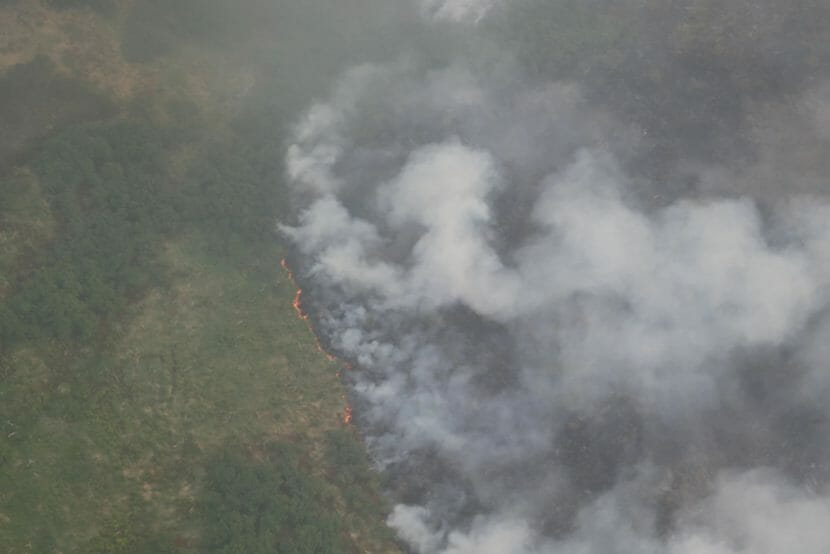
An aerial view of the fire near the Tuklung River. June 9, 2022. (Izzy Ross/KDLG)

Bristol Bay experienced its largest wildfire season on record last year, underscoring a trend toward bigger and more numerous fires in southwest Alaska as the climate warms.

“We really have not seen anything like this,” said University of Alaska Fairbanks climate specialist Rick Thoman. “And the Bristol Bay region was the most extreme of all the extremes.”

Fires scorched nearly 650 square miles in the Bristol Bay region last year — more land than has burned in the region in the past 72 years combined.

The Alaska Fire Service boundaries for Bristol Bay stretch from Platinum in the west to north of Iliamna Lake, east to the Gulf of Alaska coast and down the Alaska Peninsula to Port Heiden.
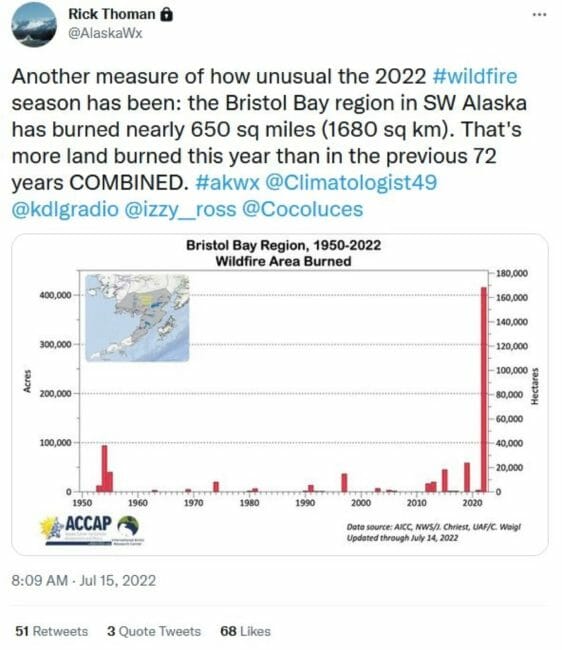
Rick Thoman put Bristol Bay’s 2022 fire season into context on Twitter. (Rick Thoman/Via Twitter)

Thoman said the biggest fires were the Koktuli and Pike Creek fires north of Iliamna Lake. But there were other big fires, too, like the Iowithla fire, which grew to about 27,500 acres, and burned within about nine miles of Dillingham.

It was by far the largest wildfire on record close to Dillingham, said Thoman.

And there many other fires too, he said, including the Contact Creek fire that ignited early in the season.

“Again, a 10,000-acre fire in a place that we just don’t expect this kind of thing,” Thoman said. “So really, it wasn’t just, ‘Oh, there was one big fire.’ We had big fires, and they were all over the Bristol Bay region.”

For that to happen, many environmental factors have to align. One ingredient is dry fuel. In Alaska, that fuel is both the forest and the ground cover.

“This is very different than, say, the Lower 48 where what you’re going to burn is vegetation above ground,” Thoman said. “We have both the above ground and that duff layer right at and just below the surface that is equally flammable, so we’ve got to get that dry.”

Sun, wind and a lack of rain are all conducive to starting and growing wildfires. And there needs to be a spark. In Alaska, that spark is often lightning.

“We had a burst of lightning from the last days of May through the first week of June, all across southwest Alaska, several days in a row with lots of lightning,” Thoman said. “As is typical for early summer thunderstorms, lots of places had lightning, but no significant rain. And that touched off many fires in the course of a few days across southwest Alaska.”
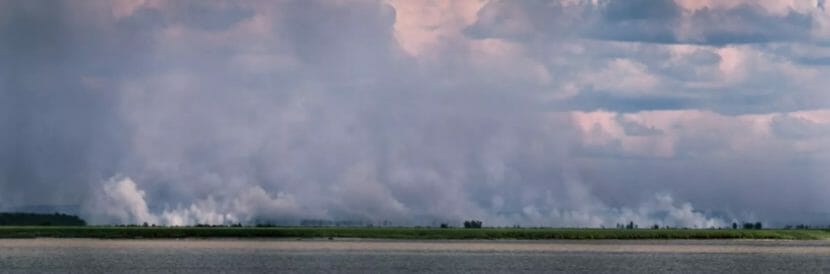
Smoke from the Iowithla River fire seen from Wood River Road. June 17, 2022. (Brian Venua/KDLG)

Another factor: snowmelt. Some areas of the region, like north of Ugashik Bay, had an early snowmelt and a warm, dry spring. That meant the tundra dried out earlier. But other areas, like Dillingham, had a lot of snow and rain at the end of the winter, which left a high snowpack.

“The early snowmelt was not so much a factor but the warm and dry weather after the snow was all going certainly contributed,” Thoman said.

Thoman said southwest Alaska crossed a threshold in 2015: Wildfires have gotten larger and more numerous since then. For example, in four separate seasons since 2015, more acreage has burned in the Yukon-Kuskokwim Delta than any other year prior. He called it one of the clearest signals of climate change-induced shifts in Alaska.

“The Elders are telling us there is much more vegetation on the tundra, tundra vegetation is growing higher, it’s growing thicker in the transition between boreal forest and the tundra, the trees are growing farther up away from the rivers, the trees near the rivers are growing bigger,” he said. “All of that means there’s more fuel for fire to burn, once it gets going.”

Thoman doesn’t think next summer will be as extreme as the last one because too many factors would have to align again. But as the climate warms, he said Alaskans will continue to experience more and bigger wildfires in the future.

After fighting for their place on the mat, Bristol Bay girls are winning wrestling titles

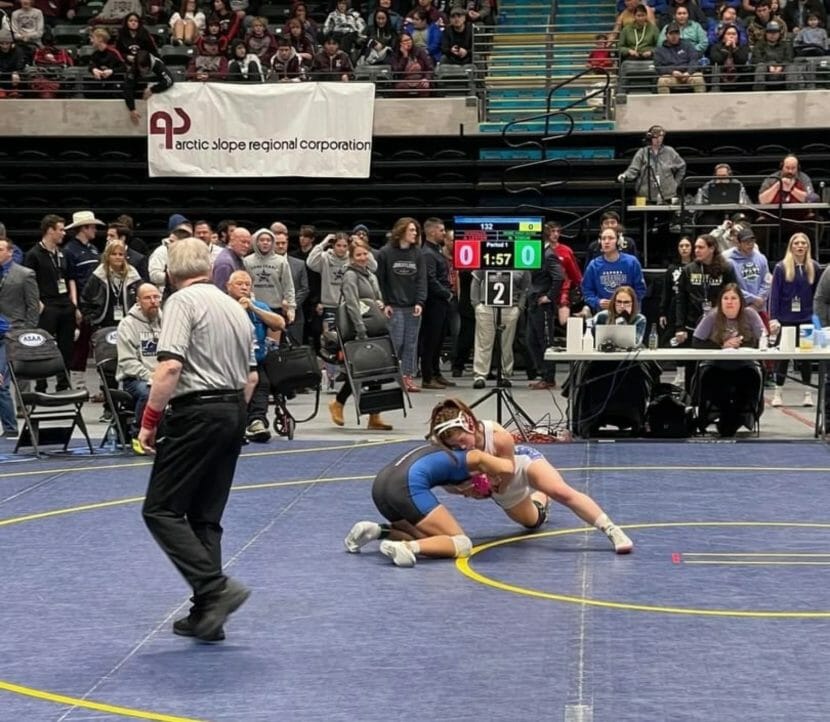
A ref lies on a wrestling mat and watches as one wrestler pins another
Kiley Clouse wrestles at the ASAA State Wrestling Tournament in Anchorage on Dec. 16-17, 2022. (Courtesy Of The Dillingham Wolverine Wrestling Camp)

Girls weren’t always able to wrestle in Dillingham.

In the early 2000s, they had to petition the school board to let them join the team. Then, they were wrestling against boys. But girls’ wrestling kept growing in Bristol Bay despite those barriers.

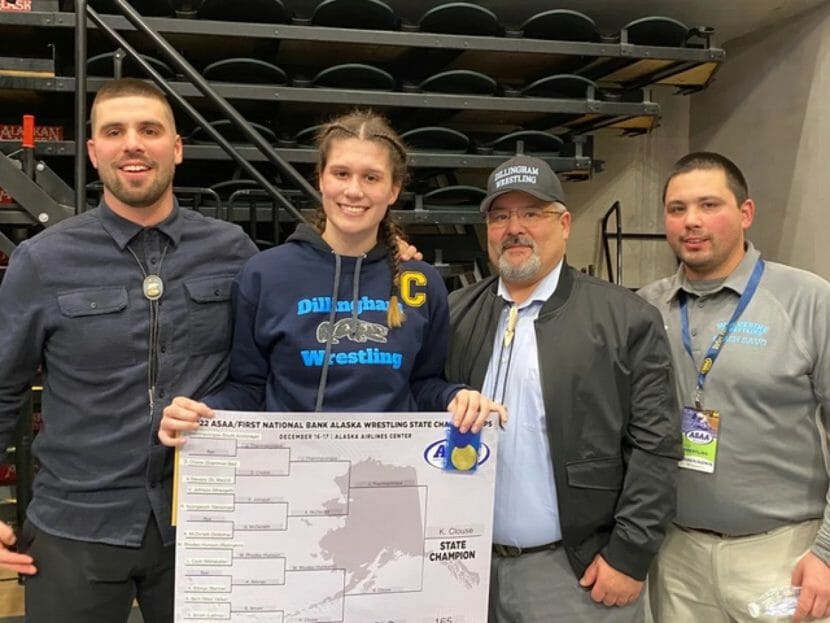
Now, 18-year-old team captain Kiley Clouse has become Dillingham’s first statewide girls wrestling champion. And Aileen Lester of Newhalen has won her third state title. Both competed in Division II at the ASAA State Wrestling Tournament in Anchorage this month.

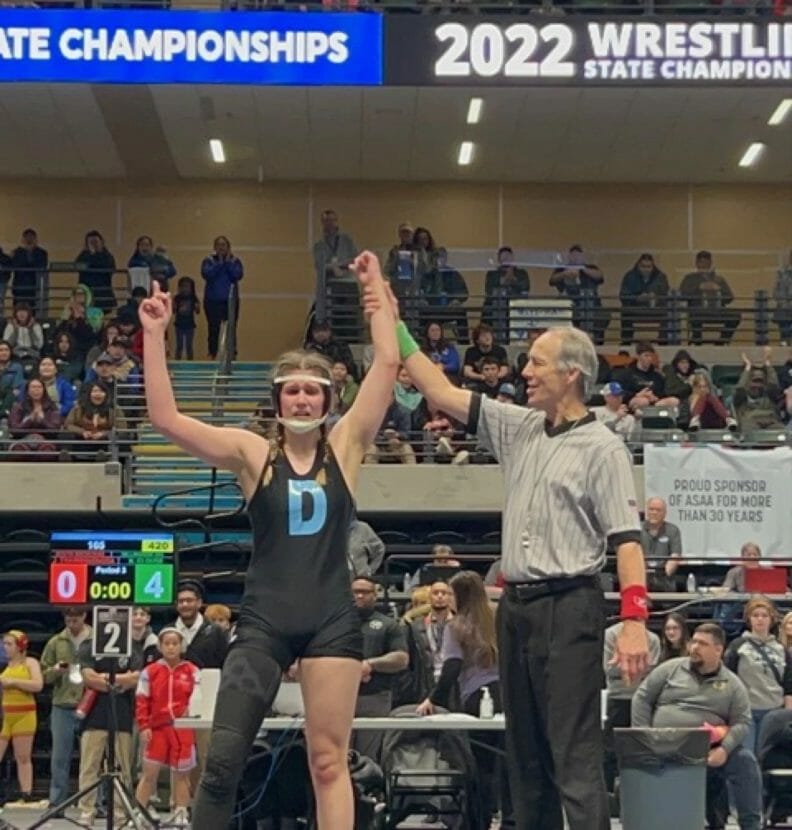
In her final match, Clouse wrestled the undefeated Jessailah Thammavongsa of South Anchorage and won 4-0 in the third period. The crowd cheered as the referee raised her hand high. For a moment, Clouse didn’t believe it.

“I wanted it for so long, and it finally happened.” she said. “I was just so overwhelmed and proud of myself. I just started straight crying on the mat, and I got off and I was just like, crying and hugging everyone.”

A smiling referee holds a girl's fist aloft as she stands on a wrestling mat
Kiley Clouse after her final match at the 2022 state tournament. Dec. 17, 2022. (Courtesy of Shannon Clouse)

This win was a long time coming. Clouse didn’t have a season her sophomore year during the pandemic, and an injury last year made it tough to compete.

And because there were fewer wrestlers on the girls teams, they didn’t have as many weight classes as the boys. Clouse was wrestling at the 189 weight class until this year — which meant she was 20 pounds lighter than some of her opponents.

This season, she wrestled at 165, and she had a lot more confidence.

“It’s the first time I’m wrestling girls who are actually my weight,” she said.

William Savo, the Dillingham Wolverine’s head coach, was a student athlete when girls first started to petition the school for a chance to compete in the early 2000s.

“It’s pretty ironic. When I was in eighth grade, two of my classmates, Kim McCambly and Sarah Evans, wanted to wrestle, but the school board wouldn’t let them,” he said.

The girls petitioned the school to change its policy. When they did join, Savo said, they were wrestling against boys. And the team wasn’t welcoming.

“Boys ain’t very accepting, you know,” he said. “I was part of it. Nobody really wants to change. But they competed in middle school, in high school. They were the first two that kind of got the ball rolling around Dillingham. And then there’s been girls that’ve wrestled throughout.”

Assistant Coach Jack Savo wrestled for Dillingham in the 1990s and came back in 2002. He said girls wrestling was unprecedented.

“It was new, and it was unheard of to have a highly contact and competitive sport like wrestling be co-ed, especially at a time when the girls had to practice with boys and had to compete against boys,” he said. “But I think the determination of the young ladies that started the drive leads us to where we’re at now.”

A high school girl stands with three male coaches.
Kiley Clouse with coaches Reed Tennyson, Jack Savo and William Savo. (Courtesy of Shannon Clouse)

Dillingham’s team — and Alaska wrestling — has come a long way since then. Alaska’s first sanctioned girls’ state wrestling tournament was in 2014. Jack Savo said they brought in three women wrestlers to work with the girls team this year, including one who wrestled on the first U.S. women’s Olympic freestyle team in 2004.

And interest is increasing. There’s a strong cohort of middle school girls, Willie Savo said, and 21 elementary girls have signed up for wrestling this year.

Women’s wrestling is one of the fastest-growing sports in the country, both at the high school and college levels. According to the National Wrestling Coaches Association, since 1994 the number of women who wrestle in high school has grown from 804 to over 31,600.

Another state champion from Bristol Bay is 18-year-old Aileen Lester of Newhalen, a small community on Iliamna Lake. She also won state titles in 2020 and 2021, and she was named last year’s outstanding state wrestler. Lester has wanted to wrestle since kindergarten, and she finally convinced her parents to let her join in sixth grade. Still, she had some reservations.

“When I said something in class, all the boys were like, ‘Oh, girls can’t wrestle, this and that and the other,’” she said. “I remember playing king of the mat, and I kicked all the boys’ butts that were around my weight. And I was like, ‘Yeah, definitely, this is what I’m doing.’”

A ref stands watching two girls wrestle.
Aileen Lester of Newhalen wrestled her way to a third state title at the 2022 ASAA tournament on Dec. 16 – 17, 2022. (Courtesy of Aileen Lester)

Still, she said, she had to prove she belonged there.

“It was pretty tough because at the beginning I didn’t necessarily feel like part of the team,” she said. “But after a while, it was like, I got some wins under my belt. I won some tournaments and matches and I beat some boys and I guess I got respect from them a little.”

Lester said there is a big difference between wrestling with girls and boys — and she has to use different strategies depending on who she’s facing on the mat.

“Girls have a lot more hip control, and a lot more flexibility,” she said. “Guys, usually you get a good half-pin, you’re going to be able to turn them. If you get some sort of pinning combination, you’ll be able to turn them and you can pin them. Like, that’s it for them. But with girls, you can get a good pinning combination in, and they’ll somehow bend their way out of it.”

During her time wrestling, Lester said she convinced several of her classmates to join, as well as her little sister. And she’s enjoyed training with other girls.

Wrestling has been a huge part of life for Dillingham’s Kiley Clouse as well, from making friends to learning new moves to being part of the Dillingham team.

“Wrestling makes me happy. If I’m having a bad day or something, I’m like, ‘Oh, there’s wrestling today.’ Or I’ve had a bad month before school starts and I’m like, ‘Okay, like wrestling starts, one more month. It’s okay.’ And I just love it.”

It was the last high school season for these seniors. Winter practice for middle school begins in January.

Bill passes to protect former Bethel resident, adopted at birth, from deportation

A family photo of a couple and three children standing among trees.
Rebecca Trimble with her husband, John, and their three children. (Courtesy of John Trimble)

If everything goes right, former Bethel resident Rebecca Trimble will be an American soon.

It’s a moment that has taken years to reach, but her husband, John Trimble, a captain in the U.S. Army Reserve, said that they’re waiting for a final decision before they celebrate.

“You know, like, we’ve gotten so hopeful so many times along the way and then been disappointed, you know,” he said. “So now it’s, I mean, I don’t know, that’s just how I feel about it. It’s like it’s definitely exciting, but it’s, but we’ve kind of trained ourselves to not get too, too excited.”

Trimble’s story made national headlines in 2020, but it has been slowly unfolding for more than a decade. She’s been in the U.S. since she was a few days old.

“I was adopted at birth in Mexico. And then I came up from, like three days on up, to Salem, Oregon, and that’s where I grew up,” Trimble said. “Later on, in middle school, I moved up to Vancouver, Washington. I lived in Vancouver until 2017, when we moved to Alaska for my husband’s job.”

Trimble said that she didn’t know she wasn’t legally a citizen. She even voted in the 2008 presidential election, which is illegal for a non-citizen. This caused a lot of problems when she found out she wasn’t a citizen and started looking for legal ways to stay.

“There’s been so many ups and downs and dead ends where we’re like, ‘oh, connect with this person or do that paper. Let’s try this.’ And it’s just been a whirlwind,” she said.

Trimble first told her story to the Alaska Landmine in early 2020 after she received a letter from the U.S. Citizenship and Immigration Services saying that she had a month to leave the country. That was hard on her husband and her kids.

”They saw the hurt, and they saw me crying, and they kind of, we kind of tried to explain in the, like, soft way, how, you know, ‘Mommy was adopted.’ And you know, there’s just papers and that makes you like, who you are, where you’re born, and just like, ‘Mommy might not be here,’ you know. ‘We might have to move,’ kind of thing,” she said.

Trimble’s situation is tricky, and she said that trying to find a way to get immigration officials to understand that felt dehumanizing.

“I didn’t get approved one way because of this. So we filed a paper the other way. Then they’re like, ‘no, because we feel like you don’t fit in this way either.’ And then no one had taken the time to talk to me, and it was like ‘mail this in, and three months later you’ll hear a response to that question.’ I felt like a number at times. And if I didn’t fit that number, then, you know, then it didn’t move forward,” she said.

In 2019, the Trimbles hired Margaret Stock, an immigration attorney in Anchorage.

“The facts of Rebecca’s case are very sympathetic. I think most people understand that when you came to the United States when you were a few days old and you thought you were an American citizen your whole life, that it’s not fair for the government to come forward when you’re an adult and tell you that you need to be deported,” Stock said.

But in the end, it took a literal act of Congress to get results. Alaska’s congressional delegation had to push a private bill through Congress specifically for Trimble. A private bill allows individuals to get relief directly from federal lawmakers when they’ve exhausted all of their other options. Many of them deal with immigration. But even with high-level support from Alaska’s delegation, it has taken more than a year for that bill to work its way through the House and Senate.

Trimble’s case is unique in some ways, but the circumstances are deeply familiar to hundreds of thousands of undocumented people living in the country.

“We know the story of so many, who we refer to as the Dreamers. Young people who came into this country and very, very young, knowing no other country other than the United States, brought here by their parents, and who have been denied opportunity,” said Alaska Sen. Lisa Murkowski who sponsored Trimble’s bill in the Senate.

What’s rare about this case is that her private bill actually made it through Congress.

“But Rebecca Trimble came to us as, as really, a very special case,” Murkowski said.

Stock, Trimble’s attorney, deals exclusively with immigration cases. She said that she’d like to see a legislative fix to this problem.

“I think it’s really important for people to know about cases like this — they’re not actually that uncommon. So to help the rest of the people, I think, though, we’re gonna have to get immigration law changed,” Stock said.“Because one of the problems with private bills, of course, is they only benefit one person and they don’t fix the general laws.”

Trimble’s bill passed the Senate unanimously on Dec. 15. Now she’s waiting for President Biden to sign it, but that doesn’t mean she’s done with all of the paperwork.

“So this will grant me, I believe, permanent residency, and then I’ll have to get a green card after that. And I know that’s, you know, that’s a long process as well,” she said.

And, once she’s legally able to, Trimble said, she’ll probably vote again — even though it caused so much trouble the first time around.

“I mean, once I become a U.S, citizen I — yeah, I might vote. I don’t know yet at this point. I mean, I want to do my civic duty as a U.S. citizen,” she said.

Nearly 3 years after deadly sinking, debris from the Scandies Rose finds its way to a family in Kodiak

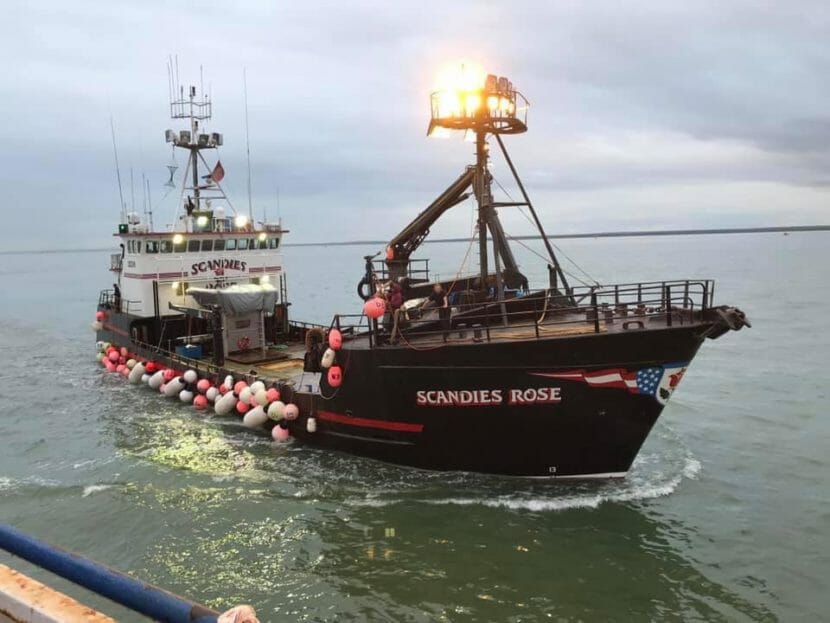
A photo of the Scandies Rose, taken from another boat.
Debris from the F/V Scandies Rose, which sunk on Dec. 31, 2019, recently was found by a fisherman from Chignik. (Photo courtesy Gerry Cobban Knagin)

Seven men were on board the F/V Scandies Rose when it went down during stormy weather in the waters off Sutwik Island – near Chignik – on New Year’s Eve, 2019.

Two survivors were plucked from the water in the hours after the vessel sank by Coast Guard rescue crews. But five crew members were never found and presumed dead. Those included the ship’s captain, Gary Cobban Jr. and his son David Cobban, both from Kodiak.

Gerry Cobban Knagin is Gary Cobban Jr.’s sister. She said in the years since, the family sent a remote operated vehicle down to the seafloor to survey the wreckage.

“I have a whole video of the boat on the bottom with the pots and the buoys popped up out of the pots and made like a kelp forest of buoys,” she said.

The ship, a 130-foot crabbing boat, was enroute from Kodiak to fishing grounds in the Bering Sea and stacked with 198 crab pots when it sank.

Now, nearly three years later, those buoys and other pieces of the ship have started washing ashore, bringing closure to Knagin and some of the other family members of the crew members lost.

Knagin said her family was contacted earlier this month by a fisherman from Chignik, who found two buoys and a bait tow. He flew them back to the family in Kodiak.

“That was just such a heartfelt moment to know that this fisherman, he recognized them for what they were and then he didn’t have Facebook, so he used somebody else’s Facebook page to get in touch with me,” said Knagin. “And then I met them here in Kodiak and picked them up and that’s just like, thank you. I can’t thank him enough for that.”

Knagin said they’ve received some of her brother’s personal belongings from storage yards in Kodiak and Dutch Harbor over the years, but finding something from the ship was different.

“When I touched those buoys it was like getting a hug from my brother. It was a pretty emotional moment,” said Knagin.

report from the National Transportation Safety Board later concluded that inaccurate stacking instructions – particularly in icing conditions – for the ship’s crab pots and more extreme weather than predicted likely caused the Scandies Rose’s sinking. The NTSB made a series of recommendations to multiple agencies, including the Coast Guard, National Oceanic and Atmospheric Administration, National Weather Service and the North Pacific Fishing Vessel Owners’ Association based on its findings.

Just last week, members of the Coast Guard’s Marine Safety Detachment were walking the docks in Kodiak to make sure boats heading out for the upcoming tanner crab fishery were loading pots correctly. Knagin said weather forecasting has also gotten better in the area where her brother’s ship went down. Education and outreach to fishermen has also improved; there’s an upcoming Alaska Marine Safety Education Association course in Kodiak on vessel stability and emergency procedures.

Knagin said she plans to reunite washed-up items from the sunken vessel with the family members of the other men who went down with the ship.

Her brother was color blind, so the big buoys from the Scandies Rose are lime green for him to pick them out on the sea. They have the letters “SR” written on them in black with the ship’s Fish and Game number, 35318. There’s also smaller buoys with the Fish and Game number on them that may float to the surface.

“Some of those are trailer buoys, some of those are red and some of those are white,” she said.

She said anyone who finds something they think is from the ship can find her on Facebook and send her a message, or contact her via email, that’s gdknagin@gmail.com.

Kodiak brown bear cub dies of bird flu

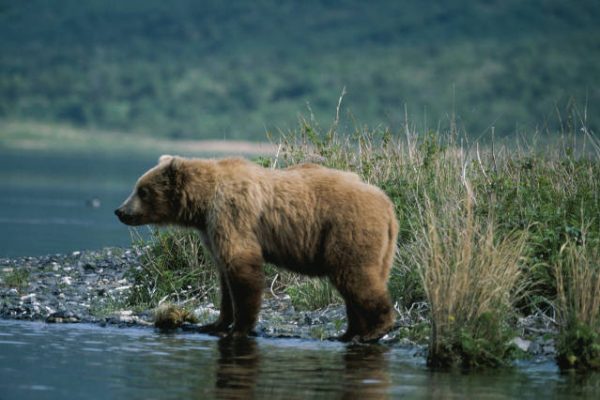
A brown bear on Kodiak. (Photo by Steve Hillebrand/USFWS)

A highly contagious form of avian influenza was found in a Kodiak brown bear cub. It’s one of only four mammals in Alaska known to have contracted the virus, and the first brown bear to be found with the disease.

A deer hunter found the cub’s carcass on Nov. 26 about half a mile from the road near the Pasagshak State Recreational Site in Kodiak and reported it to the Alaska Department of Fish and Game. A necropsy later determined the cub died of a strain of avian influenza that has plagued both feral and domestic flocks across the country.

Dr. Kimberlee Beckmen, a wildlife veterinarian for the Fish and Game, says the virus doesn’t spread between mammals, but it can affect scavengers like Kodiak brown bears.

“It’s not foodborne, so they don’t get it by ingesting, but they get it by inhaling the virus,” she said.” So while they’re scavenging, they’re probably inhaling the virus and that’s how it gets into their system.”

The virus has ravaged bird populations across the nation, but especially waterfowl.

“It’s a virus that’s carried by waterfowl normally, and not every bird gets sick,” said Beckmen. “But certain species are more susceptible — and we’ve been seeing this outbreak mainly hit birds like eagles and ravens, and other birds that scavenge on dead birds.”

The virus hasn’t been widespread in mammals, and Beckmen said it’s not much of a threat to humans.

“In the world there’s only been three people that have had the virus, and the one in the U.S. wasn’t even sick from it,” she said.

While there have been no cases of domestic pets such as cats or dogs infected with the virus, Beckmen warns they could be at risk while swimming or while retrieving hunted game.

“The risks that I perceive for dogs would mainly be for retrievers if they’re used to retrieve waterfowl, or if they’re taken out and swum in a lake or a pond that’s highly contaminated with waterfowl droppings,” she said.

Nate Svoboda is Fish and Game’s Kodiak area wildlife biologist. He says wetland areas near rivers and streams are most likely where waterfowl and other animals can get infected.

“Anywhere where waterfowl congregate would be an area that is probably more likely to experience the sort of outbreak or have birds that might have died from this,” said Svoboda.

The biologist said some of the most reliable signs of infection would be an animal stumbling around or walking in circles.

“For example, the cub that was found in the Southeast that also suffered from bird flu, the people who reported it said it appeared drunk,” he said.

Other signs of infection are dead animals with no obvious cause of death such as predation. Svoboda said the best thing the public can do is to keep an eye out and report suspicious animal behavior and deaths to Fish and Game.

“If animals start dying for an unknown reason, let us know you know, even if it’s domestic poultry, that comes up dead, you know, that would be valuable for us to know and potentially test them for the virus,” he said.

With hope and frustration, Bristol Bay awaits the EPA’s final verdict on Pebble

People standing and sitting at a public meeting.
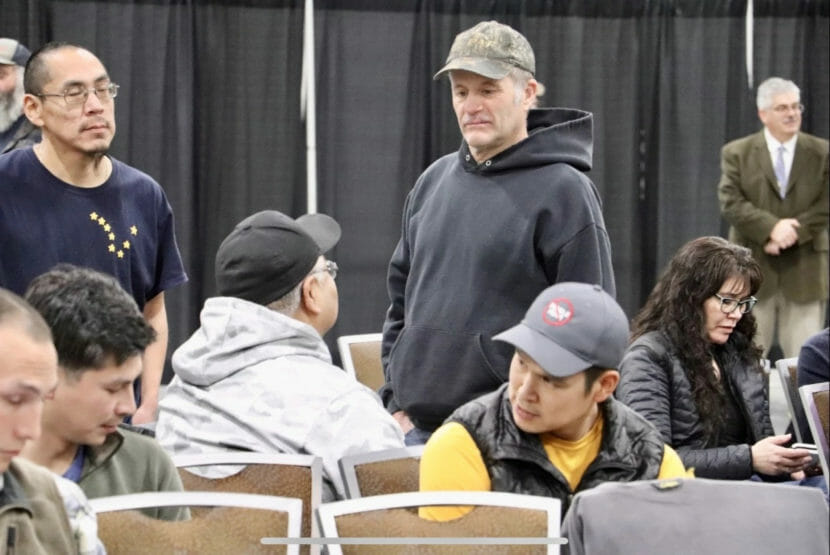
An attendee wears a “No Pebble” hat at the Bristol Bay Board of Fisheries meeting on Dec. 1, 2022. (Izzy Ross/KDLG)

The Environmental Protection Agency has recommended a ban on mining activities in the area around the Pebble deposit. People across Bristol Bay are now waiting for a final decision on the future of the controversial copper and gold prospect.

“I think it sends a real strong message that the science is there; that it’s going to have unacceptable adverse effects on our watershed,” said Gayla Hoseth, the second chief of the Curyung Tribal Council and the natural resources director for the Bristol Bay Native Association.

Hoseth welcomes the move. She said those opposed to the mine have wanted this decision for a long time.

The EPA wants to prohibit the discharge of mining materials in the North and South Fork Koktuli River watersheds, as proposed in Pebble’s permit application. The agency cites its authority under the Clean Water Act to do so. It would extend that prohibition to any future proposals to develop a mine at the Pebble deposit that could result in a similar loss of aquatic resources. The action would effectively kill the mine.

EPA Region 10 Administrator Casey Sixkiller said that if the agency’s Office of Water approves the recommendation, it will provide protections for both commercial and sport fisheries and a way of life for “one of the last intact wild salmon-based cultures in the world.”

“When the information came out yesterday it took a while to actually absorb it,” Hoseth said. “That we were finally this far, that we got this far with the recommendation.”

A broad coalition has worked to oppose Pebble over the years, from tribes and community groups to commercial and sport fishing organizations. Hoseth said tribal consultation with the EPA has been a critical part of this process.

“I want to encourage tribes to take advantage of that government-to-government opportunity that we have,” she said. “Because that’s the time that we can actually sit down and have the dialogue back and forth to have our voices heard from a tribal perspective. And then when your voice is heard of what we are protecting and how we’ve been sustained on salmon for generations after generations, and as we are here today to make sure the protections that are here today, that they continue into the future.”

Jonathan Salmon was attending the state Board of Fisheries meeting for Bristol Bay when the recommendation was announced.

He said EPA officials, including Region 10 Administrator Sixkiller, made an effort to get to know the area. They visited his small home village, Igiugig, earlier this year.

“They got to talk to us and we gave them a tour of Igiugig and who we are and why we’re there. And it was really great to see that our emotion and our responsibilities were able to be shared with him so he can understand the detriment a mine would propose to the region and be able to move the 404 forward,” Salmon said, referring to the section of the Clean Water Act that gives the EPA the authority to block the mine.

Debates around the potential merits and drawbacks of Pebble have gone on for years. Most people in the region oppose mining. But Salmon said that’s not universal.

“Of course we have friends, family members, fellow villagers, and we all have different views. It’s not square across the board. But it doesn’t mean you need to break personal ties over opinions,” Salmon said.

One of those opposed to a ban is Chasity Anelon, who lives in Iliamna and works for Pebble Limited Partnership, the company looking to develop the mine.

“I was just very disappointed in the EPA, because there are people that live in rural Alaska that need to have jobs to be able to support their families to live here. And this would be a great opportunity for that,” she said.

Anelon was thankful that Administrator Sixkiller visited Iliamna. But she is frustrated by his decision. Her family fishes for salmon in the summer and fall, and she wants her daughter, Stormi, to be able to live and harvest there.

“It’s just really hard,” she said. “I know that everybody has their own opinion about it, and I want Stormi to do the subsistence things that we all do as well. But I know that you need a boat and a motor and a net to go and get the fish, and it costs money. And it’s not free. But I’m very thankful to live where I’m at. This is why I live in Iliamna. I love it here. And I’m very thankful to have a job.”

Anelon said she understands that fishing is a big economic foundation in other parts of the region. But commercial prospects have declined in Iliamna; Anelon said many people have sold their commercial fishing permits.

Pebble spokesperson Mike Heatwole said the EPA’s action is political.

“This action is unprecedented. And when we say unprecedented, to help spell it out, is that the EPA is pursuing a veto, what we call a preemptive veto, of the project before the permitting process has concluded,” he said. “And it remains our view that the process for the EPA to follow is a permit is granted by the Corps of Engineers, and then the veto actions are followed by that.”

Two years ago, the U.S. Army Corps of Engineers denied Pebble a federal permit. But Heatwole said the permitting process is ongoing.

“They made a decision and we have the right under their process to appeal the decision,” Heatwole said. “Once we did, that appeal was accepted. And we’re working through that at the moment. So technically, the Pebble permitting process is still underway, if you will.”

Moving forward, Heatwole said, the company is reviewing legal courses of action.

Now that the regional administrator has recommended blocking the mine, the agency’s assistant administrator for water, Radhika Fox, has 60 days to decide whether to impose the veto, make changes or reject it entirely.

Site notifications
Update notification options
Subscribe to notifications