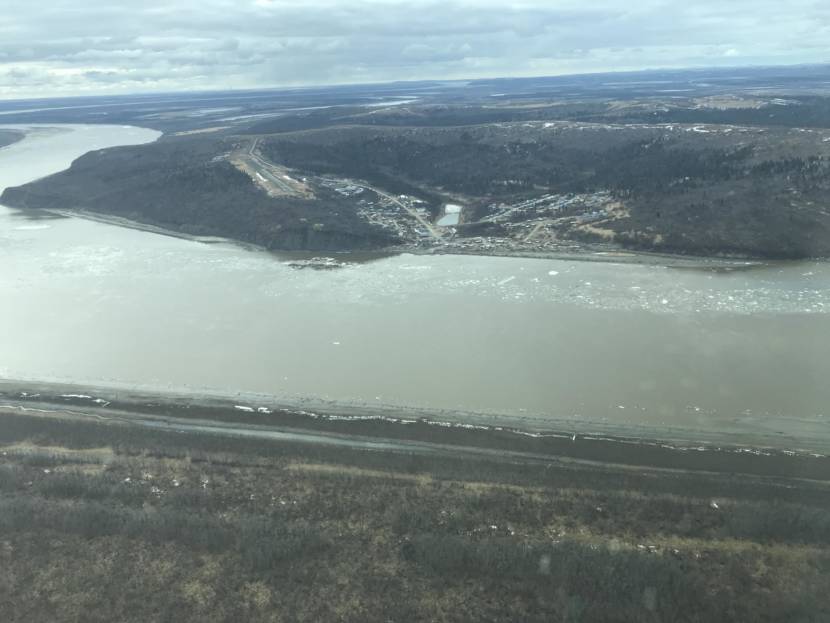
Pilot Station on May 16, 2018. (courtesy Mike Carpenter)
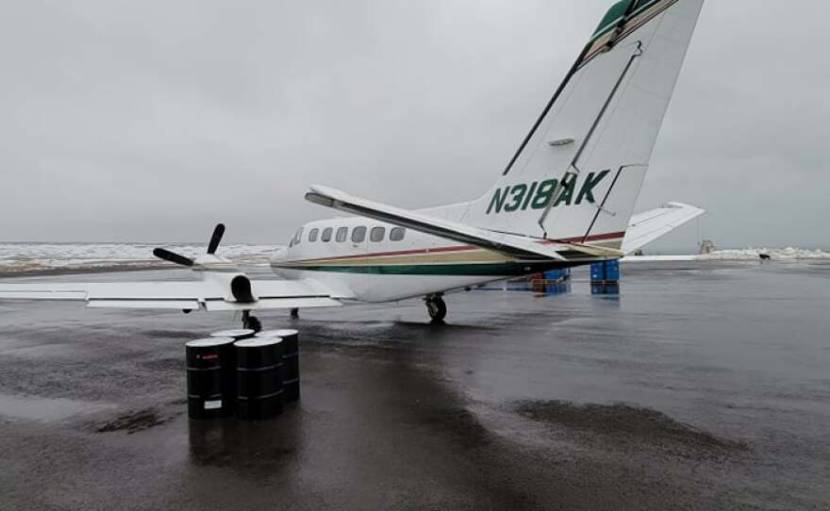
A Yute Commuter Service airplane landed on a frozen lake near Pilot Station on Jan. 7, possibly due to a partial loss of power to the engine. The airline is reporting no injuries and no damage to the plane.
A YCS Cessna 172 was heading from Bethel to Pilot Station mid-afternoon with the pilot and two passengers on board.
YCS Director of Operations Terry Cratty said that the lake that the pilot landed on was a few miles away from Pilot Station. It was clear of snow because the windy weather had blown it clear recently. He declined to comment why the pilot landed there.
“All I can do is tell you everybody’s safe and everything’s okay. And the aircraft is unharmed and things are good,” Cratty said. “The aircraft was safely landed on the lake, and we had another aircraft go in and pick the people up and move them to their destination.”
Cratty said that the airline dispatched another plane from Bethel, which picked up the pilot, the passengers and their luggage from the lake and transported them to Pilot Station. He declined to say whether the original plane was still on the lake near Pilot Station.
The National Transportation Safety Board is looking into the incident. NTSB Alaska Chief Clint Johnson said that based on preliminary findings, the YCS pilot landed on the lake as a precautionary measure after a partial loss of power to the engine.
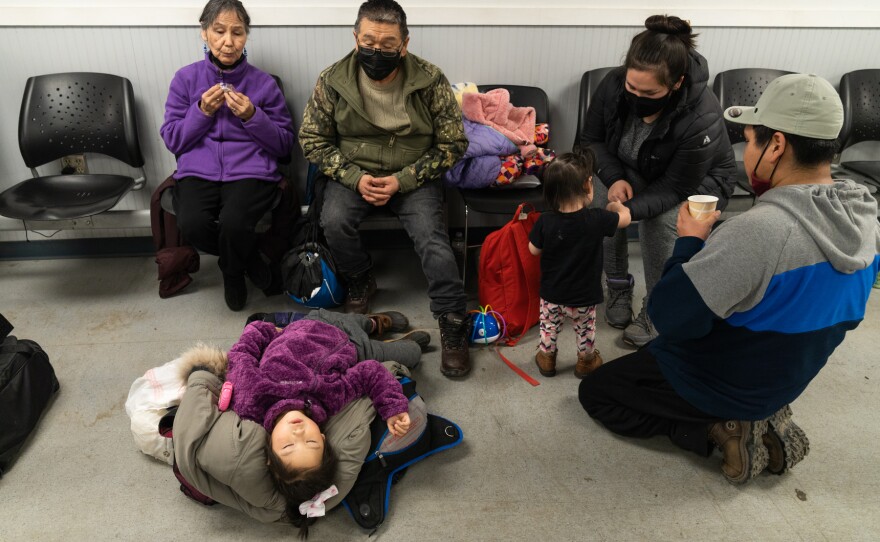
Ferdinand and Edith Carter watch over their sleeping granddaughter at the Grant Aviation terminal in Bethel while waiting for flights home to Eek, on December 28, 2021. (Photo by Katie Basile / KYUK)
A combination of historically bad weather in the Yukon-Kuskokwim Delta and ill-equipped airports stranded hundreds of passengers in Bethel this holiday season. Volunteers stepped in to donate food and some businesses provided lodging, but passengers still missed out on Christmas at home with their families.
Minnie Tunutmoak has been stuck in Bethel for nearly a week. She’s been coming to the Grant Aviation terminal most days to try to catch a flight back to Scammon Bay where she lives. Tunutmoak’s absence on Christmas cost her and her family some missed memories this holiday season.
“I was supposed to cook everything — turkey and everything — for Christmas. And my kids. Family time. That’s what I missed on Christmas Day,” said Tunutmoak.
Tunutmoak estimates that she’s spent over $300 on cab fare and food so far since being stuck in Bethel. She’d been lucky enough to stay with a relative, but said she may move to a hotel if her flight gets cancelled again.
Others have spent more.
Kenni Ulek, also from Scammon Bay, has been staying at the Long House Hotel. She’s spent $1,400 on lodging because of missed flights.
This stranding is, of course, happening during a pandemic when local health officials are advising people from different households to not spend extended amounts of time inside together.
Travelers who were in town for a doctor’s appointment are being provided lodging from the Yukon-Kuskokwim Health Corporation, according to Vice President of Operations Tiffany Zulkosky.
The executive director of the Bethel Winter House, Jaela Milford, said that about six to eight people stranded from flights checked into the shelter over the weekend.
Grant Aviation is the primary passenger air carrier in the Yukon-Kuskokwim Delta.
“It’s very stressful for the passengers. People are wanting to get home. They’re missing Christmas,” said Dan Knesek, Grant’s vice president for operations.
Many of the stranded passengers are from coastal villages. Knesek said that part of the reason they’re stranded is because many of those villages don’t have up-to-date navigation and weather tools. If the visibility is low, the pilot needs to land using navigation instruments. If the airport doesn’t have them, the plane can’t land.
Knesek said that he’s been working on getting federal funding to purchase up-to-date equipment for these airports for years. But he says the weather has been so bad that they have barely been able to even travel to villages with up-to-date equipment.
Many passengers have been forced to fly because they can’t travel by snowmachine. Warm, wet weather in the past few weeks has melted the ice on rivers and lakes.
This has been the rainiest December on the books in Bethel, and unseasonably warm. That’s according to Alaska climatologist Rick Thoman. This month follows the coldest November in Bethel in 80 years. Only December 1951 saw more precipitation, but that year was much colder and most of that precipitation was snow.
Grant Aviation, Yute Commuter Service and Ryan Air have all canceled dozens of flights over the past week and a half. But Knesek with Grant said that the trouble began with the cold snap back in November.
“It’s something that I have not seen since I’ve been in Alaska, to where we have the back to back to back storms. We’ve had more complete shutdowns in the last few weeks than I’ve probably seen in the last several years,” said Knesek.
Thoman confirmed Knesek’s weather pattern observations. Thoman said that it may still be a few days before the cycle of stormy weather breaks.
“An old saying in weather forecasting, you know, if you don’t like the weather, it’ll change. And that is certainly true, but both last month and this month, once we get stuck in a pattern, boy it has been slow, slow to change,” said Thoman.
Community members across Bethel have been stepping in to help the stranded travelers by donating food and household items.
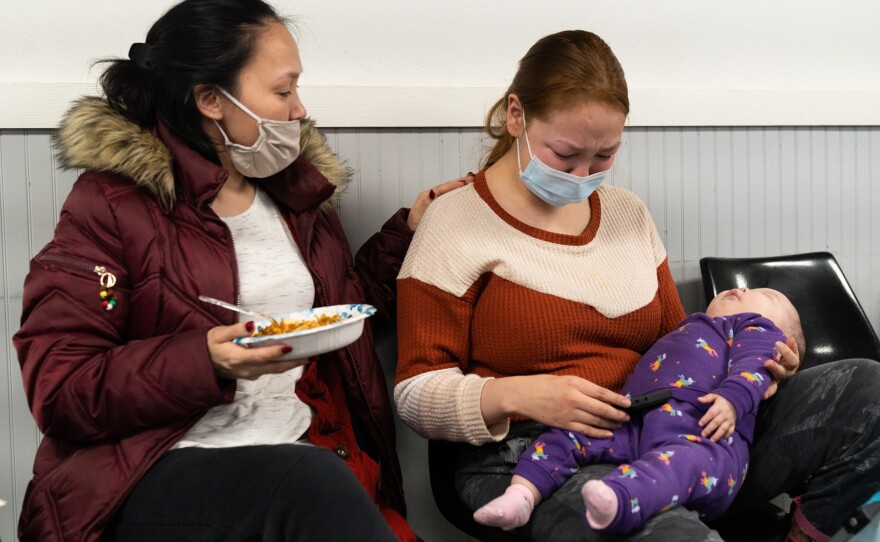
Michelle Matchian (left) comforts Kenni Ulek at the Grant Aviation terminal in Bethel on Dec. 28, 2021. The two have been stranded in Bethel and missed celebrating Christmas with their families in Hooper Bay and Scammon Bay this year due to poor weather conditions. (Photo by Katie Basile / KYUK)
A lot of the donations have been coordinated by Aggie Gregory, who said that she was first drawn to helping people at the airport when her friend from Tuntutuliak said that she was stranded and wanted a hot coffee. Now, the operation has grown and it consumed her day on Tuesday.
She drove around town picking up a $300 voucher donated by VFW and 145 sandwiches and other snacks donated by AC. With the voucher she bought diapers for the babies stranded in Bethel.
“Pampers and Wet Ones. And then there’s other people that are, later on, that are bringing, like, spaghetti. And there’s soup that we have to go and pick up to deliver,” said Gregory.
Another woman, Angie Jackson, saw Gregory’s posts on Facebook and then got involved.
“Yesterday we brought just some random snacks and things like that. And then today we did more of a coordinated effort to kind of have hot meals and kind of spread the word,” said Jackson.
Knesek said that Grant has a plan for the next break in the weather. He said that he has a cadre of extra pilots and planes at the ready so he can fly as many people home as possible as soon as it is safe to do so. Knesek said that these flight delays are also delaying mail, but that getting passengers home takes precedence.
KYUK’s Katie Basile and Gabby Hiestand Salgado contributed additional reporting to this story.
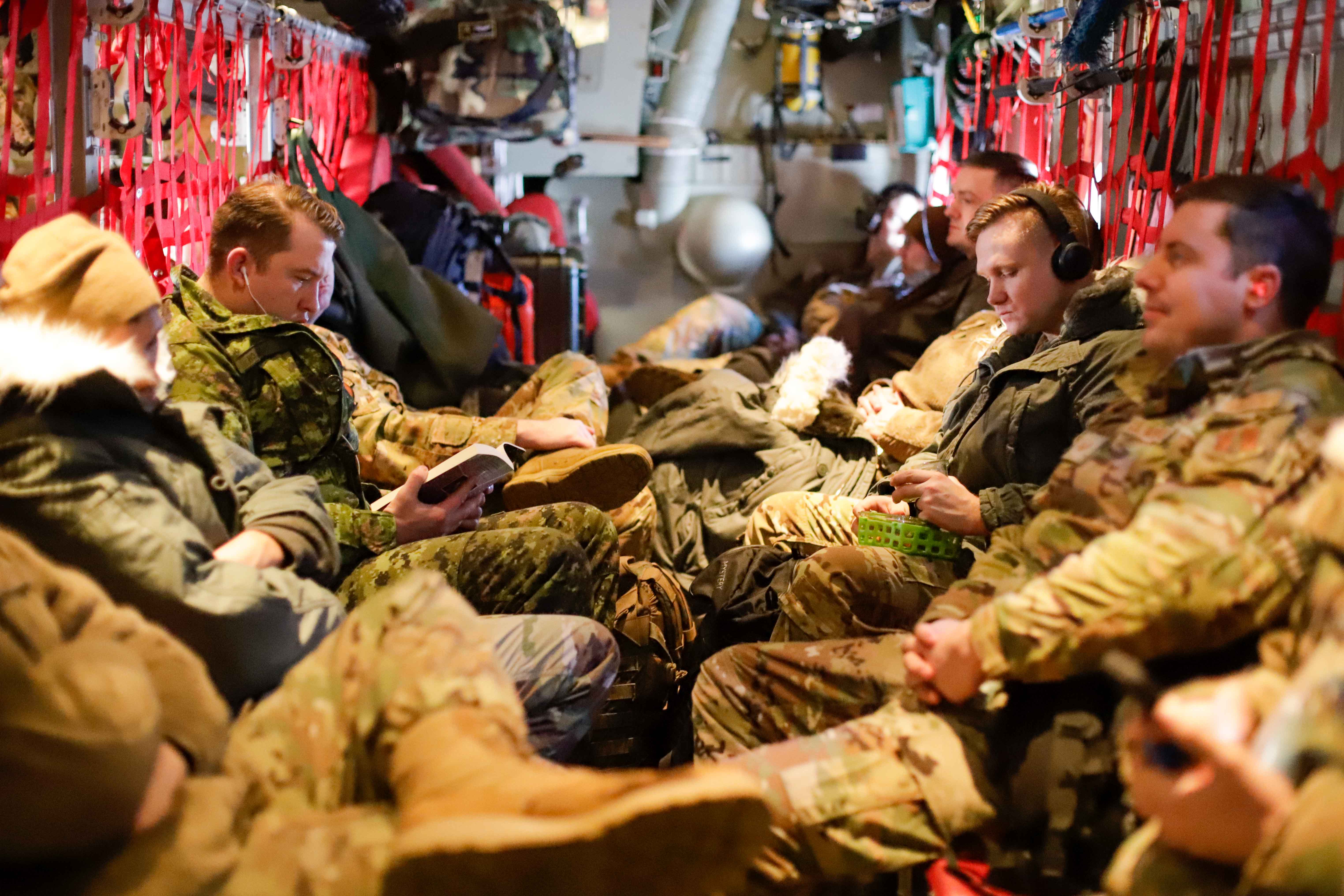
Members of the Alaska Air National Guard board a C-130 plane at Joint Base Elmendorf-Richardson in Anchorage on Dec. 2, 2021, to participate in Operation Santa. (Jeff Chen/Alaska Public Media)
A camouflaged Santa whirled into Buckland on a funny-looking sleigh this year. As part of its annual Operation Santa Claus, the Alaska National Guard delivered 261 presents to the community in northwest Alaska on December 14. Santa says he’ll drop off 360 gifts to Chevak after the holidays and once weather conditions allow.
Azara Mohammadi, tribal liaison for the Alaska National Guard, coordinated with the Native Village of Buckland and Chevak Native Village to organize and shop for gifts. The Salvation Army made the purchases, and volunteers wrapped gifts that began their journey to the two predominantly Alaska Native communities at the start of the month.
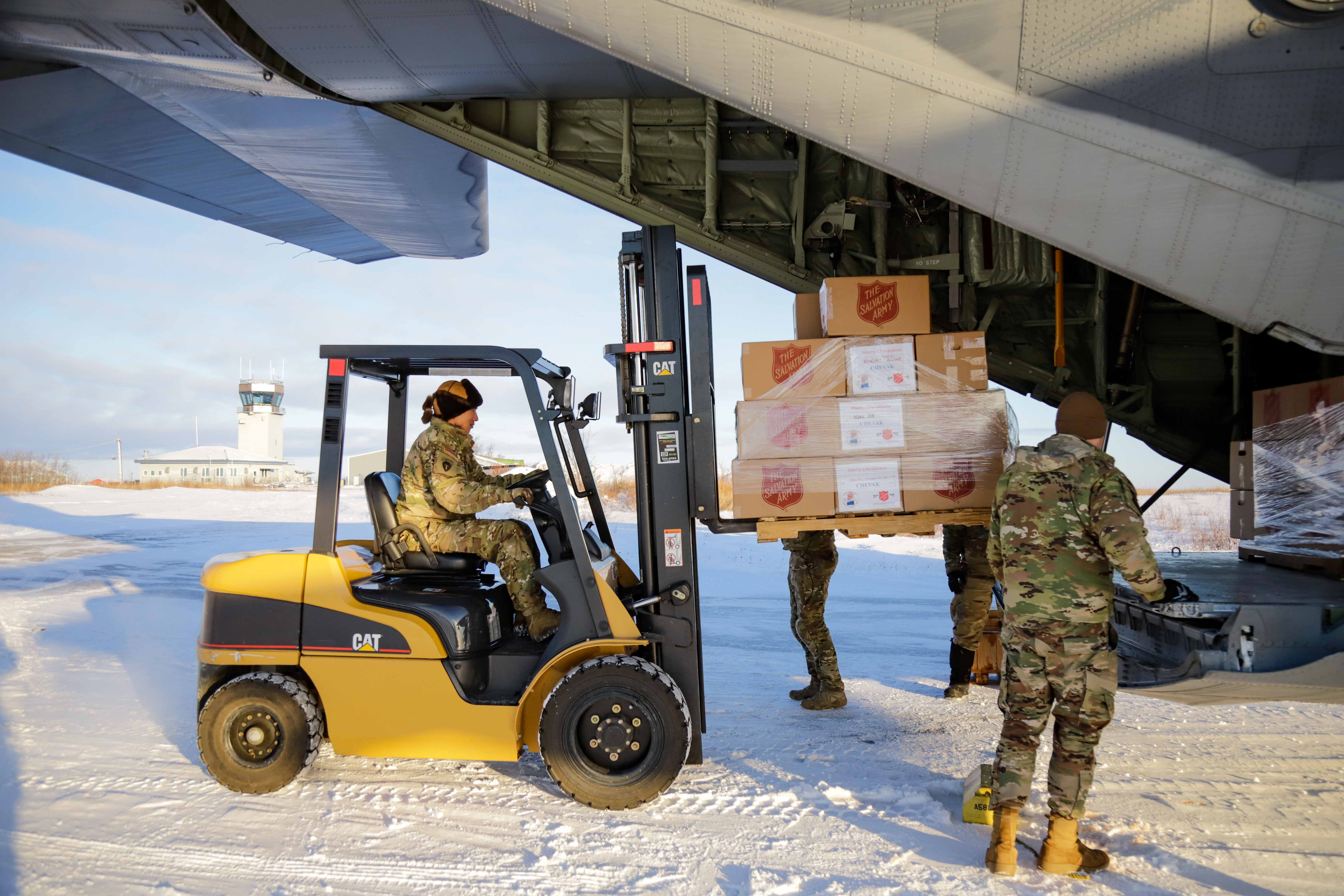
Randell Andrew, a sergeant with the Active Guard Reserve in Bethel, operates a forklift to unload 2,770-pounds of presents from an Operation Santa flight on Dec. 2, 2021. Presents will be delivered to Chevak as part of Operation Santa. (Jeff Chen/Alaska Public Media)
On December 2, 24 Guard members boarded a C-130 plane loaded with 631 presents. The gifts were offloaded in Bethel and Nome, where they would be stored until delivery to the two communities. The Chevak-bound presents are still in Bethel, as of Christmas Eve.
Joseph Sallaffie, a sergeant with the Active Guard Reserve in Bethel, said Operation Santa helps the communities a lot during the holidays.
“Yesterday, me and my wife went to the local store here to look for some water and Gatorade, and we just had a hard time getting cases of water, so imagine if Bethel stores are having a hard time, imagine what the village stores are going through,” he said.
Dana Rosso, a public affairs specialist with the Alaska National Guard, said Operation Santa began in 1956, when St. Mary’s Mission was hit with spring floods and then a drought – impacting subsistence fishing and hunting. Rosso said the Air National Guard flew in donated gifts and supplies to help residents that year.
Rosso said Operation Santa recipient communities are identified by Alaska’s Division of Homeland Security and Emergency Management as communities that have experienced particular hardship that year. The tribes in Chevak and Buckland could not be reached by time of publication.
No Guard members wore masks on the trip to Bethel and Nome, but Rosso said service members selected for the mission came from the same unit and office area, in order to lower the risk of Covid transmission. December 2, the day of the initial Operation Santa flight, was also the national deadline for Air National Guard service members to be vaccinated. Rosso said he did not have current vaccination numbers for the Alaska National Guard.
Members of the Alaska Air National Guard ride on a C-130 plane to Bethel on Dec. 2, 2021, the first stop in Operation Santa. (Jeff Chen/Alaska Public Media)
“This means a whole lot since, like I mentioned, Covid-19 and hard times – this means a whole lot,” Sallaffie said. “It’s kind of hard for them to enjoy a Christmas like it used to be, but with all this, it makes a difference.”
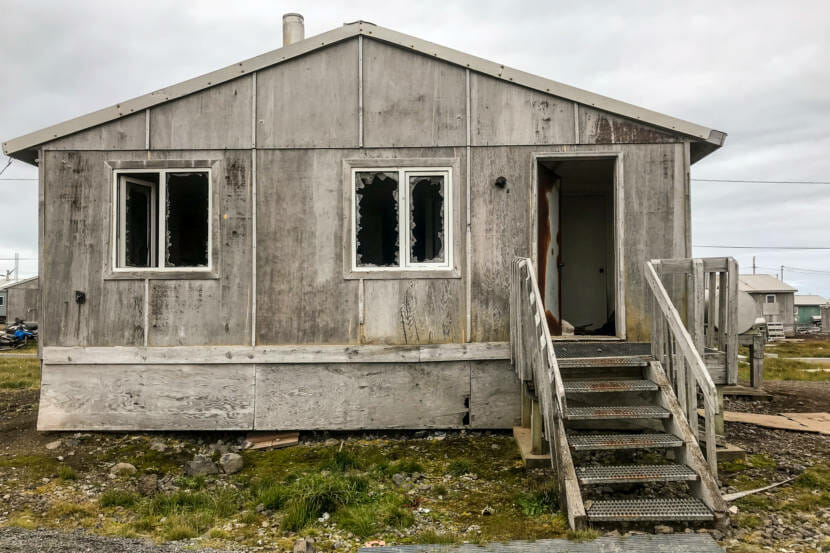
Several older homes in Savoonga have been run down by frequent winter storms and many years without maintenance. (Photo by Emily Hofstaedter/KNOM)
The COVID-19 pandemic has made it difficult to build homes in Western Alaska. But it’s also provided opportunities for more funding to alleviate some housing issues that exist in the region.
More than a third of residents in the Bering Strait region are living in overcrowded conditions according to the Alaska Housing Finance Corporation.
The former CEO of Bering Straits Regional Housing Authority, Chris Kolerok, gave public testimony on housing conditions in the region three years ago. Kolerok spoke during an Indian Affairs Senate Hearing held in Savoonga, the first of its kind hosted in Western Alaska.
“In the Bering Straits outside of Nome, the overcrowding rate is 37% — 19% of that are homes being classified as severely overcrowded,” he said in 2018. “And during community meetings, we have been confronted with the heartbreaking stories of 21 people sharing a small three-bedroom home.”
That same year, Savoonga received six new houses. Since then, there have been no new homes built in the community. Prior to the completion of those six new homes, Savoonga hadn’t seen new houses built locally in over 10 years.
Those rates are based on the Alaska Housing Finance Corporation’s latest housing assessment from 2018.
Jolene Lyon inherited these challenges as she took over as president and CEO of Bering Straits Regional housing authority in 2020. Although the housing authority has traditionally served tribal members of the Bering Strait by building houses, during the pandemic they were able to offer other assistance.
“Some communities chose to buy side-by-sides or ATVs,” Lyon said. “Others chose to get washers and dryers, some wanted more PPE, some wanted freezers because at the same time there was a concern that there would be meat shortages.”
Each community gets a certain amount of funding from the U.S. Department of Housing and Urban Development based on the population of the tribe. The housing authority then pools all the allocated money together which comes to between $1.4 million to $1.8 million each year for the entire Bering Strait region.
Staffing turnover, logistical issues and the wrench thrown into the plan by COVID-19 all delayed the construction of new homes that were slated for this year. Lyon says the upside of waiting though, is that the housing authority received additional funds from COVID-related grants and can afford to build more homes in 2022.
She had money left over from the regular allotment from the federal government and decided to stretch that with approval from the housing authority’s board of directors.
“I presented a revised Indian Housing plan to take that remaining funding and apply it towards new construction for Shaktoolik. So now we have two homes we can build. Thus comes along, we get the American Rescue Plan [funding], and I can take another $1.5 million from that and now I’m building four homes in Shaktoolik instead of the one we were actually going to do,” she said.
Shaktoolik, Diomede and Wales are all set to receive new homes in 2022. On top of that, King Island tribal members received two new modular homes constructed in Nome last year.
But a couple of single-family homes every 10 years or so is not enough to tackle the issue of overcrowding which is at 14% in Nome, and 37% in the Bering Strait region, according to the latest numbers from AHFC.
Sophia Katchatag, tribal coordinator for the Native Village of Shaktoolik, says four new homes next year will only make a small dent in a sizable issue for her community.
“It’s a blessing to know we are getting four new homes this coming summer, but there’s still a need out there. There’s still multiple families living in homes,” she said.
According to Katchatag, the last time Shaktoolik had new homes built in the community was from 2005 to 2006.
Going forward into 2022, Lyon says the housing authority will focus on building more homes across the region, with some extra funding courtesy of the American Rescue Plan Act.
“We can build stick-build [houses]. We can build sit-paneled homes, with those big, large panels. We can do modular or if they’re small, we can do tiny homes, we can have those shipped in,” she said.
Each option comes with its own set of pros and cons. Some cost more to ship than others but some are more suitable for the Arctic conditions that exist in Western Alaska.
According to Lyon, the housing authority could build up to a total of 10 new homes next year for three different communities instead of the usual three new homes.
And in early December, the federal housing and urban development department announced an additional $52 million in Indian Community Block Grants. Some of those funds will pay for a temporary shelter in Solomon, five tiny homes in Aniak and water holding tanks for Wales.
Correction: An earlier version of this story misspelled Jolene Lyon’s last name. It is Lyon, not Lyons.
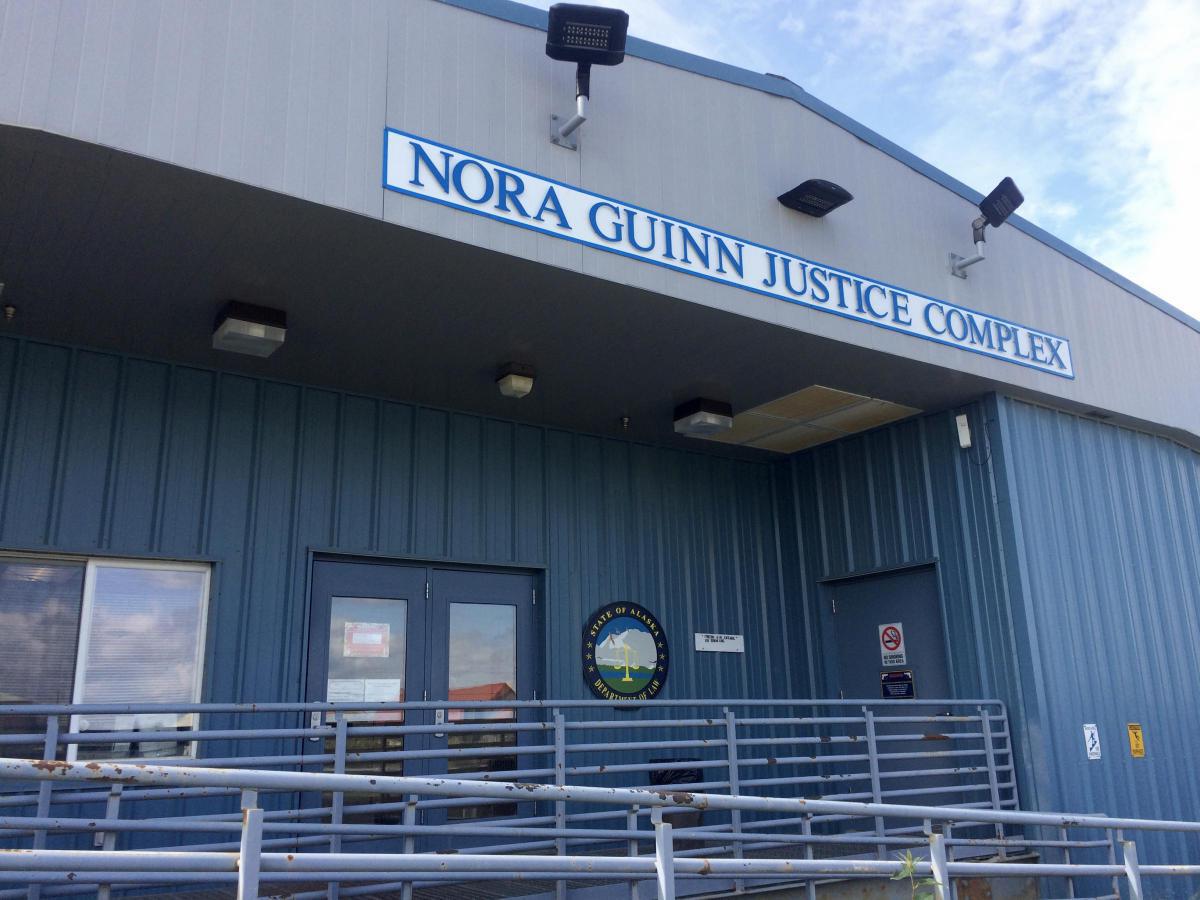
The State of Alaska courthouse in Bethel, Alaska. (Photo by Dean Swope/KYUK)
A state employee for the Office of Children’s Services in Bethel has been charged with sexual assault. Several local non-profit organizations that he is a board member of are evaluating whether to remove him.
On Dec. 16, the state of Alaska charged 51-year-old Bethel resident Jon Cochrane with sexual assault in the first degree, attempted sexual assault in the first degree, three counts of sexual assault in the second degree, and assault in the fourth degree.
If convicted, Cochrane faces up to 99 years in prison. His bail has been set at $50,000.
Charging documents state that a woman told a police officer that Cochrane assaulted her and tried to have sex with her without her consent. She said that she was able to fight him off, but sustained bruises from his blows.
A woman filed a restraining order against Cochrane a few days later. She wrote that he had assaulted her on multiple occasions over a period of months. KYUK reached out to the woman, who did not want to be named in this story. Cochrane’s attorney did not reply to a request for comment before this story was published.
Since February 2021, Cochrane has worked as a protective services specialist for the state’s Office of Children’s Services. State spokesperson Clinton Bennett said that Cochrane has been on administrative leave without pay since Dec. 15.
Before working for the state, Cochrane worked as a branch manager for Wells Fargo Bank in Bethel for over 12 years, according to his LinkedIn profile.
Cochrane sits on the board of directors for the Bethel Family Clinic, and presides over the Bethel Winter House’s board. Executive directors for both non-profit organizations said that they were aware of the charges against Cochrane. Bethel Winter House is scheduling an emergency board meeting this week to consider whether to remove Cochrane from his position.
Cochrane held a license as an emergency foster parent in Bethel. However, a state spokesperson stated that he has not cared for any foster children since 2019 and has not held a license to do so since it expired in 2020. The state spokesperson said that there were no enforcement actions or investigations against Cochrane while he held the license.
Grant and Security Aviation flew to St. George on Tuesday with fuel drums and cases of water for the community. (courtesy of Anastasia Kashevarof)
Residents on the remote island of St. George say they’re rationing fuel and water after stormy weather delayed a fuel barge, led to widespread power outages and broke water lines. They’ve been without running water since Saturday.
“Whatever led up to the situation where all the sudden we don’t have any fuel in the dead of winter, and with all these storms coming through, is beyond me,” said St. George resident Victor Malavansky. “I would like to say this is totally unacceptable.”
Malavansky is 70 years old and has spent nearly his whole life in St. George, a small island north of the Aleutian Chain where elders make up about 75% of the 50-person population.
Malavansky said there have been fuel emergencies in the past, when fuel drums had to be flown to the remote island because barges couldn’t get in.
“But this time, the news, it pretty much floored me,” he said. “How in the world did we ever get to this point? I don’t know.”
Malavansky said he’s been trying to ration his heat and water amidst freezing temperatures.
On top of the fuel shortage, a blizzard last weekend broke water lines and drained the island’s water tanks.
Resident Anastasia Kashevarof said some community members have been brought to tears over the situation.
“These winter months are pretty harsh, especially during December and January, and all the way through March,” she said. “And nobody should have to be rationing their fuel, not using hot water, not washing a lot, not [taking] a shower. I think it’s ridiculous, and there should have been no way in heck that we should have come to the situation.”
Kashevarof said the community became aware of the fuel shortage about a week and a half ago.
Fuel is normally barged into St. George, but a storm surge has held up that barge, and as the delay lingered, the community started running out of fuel to power the island’s sole diesel power plant.
On Saturday, the community contacted the state Emergency Operations Center to say they were down to one functioning generator.
“From what we understand, the power generation issues may have been caused by low fuel and some dirty fuel, as they were kind of getting to the bottom of the tank,” said Jeremy Zidek, a public information officer with the State Division of Homeland Security and Emergency Management. “That led to rationing of electricity, which reduced the flow in their pipes and led to freeze up there.”
But Zidek said he expects the worst is over, and St. George residents will have access to running water and full fuel tanks soon.
Delta Western — the fuel company that has been serving the community for 20 years — flew in nearly 4,500 gallons of fuel on Tuesday. A representative from the company also said, barring any weather or mechanical problems, they anticipate a resupply vessel to arrive this weekend with the remainder of the winter supply.
Meanwhile, maintenance staff are working to get the water system thawed and back online, but the community remained under a boil-water warning Thursday.
Zidek said the state talked to the community about activating their school as an emergency shelter. Right now, the location is in what he calls a “warm status” where it isn’t currently being used, but could be if conditions get worse.
Zidek said across the state, there are a number of communities that have been dealing with extreme cold weather, high winds and blizzard conditions for a while now. He said at least 10 communities are experiencing some type of power or water issue because of that.
Close
Update notification options
Subscribe to notifications
Subscribe
Get notifications about news related to the topics you care about. You can unsubscribe anytime.