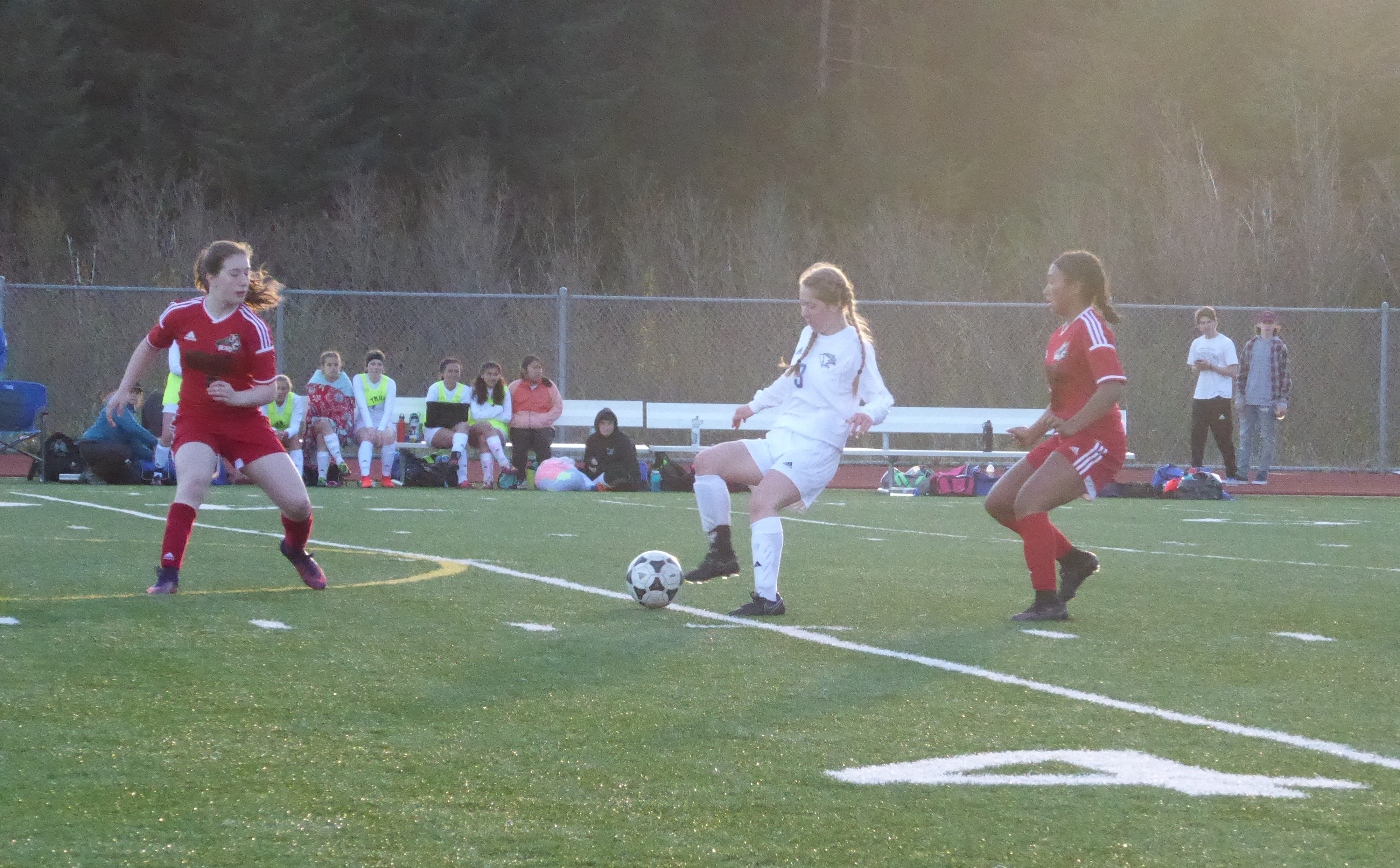
The Thunder Mountain and Juneau-Douglas girls soccer teams dedicated a regular season conference game and fundraiser to Hunter Rathbone, a Thunder Mountain player who is partially paralyzed. (Photo by Quinton Chandler/KTOO)
It’s the second half of an intense game. Dozens of fans are shouting encouragement from the bleachers and sidelines to support the Thunder Mountain Falcons and the Juneau-Douglas High School Crimson Bears.
Each year, Thunder Mountain and Juneau-Douglas’ soccer teams turn one or two games into a cancer awareness fundraiser. The fundraisers started in 2012 and were inspired by Juneau-Douglas soccer player Dorothy Brent, who died from cancer last year.
This year the Falcons and Bears girls teams dedicated the fundraiser to Hunter Rathbone.
“I love my team,” Rathbone said. “It really warms my heart that they would put all that effort … all that together for me … that’s like no words, that’s the coolest thing someone’s ever done for me.”
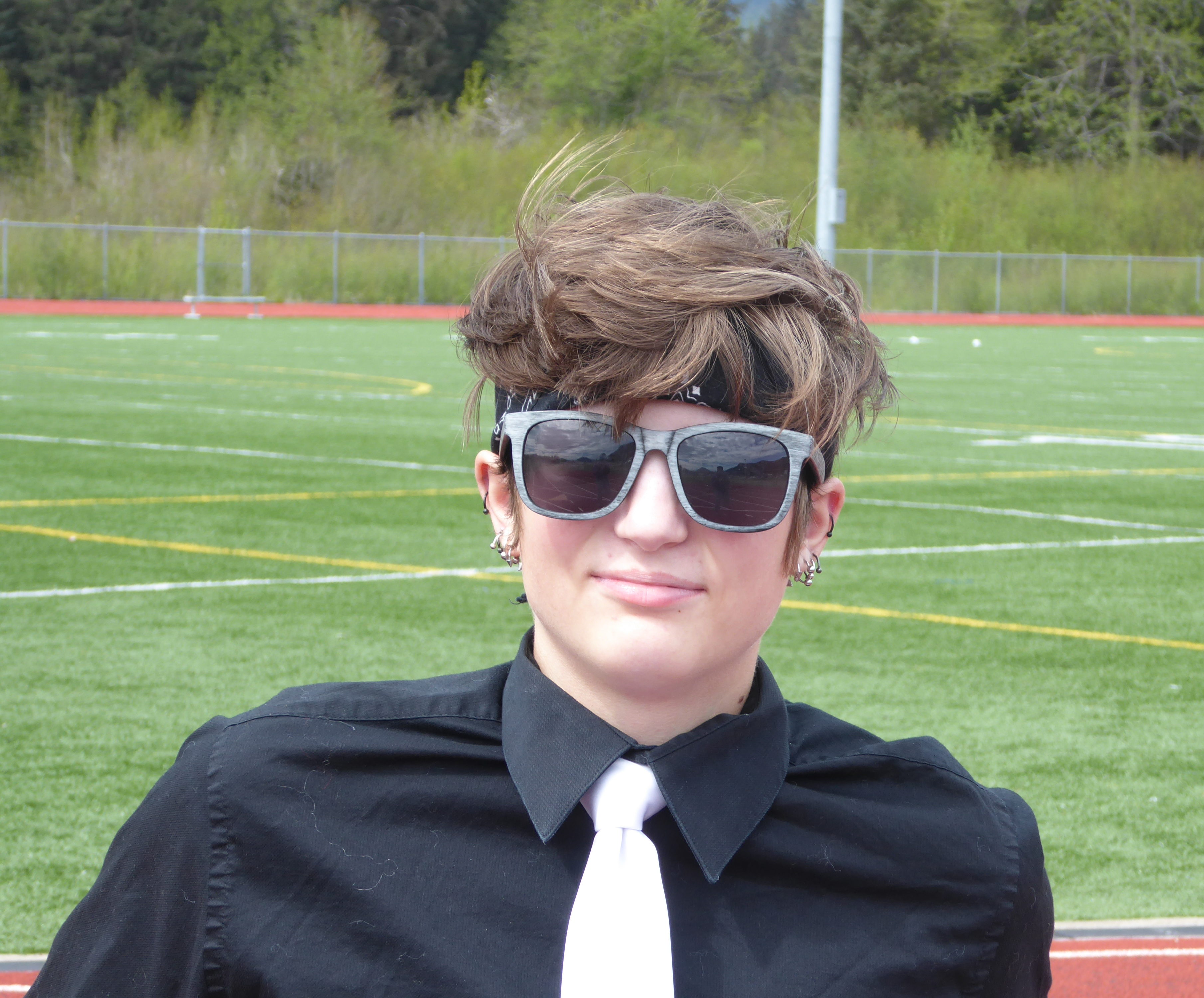
Rathbone, 16, identifies as a boy. He sits in a wheelchair, wearing sunglasses to protect his eyes. He’s a Falcons player who was hurt in a previous game and has lost most of the feeling in his legs. Speaking after the game, Rathbone said the injury happened while trying to score a goal during a game in Ketchikan.
“There was an opponent next to me … behind me,” Rathbone said. “They accidentally kicked my feet up from underneath me, and it caused me to fall backwards onto my back and then it slammed my head to the ground.”
Hunter Rathbone at the Thunder Mountain High School Turf Field on Wednesday. (Photo by Quinton Chandler/KTOO)
After the fall, he remembers his coaches helping him back to the bench.
Rathbone had a spinal and head concussion, he said.
“I knew something was off from the beginning because the turf looked white and then I had extreme sensitivity to the light,” he said. “I couldn’t keep my eyes open because it was really bright.”
His legs went numb. His thighs, calves and feet felt like “they were catching on fire.”
Rathbone was flown to a hospital in Seattle. After five days of tests and scans, doctors decided he wasn’t just concussed, he said. The doctors diagnosed him with conversion disorder.
“I could’ve lost my sense of taste, smell and eyesight. Losing your feeling in your legs is the most common,” he said.
At the end of the fundraiser game, the Bears are the clear winners on the field.
But as the Falcons’ coaches give their girls a word of encouragement and send them off for the ritual end-of-game handshake, it’s soon evident the final score isn’t the only measure of a team’s success.
Rathbone said his team played great and he’s proud of them.
His recovery is going to be hard work. He goes to school every day in his wheelchair and is in physical and occupational therapy. It’s exhausting, he said.
“They are telling me that I’m going to get some mobility back … but after standing, some basic movements, after that is basically how hard I work is how far I’m going to make my recovery,” Rathbone said.
He describes himself as an active person and said the thought of getting out of his chair is his biggest motivation.
“To be able to get back on the field, hike, bike, longboard, snowboard … all my activities that I love to do,” he said.
One day he hopes to be back in the Falcon’s huddle.
The fundraiser for Hunter Rathbone raised $1,450, a Falcons soccer coach said.
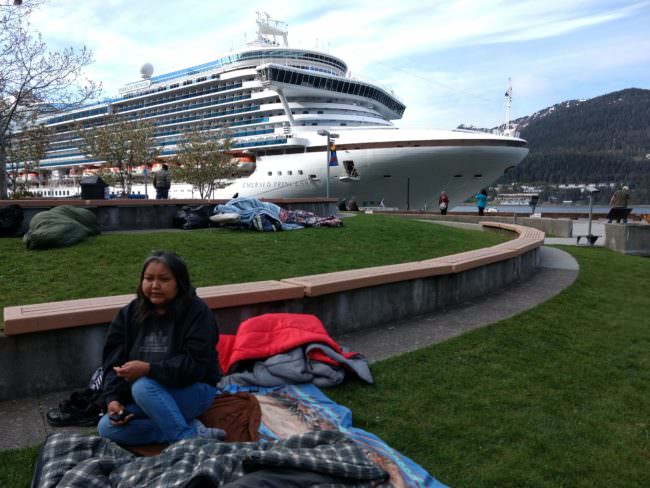
Lorraine Paul, 42, wakes up the morning of May 17, 2017, in Marine Park, Juneau. The city wants to begin enforcing the park’s posted hours of midnight to 7 a.m.
Juneau’s controversial anti-camping ordinance has been in effect for more than a month. The result has been more people are sleeping in downtown’s Marine Park. Now the city is looking to empty the park of overnight campers.
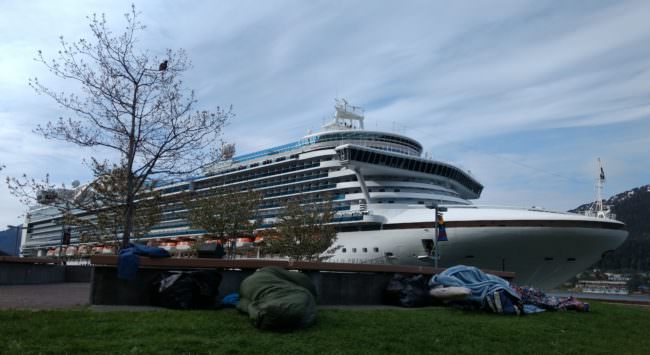
It’s just after 8 a.m. on Juneau’s downtown waterfront. The Emerald Princess cruise ship empties of tourists as people sprawled out on the soft grass begin to stir inside their sleeping bags.
Lorraine Paul is one of those early risers. The 42-year-old and others often sleep in Marine Park though police sometimes try to move them on.
“Some of us sleep in the booth over here and have to be out by 5:30 a.m. to be respectful,” she said. “We get up to try and come over here and lay down and then here comes JPD and they’re like: ‘You need to get up and pick your stuff up.'”
The reason she chooses to sleep out in the open, in a public park, is security. There are aggressive drug addicts around who can be threatening.
“I hate to say this but because some of these people do meth, you know. I feel like they ruin it for us,” she said. “It’s really hard to find somewhere to sleep. I mean, I’m an alcoholic. Some of us try to stick together — how do I say it — pack off to ourselves.”
Juneau has one of the largest homeless populations in Alaska. A statewide survey in January found the capital city had 215 homeless people — 59 of them unsheltered.
Earlier this year the Assembly passed a controversial ordinance banning sleeping on private property in the downtown core.
Juneau Police Lt. David Campbell says officers have been able to coax people away from storefronts without serious conflict.
“Since the initiation of the ordinance, no citations have been issued,” Campbell said. “Which means that people are basically moving on if requested to and it hasn’t gotten to the level were the officers feel like they have to write a citation.”
“With the new camping ordinance and the directions to the officers we were told not to enforce that in Marine Park,” he said.
But soon the city will try to make Marine Park off-limits after midnight.
“We think that making sure that the park remains open as a park and not as a camping areas is best for everyone,” Deputy City Manager Mila Cosgrove said.
She says the decision was made Tuesday at a meeting of city department heads. The logic is to close the downtown parks to drive people toward alternatives, such as the seasonal campground near Thane.
“The thought was people would naturally migrate up to Thane as the weather got a little bit warmer, which it certainly has, and that hasn’t been happening. We want people to know that that’s a designated option for them.”
Unidentified sleepers sprawl out in Marine Park on May 17, 2017. (Photo by Jacob Resneck/KTOO)
Complaints in recent weeks about rowdy behavior in Marine Park is what led the city to take action.
“At times people don’t feel safe transiting through that area and that’s just not acceptable — everyone has the right to feel safe in their community,” she said.
The Tuesday afternoon directive to clear Marine Park after hours hadn’t filtered down to the police lieutenant on Wednesday morning.
But Campbell says it could be done.
“When we encounter someone it gives us the ability to legally justify contact with them to identify them and see who they are and then ask them to go out of the park,” Campbell said. “Because it’s after hours and if they refuse then to issue them a citation.”
Back in Marine Park, this is not welcome news to Lorraine Paul.
“Now that I hear that we can’t be sleeping out here — it sucks,” Paul said. “Wish they’d have somewhere for us to camp.”
What about Thane campground? She says it’s 2-miles from downtown on an unlit road. Not safe for a single woman.
“You hear a lot of stories. For example, if I walked out there myself — I’m told there’s guys out that way that camp that would hurt you and rape you,” she said. “It’s kind of hard because I’ve been on the streets off-and-on all my life.”
It’s unclear whether the city would be able penalize anyone caught in the park after hours, because there’s a typo in the city’s code that likely would need amending before a court could impose the $25 fine.
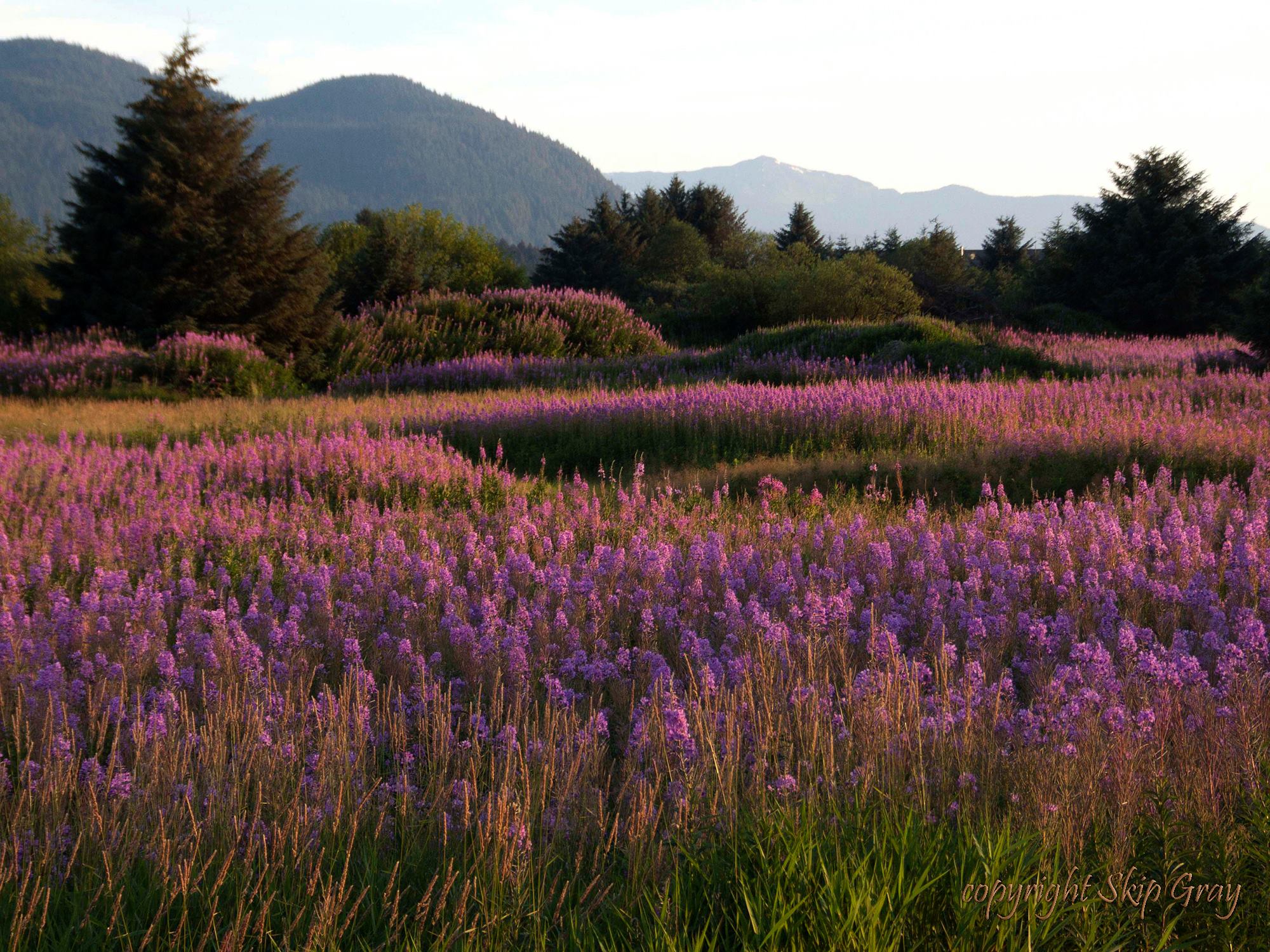
Fireweed blooms near Juneau International Airport on July 17, 2016. Many locals call this area “the Field of Fireweed.” (Photo courtesy Skip Gray)
The Juneau Assembly voted 7-2 to rezone land around Honsinger Pond also known as a “Field of Fireweed” near the airport for industrial use. Public outcry over blooming fireweed and bird habitat had helped scuttled previous efforts to rezone the land.
After hearing comments from nature lovers and off-roading advocates, Assemblywoman Debbie White noted that owner Spike Bicknell had been denied permission to rezone it on two previous occasions.
“It’s about time that this Assembly have a backbone and allow a private property owner to develop their property and not give in to — I’m not even going to use the words,” she said.
Bicknell has also applied for a permit for a motocross park on the site. Opposition came from skeptical Assembly members Loren Jones and Jesse Kiehl who said the current zoning would already allow a motocross park.
“I’m deeply confused at the idea of a motocross or an off-road bike track as the reason we have to rezone it because the current zoning allows the permit for that on exactly the same terms that the new zone would,” Kiehl said. “So that — that can’t be it.”
Deputy Mayor Jerry Nankervis said future plans for the property weren’t the issue being discussed.
“I don’t know what Spike Bicknell is going to do with this property, I don’t know what he’s going to do — it’s private property,” Nankervis said. “There’s a conditional use permit requirement if he wants to do something with it, he’s going to be back before the Planning Commission to discuss that and discuss the merits of that.”
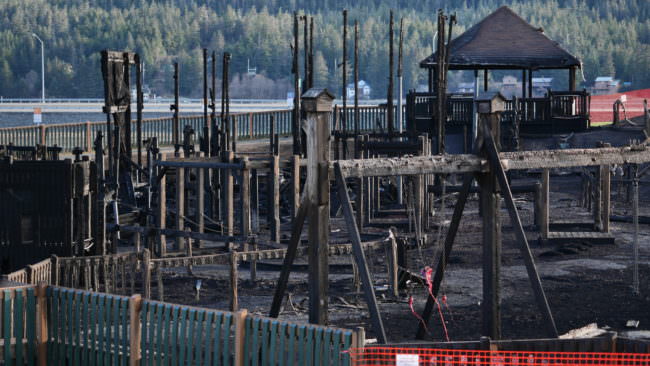
The Juneau Community Foundation said Monday that a mix of private and corporate donations have raised just over $110,000. Alaska Airlines, BP Alaska and, most recently, $25,000 from the Cruise Lines International Association Alaska have helped fundraisers reach the target.
The city’s insurance policy is expected to cover the remaining costs to rebuild. But the actual cost of rebuilding the city-owned playground won’t be known until a revised design is approved. Any expansion beyond the original footprint wouldn’t be covered by insurance and would need to be raised separately.
The original Twin Lakes playground was completed in 2007. It was a community fundraising effort involving thousands of volunteer hours. Volunteers also raised nearly a half million dollars in cash.
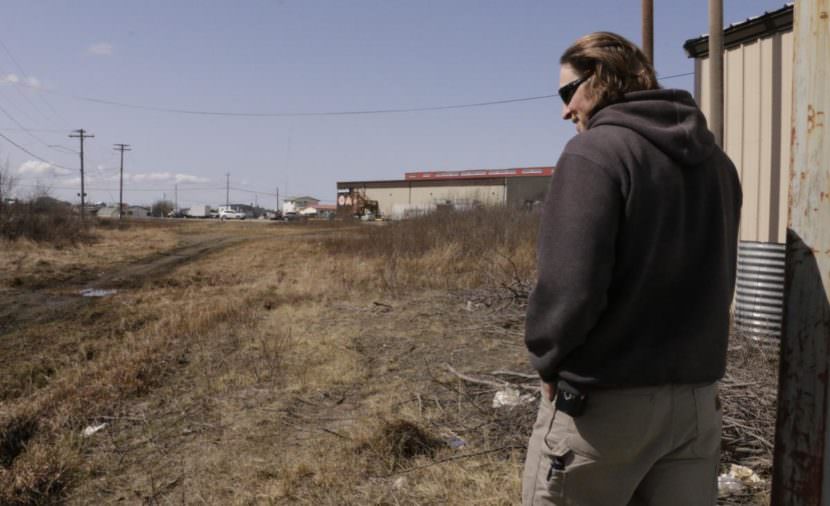
Bethel City Council member, Leif Albertson, visits the site of a proposed Air Quality Monitoring System behind AC on May 10, 2017. Albertson believes the monitoring system could eventually lead to better air quality for Bethel citizens. (Photo by Christine Trudeau/KYUK)
The Alaska Department of Environmental Conservation is looking for a lease agreement with the City of Bethel to set up an air quality monitoring system. The state-funded project is part of an effort to collect better data on what’s in our air.
Behind Alaska Commercial Company, off Fourth Avenue, is the proposed site for the air quality monitoring system. Bethel City Council member, Leif Albertson, said this area will make for a great location.
“There’s sort of just an empty space here,” said Albertson. “It’s got some brush on it right now, and what will be here is a trailer with a small shed on it that will have the air monitoring equipment in it.”
It’s also near a gravel road. The idea was introduced at Tuesday night’s City Council meeting. It would be part of a lease agreement that allows the state Department of Environmental Conservation to install the system.
The proposed site for the air quality monitoring system is behind Alaska Commercial Co. off of Fourth Avenue. (Photo by Christine Trudeau/KYUK)
Council member Albertson says it’s important for the community of Bethel to get good air quality data.
“The plan right now is to be able to measure particulate matter in two different sizes. PM 2.5, and PM 10,” said Albertson. “PM 2.5 is the small stuff, and that is generally what a lot of health concern is around. Because the particles are so small they can really get very deep into your lungs and even get into your bloodstream.”
Albertson hopes better monitoring will help inform policymakers in improving air quality for residents, especially those with chronic breathing conditions.
“There is sort of an assumption that the air is bad here. We have a lot of really bad road dust problems, but we don’t really have any hard data to back that up,” said Albertson.
At the next City Council meeting, on May 23, Albertson says the public will have another opportunity to comment on the proposed location for the air monitoring station when a motion to adopt the lease comes up on the agenda.
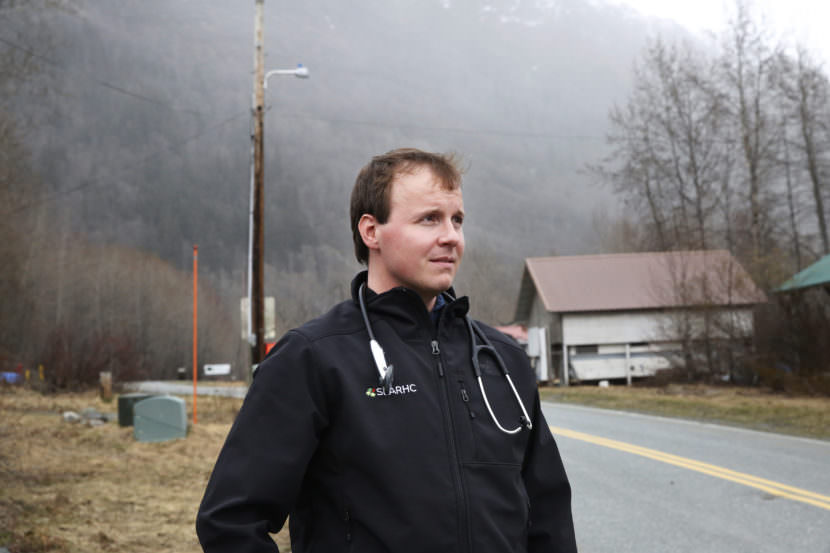
Dr. Adam McMahan has been practicing medicine in rural Alaska for three years. It’s the kind of intimate, full-spectrum family medicine the 34-year-old doctor loves. Elissa Nadworny/NPR
In rural Alaska, providing health care means overcoming a lot of hurdles.
Fickle weather that can leave patients stranded, for one.
Also: complicated geography. Many Alaskan villages have no roads connecting them with hospitals or specialists, so people depend on local clinics and a cadre of devoted primary care doctors.
I followed one young family physician, Dr. Adam McMahan, on his regular weekly visit to the clinic in the village of Klukwan.
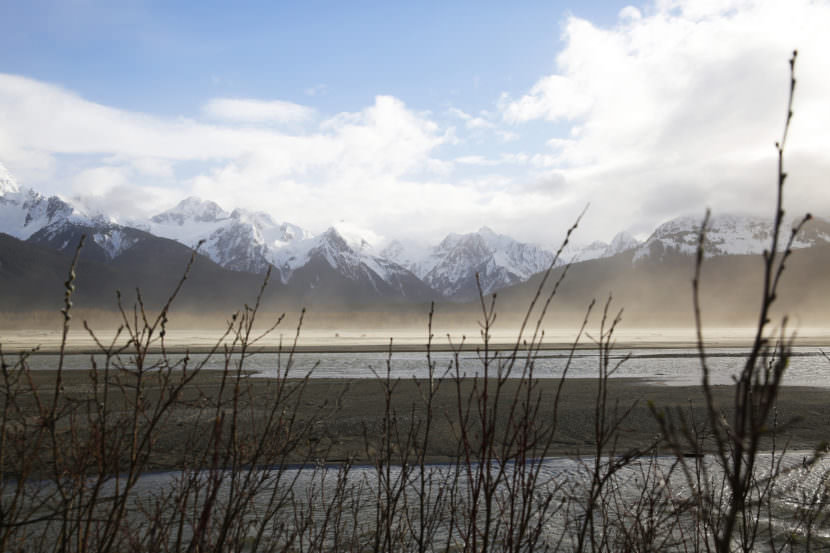
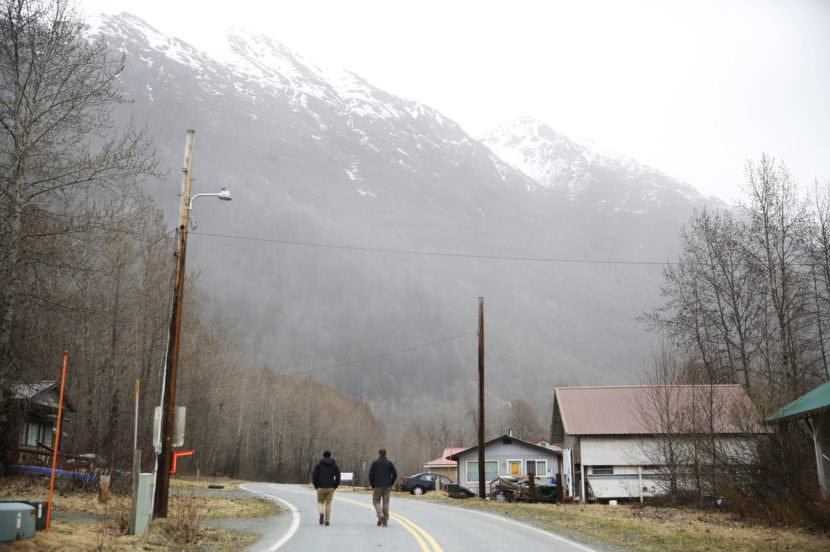
It’s a speck of a town alongside the Chilkat River in Southeast Alaska, framed by snowy mountains that loom in the distance.
The village of Klukwan is populated mostly by Alaska Natives of the Tlingit tribe, and has fewer than 100 residents. It sits along the Chilkat River in Southeast Alaska. Elissa Nadworny/NPR
The clinic staff drives up to Klukwan twice a week from the bigger town of Haines, 22 miles to the south.
On our drive, McMahan points out the clouds of dust blowing off sandbars along the river: “Likely today we’ll see somebody with a lung issue because of the sand coming off the river.”
Klukwan is populated mostly by Alaska Natives of the Tlingit tribe, fewer than 100 people in all, with a few hundred more people in the surrounding area.
Over the three years that he’s been practicing medicine in Klukwan, McMahan has come to know his patients well, and that becomes clear as he begins the day’s consultations.
With patient Lani Hotch, along with reviewing her cholesterol and blood sugar levels, McMahan remembers that she has a new dog. “What type of puppy did you get?” he asks her. (A yellow Lab.)
With fisherman Henry Chatoney, he wonders, “Hey, did you find a deckhand?”
And knowing that Everett Simons grows great potatoes and has been put on a low-starch diet for his diabetes, the doctor joshes, “How often are you sneaking a potato?”
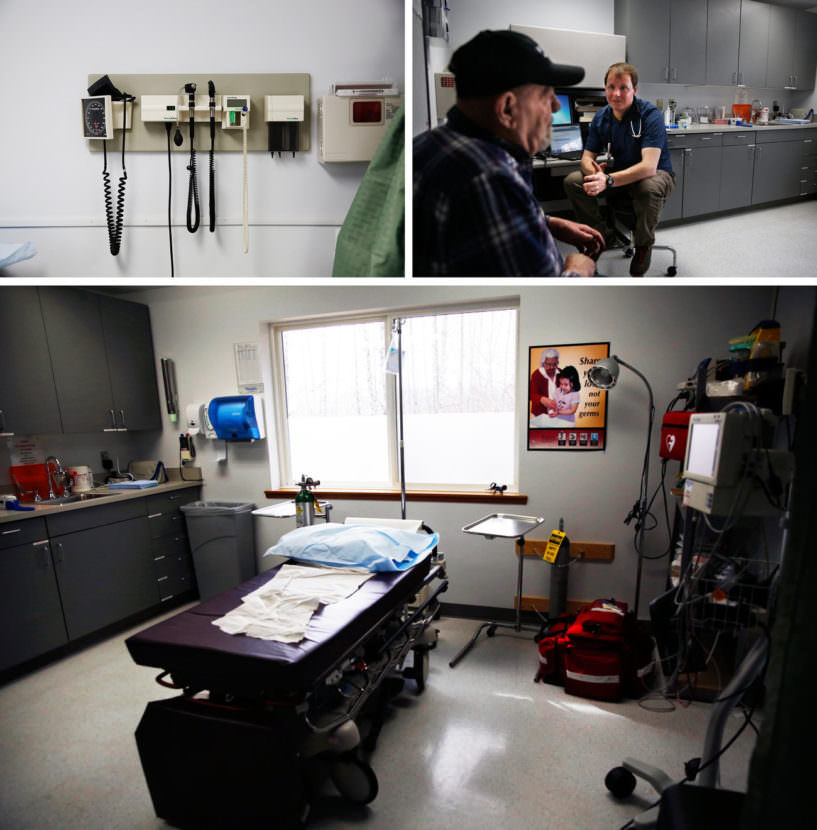
The Klukwan clinic is open on Tuesdays and Thursdays, and includes two exam rooms, a dental suite and a small lab for basic diagnostics. It’s part of the Southeast Alaska Regional Health Consortium, or SEARHC. Elissa Nadworny/NPR
This is the kind of intimate, full-spectrum family medicine the 34-year-old doctor loves.
“I know that Everett, he’s an amazing potato farmer,” he says. “I know that Henry is full of adventures and has fished Bristol Bay for longer than I’ve been alive. You get to know your patients as human.”
McMahan can trace his inspiration to become a physician back to a striking series of black-and-white photographs he saw in a magazine when he was a teenager. His grandfather was a pediatrician and had a 1948 issue of Life magazine on a shelf in his office. The photo essay by W. Eugene Smith, “Country Doctor,” shows a dedicated general practitioner tending to his patients in rural Colorado: making house calls, taping up broken ribs, stitching wounds.
“Those stills were really captivating,” McMahan says. “I was looking at those the other day and they’re not that different than what we do now here in Alaska.”
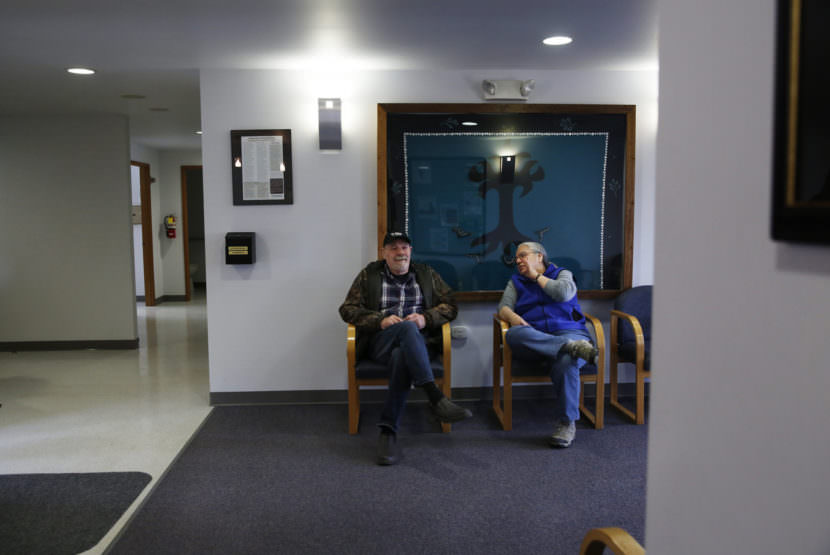
Everett Simons and Lani Hotch chat in the waiting room at the health clinic. Elissa Nadworny/NPR
The Klukwan clinic is open on Tuesdays and Thursdays. It’s part of the Southeast Alaska Regional Health Consortium, or SEARHC.
The clinic has two exam rooms, a dental suite and a small lab for basic diagnostics.
“A lot of it is doing the best we can in the moment with limited resources,” McMahan says. “I can’t send you down the street to go see a cardiologist. I can’t get a CT [scan] done in 10 minutes.”
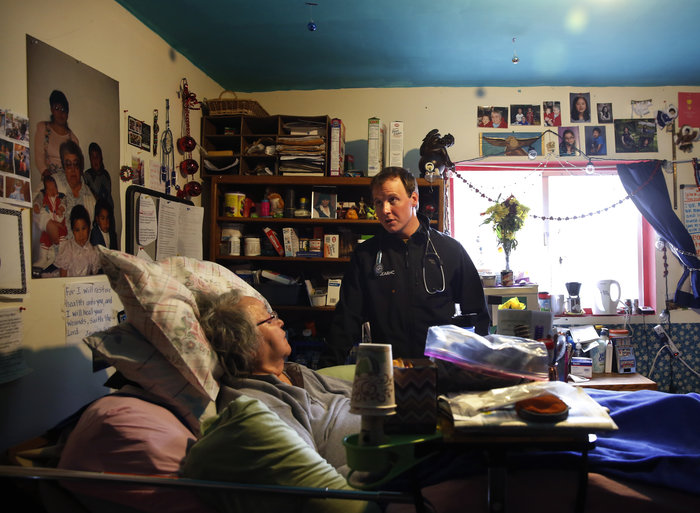
On the day we visit, McMahan is seeing mostly elderly patients, including one, a Tlingit elder named Evelyn Hotch, who is confined to her bed after a stroke.
So with stethoscope looped around his neck, McMahan walks down the road to pay her a house call.
Once we’re inside her home, the first thing Evelyn Hotch does is offer all of us a snack: dried red seaweed. “You came to an Indian house,” she says, “and this is what Indians like to eat!”
It’s only after McMahan has shared her seaweed and inquired about the grandchildren whose photos cover just about every inch of her walls that he turns to her medical issues, asking about pain and what supplies she needs. “We’ll see you next week, OK?” he says as he heads out.
McMahan pays a house call on a Tlingit elder named Evelyn Hotch, who is bedridden after a stroke. Elissa Nadworny/NPR
The goal with regular primary care like this is to keep people out of the emergency room. But in such a small, remote town, what happens in an emergency? There’s a volunteer ambulance squad that will drive up from Haines, about a half hour away.
Haines doesn’t have a hospital, though, so critically ill or injured patients might need to be medevacked by Coast Guard helicopter from Haines to Juneau.
“The vibratory effect of that, when your heart rate’s beating fast and you’ve got a really sick patient, hearing the helicopter, hearing the blades, is such a relief,” McMahan says.
Once a patient makes it to Juneau, he or she might still need to be flown by air ambulance to bigger hospitals in Anchorage or Seattle, hundreds of miles away.
“The Rubik’s Cube of resource coordination and transport is probably one of our biggest challenges,” McMahan says.
For people who don’t have health insurance, “it’s often cause for catastrophe, financially,” McMahan says.
McMahan and medical student Jesse Han head back to the clinic after a home visit. Elissa Nadworny/NPR
But, he adds, since Alaska expanded its Medicaid program in September 2015 under the Affordable Care Act, he is able to treat patients now who had gone for years without access to primary care.
More than 32,000 Alaskans have gained health coverage through Medicaid expansion.
McMahan worries about what might happen to his patients if the ACA is repealed and replaced by Congress: “I think if the Medicaid expansion is undercut, people will go without care,” he tells me. “They’re not going to be able to afford it.”
Even though the current health care debate is taking place thousands of miles away from his clinic, it hits home.
“It’s amazing how politics impact my day-to-day life when it comes to just getting somebody basic, basic care,” he says.
For now, though, Dr. McMahan turns to his immediate concerns: He has more patients to see, and more stories to hear.
The “Our Land” series is produced by Elissa Nadworny.
Copyright 2017 NPR. To see more, visit http://www.npr.org/.
Close
Update notification options
Subscribe to notifications
Subscribe
Get notifications about news related to the topics you care about. You can unsubscribe anytime.

9(MDEwMjQ0ODM1MDEzNDk4MTEzNjU3NTRhYg004))