Community

Southwest Alaska village staves off opening new landfill by recycling

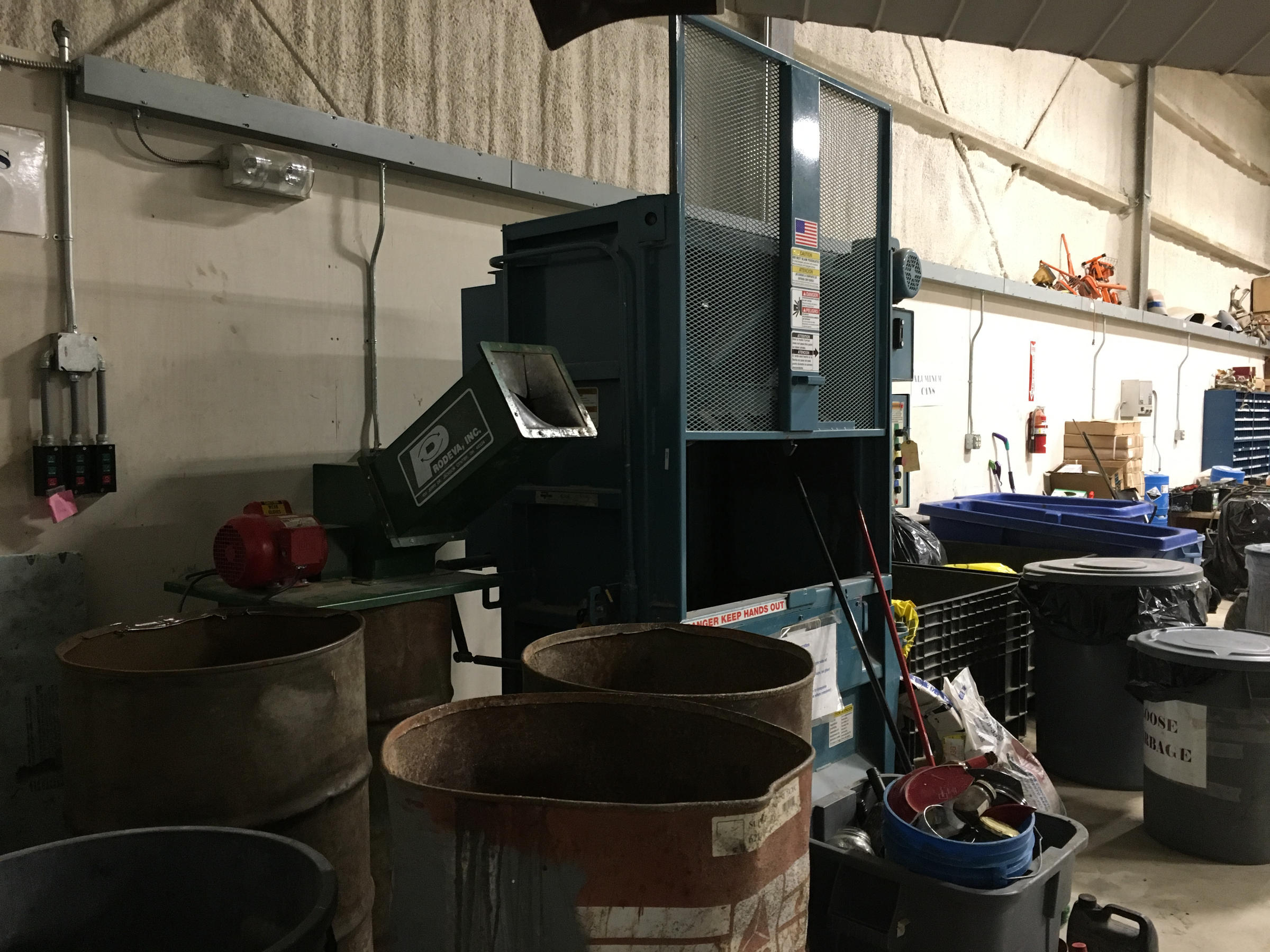
Igiugig's recycling center (Photo courtesy of Stacy Hill)
Igiugig’s recycling center (Photo courtesy of Stacy Hill/Indian General Assistance Program)

Rural Alaskan villages are not typically known for their recycling prowess.

For communities off the road system, it can be a hassle not only to ship products in, but also to deal with junk when it has served its purpose.

However, recycling is a priority for the village of Igiugig.

“Currently we recycle aluminum cans and plastics,” said Stacy Hill, Indian General Assistance Program coordinator and environmental director for the village. “We crush our glass, and we put it in our roads as a foundation. Any household waste as far as moist stuff, food, we compost it for the greenhouse. We have chickens that eat scraps.”

The funding that animates Igiugig’s recycling program comes from a variety of sources.

The village has been flying out cans with funding from Alaskans for Litter Prevention and Recycling since the non-profit started in the 1982.

It helped the organization pilot a program for flying out plastics in 2010.

Now Igiugig is the non-profit’s most recent recipient of the Outstanding Recycling Community award.

Last year the Lake and Peninsula Borough provided the village $45,000 in matched funds to back haul 55,000 pounds of scrap metal.

Hill estimates that the village still has 15,000 pounds of scrap metal remaining.

When area lodges bring guests in this summer, the village hopes to send out more of that metal on empty backhaul flights.

IGAP is another major source of funding for the village’s recycling program.

“That funds our landfill. That funds our interns. We have about five or six high school kids that work for IGAP during the year,” Hill said. “After school they help with the recycling and separating all this material,”

For this village of roughly 70 people, recycling is about more than being environmentally conscious. It’s also integral to keeping city costs down.

“It would really fill up our landfill if we were to bury all that material,” Hill said. “It’s about $3 million to $5 million to produce another landfill of our size, and nobody has $3 million to $5 million to replace what we’ve got now. So we might as well cherish what we have.”

Next on the agenda, Igiugig is turning its attention to the oil-based paints that they have stored in their hangar. This year they are applying for a hazardous waste grant that will allow them to dispose of the paint safely.

Juneau Assembly backs away from library cuts

The Juneau Public Library runs a number of children’s programs to promote literacy among young people. (Photo by Jacob Resneck/KTOO)

Juneau library’s youth and adult outreach programs are apparently no longer facing budget cuts. Fans of popular children’s and adult literacy programs were alarmed after the Assembly briefly put the programs under review in advance of adopting its final budget.

When a Juneau Assembly member requested library staff to detail the expense of youth and adult literacy activities for possible cuts, the city found it could save as much as $146,000 by slashing programs and reducing the hours of six librarians.

That alarmed the Friends of the Juneau Library, a nonprofit whose fundraising pays for the program materials.

“We provide pretty much almost 100 percent of the programming budget as a gift to the library annually to the tune of about $40,000,” said Jonas Lamb, president of 250-member nonprofit. “So to see the personnel piece threatened in terms of the the devoted and trained staff that deliver these pretty essential programs to youth and community members, we were called to action to say the least.”

And take action it did. At least 36 emails and letters arrived at city hall opposing the cuts in advance of a scheduled finance committee meeting.

“We were going to have signs indicating support whether they were the common summer reader superstar yard signs or just some stickers indicating that they were a ‘Friend of the Juneau Library,'” he said.

But the meeting never happened.

“We didn’t have a quorum to have our discussions so we had to pull this one off the agenda,” explained Finance Committee Chairman Jesse Kiehl who said he opposed the cuts. “I was very happy to see the committee process end without any cuts to those library outreach services. Reading for kids is really important and I wouldn’t want to see that change.”

The review of library programs came at the request of Assemblywoman Mary Becker who said she received a lot of letters of concern.

“I do appreciate receiving responses from the public on this issue,” she said.

The literacy programs run the gamut from Storytime where small groups of young children are read to, to traveling librarians that visit seniors with limited mobility and youth offenders housed in a secure facility.

“Our outreach is really all about getting out into the community, specifically the parts of the community that can’t get to us,” Library Director Robert Barr said.

By Wednesday, Becker said she became satisfied that the programs are worth it.

“I wanted to be sure that all of the things that are being credited to being done are actually – most of them are being done,” she said. “And I’m finding that they are which gives me a lot of comfort in what we are doing to support the libraries, so I am not planning on bringing it back.”

There still will be tweaks in the program next year. There’s an alarming level of illiteracy among Juneau’s homeless population.

“There are a lot of people at the Glory Hole who cannot read or write – at any level — it’s very sad,” said Mariya Lovishchuk who runs the Glory Hole downtown shelter.

But the library is ending its practice of sending librarians to the downtown shelter. The program had been running for four years but lately hadn’t been productive.

“It was a mutual decision to not have the librarians come to the Glory Hole anymore but the folks from the Glory Hole will still be able to go to the library – as they do a lot,” she said.

Library resources will be redirected to increasing visits to seniors. Now that the programs appear safe, Lamb said he’s glad the Assembly recognizes the library’s support.

“I get the impression that based on the amount of correspondence that went out from our membership to the Assembly members that perhaps they thought this was a bad idea to cut so late in the budget,” he said.

The budget isn’t a done deal. At next week’s June 5 meeting the Assembly will hold a public hearing and could still make cuts at the eleventh hour.

Finance Committee Chairman Jesse Kiehl said he hopes there won’t be any surprises.

“But I can never predict who will offer what amendments when an ordinance gets in front of the full Assembly,” he said.

As it stands the city envisions closing no facilities and no layoffs; it will lose a community service officer and a city planner through attrition. And city departments are projecting about $400,000 in savings through belt tightening.

Brown bear shot on Douglas Island — the first documented kill in decades

Update | 12:36 p.m. Wednesday

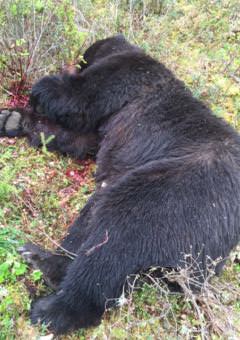
A homeowner shot and killed a brown bear on Douglas Island last week. It’s the first brown bear documented on the island in more than 40 years.

Sightings of brown bears are often reported but there’s been no proof – until now, said Ryan Scott, regional conservation supervisor for Alaska Department of Fish & Game.

An adult brown bear weighing at least 700 pounds was shot and killed by a homeowner near North Douglas Highway on May 25. Authorities ruled the killing justified in defense of life and property. (Photo courtesy of Alaska Wildlife Troopers)

“Over the years we’ve had reports of bears swimming around, being sighted in the water adjacent to Douglas and some other anecdotal information,” Scott said Wednesday. “Folks see a bear and they believe it is a brown bear, but we’ve never been able to confirm it.”

Authorities didn’t name the man who reported that he heard a racket outside his home about 6:30 a.m. May 25 near mile 5 of North Douglas Highway.

“The homeowner went out to scare the bear away, which is a normal thing for Juneau,” he said. “Instead of responding like we would normally expect, running away, essentially, the bear actually turned to face him. The homeowner felt like the bear was imminently going to come to him and he dispatched the animal.”

The homeowner reported the shooting shortly afterward.

Alaska Wildlife Troopers investigated the killing of the male bear, which reportedly weighed more than 700 pounds. The shooting was ruled justified.

“The wildlife troopers did visit the site and talked to the homeowner and looked around a little bit and it looked like the home was well-kept,” Scott said. “There were no noticeable attractants or things like that. It’s a little bit of a head-scratcher as to why the bear was as agitated as it was.”

Jacob Resneck, KTOO


Original post | 11:38 a.m. Tuesday

First confirmed brown bear on Douglas Island in decades killed

The first confirmed brown bear on Douglas Island in decades was killed last week in what state officials say was reported as a shooting in defense of life or property.

Tom Schumacher, a Douglas-based Fish and Game management coordinator, said the adult boar was killed at a residence near Mile 5 of the North Douglas Highway, across Gastineau Channel from Juneau. The homeowner, a commercial fisherman, was awakened by “a bear tearing up things behind his house,” according to Schumacher.

“He went outside with a rifle and intended to just yell at the bear,” Schumacher said. “When he did that, the bear looked at him, so he thought it was going to charge him.”

Alaska Wildlife Troopers visited the scene of the shooting afterward. Troopers spokeswoman Megan Peters said in an email that the bear was “black-ish” in color and the investigation indicated the shooting was appropriate.

“At this point, it is highly unlikely that a citation is warranted,” Peters wrote.

Schumacher said Douglas Island’s bear population is “not numerous.” Although visitors to the island’s west side, facing away from Juneau, have reported seeing brown bears, Schumacher said they’ve been difficult to identify in photos.

“We haven’t had a brown bear documented on Douglas Island since 1974,” Schumacher said.

That bear was also killed, by a hunter near Fish Creek, slightly farther north along the highway than Thursday’s shooting.

The hide and skull of the bear killed last week have been submitted to Fish and Game, Schumacher said, in accordance with state requirements for any defensive bear death. The remains are undergoing testing to be compared with other samples at Fish and Game in an attempt to determine whether the animal came from the mainland or nearby Admiralty Island – a 3-mile swim the bears can readily make.

“The homeowner told us he keeps a very clean yard, so why the bear was there and acting the way it was remains a mystery,” Schumacher said. “We don’t know where it came from or how long it’s been here.”

Schumacher said island-bound brown bear populations, including more than 1,000 estimated on Admiralty Island, are generally more abundant than mainland bears in Southeast Alaska. They also tend to be genetically distinct due to their isolation.

“New bears don’t go there and bears from there don’t generally leave,” Schumacher said. “They have a lot of salmon streams on them – there’s a lot to eat, so those islands tend to be particularly productive.”

Editor’s note: This story has been republished with permission from the Alaska Dispatch News.

Chris Klint, Alaska Dispatch News

Juneau man shares a painful memory from driving trucks in Iraq

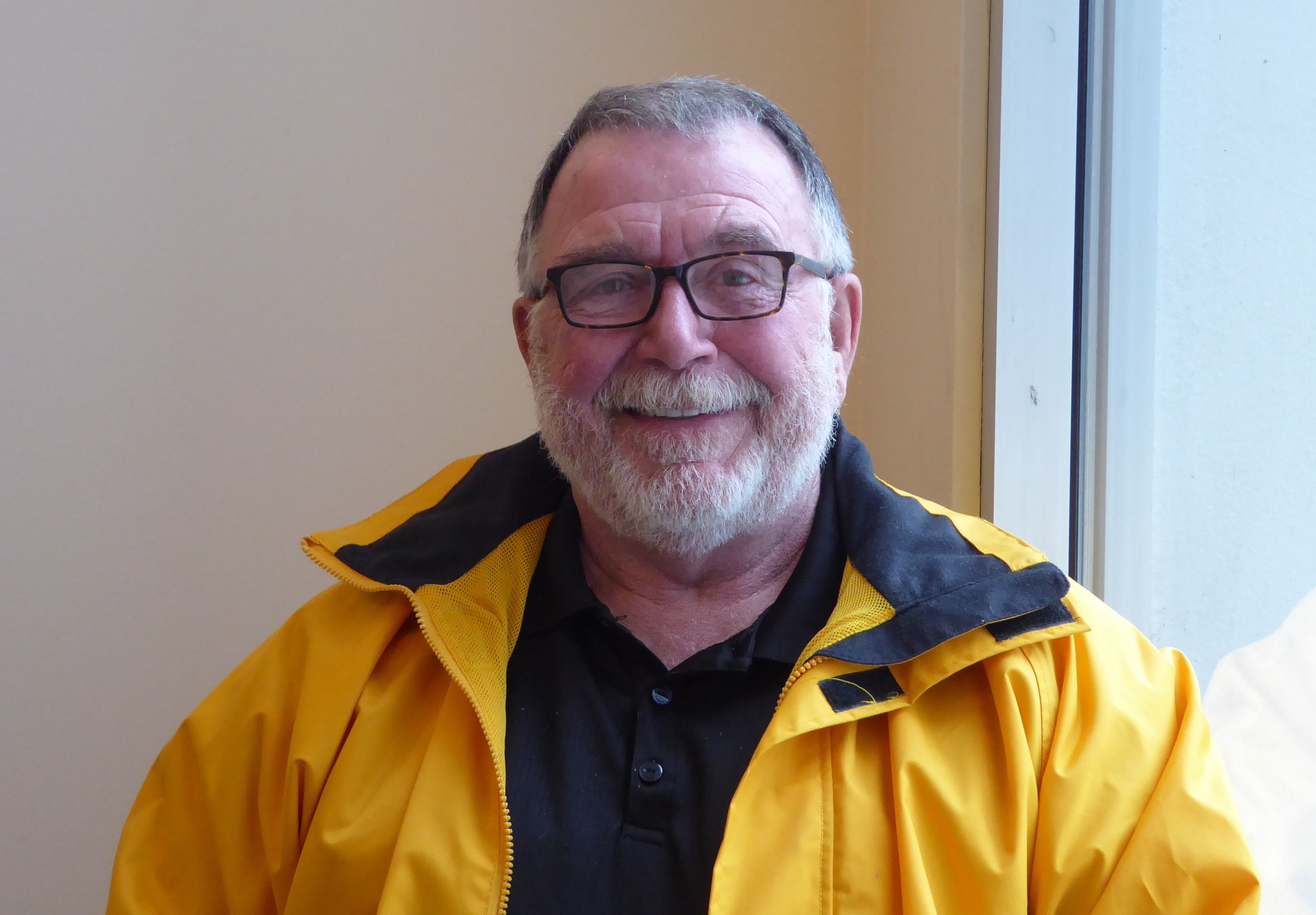
Richard Marshall at KTOO on Friday, May 19, 2017.
Richard Marshall at KTOO on Friday, May 19. (Photo by Quinton Chandler/KTOO)

Richard Marshall is a 66-year-old Vietnam veteran. He’s a Juneau resident and was a civilian contractor for the U.S. military in Iraq. He signed up to drive fuel trucks through combat zones because he wanted to help.

During his first year in Iraq, Marshall drove 96 combat missions. In 2004 on Good Friday, he narrowly avoided a deadly attack. I asked him to share his memory of that day and he explained how it changed his life. This interview has been edited for length and clarity.


“Everyday we would line up and they would hand out keys and according to which key to which truck you got, you would be assigned a convoy commander and you’d form up into a group and leave.

“I was living in a tent with a bunch of guys that I got very close to. So when we would go up to sort of hang around the place where they handed out the keys, we’d routinely walk up together. That morning, they’d awakened us very early in the morning. All of the roads had been shut down for a couple of days. The threat was so high, the danger was so bad, the combat was so furious that they wouldn’t let anybody leave any of the camp. We were (sitting) around waiting for them to line us up and I got up to go get a bottle of water. As I was getting a bottle of water from an area … they called for us to come line up. So we did and it just happened that I ended up a couple of spaces ahead of this group of guys that was behind me. That couple of spaces put me as the last man in the first convoy that day.

“It was just horrible, we got shot at from the minute we left the gate and we got beat up and shot and blown up until we made it to Taji which is halfway to Baghdad. Finally got out of Taji and got south into Baghdad and we were able to supply enough fuel to keep the medevac birds going – that’s about all we could do at that point.

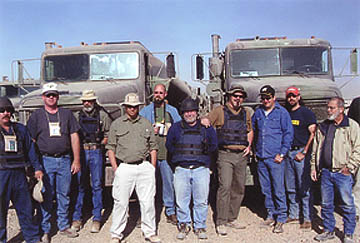
Marshall and his fellow drivers waiting to settle in for the night at Al Taqaddum Air Base in West Central Iraq after unloading a shipment of fuel.
Marshall, middle, and his fellow drivers wait to settle in for the night at Al Taqaddum Air Base in West Central Iraq after unloading a fuel shipment in 2004. (Photo courtesy Richard Marshall)

“The following morning, they allowed that second group to leave. … The group of guys that I lived with were all in that convoy. That was the group that got hit with anti-aircraft guns. They pretty well wiped out the convoy. The convoy commander lost an eye; I think we lost seven — there were seven drivers killed, there were several injured. Three or four soldiers killed that day. Basically everybody … all my friends were killed that day.

“So the fickleness is that even though I had it tough getting out of the gate that day and we had a tough time, had it not been for that bottle of water, that silly bottle of water, I would’ve been with them. So … that’s part of the reason why I stayed.”

Now, do you still feel survivor’s guilt?

“Oh sure, yeah, I don’t think — I don’t think that ever goes away. My response, my way of dealing with it, is to try and feel — feel very lucky every day. It’s tough to talk about, but in truth, I just don’t feel like I have the — I don’t have the right to feel bad about anything.

“I’m sorry. In other words, now when I’m working, when I’m doing anything — I mean my gosh, any of those guys — on my worst, worst day, every one of them would love to have that day. I’m just blessed, that’s all. I’m very blessed.”


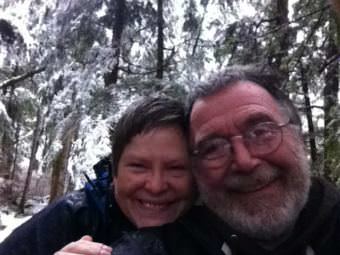
Richard Marshall and his wife Teresa on Fish Creek Trail on Douglas in 2015. (Photo courtesy Richard Marshall)

Richard Marshall left Iraq at the end of 2007 and returned in 2010. After a short break, he moved on to work in Afghanistan for two and a half years.

Today he is semi-retired and works for Juneau Docks and Harbors in his spare time. He and his wife Teresa just celebrated their 32nd wedding anniversary and plan to build a retirement home in Haines. Marshall said his biggest regret is spending so many years away from his wife.

High school seniors take spotlight in Juneau elementary schools

Juneau-Douglas seniors walk through Harborview Elementary School on Friday.
Juneau-Douglas seniors walk through Harborview Elementary School on Friday. (Photo courtesy Juneau School District)

The Juneau-Douglas High School seniors are eating a barbecue lunch after visiting Gastineau and Harborview Elementary schools this morning. The seniors donned their caps and gowns and took a victory lap through the schools. The walkthroughs are supposed to inspire the school district’s younger kids to graduate.

Rena Nauer and Sierra Ezrre were eating lunch together but this morning they paraded through different schools. Nauer visited the kids at Gastineau.

“They (were) excited and I went to school there so it was kind of cool getting to do it as a senior and going back,” Nauer said.

She thinks the walk was a good idea because it was fun and it might have a positive impact on the younger kids.

“It’s probably, like, cool getting to see the older kids, like, realizing that’s where you’re going to want to be when you’re older and be, like, ‘Oh my God, that’s going to be me soon,’” she said. “So maybe they’re just, like, looking forward to it.”

Rena Nauer, left, and Sierra Ezree in the Juneau-Douglas High School Commons on Friday.
Rena Nauer, left, and Sierra Ezzre in the Juneau-Douglas High School Commons on Friday. Photo by Quinton Chandler/KTOO)

Sierra Ezzre visited Harborview – also her old school. She agrees with Nauer because she admired older kids when she was in elementary school.

“Yeah, I definitely looked up to them. Like, I thought they were so cool when I was little,” Ezzre said. “So, for us to go do that, I think that’s really important to them because I feel like quite a few of them look up to us.”

The girls just cut to the heart of the reason for this new tradition. JDHS Assistant Principal Kim McNamara said Juneau educators plan to keep doing this every year to make sure the younger kids remember what graduation looks like.

“The Gastineau kids had their yearbooks ready, they were asking all of the seniors to sign their yearbooks,” McNamara said. “The Harborview kids were equally enthusiastic, lining the halls, giving high-fives, cheering. It was really inspiring.”

Juneau schools first considered doing this last year after they learned other school districts were doing it in the Lower 48. They didn’t get a chance to do it in Juneau until now.

Juneau-Douglas seniors walk to Harborview Elementary School on Friday, May 26, 2017.
Juneau-Douglas Assistant Principal Kim McNamara leads the school’s seniors to Harborview Elementary School on Friday. (Photo courtesy Juneau School District)

McNamara said these walkthroughs were also meaningful for the seniors.

“Especially the ones that went back to their elementary school,” she said. “It was really meaningful for them to walk through the halls, think back to their experiences as a younger child, and see some of their teachers and be able to connect with them again.”

She said it was a chance for the seniors to reflect on where they came from as they take their final steps out of high school into their next chapter.

The Juneau-Douglas seniors weren’t the only ones who held walkthroughs. Thunder Mountain High School seniors held a similar one at Riverbend Elementary School on Friday.

JDHS, TMHS and Yaakoosge Daakahidi are all holding their graduation ceremonies Sunday.

Juneau Assembly forms task force on homelessness

Facing criticism to its handling of the community’s growing homelessness population, the Juneau Assembly has formed a task force on homelessness.

Juneau has the third largest homeless population in the state – after Anchorage and Fairbanks.

After fielding complaints from merchants, the Assembly banned sleeping overnight on private property in the downtown core. But many campers have since moved into downtown parks.

I don’t find myself being able to tell you that we are organized to proactively make decisions,” City Manager Rorie Watt told the Assembly on Monday. “I think we need to figure out how not to be in react mode.

He pointed to a Monday letter from the Juneau Coalition on Housing and Homelessness that questioned the city’s wisdom of ordering police to crackdown on sleepers in the city’s Marine Park. The coalition’s letter closed with an appeal to work closer with the city.

Assembly member Maria Gladziszewski agreed that the status quo isn’t working.

“We are, exactly as the manager said, doing something and then people get mad and then we do something else and then other people get mad,” she said.

The committee moved unanimously to form a three-member taskforce with Gladziszewski and fellow Assembly members Norton Gregory and Debbie White.

The task force will work with the city manager, housing officer and members of the Juneau Coalition on Housing and Homelessness and report back its findings at a future meeting.

Site notifications
Update notification options
Subscribe to notifications