Community

Native groups install totem pole at Gastineau Elementary, lost cemetery

The T’aaku Kwáan of Douglas Island raised a totem pole in front of an elementary school Saturday to mark the site of a disturbed graveyard. The pole symbolizes the pain of historical trauma and a need to heal.

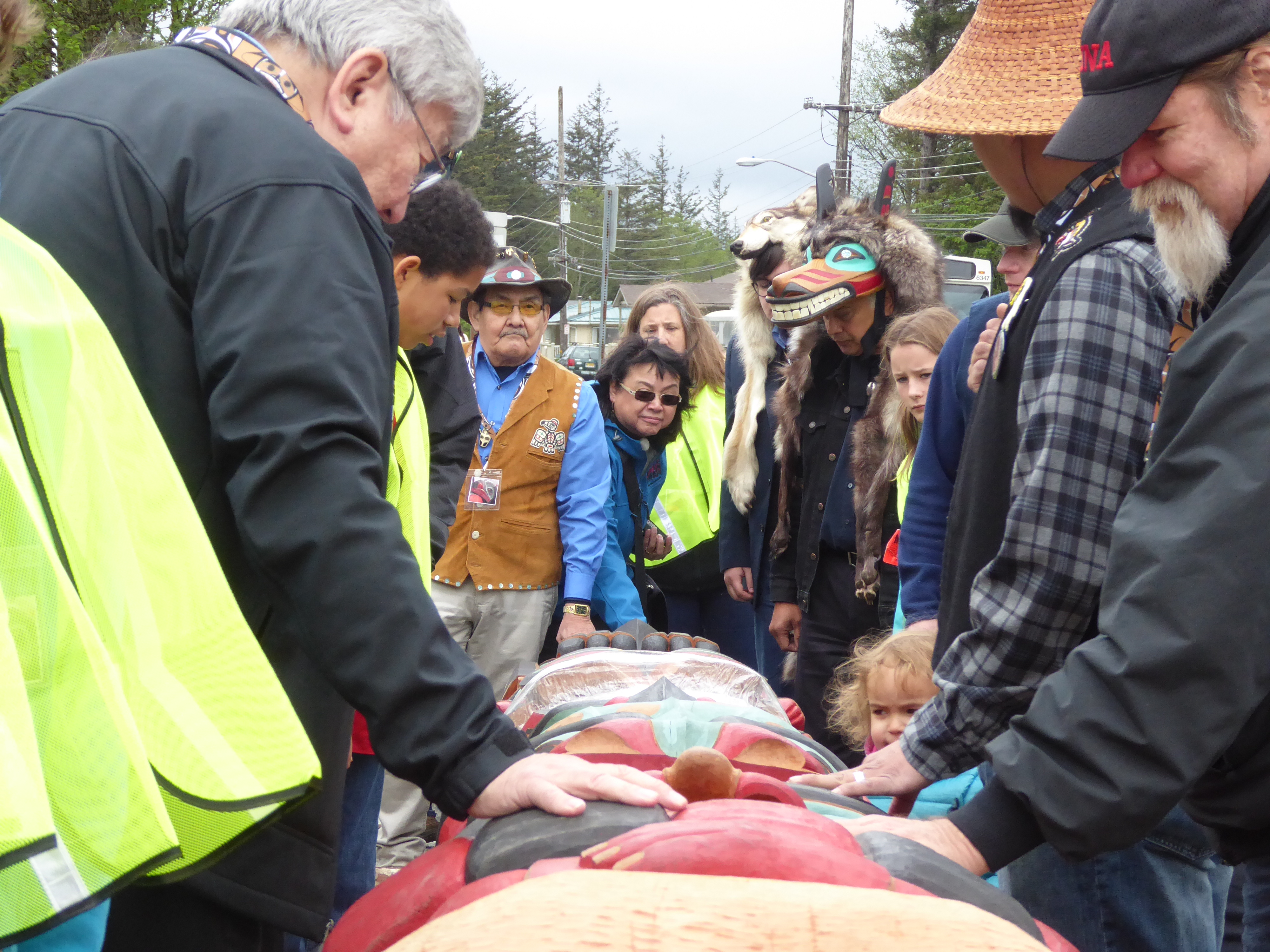
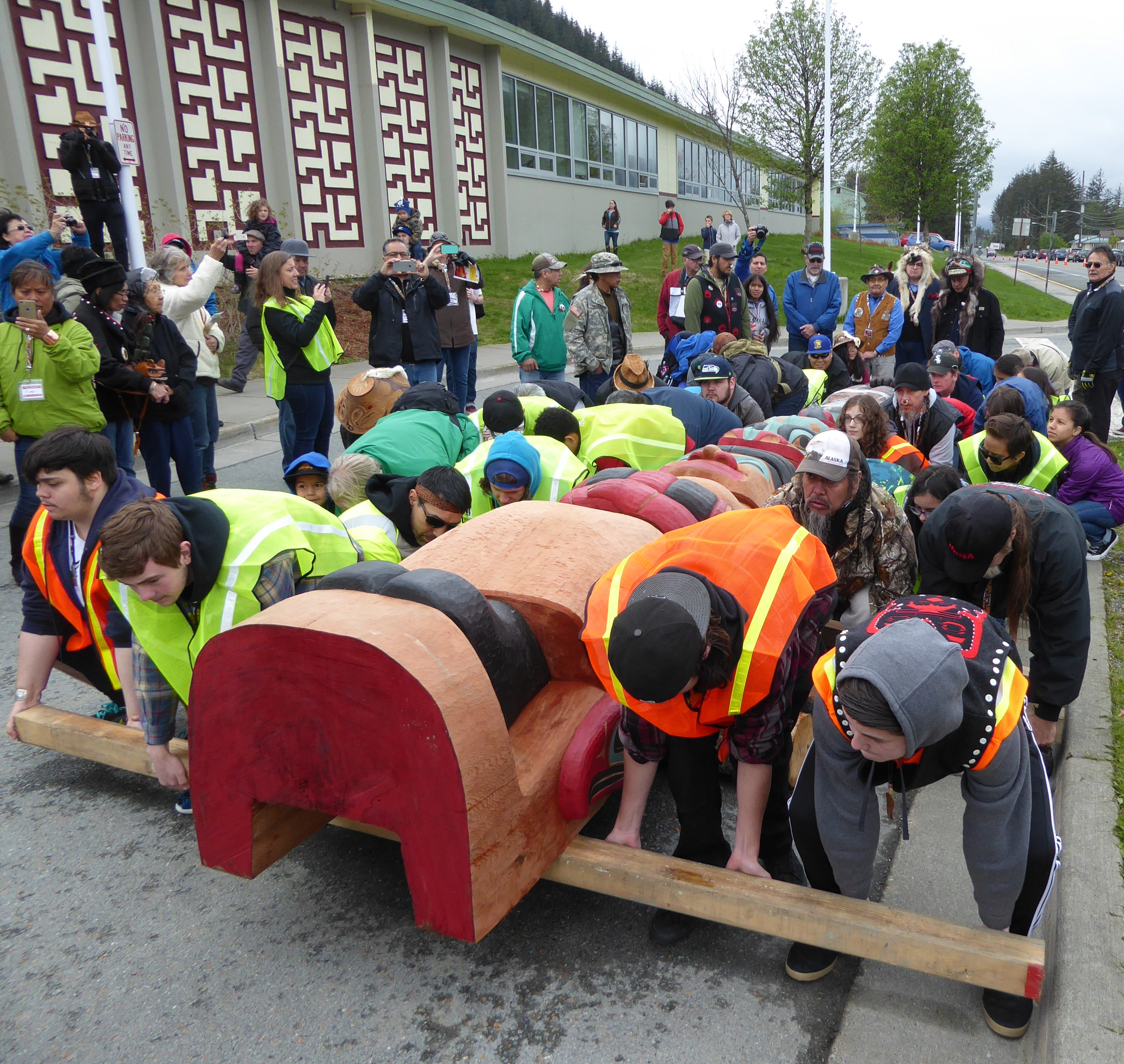
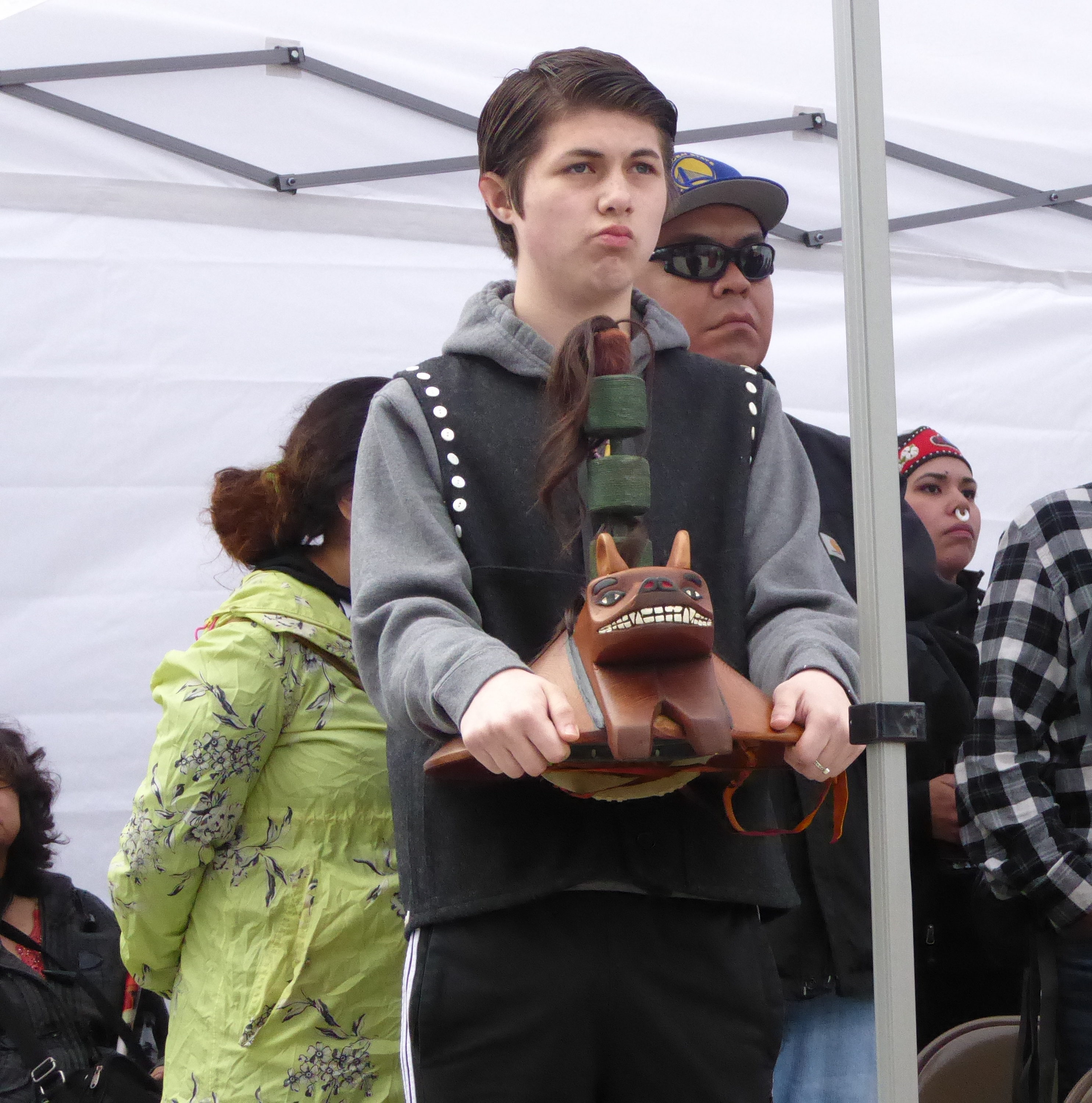
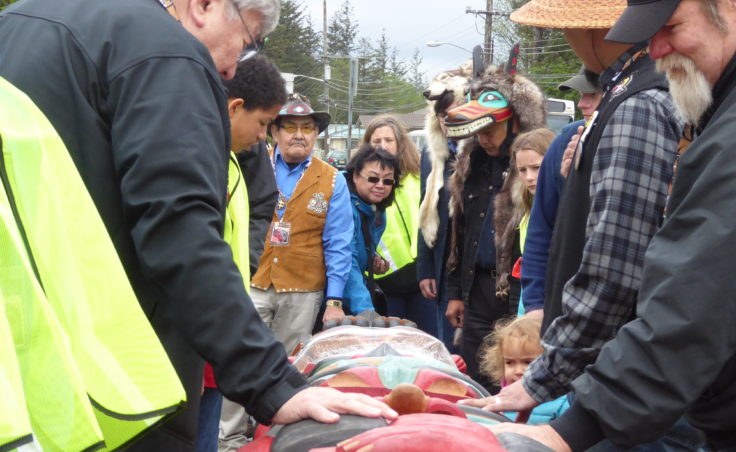
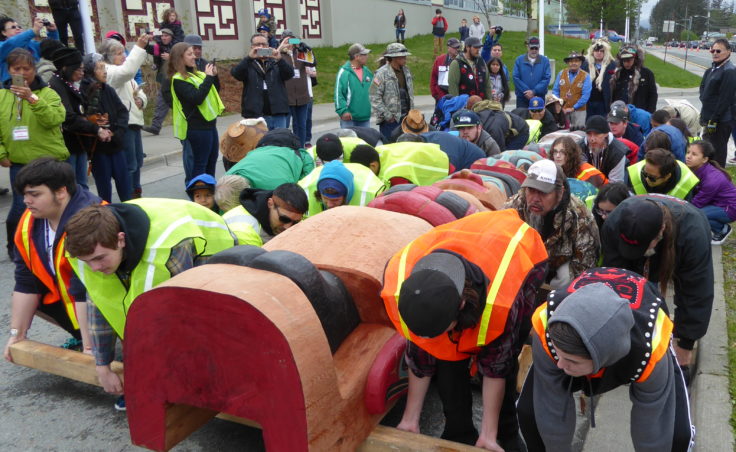
A couple dozen volunteers prepared to bend their knees and backs to grab wooden beams underneath a 26-foot, solid wood, Raven totem pole laying on its back. Like pallbearers, they lifted the pole and slowly carried it toward a crane waiting to lift and place it on a metal base sitting in front of Gastineau Elementary School.

Event organizers warned them to call for help if they felt like the weight was too much.

“For those of you on the sides, we’re going to need you to switch out if somebody says help. We don’t want anybody getting hurt trying to move this,” one man ordered.

Sixty-one years ago, Gastineau Elementary School was built on top of a graveyard for the Tlingit T’aaku Kwáan.

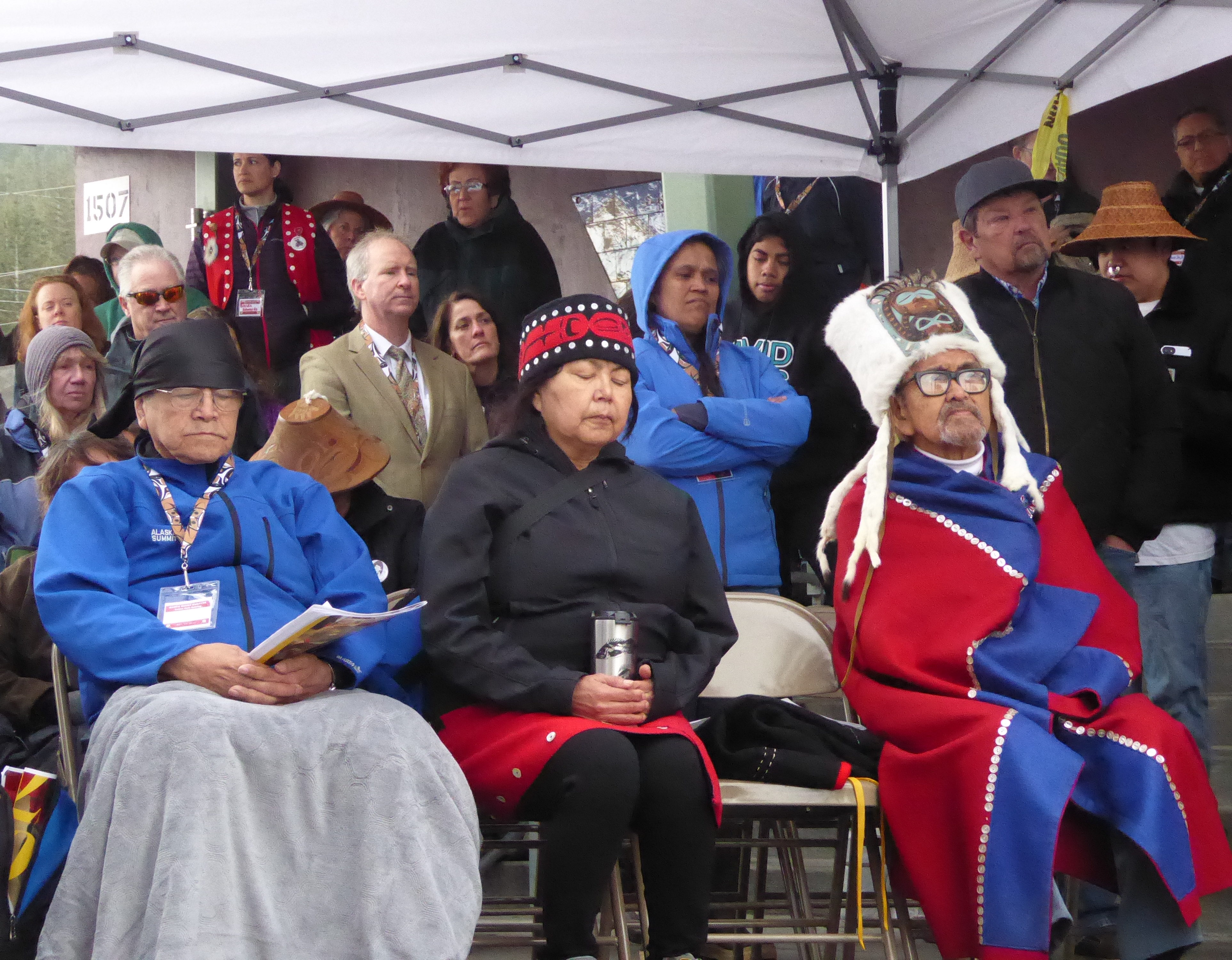
Goldbelt Heritage Foundation, the Douglas Indian Association and the Juneau School District organized the totem pole raising and a ceremony to reflect on “social injustices” inflicted on the T’aaku Kwáan.
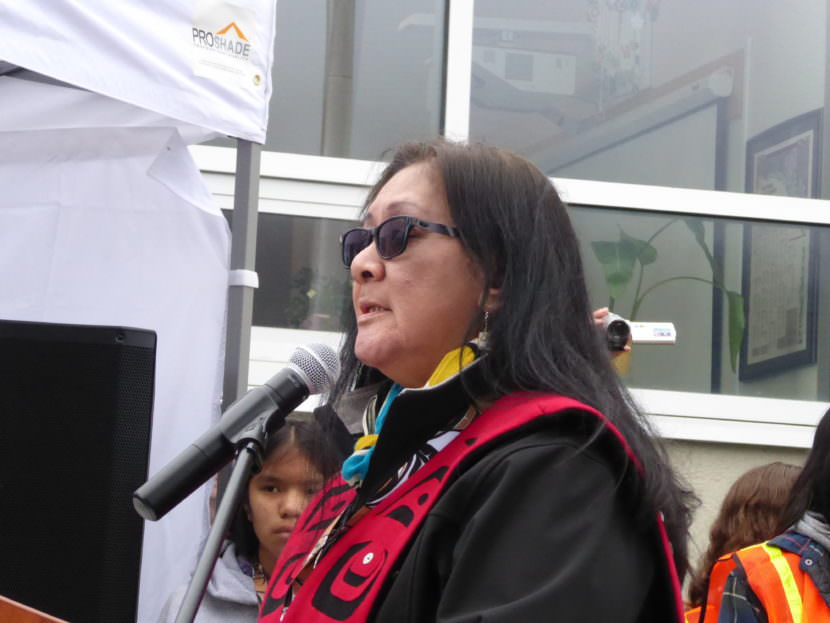
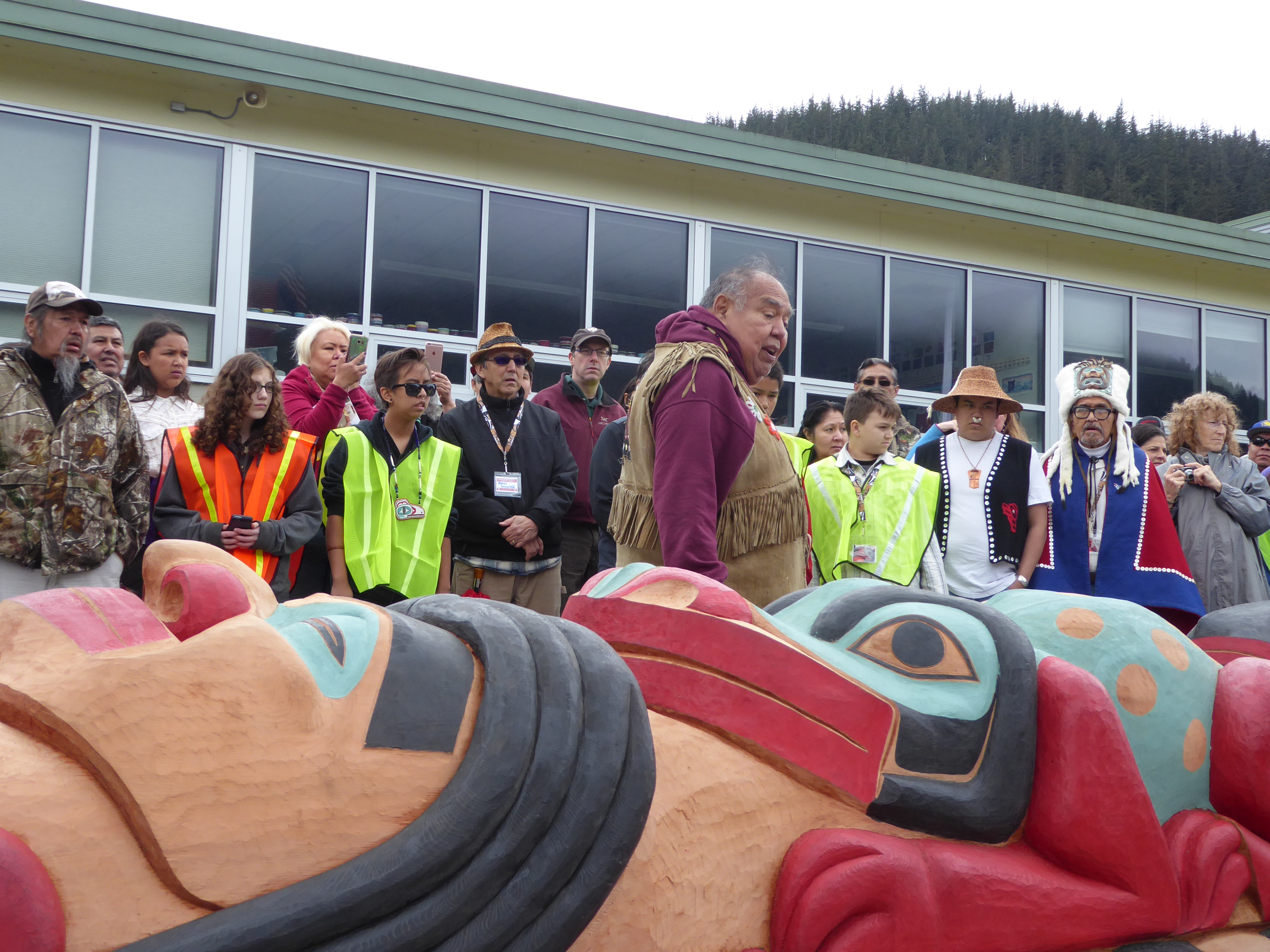
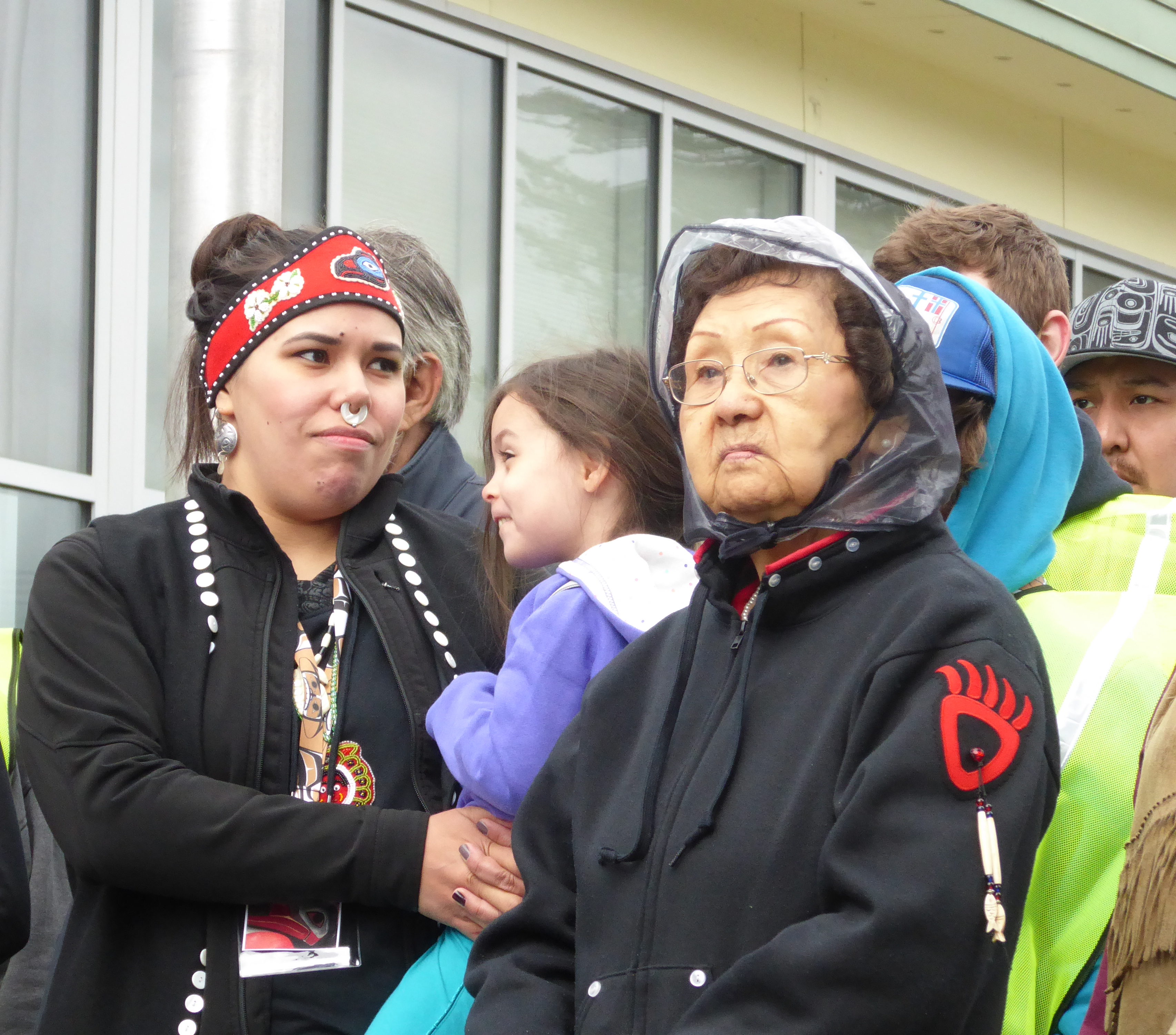
Andrea Cadiente -- Laiti speaks at the totem pole raising ceremony on Saturday.
Andrea Cadiente-Laiti speaks at the totem pole raising ceremony on Saturday. (Photo by Quinton Chandler/KTOO)

Andrea Cadiente-Laiti was the keynote speaker at the ceremony. She sits on the Goldbelt Heritage Foundation’s board and she’s also the tribal administrator for the Douglas Indian Association.

She said construction workers accidentally unearthed three burial sites on the school property in 2012. Five people were in the graves.

“One was a young woman and it was determined by the archaeologist that she died in childbirth,” Cadiente-Laiti said. “So, that leads us to assume that the remains were not just that of the young mom, but that of her infant.”

She said another man was buried with what might have been his prized gun collection.

Cadiente-Laiti likened building Gastineau Elementary over the cemetery to someone building “an office building over Evergreen Cemetery,” a 9-acre memorial in Juneau that the city estimates over 8,000 Juneau residents have been buried in.

Cadiente-Laiti and other speakers also recalled the impacts of the city of Douglas’ intentional burning of Douglas Indian Village in 1962, decisions to build roads over graveyards, property loss, the loss of fishing rights and the suppression of the Tlingit language.

Cadiente-Laiti said those actions had powerful effects that were passed down to today’s generations.

“We don’t necessarily feel it, or see it, or taste it, but somehow through our parents we know it’s there. We see their sadness,” Cadiente-Laiti said.
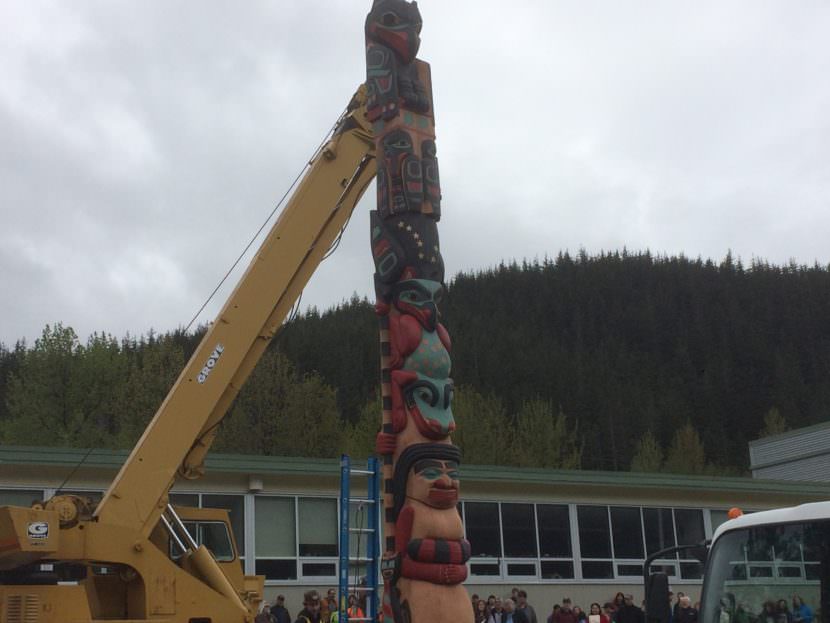
The Raven totem pole after being placed on its base on Saturday.
The Raven totem pole after being placed on its base on Saturday. (Photo by Quinton Chandler/KTOO)

It is hoped that raising the Raven totem pole will pay respect to the grievances of the past, restore the T’aaku Kwáan’s ancestral connection to the land, and signal their desire to heal and move forward, culture intact.

The organizers plan to raise a second totem pole at Savikko Park next spring. The second pole will recognize the Yanyeidì clan and the 1962 burning of Douglas Indian Village.

Correction: A previous version of this story misstated that five construction workers unearthed the burial sites discovered in 2012. The orthography of “T’aaku Kwáan” has also been corrected. 
Photos: Wreath-laying memorial honors fallen Juneau police officers

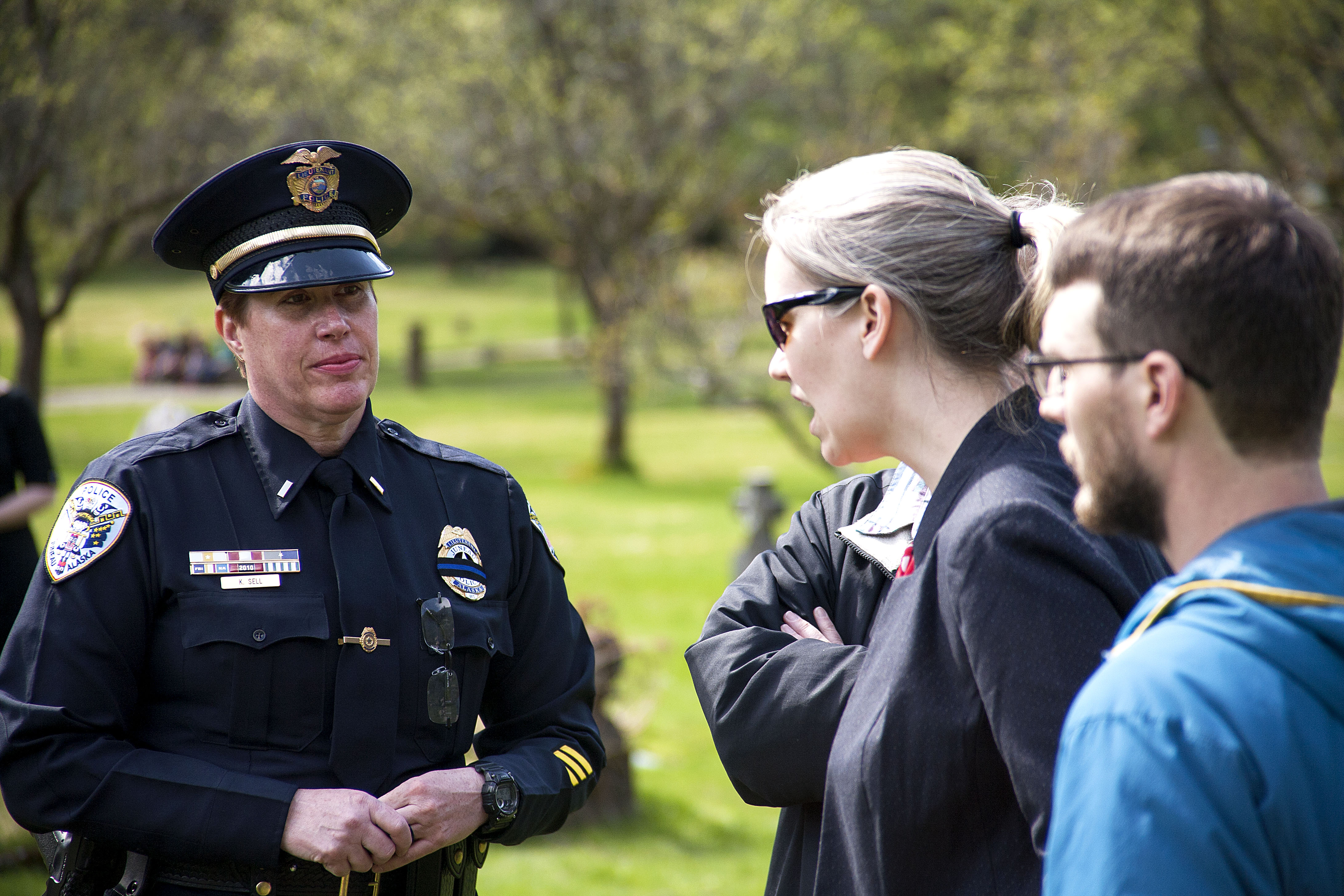
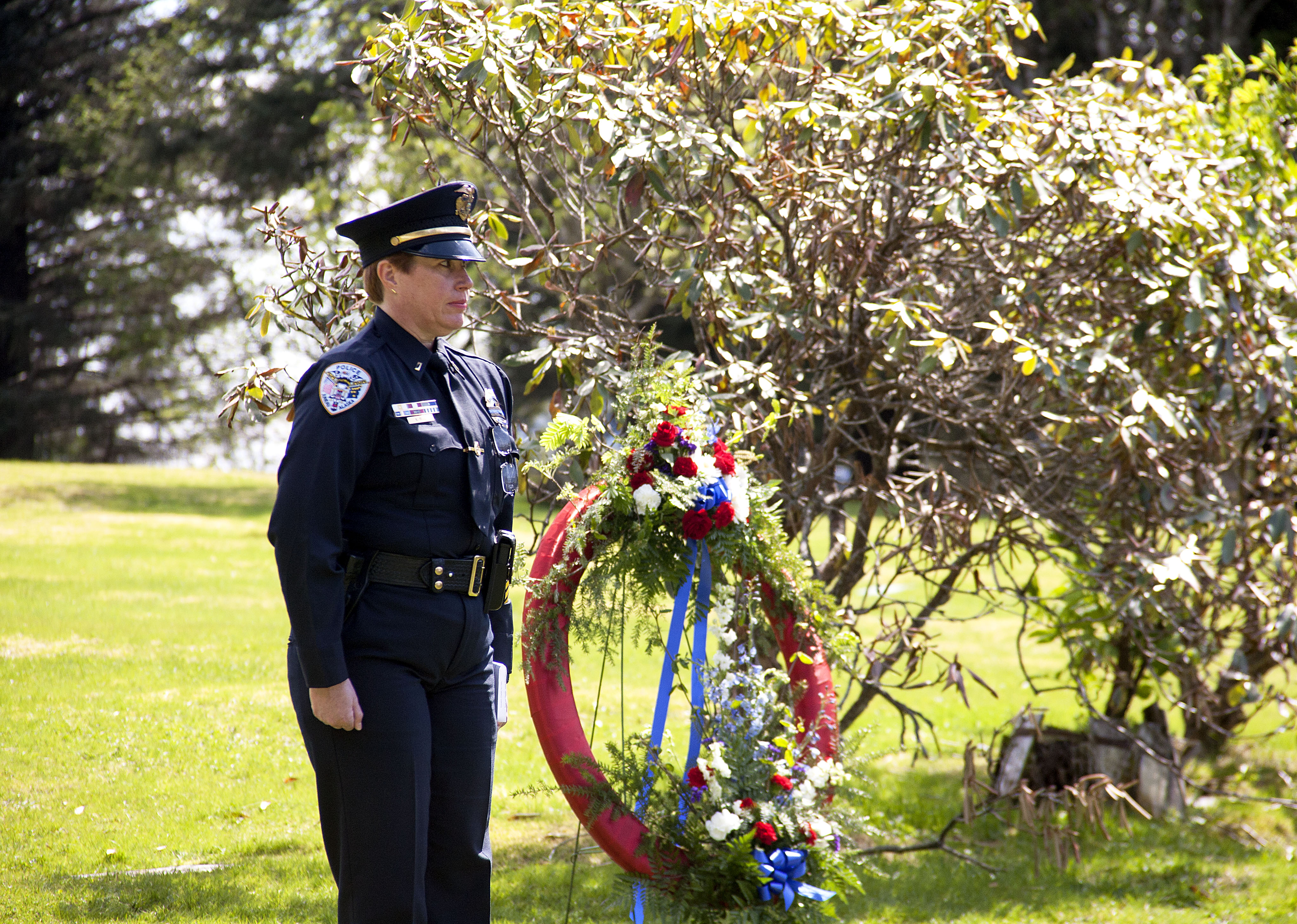
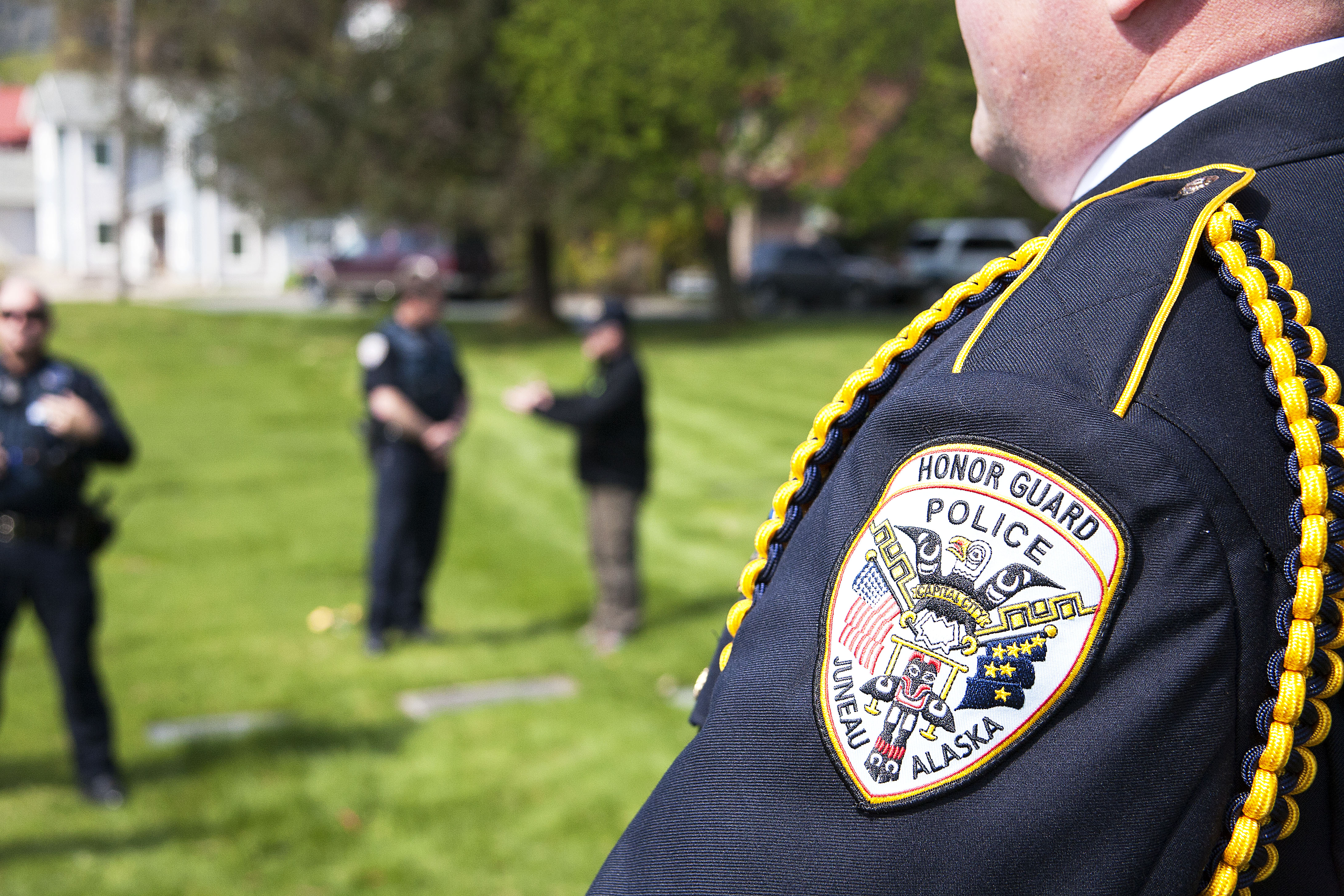
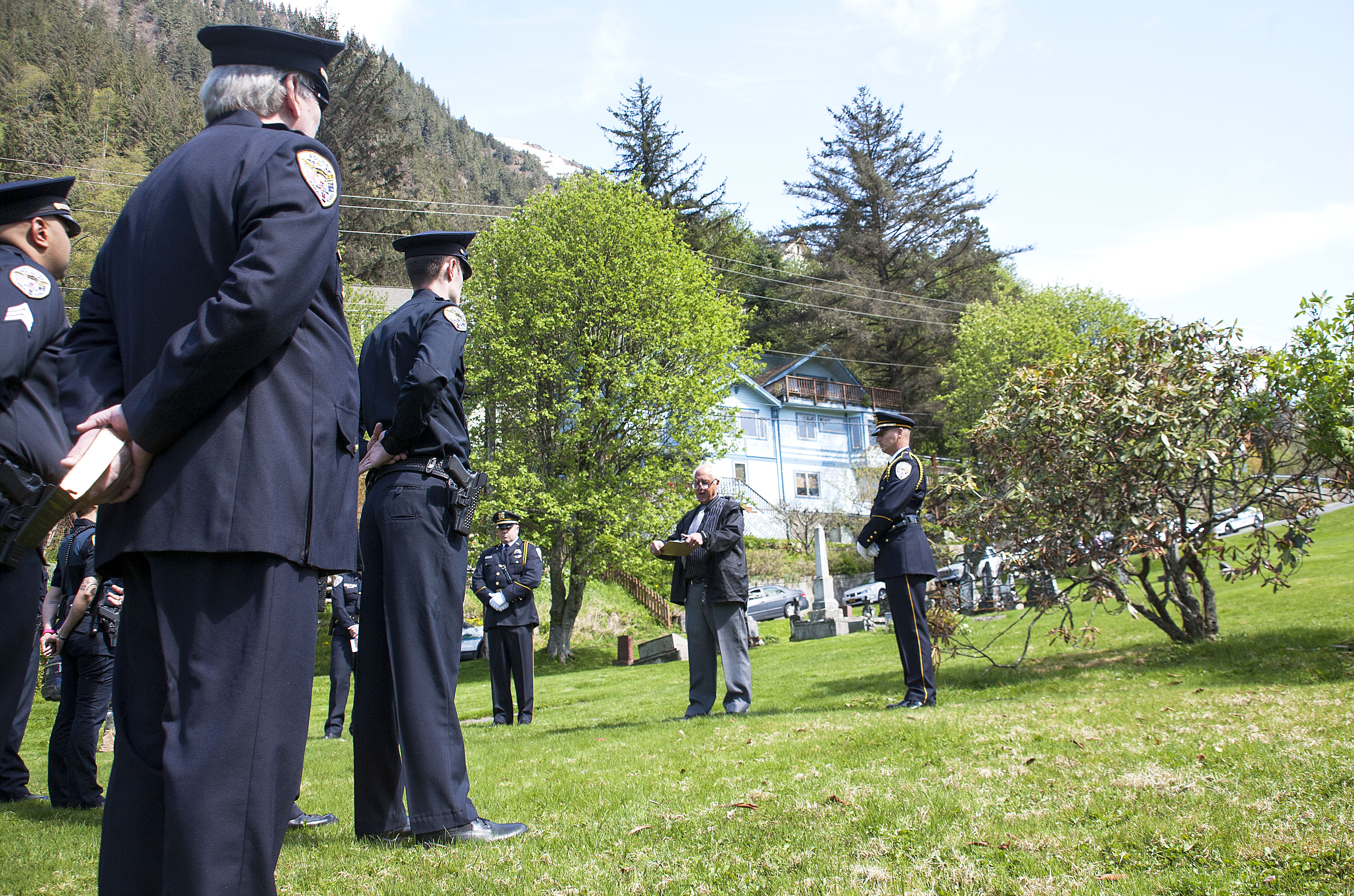
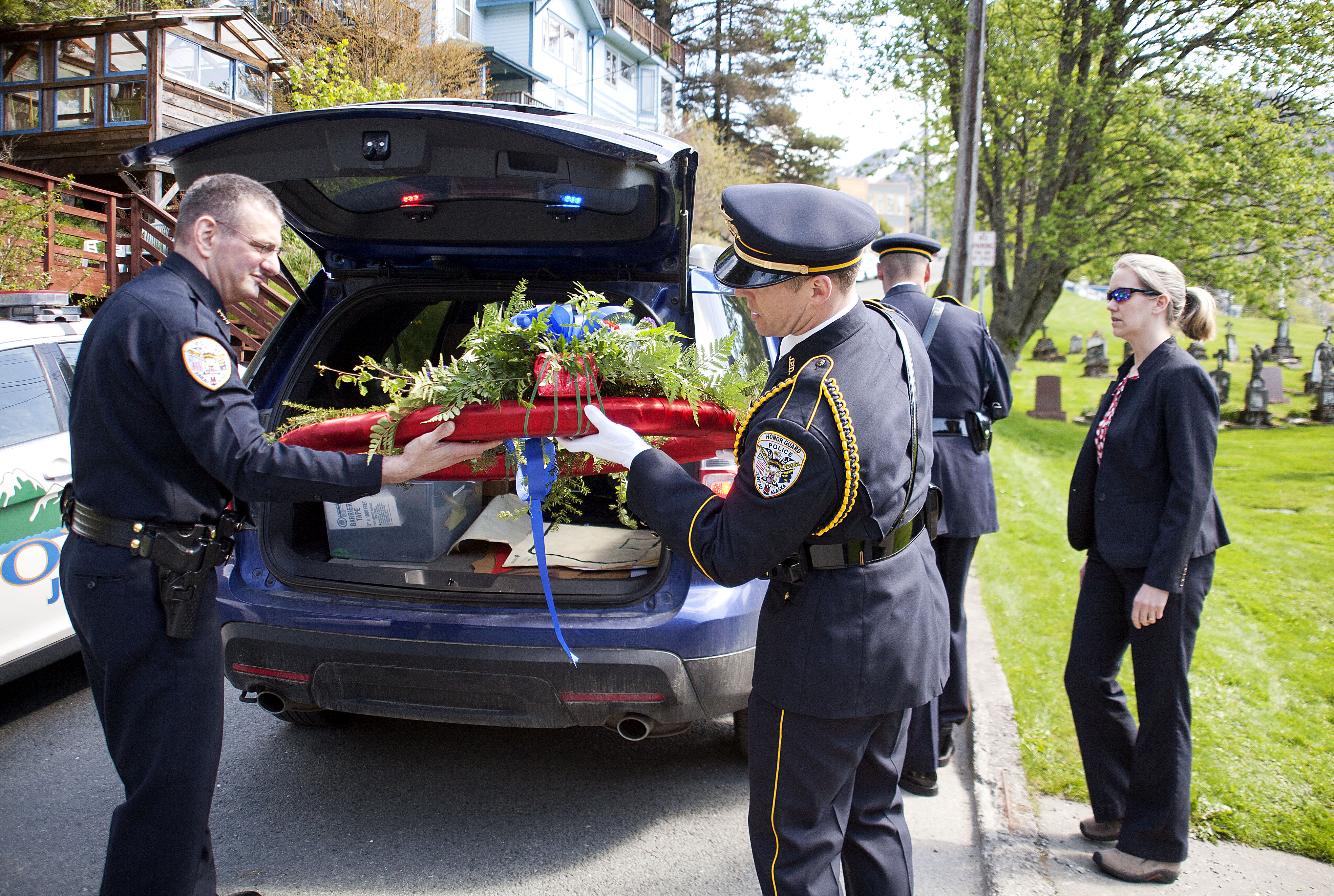
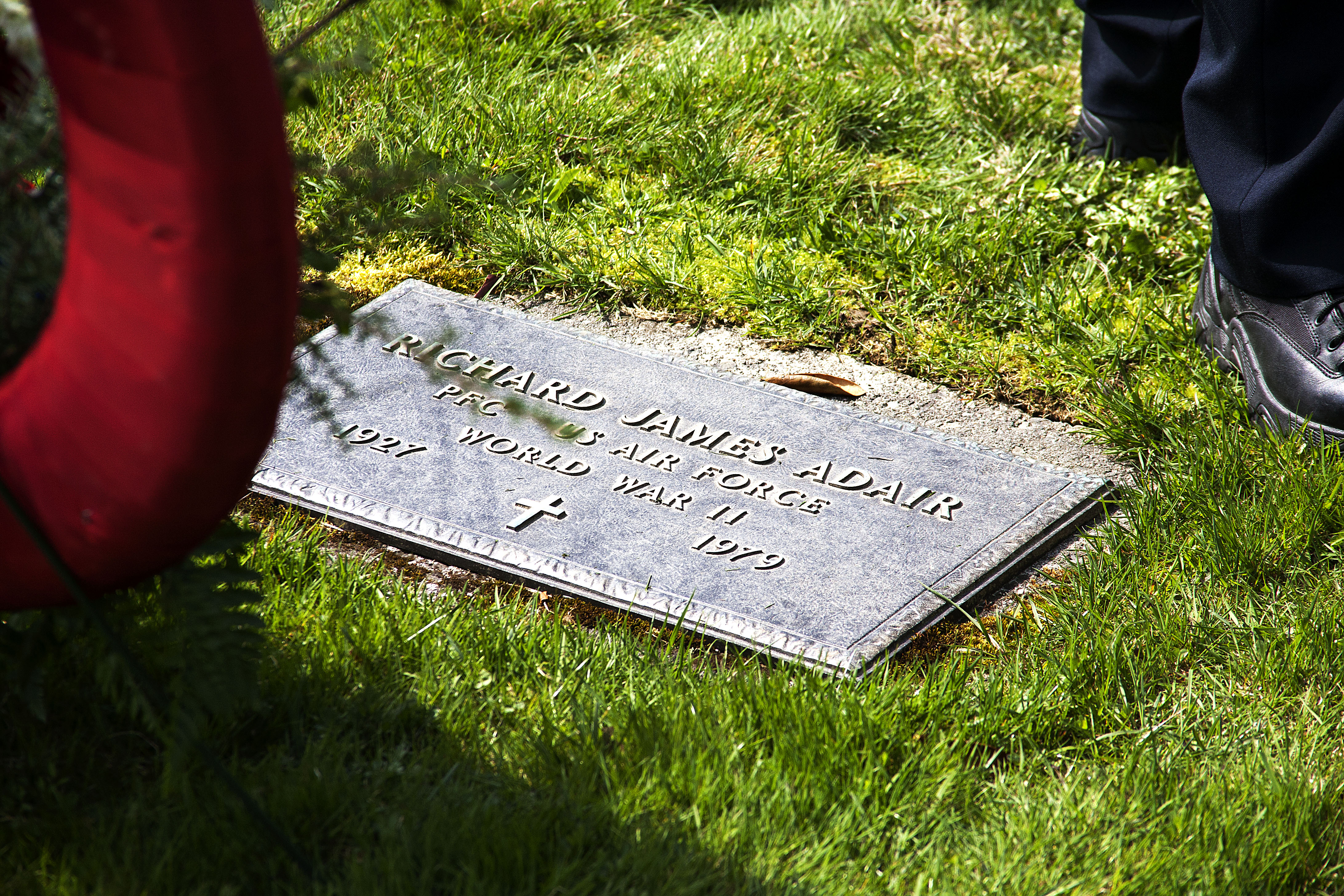
Juneau police officers in full uniform laid a wreath at Evergreen Cemetery today for a police memorial ceremony that about 20 people attended.

Lt. Kris Sell was one of the many officers observing the memorial.

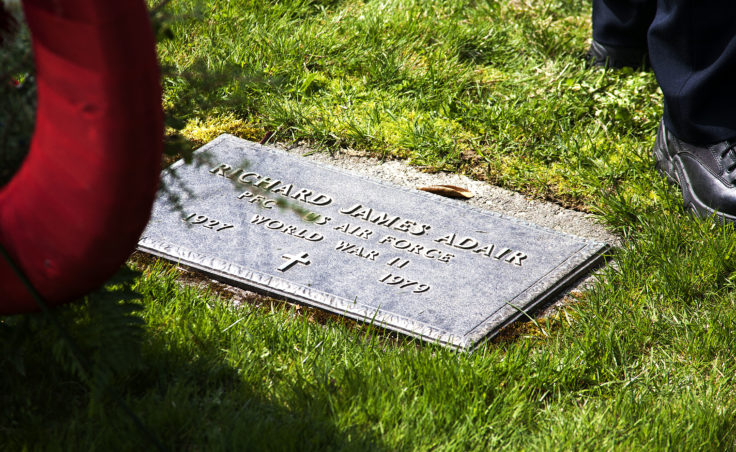
“This is an annual ceremony that we have to show our respects for the loss of Officer Richard Adair and Officer Jimmy Kennedy who were killed in the line of duty on April 17, 1979, very close to where we stand today,” she said.

Adair and Kennedy were responding to a report of shots fired when they were shot and killed.

Officers placed a large wreath at the grave site of Adair. It is a stark reminder of the dangers that police officers face every day.

“I know from my own family that whenever the phone rings when we’re on duty, there’s always that initial thought that something has happened,” Sell said. “We want to make note that this is real risk and there are real families, families that still live in Juneau and contribute to our community who have been impacted by an event like this.”

Another ceremony will take place tonight at Dzantik’i Heeni Middle School at 6 p.m.

Alaska Police Memorial Day was May 5. National Law Enforcement Memorial Week begins next week.

Anchorage Petroleum Wives Club welcomes new era with new name

PetroleumWives_Harball
Members of the Anchorage Petroleum Wives Club — soon to be the Anchorage Petroleum Women’s Association — pose by the Easter goodie bags they assembled for a youth homeless shelter. (photo courtesy Holly Lee)

At a luncheon at the Lakefront hotel in Anchorage this April, Petroleum Wives Club president Linnea Ward greeted members from behind a small, cardboard ballot box.

The Anchorage Petroleum Wives Club has been around longer than Alaska has been a state. It was founded shortly after the first big oil discovery. Its purpose was to welcome the wives of the oil workers flooding in to the state. But a lot has changed since then, so the Anchorage Petroleum Wives Club decided they needed a change, too. On April 26, the club held a historic vote, and the members decided unanimously to change their name to the Anchorage Petroleum Women’s Association — effective June 1.

Club President Linnea Ward said there are several reasons for the rebranding. One is that “Petroleum Wives” might paint a misleading picture in some people’s minds.

“I don’t know if this was true, but supposedly the gossip throughout the organization was that we were approached by some reality show wanting to talk about — you know they do the ‘desperate housewives of Orange County’ or whatever,” said Ward. “And so there was an interest in doing some ‘wives’ thing of Anchorage. And that’s just not us.”

The Petroleum Wives want the world to know they’re not a group of cocktail-sipping, pearl-wearing socialites — although some do get together for a “ladies night out” now and then. Take Ward, for example: her husband may work for ConocoPhillips, but she’s a Ph.D. This spring, Ward earned her doctorate in public communication and technology. She actually wrote her dissertation about the Petroleum Wives.

But mainly, Ward said the group changed its name because the petroleum industry has changed. Ward said she’s one of a growing number of club members who work, too.

“We’re not all these super-wealthy [people], just trying to throw money out there, or [people] trying to destroy the Earth one step at a time,” said Ward.

Like everyone else, she said, “we’re just trying to make our way in this world, we’re trying to give back. We’re trying to find meaning.”

In addition to getting together for activities like hiking, playing cards and making crafts, the Petroleum Wives also spend time volunteering and raising funds for local charities.

But increasingly, the meetups have to be scheduled around the 9-to-5 workday. Ward said another reason the club changed its name is to welcome a new kind of member — members like Anna Belanger, a petroleum geologist for Glacier Oil & Gas.

There are lots more women working in Alaska’s oil industry than when the club started in the 1950s. The Petroleum Wives recently changed its rules to allow oil industry workers to become president or vice president of the club. Belanger said replacing ‘wives’ with ‘women’ in the name means a lot to her.

When she found out about the club, she said, “I thought, ‘well, my husband is actually a fisherman — sport fishing on the Kenai River — he’s not in the oil industry. Am I able to join the organization?'”

Belanger works for a small company. She said the group connects her with people across the oil industry. Belanger said she also appreciates meeting other women who understand the industry’s ups and downs.

After oil prices crashed in 2015, many companies in Alaska announced mass layoffs. Member Zoe Smith’s husband was retired from BP by then, but she said during the downturn, the Petroleum Wives came together to help each other cope.

“Especially the older ladies like myself, we’ve been through these cycles before,” said Smith. “And then you can share it with someone else. And it just gives support, that you maybe don’t find with your neighbor because they don’t really understand.”

The Petroleum Wives kept meeting throughout the tough times — even after losing about 80 members, close to third of its membership.

Today, they’re still going strong. In early April, about a dozen members got together to make Easter goodie bags for Covenant House, a homeless youth shelter in Anchorage. Holly Lee organized the get-together. Lee’s husband, an oil industry engineer, was transferred from Canada to Alaska in 2012.

It’s pretty common for oil companies to move employees around the country –and even the world — every few years. Lee said finding friends in Anchorage wasn’t easy at first. But then she joined the Petroleum Wives Club.

“We are often, many of us, out of our own country. We’re away from our family — like so many people who live in Alaska. And so this group provides a connectivity that I desperately needed.”

Lee said some might argue the Petroleum Wives should have changed their name years ago. But she explained that for some members, the name represented a long tradition of women forging close friendships over shared connections to the oil industry.

And in that way, the Anchorage Petroleum Women’s Association hasn’t forgotten its roots.

Bartlett CEO: A decade under House GOP health care bill could cost hospital $69 million

Bartlett Regional Hospital CEO Chuck Bill. (Photo by Lisa Phu/KTOO)

Juneau’s public hospital could still stand to lose tens of millions of dollars under the bill passed by the U.S. House of Representatives to replace the Affordable Care Act, commonly known as Obamacare. That’s according to numbers from the American Hospital Association.

“It actually cuts the reimbursement to Bartlett Regional Hospital by $69 million over the next 10 years if it stays in the format that it’s currently in,” Bartlett Regional Hospital CEO Chuck Bill said Monday.

A breakdown of the House GOP’s American Health Care Act would cut Bartlett’s Medicaid reimbursements by about $52 million over 10 years. Adding to that would be nearly $17 million in higher costs in treating the number of patients who would be uninsured in Juneau.

Alaska’s House Rep. Don Young voted in favor of the bill that passed on a razor thin margin. Now it’s the U.S. Senate’s turn to tackle the GOP initiative to repeal and replace former President Barack Obama’s signature health care act.

Neither Sen. Lisa Murkowski nor Dan Sullivan has publicly staked out a position, though Murkowski has criticized House Republicans for stripping away protections for patients with many pre-existing conditions.

Alaska’s health care sector is making its case in Washington.

“We’re working with the Alaska Hospital and Nursing Home Association to reach out to Sens. Murkowski and Sullivan to let them know that the impact is and that we certainly believe that it can’t be passed in the format that it’s been presented to the Senate,” Bill said.

It’s unclear when the Senate will produce its version of the law though the GOP-led working group’s goal is before the Fourth of July recess.

Eaglecrest Ski Area names new general manager

David Scanlan will take the helm of Eaglecrest this summer. He comes to Juneau from Greenwood, Maine where he’s managed a ski area since 2013. (Photo courtesy of City and Borough of Juneau)

The Eaglecrest Ski Area has a new general manager. The board of directors announced Monday that David Scanlan would come on board June 26.

Scanlan will relocate from Greenwood, Maine, where he’s been the general manager of the Mt. Abram Ski Resort since 2013.

He’ll replace Matt Lillard who left earlier this year for a ski area job in Vermont.

Scanlan had been a business owner on the Kenai Peninsula and has been an advocate of community owned ski areas like Eaglecrest.

“He’s an Alaskan which was not a main thing but it’s something to consider in terms of somebody that knows what they’re getting into up here as far as weather and such,” Eaglecrest Board President Mike Stanley said. “We just felt he’s the candidate to take Eaglecrest forward. He’s the right person for the job.”

In a statement, Scanlan said he was honored to have the opportunity to return to Alaska and help Eaglecrest reach its potential as a long-term community asset.  Eaglecrest is owned by the City and Borough of Juneau, which subsidizes its operations. His starting salary will be $84,136.

Delores Churchill honored with Lifetime Achievement Award

The Central Council of Tlingit and Haida Indian Tribes of Alaska will get about half the BIA settlement funds slated for Southeast tribal governments. (Photo by Ed Schoenfeld/CoastAlaska News)
(Photo by Ed Schoenfeld/CoastAlaska News)

The Central Council of Tlingit and Haida Indian Tribes of Alaska held its 82nd annual meeting last month in Juneau. At the welcoming banquet, Haida master weaver Delores Churchill of Ketchikan received the Lifetime Achievement Award from council president Richard Peterson.

Ninety-nine delegates from throughout Southeast, Anchorage and the Pacific Northwest attended the three-day event.

Before the award was presented to Churchill, Dana Ruaro gave an introduction.

“Ná anii has such an incredible background, but the most amazing about her is her personality, and how loving she is, how funny she is, the situations she puts herself in.”

Ruaro says Churchill is not only a master weaver, but also a master diver. She shared stories of Churchill diving for abalone. Ruaro says Churchill is also an avid hiker, and once was a taxi driver.

“She was telling me this story one time about how this gentleman, a nice looking man, wanted to ride up to Ward Lake. He wanted her to take all these back trails and she refused. She said, ‘I’m not going up there. If I get up there, I’m not going to be able to get back down, so you get out right here, right now!’  She said later on she saw him in the newspaper and he was a serial killer. And I’m not kidding. She really has had an incredible life, given to her by her stubbornness and bluntness.”

Ruaro spoke about the many honors Churchill has received, including an Alaska State Council on the Arts fellowship, and a National Endowment for the Arts National Heritage Fellowship Award for Haida basketry. Ruaro says Churchill studied at the British Museum and relearned the six-strand weave, which she brought back to Alaska.

She says basketry was taught differently in the past, and Churchill’s mother took steps to ensure Delores’ weaving was done properly.

“She spent five years (weaving) until she was actually able to keep one of the baskets that she wove. Because if they weren’t good enough, she would make them throw them in the fire and she’d have to start all over again. And so it made her really learn the technique of weaving, which she shared with other people.”

Churchill was raised in the Haida village of Masset in the Queen Charlotte Islands. In addition to working to continue the tradition of Haida basketry, Churchill also has worked to preserve the language.

Churchill says she is honored to receive the award, but wished it had happened when her mother, Selina Peratrovich, and other master weavers and artists who passed on the tradition were still alive.

“I think of them every time I see hats. And the slippers I’m wearing are ones that Jennie Thlunaut made for me before she died.”

At the ceremony, Churchill wore the same dress she wore in 1978, when her mother won an Alaska Native Brotherhood / Alaska Native Sisterhood lifetime achievement award.

“I also wore her bracelets, because when she was being honored, she also wore her gold bracelet. I very seldom wear them because I’m not a gold bracelet kind of person. Holly (Dolores’ daughter) is. Holly loves her jewelry.”

Before presenting the award, President Richard Peterson read a proclamation.

“…and whereas Delores is a world-renowned Haida master weaver of baskets, hats, robes and other regalia…And whereas Delores has carried her mother’s legacy as a teacher, and has taught and demonstrated basket weaving in many Alaskan communities, nationally, and in countries such as West Germany, Great Britain, Holland, Switzerland, Finland, Sweden and Norway…And whereas Delores is one of the few remaining speakers of Xaad kíl…”

The proclamation also noted that Churchill was appointed to the Governor’s Alaska Language Preservation and Advisory Council, received an honorary doctorate from the University of Alaska Southeast, is a Rasmuson Foundation Distinguished Artist, and received many other honors. Peterson also declared April 19, 2017, as Delores Churchill Day.

Site notifications
Update notification options
Subscribe to notifications