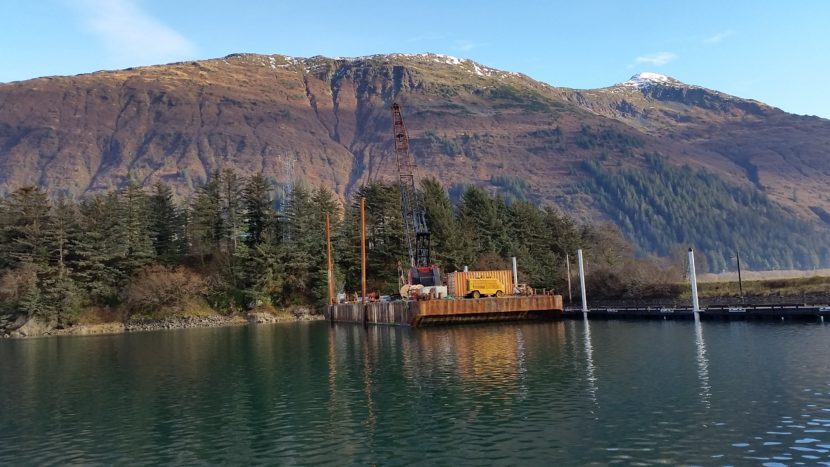
Contractors work on upgrading slips at Douglas Harbor along Gastineau Channel on Oct. 27, 2016. (Photo courtesy Juneau Docks and Harbors)
Extensive work rebuilding Douglas Harbor is 85 percent complete with contractors projected to finish work by the end of March or early April. That’s according to the City and Borough of Juneau, which has invested millions to renovate the 120-slip harbor on Gastineau Channel.
Deputy Port Director Erich Schaal said the new dock is a superior design.
“The new floats will have new LED lights that will illuminate the docks really well. That will sit on the docks this time, the old lights were up on the poles, so as the tides went up and down the lighting changed,” he said. “The LEDs will use less power but will also provide better lighting but should not throw so much light up the hill at the neighbors.”
Following demolition work and dredging the harbor, the upgrades of Douglas Harbor are in their third and final phase. Trucano Construction is the lead contractor with several subcontractors completing the electrical and plumbing to service the slips. Schaal said most boaters are hunkered down for the winter, but Juneau Docks and Harbors reminds the boating public to steer clear of the work area.
“Trucano’s almost done and so they have their barge and crane kind of out at the end of the headwalks out at the end of D or C float right now,” he said, “and so there’s not a lot of maneuvering room back in there and and they need some space so we just ask that the boating public not venture into the construction zone at Douglas Harbor.”
The new $6 million design has no wooden pilings in the water and uses less metal that could rust. The new dock is projected to last 40 to 50 years.
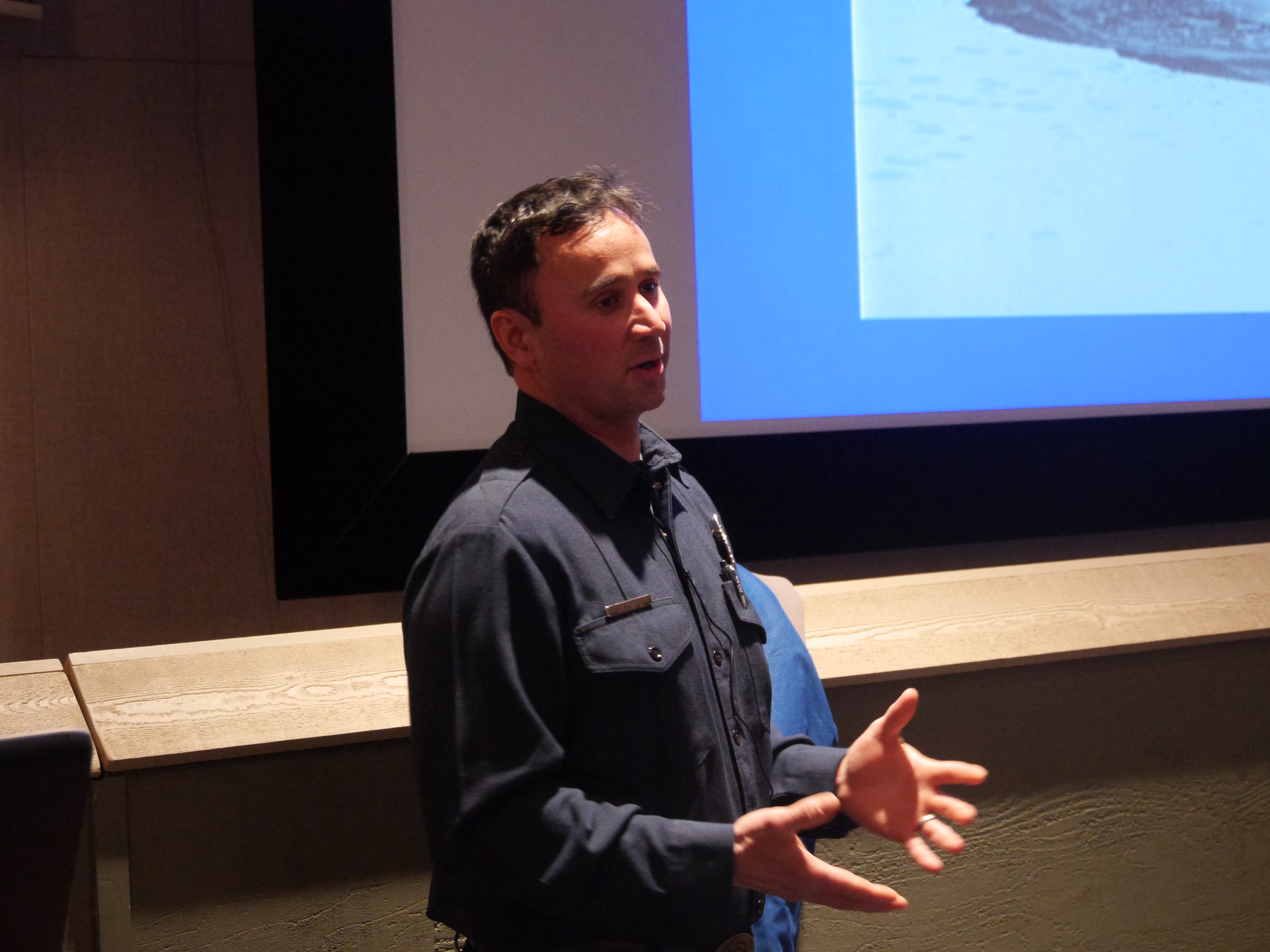
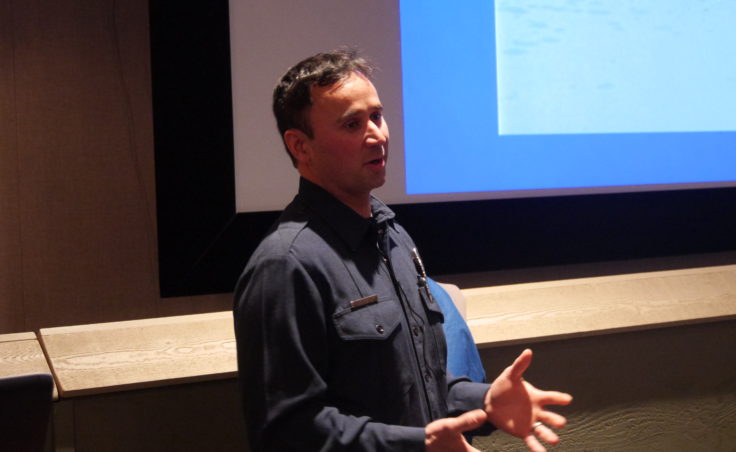
Jayme Johns is a CCFR engineer and he's the department's water rescue team lead. He led the workshop Saturday. (Photo by Quinton Chandler/KTOO)
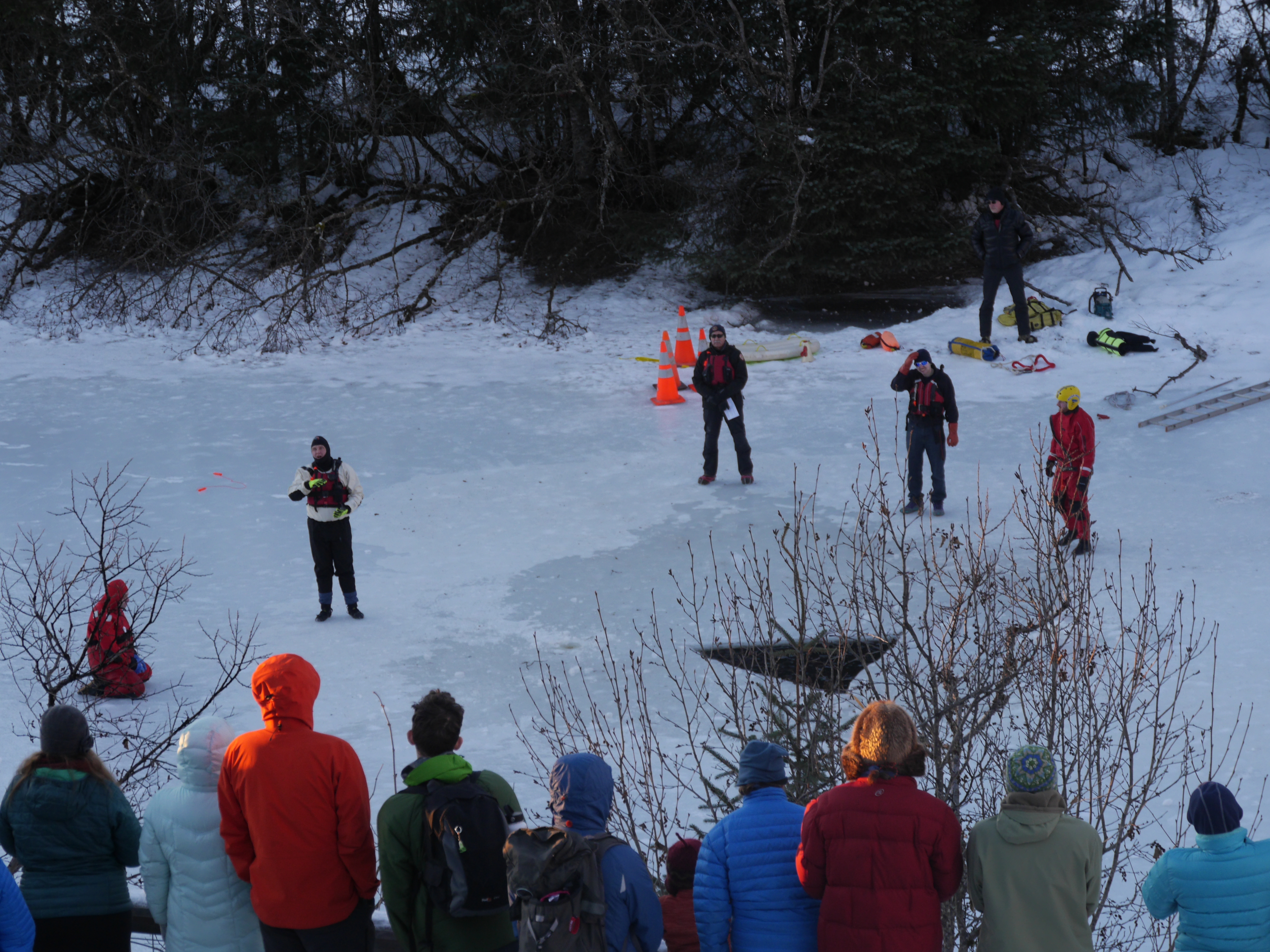
The CCFR water rescue team prepares to demonstrate how to escape from a hole in the ice. (Photo by Quinton Chandler/KTOO)
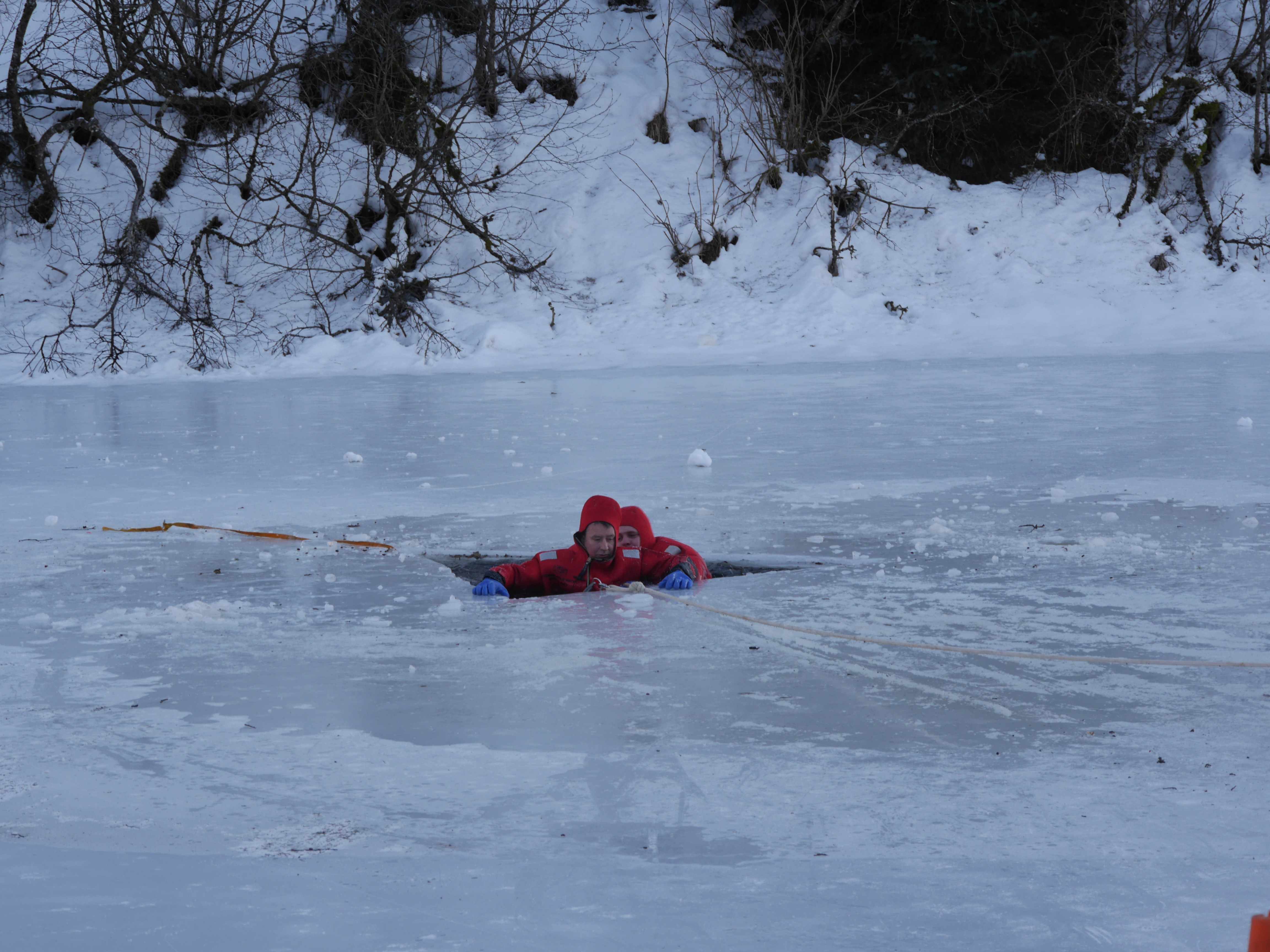
Two members of the CCFR water rescue team simulate an escape from a hole in the ice at the Mendenhall Glacier Recreation Area on Saturday. (Photo by Quinton Chandler/KTOO)
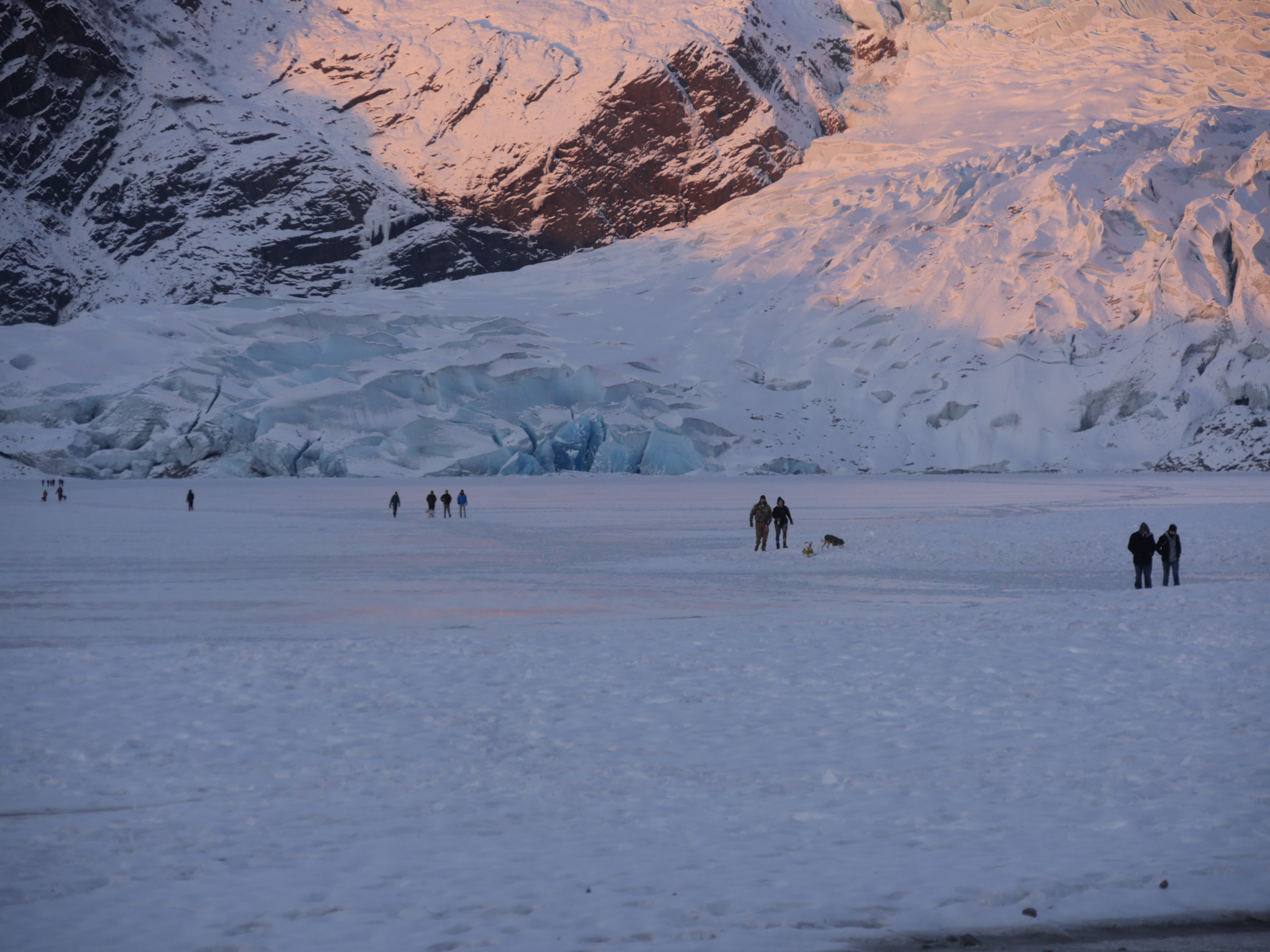
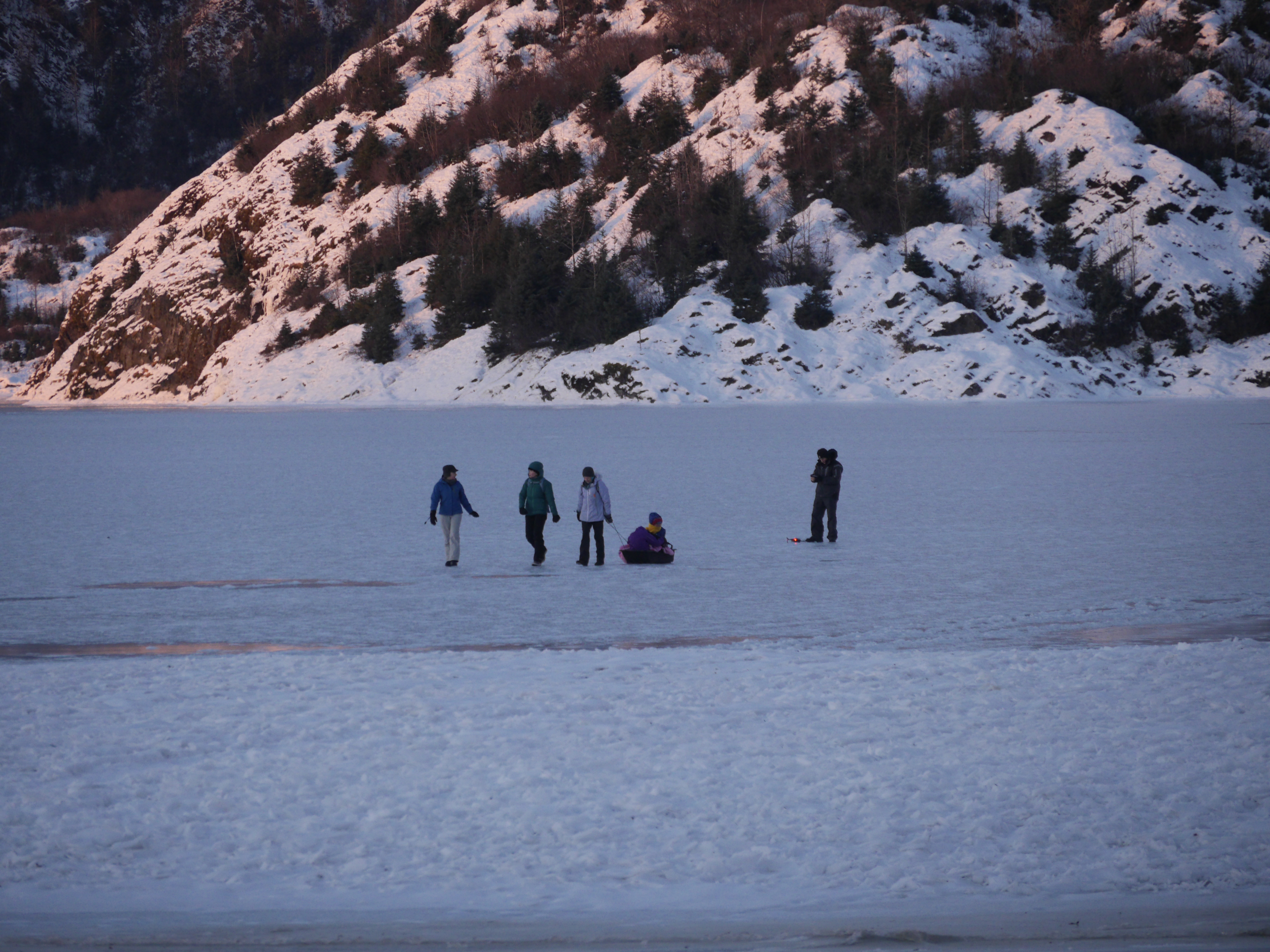
Visitors walk on the frozen Mendenhall Lake. (Photo by Quinton Chandler/KTOO)
Visitors walk across the frozen Mendenhall Lake, Saturday. (Photo by Quinton Chandler/KTOO)
Avoid thin ice. That’s the first piece of advice. But if you do fall through and find yourself in ice water, Capital City Fire/Rescue Engineer Jayme Johns wants you to keep a cool head.
“Stay calm. It is very hard to stay calm, especially in that water, it’s going to take your breath away,” Johns said. “If you remain calm, your chance of survival is a lot better for rescue to come get you if you’re still conscious.”
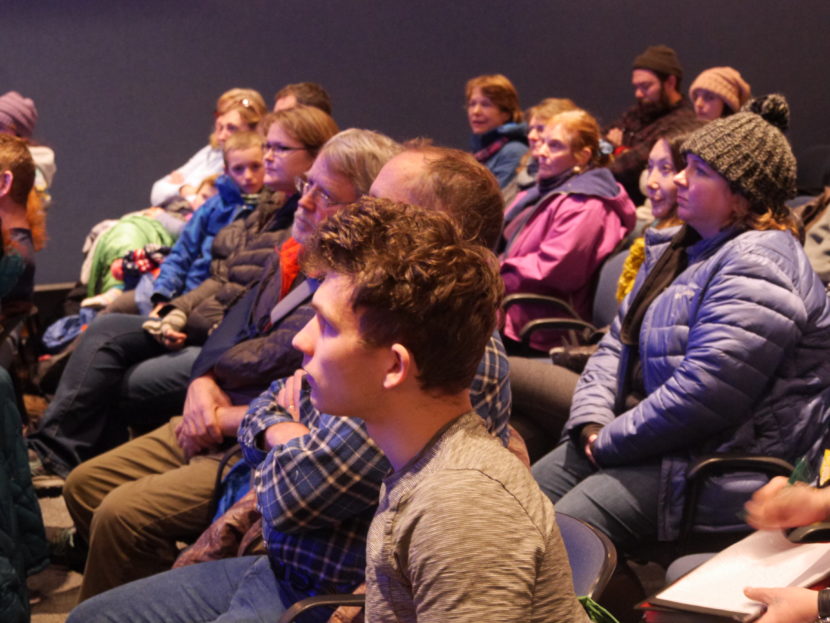
He relayed this to a full auditorium inside the Mendenhall Glacier Visitor Center on Saturday afternoon.
Thin ice is a common danger during winter and surviving a fall through it isn’t as simple as just pulling yourself out.
For at least the past five years, Juneau’s Capital City Fire/Rescue has used a special workshop to warn people about walking over frozen water and they’ve demonstrated how to escape a fall.
In the dead of winter when the water looks frozen solid, crossing Mendenhall Lake outside the visitor center is a tempting shortcut to an up close look at Mendenhall Glacier and its stunning blue ice caves.
But, it can also be a perfect nature-trap.
The audience at the CCFR ice safety training at Mendenhall Glacier Visitor Center on Saturday. (Photo by Quinton Chandler/KTOO)
During the presentation, the audience learned they have just a few minutes to escape freezing water under their own steam before their energy is drained.
They were advised to return to the place they fell in, level out their bodies, kick the water hard to help push themselves onto solid ice and roll away instead of standing up immediately.
But Johns said if someone can’t escape by themselves, they should focus on staying above water and waiting to be rescued.
“(The) state of Alaska has numerous cases of people that have been submerged in water or hypothermic for hours — clinically hypothermic, core temperature way down in the low 90s and they made a full recovery,” he said.
Johns said this winter, CCFR has heard several reports of people breaking through ice, but the department hasn’t come out to rescue anyone, yet.
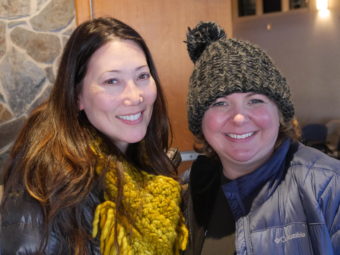
Sheila Fullbright, left, and Karen Smith, right. (Photo by Quinton Chandler/KTOO)
Karen Smith came to the workshop with a friend and she wasn’t too embarrassed to admit she’s been rescued by CCFR. Twice.
“Trying to get to the ice caves, unfortunately. Once our boat turned over and once (because) our daughter has a heart condition,” Smith said. “So, I always want to learn as much about safety as I can, because they’ve helped us a lot. Alaska can be a very dangerous place for sure.”
In both of those rescues, Smith said the lake wasn’t frozen but the water was still cold.
“I think it was still 30 something, maybe 40 degrees. It was very cold. I can see why people could die very quickly,” she said.
Smith and her friend Sheila Fullbright were both impressed by the amount of useful information they got from the workshop.
Fullbright said, “I didn’t know about when you get out, rolling out and going the direction that you came. That’s a really good thing because I would’ve been like, ‘Yeah, (I’m) just getting out.”
Smith added, “Also about watching for the layers of ice and about how it’s really unsafe, I knew at the face of the glacier, I knew at the waterfall, but I didn’t know that Skater’s Cabin was really unsafe, with the rocks heating up from the sun.”
“She just made me go to Skater’s Cabin, like last week,” Fullbright said.
“I was like, ‘Girl …!’”
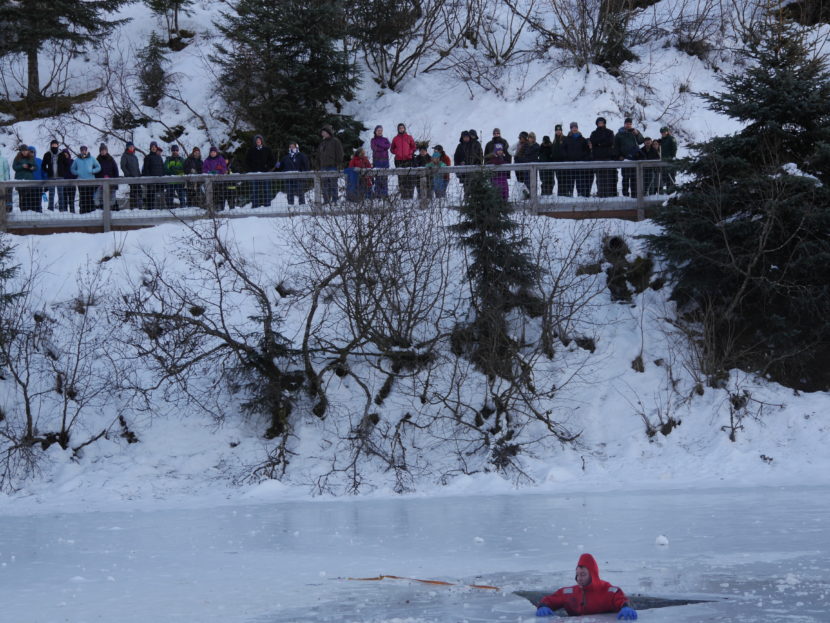
A member of the CCFR water rescue team voluntarily went into the icy water to demonstrate how to escape. (Photo by Quinton Chandler/KTOO)
Outside the visitor center, a CCFR water rescue team demonstrated how to escape a hole in an icy pond alone. They also showed how others can help by using rope or a long object like a branch.
As a parting piece of advice, Johns asked people to stay away from weak ice.
“The ice is always unsafe at the face of the glacier, at Nugget Falls, and out by the lake where it dumps into the Mendenhall River,” Johns said.
He said if you’re unsure about a patch of ice, trust your gut and turn back the way you came.
When asked if she would keep walking on the ice after attending the workshop, Karen Smith laughed and said, “I did this morning.”
She said it was her fourth attempt but she finally made it out to the ice caves.
The flu season in Alaska appears to be mild so far, but Alaska’s Chief Medical Officer warns that cases could peak later this winter.
This year’s flu season is off to a mild start, though there was an uptick of cases reported nationwide and in Alaska during the last two weeks of the year.
Dr. Jay Butler is Alaska’s Chief Medical Officer.
“It’s not been a terrible year for flu,” Butler said. “We began to see an increase in influenza-like illness in October. Now, at the same time, there are other respiratory viruses that are circulating, so there’s no lack of coughs out in the community. But, so far it’s been fairly mild for influenza.”
For the past two seasons, the flu vaccine has not proven as effective as health officials would like, but Dr. Butler said this year’s vaccine seems to be doing a better job.
“The vaccine has a good match this year with the isolates that have been obtained in the United States so we’re much more optimistic that we’ll have a good vaccine effectiveness this year,” Butler said.
Last year’s flu peaked late in the U.S., including in Alaska, with the highest number of cases reported in March and early April.
Dr. Butler said it’s not too late to get vaccinated this season.
“Because of the remote location, sometimes influenza can reach our villages a little later than other parts of Alaska or the Lower 48,” Butler said. “So it’s important to keep in mind that sometimes, flu activity doesn’t peak until fairly late in the winter.”
The U.S. Centers for Disease Control recommends everyone over the age of 6 months get a flu shot.
The nasal spray flu vaccine used last year is no longer recommended; the nasal vaccine ended up offering no protection for children aged two to 17 years old, though the CDC said it’s not yet sure why.
Each year millions of Americans catch the flu, hundreds of thousands are hospitalized, and thousands will die from it.
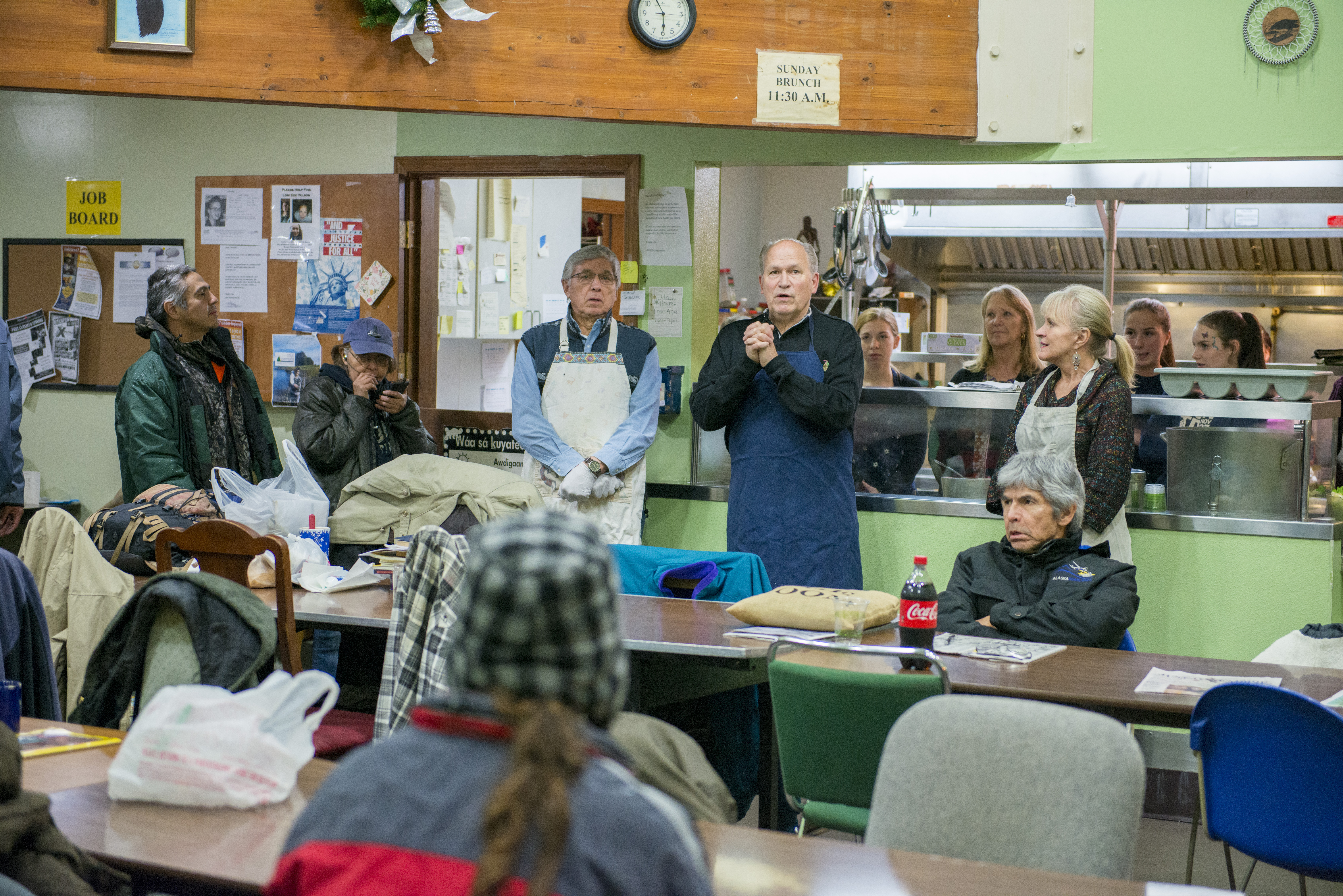
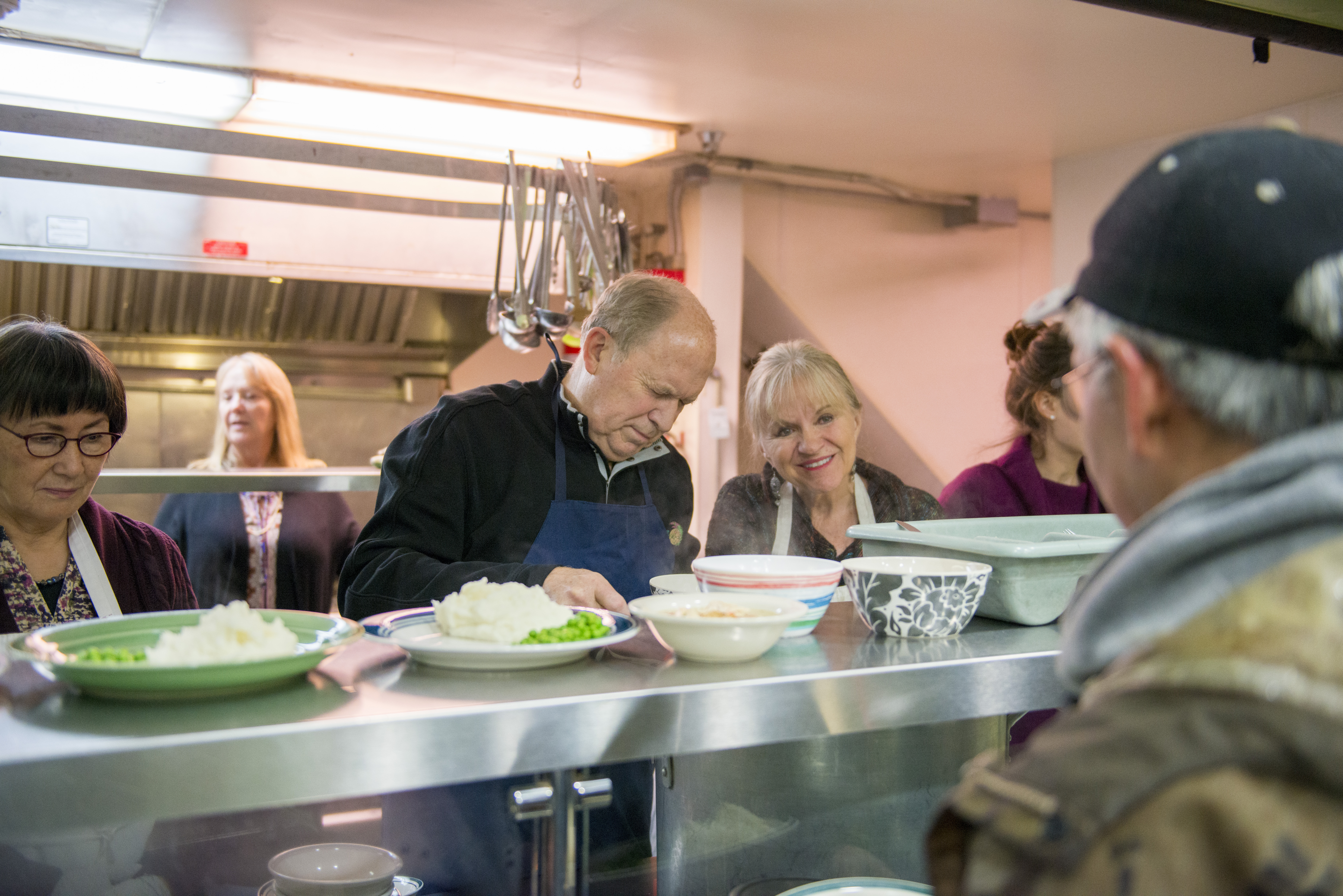
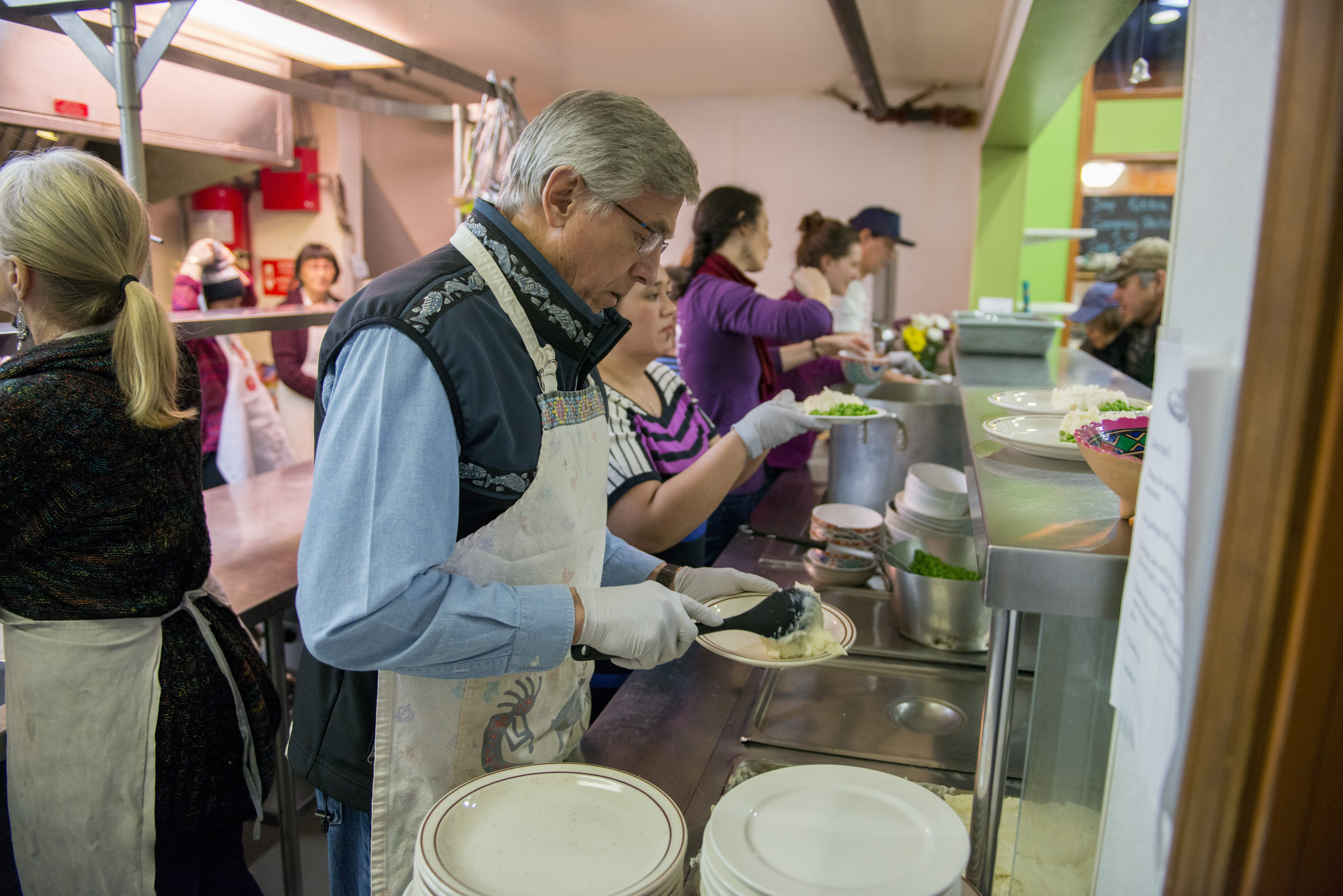
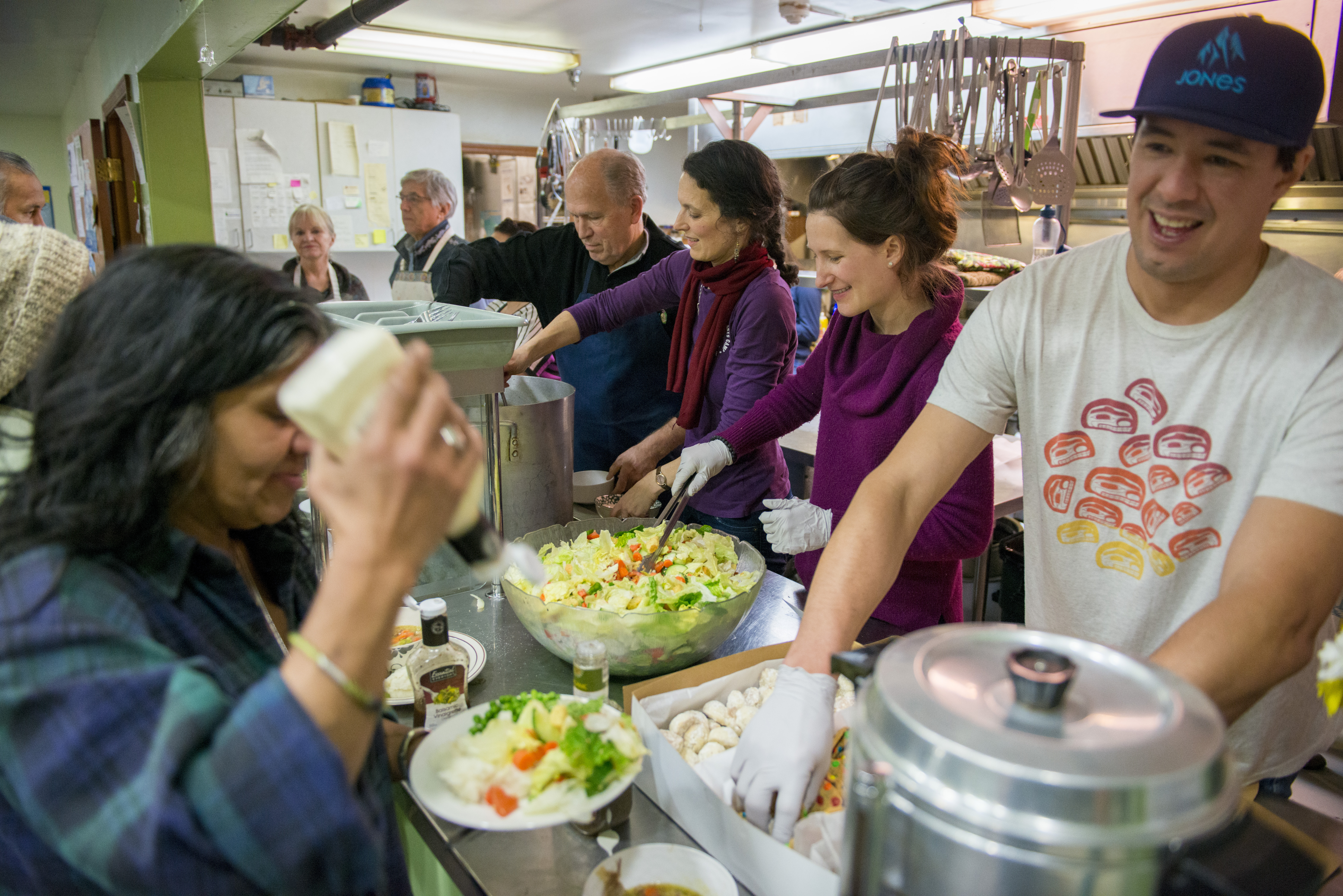
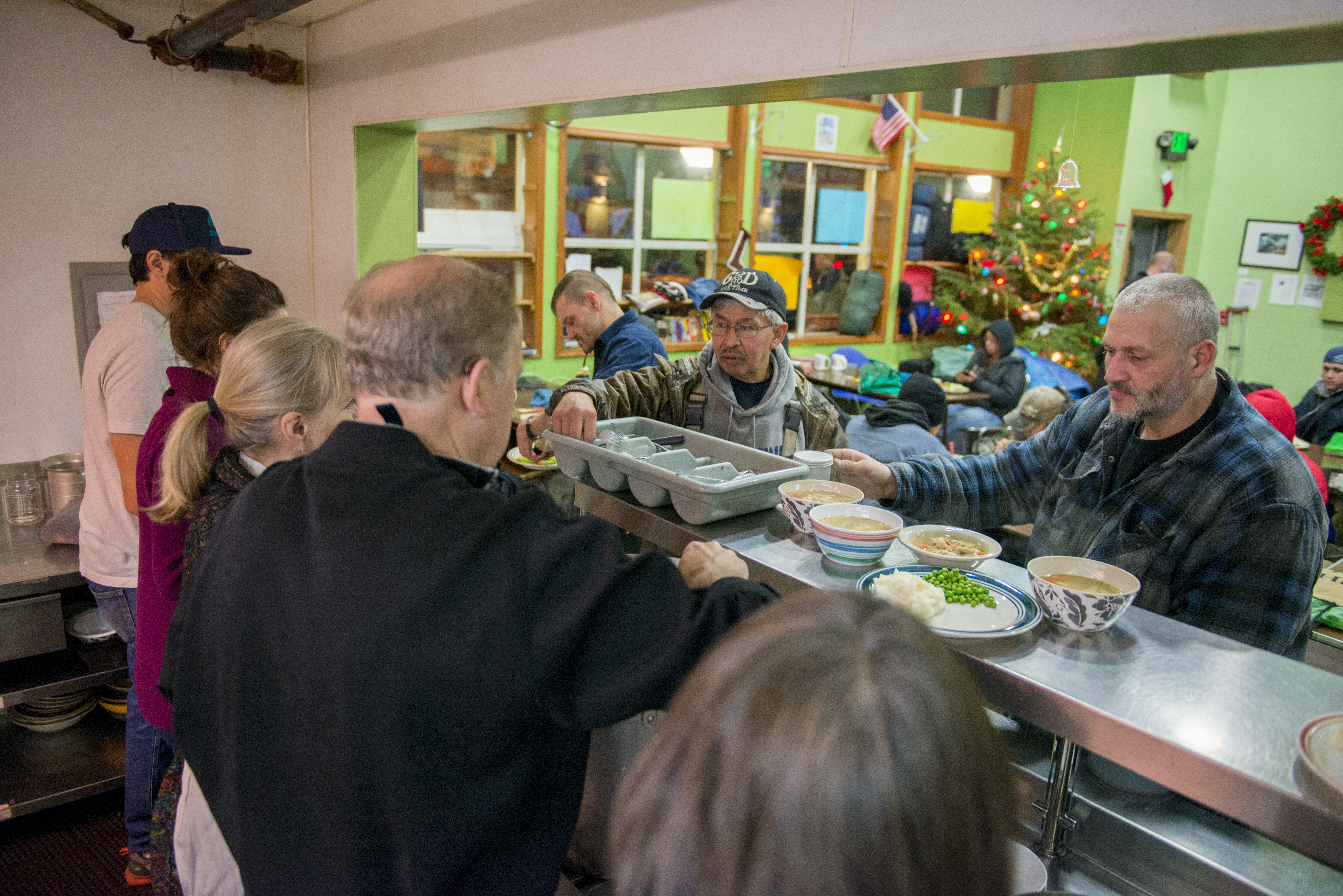
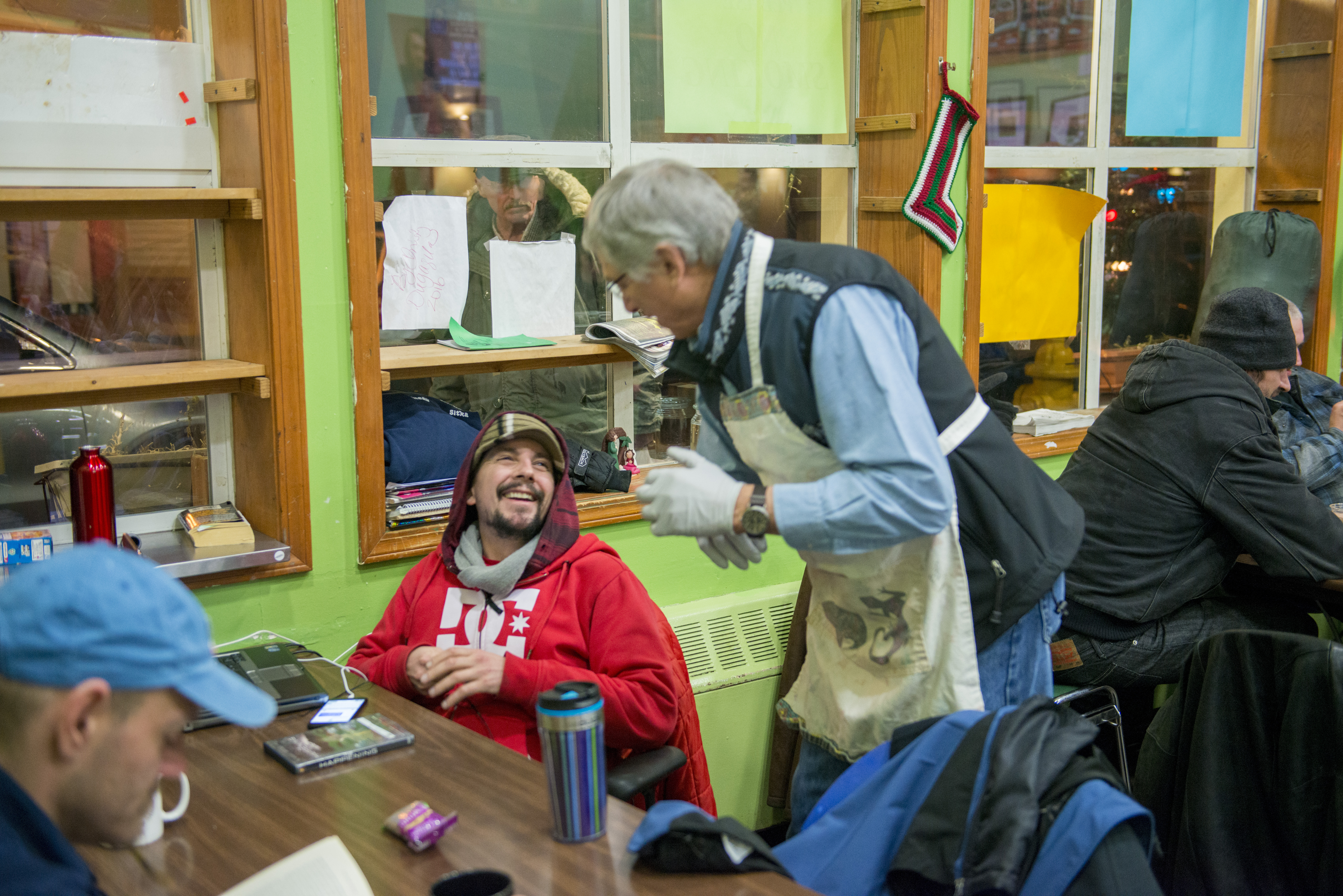
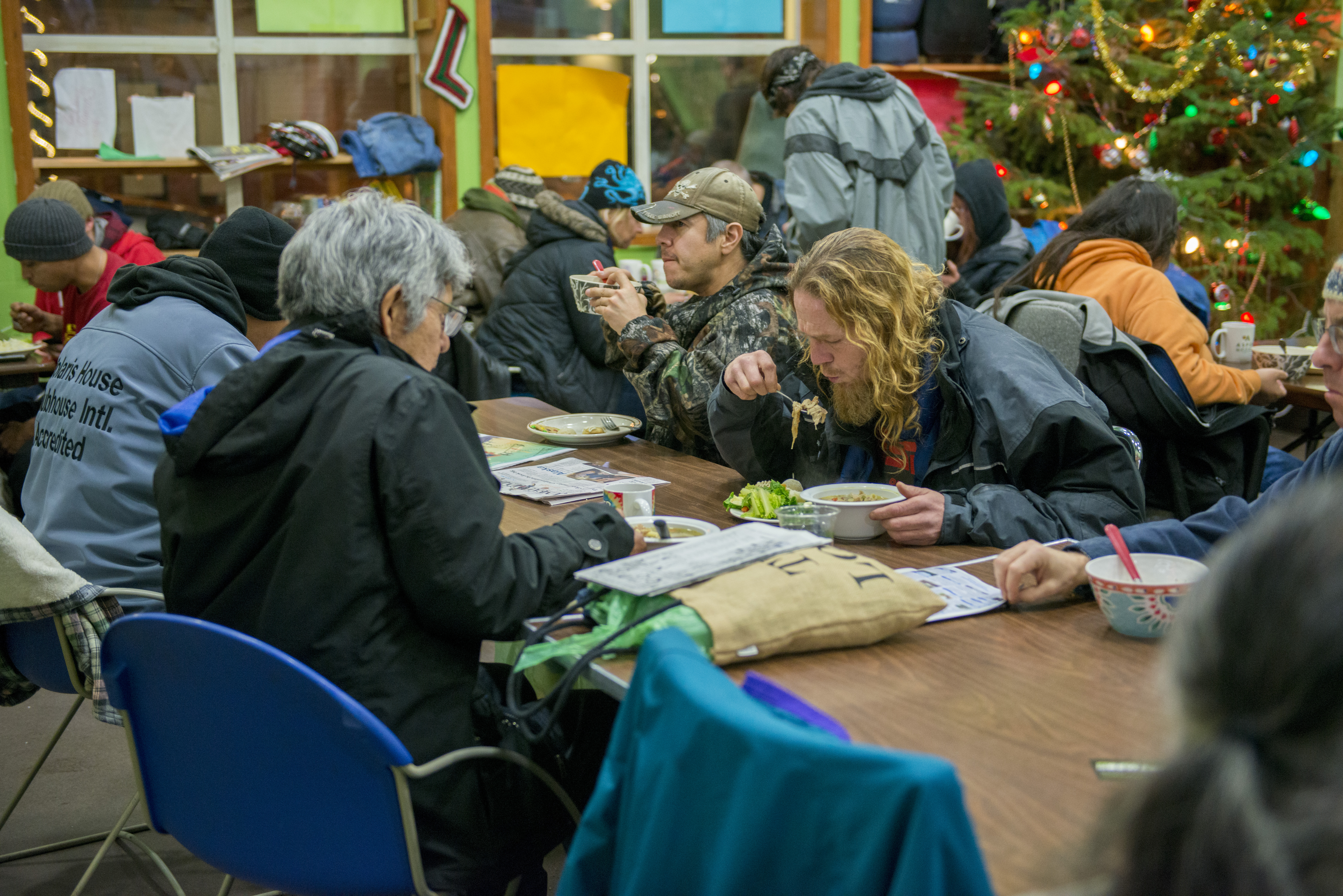
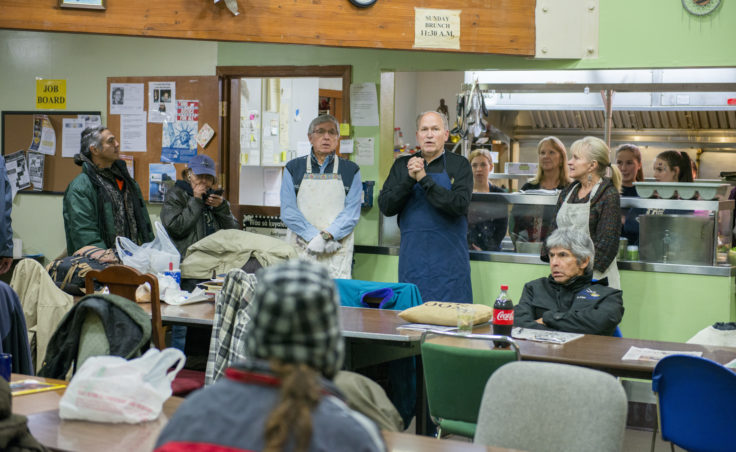
Gov. Bill Walker and Lt. Gov. Byron Mallott address at the patrons at The Glory Hole soup kitchen and shelter on Friday, Dec. 30, 2016. (Creative Commons photo courtesy Alaska Governor Bill Walker)
Governor's policy adviser Rebecca Braun volunteers at The Glory Hole soup kitchen and shelter on Friday, Dec. 30, 2016. She did the shopping. (Creative Commons photo courtesy Alaska Governor Bill Walker)
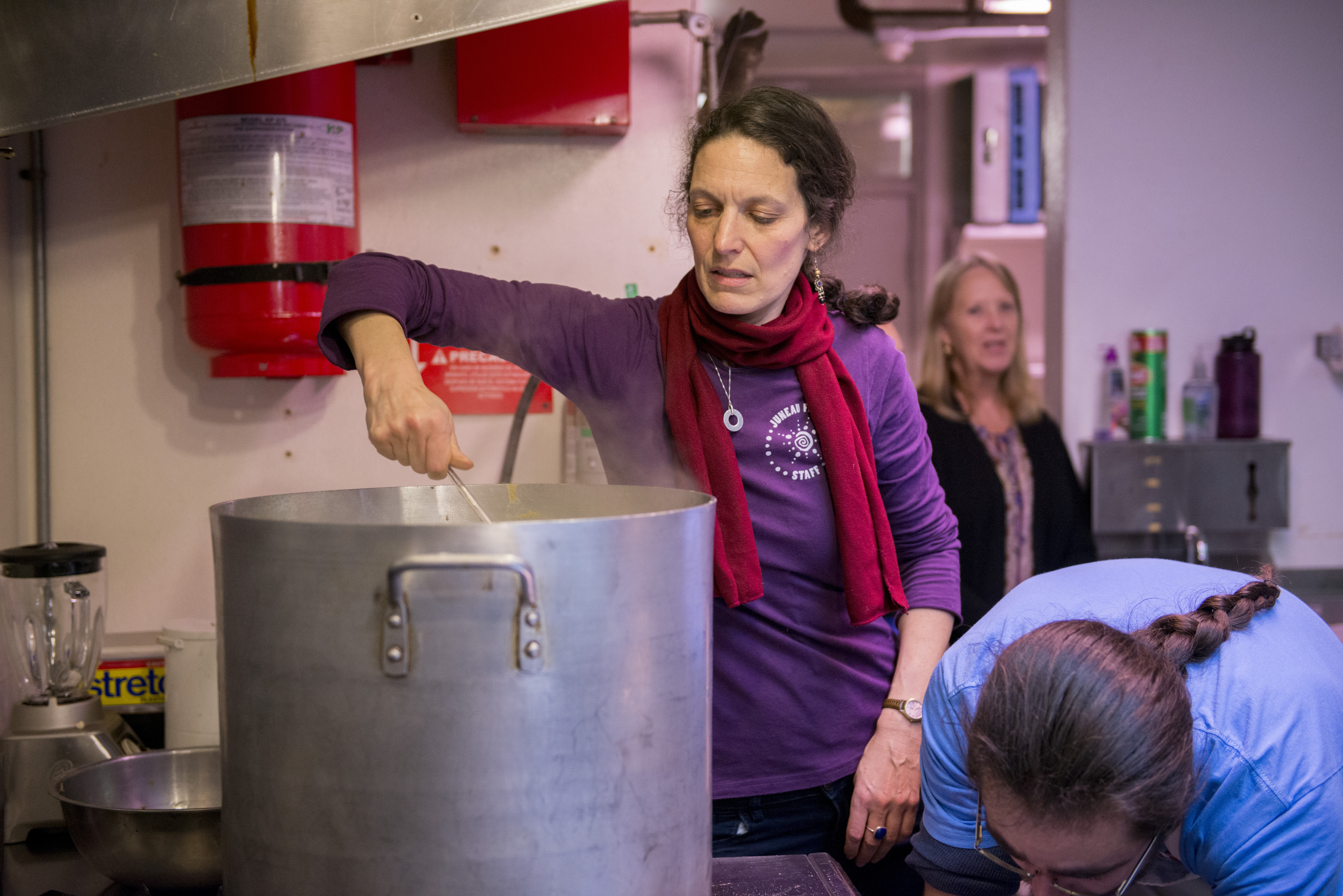
Gov. Bill Walker and policy adviser Rebecca Braun volunteer at The Glory Hole soup kitchen and shelter on Friday, Dec. 30, 2016. Turkey soup, mashed potatoes, salad, peas, and cookies were on the menu. (Creative Commons photo courtesy Alaska Governor Bill Walker)
First Lady Donna Walker, Lt. Gov. Byron Mallott, Gov. Bill Walker, and office staff and family members volunteer at The Glory Hole soup kitchen and shelter on Friday, Dec. 30, 2016. (Creative Commons photo courtesy Alaska Governor Bill Walker)
Gov. Bill Walker, Lt. Gov. Byron Mallott and office staff and family members volunteer at The Glory Hole soup kitchen and shelter on Friday, Dec. 30, 2016. (Creative Commons photo courtesy Alaska Governor Bill Walker)
Gov. Bill Walker, Lt. Gov. Byron Mallott, members of their offices, family and friends volunteered during the dinner shift at The Glory Hole soup kitchen and shelter on the last Friday of 2016.
The volunteers pooled donations, purchased groceries, roasted turkeys in advance and put in about 3 hours of prep, cooking and serving time at the shelter itself.
Rebecca Braun was one of the volunteers who works in the governor’s office. She shared this anecdote from the night via email:
“About an hour before dinner was served one woman asked me what’s for dinner. I told her turkey soup, mashed potatoes and salad. She was stony faced. Then I said, ‘And cookies from the governor,’ and her face broke into a huge smile. I said, ‘You’re the first person I’ve told that the governor is coming!’ She walked away grinning.
Mariya Lovishchuk, the shelter’s executive director, said their help was wonderful, and that it showed a connection between the most vulnerable citizens, the issues they face and the people who serve them.
You don’t have to be the governor to volunteer or help out. To pitch in for meals, Lovishchuk recommends getting a group together to make the meal or donating ingredients; call the shelter at 586-4159 for details. She also recommended making cash donations or Permanent Fund Dividend donations through Pick.Click.Give.
She said the Glory Hole provides 45,000 meals and 10,000 emergency shelter beds a year.
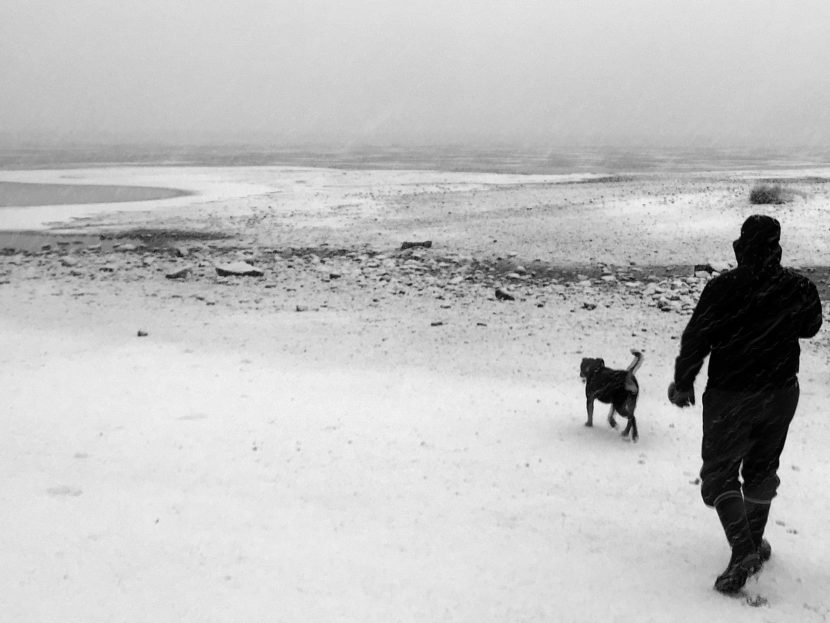
James Brooks walks his dog, Cookie, and a malamute friend along Mendenhall Lake on Dec. 3 in Juneau. Shortly before New Year’s, Cookie fell into the lake after the ice beneath her gave way and she never resurfaced. (Photo courtesy Rashah McChesney)
It’s the stuff of nightmares. Watching a loved one fall through the ice and being unable to save them.
It happened recently to one Juneau man who lost his 4-year-old dog shortly before New Year’s. James Brooks, 31, and a friend were walking their dogs on Mendenhall Lake near Nugget Falls.
“There was a lead of open water at the time and the other dog jumped in. My dog is not much of a swimmer,” Brooks said. “She likes to wade but she doesn’t like to swim.”
The first dog was a husky mix. Brooks’ 60-pound rottweiler/beagle mix named Cookie, went over to watch.
“She walked up to the edge to see what he was doing and the ice just gave way under her front paws and my initial reaction was to smile because I assumed that she would come up splashing, paddling — maybe a little panicked — but I’d be able to reach in and pull her out without any trouble,” Brooks said. “But she never came up.”
(Courtesy Mendenhall Glacier Visitor Center)
Brooks’ friend stripped down and jumped into the water. But neither man could find any trace.
Not even bubbles.
“I walked along the edge to see if I could see anything but there was nothing there,” Brooks said. “It just happened in a split second.”
“It was as if a cosmic eraser had come in and just erased her from existence,” he said. “Because there was no trace after she slipped in. It was there one moment and gone the next.”
Rescuers in Juneau say the ice around the Mendenhall Glacier area can be risky.
“Three people that I know of now have gone through the ice and fell in — all around the face of the glacier and over by Nugget Falls,” said Jayme Johns, an engineer with Capital City Fire/Rescue.
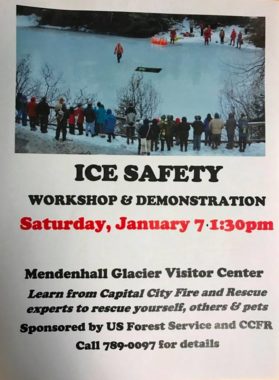
Johns is the lead water rescuer for the department and will be demonstrating rescue techniques at 1:30 p.m. Saturday at the Mendenhall Glacier Visitor Center.
“When other people venture out, other people see that and think the ice is safe,” he said. “We’re just going to give them some pointers and some clues on ice that’s not safe and stuff that they can look for if they do fall in or if someone does fall in what they can do to help out.”
Brooks and friends held a memorial recently for his dog.
No trace of her was found.
He says the experience was tragic but also instructive.
“It could happen at any time without any warning because I had no warning,” Brooks said, “and there’s no way to tell from one moment to the next what might happen in the next second.”
A few weeks before Brooks’ dog perished in the lake, a Juneau man fell through the ice.
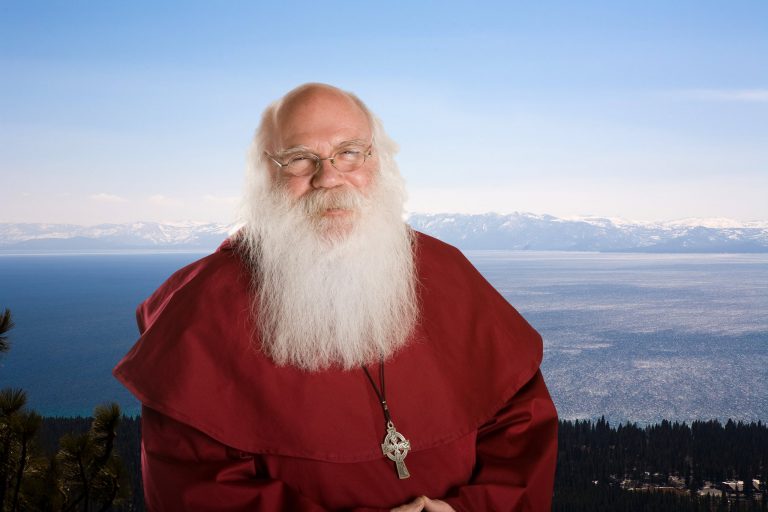
North Pole’s Santa Claus (Photo courtesy of Santa Claus’ Facebook page)
North Pole resident Santa Claus –yes, that is his legal name — has been living under that name for about 11 years. He was elected to North Pole City Council last year and also served as chair of the North Pole Chamber of Commerce. He said every now and then he has interesting issues with ordering items over the phone and disbelief from various officials. He was surprised however, when Facebook notified him that his account had been shut down because Facebook didn’t believe him. Santa got the notice on Christmas Day.
“I don’t think it was (done) ironically,” Santa said. “I think it was suspect, personally.”
Santa began corresponding with a Facebook worker named Elliot to rectify the situation. When sending his driver’s license was not sufficient enough identification, he later sent a copy of his passport and even a copy of the letter from the governor appointing him to the Alaska Public Broadcasting Commission — all to clarify that his name was indeed Santa Claus and that he lived in North Pole, Alaska on Santa Claus Lane.
The mistake prompted Santa to put Elliot, Facebook and Mark Zuckerburg on the “naughty list”. Eventually, the company recognized they had made an error, and restored Santa’s account, however, he wasn’t told of the correction.
“They recognized to a reporter that they had made a mistake, and that was that. But no, they didn’t even tell me I had access restored to my page,” Santa said. “I found that out from the reporter.”
Even though Facebook didn’t tell him directly, Santa is thankful for his community, both in close proximity and online, in their quest to rectify the error.
“My takeaway is that I’m blessed to be in a small community, where friends and neighbors will gather around, in addition to my several hundred thousand folks on Facebook, to help right a wrong — perceived or real,” Santa said.
Although he was upset with Facebook at first, Santa said they are not on the naughty list anymore.
“Facebook is now, since they restored my access, off the naughty list, but they’re not yet on the nice list,” Santa said. “If they’d like to be on the nice list, they could put a verification check-mark on my Facebook page. That would be very helpful and greatly appreciated. And I would be happy to have that in lieu of a direct apology.”
Santa said that he doesn’t expect a “behemoth company” like Facebook to apologize, but he’s grateful for his loyal Facebook followers, that total close to 300,000, for showing him support.
Close
Update notification options
Subscribe to notifications
Subscribe
Get notifications about news related to the topics you care about. You can unsubscribe anytime.