Alaska Native Corporations

Summer camp promotes Alutiiq culture on Afognak Island

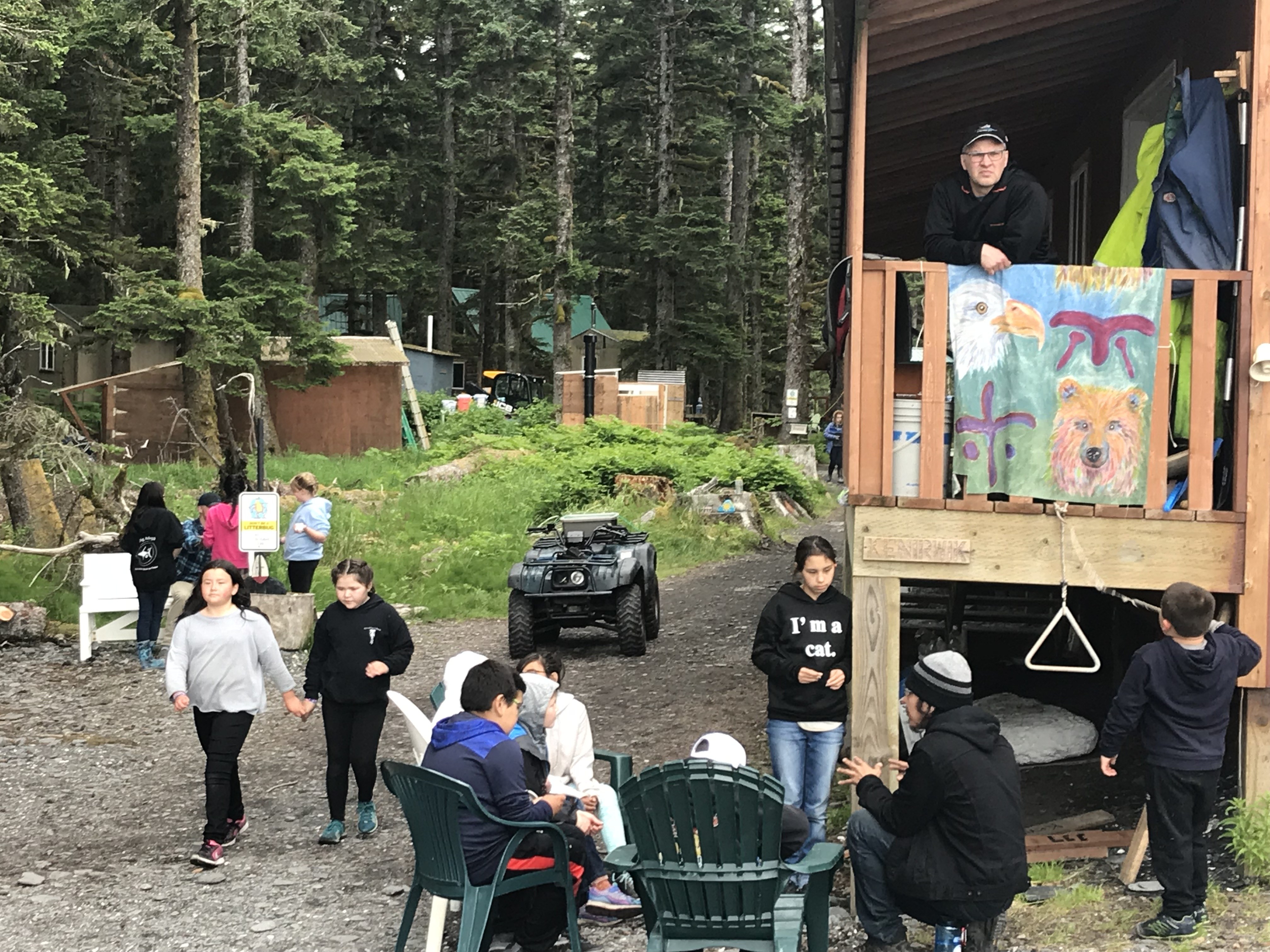
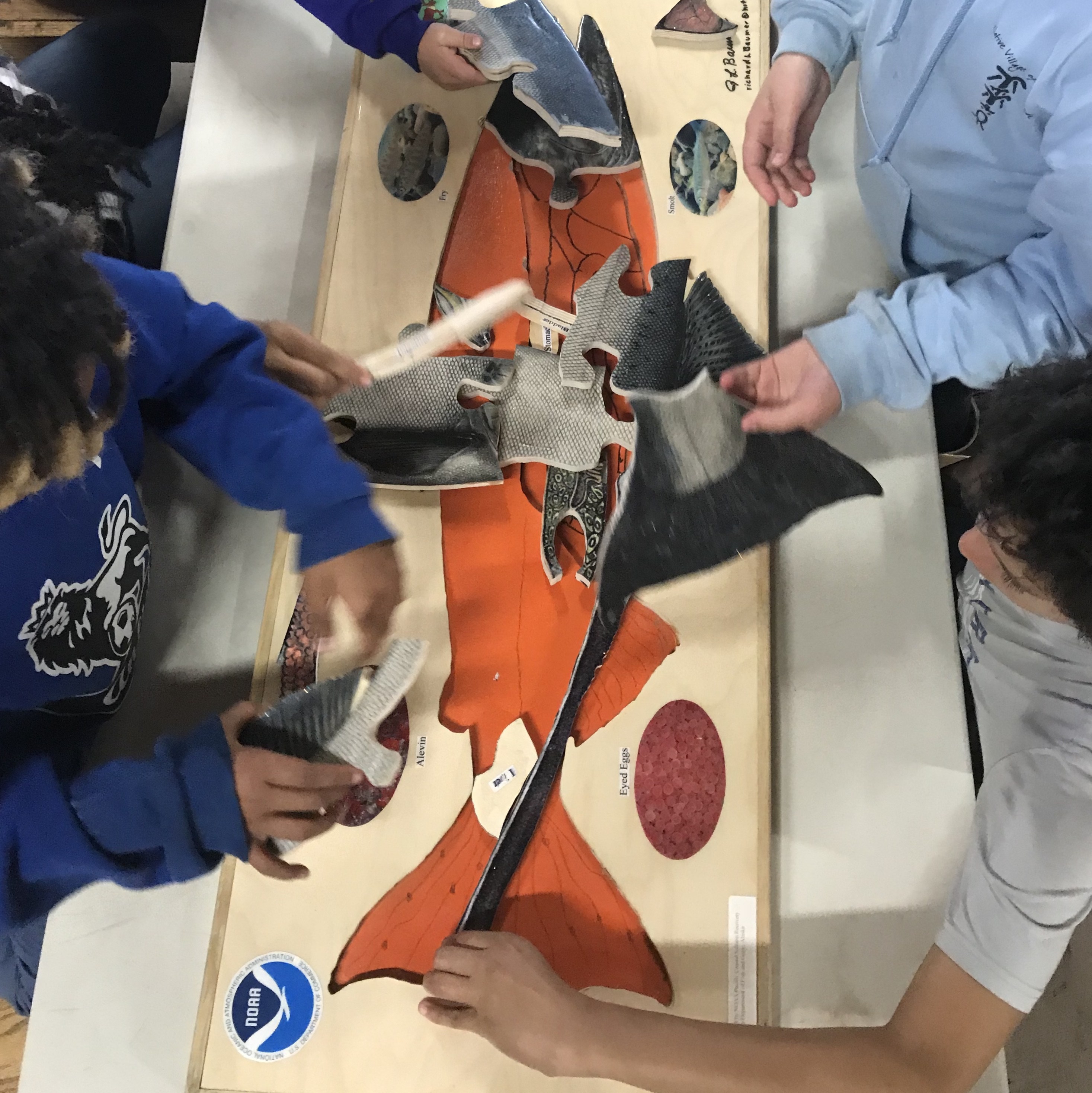
Dig Afognak camp on June 30, 2018. (Photo by Daysha Eaton/KMXT)

A 1964 earthquake devastated the island of Afognak, near Kodiak, and scattered its indigenous people to other parts of Alaska and the Lower 48.

Many lost touch with their culture and language.

Afognak descendants are making sure a new generation has a connection to Alutiiq culture, language and to the land where their ancestors lived.

Two young Alaska Native women who work at a nearby weir counting fish during summer are teaching the kids at this camp about salmon.

“This is Dig Afognak on Afognak Island and its a kids cultural camp,” said Taletha Gertz, who has spent the past seven summers working at the camp,

The camp site was previously the site of an archeaological dig, and before that, the home of her ancestors.

The village was destroyed after the 1964 earthquake and tsunami.

“They decided not to rebuild on Afognak and some of the villagers went to Port Lions and the rest dispersed throughout the United States, Kodiak and Alaska,” Gertz said. “To me, I’ve realized that Dig Afognak, it’s a place where we can all come together and talk about those original roots of Afognak.”

The land on which the camp sits was owned by Afognak Native Corporation and, after an archeaological dig was completed, the camp was turned over to the tribe and later the land was donated as well.

Native Village of Afognak turned it into the kids cultural camp.

They host four week-long camps with themes like subsistence hunting and survival skills and Alutiiq music and dance and language immersion. Kids, Native and non-Native, learn about science, the arts and the outdoors through the lens of Alutiiq culture.

Gertz said visiting the place where her ancestors once lived helps her feel connected. And she says it is also important for her three kids.

16-year-old Skylar Gertz is the oldest.

“If it wasn’t for this camp I think I probably would have been like, completely oblivious to who I am,” she said.

With light hair and eyes, she says growing up in Kodiak people didn’t always recognize her Native identity.

But at the summer camps, she feels like she is part of a big family. Now she works here as an intern, helping out in the kitchen and mentoring younger campers.

Sometimes she tags along to help out on excursions to forage for plants or to hunt and fish.
http://
Dig Afognak camp on June 30, 2018. (Photo by Daysha Eaton/KMXT)

It also immerses campers in the Alutiiq language.

Signs with Alutiiq words for household items are posted around the camp.

“The language is a big part of it because as we learn the language and go into the different concepts we learn about tradition, why this word is what it is, when it was used by the elders, the different kinds of ceremonies they had, the different kinds of family structures they had,” said Susan Malutin, who teaches Alutiiq culture and language at the camp. “And these words describe those things and that’s how they learn.”

Camp manager Nancy Nelson says the camp is critical for boosting the next generation’s skills and confidence.

“It’s mostly building their self-esteem, making them have that self-confidence in themselves because they’re our future leaders,” she said.

James Dunham is a member of the Afognak Tribal Council, which views the development of the camp as one of their most important accomplishments.

Dunham said the camp is very important to him because, like many Afognak descendents, his grandchildren are growing up in the Lower 48, and he doesn’t want them to forget their roots.

“We want to make sure our kids are able to hold their heads up and be proud of who they are and where they come from,” Dunham said.

And it seems to be working.

Skylar Gertz, whose mother is a descendent, but whose father is not, said she cannot participate in some cultural activities, like hunting for otters and seals during camp because of the way the government defines her eligibility through blood quantum.

However, she says the camp has taught her to feel confident in who she is.

“Being Native isn’t about how much Native you are,” Skyler Gertz said. “It is just about your ancestors and how you live up to that today.”

Dig Afognak summer camps run through the end of July.
Independent candidate wins seat on Sealaska board of directors

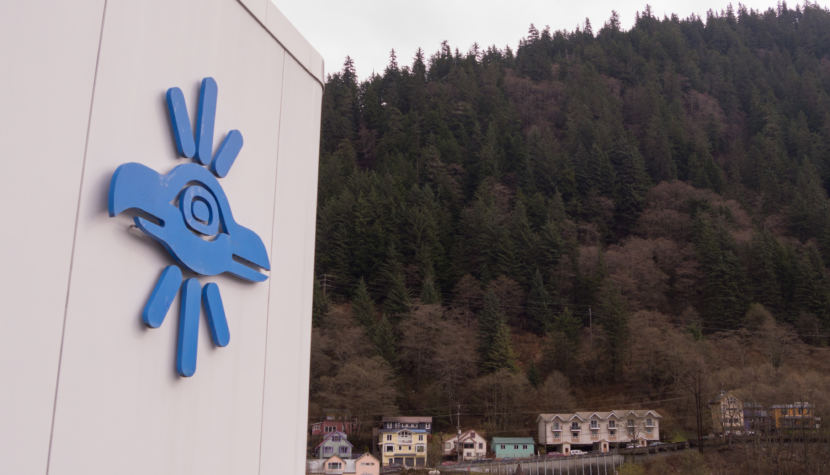
A Sealaska corporate logo adorns the roof of the Southeast Alaska Native corportation's headquarters in Juneau on May 2, 2018.
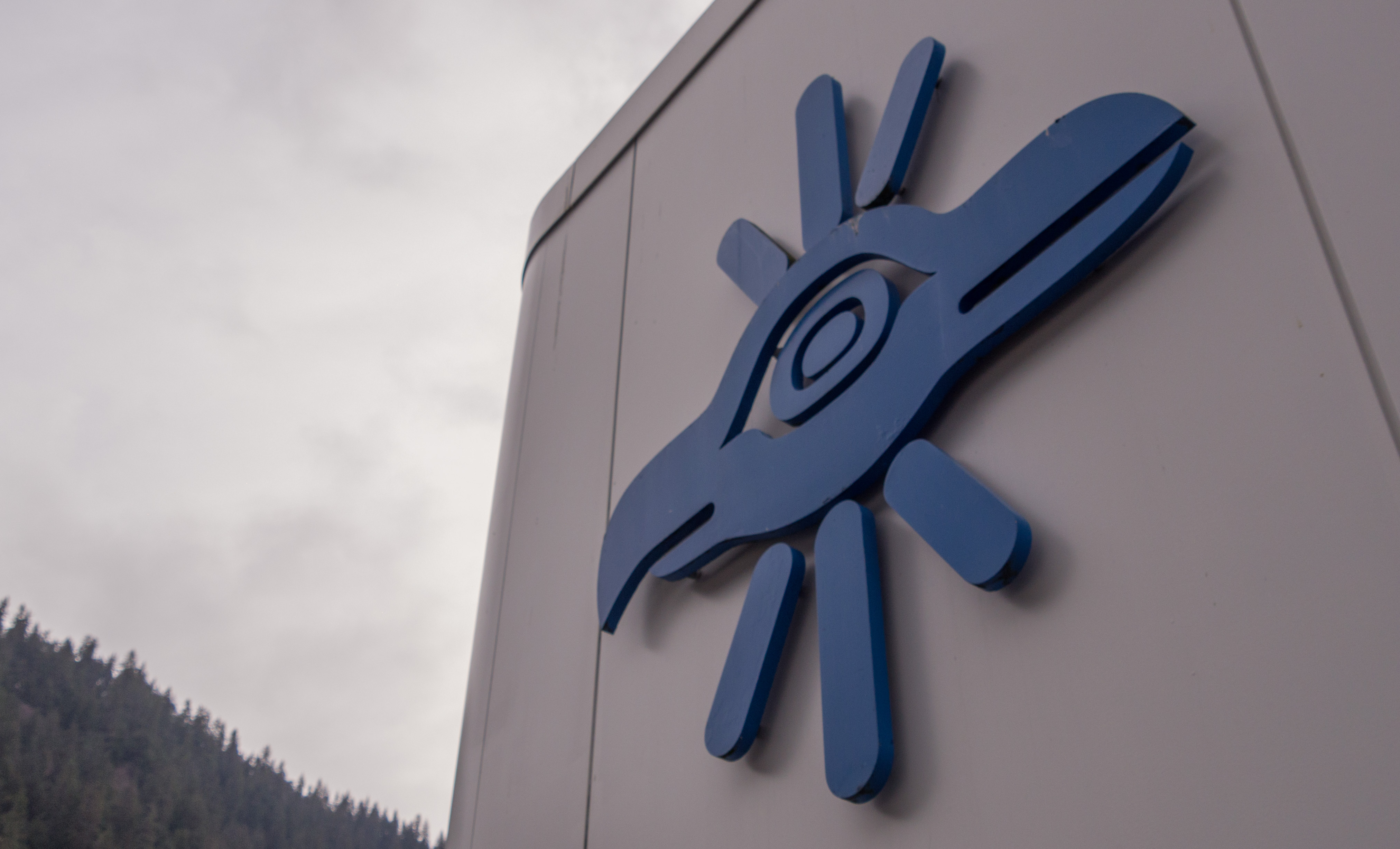
A Sealaska corporate logo adorns the roof of the Southeast Alaska Native corportation’s headquarters in Juneau on May 2, 2018. The logo has representations of the Eagle and Raven moieties of the Tlingit, Haida and Tsimshian cultures. (Photo by Jeremy Hsieh/KTOO)

Sealaska shareholders elected independent candidate Nicole Hallingstad to the Alaska Native corporation’s board of directors.

Election results were announced at the Alaska Native corporation’s annual meeting Saturday in Wrangell.

Hallingstad previously ran for the board in 2016 and 2017. She lives in Arlington, Virginia, and is the director of operations for the National Congress of American Indians.

“This election has proven that an independent candidate can be elected,” Hallingstad said. “The incumbents certainly have an advantage, but when you vote for a candidate you believe in, you can actually see that result in just a few weeks.”

She said her priorities during her three-year term include working to ensure the corporation’s continued profitability and modernizing Sealaska’s elections.

She also would like to see the board adopt term limits in order to give more shareholders the opportunity to serve.

“When we say to our young people, ‘Get your education, gain your experience in the world, but come back and work for your people,” she said. “There will be a place at this table for you,’ and … they see people who have maybe been in the same seat of power for 20, 30, 40 years, what message does that send to our youth?”

Sealaska has more than 22,000 shareholders in and outside of Alaska. This year, the corporation announced it tripled its earnings from 2016 to 2017.

At the meeting, directors approved a contract to deed Sealaska land in Wrangell to the Wrangell Cooperative Association, a federally recognized tribe.

Incumbent board members Joe Nelson, Albert Kookesh, Barbara Cadiente-Nelson and Tate London won re-election.

Incumbent Bill Thomas came in 8,000 votes shy of maintaining his seat. Independent candidates Karen Taug and Edwell John Jr. also came up short.

The board also introduced Aidan Hellen as its new board youth adviser. Hellen replaces outgoing youth adviser Nicole George for a one-year term.

Two remaining independents vie for spots on Sealaska board

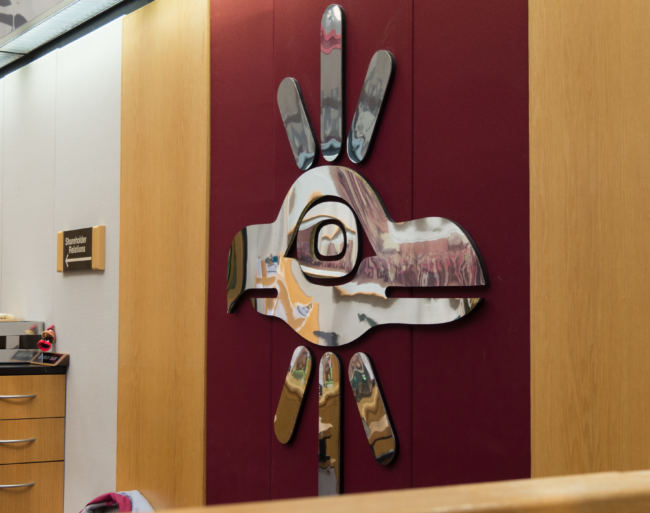
A Sealaska corporate logo is mounted behind the main receiptionsts desk at the Southeast Alaska Native corportation's headquarters in Juneau on May 2, 2018.
A Sealaska corporate logo is mounted behind the main receiptionsts desk at the Southeast Alaska Native corportation’s headquarters in Juneau on May 2, 2018. (Photo by Jeremy Hsieh/KTOO)

An independent candidate for the Sealaska Board of Directors withdrew from the race this week and endorsed two other independent challengers.

Edwell John Jr. said in a Facebook post Tuesday he wanted to increase the chance of election of Nicole Hallingstad and Karen Taug.

Sealaska shareholders will find out the results of the election Saturday at the Alaska Native corporation’s annual meeting in Wrangell.

The independents hope to unseat at least one of the five incumbents up for re-election on the 13-member board. They include Board Chair Joe Nelson, Albert Kookesh of Angoon, Bill Thomas of Haines, Barbara Cadiente-Nelson of Juneau and Tate London of Bothell, Washington.

Sealaska has more than 22,000 shareholders in and outside of Alaska.

The meeting will be webcast live for shareholders beginning at 10 a.m. Saturday.

Alaska’s northernmost town still in transition 1 1/2 years after official name change

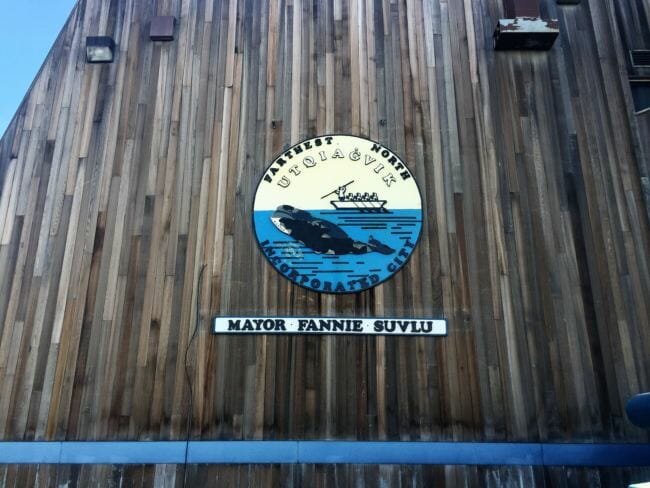
The new logo for the City of Utqiaġvik, photographed June 5. In October 2016, residents of the town formerly known as Barrow voted to officially change the name of their city to the traditional Iñupiaq name Utqiaġvik. (Photo by Ravenna Koenig/ Alaska’s Energy Desk.)

The town most of the world knew as Barrow voted in 2016 to officially start going by the traditional Iñupiaq name of Utqiaġvik.

The vote passed by a slim margin of 6 votes.

Some residents pushed back in the ensuing months, wanting to keep the name Barrow. Others said the town historically had a different traditional name, which was the view of the local Native corporation that filed a lawsuit to try to stop the change.

Over year and a half later, Utqiaġvik is still what the town is officially called.

But when you arrive by plane, the first thing you see is the word “Barrow” printed over the airport on the side facing the tarmac. 

“Barrow” is everywhere while walking around town: on the fire trucks, in the name of the high school, the local utility company, on the North Slope Borough’s official logo. It’s even scrawled on some of the brightly painted dumpsters.

City Hall has “Utqiaġvik” on the front of the building. And on bulletin boards around town where people post notices to the community, “Utqiaġvik” is starting to appear in some municipal department letterhead.

When you ask people what they call it, you get a real mix:

“I call it Utqiaġvik now,” James Koonaloak said.

“I still call it Barrow,” Murphy Nuglene said.

“I will use both at this point,” Muriel Brower said.

“I still call it Barrow out of habit,” Mary Patkotak said.

“Utqiaġvik,” Richard Okpeaha said.

“I was born in Barrow and I still live in Barrow,” Isaac Kalayauk said.

“Utqiaġvik,” Edith Nageak said. “I’m very happy they changed it to the original name.”

A lot of feathers got ruffled here when the name change went through.

Less than 20 percent of the town voted.

Some said they didn’t have enough time between the proposed change and ballot voting to really become aware of what was going to be decided at the polls.

There are people who still feel the official name should have remained Barrow.

Charles Brower, interim executive director at the Native Village of Barrow — the local tribal government — is one of them.

“I wasn’t interested in changing the name to Utqiaġvik,” he said. “It’s always been Barrow.”

He adds that the tribal council has no plans to change its name.

Then there are those who were really supportive of the change.

Fannie Akpik, the coordinator for Iñupiaq Education for the North Slope Borough school district, says hearing people calling the name of her hometown Utqiaġvik “warms my spirit.”

Akpik is in her 60s and says she doesn’t remember hearing the name Barrow until she showed up for her first day of school and saw it written on the building.

For her, the reversion to the traditional name is a way of affirming the Iñupiaq identity of this place.

“Someday I hope everybody will walk around and be proud to live in Utqiaġvik like I do,” Akpik said.

Tennessee Judkins teaches Iñupiaq education for the school district.

She voted to change the name, but also said that she’s OK if certain things in town continue to be called “Barrow” such as the high school where she played volleyball and rooted for the basketball teams.

“I wouldn’t be sad if it never changed,” Judkins said of her alma mater. “That’s one thing I’m like, cool, you can keep it Barrow High School, ’cause we are Barrow Whalers.”

Some of the initial hubbub about the name change has quieted at this point.

But Utqiaġvik is still in transition.

There’s a mountain of logistics that go into changing a place’s name. And some of that costs money, which was one of the initial concerns brought up by people who were against the change.

It’s unclear how long it will be before all the signage, textbooks, maps and the airport code fully reflect the name Utqiaġvik.

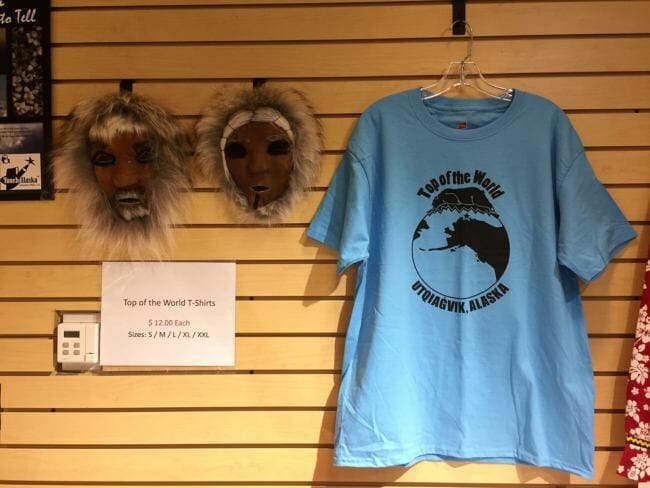
A T-shirt for sale at the Iñupiat Heritage Center in Utqiaġvik. In the gift shop you can buy items that say both ‘Barrow,’ and ‘Utqiaġvik.’ (Photo by Ravenna Koenig/Alaska’s Energy Desk)

For now at least, what people call this place seems to be a choice they’re making day by day, conversation by conversation, document by document.

At the DMV, for example, residents can choose what name they want printed on their driver’s license.

Dawndee Ipalook, who works at the DMV, issues those IDs. When asked for an estimate of the percentage of people who are choosing Barrow versus Utqiaġvik, Ipalook said, “I would say about probably 80-20.”

That’s 80 percent Barrow, 20 percent Utqiaġvik.

A lot of people choose Barrow because it’s easier to spell, Ipalook said.

Others have come in to add Utqiaġvik to their ID even though it hasn’t expired yet, just because they’re proud of the name.

Robert Nageak, who grew up here, says he respects the change, and uses Utqiaġvik sometimes himself, but he’s not a stickler for what people call this place.

“I just don’t have a problem with either/or,” he said. “Utqiaġvik; Barrow; still the same place. The most northern city in the United States of America.”

In other words, home.

Growing group of Native veterans paddles to Celebration while raising awareness

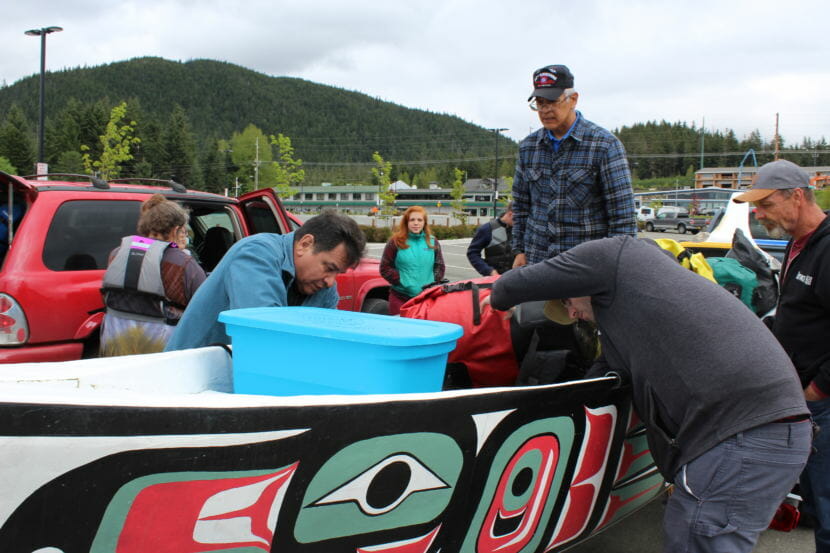
Dennis Jack, center, looks on as Doug Chilton, right, and other paddlers pack supplies into the Eagle canoe that veterans will paddle. May 29, 2018.
Dennis Jack, center, looks on as Doug Chilton, right, and other paddlers pack supplies into the Eagle canoe that veterans will paddle. May 29, 2018. (Photo by Adelyn Baxter/KTOO)

In the waters of Southeast, the members of the One Paddle Canoe Society will reach Juneau the same way their ancestors would have thousands of years ago.

On Tuesday, canoes representing six Southeast communities and Canada will arrive in Juneau. Their landing will kick off Celebration, a four-day gathering of Tlingit, Haida and Tsimshian peoples.

Before they departed last week, a few local paddlers gathered at Auke Bay for last minute preparations. They piled bags of supplies into a long, white canoe covered in formline design with an eagle painted on the bow.

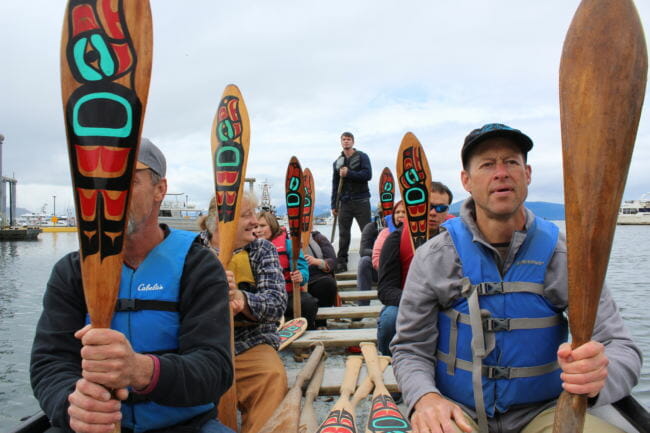
The Eagle canoe is manned by Alaska Native veterans. Aside from the desire to travel their ancestral waters, this group also paddles to raise awareness about the high rate of post-traumatic stress disorder and suicide among veterans.

Alaska has the highest concentration of veterans in the nation, and Alaska Natives make up a high number of them.

“Most every village you come into in Southeast Alaska, you’ll find a veteran,” said Dennis Jack.

He’s a combat veteran who served in Desert Storm and the Iraq War. He’s from Angoon, and two years ago, he decided to organize a veteran canoe for the first time.

“At that time we had seven veterans and this year we have over 22 that are participating,” Jack said.

According to a study released in 2016 by the U.S. Department of Veterans Affairs, the risk of suicide is 22 percent higher among veterans compared with the rest of the U.S. population.

Jack said the response after their first trip two years ago was extremely positive. The governor’s office and other state politicians reached out to ask how they could help. This year, Safeway and Fred Meyer offered support, as well as the Department of Veterans Affairs out of Anchorage and the National Guard in Juneau.

“Through the veteran canoe journey we’ve managed to get some help for a couple veterans that slipped through the cracks and they’re now getting help,” Jack said. “Even if we help just one person, it’s well worth the trip.”

Jim Kindle (left) and John Hannon (right) sit with other members of One People Canoe Society in the Eagle canoe during a supply run on Tuesday, May 29, 2018. (Photo by Adelyn Baxter/KTOO)
Jim Kindle, left, and John Hannon, right, sit with other members of One People Canoe Society in the Eagle canoe during a supply run on Tuesday, May 29, 2018. (Photo by Adelyn Baxter/KTOO)

Val Cooday is paddling for the first time. During the Vietnam War, Cooday served in the Women’s Army Corps out of Fort Sam Houston in Texas.

She’s originally from Petersburg and she’s witnessed the effects of PTSD firsthand.

“I had a daughter who went to Afghanistan twice. She came back, very extreme PTSD and it’s been a five-year struggle trying to keep her wanting to live, ” Cooday said.

Jack has his own reason for paddling.

“For me, I started out because my father was a World War II veteran,” he said. “He always wanted to be on a canoe trip, but with his age … I decided to do this in his name, in honor of my father.”

The canoes are due to arrive in Douglas Harbor between 2 p.m. and 3:30 p.m. Tuesday. There will be a welcome party waiting for them.

Editor’s note: 360 North is under contract with Sealaska Heritage Institute to produce television and online video coverage of Celebration.

Sealaska board election short on independents

A Sealaska corporate logo adorns the roof of the Southeast Alaska Native corportation's headquarters in Juneau on May 2, 2018.
A Sealaska corporate logo adorns the roof of the Southeast Alaska Native corportation’s headquarters in Juneau on May 2, 2018. The logo has representations of the Eagle and Raven moieties of the Tlingit, Haida and Tsimshian cultures. (Photo by Jeremy Hsieh/KTOO)

Only three independent candidates are running for the Sealaska Board of Directors this spring. That’s a smaller number than most recent years. Why?

Sealaska is holding community meetings this month in nine Southeast Alaska and Washington state cities.

They’re an opportunity for some of its more than 22,000 shareholders to hear about the regional Native corporation’s business progress. The meetings are also a chance to hear from incumbents and challengers running for Sealaska’s board of directors.

Five of the board’s 13 incumbents are on this year’s ballot. They’re endorsed by the board and run as a slate. Shareholders can cast ballots for them as a group through a process called discretionary voting.

Only three independent candidates are challenging the incumbents. That’s a third to a half of the number in some elections this decade. Shareholders cast ballots for each individual candidate through what’s called directed voting.

Ray Austin of Albuquerque, New Mexico, has run as an independent in several elections. But not this time around.

“What’s been happening in the past years is too many people run, sometimes almost 10. And what happens then is that they dilute the voting power of the shareholders that vote directed,” he said.

Two of the three independent candidates have run before. They are Nicole Hallingstad of Arlington, Virginia, Sealaska’s former corporate secretary; Karen Taug of Juneau, Bartlett Regional Hospital Controller; and Edwell John Jr. of Juneau, a state business analyst.

The incumbents include board president Joe Nelson of Juneau and his predecessor, Albert Kookesh of Angoon. Also running are former lawmaker Bill Thomas of Haines, fisheries business owner Barbara Cadiente-Nelson of Juneau and attorney Tate London of Bothell, Washington.

Nelson, in a prepared statement, said the thin independent slate could be the result of several factors.

One is that two strong independents won board elections over the past three years. Another is that several other incumbents first ran as independents.

Sealaska CEO Anthony Mallott said it also could be due to the corporation’s business success. A recently released annual report showed last year’s earnings triple the amount of the previous year.

“The excitement we have around the financial performance, I would guess, should drive a lot of decision-making for our shareholders in this process. We want to be very clear and transparent that 2017 is a milestone year and there’s more to come,” he said.

In past years, some critics have suggested a coordinated campaign to limit the number of independents.

That happened in 2014, when a group called 4 Shareholders for Sealaska ran its own slate. It succeeded in putting one person on the board.

Candidate Hallingstad said social media postings show there’s still interest in coordination.

“I’ve seen a lot of conversation about shareholders wanting to unite behind one or two qualified candidates to get an independent elected,” she said.

But she, Austin and another former candidate say there’s no coordinated effort this year.

Austin said that’s in part because campaigns begin before the official list of candidates is made public.

“I think that’s always been a disadvantage for any shareholder because you cannot plan a strategy if you don’t know who’s running as an independent,” he said.

Shareholders have been voting online and by mail since early this month.

Election results will be announced at Sealaska’s annual meeting June 23 at the Wrangell High School Gymnasium.

Site notifications
Update notification options
Subscribe to notifications