Alaska Native Corporations

Begich spent four years as a consultant. As governor, he could sign bills affecting former clients.

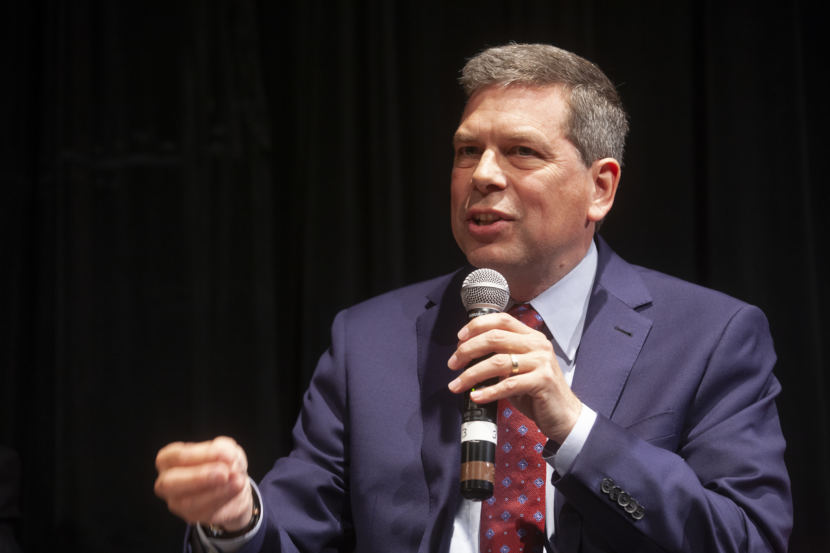
After leaving the U.S. Senate, Mark Begich — pictured at a talk during a September campaign visit to Juneau — founded a consulting company, Northern Compass Group. (Photo by Rashah McChesney/Alaska’s Energy Desk)

If Democrat Mark Begich is elected Alaska’s governor, he’ll wield veto power over dozens of bills each year, just like his predecessors.

A major difference from those predecessors, though, are his relationships with the special interests that will be pushing him to sign or reject each bill. In some cases, they could be his former paying customers.

For nearly four years, Begich has owned a public affairs and consulting firm, Northern Compass Group, that’s worked with clients that intersect with both state and federal government. If elected, he’ll likely be faced with decisions that will directly affect the businesses, unions and Native organizations that have been paying his business for advice.

That means Begich should be careful about possible conflicts, according to Anchorage independent Rep. Jason Grenn, who helped lead a successful push for legislative ethics reforms this year.

Rep. Jason Grenn, I-Anchorage, speaks during a House Floor Session in the Capitol in Juneau on Feb. 10, 2017.
Anchorage independent Rep. Jason Grenn. (Photo by Skip Gray/360 North)

“I don’t think anyone should be disqualified just because they’ve been successful in the past,” Grenn said. But, he said, he thinks Begich “should understand that people are going to be maybe more critical than of governors in the past, who had a law firm or had other business dealings.”

“And he should be sensitive to that, and take the steps needed to show these aren’t going to inject themselves into his best vision for Alaska,” Grenn added.

Alaska politicians often emerge from the worlds of public policy and business, and Begich is far from the first with potential for conflicts.

The current governor, Bill Walker, owned a law firm that worked for the city of Valdez, the Kenai Peninsula Borough and the Alaska Gasline Port Authority — a municipal group pushing the construction of a natural gas pipeline from the North Slope to Valdez.

Walker sold his law firm after being elected, but his critics still cited his past relationship with the authority because its gas line plans conflicted with a state-sponsored project to build the pipeline on a different route.

And after the 1990 election of Wally Hickel, a businessman with holdings worth more than $80 million, he pledged to put his interests in a gas line company, Yukon Pacific Corp., into a blind trust.

Begich’s work is significant, though, because of the number of clients he’s had, as well as the recentness of his work, Grenn said.

Northern Compass Group had 17 paying clients last year, generating at least $885,000 in income for the firm, according to a financial disclosure Begich was required to file with the state. Begich himself reported between $300,000 and $700,000 in personal income from his company. (State law requires income to be reported in ranges, rather than specific amounts.)

Several of Begich’s clients, or their employees, have also spent thousands of dollars on political efforts and groups that are trying to get him elected.

One step Begich should take if elected governor is to recuse himself from official actions that would “directly and substantially” affect his company’s clients, said Craig Holman, an expert on campaign finance and governmental ethics at the Washington, D.C. watchdog group Public Citizen.

“That would be one big step that we see flaunted over and over, here in Washington, D.C.,” he said.

Begich’s campaign manager, Nora Morse, would not make him available for an interview.

Former U.S. Sen. Mark Begich announces that he's staying in the race for governor in Anchorage on Tuesday, the deadline for candidates to withdraw and have their names taken off the ballot. Also pictured: His son Jacob Begich, wife Deborah Bonito and lieutenant governor running mate Debra Call.  The three-way race includes Gov. Bill Walker, an independent, former state Sen. Mike Dunleavy, a Republican, and Begich, a Democrat.
Former U.S. Sen. Mark Begich speaks at a campaign event in September. (Photo by Liz Ruskin/Alaska Public Media)

In an email, she said Begich, as an elected official, “is always focused on one singular goal: doing what is in the best interest of Alaskans with a commitment to open and transparent government.”

“And as always, his office and the entire administration would be held to the highest ethical standards – following all laws and state regulations,” she wrote.

The future of Northern Compass Group, and of Begich’s ownership stake, will be determined after the election, she said.

Begich created Northern Compass Group in 2015, less than three months after losing his re-election bid to Republican Dan Sullivan. The company’s website shows five employees working with Begich, several of whom worked in his U.S. Senate office; state corporate filings list Begich as Northern Compass Group’s sole owner.

While state law requires Begich to list his clients on his financial disclosure, and say roughly how much they paid Northern Compass Group, he does not have to describe the work his company did for each one.

Northern Compass Group’s largest source of revenue last year — at least $200,000 — was a Washington, D.C. law and lobbying firm called Brownstein Hyatt Farber Schreck, where Begich was hired as an adviser in 2015.

Brownstein has dozens of accounts, from Walgreens to Amazon to MGM Resorts.

Brownstein, when Begich was hired, said he would work on energy issues and the intersection between business and government. But neither Begich’s campaign nor Brownstein would identify the specific clients Begich has worked with.

Morse described Begich’s work for Brownstein generally as “internal communication and organization,” “bridging the bipartisan team” within the company and “public relations and outreach.” He helped launch and moderate an issue-based podcast series, as well as panels with bipartisan speakers on current events, she said.

What Northern Compass Group did for clients in Alaska last year is a little more clear.

The company researched Alaska renters insurance law for Weidner Apartment Homes, which has more than 5,000 units in the state, said Weidner spokesman Greg Cerbana.

Northern Compass Group worked for Chugach Electric Association on the Anchorage co-op’s proposed merger with a municipal utility, though a spokeswoman, Julie Hasquet — a former Begich press secretary — refused to provide details or documentation.

Grant Aviation, a regional Alaska airline, hired Northern Compass Group to solicit feedback from the communities where the airline works, Grant officials said in a 2015 news report.

And Northern Compass Group has also advised Planned Parenthood in its fights with Congress and the Trump administration, spokesman Andrew Everett said.

While Begich wouldn’t talk about the specifics of his consulting work, he did describe it generally in an interview earlier this year.

“It was varied, every day. Sometimes I’d be traveling to a place in Alaska, meeting with a potential new client, or talking with people about a client,” he said. “Or, the team would be doing other projects, related. So, very eclectic.”

The same issues and entities that Begich’s company has worked with are almost certain to come before state government in the next few years.
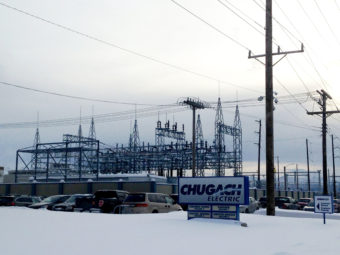
Chugach Electric in Anchorage is one of three utilities announcing a preliminary agreement to work together to reduce power costs. (Photo by Elizabeth Harball/Alaska's Energy Desk)
Chugach Electric Association hired Mark Begich’s consulting firm to work on its merger with a municipal utility. (Photo by Elizabeth Harball/Alaska’s Energy Desk)

Eight of Northern Compass Group’s 17 clients pay lobbyists to work with Alaska’s executive branch, which Begich will oversee if he’s elected. Those clients also lobby on specific bills that could come to the governor’s desk.

This year, for example, Chugach Electric Association lobbied against legislation to create an independent entity aimed at cutting consumers’ costs by better coordinating power generation among Alaska’s interconnected utilities, according to one of Chugach’s lobbying reports.

The utilities said the legislation was unnecessary and that they were already working toward the same goal.

While Grenn, the state representative, said he wants Begich to be transparent about possible conflicts if he’s elected, Begich’s opponents have also questioned his loyalty to Alaskans’ interests in his current job — by describing his work for the past four years as “lobbying.”

But that’s a mischaracterization, according to the specific definition of lobbying under federal law.

Begich was barred from lobbying his former Congressional colleagues for two years after he left office. The ban is designed to stop representatives and senators from profiting from the connections they made while in public service, and to prevent them from doing favors for possible future employers while they’re still in office.

After the two-year cooling-off period, if Begich wanted to try to directly influence members of Congress on legislation, he would have had to formally register as a lobbyist. He didn’t.

What Begich did do, in some cases, was give advice to other people who were lobbying and trying to influence Congress.

That’s become a common practice for former government officials. And good government groups are critical of the practice, saying it’s not much different than lobbying.

“Strategic consulting — especially when you’re doing strategic consulting on behalf of a major lobbying firm — is really stealth lobbying,” said Holman, the government ethics expert. Begich, he added, is giving clients “key advice and direction on how to get around the governmental system, both at the federal and state systems. That is lobbying by any other term.”

But Begich’s supporters disagree. One of them, Anchorage tribal lawyer and lobbyist Lloyd Miller, said there’s a big distinction between Begich’s work and what a registered lobbyist does.

It’s one thing to advise lobbyists on how to best approach members of Congress, and another completely to pick up the phone and make those calls yourself, Miller said in an interview.

“It’s not a line, it’s a river,” Miller said. “Because it’s such an enormous gap.”

Miller’s firm paid Northern Compass Group at least $20,000 last year, according to Begich’s financial disclosure. Miller said Begich gave advice about the most effective arguments to use to convince individual senators of the benefits of legislation Miller was pushing.

But Miller said he still had to make those arguments to senators and staffers himself, which was harder than having Begich do it for him.

“I would have loved for him to actually become a registered lobbyist, because he would be great at it. He would be super at it,” Miller added. “People like him who become registered lobbyists earn a million, two million or more a year in Washington, D.C.”

Andrew Kitchenman contributed reporting.

U.S. Treasury Secretary Steven Mnuchin talks gasline, Alaska economy in Fairbanks


U.S. Treasury Secretary Steven Mnuchin, Alaska Governor Bill Walker, and AGDC President Keith Meyer at the Trans-Alaska Pipeline visitor center north of Fairbanks on October 13, 2018. (Alaska Gasline Development Corporation).

One of President Trump’s Cabinet officials made a stop in Fairbanks this past weekend.

Treasury Secretary Steven Mnuchin was on his way back to Washington D.C. from a meeting in Indonesia. On Saturday, October 13th, he attended several meetings to talk about Alaska’s economy with community and business leaders.

Gov. Bill Walker organized a number of those meetings, but he said the idea to come to Alaska was the Mnuchin’s idea. He said the primary reason for the visit was for the Secretary to get a better understanding of the Alaska LNG Project.

“Learning more about the mechanics of the project, how it would work,” said Governor Walker. “He’s obviously very involved on the trade issues as well.”

The Secretary also attended a discussion with several Alaska Native corporations including Ahtna Incorporated, Calista Corporation, CIRI, Doyon and NANA.

“I wanted him to hear from them as far as what they do in the way of resource development in Alaska,” Walker said. “It’s a very unique model. And how successful they have been, and the big impact that their … corporations have on Alaska employment and revenue to the state.”

Both Sen. Lisa Murkowski and Gov. Walker accompanied Secretary Mnuchin during his Fairbanks trip.


Online, Sealaska shareholders condemned their corporation’s Walker-Mallott endorsement. Here’s what they said in person.

A Sealaska corporate logo adorns the roof of the Southeast Alaska Native corportation's headquarters in Juneau on May 2, 2018.
A Sealaska corporate logo adorns the roof of the Southeast Alaska Native corportation’s headquarters in Juneau on May 2, 2018. The logo has representations of the Eagle and Raven moieties of the Tlingit, Haida and Tsimshian cultures. (Photo by Jeremy Hsieh/KTOO)

Last month, Sealaska Corporation’s board of directors announced their endorsement of Bill Walker and Byron Mallott for governor and lieutenant governor. The board also donated $100,000 to Unite Alaska, a political action committee supporting the Walker-Mallott ticket.

The announcement was met with emoji-laden condemnation from shareholders on social media, so I asked around in the community to see if the sentiment was shared offline.

The most common response I got from shareholders in Juneau was “no comment.” But of those who did agree to talk, almost all disapproved of the decision, and for a wide range of reasons.

“It’s fine in my world if they want to donate out of their own pockets, which is what I do if I so choose for a particular candidate,” an elder named Evelyn Myers told me over the phone. “But they’re using corporate funds, they’re using shareholder funds. … It just seemed excessive, to me.”

“There’s quite a few shareholders that disagree with what they did and are actually not voting for Walker-Mallott,” shareholder Mabel Lee said.

“I don’t think they should be joining any politicians,” shareholder John Ross told me. “They could do it verbally, financially — I don’t think they should.”

While concerns differed in some of the details, many shareholders oppose the board’s decision for a few common reasons. One was the feeling that shareholders should have been consulted before the endorsement and donation were made.

“If you’re part of Sealaska shareholders, it involves everybody. To have them do stuff like that, without telling the shareholders anything, it just wasn’t right,” shareholder Royal Jackson Jr. told me at a Get Out The Native Vote event last week.

Another common perspective was shareholder opposition to Sealaska showing support for any political candidate. In the past, the board has endorsed other candidates, including Lisa Murkowski for Senate in 2010 and 2016, and Mallott in his 2014 bid for governor. The 2014 Mallott endorsement also came with a $50,000 donation to Mallott-One Alaska, a political action committee that supported his run.  For many, this most recent decision appeared to represent the board’s political interests, and not those of the more than 22,000 Sealaska shareholders.

“Shareholders aren’t homogeneous,” shareholder Brad Fluetsch said over the phone. “We have Republicans, we have Democrats, we have Green Party, we have Libertarians. You know, just about every political party in Alaska, Sealaska has shareholders who hold that perspective. Why is the board using shareholder money to fund their political view?”

Speculation about favoritism, and even nepotism, popped up in shareholder comments as well, since Mallott is a former board member and former president and CEO. His son, Anthony Mallott, is currently president and CEO.

The board declined requests for an interview, but defended its decision in an email as “a way to share its perspective on broad issues facing Alaska Natives and support candidates that work to advance their goals.” In a separate emailed statement, Sealaska board chair Joe Nelson also cited Walker’s establishment of Indigenous People’s Day and signing the Alaska Tribal Child Welfare Compact last year as examples of the administration prioritizing Native issues.

I did hear a few voices of support from shareholders who agree with the board that electing Walker-Mallott is in the best interest of Alaska Natives.

“My support is for the previous governor, and I support them,” shareholder Deena LaRue said last week. “I guess my opinion is that I appreciate the efforts of Sealaska to keep them moving forward.”

But even though the decision aligns with her political views, LaRue said shareholders should have been consulted before the endorsement and donation were made. “I think that because I am a Sealaska shareholder, I didn’t have any voice in that decision-making, and I think that kind of money, for a corporation, should have been considering the shareholders of that corporation.”

Some shareholders felt the money would be better spent on scholarships or dividends.

In its statement, Sealaska said it “respects all shareholder positions and political views and encourages them to add their voice by voting in the general election.” The election will be held Nov. 6. Until then, Sealaska says shareholders can get more information directly from the corporation by visiting its website or reaching out by mail.

Editor’s note: Byron Mallott resigned as lieutenant governor Tuesday, effective immediately. 

Red Dog Mine, in hunt for more ore, proposes new road

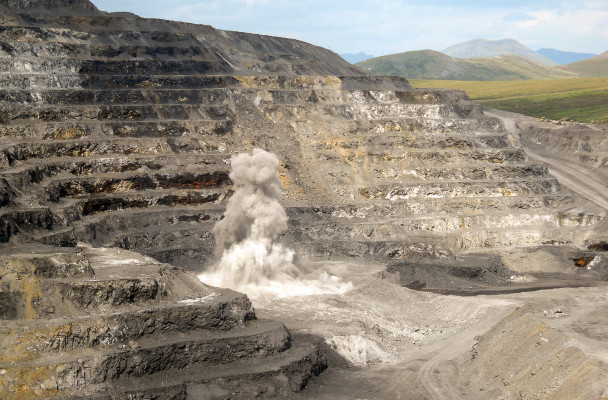
The Red Dog Mine in 2010. (Photo by Alaska Public Media)

One of Alaska’s largest mines is moving toward a significant expansion, applying for state and federal permits to build a 10-mile road to a pair of new prospects in a remote part of Northwest Alaska.

The 30-year-old Red Dog Mine has generated profits for its operator, Canadian mining company Teck. Teck, in turn, pays hundreds of millions of dollars in yearly royalties to the Alaska Native regional corporation, NANA, that owns the land where the mine sits. It also hires hundreds of NANA shareholders.

But without a new source of zinc and lead, the money and jobs could disappear in less than 15 years, when Red Dog is expected to run out of ore. Teck’s planned road leads to a pair of new prospects, Anarraaq and Aktigiruq, that could extend the mine’s lifespan.

Teck has been drilling into the prospects from the surface, moving equipment by helicopter. Now, the company wants to do more intensive drilling from underground, and it wants to build the road to bring in heavy equipment, according to permitting documents that the company filed with the U.S. Army Corps of Engineers.

Teck, in a prepared statement from spokesman Chris Stannell, said it chose the route for the road in consultation with local elders and subsistence hunters. And it’s given helicopter tours to local leaders in nearby Kivalina, who get drinking water and fish from the Wulik River, in the same watershed as the mine.

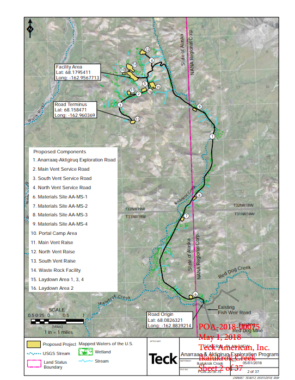
Teck’s plans for a road from the Red Dog Mine to a pair of new prospects, included in documents submitted to the U.S. Army Corps of Engineers.

A group of Kivalina residents sued the mine’s operators over wastewater discharge in 2004, in a case that was later settled. One said this week that she’ll be closely watching Teck’s expansion plans.

“We are not trying to close the mine down — we know that’s not going to happen. We just want them to be careful as much as they can,” said Janet Mitchell, a former village administrator. “We just want as little spills as possible and as little dust flying out in the air as possible. And they’ve been pretty good about that.”

The mine has been operating since 1989 and last year produced more than 500,000 tons of zinc. Its gross profit in 2017 was $971 million, according to Teck’s annual report, and the company paid $325 million in royalties to NANA, which distributes about two-thirds of the money to other Alaska Native corporations under federal law.

The mine also employs hundreds of Northwest Alaska residents and NANA shareholders.

Teck, in its annual report, said it expects Red Dog to run through 2031. It’s assessing the new deposits to see if it’s “economically and environmentally viable” to extend the mine’s operations past that date, Stannell said.

One key fact is that the new prospects are on state land, so NANA wouldn’t collect royalties like it does now — though the road to access the prospects does have to cross NANA land.

Teck applied with the Alaska Department of Natural Resources in June for permission to build the road, as well as pads for things like a camp and waste rock storage. The state published the plans Wednesday and said it would accept comments on them for two weeks.

Stannell said road construction is expected to start in mid-January, and the project will include a half-dozen steel bridges over creeks, according to Teck’s application with the state. Teck, Stannell added, is working with residents, elders and NANA “to ensure we conduct this work in a way that is protective of the environment, such as ensuring that water sources are protected and preventing any potential impacts to subsistence resources such as caribou.”

Some Kivalina residents have “grave concerns” about possible contamination to the Wulik River, said Millie Hawley, former president of Kivalina’s tribal council.
Teck’s new prospects are closer to the river than the mine’s current operations.

“But it doesn’t look like it’s going to get too close,” Hawley said. “We’ll just have to wait and see.”

Opponents pack Anchorage hearing on salmon habitat ballot measure

Roger Jenkins testifies on the salmon habitat ballot measure to a packed room at the Alaska Legislative Information Offices in Anchorage. (Joey Mendolia/Alaska’s Energy Desk)

A ballot initiative aimed at protecting salmon habitat is facing stiff opposition from industry groups, unions and Native corporations in Alaska. That opposition was on full display at an Anchorage hearing on the measure held this week.

As required by law, the state is holding a series of public hearings on the initiative.

Before the hearing, about a dozen demonstrators gathered to chant and wave signs saying “Vote No on 1” on a nearby street corner. The demonstration was organized by Stand for Alaska, a group formed to oppose the measure. Supporters of the ballot measure, which would toughen the state’s permitting requirements for projects built in salmon habitat, also showed up to demonstrate ahead of the hearing.

Inside, the hearing room was packed, with attendees lining the walls and spilling out into the hallway. Lt. Gov. Byron Mallott, who oversees the Alaska Division of Elections, presided over the hearing.

“Time will be very tight,” Mallott said in his opening remarks. “With the number of folks that have signed up, it looks like we will be hard-pressed to hear everyone.”

The first speaker was Stephanie Quinn-Davidson, one of the measure’s sponsors and head of the Yukon River Inter-Tribal Fish Commission. She argued that as companies pursue more large mines and oil developments in Alaska, the state needs to protect salmon runs from impacts seen in the Lower 48.

“We have the opportunity to finally get it right here in Alaska. My hope for our future is that we can learn from our past and choose a different path forward,” Quinn-Davidson said.

Doyon President and CEO Aaron Schutt delivered the opposition’s official response.

“This not only threatens our jobs and our economy, it threatens our rights as property owners,” Schutt said.

After that, there was a long string of testimony echoing Schutt’s arguments against the measure. Alaskans working for mining, oil, other resource development companies and those that support them turned out in force. That included Jim Hill.

“It’s a development killer,” Hill said.

There was also testimony from groups that advocate for industry like the Resource Development Council, the Alaska Miners Association and the Alaska Oil and Gas Association — all against the ballot measure.

Eventually, a handful of initiative supporters had their turn, including Georgeanna Heaverley, a commercial fisherman in Cook Inlet, who argued the ballot measure will ensure resource development is done responsibly.

“We are willing to do what it takes to protect what we love so that our future grandchildren — and their grandchildren — know what it’s like to stand on the aluminum deck of a boat and pick salmon from a net and provide the world a sustainable food,” Heaverley said.

As he began his testimony, ballot initiative supporter Charles Treinan remarked on the imbalance at the hearing.

“I was feeling pretty lonely as a proponent of the initiative until I heard a few of my fellow proponents here,” Treinan said.

Of the over 60 people who testified during the two-hour hearing, most were against it.

When it comes to campaign fundraising, there’s an even bigger imbalance. Yes for Salmon, the official group campaigning for the initiative, has raised just over $1 million, with support from environmental groups like Cook Inletkeeper and the Portland-based Wild Salmon Center. Stand for Alaska has raised over $10 million with major recent contributions from ExxonMobil and mining companies Coeur Alaska and Hecla.
This article has been updated to include a more accurate estimate of Stand for Alaska’s fundraising total.

Sealaska to donate $100,000 to group backing Walker and Mallott re-election

A Sealaska corporate logo adorns the roof of the Southeast Alaska Native corportation's headquarters in Juneau on May 2, 2018.
A Sealaska corporate logo adorns the roof of the Southeast Alaska Native corportation’s headquarters in Juneau on May 2, 2018. The logo has representations of the Eagle and Raven moieties of the Tlingit, Haida and Tsimshian cultures. (Photo by Jeremy Hsieh/KTOO)

Sealaska Corp. announced Tuesday that it’s endorsing incumbent Gov. Bill Walker and Lt. Gov. Byron Mallott for re-election. And the regional Native corporation is kicking in $100,000 to a group backing the independent ticket.

Sealaska Board Chairman Joe Nelson.
Sealaska Board Chairman Joe Nelson (Photo courtesy Sealaska)

“The Walker-Mallott administration has been consistent and fair with respect to properly acknowledging Alaska’s first people and respecting the sovereignty of Alaska’s 229 tribes,” Sealaska board President Joe Nelson said in a news release. “The establishment of Indigenous Peoples Day and compacting with tribes on Indian Child Welfare services are examples of this administration’s genuine effort to put our Alaska Native interests front and center, where they should be.”

Sealaska’s $100,000 donation is going to Unite Alaska for Walker-Mallott. The independent expenditure group registered itself last week.

Tim Woolston is a Unite Alaska spokesman. He said Sealaska’s donation is the first public commitment from an Alaska group.

“We are expecting and very confident that we’re going to raise over $1 million and in a pretty short period of time,” he said. “And we’re going to spend that money taking this message of the record of the governor and the work that he’s done and the leadership that he’s demonstrated.”

Unite Alaska previously received $75,000 in seed money from the Colorado-based Unite America. Woolston said the Alaska group is patterning itself after that group. Its mission to get independent candidates elected nationwide to bridge partisan divides. It also endorses Walker.

Woolston hinted that other Alaska Native corporations may follow Sealaska, as well as outside interests that want to weaken destructive elements of the two-party system.

He said most of the money will be spent on advertising. The group isn’t interested in mudslinging or personal attacks.

“The commitment is to focus on the governor’s record, but to also point out some truths about the opponents in this race,” Woolston said.

Byron Mallott is a former Sealaksa board chair and CEO. His son Anthony Mallott has been its CEO since 2014.

A Sealaska representative could not immediately be reached for comment.

Editor’s note: Sealaska Corp. and Sealaska Heritage Institute occasionally hire 360 North to produce television and video coverage of their events. This story has been updated and expanded with comment from Unite Alaska. 

Site notifications
Update notification options
Subscribe to notifications