Alaska Native Corporations

New House Tribal Affairs Committee aims to advance state relationships

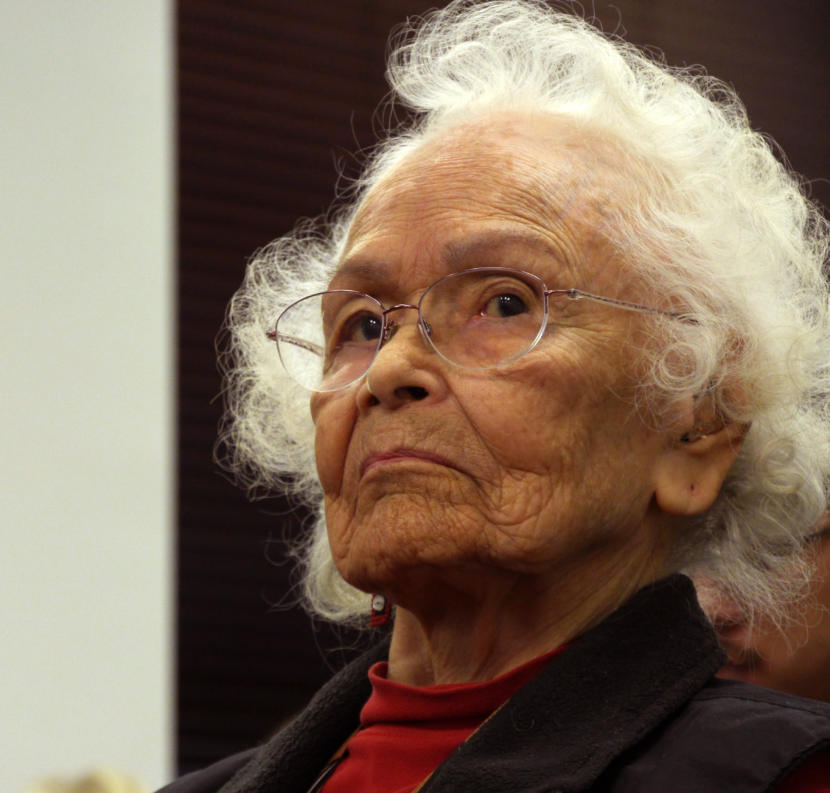
Tlingit Elder Marie Olson listens from the audience in the first meeting of the House Tribal Affairs Committee on March 7. Earlier, as an invited representative of the Áakʼw Ḵwáan, one of the indigenous groups from the Juneau area, she had welcomed the committee. (Photo by Skip Gray/360 North)

The Alaska House of Representatives has a new special committee to focus on tribal affairs. The committee will aim to advance relationships with tribes. Lawmakers spent the first few meetings getting an overview of how tribes are governed and reach compacts with the state

The committee has been formed in part because tribes — and tribal organizations like hospitals — could provide more services that the state funds. And since the state’s relationship with tribes cuts across many different state departments, lawmakers decided to have one committee that would deal with the full range of tribal affairs.  

Marie Olson is an Áakʼw Ḵwáan Tlingit Elder. She welcomed the first meeting of the Alaska House Tribal Affairs Committee this month on March 7.

“I thank you very much because I recognize the history of what is occurring now,” Olson said, adding the Tlingit word for thank you: “Gunalchéesh.”
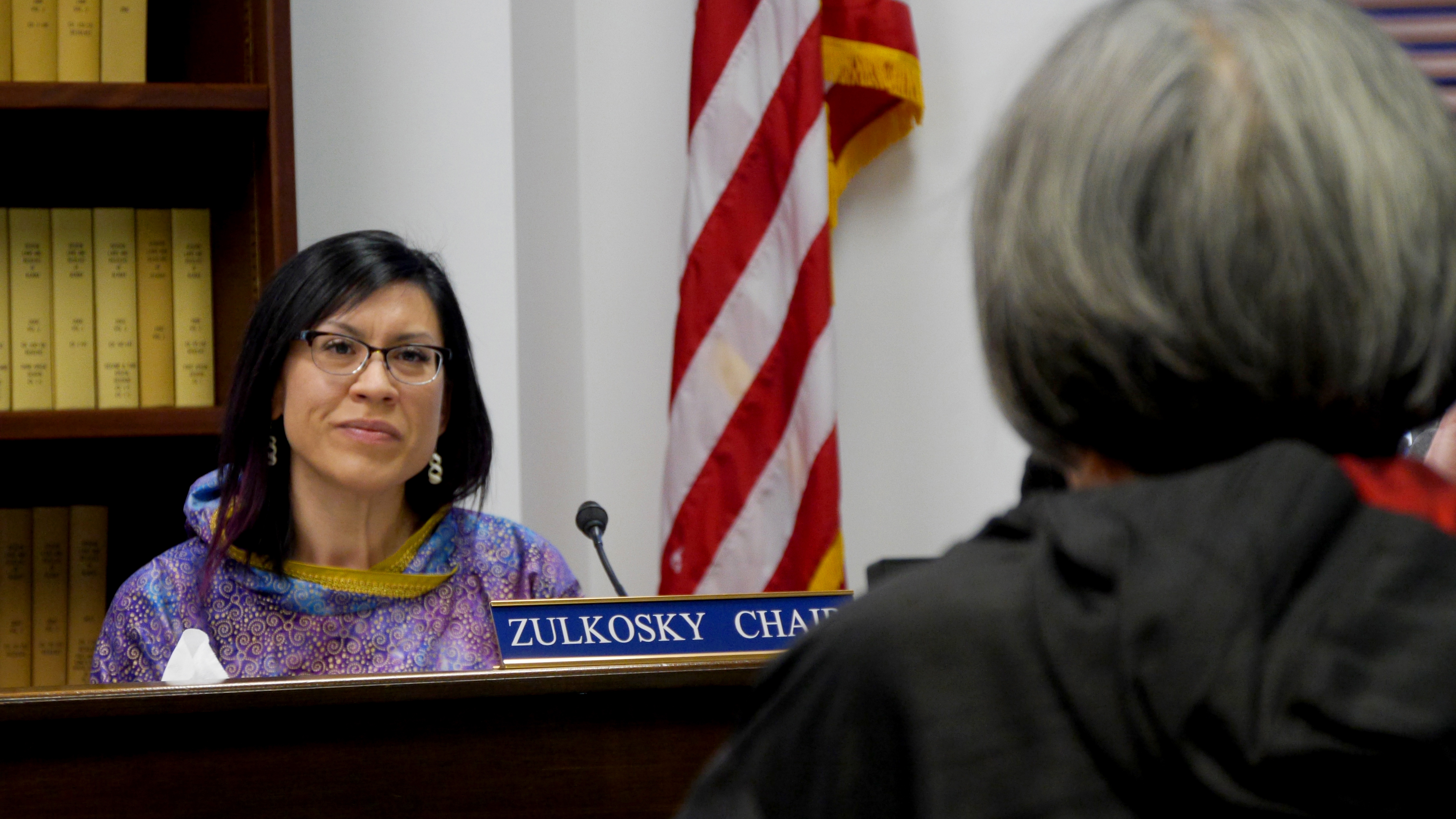
Rep. Tiffany Zulkosky, chair of the of House Tribal Affairs Committee, listens to a presentation by Rosita Worl, president of the Sealaska Heritage Institute, at the committee’s first-ever meeting on March 7, 2019. (Photo by Skip Gray/360 North)

Bethel Democratic Rep. Tiffany Zulkosky said tribes are providing services that incorporate traditional ways of thinking. And she said that’s improving outcomes in areas like health care.

“Our state is home to nearly half of all federally-recognized tribes in the country,” she said. “Seeking to further our relationship with Alaska tribes helped to bridge both historical and political divisions, while also capitalizing on limited fiscal resources.”

The committee’s first meeting provided context. Andrea Akall’eq Sanders of the First Alaskans Institute gave a presentation on Alaska Native history and current issues. She said her organization has a broad perspective.

“Our vision is progress for the next 10,000 years,” she said.

Sanders said Alaska Native people have a perspective that the entire state can benefit from.

“We have intact knowledge of our environment — what’s happening around us, our relationship with other species, and the changes that are happening,” she said. “Our people have intact knowledge about how these things have impacted us previously and ideas on how to move forward.”
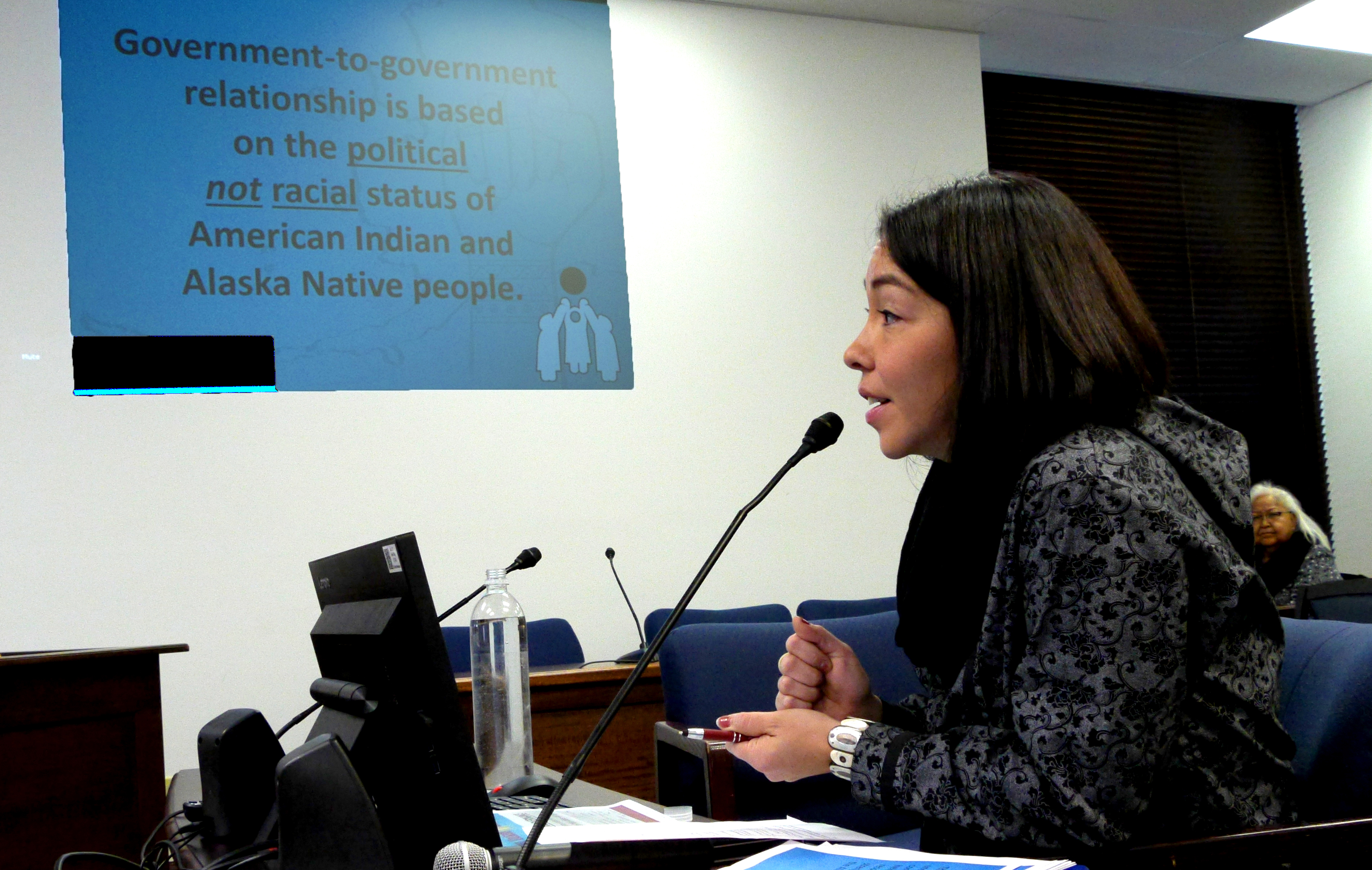
Andrea Akall’eq Sanders, director of the Alaska Native Policy Center at First Alaskans Institute, gives an overview of the history of Alaska Native cultures and current tribal governance to members of the House Tribal Affairs Committee on March 7, 2019. (Photo by Skip Gray/360 North)

Sanders emphasized that the federal and state relationship with Alaska Native tribes means that Alaska Natives have a political status, and that services like the Indian Health Service are based on that political status, and not race. But she said non-Natives can misunderstand that.

“Sometimes they get angry about, why do Alaska Native people get free health care,” she said. “It’s not because of our racial status. It’s because, when this country was founded, it was all Indian country. And so the United States, in recognition of what we gave up as tribes, made a commitment.”

She added that improved partnerships between the state and tribes can benefit the state’s future.

“Establishing a committee on tribal affairs is an opening of the door to a respectful relationship,” she said.

One major area of work is health care. Former Lt. Gov. Valerie Nurr’araaluk Davidson said tribal organizations have provided care in a way that improved the health of Alaska Native people — in part by providing health care where people live. This is based on compacts the state has formed with tribes. She said compacts can be used to provide services in other areas.

“We have those same opportunities to make those same strides through state compacts with tribes,” she said. “But they have to be adequately funded in order for them to be successful. We need to make sure that we set people up for success, and we don’t just merely transfer the responsibility without any of the resources.”

Anchorage Republican Rep. Chuck Kopp said he’s looking forward to the committee’s work.

“It’s really clear that Alaska is awakening from a long night,” Kopp said. “A night of a lot of sickness and sorrow, because of individual groups that did not understand each other, did not grow together, and a lack of community. But I look forward to the dawn of a new day of partnering, working together.”

The committee will hold meetings on rural public safety and child welfare in the coming days.
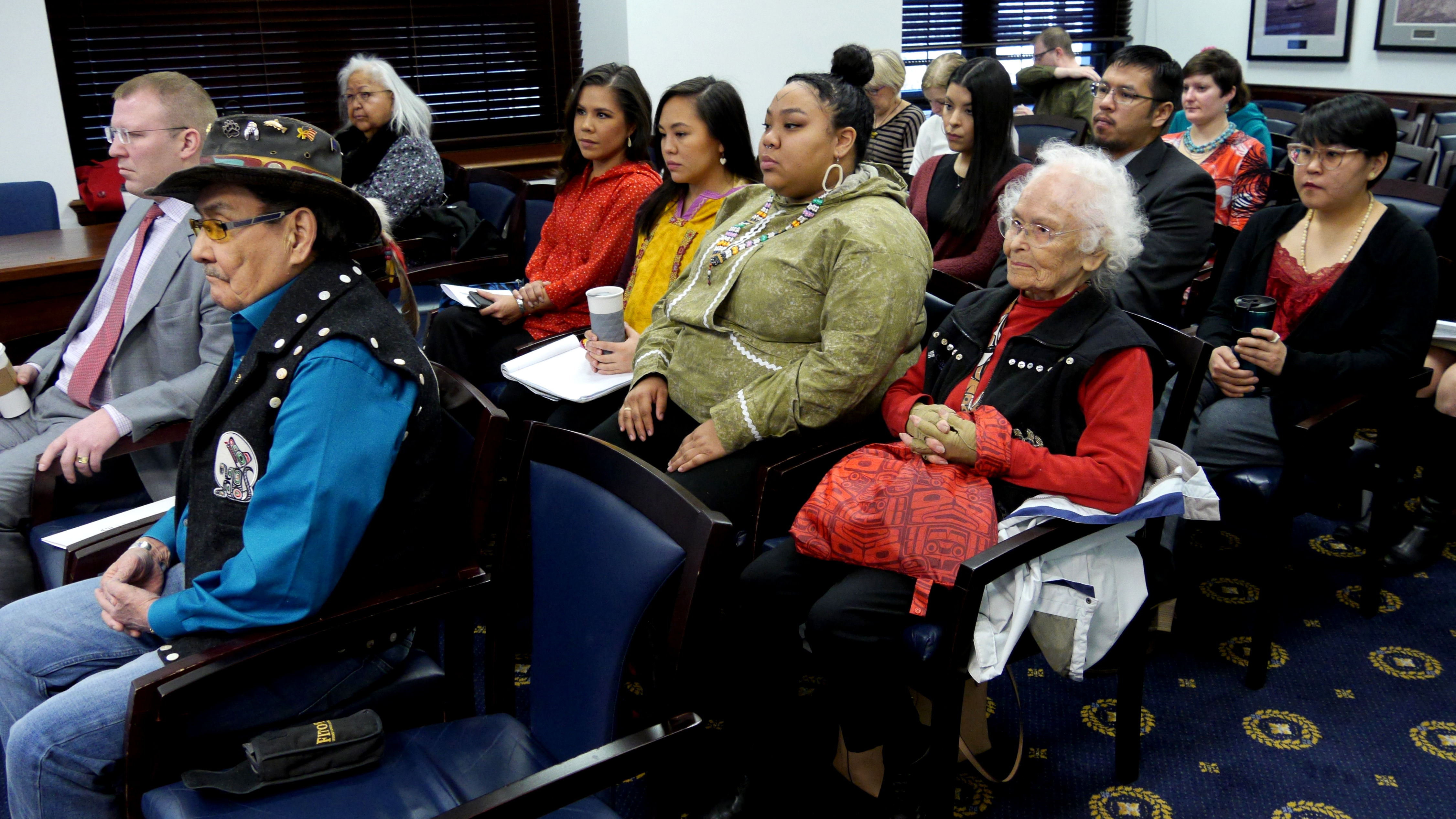
Members of the public and invited guests observe the proceedings of the first-ever House Tribal Affairs Committee meeting, March 7, 2019. (Photo by Skip Gray/360 North)

North Slope village tribal government sues over ConocoPhillips’ drilling plans

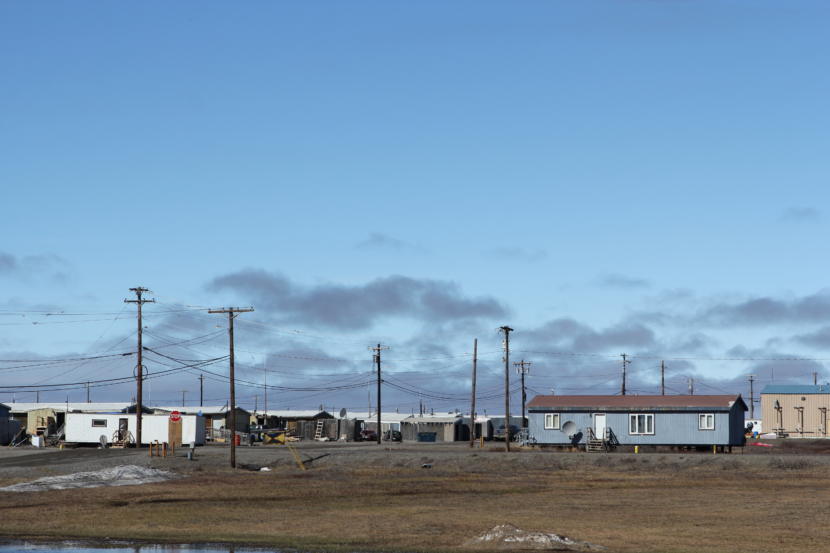
Nuiqsut in June 2018. The village is near a growing number of oil developments in the western Arctic.
Nuiqsut in June 2018. The village is near a growing number of oil developments in the western Arctic. (Photo by Elizabeth Harball/Alaska’s Energy Desk)

The tribal government for a North Slope village near a growing number of oil projects is suing the federal government over its approval of ConocoPhillips’ plans to drill more wells nearby. The complaint was submitted Thursday in federal court.

Along with five environmental groups, the Native Village of Nuiqsut is challenging the Bureau of Land Management’s approval of ConocoPhillips’ exploratory drilling program this winter in the National Petroleum Reserve-Alaska.

“The impacts outweigh the benefits and don’t address the concerns of the community, so we’re filing this lawsuit to get the impacts and concerns fully analyzed for responsible development,” said Native Village of Nuiqsut tribal administrator Martha Itta. “We’re trying to fully understand and adapt to the fast-paced changes of our environment and impacts from being surrounded by the drilling rigs and oil industry.”

ConocoPhillips has already started this winter’s drilling program and plans to complete six to eight wells. If successful, the lawsuit could require the federal government to perform a tougher environmental review process for future oil exploration activities in NPR-A.

The groups argue BLM should have completed a full environmental impact statement before approving Conoco’s plans. In December, BLM completed an environmental assessment, a less involved version of an environmental review, and determined Conoco’s drilling program would have “no new significant impacts.”

The groups disagree, saying ConocoPhillips’s drilling plans threaten caribou that migrate near the village. People in Nuiqsut rely heavily on subsistence hunting.

The environmental groups that are also involved in the lawsuit are the Alaska Wilderness League, the Center for Biological Diversity, Friends of the Earth, the Natural Resources Defense Council and the Sierra Club.

In a statement, the environmental groups said the federal government “acted irresponsibly and illegally by allowing this escalation and intrusion of industrial activity into this area without even the pretense of meaningful analysis of the impacts of this action or consideration of less harmful alternatives.”

BLM completed an overarching environmental impact statement for the National Petroleum Reserve-Alaska in 2013. The Trump administration is now redoing that plan and could potentially open up more land in NPR-A to oil development.

ConocoPhillips already operates several drill sites and an oil processing facility not far from Nuiqsut. The company has made significant oil discoveries nearby in recent years.

Nuiqsut’s village corporation, Kuukpik Corporation, said in a statement it “continues to support balanced and environmentally responsible, feasible development.”

Because the litigation is pending, both BLM and ConocoPhillips declined to comment.

ASRC, after backing Dunleavy’s campaign, blasts his oil tax redistribution plan

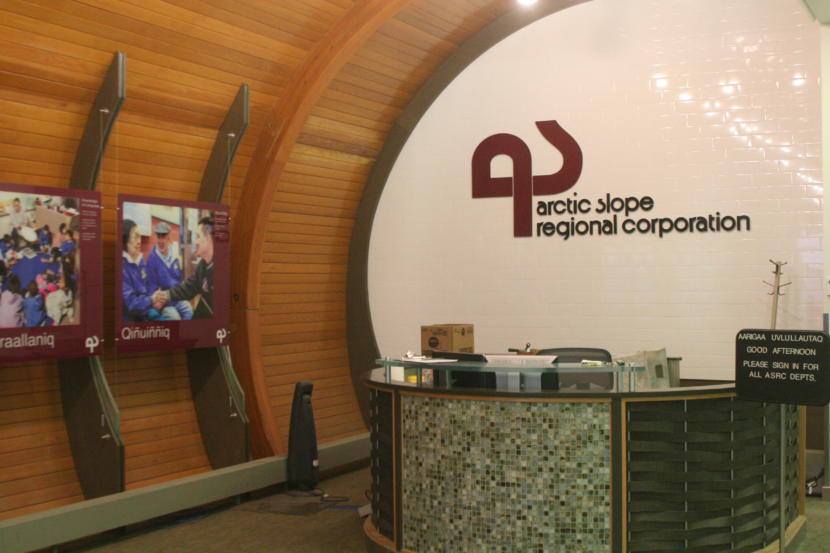
The Arctic Slope Regional Corporation’s corporate headquarters in Utqiaġvik, Alaska. January 2018. (Photo by Ravenna Koenig/Alaska’s Energy Desk)

An influential Alaska Native corporation has joined the list of critics of a proposal from Gov. Michael Dunleavy that would strip some of the taxing power of cities and boroughs.

The legislation would deprive the North Slope Borough of a major revenue source: property taxes on oil and gas infrastructure. Wednesday, the Arctic Slope Regional Corporation, or ASRC, joined the borough in a joint statement that called the bill “an attack on communities across the region.”

In a written statement, ASRC president and CEO Rex Rock Sr. said: “Trying to balance a state budget on the backs of the Iñupiat people across the Arctic Slope is a wrongsided attack on our region.”

The criticism is noteworthy because it comes from one of the governor’s allies: ASRC endorsed Dunleavy back in October, citing, among other things, his enthusiasm for oil and gas development.

The joint press release yesterday also included a statement from North Slope Borough Mayor Harry Brower Jr.

“For decades, we have supported safe and responsible natural resource development on the Arctic Slope because of the economic benefits the industry brings to our communities,” said Brower. “As written, Senate Bill 57 makes us question that support. Is this what the governor is intending to do with this legislation – pit the Iñupiaq people of the Slope against industry?”

The governor’s plan would cost the North Slope Borough nearly $400 million in property tax revenue.

Before it can take effect, though, it would have to be approved by the Alaska Legislature. House Speaker Bryce Edgmon gave Dunleavy’s House version of the bill a cool reception yesterday by sending it to three different committees for vetting — often a step that the speaker takes to delay or derail legislation.

Nathaniel Herz contributed reporting from Anchorage.

More than 130 Calista shareholder women voice dissent over Donlin mine

The site of the proposed Donlin gold mine would make it one of the biggest ones in the world (Photo: KYUK).
The site of the proposed Donlin gold mine would make it one of the biggest in the world (Photo credit KYUK).

More than 130 Calista shareholders signed a letter sent to the Calista Native Corporation protesting the proposed Donlin gold mine, and they are all women. Calista owns the subsurface rights to the mine, and is the regional corporation for the Yukon-Kuskokwim Delta.

The letter starts like this: “We are Indigenous women of the Calista region with strong physical, emotional, and spiritual ties to the people and the land. We are also Calista shareholders who are concerned with the development of the Donlin gold mine and how that will impact our salmon-spawning river.”

That river is the Kuskokwim, the primary food source for a region that relies heavily on subsistence for its diet. The Donlin mine could be one of the biggest in the world, if developed.

Bev Hoffman of Bethel is a long-time protester of the mine and led the effort to craft the letter and gather signatures. An advocacy meeting with some of Donlin’s critics gave her the idea to have only female shareholders sign the letter.

“Women of the earth have been just in this century, last century I should say, and this new century have been finding the voice. Indigenous people demanding the right. People of all colors and nationalities, and we see it right now today, and then here right along the Kuskokwim river we see it too,” Hoffman said.

Hoffman doesn’t like that Calista signed the lease with Donlin two decades ago without any shareholder input. They say that this letter will show Calista that not all of its shareholders are on board

“They say it’s going to be great for the region; I would welcome a vote from shareholders,” Hoffman said.

Fannie Black grew up in Bethel and also signed her name to the letter. While she doesn’t depend on the river for her dietary needs, she knows that many villages do.

“I don’t want that to risk, any environmental risks that might take those foods away from people. There’s a lot to be lost with that mine. Even if there aren’t any spills or anything, there’s still going to be some kind of environmental impact.”

Black has a degree in mechanical engineering and worked for some time in the oil and gas industry. That experience made her aware of the environmental risks from extraction industries, like oil, gas and mining.

Black also works for a workforce development organization so she also understands the economic opportunities that Donlin will bring to Alaska’s poorest region. But she says that the region could seize other opportunities within communities, such as investing more in local craftmanship like sewing furs or carving ivory.

Bethel is more than 100 miles down from the mine site. So far, many of the protests and resolutions against the proposed Donlin gold mine have come from the Lower Kuskokwim region, but quite a few of the signatures on the letter come from the villages closer to the proposed site: Aniak, Sleetmute, Napaimute, Crooked Creek, Chuathbulak and Stony River.

While Calista owns the subsurface rights to the mine, The Kuskokwim Corporation (TKC), which these villages belong to, owns the surface rights. Esther Diehl lives in Aniak. She’s both a Calista and TKC shareholder.

“It’s like, yeah, the river is a huge concern and anything that happens, the headwaters or the end of the river, it’s still going to affect the wildlife and the fish and game all the way to the ocean. This river may seem big and all, but it’s not all that big if it’s our lifeline,” Diehl said.

Calista defended its support for Donlin. The corporation says that its staff members also practice subsistence and have the same stake in the environmental health of the region.

“We waited until science and data showed that NEPA [National Environmental Policy Act] protections and regulations worked. Further, Calista continues to support the public comment process so that concerns and questions can be raised, and more importantly, be addressed,” it said in a statement.

Donlin Gold has pledged to build the mine as safely as possible. The company declined to comment on the letter, saying that it was between Calista and its shareholders.

Alaska Native issues feature prominently at hearing on Arctic Refuge oil leasing

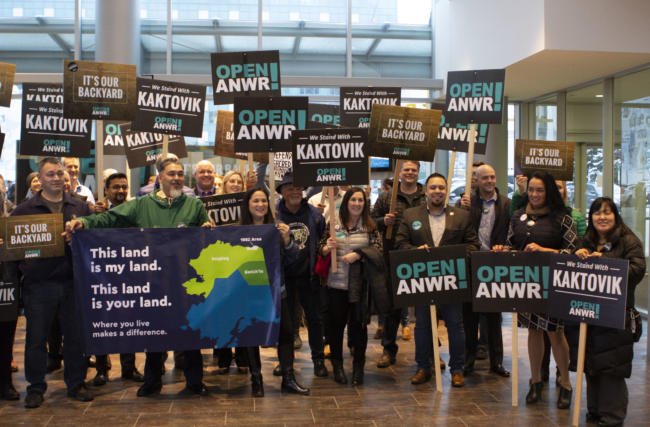
ASRC leaders and supporters held a press conference outside the Anchorage public meeting on oil leasing in the Arctic National Wildlife Refuge on Feb. 11, 2019. (Photo by Elizabeth Harball/Alaska’s Energy Desk)

At a public meeting in Anchorage on the federal government’s plan to open part of the Arctic National Wildlife Refuge to oil development, Alaska Native speakers delivered passionate testimony on both sides of the issue.

According to the Bureau of Land Management, more than 450 people attended the Monday meeting. It stretched over seven hours. And following protests at the Fairbanks meeting last week, BLM changed the format to allow public testimony.

In her testimony, Charlene Apok of Golovin said she is Inupiaq and was there to speak in solidarity with Gwich’in people, who oppose drilling in the refuge because of potential harm to caribou.

“The refuge is not a warehouse. Again, the refuge is not a warehouse,” Apok said. “Nor is it a bank. The proposed drilling won’t pay for the desired tax cuts that the state is seeking.”

Throughout the hearing, an organized group of opponents from communities across the state provided much of the public testimony against development in the refuge, holding up bandannas and signs that said: “Defend the Sacred: Protect the Arctic.”

But in his testimony, Arctic Slope Regional Corp. executive Richard Glenn talked about oil’s economic benefits to North Slope communities.

“It’s the presence of the oil and gas industry in our region, it’s the only thing that’s hung around long enough to generate an economy — to generate an economy that we depend on,” said Glenn, ASRC’s executive vice president of external affairs. “This is not bullying. This is freedom. This is what built our schools in our region. This is what keeps our communities healthy.”

ASRC has been a major booster of oil development in the refuge. Later at the hearing, ASRC leaders, flanked by supporters from Alaska’s oil and gas industry, held a rare news conference, waving signs that said, “We Stand with Kaktovik, Open ANWR!” and “It’s Our Backyard.”

Glen Solomon, a leader and whaling captain from Kaktovik and an ASRC board member, was one of the speakers at the news conference.

“We love our people, we love our culture,” Solomon said. “And this is our fight. And we are making a stand. We stand strong. We’re tired of being silent.”

ASRC board chairman Crawford Patkotak praised the current leadership in Washington, D.C., which has made oil leasing in ANWR a priority.

“Thank God for our federal government, especially President Donald Trump, who has stood behind us,” Patkotak said.

As Patkotak was finishing his remarks, an Alaska Native woman attending the meeting began speaking over him.

“We’re supposed to be protecting the land, we’re supposed to be protecting the waters,” she said.

“When it comes to resource development, we are able to protect the environment and be able to benefit financially from all of this,” Patkotak said.

“It’s all about the money,” the woman said.

“It’s been too long, we’ve been left in poverty,” Patkotak said. “Other people would rather see us in poverty and without. This is our opportunity to enhance the lives of our people.”

“You get money, but none of the rest of the Alaska state taxpayers are benefiting,” the woman said.

The meeting culminated in competing chants outside — the woman versus a large crowd of ASRC leaders and their supporters shouting “10-02,” referring to the portion of the refuge where oil leasing is now legal.

“Money, money…shame on you!” the woman shouted in response.

The woman later identified herself as Natasha Gamache, from Nome. In an interview after ASRC’s news conference, she said she disagrees with the idea that oil development helps all Alaska Native communities.

“We have lots of examples, throughout the state, of villages where they don’t have access to running water. Where their villages are being washed away through erosion because of climate change. I think of Newtok and them having to move to Mertarvik. Is ASRC paying for their move? I don’t think so,” Gamache said.

Gamache reflected on disagreement in the Alaska Native community over resource development and how she thinks that outside entities can take advantage of that division.

“There is a reason that we are pitted against each other. There is a reason that there is disharmony between the people,” Gamache said. “Because if we were united, we would be an unstoppable force.”

“Unfortunately, it is not that way,” Gamache added.

The last public meeting on oil leasing in the refuge before the final environmental review is published is Wednesday in Washington, D.C. The public comment period has been extended to March 13.

Native corporations maintaining Alaska forests find a carbon credit buyer: oil company BP

Photo of trees in the Tongass National Forest
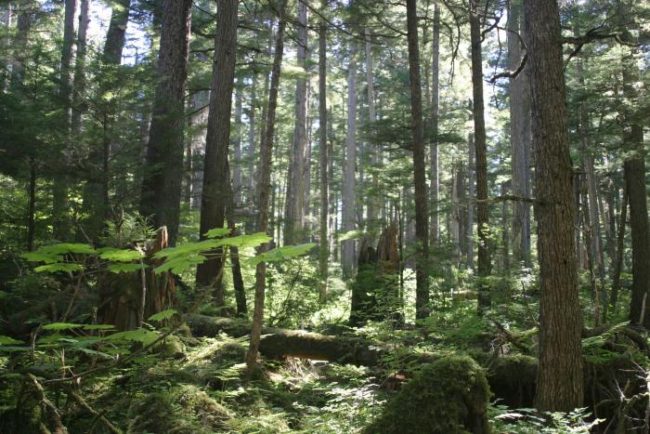
Sealaska has previously announced it was setting aside 165,000 acres of forest to use as a carbon bank. (Photo by Henry Hartley/Wikimedia Commons)

To help address climate change, one of the biggest oil companies in Alaska is paying to keep forests standing on land managed by two Native corporations.

At an industry conference held Friday in Anchorage, BP Alaska president Janet Weiss announced the company has developed two carbon credit offset projects with Alaska Native corporations Ahtna and Sealaska.

“We will use offsets as one of the tools to underpin our low-carbon ambitions,” Weiss said.

Carbon offsetting is a mechanism that allows a company like BP to pay a landowner to maintain a forest, to keep it from being logged. Trees take in carbon dioxide as they grow, helping make up for the company’s greenhouse gas emissions.

Weiss said the Native corporations have agreed to maintain the forests they manage for at least 100 years. The deal is verified through California’s cap-and-trade program. California regulates greenhouse gas emissions and allows big emitters to buy carbon credits.

Details on BP’s carbon offset projects are limited — the terms of the agreements are confidential, Weiss said. She didn’t say what percentage of BP Alaska’s greenhouse gas emissions are being offset or how much money is involved.

But, Weiss added, “these credits will amount to significant revenue for Sealalaska and it will benefit their region and its communities for a very long time.”

Sealaska previously announced it has set aside 165,000 acres of forest to use as a carbon bank. According to Sealaska, that allows the company to sell 9.3 million carbon credits, representing 9.3 million metric tons of carbon dioxide.

A Sealaska spokesperson confirmed BP will be the corporation’s main buyer for its carbon bank.

In April 2018,  Sealaska Corporation President and CEO Anthony Mallott described their project as being worth “multiple millions” of dollars.

Weiss said the carbon offset project with Ahtna was completed last October.

Ahtna declined to comment, but Weiss said that deal was “even larger” than Sealaska’s, calling it “the largest carbon credit event in North American history.”

Site notifications
Update notification options
Subscribe to notifications