Alaska Native Corporations

Native regional corporation for Western Alaska elects first-ever chairwoman

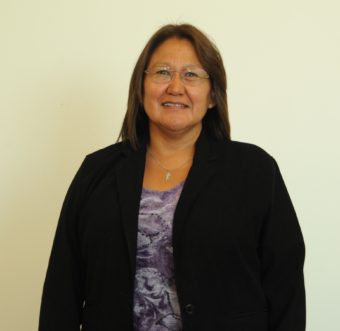
Margaret Pohjola is Calista's new board chair. (Photo courtesy of Calista Corp.)
Margaret Pohjola is Calista’s new board chair. (Photo courtesy of Calista Corp.)

The Calista board elected its first chairwoman in the corporation’s 44-year history. Margaret Pohjola was voted to the job Thursday. Pohjola has ties to Chuathbaluk, upriver from Bethel. Chair Willie Kasayulie of Akiachak had served the limit of three consecutive yearlong terms.

Calista says in a news release that Pohjola has done accounting work for Cook Inlet Tribal Council, NANA and the Alaska Native Tribal Health Consortium. She graduated from the University of Alaska Anchorage with a degree in management and has been on Calista’s board since 1987.
Paul George Guy was reelected to vice-chair. Robert L. Beans was voted secretary and Johnny Evan as treasurer.

Puhjola will lead the company’s directors as it plans to take on tens of thousands of new shareholders born after 1971. Shareholders voted earlier this month to drastically increase the ownership base. That enrollment is expected to begin in early 2017.

In historic vote, Calista shareholders choose to enroll ‘afterborns’

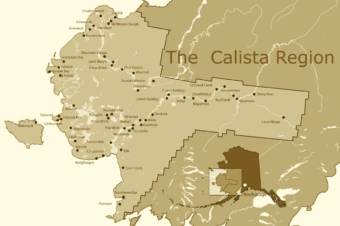
Calista is the regional Native corporation for much of Western Alaska. (Image courtesy of Calista Corp.)

Thousands of so-called afterborns will be eligible for shares of Calista Corporation after shareholders voted Saturday. The preliminary results from the annual meeting in Kasigluk dramatically reshapes the ownership of the YK Delta’s regional Alaska Native Corporation.

It extends the shareholder base beyond people born before a cutoff date of December 18th 1971. Prior to passage of the binding resolution, younger people could only receive shares through inheritance or gifting.

The company estimates that the number of shareholders could initially increase from 13,000 to between 38,000 and 43,000. With a tripling of shares, each individual shareholder would, on average, receive one-third of the value of shareholder dividends relative to the company prior to expansion. Last year’s dividend averaged $380 dollars.

The company takes on additional administrative overhead with the growth. Establishing a quorum also becomes more complicated. While more than 60% of shareholders live in the YK Delta region, that figure could drop to 55% with the descendant enrollment.

The corporation in a Saturday news release did not indicate the breakdown of votes for descendant enrollment. The certified tally will available in the next few days. Just fewer than 58% of the company’s shares voted this year, many through online proxy votes.

Calista says they will spend the next 18-24 months developing a plan for enrollment. The actual enrollment would begin between January and June of 2017. One-hundred Class C shares are issued to descendants of original shareholders, while Class D shares will be created for Alaska Natives who did not receive original shares in 1971 with the passage of the Alaska Native Claims Settlement Act.

Board Chair Willie Kasayulie in a statement said the company has for years heard from shareholders about their interest in enrolling descendants.

“With this binding vote, Calista’s shareholder base will grow tremendously, and we directors and the administration will step up to meet the increased challenges,” said Kasayulie.

Calista joins other Alaska Native corporations like the Arctic Slope Regional Corporation, Doyon, and Sealaska that have issued shares to descendants.

Regional Native corporation to consider opening enrollment to ‘afterborns’

Calista is the regional Native corporation for much of Western Alaska. (Image courtesy of Calista Corp.)

Calista shareholders will decide this weekend whether to issue shares to thousands of so-called “afterborns” – those born after December 18, 1971, the year Alaska Native Corporations were formed. The final vote happens Saturday corporation’s annual regional meeting in Kasigluk.

Shareholders will be able to vote in-person at the meeting, but they’ve also been voting online and through the mail. Thom Leonard is communications manager for Calista. He says the corporation first offered online voting last year, however, less than 3 percent of the proxy votes were submitted online.

“The final numbers aren’t in for this year, but it’s looking to be many, many more times that. The number of shareholders participating in online voting has grown tremendously, which is very exciting,” Leonard said.

If shareholders approve opening up enrollment, descendants and those who could have but didn’t enroll in 1971 will be able to enroll. An estimated 25,000 new shareholders would triple the number of shares that make up the corporation. A three-fold increase in shares means per-share dividends would drop to a third of their previous value. This year’s annual dividend averaged about $380.

Leading up to the vote, the company met in person with shareholders in 15 communities and Anchorage. Leonard says they wanted to make sure shareholders know how including descendants would change the geographic makeup of shareholders.

“Right now about 61 percent of shareholders live in the Calista region. If this passes, we anticipate that that percentage will drop to about 55 percent,” Leonard said.

If more shareholders are added, holding annual meetings could also get more complicated.

“If the number of shareholders increases dramatically, that certainly could be a challenge to make sure the 50 percent plus quorum requirement is met,” Leonard said.

If enrollment is opened up, Calista would join other corporations such as the Arctic Slope Regional Corporation, Doyon and Sealaska — all regional corporations that issue shares to descendants. There are currently about 13,000 Calista shareholders.
Sealaska board unchanged by election

Former Sealaska board Chairman Albert Kookesh won the most votes in elections. (Photo by Ed Schoenfeld/CoastAlaska News)
Former Sealaska board Chairman Albert Kookesh won the most votes in the regional Native corporation’s 2015 election. (Photo by Ed Schoenfeld/CoastAlaska News)

Sealaska shareholders returned five incumbents to the regional Native corporation’s 13-member board of directors.

Results released at Saturday’s annual meeting in Juneau show former board Chairman and state Senator Albert Kookesh winning the most votes.

Close behind were Juneau’s Barbara Cadiente-Nelson, Haines’ Bill Thomas, Juneau’s Joe Nelson and Washington state’s Tate London.

The board slate defeated five independent candidates. They were Yakutat’s Ralph Wolfe, Juneau’s Karen Taug and Brad Fluetsch, California’s Catherine Edwards and New Mexico’s Ray Austin.

A big issue this year was Sealaska’s financial situation. Its operations and investments have lost money for the last five years.

The regional Native corporation for Southeast Alaska has about 22,000 Tlingit, Haida and Tsimshian shareholders. Each gets a vote for each share they own, the average being 100.

No resolutions were on this year’s ballot.

Election results (shares voted):

Incumbents:

  • Albert Kookesh – 721,567
    Barbara Cadiente -Nelson – 721,052
    Bill Thomas – 720,977
    Joe Nelson – 719,891
    Tate London – 719, 846

Independents:

  • Ralph Wolfe – 436,503
    Karen Ann Taug – 425,872
    Bradley J. Fluetsch – 415,207
    Catherine N. Edwards – 236,836
    Raymond E. Austin – 201,542

Sealaska annual meeting Saturday, election results due

Sealaska Building
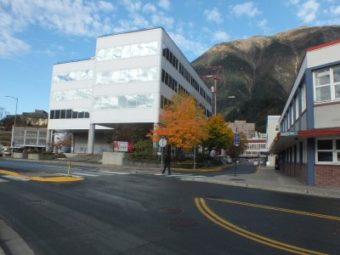
Sealaska headquarters in Juneau. The regional Native corporation will hold its annual meeting Saturday. (Photo by Casey Kelly/KTOO)

Sealaska shareholders meet Saturday in Juneau for their annual meeting.

The regional Native corporation has about 22,000 shareholders with roots in Southeast Alaska. Many live outside the region.

Board election results will be announced at the meeting, which starts at 9:30 a.m. in the capital city’s Centennial Hall. Shareholders will also be able to attend via a webcast.

Board candidates will have a chance to speak, though most shareholders have already voted. Five independent candidates are challenging the same number of incumbents. Sealaska’s financial performance is a major issue.

No resolutions are on this year’s ballot. Past years have seen votes on term limits, shareholders’ descendants’ stock and discretionary voting.

Incumbents on the board slate are Juneau’s Joe Nelson and Barbara Cadiente, Angoon’s Albert Kookesh, Haines’ Bill Thomas and Washington state’s Tate London.

The independent candidates are Juneau’s Karen Taug and Brad Fluetsch, New Mexico’s Ray Austin, California’s Catherine Edwards and Yakutat’s Ralph Wolfe.

No opposition slate formed this year. Four independents ran as a group in 2014.

Landless Natives bill gets first hearing before Congress

U.S. Rep. Don Young poses in his office with Sealaska board member Richard Rinehart, right,  and landless spokesman Leo Barlow, left. Barlow and Reinhart were lobbying for Young's landless Natives legislation. (Photo courtest Don Young's office.)
U.S. Rep. Don Young poses in his office with Sealaska board member Richard Rinehart, left, and landless spokesman Leo Barlow, right. Barlow and Rinehart were lobbying this week for Young’s landless Natives legislation. (Photo courtesy Don Young’s office.)

A bill creating corporations for Native residents of five “landless” Southeast Alaska communities had its first hearing in Congress today.

Haines, Petersburg, Wrangell, Ketchikan and Tenakee were left out of 1971’s Alaska Native Claims Settlement Act. That bill gave land, money and corporate status to those in many other Alaska communities.

Wrangell’s Leo Barlow represented landless residents at the hearing, before the House Subcommittee on Indian and Alaska Native Affairs.

“Those of us who enrolled to these five communities during the ANCSA process did so because they are our traditional homelands and places of origin. Our families and clans originated in these communities and have lived here for hundreds if not thousands of years,” Barlow said.

He said about 3,500 Tlingits and Haidas were affected. They still became shareholders of the Sealaska regional Native corporation.

Congressman Don Young, who authored the legislation, chaired the committee hearing. Sen. Lisa Murkowski introduced a similar bill earlier this year. Sealaska is also lobbying for its passage.

A report by the University of Alaska’s Institute of Social and Economic Research found no clear reason why the five communities were excluded, other than Congressional intent.

Federal officials continue to oppose inclusion, saying it would break precedent and allow others to follow suit.

At the hearing, Young said the timber industry lobbied Congress before ANCSA passed because it wanted to keep more of the Tongass National Forest available for logging.

“The communities involved here had large lumbering, timbering operations. And there was effort put into this Congress at that time not to recognize them because it might have affected the long-term leases for that timber,” Young said.

Similar legislation has been introduced more than a half-dozen times.

Supporters have suggested it would only get serious consideration after a bill turning Tongass timberlands over to Sealaska passed.

That happened last year.

Site notifications
Update notification options
Subscribe to notifications