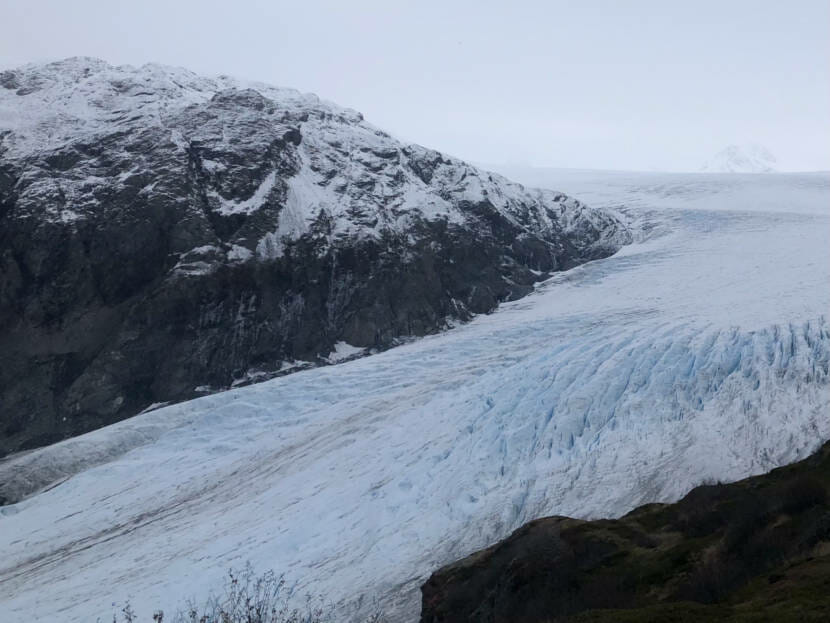
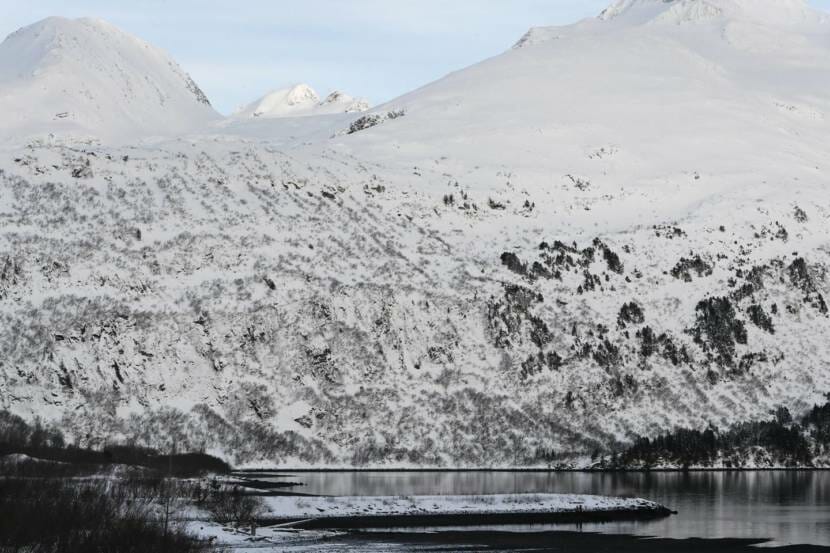
Exit Glacier has retreated so much that the management plan made in 2004 no longer makes sense for that part of the park. (Photo by Sabine Poux/KDLL)
Exit Glacier has receded more than 2,300 feet since 2004.
That year was the last time Kenai Fjords National Park created a management plan for that part of the park. In it, park officials said a big draw of the glacier was that visitors could walk right up and touch it.
That’s not possible anymore. Exit Glacier has been receding so quickly that parts of the park that were once prime glacier viewing aren’t anymore.
To account for those changes, Kenai Fjords National Park is updating its management plan for the area. And it’s asking for input from the public on what it would like to see from a new park plan.
Exit Glacier, just west of Seward, is the most accessible part of the 1,000-square-mile Kenai Fjords National Park. But the glacier has been receding so quickly that the National Park Service now says it’s no longer feasible to add new trails to account for the shift, as it’s done in the past.
The park says it’s considering new visitor facilities and modified rules for where visitors can walk, which would move as the glacier recedes. It says a new management plan would be in place for the next 10 to 20 years.
Kenai Fjords is not the only national park that’s had to adjust its management style to account for climate change. Last year, the park service published a guide for parks to consider those forces and manage accordingly.
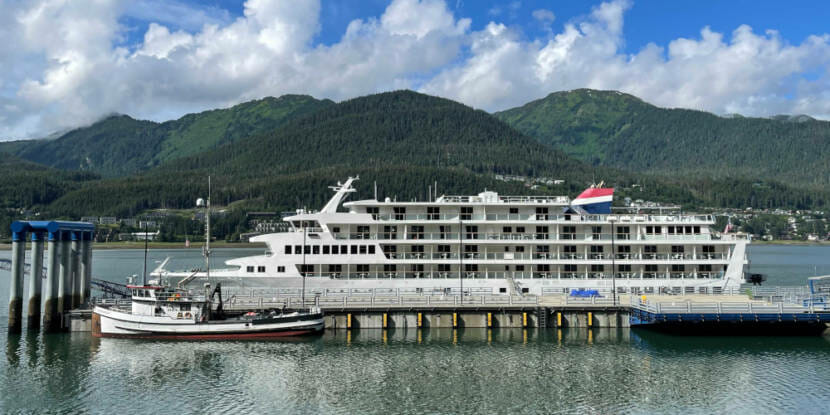
The American Constellation is docked near downtown on Thursday, July 15, 2021, in Juneau. (Rashah McChesney/KTOO)
The Juneau City Manager’s office has released its recommendations for how to use the money that’s expected to come from this year’s cruise ship visitors. Residents have until March 4 to weigh in on those suggestions.
Juneau gets money from cruise passengers through three different fees: $5 per passenger from the state’s commercial passenger vessel fee; $3 from a port development fee and $5 from the city’s marine passenger fee.
This year, the city is estimating that about 1 million passengers will come to Juneau, generating about $13.8 million in passenger fees.
Some of the suggestions include installing refillable water bottle stations downtown and funding visitor services. Juneau Tourism Manager Alexandra Pierce said that means hiring crossing guards, beefing up security and restroom maintenance for some of Juneau’s docks.
“That’s a significant funding increase because the Coast Guard issued an additional security requirement that cost quite a bit more money to implement,” Pierce said.
The city is also carrying a negative passenger fee fund balance of $3.2 million into this fiscal year. Pierce said that negative balance isn’t something that usually happens.
“Typically, we like to have a little bit of money left over, but we had two years with no visitation and then very limited visitation for which we needed to still supply some of the services that we always do and so that’s where the negative balance came from,” Pierce said.
The services she’s referring to are city departments like police, ambulances and visitor information. The City Manager’s office is suggesting they use some of the passenger fee proceeds to repay the negative balance.
Over the course of a normal summer, Juneau sees about 1.2 million cruise ship passengers from large ships. In 2021, with tourism and the cruise industry still reeling from the pandemic, only about 125,000 of those passengers made it to the city. Pierce said for the next fiscal year, they budgeted for fewer passengers than a pre-pandemic year, but still more than Juneau saw last season.
“With some nervousness around industry recovery and the possibility of another variant, there’s a lot of uncertainty right now,” Pierce said. “But we also recognize that people are returning to travel and that we probably will see a pretty robust season this year.”
Pierce said they expect every ship currently on the schedule will still come, but questions remain about how full those ships will be.
People can submit comments on the recommendations to Alexandra Pierce by mailing them to the City Manager’s Office at 155 S. Seward Street, Juneau, Alaska 99801 or via email.
The Head of the Bay concept by Huna Totem Corp. would include a new cruise ship dock in Whittier. Photographed on Thursday, Jan. 20, 2022. (Photo by Bill Roth/ADN)
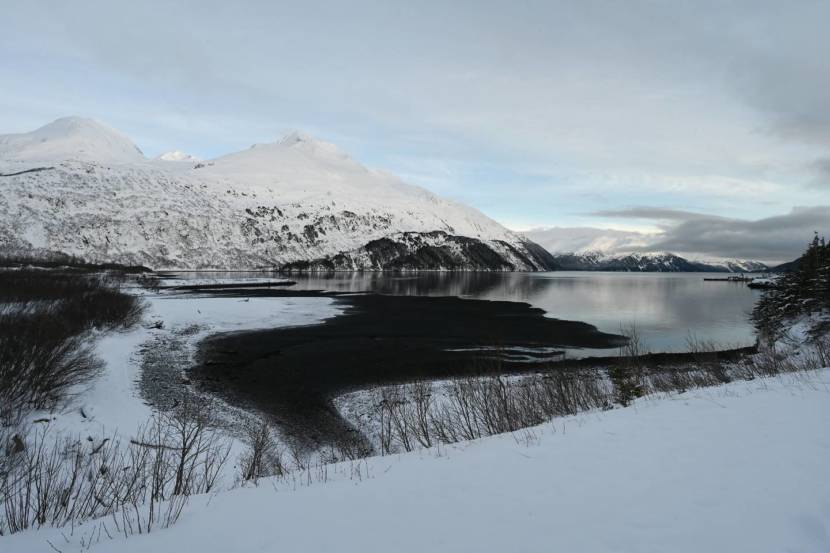
An Alaska Native corporation is pursuing plans to build a second cruise ship dock in Whittier, potentially bringing more than 100,000 new visitors each summer to the tiny townon Prince William Sound.
Huna Totem has already created a cruise-based tourism industry in Hoonah, a Southeast Alaska village. It’s now proposing to build a 1,200-foot dock to moor ships in Whittier at the picturesque head of Passage Canal, about an hour’s drive southeast of Anchorage.
In public meetings with Whittier residents, Huna Totem has presented a project, called Head of the Bay, that would essentially create a new business district on the west side of Whittier,with a boardwalk for housing and shops, a gondola, a trolley as well as a new cultural center, boat harbor and fish hatchery.
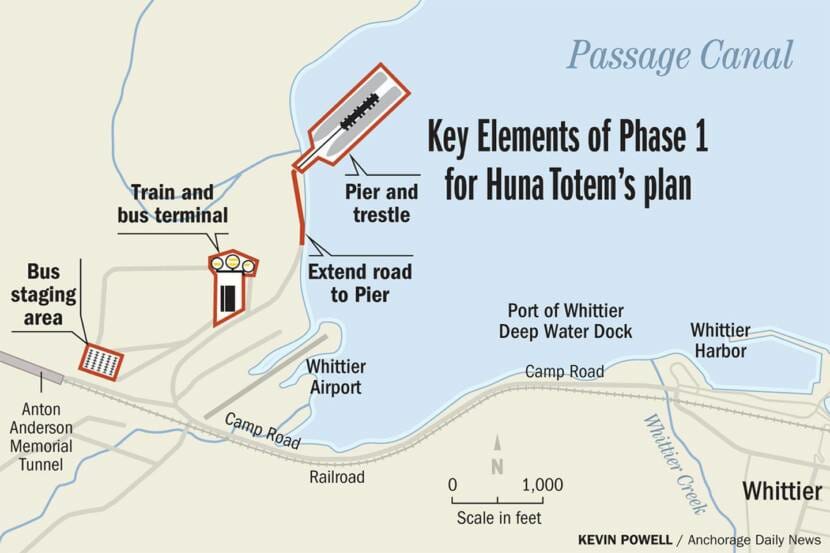
But Huna Totemofficials say they are currentlyfocused only on the first phase. That consists of the dock, the terminal where guests board buses and the train heading out of town, a road and small rail extension, and a bus staging area, said Mickey Richardson, marketing director with the company.
Initial estimates for the cost of the first phase exceed$80 million, with Huna Totem seeking third-party financing, Richardson said. The corporation is pursuing cruise lines to sign long-term agreements to use the dock.
Future phases of the project are more uncertain and could be many years away, according to Whittier Mayor Dave Dickason.
They would be built only if demand is there and the town supports it, Richardson said. That could involve partnerships between the city and private entities, possibly Huna Totem.
Whittier residents who support the project say it will bring much-needed city revenue, more jobs and business opportunities. But they want more information and say the town’s involvement will be critical to properly shaping the project.
Some who live and work in Whittier are skeptical of the idea, however. They worry more cruise ships and guests will hurt the town’s scenic setting and overcrowd the harbor and roads, including the only road out of town through the one-lane, World War II-era Anton Anderson Memorial Tunnel.
Huna Totem sees opportunity in Whittier
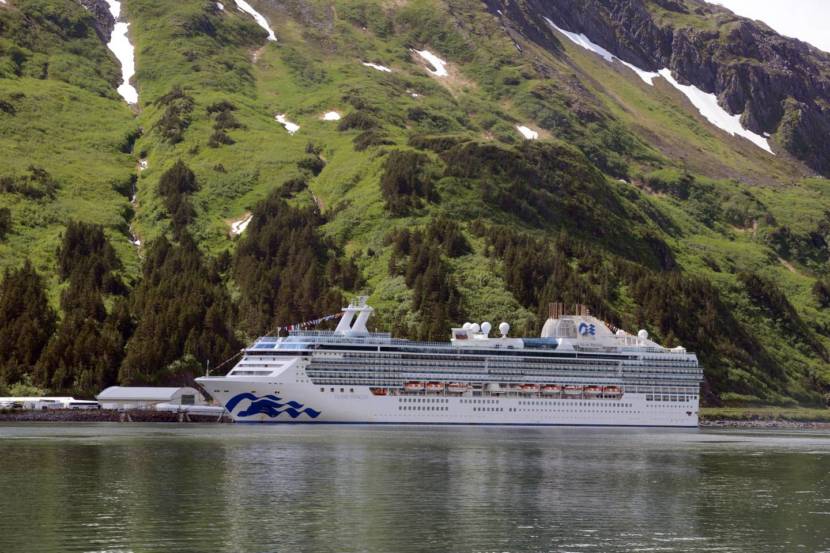
The existing dock in the community, owned by Princess Cruises, brought about 60,000 travelers to Whittier in 2019 before the COVID-19 pandemic haltedcruise travel to the city, Whittier officials say.
The Island Princess was docked at Whittier in June 2019. (Photo by Anne Raup / ADN)
This proposed new dock could bring an additional 110,000 visitors to Whittier each summer, Richardson said.
Most cruise visitors are expected to leave town quickly, arriving at night and catching the morning Alaska Railroad train through the tunnel, he said.
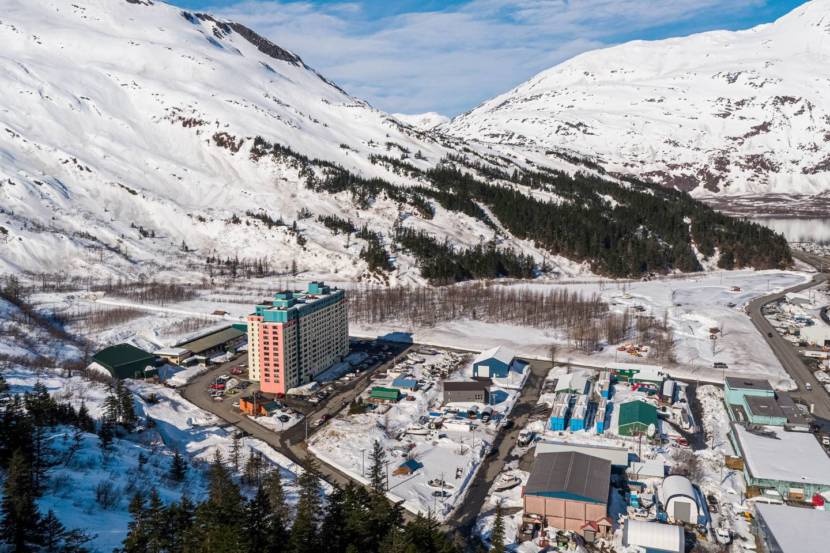
But some will want to see Whittier sites including the 14-story Begich Towers, a curiosity for tourists because it’swheremost of the town’s 300 residentslive.
Begich Towers, home to most of Whittier’s residents, photographed on Thursday, April 22, 2021. (Photo by Loren Holmes/ADN)
The project was conceived last year. Huna Totem was looking for a tourism opportunity in Alaska when it settled on Whittier, Richardson said.
At the same time, the city of Whittier was acquiring 58 acres at a cleaned-up tank farm at the head of the bay from the Department of Defense, said Dickason, the mayor.
The timing was good, Dickason said. The city now owns the land, which is near the tunnel, and the terminal and bus staging area could be built on five of those acres.
Whittier is now in the process of creating a lease agreement with Huna Totem, he said.
The dock and other facilities could be built and ready for a trial run in late summer 2023, with full operation in 2024, Richardson said.
‘We need more information’
The mayorsaid the project could be a “turning point” for Whittier, opening up a new area in a city that owns little land for expansion.
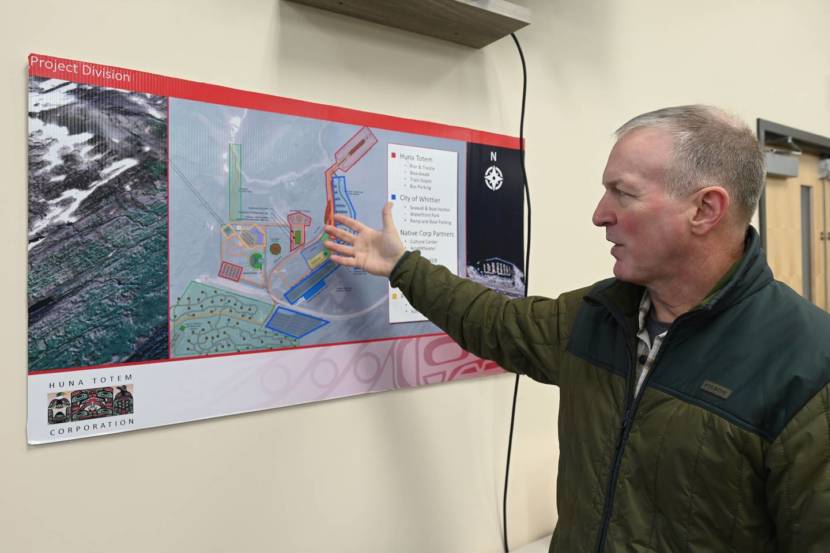
Whittier Mayor David Dickason points to the areas in red that would be part of the first phase of the Head of the Bay concept on Thursday, Jan. 20, 2022. (Photo by Bill Roth/ADN)
The first phase could boost Whittier revenues by $2.6 million, or 40%, Dickason said. That could help upgrade infrastructure that in some cases dates back to World War II, when the city was a military supply post, he said.
“It would provide the revenue we need that secures the future of Whittier,” Dickason said.
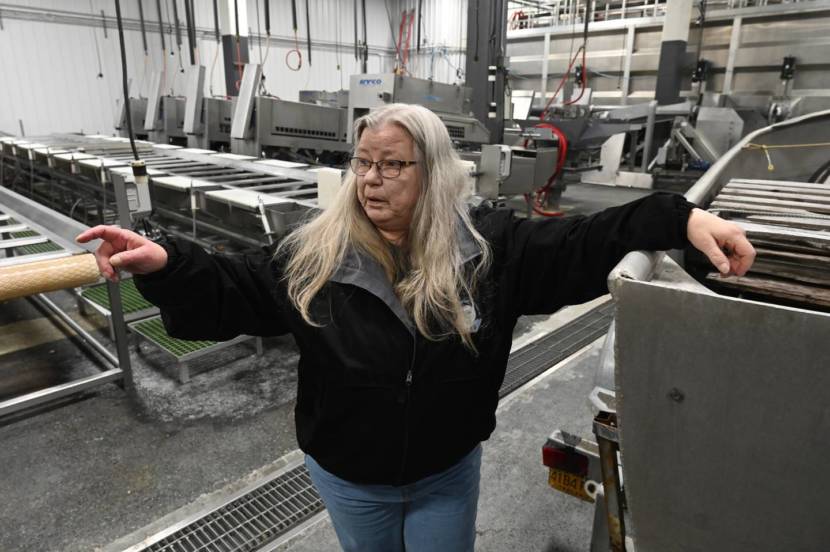
Whittier Seafood office manager Cathy McCord in their fish processing plant on Thursday, Jan. 20, 2022. (Photo by Bill Roth/ADN)
Cathy McCord, the seafood plant office manager and a city council member, said the project is a rare growth opportunity.
“It will help establish a future for children growing up in Whittier,” she said.
Other council members are less certain about the project.
Dan Blair said the first phase could be good for Whittier, though he and other community members have many questions that need answers.
He said the first phase could increase competition for hard-to-find workers, hurting businesses. And it will place new demands and costs on local services such as police and emergency response, he said.
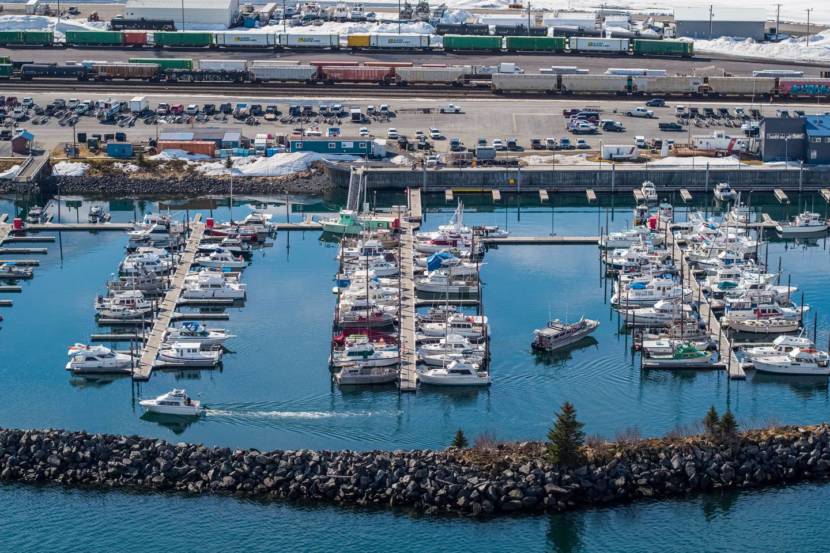
Some in the community worry that Whittier’s already crowded boat harbor will become more so as more cruise tourists book small boats for fishing trips or for wildlife and glacier viewing. They foresee longer lines at the state-run tunnel.
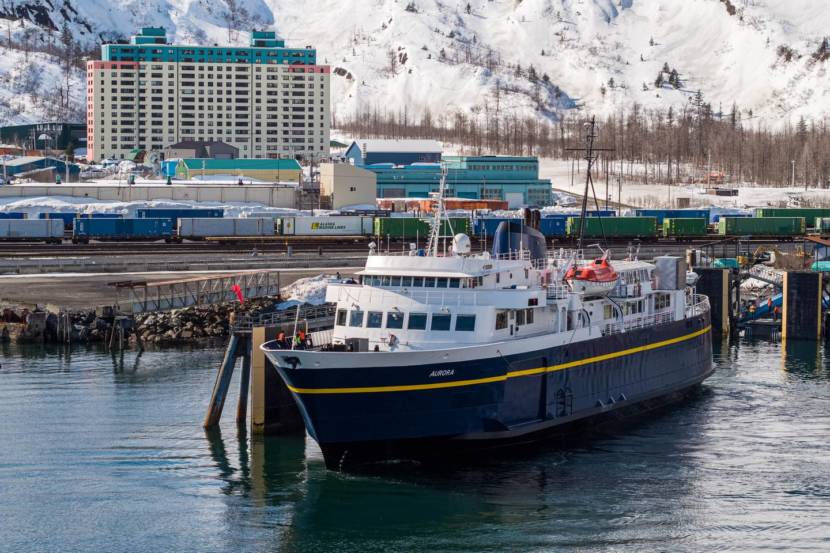
Small boats move through the harbor in Whittier, Alaska on Thursday, April 22, 2021. (Photo by Loren Holmes/ADN)The M/V Aurora maneuvers before docking in Whittier on Thursday, April 22, 2021. The ferry, named for the Aurora Glacier in Glacier Bay National Park, was built in 1977 and can carry 250 passengers and 34 vehicles. All ferries operated by the Alaska Marine Highway System are named for glaciers in Alaska. (Photo by Loren Holmes/ADN)
Dean Rand, a longtime resident who operates Discovery Voyages with a 65-foot touring boat that can sleep a dozen guests, said Whittier doesn’t need more cruise ships.
Cruise visitors usually follow a preset land package that benefits the cruise lines but not mom-and-pop shops, he said. And cruise guests often don’t spend much money compared to people traveling on their own. He asserted that the industry looks out for its own interests first, not a community’s.
“Where is the positive economic impact of their presence? I don’t see it,” he said.
Kelly Bender, president of the local chamber of commerce, owns Lazy Otter Charters with her husband.It’s a sightseeing and water taxi service in Whittier.
Growth will bring new business and opportunities, so that’s good, Bender said.
But the project needs to be done right, she said: If not, the extra guests could hurt Whittier’s small-town charm and mountain-studded scenery. The city may need to look at requirements to encourage local ownership for new businesses and placing limits on sportfishing to protect fish stocks, she said.
“Being in favor of this project hurts my wilderness values a little bit,” Bender said. “It feels like I’m being disloyal. But we consciously support it and really want to be at the table to make sure Whittier gets what we’d like.”
Long-time Whittier resident Joe Shen, owner of the Anchor Inn and Glacier View Condo Suites, among other businesses, shares his thoughts on the Head of the Bay concept on Thursday, Jan. 20, 2022. (Photo by Bill Roth/ADN)
At the Anchor Inn restaurant in Whittier recently, owner Joe Shen sat at a table catching up on bookkeeping. He said he supports all phases of the proposal.
“I think it’s good,” he said. “Otherwise, this town goes nowhere.”
Anchor Inn waitress Veronica Fausto said she’s OK with a new dock, but the plan must include requirements to treat businesses fairly. In the future, she said, a trolley should be built to shuttle cruise guests to each of the town’s three restaurants.
Veronica Fausto takes an order from tourists visiting from Missouri at the Anchor Inn in Whittier on Thursday, Jan. 20, 2022. (Photo by Bill Roth/ADN)
“I don’t think it’s bad, but we need more information,” she said of the project.
Hoonah a possible model
Richardson said the company has created a sustainable tourism industry in Hoonah, a Huna Tlingit village of 800 in Southeast Alaska.
Icy Strait Point, as the cruise destination in Hoonah is called, highlights the local Native culture.
Since first building a giant zipline ride in 2007, Huna Totem has added two cruise ship docks in Hoonah and built two gondola systems that eliminated the need for 100 buses, Richardson said.
The New York Times in January listed Hoonah as one of its annual “52 Places” for travelers to visit in 2022.
The Head of the Bay concept by Huna Totem Corp. would build a new cruise ship dock in Whittier. (Photo by Bill Roth/ADN)
In Whittier, Huna Totem’s goals include extending electricity to the dock so ships can cut diesel engines while in port, he said. Richardson said the location of the proposed cruise dock will separate most cruise visitors from the town, as Huna Totem has done in Hoonah.
Guests who linger in Whittier could create opportunities for new businesses and tours, he said. Whittier’s rich history, near an ancient portage for Chugach people trekking into the Turnagain Arm area, provides opportunities for cultural tourism, he said.
Whittier is “one of the most beautiful places in the state to dock, and we’d like to see more people spend time there,” he said. “Our goal is to find a right balance for the city and to encourage new tour products that benefit people from the community of Whittier as well.”
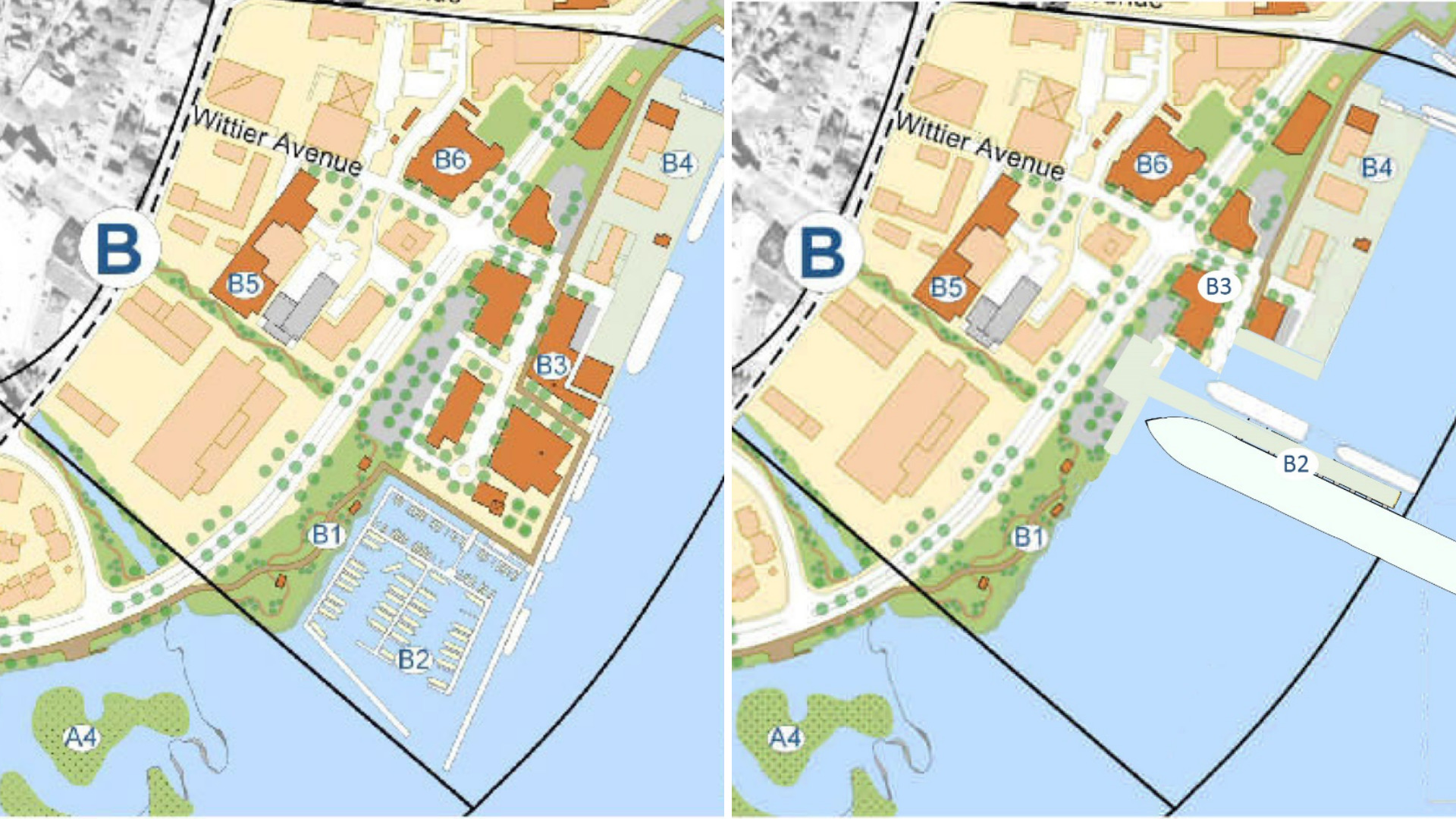
The image on the left shows the subport area of downtown Juneau in the city’s Long Range Waterfront Plan from 2004. (The city maps misidentify Whitter Street as Wittier Avenue.) The image on the right shows a concept in an amendment to the plan that city staff are proposing that would kill the marina concept and accommodate Norwegian Cruise Line’s goal to build a new cruise ship dock there. (Composite image by Jeremy Hsieh/KTOO)
The Juneau Assembly will soon consider removing one of the first hurdles for a cruise line’s plan to build a new dock for its ships.
For the last 17 years, Juneau’s Long Range Waterfront Plan has called for a new mixed-use neighborhood and marina between the U.S. Coast Guard facility and the mouth of Gold Creek. That’s also where Norwegian Cruise Line bought a nearly 3-acre piece of land known as the subport lot in 2020 for a whopping $20 million from the Alaska Mental Health Trust Authority.
As is, it’s unclear if the city’s waterfront plan fits with Norwegian’s goal to build a new cruise ship dock there. It would be Juneau’s fifth parking spot for big ships.
The city’s plan on the books calls for a marina for smaller boats and a long, floating dock for visiting yachts, small cruise ships, the military and “other vessels.” It would likely obstruct a big cruise ship dock there.
City staff are proposing an amendment to the existing waterfront plan that kills the marina and floating dock concept. Instead, there’d be a facility for one large cruise ship and the neighboring federal agencies, the U.S. Coast Guard and National Oceanic and Atmospheric Administration.
Amending the waterfront plan wouldn’t clear the way for Norwegian to build. But it would be one less thing for the Juneau Planning Commission to parse when it considers granting Norwegian a permit to develop its property.
“The amendment’s required as a first step,” said Alexandra Pierce, the city’s tourism manager.
She said the planning commission would still have other bread-and-butter urban planning issues to weigh.
“The zoning in the area, parking and traffic requirements, things like that,” she said.
“Haven’t seen a ton of comments yet, about a dozen,” she said. “I would say that it’s fairly similar to the types of comments that we received in the visitor industry task force.”
To formally weigh in on the city’s Long Range Waterfront Plan amendment, email Alexandra Pierce. The comment period is open through the end of January.
Pierce plans to update the Assembly in a committee meeting on Monday. The Assembly must also hold a public hearing before its final vote on the amendment, which will likely be in February.
Besides the city’s waterfront plan and the planning commission permit, the cruise line has more public hurdles in its path. Norwegian still needs permission from the city to develop and operate in the city-owned tidelands around the property. And the Coast Guard and NOAA also must be satisfied if the development impacts their access to the water.
That gives the city room to negotiate for conditions the city’s tourism task force recommended in 2020. That includes electrifying the dock so that cruise ships can plug into Juneau’s clean power grid while in port, instead of burning fuel to generate electricity on board. Another recommendation is to limit the use of the dock to one big cruise ship per day.
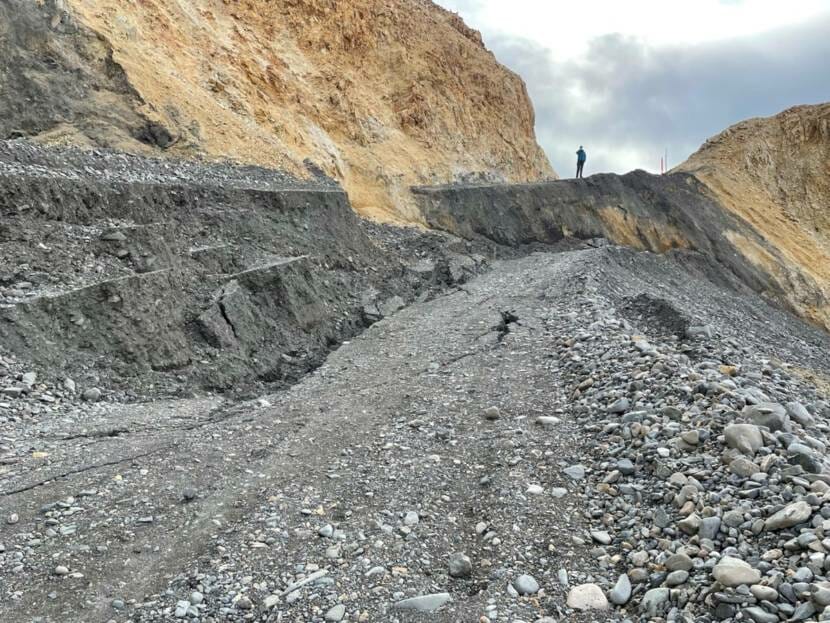
The Pretty Rocks landslide on Sept. 16, 2021. The displacement of approximately 14 vertical feet seen below the person standing on the stable road surface (for scale) occurred over two weeks following the cessation of maintenance and road use on September 2, 2021. (NPS photo)
Twenty-five million dollars have been set aside for repair work to address landslide issues with the Park Road in Denali National Park and Preserve.
An area known as Pretty Rocks, about forty-five miles in on the Park Road, has seen an accelerating landslide in recent years. By last summer, shifting earth was causing the road to move more than half an inch per day.
Park officials have tried to keep up with maintaining the road. In 2019, there were a few short-term closures for maintenance. In 2020, the road was able to stay open all season. But in 2020, the deteriorating situation led the National Park Service to close the road in late August for the remainder of the season.
Last fall, the Park Service set up a page detailing the issues at Pretty Rocks. That page says climate change is a likely contributor to the current problems, and continued use of the Park Road west of Pretty Rocks would require new, more expensive methods.
Now the National Park Service is looking at building a bridge over the landslide.
On Thursday, U.S. Secretary of the Interior Deb Haaland announced that $25 million from the recently passed bipartisan infrastructure bill will be used to make the needed changes. All three members of Alaska’s congressional delegation applauded the funds being dedicated to Denali National Park.
Before bridge construction can begin, the project must go through an environmental assessment process. That assessment allows for a public comment period, which is open until Feb. 13.
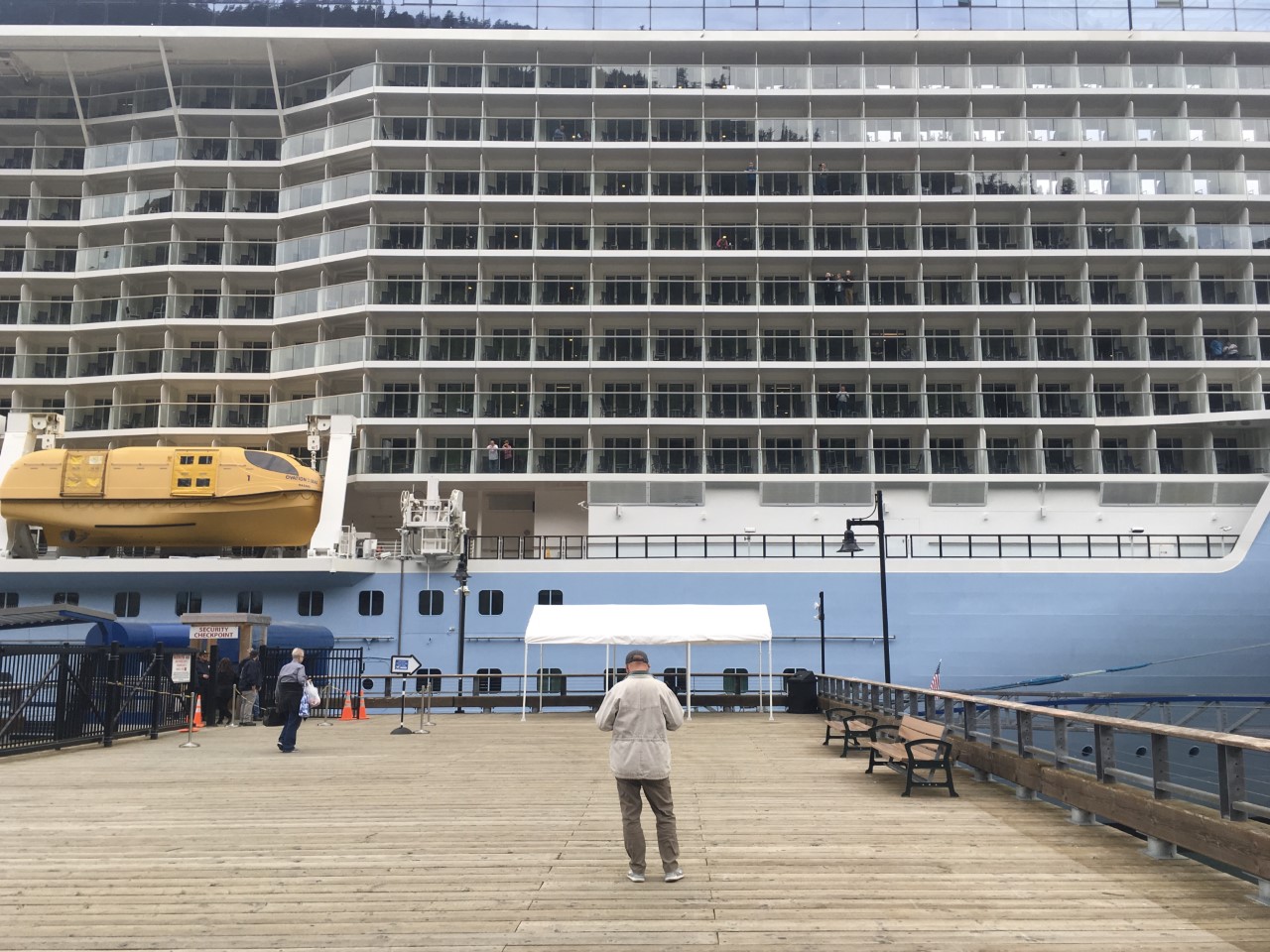
A passenger stands on the dock in Juneau near the Ovation of the Seas cruise ship on May 19, 2019. (Photo by Ryan Cunningham/KTOO)
The federal guidelines that have closely regulated the cruise industry during the COVID-19 pandemic, known as the Conditional Sailing Order, are set to expire on Jan. 15. On Tuesday, Dr. Rochelle Walensky, director of the US Centers for Disease Control, told a U.S. Senate committee that they won’t be renewed.
“We anticipate that this order will not be renewed, and that the cruise ship industries will continue to understand that this is a really safe practice for those industries,” she told Alaska’s Sen. Lisa Murkowski during the committee meeting. “What I can’t predict is what the summer will bring.”
The CDC first imposed as a “No Sail Order” in March of 2020, which entirely eliminated Alaska’s summer cruise season that year. In October 2020, the agency issued the Conditional Sailing Order that introduced strict guidelines for cruise ships to resume sailings. Most Alaskan ports saw a limited return of ships in 2021, once a legal barrier involving Canada was resolved.
Due to pent-up demand and travel restrictions elsewhere in the world, the Alaska visitor industry has projected a record cruise season in 2022.
Close
Update notification options
Subscribe to notifications
Subscribe
Get notifications about news related to the topics you care about. You can unsubscribe anytime.