
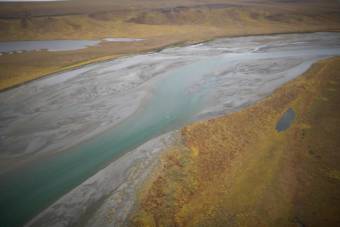
The announcement calls for a new study that will be a supplement to the 2019 environmental impact statement conducted by the Trump administration.
Wildlife
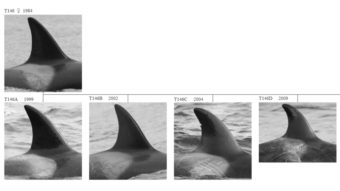
Meet T146D, the killer whale that freed itself after stranding on Prince of Wales Island
Researchers say there are good signs pointing to T146D’s survival. Five live-strandings from this population have been documented over the last 20 years, and four of those animals are thought to still be alive.
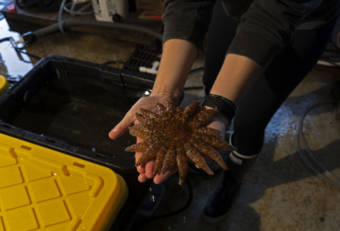
Sea stars shed light on kelp forests’ decline
From the coast of Mexico to the Gulf of Alaska, ocean habitats have seen a startling change recently. Invisible from land, beneath the waves of the Pacific, kelp forests have been fighting a losing battle.

Update: Killer whale stranded on Prince of Wales Island frees itself
A lone killer whale was reported to have beached itself on Prince of Wales Island Thursday, and federal biologists say they are responding.
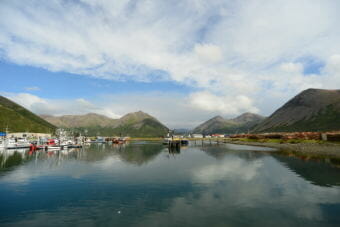
Interior stalls aerial survey in Izembek Refuge, Murkowski says
Alaska Department of Transportation spokesman Andy Mills said its contractor is waiting for special use permits to mark wetlands and identify cultural resources with the aid of a helicopter.
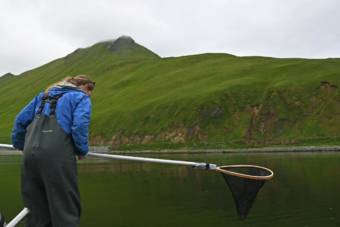
Harmful algal blooms can be lethal for humans. Scientists wonder if they cause seabird die-offs, too
USGS biologist Sarah Schoen said the project started about five years ago when a major heat wave, known as “the blob,” hit the ocean. Around the same time, there was a die-off of an estimated million common murres — a northern seabird — from Alaska down to California.