
An equal rights ordinance that divided Anchorage before failing in a ballot vote is expected to easily pass the city Assembly this week.
The ordinance was originally introduced by South Anchorage Assembly Member Bill Evans and was modified with input from Downtown’s Patrick Flynn. It adds sexual orientation and gender expression as categories under which city residents are protected from discrimination in housing, at work or at public facilities.
Evans works as an employment lawyer and has seen a small number of discrimination cases the new law would cover. But because gender and sexuality aren’t protected by discrimination law, incidents aren’t reported when they happen.
“The intent was to make a statement about what is appropriate or inappropriate in our community,” Evans said of the ordinance. “That statement is that in Anchorage in the 21st century. Discriminating against someone on the basis of their sexual orientation or gender identity isn’t acceptable.”
The modified version of the ordinance leaves in language for ministerial exemptions, a way of giving some latitude to religious institutions in employment issues. Some feel the exemptions go too far; others say they don’t go far enough.
Though public testimony at Tuesday’s Assembly meeting is expected to be heated, most of those watching city politics expect the measure to pass overwhelmingly.
If it does, Anchorage will become the first city in Alaska to put full protections for gender and sexuality into law.
Married, pregnant and parenting students will be the focus of a Ketchikan School Board hearing Wednesday.
The Association of Alaska School Boards is proposing a policy that prevents the district from denying those students participation in class or extracurricular activities.
If a doctor requires a student to be absent due to pregnancy, childbirth or abortion, the school would have to allow the absence and reinstate her to her previous status upon return.
The instructional program for affected students would be determined on a case-by-case basis.
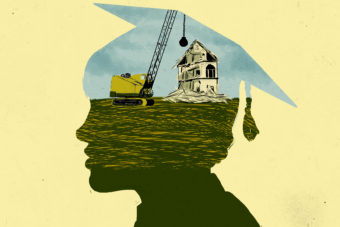
All over the country, high school graduates are making the jump to college. They’re getting to know their roommates, buying supplies, and saying tearful goodbyes to parents.
It’s a stressful time for any family, but consider this: For the growing number of students dealing with mental health issues, it can be a terrifying transition. Sometimes, it raises the question: Is college really an option?
That’s the case with Luis, a bright young man from Virginia with a brain injury and bipolar disorder.
I first met Luis in late June — on the day of his high school graduation. (To protect his privacy, we’re using only his middle name.)
His forehead was moist with sweat from his blue cap and gown and the muggy southern heat — but mostly, because he was nervous.
“School has been the thing that is constant, throughout my entire life, that I remember,” he said.
For a lot of kids, this is a bittersweet occasion: Saying goodbye to friends and looking towards college. For Luis, leaving high school means jumping into the unknown.
The next day, we talked again in his dark living room, as he strummed on his guitar. Excitement had given way to concern, he said: “Everything is different.”
Luis seems like the type of kid who should be headed straight to college. “I enjoy economics a lot,” he says. “I play the bass guitar, the piano, the trombone, the guitar a little bit.”
He tells me he’s been grappling with depression his whole life. But it was a head injury during his sophomore year that changed everything. Suddenly, college became a big question mark. Getting through high school became the one goal.
Doctors say it’s going to take his brain years to heal. When I spoke to Luis, he was on Olanzapine and Hydroxyzine, as needed, for anxiety.
“Before the brain injury I never took notes. I sat in class, I listened to what the teacher said, and I absorbed it beautifully,” Luis says. “And I always got amazing grades on tests.”
Now, it doesn’t work like that. And academics aren’t the only problem. “One of the things that is definitely challenging is my rage,” he says. “I have a much shorter fuse.”
Beth, Luis’ mom, told me when the rage hits, it’s more than just a “short fuse.”
“He wants to kill himself,” she says, sobbing.
In the past year, she’s had Luis hospitalized several times.
“I get scared,” she says. “Because I don’t know if this is the time he’ll go through with it.”
Speaking to mother and son separately, it’s disconcerting, the gap between their perceptions of how serious the situation is. Beth is terrified. She’s already working two jobs to pay Luis’ health bills. Each hospitalization costs between $1,500 and $2,000.
“There’s a moment, for a second, that I think, ‘I’m not a very good mom,’ ” she says. “Because I think, ‘Wait, how is this going to affect what I’m trying to give him?’ I just can’t seem to get out of the hole.”
Luis does see the way to get out: college. “I look at my mental illness as something that spiritually I have to be able to handle on my own,” he says. “I’m definitely going to go to college, regardless of whether the system is in place.”
Seeking Support On Campus
So, what systems are in place? I called up Vanessa Caldwell Jenkins. She’s the director of the counseling center at Norfolk State University, in Norfolk, Va. I asked her what kind of options a student like Luis has if he should go to college.
“All college campuses have disability services,” she told me. “So Luis needs to go into disability services, because that gives him his reasonable accommodations they need to give him by federal law. He has a right to those: If he needs more time for testing … if he needs to be in a different room because he gets anxiety … whatever that is.”
Caldwell Jenkins suggested other key steps. Mainly, Luis and his mom need to research what counseling services schools offer, and meet in person with the counselors. Make Luis a familiar face, she says, adding that a lot of schools have support groups. And she also encourages students to sign a disclosure allowing parents access to information about their kid’s mental health.
Parents, she adds, also need to seek support groups for themselves. And they need to learn to let go a little bit. “A part of growing up, and also expanding as a young person,” Caldwell Jenkins explains, “is that you slowly, gradually get them out there.”
Beth says she gets that. “He wants his independence, he wants to go out and do this, which is the right thing at his age to do,” she says.
But she still worries about the little things: the ups and downs of college life, the stress, the experimenting. Thing that barely make a blip in most college students lives could unravel Luis’. “One little mistake, as we’ve learned,” she says, “can cost so much.”
In the weeks after I meet them, Luis has to be hospitalized, twice. Beth tells me he misses his friends who’ve moved out. She says she’s thinking of quitting one of her jobs, just to spend more time with him.
But they also sound happier. Beth joins a support group. Luis is a lot calmer. The medication seems to be working. Luis got a job — he hopes to save some money, and apply to colleges very soon.
Things are still uncertain, but, Beth says, she sees a light.
Copyright 2015 NPR. To see more, visit http://www.npr.org/.
Read Original Article – Published SEPTEMBER 12, 2015 5:05 PM ET
In the fall of 2003, police in New Jersey received a call from a concerned neighbor who’d found a boy rummaging in her garbage, looking for food. He was 19 years old but was 4 feet tall and weighed just 45 pounds. Investigators soon learned that the boy’s three younger brothers were also severely malnourished.
The family was known to social workers, but the children were being homeschooled and thus were cut off from the one place where their condition could have gotten daily scrutiny — a classroom.
After the story of the emaciated boys appeared in national newspapers, New Jersey Senate Majority Leader Loretta Weinberg was moved to introduce new legislation. “My question was, how does someone fall off the face of the earth so that no one knows they exist? I was told it was because he was homeschooled,” she said.
Her bill, introduced in 2004, would’ve required parents, for the first time, to notify the state that their children were being homeschooled, have them complete the same annual tests as public school students, and submit proof of annual medical tests.
Soon afterward, a small group of homeschooling parents began following Weinberg around the capitol. The barrage of phone calls from homeschooling advocates so jammed her office phone lines that staffers had to use their private cellphones to conduct business. “You would have thought I’d recommended the end of the world as we know it,” said Weinberg. “Our office was besieged.”
Many of the “hundreds and hundreds” of calls she said her office received came in response to an email alert from the Home School Legal Defense Association, a small but fierce advocacy group based in Purcellville, Virginia. The email, sent May 3, 2004, urged members to immediately place calls opposing a bill that would “devastate homeschooling in New Jersey” by giving the state Board of Education “virtually unlimited power to impose additional restrictions” — a claim Weinberg said was untrue. Additional alerts with similar language were sent out on May 13, 14, 18, 21, 26 and 28.
“There are very few fights I have given up in the more than 20-some-odd years I have been involved in the state Legislature, but this was one of them,” Weinberg said. While Weinberg dropped the bill that year, she has picked it up several times since — as recently as 2014 — even removing the testing requirement in favor of reviews of student work in an attempt to compromise with the HSLDA. Each attempt has failed.
To lawmakers who have made similar efforts across the country, this comes as no surprise. Since homeschooling first became legal about 25 years ago, HSLDA’s lobbying efforts have doomed proposed regulations and rolled back existing laws in state after state. The group was founded in 1983 by lawyer and ordained Baptist minister Michael Farris, who also founded Patrick Henry College. Although its members represent only about 15 percent of the nation’s estimated 1.5 million homeschooled children — up from 850,000 in 1999 — its tactics have made it highly influential.
“To my knowledge, I can’t think of an occasion where we went backwards [in our goal],” said Farris, who said the HSLDA has been involved in “virtually all” legislative efforts involving homeschooling in the past two decades.
“Somebody who wants to file a bill, they should expect to hear from every homeschooler in their state. We will do everything we can do to make sure every homeschooler knows what is going on,” said Farris.
Judy Day, a former Democratic assemblywoman in New Hampshire, experienced this firsthand when she attempted to pass a bill that would have required annual tests and evaluations of student work, called portfolio reviews, in 2009. In November 2008, before the text of the bill was even released, the HSLDA sent an email alert to its members, listing Day’s phone number and personal email address. A subsequent alert sent in January 2009 called the bill the “most serious legislative threat ever faced by New Hampshire homeschoolers.”
Day said she often talked with homeschooling parents for upward of an hour, explaining that the only intent of the bill was to catch the children who were receiving a poor education. “The general response was that they weren’t that interested in the other kids — they were interested in their own children and that’s where it stopped,” she said. These discussions, she said, further convinced her that regulation was necessary. The bill went to a vote but overwhelmingly failed. Day believes other legislators didn’t want to deal with the blowback she’d received.
That same year, David Cook, a former representative from Arkansas, attempted to pass a bill that would have required homeschooling parents to seek approval from the local district to homeschool. “I was a superintendent for 18 years, and in that time I saw a lot of folks that said they were homeschooling and they really weren’t,” he said. But all of Cook’s cosponsors removed their names from the bill after HSLDA-prompted calls flooded in. “They thought it was good legislation until the heat got to them,” he said, noting that a similar bill he’d written in 2005 had died in committee. After meeting with several homeschooling groups to attempt to compromise on the 2009 bill, Cook came up empty. “They told me the only legislation they wanted was what Alaska had, which was nothing,” he said.
In an alert sent shortly afterwards, the HSLDA thanked its members. “There is no question that your outcry against this terrible bill is what made the difference,” the email read. “I have no doubt that had you not contacted these legislators, this bill would have become unstoppable.”
The HSLDA’s campaigns have continued over the past few years. At the end of 2013, Ohio Sen. Capri Cafaro proposed a bill that would have required social services to interview parents who wished to homeschool. Her office was flooded with angry phone calls from all over the country. She wasn’t surprised when the particularly threatening email arrived. According to a copy provided by the senator’s office, it said she had made a “fatal” mistake and that she “wouldn’t see her next birthday,” By that time, she’d received thousands of emails, more responses than she’d gotten for any other piece of legislation during her more than seven years in office. She withdrew the bill two weeks after introducing it. Last year, Pennsylvania — among the few states that broadly regulates homeschooling — rolled back some of its laws under pressure from the HSLDA. And this year, West Virginia’s state Legislature passed bills that would have drastically reduced homeschooling requirements in the state, but the governor vetoed the measures.
“I’ve never seen a lobby more powerful and scary,” said Ellen Heinitz, the legislative director for Michigan Rep. Stephanie Chang, who ran up against HSLDA backlash when she tried to pass homeschooling regulations a few months ago. “They make the anti-vaxxers seem rational.”
The HSLDA has even fought and won battles over a broad swath of issues that seem only tangentially related to homeschooling. Farris said the group has three “bedrock” concerns — not only homeschooling, but also parental rights and religious freedom. In Washington, the group’s efforts blocked laws that would have allowed grandparents to petition for visitation rights, claiming that such policies made it possible for disapproving grandparents to stop children from being homeschooled. In Montana, the group thwarted proposals that would have made high-school attendance mandatory beyond age 16. Initiatives ranging from prekindergarten programs at public schools to the legalization of gay marriage have pushed the HSLDA to action.
Farris said the HSLDA “always encourages people be polite” and often provides a script to help guide conversations. Threats are not sanctioned by the organization, he said. “I get death threats. I would never want anyone else to receive a death threat,” he told me. Still, he recognizes that the calls and visits can get out of hand. He said it comes with the territory. “Look, politics is a rough-and-tumble business at times,” he said. “If somebody can’t take some criticism, then they shouldn’t be in politics.”
When Farris established the HSLDA in the mid20131980s, homeschooling was illegal across the country. Today, it’s legal in all 50 states, but regulations vary dramatically. Some of the discrepancies (many of which were highlighted in a new report from the Education Commission of the States) include:
Forty-eight states have no background-check process for parents who choose to homeschool. Two have some restrictions. Arkansas prevents homeschooling when a registered sex offender lives in the home, while Pennsylvania bans parents previously convicted of a wide array of crimes from homeschooling.
Fewer than half of states require any kind of evaluation. In some of these, including Washington, New Hampshire and Georgia, homeschooled students are tested, but these tests are not submitted to the school district and there are no ramifications for failure. Others, like Oregon, require parents to submit the test scores only if the local districts request them. A third category of states, including Maine, requires that test scores be submitted but set no minimum score.
Seventeen states have no required subjects for homeschooled students. Of the 33 states that do, 22 have no means of checking whether a parent is actually teaching those subjects.
In 40 states, homeschooling parents are not required to have a high-school diploma, even if they intend to homeschool through 12th grade.
Twenty-five states do not require homeschoolers to be vaccinated. Another 12 mandate vaccinations but do not require records. Only five states require homeschoolers to submit proof of vaccinations at any time.
In states with more vigorous homeschool regulation, officials have a good idea of how each child is performing. In New York, for instance, parents who wish to homeschool must notify the state and submit an education plan. Each year, they must provide the results of one of several approved standardized assessments — including the Iowa Test of Basic Skills and the Stanford Achievement Test — or, if parents prefer not to test their children, an agreed-upon portfolio review. If their children aren’t making adequate progress, parents can be put on probation and eventually forced to enroll their children in school.
But if parents don’t like this degree of oversight, they can move across the Hudson to New Jersey. The word “homeschooling” is not mentioned once in the education regulations of New Jersey; it’s covered under a broadly worded provision that allows children to receive “equivalent instruction elsewhere than at school.” The state is so uninvolved in homeschooling that it took me two weeks and over a dozen phone calls to the New Jersey Department of Education to locate someone who could answer any questions about it. The person who eventually fielded my call said he’d never been asked about homeschooling before and called our conversation “a learning experience.”
Christopher Lubienski, an education professor at the University of Illinois at Urbana-Champaign who studies homeschooling, notes that public-school students are flagged if they are chronically truant, while homeschooled children might be illiterate, suffering from acute medical conditions or enduring abuse and no one would notice. “We put basic requirements and limitations for who can teach our children in schools,” he said. “But when you introduce homeschooling outside the ability for the community to see what happens in the home, that becomes even more of a problem.” Parents who have committed violent crimes against children, he said, can legally homeschool, and there’s often “nothing the state can do.”
Similar criticisms have been levied against private schools, which frequently do not require children to pass state-mandated assessments or follow the same background check processes as public schools. In some states, accreditation is optional, giving private schools greater freedom to deviate from public-school requirements. But even these schools are expected to meet minimum requirements and conduct screenings that may expose abuse or neglect. In Texas, where homeschooling is not regulated in any capacity, private schools are at least required to offer vision and hearing screenings, as well as screenings for scoliosis. New Jersey, where homeschooling is also totally unregulated, prevents private schools from using corporal punishment.
Milton Gaither, a professor of education at Messiah College in Pennsylvania and the author of “Homeschool: An American History,” pointed out that private schools, by their nature, also fulfill a need homeschooling does not: to have eyes other than the parents’ observing the child.
There’s one way the government can check in on homeschooled families: by sending social workers. These visits typically happen only when officials get a tip from a concerned neighbor or have other reasons to suspect neglect or abuse.
Farris believes such visits present a dire threat to homeschooling families, encroaching on personal freedom and family life. Social workers, he said, fundamentally misunderstand homeschooling and too often target families that are in no way abusing their children. “These are armed officers invading people’s houses, in many instances without a warrant,” Farris said. “The reality is that we want to stand together as a movement. If they touch one of us we are going to go to their defense, and we have the ability to go to their defense with rigor and expertise.”
Farris said his group gets 300 calls a year from dues-paying members worrying about “social workers at the door.” This number, however, represents just 0.35 percent of the HSLDA’s membership, assuming each call came from a different family.
But Gaither said Farris’ view is outdated. When homeschooling was first legalized, social workers often misunderstood the intent of parents who chose to keep their children home, he said, and visited homes unnecessarily. He said similar behavior today is rare because of how mainstream homeschooling has become.
If social workers are particularly interested in homeschooling families, it’s not because they assume those parents are predisposed to be abusive, said Barbara Knox, a University of Wisconsin pediatrician who specializes in child abuse. It’s because parents who do have a pattern of abuse often pull their children from school under the guise of homeschooling in order to avoid scrutiny. A 2014 study conducted by Knox and five colleagues looked at 38 cases of severe child abuse and found that nearly 50 percent of parents had either removed their children from public school or never enrolled them, telling their respective states they were homeschooling.
“This is a pattern all of us see over and over and over again,” Knox said. “Certainly there are wonderful homeschooling families. But the lack of regulation for this population makes it easier to disenroll children from public school to further isolate them and escalate abuse to the point of reaching torture.”
Farris acknowledged that such cases exist, but believes more often social workers are simply harassing parents who choose to educate their children outside the mainstream.
In 1995, when the organization was first growing into a national power, the HSLDA put out a role-playing guide called “How To Handle Visits From Social Service Agents,” written by former HSLDA attorney Chris Klicka. The social worker in the scene is named Orwell, and he forces his way into the home without a warrant and attempts to strip search the children.
Every family who pays the HSLDA’s annual $120 membership fee is entitled to legal aid from the group whenever social workers come calling. Farris said families would otherwise find it “almost impossible” to track down a lawyer who understood the applicable laws and had the resources to act quickly.
Farris is frequently paid to give talks to conventions and homeschooling organizations on the risks of allowing children to talk to social workers. He published the book “Anonymous Tip” in 1996 — a 470-page fictional account of an overzealous and abusive social worker who fakes bruises in order to take a mother’s children away. A fictional lawyer (and fictional graduate of Farris’ real-life law school) comes to the mother’s rescue.
Julie Ann Smith, who homeschooled her seven children in Oregon until last year, joined the HSLDA after she heard one of the group’s attorneys speaking at a conference, telling parents about “difficult cases” in which children were taken from homeschooling parents. She began receiving the group’s monthly magazine and clipping out instructions on handling social workers, taping them to the inside of her cupboard for easy access. She even followed HSLDA’s advice not to tell any of her neighbors or family members she was homeschooling for fear one of them would call social services. Her children weren’t allowed to play outside or answer the door during school hours because she thought someone would report her for truancy. “It robbed my kids of opportunities to be outside, and honestly, it robbed my sanity not to send them outside for a break,” said Smith, who now sends her children to a local school.
LaDonna Sasscer had a similar experience when she was homeschooling her two children in Florida. She was so worried about social workers that she became the legislative liaison for her local homeschooling group, and she was the HSLDA’s main point of contact for lobbying efforts. She said she encouraged people to join the HSLDA by telling them “scary stories that social workers were going to come and take your children.”
“I used to read [the monthly report] cover to cover and flip to my state right away and say 2018Oh my gosh! Look what’s happening in Florida!'” said Sasscer, who has since left the HSLDA and no longer homeschools. “They had us all paranoid.”
Farris rejected the idea that the HSLDA is scaring people into buying memberships. “I think it would be strange that anyone would think I would do anything differently than teach people their constitutional rights,” he said. “I don’t know how it’s scary to tell the stories of my experiences.” He adds that Smith and Sasscer represent only a “small percent of people,” and that those who are unhappy are free to leave the HSLDA at any time and receive a full refund.
Although the HSLDA is the nation’s leading homeschooling advocacy group, its 85,000 memberships — which Farris said encompass more than 250,000 children, an average of three per member — represent only a small portion of the homeschooling population. Some of these families, and almost certainly a majority of HSLDA members, have religious motivations for choosing to homeschool; many use alternative textbooks that teach creationism instead of evolution and offer a Christianity-centered view of American history.
Non-HSLDA members, who constitute about 85 percent of the nation’s homeschoolers, choose to homeschool for a variety of reasons, said Gaither, the Messiah College professor and homeschooling expert. Some hope to protect their children from what they see as the systematic racism of public schools, while others want to give a child with special learning needs more individual attention. Some families homeschool because a parent’s job requires constant moving, and still others do it simply to become closer to their children.
Karen Myers Bergey homeschools her two daughters, ages 10 and 13, in Pennsylvania, the most heavily regulated state for homeschooling in the country. She said she began homeschooling because she thought she could give her daughters a better, more self-driven education than her local school district could.
“I wanted to be able to live as creative of a life as possible,” she said. “If we want to go take in a show in the city, I can have them get their schoolwork done to allow time for that. We can also take a week off to do an educational trip or even a fun trip somewhere without someone questioning that.”
While she says her family is faithfully Christian, she doesn’t homeschool because of that. She teaches evolution and Howard Zinn’s “A People’s History of the United States,” which she says her evangelical friends frown upon. While she’s confident homeschoolers like her make up much of the population, she said she’s frustrated she doesn’t see this represented.
“We aren’t for or against anything in society at large — we are just experiencing life together with our children. That voice isn’t heard,” she said. “What you hear on TV and the radio is the HSLDA saying to leave us alone.” Bergey said she’s never felt like she was “jumping through hoops” to meet Pennsylvania’s standards, and says she’s willing to deal with the regulation if it means keeping kids safe.
“I’m confident that I’m doing a good job for [my children] but I’m willing to give up some of my freedom to make sure that every child is being educated in a healthy and beneficial way,” she said.
Gaither said many parents like Bergey never join homeschooling organizations because their reasons feel so unique to their own families. Secular homeschooling groups exist in every state, but their primary role is to offer support and resources, not to lobby politicians. Even if these groups were to feel strongly about a potential new law, their lack of organizational prowess and funding would make it impossible for them to mount campaigns on the scale of the HSLDA’s.
Some of these smaller groups complain that the HSLDA is perpetuating a stereotype. “Because of the HSLDA, people think we are all far-right, extremely religious, maybe even fanatics,” said Shay Seaborne, a long-time homeschooling activist and former board member of The Organization of Virginia Homeschoolers.
The HSLDA argues that it is advancing the goals of all homeschooling parents, not only through its lobbying but by funding most of the published research on homeschooled children. There are few independent studies measuring how much these kids are learning, Gaither said, since it is difficult to get a random sample of students because notification laws vary so drastically by state. When homeschoolers take the ACT and SAT, they tend to perform fairly well. But those who choose to take these tests are likely already on the higher-achieving end of the group; as a whole, studies have shown homeschoolers take college entrance exams at a lower rate than their public or private-schooled peers.
The HSLDA has funded dozens of studies on homeschoolers’ academic performance, most of them conducted by Brian Ray at the National Home Education Research Institute. Every study Ray has published on homeschoolers indicates they are performing at or above the level of similarly situated public school students. Studies not funded by the HSLDA do not tend to be as positive or have such definitive findings, though most find that the small sample of homeschooled students studied are not performing demonstrably worse than their peers.
Gaither said Ray’s studies are generally as sound as surveys, but they don’t necessarily indicate how homeschooling impacts the average student, since they rely on voluntary surveys given to members of HSLDA and similar organizations. Parents whose children do poorly, he said, are unlikely to volunteer to submit their results.
The HSLDA tends to draw conclusions from Ray’s studies far beyond even Ray himself. While Ray typically includes disclaimers that the studies should not be used to draw broad conclusions, one HSLDA pamphlet touting his research leaves this out, claiming, “Homeschoolers are still achieving well beyond their public school counterparts — no matter what their family background, socioeconomic level, or style of homeschooling.”
Ray acknowledges the way in which his work is used by the HSLDA. “I wouldn’t say it’s fine, but it’s what they do,” he said. “I try to be responsible for what I write, but I’m not their policeman.”
Over the past few years, some members of the first homeschooled generation have begun advocating for stronger regulations. Ryan Stollar is the co-founder of Homeschool Alumni Reaching Out, with a mission of improving homeschooling for future generations. “When homeschooling is done responsibly, it can be amazing,” the group says on its website. “What we oppose is irresponsible homeschooling, where the educational method is used to create or hide abuse, isolation, and neglect.”
Stollar said the homeschool alumni he has spoken with “never felt like they had a right” to speak out because they were always expected to be “perfect examples and show homeschooling can work.” Now, he said, that’s changing. “These last three years have been the first time people have felt like it’s okay to say, 2018Hey, everything wasn’t perfect.'” On the HARO website, alumni are encouraged to share their experiences of abuse and neglect and provide critical analysis of the curricula, principles and leaders who dominated the field when they were growing up.
Rachel Coleman, a co-founder of the Coalition for Responsible Home Education, said she felt for years that if she criticized homeschooling she would be labeled “a traitor.” Her group advocates for homeschool reform and aims to make homeschooling “a child-centered option, used only to lovingly prepare young people for an open future.”
When asked about the groups, Jim Mason, an attorney with the HSLDA, told me that, while he takes issue with what he called their “tone,” he thinks “some of their criticisms [are] very well taken or valid.” The HSLDA is “certainly open to considering constructive criticism” he said. But when I spoke to Farris, he dismissed both organizations outright, calling them “a group of bitter young people” who are “fighting against homeschooling 2026 to work out their own issues with their parents.”
Farris has rebuttals to each of the five practices recommended by CRHE, Coleman’s group. At the moment, no state follows all five recommendations, and only a small percentage of states follow any of them.
First, CRHE said all states should require homeschooling parents to annually notify the state of their intent to homeschool. “Do we ask parents to annually notify the state that they are feeding their kids?” Farris responded. “No. But that’s necessary for well-being, too. We trust parents to feed their kids, and we have an elaborate infrastructure called society that interfaces with people and checks up on them. Does it work every time? No. Do people fall through the cracks? Yes. Nonetheless as a free country we have decided that we do not want the country invading every home.”
The HSLDA also takes issue with CHRE’s second suggestion: that all parents who choose to homeschool are subjected to a background check. The HSLDA contends such a policy would be redundant, as parents convicted of abuse are already subject to additional oversight. But Coleman said this isn’t always the case, as social workers tend not to remove children from the home unless extreme circumstances are present. Also, she said, parents convicted of crimes such as drug abuse or assault against someone other than their child may still have custody.
The CHRE’s third recommendation is that homeschooled students complete annual standardized tests or a portfolio review, to be assessed by a non-relative. The HSLDA strongly opposes all types of standardized testing, which Farris said forces a curriculum onto parents by default. The group recently succeeded in lobbying the state of Arkansas to repeal its testing provision, which an HSLDA news alert said had “no stated purpose.” (This was true — the test had no minimum score and was not submitted to the state, which meant it could not be used to intervene in a child’s education.)
Fourth, the CRHE advocates for a system that would flag homeschooling families with a troubling history of social services involvement, subjecting them to additional oversight such as random visits or additional testing. Mason, the HSLDA lawyer, said this ran counter to American principles by punishing families for unproven wrongdoing. “We live in a country of presumed innocence,” he said. “Suspicion of wrongdoing shouldn’t limit the actions of anyone.”
Knox, the abuse expert, disagrees. She supports increased communication between family services agencies and school systems, so that when a child with a history of family services involvement is removed from public school for homeschooling they can be flagged and monitored.
Finally, CRHE said homeschooled students should be subject to the same medical requirements as public-school students. At the moment, almost every state requires public school students to submit medical forms filled out by a doctor. The HSLDA is neutral on whether parents should vaccinate their children, but it opposes “any attempt to weaken exemption provisions currently in state law” and sends out emergency alerts when states propose removing exemptions. This year alone, alerts have been sent out warning parents of bills concerning vaccination requirements in Maine, California, Rhode Island, New Jersey, Oregon, Maryland, and Mississippi.
Rob Reich, a professor of political science at Stanford who has written extensively about homeschooling regulation, said it’s “hard to oppose” laws that would limit abusive parents from homeschooling. But, he said, legislators should first pass laws that gather data on homeschooling.
“The HSLDA points out their success stories, and the skeptics point out the abuse,” he said, but neither side has real numbers to back up its claims.
Luis Huerta, an associate professor of education and public policy at Teachers College-Columbia University, is also in favor of CRHE’s data collection proposals and says he’s fascinated by the group’s emergence.
“Never have we had this strong of a group who are advocates [of homeschooling] and who are also demanding that we have information from which to be able to draw empirical conclusions that influence policy decisions,” he said. “This can potentially change the landscape.”
Farris is frustrated by the criticism from groups like CRHE and HARO, insisting that many of these groups will “say the opposite, no matter what we say.” When I told him that I’d spoken to homeschoolers who told me HSLDA doesn’t represent their views, he responded, “We don’t ever say that we do. But 15 percent, I will say, is bigger than anything they can organize.”
Stollar, the co-founder of HARO, said his group is constantly struggling to let legislators know there are other perspectives out there. Last year, he and several other former homeschoolers showed up at the Virginia statehouse to lobby in favor of a resolution proposed by Tom Rust, a Republican assemblyman. Rust had proposed a study of the state’s religious exemption law: In Virginia, homeschoolers are officially required to register and document their children’s progress. But parents who file a religious exemption are allowed to forego school without any requirements at all. About 7,000 Virginia children are currently homeschooling under this provision. Rust said he wrote the bill after receiving phone calls from constituents who felt members of their extended family were receiving a poor education under the exemption.
HSLDA quickly sent a notification out to its member families, urging them to “accept the possibility that Rust’s call for a study is a mere pretext, and that his true intention is to try to take away some of your freedom once the study gives him some 2018cover.'” Carol Sinclair, Rust’s legislative assistant, answered most of the group’s phone calls, which came from all over the country. She said most of the callers were “downright difficult” and refused to acknowledge that some homeschooled children were being poorly educated. “If you care enough about homeschooling, I would think you would want to make sure children didn’t slip through the cracks of the system,” she said.
Until I spoke to Rust, he had assumed, as many legislators do, that the HSLDA represents the majority of homeschooling families. “They clearly came across as speaking for all homeschoolers — that’s certainly the impression they gave — and to be honest with you, I thought that’s what they were doing,” he said.
It may take some time to change that impression, said Stollar. When he and his fellow homeschooling alumni showed up at the statehouse to voice their support for Rust, many of the legislators assumed they were part of the HSLDA and dismissed them immediately.
“One legislator in particular put her hand up and said 2018I’m not even going to talk to you guys,'” he recalled. “We explained our position several times, and she just didn’t get it. Finally, it dawned on her that we were in favor of the bill. She was astonished by that.”
Jessica Huseman recently graduated from the Stabile Center for Investigative Journalism at Columbia University, which provided support for this project.
ProPublica is a Pulitzer Prize-winning investigative newsroom. Sign up for their newsletter. This story was co-published with Slate.
Hard to resist. But if they’re marijuana edibles, not such a treat. James A. Guilliam/Getty Images
“What’s wrong with you, buddy? What’s wrong?” a man says to his dog in a video uploaded to YouTube last month. The pup moans pitifully and trips over himself. He’s having trouble blinking. He gazes into nothingness; his eyes are a deep, black abyss. He’s wobbling on his paws. The man’s words dissolve into laughter. He knows the dog is high as a kite after thieving a potent marijuana brownie.
It’s a sad state that’s becoming increasingly common.
The Pet Poison Helpline, a 24-hour pet poison control center, has seen a fourfold increase in calls concerning pets experiencing marijuana intoxication over the past three years. The most dramatic rise has been over the past 12 months.
“Over the past year alone, we’ve had double the marijuana exposures,” says Dr. Ahna Brutlag, senior veterinary toxicologist at the Pet Poison Helpline.
The American Society for the Prevention of Cruelty to Animals has seen a similar increase. In 2014, the ASPCA’s poison control centers received calls on about 539 cases of animals accidentally consuming cannabis, up from 320 in 2013.
“What’s worrying to us is the severity of cases now,” says Dr. Heidi Houchen, a veterinarian at Northwest Veterinary Specialists in Clackamas, Ore. “We still see the classic case: red eyes, wobbly, urinating on themselves, a little twitchy … but they can progress through the sedate, leaning, urine-dribbling stage to becoming completely comatose or absolutely rigid. They’ve come in and had seizures. They can come in a panic, really sensitive to noise and touch. They can pass away.”
Part of the problem is that pets are sneaking away edible cannabis products. “If a brownie is sitting on the coffee table, that dog is going to eat it whether it has marijuana or not. I think the enticement and the opportunity for a pet is greater [with edibles],” Brutlag says.
That poses a special danger for gluttonous pets. “It’s not just going to eat one brownie; it’ll eat the whole pan,” Brutlag says. “The dose of what a dog would ingest relative to a human would be much greater.”
Dogs and cats might also be more susceptible to marijuana intoxication than humans. “Every species metabolizes drugs differently,” says Dr. Stacy Meola, an emergency veterinarian at Wheat Ridge Animal Hospital in Wheat Ridge, Colo.
In 2012, she reported on the deaths of two dogs from marijuana intoxication, in a study that tracked increased numbers of dog intoxications in Colorado. Still, she says, serious complications and deaths are rare. The dose it takes to kill an animal like a dog or cat far outstrips the dose it takes to begin acting stoned. “The two we saw die had other confounding factors, like eating chocolate as well,” says Meola. (Chocolate, especially dark chocolate, is toxic to dogs.)
And problems with marijuana are still far less common than toxicity from things like over-the-counter medications, insecticides and rat poison, pet poison control centers say. All of those can kill animals far more easily than pot.
It’s possible that emergency animal care centers and poison hotlines are getting more cases simply because more states have decriminalized marijuana possession. “The stigma is being dissolved, people are just more forthcoming that their pet is getting into marijuana,” Brutlag says. And she thinks it’s also the case that as more states legalize medical and recreational marijuana, the drug is becoming more ubiquitous in people’s homes.
That raises the risk for poisonings, Houchen says, no matter what form the plant is in. Pets will munch on edibles or graze on stashes of dried buds without prejudice. “I’ve heard of animals getting into growing operations and eating so much that they’re defecating undigested plant material,” says Houchen.
That kind of unchecked ingestion of marijuana can potentially be very dangerous. “Once you bring marijuana into the house and it’s available, it should be kept up and away from the pets just as the kids,” Houchen says. “If you want to use it, you have a medical license or whatever reason, great, but now do due diligence.”
Angus Rohan Chen is a reporter and radio producer living in New York City. He has a dry wit and no hobbies. Please be his friend on Twitter @angRchen.
Copyright 2015 NPR. To see more, visit http://www.npr.org/.
Read Original Article – Published SEPTEMBER 04, 201510:02 AM ET
By the time DeAngelo Cortijo was 14, he had been in more than a dozen foster homes. He had run away and lived on the streets for months, and he had been diagnosed with bipolar and anxiety disorders, attachment disorder, intermittent explosive disorder or posttraumatic stress disorder. He had been in and out of mental hospitals and heavily medicated.
Cortijo, who was born in San Francisco, was taken from his mother after she attempted suicide when he was 3.
After his later diagnoses, he was prescribed a combination of antipsychotics, antidepressants and stimulants, and was told that taking them was his only hope of being normal. Instead, he said, medication made him feel “doped up and completely lost.”
It was not until he spent several months developing a relationship with a horse — “and it was huge,” said Cortijo with a smile — that he began to really acknowledge his own feelings. “Animals sense you, your fears, anxieties and insecurities,” he said.
DeAngelo Cortijo, 22, says he benefited more from therapy than from psychotropic medications during his years in foster care. Elaine Korry
Finding help through equine-assisted therapy — riding a horse, feeding, grooming and communicating with it — helped Cortijo to gain a better perspective on himself. “It allowed me to understand what a bond was, to realize I am an individual who is capable of caring, capable of being normal,” said Cortijo.
He’s now 22, off all medication, and is helping troubled youth as a juvenile justice intern at the National Center for Youth Law.
Children in foster care are prescribed antipsychotic drugs at double to quadruple the rate of that not in foster care, according to a Government Accountability Office report. Hundreds of children were found to be taking five or more psychotropic medications at a time, although there is no medical evidence to support such a drug regimen. Thousands of children were prescribed doses that exceeded FDA-approved guidelines. The report found monitoring programs for psychotropic drugs provided to foster children fell short of guidelines established by the American Academy of Child and Adolescent Psychiatry.
In March, a report by the inspector general at Health and Human Services found quality of care concerns in more than two-thirds of claims for psychotropic drugs paid for by Medicaid, the health insurer for most children in foster care. That included too many drugs (37 percent); wrong dose (23 percent); poor monitoring (53 percent); or wrong treatment (41 percent). The OIG recommended that the Centers for Medicare & Medicaid Services (CMS) work with the states to enhance oversight, medical reviews and utilization reviews of psychotropics prescribed to children.
In California, a sweeping package of laws to regulate the prescribing of powerful psychiatric medications to children and teens in the child-welfare system has passed the Senate and is heading to the state assembly, where it faces no formal opposition. The reforms also are being eyed as a template for federal legislation. Anna Johnson, a social analyst at the Oakland, Calif., -based National Center for Youth Law, which helped write the legislation, said an enforcement mechanism is needed to change prescribing practices.
“The legislation describes in detail the oversight function — what everyone’s role is, from the juvenile court judge and the social workers, to the care providers, the lawyers, the doctors,” said Johnson. “And it names specifically the prescribing practices we want to see reduced: the use of multiple drugs on children, dosages that exceed maximums and the use of antipsychotics where not medically necessary because of physical health risk factors.”
The push for tougher laws follows last year’s publication of a series of investigative articles in the San Jose Mercury News, which alleged widespread use of antipsychotics and other psychiatric drugs without proper evaluation and monitoring among the estimated 63,000 California children in foster care.
“It is well beyond time for us to be having this discussion and intervening,” said Ken Berrick, president and CEO of the Seneca Family of Agencies, which provides mental health and other services for children in California. According to Berrick, overuse of medication has been a problem for decades, often because better alternatives simply weren’t available. “Medication is available right now on demand, and other services are not,” he said. “When you don’t have a choice, you rely on what you have.”
Under the reforms, there would be better monitoring of children on medication and closer scrutiny of physicians to identify doctors who rely most heavily on medication. The bill also calls for stricter oversight of group homes to determine if psychotropic medications are used to control children’s behavior. “Drugging and sedating children should never be considered the primary option in lieu of counseling, therapy and appropriate treatment,” said the bill’s author, Sen. Jim Beall, D-San Jose.
In addition, social workers and caregivers in California would receive training in the risks, benefits and side effects of psychiatric medications. A mix of state and federal dollars would establish a structure to provide second medical opinions.
Beyond reining in prescribing outliers, the legislation also places a new emphasis on defining what comprises appropriate care for vulnerable youth. “It’s no longer a drugs-only approach,” explained Johnson, who said the legislation would require that children who are being given powerful medications also receive other services.
Andy Baker/Ikon Images/Getty Images
“We’re saying, you have to do something else — either first or at the same time — to really help a troubled child,” said Johnson. “Swallowing a pill doesn’t help with grief or trauma. It may contain symptoms, but it doesn’t help you move forward and be functional in life.”
In legislative hearings, former foster youth testified about negative side effects from taking psychotropic medications, sometimes unwillingly. And they described how alternatives to drug therapy often led to better outcomes.
For Tisha Ortiz, 22, help finally came in the form of a therapeutic behavioral services worker who took a genuine interest in her. “I felt loved by her, that she actually cared,” said Ortiz.
Ortiz had a chaotic childhood filled with emotional and sexual abuse. While she lived in various group homes, she often lashed out at adults and resorted to self-harm when her emotions got the better of her. For years she lived with flashbacks to traumatic events, which her caregivers and social workers misinterpreted. “They considered the flashbacks as hearing voices, so I got put on psychotropic meds for that, when I wasn’t hearing voices at all.”
On medication, Ortiz gained weight and found it hard to stay awake, yet she continued to feel abandoned and depressed. “I just felt sedated, and I wasn’t really dealing with the problems,” she said.
According to Ortiz, she did not begin to get better until she was connected with a behavioral services worker who encouraged her to talk about her past. “She helped me understand that what I was feeling was because of the situations I went through and not because there’s all these things wrong with me.”
Since then, Ortiz has had other therapists who she felt really listened to her, whom she still occasionally calls if she’s had a bad day. But the self-harm has stopped, and she’s tapering off the one medication that she still takes. Ortiz says it was human interaction, not drugs, that helped her. “Having that love was one of the first steps that put me on the road to getting better.”
There are a lot of good evidence-based treatments that work, said Shadi Houshyar, vice president for child welfare policy at First Focus, a national children’s advocacy organization. “States are just struggling with finding the providers, the resources and the dollars to pay for these interventions,” she said.
Some states resort to Medicaid waivers or use their child welfare general funds to match Medicaid dollars, but that’s not enough, Houshyar said. That’s why First Focus and other advocacy groups have been big proponents of a White House program aimed at curbing the misuse of psychiatric medication in foster care.
The Obama administration has called on states to advance alternative treatments in their child welfare systems. In his 2015 and 2016 budget proposals, President Obama unveiled a two-pronged plan allocating $750 million in grant dollars and incentive payments to address the overprescribing of psychotropics.
The demonstration project would bring child welfare and Medicaid agencies together to provide more coordinated services, including behavioral therapies, to foster kids with a history of trauma or mental health problems. “If we really want to solve this problem, we have to make the alternative interventions available at the same level at which medication is available,” said Berrick. “It’s really a question of access. When that happens, people will make the right decision.”
Elaine Korry writes about healthcare and social policy from the San Francisco Bay area. This story was produced by Youth Today, the national news source for youth-service professionals, including child welfare and juvenile justice, youth development and out-of-school-time programming.
Copyright 2015 NPR. To see more, visit http://www.npr.org/.
Read Original Article – Published SEPTEMBER 02, 201512:02 PM ET