Mental Health

Feds investigating whether Alaska needlessly locks up kids with behavioral health issues

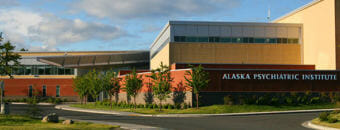
The Alaska Psychiatric Institute in Anchorage. (Photo courtesy of the Alaska Department of Health and Social Services)
The Alaska Psychiatric Institute in Anchorage. (Photo courtesy Alaska Department of Health and Social Services)

The Department of Justice is investigating whether the state of Alaska has unnecessarily institutionalized children with behavioral health issues.

That’s according to a Jan. 21 letter from the Justice Department’s Civil Rights Division to the Disability Law Center of Alaska, first reported by the Anchorage Daily News.

The investigation is the result, in part, of the Law Center’s 2020 complaint that the state has failed to provide appropriate treatment, relying too heavily on locking up children with behavioral health disorders, often at out-of-state, for-profit psychiatric institutions.

“Some of these kids are quite young, and they’re away from their families, away from their community, away from their culture,” said Leslie Jaehning, the Disability Law Center’s attorney.

There were several problems noted in last year’s complaint to federal authorities, Jaehning said. They include a lack of community-based services, pressure on families to put their kids in institutions and a growing number of children being sent Outside, she said.

A multi-year effort by the state to bring such children home to Alaska has stalled recently, something Jaehning said is likely due to a lack of funding.

“I mean, everybody wants to see Alaska’s kids getting help. Everyone wants to see kids get the treatment and services they need,” Jaehning said. “But yeah, what needs to happen is a greater focus and investment on making sure those kids can get those services here at home, staying in their home with their family or guardians, and staying within the community.”

Jaehning said she’s not sure exactly how long the Justice Department’s investigation will last, though she was told to expect it to take about a year.

The state Department of Health and Social Services did not immediately respond to a request for comment last week. A department spokesperson told the Anchorage Daily News that health officials are aware of the investigation and are communicating with the Justice Department.

We asked Dr. Anne Zink and other Alaskans what’s bringing inspiration this winter. Here’s what they said.

Dr. Anne Zink holds a self portrait drawn by her daughter in fourth grade (Screenshot via Zoom)

It’s the darkest part of winter in a very dark year marked with loss, anxiety, economic worries, political upheaval and isolation. We’ve been asking Alaskans where they find inspiration, hope and comfort on their bleakest days. Many of them said they turned to art — music, literature, film and spiritual texts — to help get through it.

Here are their answers.

Dr. Anne Zink – Chief Medical Officer of Alaska

Her Choice: Her daughter’s fourth grade self-portrait

Alaska’s Chief Medical Officer Dr. Anne Zink is known for her expansive grasp and no-nonsense delivery of facts about the coronavirus as she guided Alaska’s pandemic response.

But she’s also a visual arts disciple. She studied fine art as an undergraduate, even designing a course on the chemistry of printmaking. To her, art and science have always gone hand-in-hand.

“They’ve always been just the yin and yang of the same thing. I couldn’t have one without the other,” she said.

The piece she chose, a painting done by her daughter in fourth grade showing a colorful “Picasso-esque” face, hangs right by her home office.

Listen to Part 1 of this series, featuring Dr. Zink and Anchorage Mayor Austin Quinn-Davidson:

“The eyes are different. The eyebrows are different. The colors are different, depending on which side of the face you look at, and I’ve always valued that: Seeing a challenge from multiple perspectives, not just seeing it from one perspective,” she said.

The left eye in the painting looks inward at an impossible angle toward the center of the face, while the right eye gazes straight ahead. Zink compares it to her work navigating complex challenges during the pandemic, which take both knowledge of scientific data and an understanding of social dynamics for issues such as a statewide mask mandate.

For all the value modern science has, including a vaccine, medicine is about a lot more than the black-and-white equation of having a disease and finding the cure, she said.

“Medicine is not that dichotomous. It is the art of medicine. And it is nuanced. And it is subtle,” she said.

Julie Decker – Director of Anchorage Museum

Her choice: Documentary film “Spaceship Earth”

Anchorage Museum Director Julie Decker said her salve for 2020 was a documentary film that came out in May.

“Spaceship Earth” follows an experiment performed on Earth in the early 1990s to test the feasibility of colonizing another planet. Eight people lock themselves inside a closed environment called Biosphere 2 for two years. To survive, they learn to garden vegetables and bake bread. Decker said that there are obvious parallels to the quarantining many Alaskans experienced in 2020. Unsurprisingly, things get tense among Spaceship Earth’s residents after a few months.

“What happens when people live in isolation with each other, or from each other?” she said. “I think it’s a fascinating psychological experiment.”

But Decker said the Biosphere 2 complex resonated with her beyond the obvious COVID quarantine parallels. The long days at home during the pandemic got her thinking more and more about another existential crisis: global warming. She said the film’s ambitious project got her to think big, even while stuck in a house that felt small.

“Through the pandemic, I felt that hunger for vision, for big thinking. We are living through a moment of deep personal, professional, global change,” she said. “Where are we going to let it take us?”

There was one last piece of the film that stood out to her: A cameo appearance by former Trump advisor Steve Bannon. A young Bannon, fresh out of a Wall Street job, appears in the film to salvage the Biosphere 2 project after the completion of the two-year experiment, touting the virtues of sustainable ecological living.

“It’s another parallel, in a way, to our moment, because politics has dominated this year as well,” she said. “How strange our world is.”

Celeste Hodge Growden – President of Alaska Black Caucus

Her choice: The Bible’s Romans 8:28.

Alaska Black Caucus President Celeste Hodge Growden chose an older work of art — much older. It was a verse written two thousand years ago, Romans 8:28: “In Him know that all things work together for good to those who love God, to those who are called according to His purpose.”

Pastor Undra Parker at Shiloh Missionary Baptist Church in March 2020. Celeste Hodge Growden said she first heard the verse from Romans 8:28 from Parker at her longtime church. (Shiloh Missionary Baptist Church)

Growden’s organization, the Alaska Black Caucus, was reorganized at the end of 2019. When George Floyd was killed by police officers in Minneapolis in May 2020, sparking worldwide protests against racism, the verse reminded her that her work was part of a larger plan.

Without this verse, nothing makes sense. And you know, you crumble, you get offended, you get angry, you don’t understand things,” she said.

Listen to Part 2 of this series, featuring Celeste Hodge Growden, Samuel Johns, and Julie Decker:

Growden said while 2020 has helped awaken many to systemic racism in the U.S., it hasn’t been an easy year for her. She grieved the loss of her mother, who died late in 2019. And she’s received threats and hate mail because of her positions on issues such as police body cameras. Remembering Romans 8:28’s words about following her purpose has kept her centered.

“It’s nothing that you planned,” she said. “But it’s everything that God planned.”

Samuel Johns – Activist, social worker, artist

His choice: Video Ghengis Khan – Extra Credit

Activist, social worker and musician Samuel Johns also found direction for his Indigenous healing work from world history. But his inspiration came from an unorthodox source: a cartoon history of Mongol Emperor Genghis Khan.

“If anyone said, ‘Man, one day, you’re gonna be in quarantine and you’re gonna fall in love with the Mongol Empire,’ I’d be like, ‘That sounds like the most wacky shit I ever heard,” Johns said.

Alaska Native organizer and activist Samuel Johns protests during a speech by Gov. Mike Dunleavy at the 2019 Alaska Federation of Natives Conference at the Carlson Center in Fairbanks. (Zachariah Hughes/Alaska Public Media)

The video is from a channel called Extra Credit that he started watching to help his kids with history lessons. He acknowledged that while Genghis Khan has often been typecast as a heartless murderer, when he learned more about his story, Johns started to see admirable parts of how the Mongol empire ruled.

“They fought wars, and they defeated armies, but they let the people keep the language and eat. They kept their scholars, they kept their teachers, and they made sure that their books were protected,” he said.

Khan also instituted policies to keep everyone fed and made sure portions of all war booty were reserved for widows and children.

Those lessons struck deep for Johns as he pondered the legacy of colonialism during this summer of racial reckoning.

“I’ve grown up in a disproportionate place, where there was a lot of alcoholism, there was a lot of domestic abuse, there was a lot of things that I could not save people from,” he said.

Hearing the story of one of the world history’s most powerful rulers helped him imagine a world where he had a bit more control over his life, in a world not governed by white colonizers.

“The fact that Genghis Khan was able to create his own laws for his own people — that’s what I want for my people,” he said.

Austin Quinn-Davidson – Acting Anchorage Mayor

Her choice: Brandi Carlile live performances

Anchorage’s Acting Mayor Austin Quinn Davidson said the music of Brandi Carlile was an escape from the realities of the pandemic.

Anchorage Assembly Chair Austin Quinn-Davidson in her Turnagain neighborhood on Oct. 22. Quinn-Davidson became the interim mayor of Anchorage, following Mayor Berkowitz’s resignation on Oct. 23. (Jeff Chen/Alaska Public Media)

Quinn-Davidson said she’s fallen back on the music of singer-songwriter Brandi Carlile at several points since unexpectedly taking the helm of Alaska’s largest city. Her wife bought her tickets to a virtual concert earlier this year.

“Halfway through, I found myself kind of lost in the moment, and just singing along and thinking about all these memories I had about, you know, being at a music festival, and the open air, and it being warm,” she said.

Quinn-Davidson and Carlile both come from small rural areas, are roughly the same age, and both married to women. Feeling connected to someone through concerts at home was powerful through the loneliness of work — or when isolating after testing positive for COVID-19.

“She brings such honesty and authenticity to her music, and she tells the story of hard parts of life,” Quinn-Davidson said.

Those messages hit home this year. The lyrics to 2018 song “Most of All” — “But most of all/He taught me to forgive/How to keep a cool head/How to love the one you’re with” — reminded her of lessons she’s learned.

“Music is a tool to remember that ultimately, what it’s about is kindness, and love, and treating people with respect,” Quinn-Davidson said.

And when she finds herself the target of political vitriol, listening to Carlile reminds her we all share a lot more of the human experience than we sometimes remember. And it reminds her things will pass.

“In the context of 2020, and the pandemic, and all of these challenges — those are cyclical, too. We will get out of this … eventually,” she said.


If you’d like to share something that’s helped you get through the pandemic and why — or someone you’d like to hear from in our series — send an email to news@alaskapublic.org.

Early data shows Alaska overdose rate increasing, while suicide rate stays constant

Participants in a training rush a dummy into an ambulance as if it were a real patient at Hagevig Fire Training Center in Juneau. (Photo by Annie Bartholomew/KTOO)

The state Section of Epidemiology published preliminary data this week showing that Alaska’s suicide rate hasn’t gone up in the first three quarters of 2020, though unintentional drug overdoses are continuing an upward trend from previous years.
Alaska’s suicide rate remains among the highest in the country — around 30 deaths per 100,000 people. It’s the leading cause of death among Alaska youth over the age of 15. Beverly Schoonover, director of the statewide Suicide Prevention Council, said this has been an issue long before COVID-19 hit.

“Last year, [suicide] attempts, ideation and completions were much higher than we want to see. This has been an ongoing problem, and it’s not just the pandemic that’s contributing to that.”

Schoonover said issues like economic inequity and childhood trauma have largely driven Alaska’s high suicide rates. Officials are still compiling data to see if the pandemic has had an impact on the numbers this year, but anecdotally, she says it has definitely taken a toll on mental health.

“What we have heard from many people and from many communities is that there’s increased anxiety, increased depression for kids [and] for adults.”

She said people with existing mental health concerns have seen those exacerbated, and there are also reports that people who have never had serious concerns are developing anxiety or depression and seeking help.

The Alaska Careline, a crisis hotline, saw a 51 percent increase in the number of callers this year, according to the state’s report. “The increase in Careline call volume may indicate that more people are seeking assistance due to pandemic-associated stress,” the report read.

The state reported that the number of suicidal ideation and attempted suicide cases in emergency rooms has remained relatively consistent over the last few years.

Experts aren’t sure what’s causing the increase in overdose deaths. Schoonover said local police are reporting interruptions in illegal drug traffic during the pandemic. “So to replace that…illegal suppliers have been using more fentanyl in their mixes. And so that partially could be contributing to the overdose rate, because fentanyl is so much more deadly.

Fentanyl is a highly potent opioid, estimated to be 50 to 100 times stronger than morphine.

The department expects to have more information after all the 2020 data is compiled.

If you or someone you know is experiencing suicidal thoughts, the Alaska Careline is open 24 hours a day, every day of the year. The number is 1-877-266-HELP.

Hunker down or happy holidays? How Alaskans are choosing to celebrate this week.

Amy Jackman, her friends and coworkers are gathering for a night of “Crabs and Cannabis” on Thanksgiving, Thursday ,Nov. 26, 2020, in Kenai, Alaska. (Photo courtesy Amy Jackman)
Amy Jackman, her friends, and coworkers are gathering for a night of “Crabs and Cannabis” on Thanksgiving, Thursday, Nov. 26, 2020, in Kenai. (Photo courtesy Amy Jackman)

Alaskans are finding ways to celebrate the Thanksgiving holiday. But they’re having to balance the appeal of spending time with family and friends against the potential of contracting, and inadvertently spreading, COVID-19. 

Some are finding that choice easier than others. 

Amy Jackman, of Kenai, is doing exactly what she would be doing in any other year. She’s meeting with friends and coworkers for an evening she jokingly dubs “Crabs and Cannabis.”

“We bought 20 pounds of this really amazing crab meat… and we’ve all pitched in for it,” she said. 

She doesn’t really support the roots of Thanksgiving but said it’s more of an excuse to get together and find joy in each other’s company. 

“For me, and the people that are going to be gathering together — there was never even a second thought,” she said. “We’re together every week. We spend time having dinners with our families. We work together, we are basically cultivating and preserving this normalcy, right? Where we don’t live our lives in fear.” 

She is frustrated and concerned by the state and federal response to the spread of the virus — especially guidance about public masking and restrictions on the number of people who can gather in one place. 

“And it baffles me how many people are going outdoors or basically begging for tighter restrictions,” she said. 

Jackman worries that impacts like economic harm to businesses and isolation felt by children who are out of school and seniors who are cut-off from contact with the outside world are causing significantly more harm than the virus. 

But state health officials have repeatedly cautioned against gathering and helping to spread the virus. 

As coronavirus cases continue to climb, hospitals all over the state have warned that staffing shortages coupled with a surge in patients could be disastrous. 

The president of the Alaska State Hospital and Nursing Home Association, Jared Kosin, said on Tuesday that Thanksgiving celebrations could make it worse. 

Some Alaskans have changed their plans this year. 

Winter on the Elliot Highway in 2013. (Creative Commons photo by Jason Ahrns)
Winter on the Elliot Highway in 2013. (Creative Commons photo courtesy of Jason Ahrns)

In Fairbanks, Alyssa Enriquez generally hosts something of an orphans’ Thanksgiving, where people who have no other place to go can find company and food. 

But she didn’t feel comfortable doing that this year. She said a friend who is in her bubble is immuno-compromised. 

So Enriquez decided to unplug for the weekend. She rented the Fred Blixt cabin just off of the Elliot Highway, about an hour and a half north of Fairbanks. 

“I just want to be able to disconnect for the weekend, or for a couple of days, and not have to think about the world,” she said.  

Four friends will come to visit, but not all at the same time, and Enriquez says they’ll keep their interactions as safe as they can.

“The stuff we’re going to do as a group is probably going to be outside. And it’s supposed to be really warm. It’s supposed to be in the mid-20s here. It’s not too bad, at least it’s not 20 below,” Enriquez said. 

Even though a lot of things are different this year, Enriquez said it still feels like she’s following her normal holiday tradition of spending quality time with good friends. And in some ways, she thinks planning for a safe holiday might have helped her rethink her Thanksgiving traditions.

“It’s definitely scaled back, really thinking about who’s in my bubble. Really thinking about having a really nice time,” she said. “This is something I would probably do in the future so that it’s just being out in a cabin and enjoying the space and the presence that you’re in.”

Douglas Bridge in Juneau in December 2018 (Photo by David Purdy/KTOO)

In Juneau, Rebecca Smith also found a way to see friends and neighbors on Thursday, but it will be more of a take-home Thanksgiving. 

Her next door neighbor has a carport, and they’ve turned it into a party space. It has enough room to spread out chairs in groups for the three households that are coming. There will be some other stray friends and coworkers stopping by, too. 

“So this past week I had purchased some rope lights, and the next door neighbor had purchased some lights as well …. Then Jesse around the corner has a new propane heater, so he’s going to bring that over,” she said.

They’re all going to bring the dishes they normally eat to celebrate the holiday. Her neighbor is bringing sweet corn and drunken sweet potatoes. Rebecca Smith has smoked a turkey and is bringing cornbread stuffing, Chex mix, smoked cider and several other dishes. She said there will be plenty of pies.

Everyone will show up Thursday afternoon with their food. 

“We’ll socialize with masks on at their appropriate distances for a little bit, and then everybody just gets to pack up whatever food they want from all the offerings. Take it back home, reheat their Thanksgiving dinner so we can all eat the things we normally eat even if we can’t all eat them together. It’s our way of still sharing the holiday but still being responsible,” she said.

Like Enriquez, Rebecca Smith said her holiday tradition still feels intact. It’s still the same people. It’s still the same foods. 

“Oh, the other good thing is that I didn’t have to clean my house,” she said.

Smith said there was an unspoken agreement among her friends and neighbors that they have to make it work. 

“I think just because we are all so isolated at this point in time. We just have to cling to some way to make things as close to normal as we can. Nothing is going to be normal. Nothing is going to be normal for a long time, we’ve all come to that realization I think. And, quite frankly, it sucks,” Smith said. “I think we just all sort of, without even necessarily talking about it, we all just realized that we have to have something to celebrate.”  

Generally, she said she feels pretty comfortable with the group of people she’s seeing this week. They’ve been isolated or working alone, or they’ve been careful. But that’s not something she’s seeing reflected in the whole community.

“I look at the number of people who traveled this week. How full the airports were, having been fuller than they’ve been since March and I’m just like ‘you people are all insane,’ she said. “But clearly there are people who still aren’t taking this seriously. I’m worried because it’s clearly not going away. It’s not fake. It’s not a hoax. People are sick.” 

Eli Smith makes deviled eggs for his family’s Thanksgiving celebration on Thursday, Nov. 26, 2020, in Kenai. (Photo courtesy Todd Smith)

Normally, Todd Smith (no relation to Rebecca) would find a way to celebrate Thanksgiving with his extended Kenai family — parents, grandparents, siblings and their children. 

“You know, everybody ends up at somebody’s house,” he said. “We have family in Anchorage and Kenai, so we’ll kind of pick a spot and everybody meets up. We’ll have dinner, hang out for the weekend.”

And that could still have happened this year, though Smith said they would have had to put some thought into how to keep the parents and grandparents safe. 

But while Smith’s two kids are home for remote school, he and his wife Megan are still working. She works at a school in the Kenai Peninsula Borough School District, and he does plumbing and heating. His sister is a nurse in Anchorage. 

“We’re smart about it, but at the same time, we have more exposure every day, just out being about and working, than we do hanging out with our family,” he said. 

Plans changed when Smith and his family got sick with COVID-19 last week. It’s not clear where they picked up the virus.

“I don’t know, one of us got it. I got sick first, but several of our friends got it at the same time. Went in and got tested, three of four of us tested positive. We all three got sick,” he said.” My 14-year-old now says he didn’t feel good today, so we’ll see if he’s got it too.” 

So far, he said it’s just like a bad cold. But it’s lingering, and they’re tired.

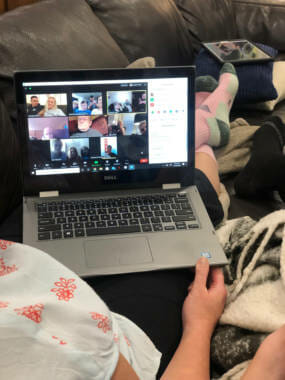
Members of Todd Smith’s family meet up via Zoom to celebrate Thanksgiving together on Thursday, Nov. 26, 2020 in Kenai, Alaska. (Photo courtesy Todd Smith)
Members of Todd Smith’s family meet up via Zoom to celebrate Thanksgiving together on Thursday, Nov. 26, 2020, in Kenai. (Photo courtesy Todd Smith)

“I’m moving around, but I’m by no means completely recovered. It just hangs on,” he said. 

Once they got sick, any ideas they had about gathering with the rest of the family evaporated. And that influenced the rest of the family too. 

“The whole family now is like, ah we’ll just have our own little … We’re going to have a Zoom family Thanksgiving meeting and play a game or something. But I think everybody is probably just going to stay home,” he said. 

Juneau’s hospital sees surge in kids experiencing mental health crises

A nearly empty critical care unit at Bartlett Hospital on April 7, 2020, in Juneau, Alaska. (Photo by Rashah McChesney/KTOO)

Juneau’s Bartlett Regional Hospital is seeing a surge in children experiencing mental health crises.

Hospital officials say the effects of the COVID-19 pandemic are to blame.

Bartlett’s emergency department has treated an unprecedented number of kids experiencing high levels of stress, thoughts of self-harm and suicide attempts over the past seven months.

Chief Behavioral Health Officer Bradley Grigg told the Juneau Assembly on Monday that the kids and their families bring up the impacts of the pandemic when interviewed by staff.

“We’re not really attributing everything here specifically to COVID, but what we are saying is that this is what our families and our parents are sharing when they come in in crisis,” Grigg said. “There seems to be precipitating factors connected with that stress level.”

According to hospital data, during the nine month period from July 2019 to last March, kids made up about 4% of the patients seen in the emergency department for behavioral health crises.

After the pandemic began and schools moved to online learning, that number shot up.

Between April and June of this year, kids made up almost 20% of the cases.

“While we say age 17 and under, the youngest one we’ve seen is five,” Grigg said. “Our most common age group at this point in the last six months has been 13 – 14.”

From April through September, the number of children 13 and under who attempted suicide also grew dramatically.

A graph showing children’s psychiatric visits to Bartlett Regional Hospital’s emergency department.
(Graph courtesy of Bradley Grigg)

Families involved in treatment after an incident talk about financial struggles and housing issues.

Those concerns are clearly trickling down to kids, Grigg said, who also bring up virtual school and the lack of sports and extracurricular activities.

And the problem isn’t exclusive to any one demographic.

“They’re families that you know. They’re families that I know. They’re families that we pass not only in the grocery store, but at any other activities we do,” Grigg said. “We may not recognize them at first with the mask on, but eventually these are folks that we know. They come from all walks. They come from all areas of town.”

Assembly member Wade Bryson weighed in as a parent who has dealt with some of the same concerns.

“I can assure you that not only does the kid stress about it, but the parents not having clear direction, not having a clear answer on how to solve it, also adds an element of stress,” Bryson said. “Depression and these types of illnesses affect the whole family, not just the individual kid.”

Grigg said Bartlett reached out to the state several months ago to ask for help responding to the high number of cases.

The state provided some funding to help expand their outpatient services at the hospital. That’s allowed staff to do more follow-up with families and patients in the weeks and months following a crisis.

Bartlett is not alone. SEARHC, JAMHI, Juneau Youth Services and other providers are also offering mental health support for youth and adults.

Bartlett also plans to build a crisis stabilization center on its campus to be able to treat up to eight patients at a time.

But Grigg said as the pandemic drags on and social isolation continues to impact mental health, they need to do more.

He and Juneau School District Superintendent Bridget Weiss have discussed what they’re seeing.

During a community update Tuesday, Weiss talked about using grant money to hire more positions as virtual learning continues.

“We are looking at how we can support students and families in this real really, really unique situation where students are missing out on not only the structure part of those activities, but the social part of that,” Weiss said.

Grigg and Weiss plan to meet with local organizations to talk about solutions, like training educators and coaches how to recognize the signs of stress in children and ways to address it.

If you or someone you know is struggling with thoughts of suicide, contact the National Suicide Prevention Lifeline at 1-800-273-8255.

After COVID-19 outbreak, the only state-run psychiatric facility in Alaska isn’t taking new patients

The Alaska Psychiatric Institute in Anchorage. (Photo courtesy of the Alaska Department of Health and Social Services)
The Alaska Psychiatric Institute in Anchorage. (Photo courtesy Alaska Department of Health and Social Services)

Four patients at the Alaska Psychiatric Institute have tested positive for COVID-19. 

In response, the state-run psychiatric hospital will not take any new patients for the next two weeks. 

According to a Friday media release, the patients will be isolated from other patients and will be treated by fewer staff, to reduce the risk of exposure to the virus. 

Staff will also be wearing N95 masks, eye protection, gloves and gowns, according to the release. 

Eight people connected with the psychiatric facility, 3 staff and 5 patients, have tested positive for COVID-19 since the beginning of the pandemic. 

According to the release, staff at the facility have attempted to keep the virus at bay by enforcing social distancing, screening employees and contractors for symptoms and requiring that all new patients have a negative test result before they’re admitted. 

The state is seeing a surge of new coronavirus cases. On Friday, state health officials reported 242 new coronavirus infections, the second highest number of cases recorded in Alaska in one day since the pandemic began. The state has also reported triple-digit increases in new cases each day for the last month. 


Site notifications
Update notification options
Subscribe to notifications