Mental Health

Could Depression Be Caused By An Infection?

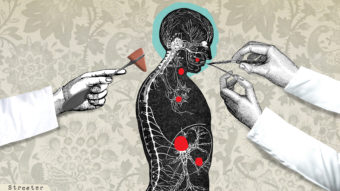
(Illustration by Katherine Streeter for NPR)

Some time around 1907, well before the modern randomized clinical trial was routine, American psychiatrist Henry Cotton began removing decaying teeth from his patients in hopes of curing their mental disorders. If that didn’t work he moved on to more invasive excisions: tonsils, testicles, ovaries and, in some cases, colons.

Cotton was the newly appointed director of the New Jersey State Hospital for the Insane and was acting on a theory proposed by influential Johns Hopkins psychiatrist Adolph Meyer, under whom Cotton had studied, that psychiatric illness is the result of chronic infection. Meyer’s idea was based on observations that patients with high fevers sometimes experience delusions and hallucinations.

Cotton ran with the idea, scalpel in hand.

In 1921 he published a well-received book on the theory called The Defective Delinquent and Insane: the Relation of Focal Infections to Their Causation, Treatment and Prevention. A few years later The New York Times wrote, “eminent physicians and surgeons testified that the New Jersey State Hospital for the Insane was the most progressive institution in the world for the care of the insane, and that the newer method of treating the insane by the removal of focal infection placed the institution in a unique position with respect to hospitals for the mentally ill.” Eventually Cotton opened a hugely successful private practice, catering to the infected molars of Trenton, N.J., high society.

Following his death in 1933, interest in Cotton’s cures waned. His mortality rates hovered at a troubling 45 percent, and in all likelihood his treatments didn’t work. But though his rogue surgeries were dreadfully misguided and disfiguring, a growing body of research suggests that there might be something to his belief that infection – and with it inflammation – is involved in some forms of mental illness.

Symptoms Of Mental And Physical Illness Can Overlap

Late last year Turhan Canli, an associate professor of psychology and radiology at Stony Brook University, published a paper in the journal Biology of Mood and Anxiety Disorders asserting that depression should be thought of as an infectious disease. “Depressed patients act physically sick,” says Canli. “They’re tired, they lose their appetite, they don’t want to get out of bed.” He notes that while Western medicine practitioners tend to focus on the psychological symptoms of depression, in many non-Western cultures patients who would qualify for a depression diagnosis report primarily physical symptoms, in part because of the stigmatization of mental illness.

“The idea that depression is caused simply by changes in serotonin is not panning out. We need to think about other possible causes and treatments for psychiatric disorders,” says Canli.

His assertion that depression results from infection might seem far-fetched, or at least premature, but there are some data to bolster his claim.

Harkening back to Adolph Meyer’s early 20th century theory, Canli notes how certain infections of the brain – perhaps most notably Toxoplasma gondii — can result in emotional disturbances that mimic psychiatric conditions. He also notes that numerous pathogens have been associated with mental illnesses, including Borna disease virus, Epstein-Barr and certain strain of herpes, including varicella zoster, the virus that causes chicken pox and shingles.


A Danish study published in JAMA Psychiatry in 2013 looked at the medical records of over three million people and found that any history of hospitalization for infection was associated with a 62 percent increased risk of later developing a mood disorder, including depression and bipolar disorder.

Canli believes that pathogens acting directly on the brain may result in psychiatric symptoms; but also that autoimmune activity — or the body’s immune system attacking itself — triggered by infection may also contribute. The Danish study also reported that a past history of an autoimmune disorder increases the risk of a future mood disorder by 45 percent.

Antibodies Provide A Clue

The idea there could be a relationship between the immune system and brain disease isn’t new. Autoantibodies were reported in schizophrenia patients in the 1930s. Subsequent work has detected antibodies to various neurotransmitter receptors in the brains of psychiatric patients, while a number of brain disorders, including multiple sclerosis, are known to involve abnormal immune system activity. Researchers at the University of Virginia recently identified a previously undiscovered network of vessels directly connecting the brain with the immune system; the authors concluded that an interplay between the two could significantly contribute to certain neurologic and psychiatric conditions.

Both infection and autoimmune activity result in inflammation, our body’s response to harmful stimuli, which in part involves a surge in immune system activity. And it’s thought by many in the psychiatric research community that inflammation is somehow involved in depression and perhaps other mental illnesses.

Multiple studies have linked depression with elevated markers of inflammation, including two analyses from 2010 and 2012 that collectively reviewed data from 53 studies, as well as several post-mortem studies. A large body of related research confirms that autoimmune and inflammatory activity in the brain is linked with psychiatric symptoms.

Still, for the most part the research so far finds associations but doesn’t prove cause and effect between inflammation and mental health issues. The apparent links could be a matter of chance or there might be some another factor that hasn’t been identified.

Dr. Roger McIntyre, a professor of psychiatry and pharmacology at the University of Toronto, tells Shots that he believes an upset in the “immune-inflammatory system” is at the core of mental illness and that psychiatric disorders might be an unfortunate cost of our powerful immune defenses. “Throughout evolution our enemy up until vaccines and antibiotics were developed was infection,” he says, “Our immune system evolved to fight infections so we could survive and pass our genes to the next generation. However our immune-inflammatory system doesn’t distinguish between what’s provoking it.” McIntyre explains how stressors of any kind – physical or sexual abuse, sleep deprivation, grief – can activate our immune alarms. “For reasons other than fighting infection our immune-inflammatory response can stay activated for weeks, months or years and result in collateral damage,” he says.

Unlike Canli, McIntyre implicates inflammation in general, not exclusively inflammation caused by infection or direct effects of infection itself, as a major contributor to mental maladies. “It’s unlikely that most people with a mental illness have it as a result of infection,” he says, “But it would be reasonable to hypothesize that a subpopulation of people with depression or bipolar disorder or schizophrenia ended up that way because an infection activated their immune-inflammatory system.” McIntyre says that infection, particularly in the womb, could work in concert with genetics, psychosocial factors and our diet and microbiome to influence immune and inflammatory activity and, in turn, our risk of psychiatric disease.

Trying Drugs Against Inflammation For Mental Illness

The idea that inflammation – whether stirred up by infection or other factors — contributes to or causes mental illness comes with caveats, at least in terms of potential treatments. Trials testing anti-inflammatory drugs have been overall mixed or underwhelming.

A recent meta-analysis reported that supplementing SSRIs like Prozac with regular low-dose aspirin use is associated with a reduced risk of depression and ibuprofen supplementation is linked with lower chances of obtaining psychiatric care. However concomitant treatment with SSRIs and diclofenac or celecoxib – two other anti-inflammatories often used to treat arthritis – was associated with increased risk of needing hospital care due to psychiatric symptoms.

A 2013 study explored the antidepressant potential of Remicade, an drug used in rheumatoid arthritis. Overall, three infusions of the medication were found to be no more effective than a placebo, but patients whose blood had higher levels of an inflammatory marker called C-reactive protein did experience modest benefit.

“The truth of the matter is that there is probably a subset of people who get depressed in response to inflammation,” says lead author Dr. Charles Raison, a psychiatry professor at the University of Arizona. “Maybe their bodies generate more inflammation, or maybe they’re more sensitive to it.”

How infection and other causes of inflammation and overly-aggressive immune activity may contribute to depression and other mental illnesses – and whether or not it’s actually depression driving the inflammation — is still being investigated, and likely will be for some time. But plenty of leading psychiatrists agree that the search for alternative pathologic explanations and treatments for psychiatric disorders is could help jump-start the field.

“I’m not convinced that anti-inflammatory strategies are going to turn out to be the most powerful treatments around,” cautions Raison. “But I think if we really want to understand depression, we definitely have to understand how the immune system talks to the brain. I just don’t think we’ve identified immune-based or anti-inflammatory treatments yet that are going to have big effects in depression.”

But the University of Toronto’s McIntyre has a slightly brighter outlook. “Is depression due to infection, or is it due to something else?” he asks. “The answer is yes and yes. The bottom line is inflammation appears to contribute to depression, and we have interventions to address this.”

McIntyre notes that while the science of psychiatry has a long way to go, and that these interventions haven’t been proved effective, numerous approaches with minimal side effects exist that appear to be generally anti-inflammatory, including exercise, meditation and healthy sleep habits.

He also finds promise in the work of his colleague: “Like most cases in medicine, Charles Raison showed that anti-inflammatory approaches may benefit some people with depression, but not everybody. If you try on your friend’s eyeglasses, chances are they won’t help your vision very much.”

Bret Stetka is a writer based in New York and an editorial director at Medscape. His work has appeared in Wired and Scientific American, and on The Atlantic.com. He graduated from the University of Virginia School of Medicine in 2005. He’s on Twitter: @BretStetka

Copyright 2015 NPR. To see more, visit http://www.npr.org/.
Read Original Article – Published OCTOBER 25, 2015 6:01 AM ET

Reflecting on an unexpected tragedy

I’ve been going to the Elders and Youth conference or the Alaska Federation of Natives convention off and on since I was in middle school. These two annual events are like holidays — a weeklong opportunity to celebrate with old friends and far-flung relatives.

It’s an opportunity for Alaska Natives to build consensus on issues and determine the AFN’s agenda for the coming year.

But there are also some very difficult and emotionally draining conversations.

Suicide is an issue, among others, that’s typically addressed in some way each year. This year John Baker, the musher, announced an initiative to address social problems in rural Alaska.

The Dena'ina Convention Center concourse. (Original photo by Mikko Wilson/KTOO. Illustration by Jennifer Canfield/KTOO)
The Dena’ina Convention Center concourse. (Photo illustration by Jennifer Canfield/KTOO)

“When we look into the eyes of another person and can plainly see that their passion for life is missing, or lacking for some reason, we must ask, ‘How have we allowed this to become acceptable, or even commonplace?’ We must ask, ‘How can we help make things right?’”

Baker wants to recruit what he calls “wellness ambassadors” in every community across the state to offer help to those dealing with domestic violence, suicide, or drug and alcohol abuse.

The day after Baker’s announcement, something happened.

I’m going to tell you the story of how I experienced the suicide that took place at the Dena’ina Convention Center, not because I want to, but because I feel like I need to.

The first thing I heard was what sounded like a gun going off, and then cries. I was on the third floor preparing for an interview.

I ran over to the railing with everyone else to see what had happened. I saw a man face down on the first floor. I still thought he must have been shot, until I overheard someone say that he’d jumped.

A moment later, I turned my recorder on and pulled out my phone. I walked halfway down the stairs to a landing overlooking the scene below and took a picture.

Dena’ina Center and AFN staff went after a photojournalist, trying to take away his camera before a police officer intervened.

“Take the camera and the film! No! Take it!” a man yelled.

A few minutes later, another reporter told me that a woman had collapsed on the floor after the man had jumped.

I called my co-worker in Juneau and told him what had happened.

“Oh my god, it’s so f—ed up right now.”

I asked for help writing the story about a man who’d fell from the third floor. I wasn’t sure at the time that he’d actually jumped, and I didn’t really want to believe it, either.    

That night I visited with a few close friends, including one who was also there. She said she heard someone desperately scream, “No!” as the man mounted the railing.

Later, I watched the video of what was happening onstage at the time. AFN co-chair Ana Hoffman interrupted the speaker onstage to make the announcement.

“There’s been, um, a tragic accident and, um, let’s just stay very calm and if we can stand and have a moment of silence,” she said.

Hoffman then led the audience in prayer.

“Holy God, Holy Mighty, Holy Immortal, have mercy on us.”

I returned to my hotel early that night. I had work to do, but instead I fell into bed with my shoes and jacket on and closed my eyes. I awoke suddenly a few minutes later, jolted by a dream that the man was standing in front of me — this man whose face I’d never seen, whose voice I’d never heard — and I worried that maybe he’d changed his mind a second too late.


Alaska CARELINE
1-877-266-HELP

National Suicide Prevention Lifeline
1-800-273-TALK (8255)

Alaska Community Mental Health Centers

Juneau organizer hosts discussion on addiction, recent deaths

Juneau has suffered six heroin-related deaths this year. The public is invited to share stories about addiction and discuss solutions at Wednesday night’s Community of Compassion gathering.

Grace Elliott, the event’s organizer, said the losses hit home. A family friend died of an overdose recently. He was dancing at her daughter’s wedding just weeks before.

“What we want is a space that people can gather in, that it’s a safe space for people to talk about their own experience, how they’re affected by this,” Elliott said. “A lot of the people who are coming already are family and friends of people who have died recently. A lot of these people are in their 20s.”

The Juneau Police Department is conducting a six-month anti-heroin initiative to help answer questions about why users start and why it’s so difficult to kick.

Police typically don’t send out press releases about heroin deaths. However, they released one on Oct. 5 after Robert James Hanson died in his family home. Hanson’s mother gave specific permission because she was distressed about the large number of overdoses in the capital city.

Grace Elliott said by talking, she hopes addiction can be de-stigmatized.

“So that we can have a realistic view of what the condition is in our community and then, thus be able to address it,” Elliott said.

Community of Compassion runs from 5 to 8 p.m. @360 in KTOO.

Hooper Bay loses fourth young adult to apparent suicide

This slough is the access point to the ocean for many people of Hooper Bay. This is the entire village. (Creative Commons photo by Travis)
Hooper Bay. (Creative Commons photo by Travis)

The village of Hooper Bay has suffered another loss. A fourth person has died by suicide.

Alaska State Troopers received a call that 21-year-old Carl Dominic Robert Joe had died from an apparent suicide Saturday afternoon, according to an online trooper dispatch.

Joe’s death comes less than a week after three other young adults have died.

In late September, 26-year-old Noel Tall died from suicide. Less than a week later, 24-year-old Eric Tomaganuk died by suicide, according to troopers.

Troopers believe the deaths are related.

Two days later, the village suffered another loss. Twenty-year-old Miranda Seton died by suicide after becoming distraught over Tomaganuk’s death, according to the online trooper dispatch.

The remains of all four victims were sent to Anchorage for autopsy.

Mental health experts say suicide is a complex issue and is not typically related to one event.

What Medicaid expansion means for this Juneau family

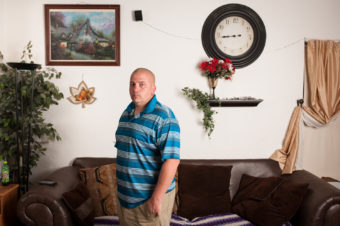
James Refeurzo and his family outside their family home. (Photo by Elizabeth Jenkins/KTOO)
James Refuerzo and his family outside their home. (Photo by Elizabeth Jenkins/KTOO)

Medicaid expansion has been available to Alaskans for over a month, and 93 people in the capital city have enrolled. 263 in all of Southeast. It’s providing coverage for the uninsured. But it’s also offering increased care for those who qualify with Indian Health Service.

For one Juneau man, that means having options to treat alcohol addiction.

James Refuerzo says he fell on hard times when he was in his 20s, and he’s still paying for it now. Back then, he didn’t think he had a drinking problem.

“Maybe one time I’d overdo it. Then all a’sudden I find myself doing something I totally wouldn’t be doing if I was sober,” he said. “With my addiction sometimes I’d drink eight or 10 beers and make a dumb decision and say, ‘Hey I think I can drive.”

After his third DUI, he was locked up at Lemon Creek Correctional Center. Refuerzo is the father of three small kids. He spent two years away serving his sentence and had a revelation.

“Realizing, hey, this has got to stop. ‘Cause the next time I get in trouble, I’m automatically going to be in jail for five years,” Refuerzo said. “And I don’t want to do that and with my kids, something had to change and that’s when I went to Rainforest.”

He knew SEARHC was another option. That’s the tribal health care organization serving Alaska Natives in Southeast. Refuerzo is Tlingit from the Wooshkeetaan Clan. So most of his medical needs are covered. But Juneau SEARHC only offers limited outpatient care for substance abuse treatment.

“It’s tough just to ask for help but then when you ask for it and to be told to wait, it’s a little bit tougher.”

At Rainforest Recovery Center, he says he was able to fill out a form and come back that same day. The center has a sliding-scale payment policy. There’s an overnight treatment program. Refuerzo opted to do outpatient. And he says things got better. He was meeting with a counselor regularly and talking about his problems.

“When I got my job and everything I didn’t qualify for the sliding scale and I was paying 100 percent,” he said.

Refuerzo only works part-time and owes Rainforest over $1,300.

“It’s gone to collections now. I just got another letter saying this one is going to go to collections, too. It’s like I got to take care of it later on in life when I start making more money and decide to start fixing my credit,” he said.

So he stopped going Rainforest. Then he heard he qualified for Medicaid, which pays for treatment.

Bettyann Boyd, Refuerzo’s girlfriend, helped him sign up. She works at SEARHC and has been covered by Indian Health Service and Medicaid for a long as she can remember. Medicaid covers travel expenses for medical reasons and specialized care. Giving her family more opportunities.

“Just the choice, the choice to have a different option to go to a private clinic, a private dental. If you’re not feeling comfortable with the IHS services,” Boyd said.

And she’s glad those choices could extend to her boyfriend, Refuerzo. She’s proud of the work he’s done on himself. She’s going to counseling, too.

“We’re doing really good and we been doing really good. Who knew we’d be able to live in this trailer and have a trailer and own it,” she said. “Everything just keeps going up higher and higher.”

Refuerzo hasn’t heard back yet if he’s been approved for Medicaid. Some people who’ve signed up have had to wait. But after Nov. 1 new applicants will get an instant response from the Health Care Exchange that could speed up the process.

When his enrollment card does come, Refuerzo says it’ll feel good to slip it in his wallet.

“For once I’ll feel like I’ve got something in my life that means something material wise. … I’ve never carried an insurance card before. And each time I’ve been asked, I’ve never had insurance number in my life,” he said. “And it’s going to be nice knowing that I got Medicaid and I’m not just stuck seeing one person because that’s the only person I can see. I can seek out other opinions, other options.”

He’s four months sober. But he says it’ll be nice to know he can get help when he needs it.

CHOICES program takes new approach to housing people with severe mental illness

About 30 percent of people who are chronically homeless in the United States suffer from severe mental illnesses. These individuals more frequently require emergency services and can cost the city of Anchorage up to $60,000 per year. A new program in the city is trying a new tactic to help them, by meeting them where they’re at. Literally.

In August, substance abuse specialist Delroy Duckworth and his colleagues received a call from someone who needed help.

“The first thing we did was went out to find him,” Duckworth recalls. “And we went to the mall to look for this person and we did not know who he was. So we called him on the phone. We heard a phone ring, we saw a man answering his cell phone, I said, ‘Mary that’s him!’”

Leo Tondreault recently moved into his own place at Safe Harbor after four years on the street. (Photo by Anne Hillman/KSKA)

The man with the phone was 60-year-old Leo Tondreault, tall and bulky with a graying beard, joints achy from rheumatoid arthritis. He’s distrustful in general but knows he needs help.

“I’ve been homeless off and on for four and a half years. And nobody cares about you out there. And people that say they understand? How can they have no idea where I’ve been. Everyday is survival. How I’m going to eat, where I’m going to be for the night. Most of the times I just walk all night, drink coffee.”

Part of the reason he never stayed still was to help cope with his anxiety and bipolar disorder – a severe mental illness.

“I just stayed away from people. Because not a lot of people understand what bipolar is. And the worst part for me is the mania. The hyper vigilance.”

Tondreault says he went to see a case worker at Providence Hospital in August and he learned about the CHOICES program. It’s short for Consumers Having Ownership in Creating Effective Services. Unlike other service providers, CHOICES does everything — mental and physical health care, housing, substance abuse treatment, job skills training.

“We are like a one-stop shop,” says Duckworth of the ten-person team that uses hyper individualized care tailored to each client.

They’re using a model called Assertive Community Treatment. It was developed in the 1970s, but this is the first time it’s being tried in Alaska. Research shows it’s more effective than standard case management models, where an individual meets with many different organizations. It costs more up front, but saves money in the long run because clients are less likely to use expensive services, like emergency rooms and hospitals.

The CHOICES program has a budget of $1.8 million for the next three years. It’s funded mostly through the state’s Department of Behavioral Health and specifically targets people who have severe mental illnesses and are homeless. The team is mobile and adaptable. They carry tablets and keyboards and meet people on their own terms.

“We don’t want to overwhelm them,” says housing specialist Mary Abraham. “If they become angry we say, it’s okay, we’ll meet later on. And usually it works out.” They’ll work with people who are still using substances, too.

Abraham’s goal is to get people into housing first. That’s what she did for Tondreault at Safe Harbor at Merrill Field.

He sits on the edge of his twin bed in a sparsely furnished former hotel room. He has a microwave and a mini-fridge, but shares the kitchen. He often runs into other tenants in the hall, who he says offer him alcohol, but he’s resisting. He’s been sober for nearly two months. Tondreault says he’s tried other programs and received some help, but he’s never felt supported the way he does with CHOICES.

“I’m pretty peaceful today. Delroy came over today and said, ‘Man, you look well rested.’ Well, yeah. You change my situation and give me the things I need to help me survive, I’m a different person.”

Tondreault hopes the CHOICES staff can help him accomplish his goals, like staying sober and going back to school in the spring. He knows he needs to put forth his own effort, but he says now he has support to get there.

Site notifications
Update notification options
Subscribe to notifications