Archives for:

"King Cove"

Ex-Alaskan to become No. 2 at Department of Interior

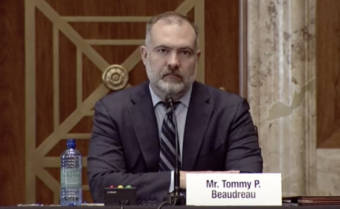
Tommy Boudreau at his confirmation hearing at the Senate Energy Committee April 29. (Still from U.S. Senate video)

Former Alaskan Tommy Beaudreau is on his way to becoming the second in command at the U.S. Interior Department as the deputy to Secretary Deb Haaland.

He’ll be working for an administration pushing the nation’s most ambitious climate agenda, but Beaudreau said he understands how important energy development is to Alaska. In 1979, his family moved to Anchorage so his father could work in Prudhoe Bay.

“I’ll always be grateful for my upbringing in Alaska,” he said at his confirmation hearing last week. “Alaska is where I learned to hunt, fish, ski, backpack and appreciate the beauty, adventure and the power of America’s vast landscapes and wild places.”

Beaudreau graduated from Service High in 1990. By then his father had been laid off from the oil industry and had gone to work for an Air Force contractor.

Beaudreau went to law school and joined the Obama administration during the Deepwater Horizon oil spill in 2010. He became the first director of the Bureau of Ocean Energy Management and later was chief of staff to then-Interior Secretary Sally Jewell.

The Biden White House first named Elizabeth Klein for the No. 2 spot at Interior, but she was dropped amid objection from Sen. Lisa Murkowski.

In an interview with Alaska Public Media last month, Murkowski praised Beaudreau as knowledgeable and a “straight-shooter” whom she can work with, even if she didn’t like the results that came out of the Obama administration. Murkowski and Jewell clashed over whether to allow a road for King Cove through the Izembek National Wildlife Refuge. It was bitter.

“I will say some of the most harrowing experiences in my career have been sitting in your office and talking about issues that I know we had a difference of opinion on,” Beaudreau told Murkowski during the Senate energy hearing on his confirmation.

Murkowski said the state felt besieged by Biden’s executive orders to review oil and gas projects and public land orders in Alaska. She said she looked to Beaudreau to improve the state’s relationship with the Interior Department.

With Murkowski’s support and no obvious opposition on the committee, Beaudreau’s nomination is likely to move to the full Senate. A vote to confirm Beaudreau as deputy secretary of the Interior Department has not been scheduled yet.

Court case on King Cove road continues; Biden administration policy on road is to be determined

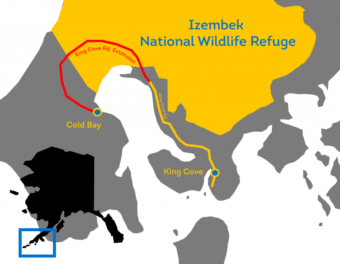
Map: Shiri Segal/Alaska Public Media

The Biden administration is continuing, at least for now, to defend the Trump administration’s land swap in the Izembek National Wildlife Refuge.

The swap is intended to allow for a road through part of the refuge, to link King Cove and Cold Bay. King Cove residents have for decades pushed the Interior Department to allow the road, and it’s been a top priority of Sen. Lisa Murkowski. They say the road could save lives in a medical emergency, by providing access to Cold Bay’s large runway.

Environmental groups argue that a road would threaten bird populations and other wildlife that depend on the refuge. The groups, represented by Trustees for Alaska, filed a lawsuit and won a court ruling last year that halted the land swap.

The Trump administration appealed, and this week the Biden administration filed another brief in that appeal. But the legal filing does not necessarily mean that the Biden administration will come out in favor of the swap or the road. An Interior department spokesperson said the policy is under review.
Deb Haaland nominated to be Biden’s Interior secretary. At her confirmation hearing last month, she told Murkowski she’s willing to meet with the people of King Cove.

Struggling seafood processor hopes to come back stronger under new ownership as ‘New Peter Pan’

The Peter Pan Seafoods plant in Dillingham. (courtesy Peter Pan Seafoods)

Peter Pan, the seafood processing company with an array of plants in Southwest Alaska, had been struggling to keep up with competitors.

So when its owner, Japanese seafood giant Maruha Nichiro, initially announced its sale of Peter Pan to three private equity groups, it said it expected a loss of almost $28 million.

The deal means the company is now vertically integrated, so all stages of production and marketing — usually operated separately — are now under one owner. It also places Peter Pan under American ownership.

One of the three buyers is Northwest Fish. Its owner, Rodger May, is the president of “New Peter Pan.” The Na’-nuk Investment Fund, managed by McKinley Capital, is another. The RRG Global Partners Fund is the third buyer.

McKinley Chairman Rob Gillam said the buyers see the deal as an investment in sustainably harvested Alaska seafood. But they agree that Peter Pan needs to up its marketing game.

“The best fish in the world isn’t any good if you can’t get it to people who want to buy it. So, that was really critical,” he said.

That’s where Northwest Fish comes in. It’s a fish seller based in Seattle, and Gillam said combining sales and production will help them reach more customers.

Gillam is the son of the late Robert Gillam, a key figure in the fight against Pebble Mine who died in 2018. He says New Peter Pan is committed to environmental stewardship and local involvement.

Peter Pan is one of the oldest seafood companies in the state. It has changed hands several times, including when the Bristol Bay Native Corporation owned it in the 1970s. The company has struggled in recent years, however, in part due to competition from other processors, and lower production and harvests outside of Bristol Bay.

Gillam said the new owners want to harness the unpredictability of the fishing industry.

“You will see our focus on being a vertically integrated seafood company. So that means that we will have processing capabilities that will go upscale, value added. We have distribution and sales capabilities,” he said.

Gillam said the pandemic was “extremely difficult” for the seafood industry, but he added that demand for sustainably harvested seafood has risen and that the company plans to meet that demand.

“You’ve got to put more pounds through the plants — put more fish through the plants. When you do, you get more efficient, the costs come down, that benefits everybody,” he said. “It means you pay fishermen a little bit more. It means you can provide more benefits to the people who work there, it means you can lower the cost against which you can sell your product into the market.”

The private equity investors want to strengthen Peter Pan’s diminished reputation with its fleet, Gillam said, and they expect to announce other changes as the summer fishing season approaches.

“Change always scares people, so I just want to be really clear. Absolutely, you can expect change,” he said. “But when you’re part of a team that hasn’t won very many games, winning more games is change. And that’s a good thing, not a bad thing.”

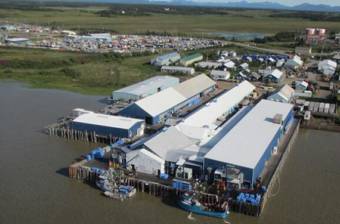
The company says it will continue to operate plants in Dillingham, King Cove, Port Moller and Valdez, along with support facilities in Naknek and Sand Point. Its headquarters are in Bellevue, Wash.
A new fish processor is buoying King Cove’s fishermen. But now the town’s finances are sinking

Gary Hennigh, the city administrator for King Cove, said he’s happy about new ownership of a company that has long been part of the community, after its presence there was threatened by new plants elsewhere in the region.

“The last few years we knew that there were issues going on, that Peter Pan was struggling, in part, just because of the fishing seasons that we’ve been having, in part because of the big investments over in False Pass with two other competitors that started moving product away,” he said.

Hennigh was referring to Trident and Silver Bay Seafoods.

King Cove has seen its tax revenue fall as Peter Pan struggled, and that problem has been compounded by the pandemic. Now, he said, the Peter Pan sale is a chance for the community to start again.

“We’re optimistic that new owners will have a new attitude, new market potential, and that we can get King Cove back to the type of community that we had with a pretty thriving economic base up until a couple years ago,” he said.

The sale was finalized on Dec. 31, 2020. The price was not disclosed.

A previous version of this story said that Northwest Fish was a private equity group. It is a company. The story has been corrected.

Feds will invest $46.5M to boost high-speed internet in coastal Alaska

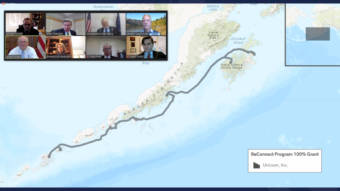
The 814-mile undersea link will connect an existing broadband hub on Kodiak Island with communities along the Alaska Peninsula to Unalaska. (Source: Zoom via Eric Stone / KRBD)

The federal government announced it’s investing $46.5 million to bring high-speed internet to communities across coastal Alaska. That’s expected to improve internet speeds in Southeast Alaska and out as far as the Aleutians.

U.S. Secretary of Agriculture Sonny Perdue made the announcement Tuesday. He said he understands Alaskans are isolated by geography.

“But when we get this high speed, broadband gigabit-speed there, you’re going to be as connected as anyone on the mainland here in that regard,” Perdue said.

More than half of the federal money — $25 million — is going to a subsidiary of GCI to build about 800 miles of undersea fiber cable stretching from Kodiak Island, along the Alaska Peninsula and the Aleutian Chain.
GCI is also spending $33 million of its own capital to complete the connection in 2022.

The U.S. Department of Agriculture’s rural utilities administrator Chad Rupe said the Trump administration recognizes the strategic importance of Dutch Harbor, one of the nation’s largest fishing ports.

“This port is one of our nation’s western, most northernmost natural deepwater ports,” Rupe said. “So this connectivity along the Aleutian chain is especially important not just for our rural economies, but just by sheer geography to support our national defense.”

GCI Chief Operating Officer Greg Chapados said once the fiber optic line is completed, speeds for those living in remote communities should be comparable to Alaska’s urban areas.

“The digital divide between Unalaska and Anchorage will be eliminated,” Chapados said.

GCI said the affected communities in the first phase will be Unalaska, King Cove, Sand Point, Akutan, Chignik Bay and Larsen Bay.

Separately, Alaska Power & Telephone has been awarded $21.5 million to build an undersea fiber optic cable in Southeast Alaska. It would run from Juneau’s Lena Point down the Wrangell Narrows and link communities on Prince of Wales Island.

AP&T is committing just over $7 million to the project. CEO Mike Garrett said it will take about five years to build the 214-mile undersea cable the company is calling SEALink.

“It’s easy to compare this to a superhighway,” Garrett said.

The submerged cable will run from Lena Point near Juneau to Prince of Wales Island. (Graphic by Alaska Power & Telephone)

 After 2025 service will be extended from Kasaan and Coffman Cove to other communities on Prince of Wales, the company said.

The $46.5 million in Alaska grants are part of $600 million approved by Congress in 2018 for the federal ReConnect Program to improve internet connectivity across rural America.

Alaska’s Congressional delegation was also on the Tuesday call.

Nobody from the federal government or telecom companies fielded any questions from reporters invited to cover the announcement.

Marine highway communities say: Along with passengers, the future rides on the ferry

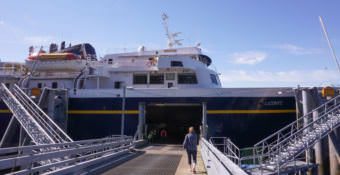
The Aurora, a 235-foot Alaska state ferry, approaches the dock in Whittier, its departure point for its trip across Prince William Sound to Cordova. (Photo by Nat Herz/Alaska's Energy Desk)
The Aurora, a 235-foot Alaska state ferry, approaches the dock in Whittier, its departure point for its trip across Prince William Sound to Cordova. (Photo by Nat Herz/Alaska’s Energy Desk)

The Alaska Marine Highway System is at a critical crossroads, as the first round of hearings on restructuring the ferry system began this week.

A nine-member working group is reviewing a $250,000 study commissioned by Gov. Mike Dunleavy’s administration, one that has already ruled out privatizing the state ferry fleet because it doesn’t pencil out.
Now they will hear what the public has to say about the future of the ferry system. They are taking testimony on September 2.

These hearings come as many coastal communities brace for long gaps in service. The Department of Transportation proposed deep cuts to its winter ferry schedule, which the working group will not address in its current series of hearings.

Department of Transportation officials said the cuts are necessary to keep the ferry system afloat, after COVID-19 hit ridership hard and caused huge losses.

During a 5-day comment period on the proposed schedule earlier this month, more than 200 people weighed in on how the reduced service will hurt them, including those who depend on the aging Tustumena, one of two certified ocean class ferries in the fleet.

The Tustumena rides the waves from Homer to Seldovia, and from Kodiak out to the Aleutian chain, where she’s known as the “Trusty Tusty.” But between mechanical problems and COVID-19, which infected the crew and kept the ferry out of service for about a month, it has been a challenge to live up to that name.

When the Tustumena resumed service to Kodiak in July, her loud bellow to clear the channel was a welcome sound, a sign that life was on its way back to normal – that passengers, cars, groceries and other goods were on the move again. But now, with the proposed cutbacks, some communities could lose service entirely.

John Mayer, one of two captains who pilots the Tustumena, understands what it means to the communities on the route. He compares it to ordering dinner in a restaurant and all you can afford is a bowl of soup.

“And who gets the soup?” he said. “We’re all getting a bowl of soup with five spoons in it. All these communities need something.”

Here’s more from Capt. John Mayer’s interview:

But in the proposed winter schedule, there are no spoons for Ouzinkie or Port Lions, no longer on the route to Kodiak, which will see some service through the winter from the Kennicott.

The mayor of Port Lions, Dorinda Kewan, said her community has no store – and its airport runway is small, too small for airplanes big enough for cargo like lumber and other big-ticket items.

“We’re back in the same boat as we were last year, with no Tustumena service, starting October 1,” Kewan said. “And no real guess at when it’ll come back because the maintenance always takes much longer than originally estimated on the Tustumena.”

Kewan has been working with the Marine Highway’s ferry scheduler in hopes to make a change in the proposed winter schedule – to allow the Kennicott to make some stops in Port Lions. Kewan said it’s frustrating to know that the Kennicott, when it makes stops at nearby Kodiak, will bypass Port Lions – after the community used state money in 2014 to build a new ferry dock to accommodate the Kennicott.

Port Lions in 2004. (Photo Credit: Department of Commerce, Community and Economic Development; Division of Community and Regional Affairs’ Community Photo Library.)

Kewan said Port Lions’ elders will suffer the most without ferry service because they use it to get to medical appointments in Kodiak.

She said the ferry system has allowed elders to continue to live in Port Lions as long as possible. And if the elders have to move for care, so will their families.

“Yet flying is difficult for elders to get in and out of planes – and our bad weather means the ferry is the first choice for getting to their appointments,” Kewan said.

Kewan is upset that the public was given less than a week to weigh in on the winter schedule. And so is Representative Louise Stutes, a Kodiak Republican.

Rep. Louise Stutes, R-Kodiak, participates in a House Majority press availability in the Alaska State Capitol on April 3, 2018. The conversation centered on House Bill 286, the state operating budget passed by the House or Representatives the day before. (Photo by Skip Gray/360 North)
Rep. Louise Stutes, R-Kodiak.

“Give me a break, you know. Come on. Obviously, they’re not too concerned with public comment,” Stutes said.

John MacKinnon, the commissioner of the Department of Transportation and Public Facilities, said the main reason for the 5-day comment period was to get the winter schedule set as soon as possible, to give people time to make travel plans.

He said cutbacks to the winter schedule are unavoidable, because passenger revenues are only 40% of normal, due to COVID-19 and mechanical breakdowns.

MacKinnon said he’s hopeful that the Alaska Marine Highway Reshaping Work Group can come up with some long-term solutions.

When Gov. Dunleavy first took office, he made drastic budget cuts and moved money set aside for the Tustumena’s replacement process to the state’s federal highway matching program. The legislature restored some of those funds and Dunleavy created the working group.

Stutes, who is part of the group, said the key to its success is to get the ferry system out of competition with the road system for its funding. Though she believes the Marine Highway deserves a fair share of state transportation funds.

“We don’t have to pave our road,” Stutes said. “We don’t have to fill potholes on our roads. What do you think the cost was to build the road between Fairbanks and Anchorage?”

Stutes would like to see the ferry system forward-funded for five years.

Here’s more from Rep. Louise Stutes’ interview:

Another ferry advocate, Shirley Marquardt, said a dependable source of revenue is critical in making sound decisions for the ferries. She heads up an economic development group called the Southwest Alaska Municipal Conference.  She was Marine Highway’s top administrator until the Dunleavy administration eliminated her job in a budget cut.

Marquardt hopes the legislature will get behind the efforts of the ferry reshaping work group.

“I’m worried without that kind of push from the legislature, that we won’t see this,” said Marquardt, who said many Alaskans on the road system, think the answer is simply to starve the ferry system and let it die.

Marquardt said it’s easy for those who don’t understand the importance of ferries to coastal communities to said, “People will be unhappy for a little bit, but they’ll get over it,” she said. “You don’t get over not being able to move back and forth between your communities.”

Marquardt believes the answer may be to set up an entity similar to the Alaska Railroad. It would be removed from the annual politically-charged funding battles, where support for the system varies from administration to administration, as well as an understanding of how the ferry system works and why it’s important.

Marquardt recently boarded the Tustumena on a trip from Kodiak to Unalaska, a nearly three-day journey, which passes by Chignik, Cold Bay, False Pass, Sand Point, King Cove, Akutan, and Unalaska.

“The scenery along the way, the volcanoes, the bays, the whales,” Marquardt said, “It’s just what 99.9 percent of the population on this planet will never see.”

Here’s more from Shirley Marquardt’s interview:

Captain John Mayers has steered the Tustumena across the Aleutian chain for many, many years. He said it’s a route that requires a specialized crew. He worries about the impact of the winter schedule cuts on crew members, who will be out of work from October to April.

“The crew right now is very nervous about where they’re going to find work,” Mayer said. “You can’t feed your family on no work, so they’re going to find other jobs.”

Without an experienced crew, Mayer worries the system could become even more unreliable — and those fighting for the ferry system, like Dorinda Kewan, say it’s doomed to fail without dependable service.

“So if you don’t have people using the ferry, then that’s going to give the governor even more fuel to say, ‘Well, they don’t need it. They don’t want it. They’re not using it,’” Kewan said. “It’s a lose-lose proposition.”

Kewan worries that the work of the ferry reshaping group won’t come in time to save the system – that not only passengers ride on the ferry, but also the future of many communities who depend on the Marine Highway.

Trump administration appeals ruling that blocked Izembek road

The Alaska Peninsula fishing village of King Cove has pushed for construction of a road through the Izembek National Wildlife Refuge, which residents say would allow more consistent access to a jet runway in neighboring Cold Bay for medical evacuations. (Photo by Berett Wilber/KUCB)

President Donald Trump’s administration has appealed a federal judge’s rejection of a plan aimed at building a road through the Izembek National Wildlife Refuge on the Alaska Peninsula.

Two months ago, Judge John Sedwick threw out a land trade between the federal government and an Alaska Native village corporation aimed at advancing the road project. He said the trade was illegal because it violated two separate federal laws, the Administrative Procedure Act and the Alaska National Interest Lands Conservation Act.

The Trump administration issued a notice Friday saying it would appeal the ruling.

Residents of the isolated Alaska Peninsula village of King Cove, with support from Alaska elected leaders, have pushed for construction of the road for decades. They say a road would make it easier to reach the nearby airport in the town of Cold Bay for lifesaving medical evacuations.

Environmental groups argue that the road could still be impassable during the winter and foul weather and that construction and traffic could harm Izembek’s birds and wildlife.

This is the second time the Trump administration’s land exchange has been challenged in federal court. An earlier version was also thrown out by a different federal judge last year.

Site notifications
Update notification options
Subscribe to notifications