Archives for:

"Government Shutdown"

As lawmakers mull budget, unprecedented state shutdown looms


Fixed Income Portfolio Manager Maria (Masha) Skuratovskaya studies her screens at the Alaska Permanent Fund Corp., March 14, 2016. (Photo by Skip Gray/360 North)
Fixed Income Portfolio Manager Maria Skuratovskaya studies her screens at the Alaska Permanent Fund Corp., on March 14, 2016, in Juneau.  Employees who manage the fund were among the 18,000 who got layoff notices on Thursday. If lawmakers don’t come to an agreement on the budget within the next 30-days, the government will shut down. (Photo by Skip Gray/360 North)

For the third straight year, state employees are being warned about a looming government shutdown and the potential for mass layoffs.

Lawmakers in Juneau appear to be at an impasse on the budget. They’re halfway through a 30-day special session and are cutting it close to their deadline to negotiate a budget for the state.

If they don’t have it figured out before July 1, thousands of state employees will be laid off and state business will grind to a halt.

Gov. Bill Walker’s administration sent out 18,000 notices on Thursday, warning state employees that they could be laid off if lawmakers don’t come to a compromise.

Kate Sheehan, who heads the state’s division of personnel and labor relations, said there are critical positions that the state can’t function without, so some people are still going to have to go to work.

“But the decision as to who will actually report to work if there is a shutdown has not yet been made,” Sheehan said.

It’s the third straight year that state employees have been faced with the prospect of temporarily losing their jobs.

In 2015, the state sent notices to some employees that they could be laid off. The legislature had a budget plan, but it wasn’t fully funded.

Then, in 2016, the state printed thousands of letters, but didn’t send them after lawmakers reached a compromise.

“So, like I said, it’s a little bit unprecedented where we are now, without having a budget at all,” Sheehan said.

And because there’s never been a shutdown in Alaska, Sheehan said her department is getting a legal opinion on who can come back to work and who can’t.

Among the thousands of state employees who got notices today, is the team of people who manage the state’s Permanent Fund Corporation.

The fund has been at the center of the budget debate this year. Lawmakers have been trying to figure out how to fill a $2.5 billion hole in next year’s budget that opened after oil prices crashed.

“There doesn’t seem to be any debate about whether or not the Permanent Fund should be used,” said Permanent Fund Corporation CEO Angela Rodell. “It’s more about how much of the Permanent Fund should be used.”

Rodell said the funds investments could be automated.

“… in other words, you just put on the money and let the computer decide the asset allocation, and there’s a standard passive index fund,” she said.

But that could have a real impact on how much money it brings in. Rodell said employees at the corporation have added an additional $4.1 billion to what the fund has brought in over the last five years.

“So I am hopeful and I am confident that the legislature will reach an agreement prior to July 1, but I do, I do worry,” she said. “I do worry about what the potential cost of inaction or slow action yields.”

Walker put out a statement on Thursday saying that mass layoffs could affect both the public and private sectors of the economy as people who process everything from fishing permits to driver’s licenses and record home sales would be forced to stop working.

Walker said lawmakers in the House and the Senate have asked for one more day to reach a solution.

State employees warned of government shutdown if budget isn’t passed by July 1

In 2015 layoff letters went out in June, but the budget was passed, preventing a government shutdown. (Photo by Elizabeth Jenkins/KTOO)

The Governor’s office and the Department of Administration are warning of a potential government shutdown.

The office sent emails today to state employees explaining the situation.

Lawmakers have not yet passed a budget for the 2018 fiscal year, which starts in just over a month on July 1. The legislature is still meeting in special session, grappling with a multi-billion dollar budget deficit.

If lawmakers don’t reach a compromise before then, a government shutdown would start on July 1.

A Department of Administration spokesperson says it will send close to 18,000 notices on Thursday, unless the legislature passes a budget, giving state employees a month to prepare for potential layoffs.

That figure doesn’t include the university system, legislature and courts, who must notify their own employees.

Trump may be spoiling for a shutdown fight, but it could spell disaster in 2018

The White House and Congress reached a deal last week to keep the government open — at least until this fall.

But in reality, the compromise may well have just kicked the can down the road until September, when both sides may be spoiling for a fight amid the specter of a government shutdown.

The spending bill didn’t give President Trump or congressional Republicans and Democrats everything they wanted. The GOP got more defense spending, while some agencies whose funding the White House had wanted to cut, such as the National Institutes of Health, actually got a boost.

But the absence of some of the president’s major priorities — namely his highly touted border wall — led Trump to take to Twitter to hint that in five months, he may not be in such a conciliatory mood. “Our country needs a good ‘shutdown’ in September to fix mess!” he tweeted.

On Sunday, White House Office of Management and Budget Director Mick Mulvaney didn’t knock down that threat on CBS’ Face the Nation:

“What we just did this week was fine and passable but not ideal. The appropriations, the spending process, Congress using the power of the purse has been broken here in Washington for more than 10 years. And I think a good shutdown would be one that could help fix that. It’s part of that overall drain-the-swamp mentality about Washington, D.C. This president is willing to think outside the box and do things differently around here in order to change Washington. And if that comes to a shutdown in September, so be it.”

A “good” shutdown?

That not-so-veiled threat from the president and his staff is likely to give many Republicans the beginnings of heartburn. The last time the government shuttered, in October 2013, polls showed that it was the GOP that shouldered the brunt of the public’s blame after a 16-day fiscal standoff over funding for the implementation of the Affordable Care Act, also known as Obamacare.

An NBC/Wall Street Journal survey during the shutdown showed that voters blamed Republicans over then-President Barack Obama by a 22-point margin — a worse outcome for the GOP than during the 1995 and 1996 shutdowns.

After the government reopened, an ABC News/Washington Post poll found that Americans blamed Republicans instead of Obama by 24 points. And the GOP’s approval rating took a bruising hit, too. According to Gallup, the party’s rating hit record lows in the wake of the shutdown, dropping to a 28 percent favorable rating.

“The government shutdown in October 2013 gave the Republican Party a huge hit from which it took more than a year to recover,” said veteran GOP pollster Whit Ayres. “The drop in the Republican Party’s favorable rating was dramatic. We were fortunate that we had a year to repair the damage.”

Looking back, it may seem as if there were few electoral consequences for Republicans as they went on to win victories in the 2014 midterms, including winning back the Senate.

But the shutdown also happened at the same time as the disastrous rollout of the HealthCare.gov website. While that got overshadowed temporarily amid the shutdown, the midterms eventually returned to being a referendum on Obama and his policies — an electoral savior for the GOP.

If a shutdown happens again, it’s Republicans who are in sole control of both the White House and Congress. And now they have a president whose approval ratings are at historic lows after his first 100 days in office and who energizes the Democratic base in a way that could prove incredibly problematic for the GOP in 2018.

A president’s first midterm elections is usually a referendum on his tenure so far, and historically, a president’s party has almost always lost seats — an average of 29, as NPR’s Domenico Montanaro pointed out last month. Coupled with backlash the GOP is already feeling against their health care bill and the historical trends against the party, adding a shutdown on top of that could be catastrophic.

“Most of the wisdom of pollsters comes from looking at history of past actions, and all the history of the last government shutdown suggests that it was very bad news for Republicans,” said Ayres. “There’s no reason to think that the result will be any different in the future, especially since we control the entire government.”

What’s on the table?

Even without the threat of a stalemate looming over the talks, the list of things Congress and the White House have to agree on is substantial.

As Politico noted, the Sept. 30 deadline is likely to coincide with a needed vote to raise the debt ceiling, in addition to the reauthorizing of Federal Aviation Administration law, the children’s health insurance program and federal flood insurance.

The White House will release its full budget later this month, which is sure to include more of the priorities Trump formally laid out in March in his initial fiscal year 2018 blueprint. In the recent spending bill, the president got an increase in defense spending — though only about half of what he wanted — but the domestic spending cuts he had sought didn’t happen this time around.

In five months, it’s unclear how much political capital the White House will have to try to engage in those fights and how the health care bill — if it passes the Senate — might factor into that.

But the president will be wanting a win on his spending priorities, looking to fulfill his campaign promises not just to build the border wall but also to “drain the swamp.” While a shutdown may be cheered by his base as a way to “stick it” to Washington, the implications could be far-reaching and imperil the rest of Trump’s first term if it causes significant backlash in the 2018 midterms.

Copyright 2017 NPR. To see more, visit http://www.npr.org/.

Murkowski: Senate had duty to approve spending bill, avoid government shutdown

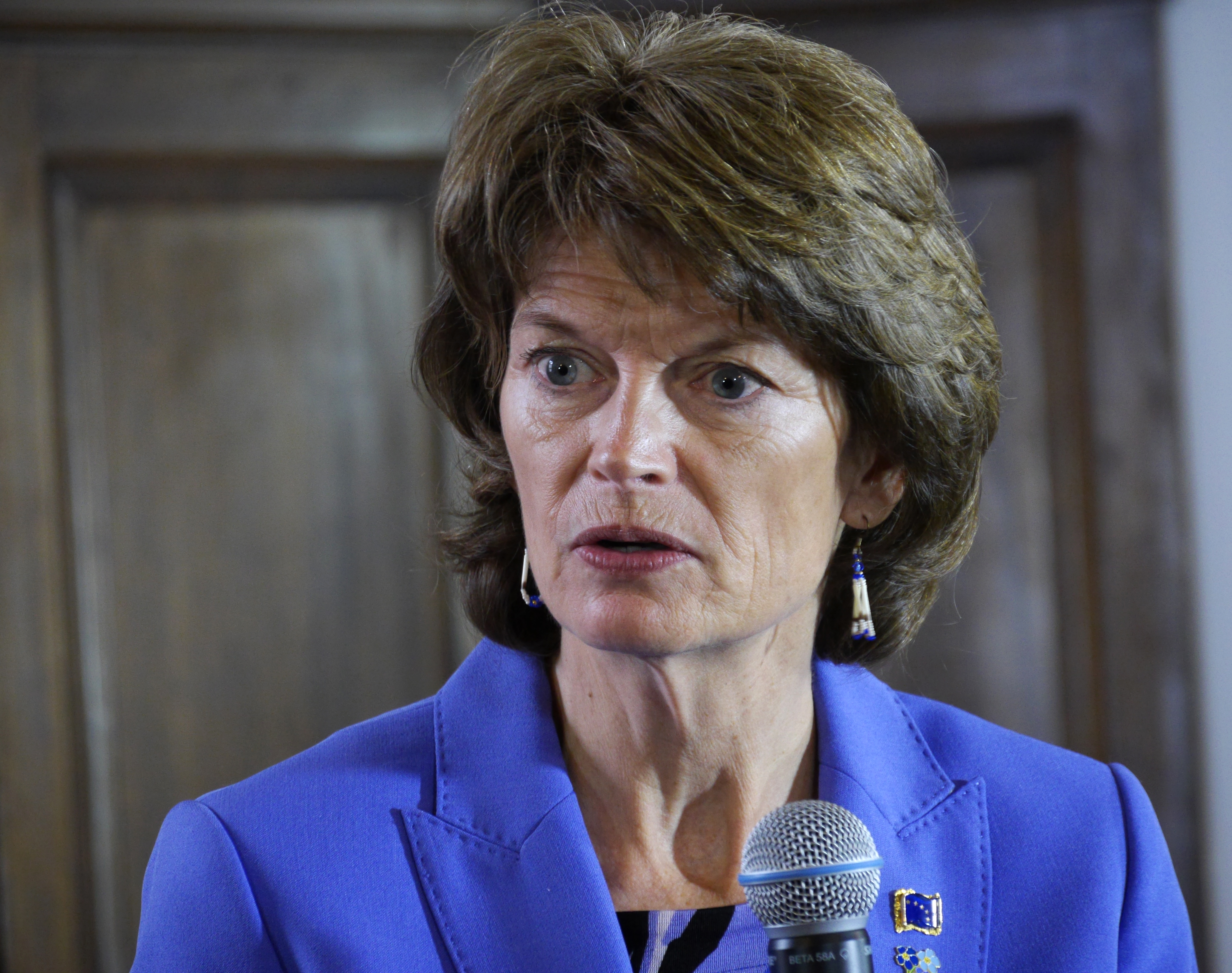
Sen. Lisa Murkowski speaks with reporters at a press availability following her annual address to the Alaska Legislature on Feb. 22, 2017. (Photo by Skip Gray/360 North)
U.S. Sen. Lisa Murkowski speaks with reporters at a press availability following her annual address to the Alaska Legislature on Feb. 22, 2017. (Photo by Skip Gray/360 North)

U.S. Sen. Lisa Murkowski on Thursday touted the Senate’s passing of a spending bill, avoiding a possible government shutdown.

The $1 trillion omnibus appropriations legislation would keep the government running until September. It passed the Senate 79-18.

Murkowski is a member of the Appropriations Committee and chair of the Interior, Environment, and Related Agencies Subcommittee. She said the bill addresses Alaskans’ needs and that a shutdown would have been disastrous, even if President Donald Trump seemed to welcome the possibility earlier this week in a tweet.

“I don’t think that there is ever a good time to say that we should shut the government down,” Murkowski said. “I think our responsibility, our obligation, is to govern. It’s to keep the wheels on the bus.”

The bill continues funding for Essential Air Service and to keep the 4-25 Airborne Brigade Combat Team intact at Joint Base Elmendorf-Richardson near Anchorage. It also includes an Alaska Mental Health Trust land exchange in Southeast.

The spending bill lacks the steep domestic spending cuts President Trump proposed for 2018, but Murkowski said it’s still a responsible use of taxpayer dollars.

The bill now goes to the president.

Congress passes spending bill to avoid shutdown, again punts on health care

(Photo by Liz Ruskin/Alaska Public Media)

Updated at 5:05 p.m. ET.

With the clock ticking, Congress on Friday managed to fulfill its basic function — keeping the federal government running.

The House and Senate approved a short-term measure that funds the government for another week. Lawmakers voted hours ahead of a midnight deadline to avoid a partial shutdown of federal agencies.

Friday’s extension gives members of Congress more time — until midnight on May 5 — to try to reach a deal on a spending bill that will last through the rest of fiscal year 2017, which ends Sept. 30.

“We’re willing to extend things for a little bit more time in hopes that the same sort of progress can be made,” said Senate Minority Leader Chuck Schumer.

Democrats out of power, but flexing political muscle

The vote caps a dramatic week of deal-making on Capitol Hill, particularly in the House.

Although Republicans control all the levers of power in Washington, Democrats had significant leverage in the spending talks and used it to win concessions from the White House.

Monday night, President Trump dropped his demand that the spending bill include a down-payment for his long-promised wall along the U.S.-Mexico border. Democrats said they would not support any bill that included wall funding.

The White House later retreated from its threat to stop paying federal subsidies to health insurers that help cover low-income Americans under the Affordable Care Act.

The calendar also proved to be a motivating factor.

If Congress hadn’t approved the spending bill, the government shutdown would have taken effect on Saturday — President Trump’s 100th day in office.

“I think the president is learning that the all-powerful position of the presidency is not the end-all,” said Rep. Joe Crowley, chairman of the House Democratic Caucus. “There is an equal co-branch of government called the legislature, and when it’s properly exercised, it gives an [opportunity] for the minority from time to time to play a role.”

Health care victory eludes Trump in his first 100 days

Members of Congress left Washington on Friday without voting on the GOP’s revised health care bill.

The updated legislation would allow states to opt out of some of the Affordable Care Act’s mandates — including the benefits health insurers must cover in their policies and the ban on allowing insurance companies to charge more based on a person’s age and health status.

“It gives states more flexibility and tools to decrease premiums and increases choices,” House Speaker Paul Ryan told reporters during his weekly briefing. “And it does this while maintaining and preserving protections for people with preexisting conditions.”

House GOP leaders faced pressure from the Trump administration to schedule a vote on the bill this week. The White House was eager to claim it as a legislative victory within Trump’s 100th-day marker.

But the GOP’s vote-counting team struggled to find the support needed to pass the measure, especially among centrist Republicans. The House Freedom Caucus’ endorsement of the bill made the divide all the more pronounced. That bloc of roughly three-dozen hard-line conservative Republicans helped sideline the party’s previous attempt.

House Democrats had threatened to block the spending bill this week if Republicans attempted to vote on the health care legislation.

The “hot potato” has moved to moderate Republicans

Still, support from the Freedom Caucus injected the GOP effort with a shot of momentum and put political pressure on moderate House Republicans to fall in line. The dynamic fueled tension within the party.

“There’s frustration that we are here where we are because of the Freedom Caucus stand three weeks ago,” said Rep. Chris Collins, R-N.Y. “And now the hot potato has moved to those of us that are typically the ones that cast the tough votes all the time — whether it’s [voting to raise] the debt ceiling or it’s keeping the government open.”

House Speaker Ryan says he’ll bring the new health care bill up for a vote only when it has enough support to pass. It’s not clear when or if that will happen with the legislation in its current form.

The renewed rift over health care will likely color next week’s negotiations over the longer spending bill, as lawmakers face yet another precarious bout of brinkmanship.

Copyright 2017 NPR. To see more, visit http://www.npr.org/.

Easing shutdown worries, Trump relents on another major hurdle

With just two days left to stop a partial shutdown of the federal government, the Trump administration on Wednesday removed another major sticking point in the spending bill negotiations.

The White House told lawmakers it will not cut off federal subsidies that help low-income Americans pay for health insurance under the Affordable Care Act, at least for now, an administration official and congressional sources confirm to NPR.

Democrats sought to have the federal payment — known as a cost-sharing reduction, or CSR — included in the spending package.

This second spending bill concession by the White House makes the specter of a shutdown unlikely. Earlier this week, President Trump backed off his demand that any funding bill Congress passes provide a down payment for his long-promised wall along the U.S.-Mexico border.

Democrats had for weeks signaled a lack of support for any spending bill that included money for Trump’s pet project.

Pelosi: “We’ve now made progress”

Democratic leaders in the House and Senate welcomed the new developments.

“Our major concerns in these negotiations have been about funding for the wall and uncertainty about the CSR payments crucial to the stability of the marketplaces under the Affordable Care Act. We’ve now made progress on both of these fronts,” House Minority Leader Nancy Pelosi said in a statement.

An aide to Pelosi says she spoke twice Wednesday with White House Chief of Staff Reince Preibus as negotiations over a spending bill continued.

Senate Minority Leader Chuck Schumer, in a statement, said of President Trump dropping his health care threat, “Like the withdrawal of money for the wall, this decision brings us closer to a bipartisan agreement to fund the government and is good news for the American people.”

Negotiators in the House and Senate are working ahead of a Friday deadline to reach a spending deal to avoid a government shutdown and fully fund federal departments and agencies through the end of the current fiscal year in September. They could seek a one- or two-week extension, which would allow lawmakers time to reach a more solid deal.

GOP renews health care push

Meanwhile, the House Freedom Caucus is injecting the GOP’s health care push with a shot of momentum.

The bloc of roughly 36 hard-line conservatives — which sidelined the previous Republican attempt to repeal and replace the Affordable Care Act — on Wednesday threw its support behind the party’s revised plan.

The updated measure includes an amendment authored by Freedom Caucus Chairman Rep. Mark Meadows, R-N.C, and Tuesday Group leader Rep. Tom MacArthur, R-N.J.

The Tuesday Group is an informal caucus of roughly 50 moderate House Republicans.

The revised plan would allow states to get waivers for many of the Affordable Care Act’s mandates. States could opt out of setting requirements for the benefits health insurers must cover in their policies and the ban on allowing insurance companies to charge more based on a person’s age and health status.

“Due to improvements to the AHCA and the addition of Rep. Tom MacArthur’s proposed amendment, the House Freedom Caucus has taken an official position in support of the current proposal,” the group said in a statement.

“While the revised version still does not fully repeal Obamacare, we are prepared to support it to keep our promise to the American people to lower healthcare costs.”

An official Freedom Caucus endorsement requires support from 80 percent of its members. But at least one member — Rep. Mo Brooks, R-Ala. — said early Wednesday he wouldn’t support it.

Moderate Republicans slow to embrace new plan

Still, the overwhelming backing from Freedom Caucus conservatives means the future of the GOP’s efforts to dismantle the Affordable Care Act now rests with moderate House Republicans. But many of them seem slow to embrace it.

“The concerns that I’ve had have not been addressed by the current proposals,” Rep. Dan Donovan, R-N.Y., said Wednesday. Donovan is a member of the Tuesday Group. “We have to help those people who were harmed by the Affordable Care Act, but at the same time not harm the people who were helped by it.”

For his part, House Speaker Paul Ryan — who last month pulled the GOP health care bill from the floor after it failed to secure enough votes — reacted favorably to the MacArthur amendment, calling it “very constructive.”

“I think it helps us get to consensus,” Ryan told reporters during a Wednesday press conference on Capitol Hill.

Republican Rep. Chris Collins, R-N.Y., summed it up more succinctly, speaking to reporters off the House floor. “If this is what it takes to get the bill passed,” Collins said, “God bless Donald Trump.”

Copyright 2017 NPR. To see more, visit http://www.npr.org/.
Site notifications
Update notification options
Subscribe to notifications