Anchorage Daily News

Anchorage Daily News is our partner in Anchorage. KTOO collaborates with partners across the state to cover important news and to share stories with our audiences.
Citizens hide from active shooters as Alaska fails to deliver on 2019 promise of village troopers

A view from above of a houses in Russian Mission, clustered together amid forest.
It took the Alaska State Troopers 110 days to capture one of three people accused of an ambush in the village of Russian Mission this year. (Loren Holmes/ADN)

This article was produced in partnership with ProPublica as part of the ProPublica Local Reporting Network.

RUSSIAN MISSION — As the summer months stretched into fall, Justin Edwards would sometimes bump into the man wanted for his attempted murder. In the street or by the schoolhouse or village store.

“He’d say, ‘Hi,’ and act like nothing happened,” said Edwards, 46, who has about 30 shotgun pellets seeded from forearm to bicep in his right arm. Edwards usually said hi back.

“I know that he was on the run,” he said. “But there was nothing I could do about it.”

In this Yukon River village, population 330, residents have long said that if someone is wanted for a serious crime, all they have to do is hide. The Alaska State Troopers might fly in to look for them, but within a few hours the officers would be gone, and even someone targeted in a manhunt could return home like nothing happened.

It took troopers 110 days to catch 20-year-old Tyler Housler, one of three people accused of ambushing Edwards on the edge of the village on July 28. Before Housler was caught in November, neighbors said they slept with rifles under their beds and shotgun shells on the windowsill, ready for anything.

It wasn’t supposed to be this way. Two years ago, the Anchorage Daily News and ProPublica documented major law enforcement gaps in rural Alaska. In response, then-U.S. Attorney General William P. Barr declared the public safety crisis in Alaska villages to be a federal emergency and Gov. Mike Dunleavy proposed a spending plan to deliver 15 more troopers to rural communities that cannot be reached by road.

Standing before the largest annual gathering of Alaska Native leaders on Oct. 17, 2019, Dunleavy specifically promised to put state troopers in the villages of St. Michael and Ambler and add officers in rural hub cities in the following year. After that, he told the crowd, the state would add troopers for the first time in recent history in four additional villages: Stebbins, Kobuk, Eek and Chevak.

As Dunleavy, a Republican, prepared to address the group again on Monday, his promises from two years ago had not come to pass.

Instead of growing the number of troopers deployed in individual, isolated Alaska Native villages by one-third in a single year, as promised in budget documents, the number increased only half that much over the past two years, the Daily News and ProPublica found by reviewing trooper staffing and spending plans from the Department of Public Safety.

On top of that, less than $100,000 of the $6 million that the Justice Department gave to the state to combat the lack of public safety infrastructure has been approved for reimbursement to villages.

Gov. Dunleavy sits behind a desk wearing a Copper River fleece jacket, with the Alaska state flag behind him
As Gov. Mike Dunleavy prepares to address a group of Alaska Native leaders, his promises of more state troopers in villages have not come to pass. (James Brooks/ADN)

The months of unease and moments of terror in Russian Mission underscore how little has changed in some isolated communities and highlight the latest in a string of half-filled government promises.

At the time of the emergency declaration in 2019, Alaska’s sexual assault rate was highest in the nation, about nearly four times the national average. Since then, even as the pandemic forced people inside and drove down every other major category of crime, the rate of reported rapes in Alaska has climbed even higher.

“I’m very disappointed, obviously,” said Joel Jackson, president of the Organized Village of Kake. The Southeast Alaska community reported an active shooter last month and waited hours for troopers to arrive. “It’s an ongoing problem for rural communities everywhere,” Jackson said.

In Russian Mission, a Yup’ik village 70 miles from the Western Alaska hub city of Bethel, there has been no long-term, certified police officer since the village public safety officer died by suicide in 2005. In April, it took troopers a week to arrive there to investigate a report of a child being clubbed over the head, kidnapped, bound with duct tape and sexually abused. No law enforcement came to the village until the offender tried to take another child.

An aerial view of Stebbins and the Bering Sea coast
Communities like Stebbins have at times resorted to hiring people with criminal records as local police or simply handing troublemakers themselves. (Bill Roth/ADN)

The Western Alaska region is so understaffed by troopers that sergeants based there have reported delayed response times to calls for help and sometimes no response at all, according to a July 2020 study by the University of Alaska Anchorage’s Alaska Justice Information Center.

A spokesman said Dunleavy was not available to answer questions about his 2019 speech promising troopers in specific villages. The governor’s office deferred questions to Public Safety Commissioner James Cockrell.

Cockrell said in a Friday interview that he could only speak to the staffing decisions made since he became head of the department in April, but that troopers face an array of recruiting challenges.

One of the biggest obstacles to placing troopers in villages and hubs, he said, has been finding local housing. The agency has been working to repurpose old National Guard armories and rent Federal Aviation Administration housing in some areas, he said, but was likely unable to secure housing in Ambler and St. Michael.

The state added $20,000 bonuses for new trooper recruits in August, which led to a spike in applications, he said. But the department is still rebuilding from budget cuts that reduced the workforce and forced post closures beginning in 2015, he said.

Cockrell said he is making a “substantial ask” of the governor in his next budget request. In Western Alaska, he said, the department is adding an investigative unit in Bethel and investigators in Nome, Dillingham and Kotzebue. Those additional, specialized troopers might be able to focus on, say, a complicated homicide investigation in the region while patrol troopers handle daily calls in villages.

“Our quality of investigations will be consistent around the state,” Cockrell said. “This is huge, I think. A game changer for the department.”

A Daily News and ProPublica investigation in 2019 found that even as remote villages lacked troopers, the Department of Public Safety had deployed more than 50 officers to patrol the Matanuska-Susitna Valley where the mostly white, partly suburban population has resisted paying property taxes for police services and relies on troopers to serve as their de facto borough police force. The trooper program was created in 1953 to provide basic law enforcement in areas too small or too remote to employ local police.

“I think Mat-Su Borough, Fairbanks and Kenai Peninsula should pay us something. We’re providing services for, essentially for free, to areas of the state that could afford to pay for it,” Cockrell said.

“And then we can also focus some of the state money on rural Alaska because, you know, the heart and soul of the Alaska State Troopers is not urban Alaska, it’s rural Alaska,” he said.

Fending for themselves

As the pandemic made travel to villages even more difficult, some communities where residents have long desired reliable local law enforcement dealt with active shooters, domestic violence deaths and jailbreaks.

Alaska state leaders have said that the Department of Public Safety would never be able to place a trooper in every village. Local village police officers and tribal police often keep the peace while serving their friends and neighbors. And the village public safety officer program, intended to draw recruits from rural communities, can provide lifesaving officers guided by regional tribal consortiums. But each year the state of Alaska has an opportunity to dedicate some of the best-trained and best-paid law enforcement to any given community. When two or three troublemakers can essentially hold a village hostage by forcing people indoors, residents say, a nearby trooper would make a world of difference.

Daisy Lockwood Katcheak, acting city administrator in Stebbins, said that following Dunleavy’s speech, residents there believed a trooper would soon be placed in the community of 612 people or at least in nearby St. Michael. They worked to find housing in the Norton Sound village and thought there was state funding for the job, she said, but no one ever came. (Cockrell, the state public safety commissioner, said Friday he hadn’t heard about available housing in Stebbins and would reach out to the community to learn more.)

“We had three individuals walking the town with bats and batons. Swinging them at people,” Lockwood Katcheak said of an incident last year. “Our community members had to make themselves become police officers and detain them.”

Things are more peaceful when a trooper is in town, she said.

Stebbins has a small force of VPOs who were able to arrest one of the three men attacking people in May 2020, but the others armed themselves with steel pipes and broke into the jail. They held down a local police officer and freed their friend, according to charges later filed in state court.

It was up to the community to catch all three. Lockwood Atcheak said the officer who was attacked, her nephew Troy Lockwood, later had a hard time with depression and anxiety. In October, he too was arrested, on charges of attempted murder. (Lockwood had been working as a tribal police officer, his aunt said, paid with CARES Act funds. He pleaded not guilty and declined an interview request.)

When there are no other options, communities like Stebbins have at times resorted to hiring people with criminal records as local police or simply handling troublemakers themselves. Lockwood was working as an officer in 2020, for example, despite convictions for domestic violence assault in 2016 and 2018.

The difference between having village police officers and troopers is stark. VPOs are hired by local governments to enforce city laws like curfews but often end up responding to all manner of public safety emergencies. They are unarmed and not paid much, earning $15 an hour in Stebbins and as low as $10 an hour in some villages. Troopers are highly trained state employees whose pay starts at $75,000 a year.

Stebbins is not the only town that was promised a trooper and hasn’t received one.

A few hundred miles to the north, between the Kobuk River and the Brooks Range, the state is backing a proposal to spend hundreds of millions of dollars to build private roads and bridges to make it easier to extract the region’s rich copper, zinc and gold deposits. In the nearby village of Ambler, a man called state troopers early one morning in July to report someone was shooting at his house. Forty minutes later, a different caller said the same shooter had put a rifle barrel to the caller’s face and threatened to kill him. A trooper flew 130 miles to the village, arriving four hours later to investigate. The man was at home, asleep in his bed, when the trooper showed up.

In St. Michael, population 383, another year ends without an arrest or explanation in the 2017 death of a 19-year-old woman. She had been preparing to leave for college before her body was found on the beach, a local mystery that made no national headlines even though her family believes she was beaten to death and the killer or killers still live nearby.

“It’s like an open wound that can’t shut,” said Lockwood Katcheak, who said the young woman, Chynelle “Pretty” Lockwood, was her niece.

“The not knowing part is what’s killing us. The not knowing, and that person’s still out there,” she said.

A Department of Public Safety spokesperson said that troopers investigated the case as a homicide and forwarded their findings to prosecutors. The Department of Law decided not to file charges, citing insufficient evidence, a spokesperson for that agency said.

Homes and a church in St. Michael, Alaska, with the bay in the background
Funding for troopers in St. Michael, pictured, and Ambler were included in each of Dunleavy’s past two budgets, but the positions were left vacant. (Bill Roth/ADN)

Dunleavy told the Alaska Federation of Natives conference in 2019 that the state expected to hire 35 new troopers in 2020 to fill positions in rural Alaska. As of October 2021, the number of working troopers — not counting vacancies — has increased by only 10 statewide. Funding for troopers in St. Michael and Ambler was included in each of the governor’s past two budgets, but the positions were left vacant, meaning no troopers were actually posted in the villages.

Department of Public Safety officials said the money intended for those village troopers was likely spent on personnel costs such as overtime.

The number of active troopers decreased by two in the fall when a Soldotna-based trooper was arrested Oct. 13 on seven charges of sexual abuse of a minor and a Palmer-based trooper was arrested Nov. 15 on multiple charges of felony domestic violence assault. Both have pleaded not guilty.

In a state where influenza epidemics nearly wiped out entire Alaska Native communities a century ago, one of Dunleavy’s efforts to recruit more law enforcement has been to invite police officers who were fired for refusing to be vaccinated against the coronavirus to come work in Alaska.

In the meantime, communities continue to face down active shooters while waiting hours or days for troopers to arrive.

After a man emptied a pistol early in the morning on Nov. 2 in the Tlingit village of Kake, people saw him walking toward the school with a rifle. Jackson, the tribal president, said a trooper on the phone asked him to grab a couple of other men and do a welfare check on the shooter’s mother.

Jackson said no. “I wouldn’t do it. I wouldn’t put other people’s lives at risk either.”

That morning he had considered calling the Department of Fish and Game, instead of troopers, and telling them that someone had illegally shot a moose in the village. “He would have been out here at first light, or even before.”

A trooper spoke to multiple people in Kake that morning, a Department of Public Safety spokesman said. “Troopers advised residents to only take action to apprehend (the man) if it was necessary to defend themselves or others.”

As for the notion that troopers could have responded faster, the spokesman wrote that officers chartered a flight to the village at first light from Juneau, the closest trooper post. “There was no faster means for either the Alaska State Troopers or Alaska Wildlife Troopers to respond to this incident.”

Cockrell said he plans to travel to Kake soon to discuss public safety with residents there.

“I’ve got guns and blades ready”

The months-long manhunt in Russian Mission started with an ambush over painkillers. That’s what Edwards, the shooting survivor, figures that Tyler Housler and two others were after when they attacked him in the early morning hours of July 28.

“They thought I had pain medication on me. Tramadols,” said Edwards, referring to a prescription pain medication that is sometimes ordered online and received by mail in Alaska villages. “They were trying to rob us.” (The charges against Housler and others make no mention of a motive for the shooting. Through the Alaska Department of Corrections, Housler declined an interview request.)

A man pulls up his shirt to reveal the recently healed scars from shotgun pellets
Justin Edwards shows the scars from being shot twice with a shotgun over the summer. The man charged with attempted murder in the shooting, Tyler Housler, was on the run for months and was one of three terrorizing people recently. (Kyle Hopkins/ADN)

Charges filed in state court say Housler, Jalen Minock, who was 20 years old at the time, and a then-14-year-old boy ambushed six people along a trail that leads into the village. Edwards was standing next to his 8-year-old daughter when he was shot, he said.

Another of the people ambushed, Simeon Askoak II, said that once the shooting started he and others ran to his house at the end of the trail, where the shooters fired into his home as children lay prone inside. Pellets lodged in the wall. The chimney pipe from the wood stove, in the center of the room, is shiny with pockmarks.

Whenever the family cleans the living room, they find more shotgun pellets.

A man inside a house points at a boarded-up window
Simeon Askoak Jr. points out the window that was broken by shotgun fire. Askoak kept shotgun shells and a handgun on the windowsill for protection. (Kyle Hopkins/ADN)

Askoak is the son of the last VPSO to work in Russian Mission. Simeon Askoak I had testified before a panel created by Congress to look into the lack of police in rural Alaska in 2005, then two days later he shot and killed himself near the same trail where the ambush occurred.

“I’ve got guns and blades ready, thinking about protecting my family,” his son said recently.

A man standing in a kitchen
Simeon Askoak Jr. is the son of Simeon Askoak Sr., the VPSO who killed himself in 2005. (Kyle Hopkins/ADN)

Even as he was wanted for attempted murder and the subject of a sporadic Alaska State Troopers manhunt, Housler walked free in Russian Mission. During that time, Russian Mission residents said they never knew what might happen. In November, Housler and others were charged with terrorizing the village, invading a home across the road from the school, beating a man inside and threatening to murder the occupants.

One family fled to Bethel. The village health aide quit and moved away, residents said.

Troopers said they visited the village and neighboring communities multiple times, looking for Housler and the others charged with attempted murder.

“AST went back to the village numerous times in an attempt to arrest the suspects,” the agency wrote in an online dispatch. “Tyler Housler was observed on several occasions to take a boat and flee in extremely hazardous weather conditions on the Yukon River. On one attempt AST rented a boat and driver and went upriver checking fish camps and sloughs but were unable to locate the suspects. AST has also used borrowed ATVs to check fish camps and outlying areas of the village.”

Troopers and U.S. marshals arrested Minock on Aug. 4 when they traveled to Russian Mission and surrounded his house.

“Jalen eventually bailed out the window and we apprehended him,” said trooper Lt. Lonnie Gonzales, who is based in Bethel. Minock has pleaded not guilty to 15 felony charges included attempted murder, robbery and assault. The 14-year-old suspect also was taken into custody at his home, troopers said.

A woman who described herself as an acquaintance of Housler’s and who asked to remain anonymous for her protection said he went to hide in the hills and bluffs around the villages when troopers came. She said one of Housler’s friends, Stephan “Blacky” Duffy, would keep an eye on incoming flights using an aviation app or website.

Things escalated on Nov. 10 when, according to troopers, Tyler Housler, his brother Bryce Housler and Duffy “were involved in assaulting and strangling at least three victims in separate events.”

One young woman said the three ambushed her and her boyfriend and threatened to kill her. “Tyler said he’d hunt me down like an animal,” she told troopers. Another woman, who is pregnant, said Tyler Housler rammed a snowmobile into her family’s home and told her to look in his eyes, threatening to shoot her. (Bryce Housler and Duffy also declined interviews through the Department of Corrections.)

During the home invasion, as many as 50 people crowded into the nearby house of a local teacher who had planned a memorial feast. The adults crouched below windows in case shooting began and placed children far from the walls, around the dinner tables filled with spaghetti, Mongolian moose meat and akutaq. Two young men with rifles stood guard at the house that night, the teacher said.

The Russian Mission school locked its doors for days while the shooters were on the loose, said another teacher at the school, Steve Jennette.

“One of the kids that got arrested was a student here last year and threatened to kill me,” Jennette said. He said the boy was angry about having his phone taken away at school.

“He pointed at us with his hand, like making a gun and shooting at us. He said, ‘I will come to your house,’” Jennette said.

Troopers arrived in Russian Mission at 6 p.m. Nov. 15 and arrested Tyler Housler, Bryce Housler and Duffy. Tyler Housler pleaded not guilty to more than 40 charges, including a new charge of attempted murder related to the November assaults. Duffy has pleaded not guilty to 10 felony charges including assault, robbery and burglary. Bryce Housler pleaded not guilty to attempted murder, robbery, assault and harassment.

Unspent money

A 2019 investigation by the Daily News and ProPublica found 1 in 3 Alaska communities had no local law enforcement of any kind.

By the end of that year the Department of Justice had vowed to spend tens of millions in funding public safety in Alaska.

Asked for an accounting of that spending, a Department of Justice spokesperson provided a two-page list of grants and awards to the state, tribes and individual villages, including money for victim services, renovating buildings and the hiring of VPSOs. Much of the funding, $42 million, fell under federal grant programs that were active before the emergency declaration but that the Justice Department described as additional funding for Alaska.

An additional $7 million was awarded through the Justice Department’s Office for Victims of Crime and transferred to the Denali Commission, an independent federal agency, which was to distribute the money using a “micro-grant” program.

The commission, established by then-Sen. Ted Stevens, who died in 2010, has an annual budget of about $20 million and distributes money to improve infrastructure in rural Alaska. The top executive for the commission resigned in April 2020 after four female employees filed civil rights complaints against him.

As of Nov. 30, the commission had allocated only $978,000 of the $7 million in federal emergency funding for Alaska crime victims, with an additional $913,000 in grants pending. About $525,000 of the $7 million will go to overhead costs of distributing the grants. Only 13 communities or tribes have submitted applications to date.

The villages of Russian Mission, St. Michael and Stebbins were eligible for the funding but did not apply, according to the Denali Commission. Commission Federal Co-Chair Garrett Boyle said the first round of grants was limited to applicants who had not recently received certain federal victim services funds. Eligibility was expanded for the second round of grant awards.

An additional $6 million in emergency rural public safety money was awarded from the Emergency Federal Law Enforcement Assistance program directly to the state Department of Public Safety. The state awarded that money to tribal consortiums and villages to pay for projects like installing prefabricated public safety buildings in 30 communities. But as of December, only about $93,000 out of the $6 million had been approved for reimbursement.

The projects are behind schedule “due to meeting the numerous requirements in the environmental review process that precedes construction,” said Nichole Tham, operations manager for the Alaska Division of Community and Regional Affairs.

This story was originally published by the Anchorage Daily News and is republished here with permission.

Mass exodus at Alaska child abuse clinic as former Wisconsin doctor accused of bullying and misdiagnoses

Dr. Barbara Knox left the University of Wisconsin and American Family Children’s Hospital after colleagues complained of workplace bullying and parents accused her of misdiagnosing abuse. Now, complaints about her are surfacing in Alaska, where she is the state’s top child abuse pediatrician. Here, Knox is seen testifying on Sept. 14, 2017, at a murder trial in Huntington, W.Va. In that case, Aaron Brendon Miles and Mariya Ajena Jones were found guilty of second-degree murder of a 3-year-old. (Courtney Hessler/The Huntington, W.Va. Herald-Dispatch)

This story is a collaboration between the Anchorage Daily News and Wisconsin Watch, a nonprofit newsroom that focuses on government integrity and quality of life issues.

Two years after leaving the University of Wisconsin amid allegations of workplace bullying, Dr. Barbara Knox, UW’s former top child abuse pediatrician, is drawing similar scrutiny at her new job in Alaska.

Seven current and former employees of Providence Alaska Medical Center say they made dozens of complaints about Knox’s management and medical judgment to supervisors, with no response for months.

Knox now heads Alaska CARES, a statewide child abuse forensic clinic operated by Providence that, over the past two years, has lost its entire medical staff to resignations or eliminated positions, the Anchorage Daily News has learned.

Providence, which houses Alaska CARES, is investigating the clinic’s workplace environment. Two sources with direct knowledge of the clinic operations confirmed that Knox was placed on leave pending an investigation. Those sources declined to be named for fear of retaliation. Alaska CARES declined to confirm Knox’s employment status.

Knox formerly led the UW’s Child Protection Program in partnership with American Family Children’s Hospital in Madison. She left that job in 2019 after being placed on paid leave while the UW investigated claims that Knox bullied and intimidated colleagues who disagreed with her clinical approach. A settlement agreement shielded details of her exit from future employers. That included Providence, which hired Knox as Alaska’s top child abuse pediatrician later that year.

Although Knox once testified she had never made a mistaken diagnosis of child abuse, Wisconsin Watch found a dozen instances in which Knox’s suspicions of abuse were rejected by officials in the criminal justice system, by child welfare workers and medical specialists. Other defendants, proclaiming innocence, remain in prison and have appealed their cases.

On Friday, a Dane County, Wisconsin jury quickly acquitted a day care provider who the state criminally charged after Knox declared a child in her care was the victim of “obvious child abuse.” Knox had been scheduled to be a “key witness” in the five-day trial, but the prosecution removed her name from the witness list, and Judge Susan Crawford ordered both parties to refrain from mentioning her findings.

In Anchorage, all six Alaska CARES medical staff members there when Knox took over  — advanced nurse practitioners and forensic nurses charged with examining children believed to be victims of abuse — quit or saw their positions eliminated over the past year.

Sarah Duran-Wood, a former forensic nurse at the clinic, said she believes in the work of her colleagues who remain at the clinic but questions Knox’s leadership. Duran-Wood said she brought concerns about Knox to Providence officials multiple times without a response before her position was eliminated in March 2021.

“I felt articulate in my concerns,” she said. “We all were. And it was swept under the rug.”

“Providence is aware of increasing concerns about the workplace environment at Alaska CARES,” a spokesperson for the hospital said in a statement. “We take these concerns very seriously, and per our normal process, Providence is conducting an investigation into those concerns.”

Anastasia Kenney, a former family care coordinator at Alaska CARES who also described a toxic work environment, said that families can still safely bring children to the clinic, despite the problems.

“There’s still a strong, competent team that’s dedicated to the care of Alaska’s most vulnerable children and families,” she said.

Knox declined to comment through a Providence spokesperson. 

High stakes for child abuse team

The new job put Knox in charge of a department that makes medical assessments about whether a child has been abused.

The stakes are high: The medical opinions of Knox and her staff can be used by agencies such as the Office of Children’s Services and law enforcement to take children into state custody or can lead to criminal charges for alleged abusers.

In this 2019 image posted on Twitter, Dr. Barbara Knox is seen being inducted as president of the Academy on Violence and Abuse. Alaska CARES hired Dr. Barbara Knox as Alaska’s top child abuse pediatrician after the University of Wisconsin suspended her in 2019 for allegedly bullying colleagues. She is facing similar allegations in Alaska.

At first, staff members at Alaska CARES were star-struck by Knox, Duran-Wood said. Knox had a national reputation for her expertise and had been a frequent speaker at conferences.

Then in February 2020, a few months after Knox started work in Alaska, Wisconsin Watch published its investigation into Knox’s treatment of a Mount Horeb, Wisconsin, family who said she wrongfully accused them of abusing their 9-month-old son. The Anchorage Daily News, in partnership with Wisconsin Watch, wrote a follow-up story days later.

But before ADN published its story, a director at Providence emailed dozens connected to the child welfare system around Alaska, warning them of the additional impending negative news story about Knox.

Bryant Skinner, the director of forensic services, assured recipients that the hospital had thoroughly vetted Knox with background checks and pre-employment inquiries, and that Alaska has a “rigorous licensing process.”

He sent the email to more than 75 people in the child protection community, including Alaska CARES staff, law enforcement, lawyers, nonprofit advocates and public school employees.

“We are confident Dr. Knox is the right person for this role.” Skinner wrote. “And a great addition to our care team.”

Knox dismisses news reports

Knox explained the 2020 news story to staff at her new job as a hazard of working as a child abuse pediatrician, two former staffers said.

“It was, ‘This is somebody who abused their children and they’re trying to discredit me,’ ” Duran-Wood said. “It was very open and shut.”

“We believed her and discounted the story,” said Kenney. “Then our team unfortunately experienced similar bullying over the next year and a half.”

Dr. Barbara Knox is seen in a Catholic Health Association of the United States video recognizing the work of Alaska CARES, a statewide child abuse forensic clinic. Speaking in the video, Knox says the clinic aims to get involved early in child abuse cases. “To be able to really effectively decrease and eliminate child maltreatment, it takes everyone in a community’s participation,” she says.

According to interviews with seven current and former employees at Alaska CARES, concerns about Knox developed around the spring of 2020, an already tense time when the team was figuring out how to work amid the coronavirus pandemic.

Five of the seven people interviewed asked not to be named because they still work for Alaska CARES, in the Providence system or are seeking employment.

At least three nonmedical staff have left Alaska CARES during Knox’s tenure in addition to the entire medical staff’s departure, said Duran-Wood. Kenney blamed a toxic workplace environment.

“All four of our seasoned, wonderful advanced nurse practitioners who had been with Alaska CARES and Providence for many years all quit within a year solely because of their treatment by Dr. Knox,” Kenney said.

Kenney said the final straw came for her when, in front of a group working on a case, Knox “cut a co-worker off in midsentence who was speaking to the team by throwing her palm up about four inches from my co-worker’s face and angrily said, ‘You stop talking.’”

Knox then refused to talk to the co-worker or answer her medical questions for the remainder of the case, Kenney recalled.

“Dr. Knox did that to our co-worker, and Providence did nothing,” she said.

‘They were wrong’

Other staff members criticized Knox’s approach to families, and how she would not tolerate dissenting medical opinions.

In one case that another co-worker was handling, Knox blamed an injury on intentional abuse that others considered a potential accident.

“Rather than (Alaska Office of Children’s Services) and advocacy talking to me, they called her,” Duran-Wood said. “She made decisions. And OCS followed those decisions. And they were wrong.”

The following Monday, according to Duran-Wood, Knox called multiple radiologists looking for someone to agree with her opinion about the cause of an injury.

“None of them would,” Duran-Wood said. Still, Knox’s judgment “resulted in an infant being removed from the custody of a nursing mother for over a month,” she said.

In this excerpt of an April 2019 letter, Dr. Ellen Wald, chair of the University of Wisconsin pediatrics department, informs Dr. Barbara Knox that UW colleagues are complaining about Knox’s workplace behavior. Knox was later placed on administrative leave. Seven current and former employees of Providence Alaska Medical Center say they made dozens of complaints about Knox’s management and medical judgment to supervisors, with no response for months.In this excerpt of an April 2019 letter, Dr. Ellen Wald, chair of the University of Wisconsin pediatrics department, informs Dr. Barbara Knox that UW colleagues are complaining about Knox’s workplace behavior. Knox was later placed on administrative leave. Seven current and former employees of Providence Alaska Medical Center say they made dozens of complaints about Knox’s management and medical judgment to supervisors, with no response for months.

Veteran child protection advocate Pam Karalunas’s experience of Knox differed. The former head of the Alaska Children’s Alliance said, “In my experience, she’s always been respectful, always eager to learn about new cultures . . . and passionate about keeping kids safe.”

Karalunas said Knox reached out to her, a lifelong Alaskan, for help understanding Alaska Native cultures after she was told she was being insensitive. The two have had a professional relationship for years. Karalunas has invited Knox to speak at several child maltreatment conferences in Anchorage in the past, and added Knox was “always a very popular speaker.”

Former and current staff members described lodging dozens of complaints, first through supervisor Skinner and then on up the Providence chain.

“I went to my manager. I went to his manager,” said Duran-Wood. “They seemed to all side with her.”

Providence did not answer questions about how it handled complaints about Knox.

“We will not comment on or share details about specific investigations or personnel actions taken regarding caregivers,” Providence said in a statement through spokesperson Mikal Canfield.

UW settlement shields reasons for leave

A settlement agreement Knox made with the UW upon resigning may have prevented Providence from hearing the whole story behind her departure from the children’s hospital in Madison.

Under Wisconsin public records law, Wisconsin Watch obtained a document showing University of Wisconsin officials agreed to keep the terms of her departure secret from future employers and credentialing processes unless she first released them from liability.

A settlement agreement required the University of Wisconsin to draft a letter stating that the 2019 departure of Dr. Barbara Knox “did not relate to dishonesty, clinical skills, medical diagnostic abilities, or incorrect medical diagnoses,” and “no disciplinary action” was taken against her. The Alaska State Medical Board received this letter before it licensed Knox to work in the state.

Internal UW hospital communications revealed that top officials there knew Knox was accused of mistreating her colleagues and patients’ families.

In an April 2019 warning letter, the UW Health pediatrics chair told Knox to change her interactions with colleagues and patients or face disciplinary action. Dr. Ellen Wald wrote that two patient families had complained, and Knox’s colleagues reported “feeling intimidated” by her and feared retaliation if they “disagreed with (Knox’s) approach to a clinical or administrative matter.”

Co-workers reported Knox’s interactions with patients seemed more focused on “ ‘collecting evidence’ than interacting with the patient and family,” Wald wrote.

Two months later, in June 2019, the hospital suspended Knox and prohibited her from practicing while they investigated complaints about her behavior.

Knox’s October resignation was voluntary, according to the settlement agreement. Upon her departure, the hospital gave Knox $20,000 and was required by the agreement to send the Alaska medical board a scripted letter that said her administrative leave “did not relate to dishonesty, clinical skills, medical diagnostic abilities, or incorrect medical diagnoses,” and “no disciplinary action” was taken against her.

What it did not say: That Knox’s alleged bullying prompted the leave, during which she was barred from contacting patients or co-workers.

Alaska medical board had ‘general knowledge’ about Knox

A spokesperson for the Alaska State Medical Board said the board had “general knowledge” of UW’s reasons for placing Knox on leave but had not been provided the letter detailing the reasons. Wisconsin Watch shared the letter with the board; the spokesperson said the information “would likely not have resulted in a different decision by the Board to issue a license to Dr. Knox.”

Recognizing and reporting child abuse can save lives, but labeling accidental injuries and medical problems as abuse can destroy the lives of otherwise stable families. And wrongful allegations can lead to criminal charges, landing innocent caregivers in court.

Kathryn Campbell is seen testifying in her own defense at the Dane County Courthouse, in Madison, Wis., on Nov. 12, 2021. Campbell was found not guilty of the charge of abusing a 4-month-old in her care. Dr. Barbara Knox, who became Alaska’s top child abuse pediatrician following a controversial tenure at the University of Wisconsin ending in 2019, had been scheduled as a “key witness” in the trial, but the prosecution removed her name from the witness list. Judge Susan Crawford ordered both parties to refrain from mentioning her findings. (Coburn Dukehart/Wisconsin Watch)

In Wisconsin, when presented with the allegation that Knox triggered child abuse investigations that were later unsubstantiated, UW Health spokesperson Tom Russell cited state law requiring physicians to report a reasonable suspicion of child abuse.

“The School of Medicine and Public Health took appropriate action in line with standard practices for reviewing human resources concerns,” Russell wrote about UW’s handling of Knox’s exit. UW was not at liberty to discuss personnel matters, he added.

The Child Protection Program’s staff and physicians, he wrote, are “committed to continuous improvement.” The program in 2019 “underwent a comprehensive review … to ensure that the health and wellbeing of our young patients and their families continue to come first.”

UW Health declined interview requests on behalf of staff and administrators.

UW Health also did not answer a question about whether it had investigated how many families were harmed by interactions with Knox. Nor did the spokesperson give specifics of how it plans to safeguard against wrongful diagnoses of child abuse in the future.

After hearing concerns about Knox’s interactions with families, Dr. Sabrina Butteris, the pediatrics department’s vice chair, wrote in a Feb. 27, 2019, email to the department’s chair: “I wonder how many other families there are out there like them. And how many families from disadvantaged groups that don’t have a voice may have been treated the same or worse.”

“This leaves a pit in my stomach,” Butteris wrote in the message to Wald. “And I do not have clarity about what to do about it.”

Wisconsin Watch reporter Dee J. Hall contributed to this story, which was a collaboration between Wisconsin Watch and the Anchorage Daily News. The nonprofit Wisconsin Watch (www.WisconsinWatch.org) collaborates with WPR, PBS Wisconsin, other news media and the University of Wisconsin-Madison School of Journalism and Mass Communication. All works created, published, posted or disseminated by Wisconsin Watch do not necessarily reflect the views or opinions of UW-Madison or any of its affiliates.

This article first appeared on WisconsinWatch.org and is republished here under a Creative Commons license.

Investigation finds dozens of unqualified Florida doctors tried to get emergency licenses in Alaska

Dozens of unqualified Florida doctors applied for emergency licenses in Alaska this year and a Chile-based company intentionally tried to recruit at least some of them, according to an ongoing investigation conducted the request of the Alaska State Medical Board.

The board that polices the state’s medical providers is expected to reevaluate the emergency licensing process in the coming months to address any potential for problems.

Fourteen of the unqualified doctors actually got licensed, though none practiced medicine in person or via telehealth before the oversight was discovered, state officials say.

While looking into the situation surrounding the Florida doctors, investigators also realized the Chilean company was trying to get doctors to Alaska by intentionally recruiting unqualified physicians and asking them to pay additional fees to get licensed, officials say.

An investigation continues into that recruiting company.

The Alaska situation is part of an evolving national medical response to the prolonged demands of COVID-19 that has led to calls to re-evaluate the existing licensure framework and better reflect and regulate the booming telehealth industry.

Nearly two dozen other states have adopted licensure waivers to address pandemic medical needs, according to a list maintained by the Federation of State Medical Boards.

As a major COVID-19 surge last November threatened to compromise Alaska’s health care capacity, the State Medical Board approved an “emergency courtesy license” to bring providers from the Lower 48. The eight-member board — which includes five physicians, one physician assistant and two members of the public — protects the public by adopting regulations to carry out laws governing the practice of medicine.

The change allowed for a fast-track licensing process to get physicians, physician assistants and paramedics the ability to practice here for six months, with one optional renewal.

Since November 2020, the state medical board has approved about 200 of the emergency licenses without issues, according to Glenn Hoskinson, spokesperson for the state Department of Commerce, Community, and Economic Development, which oversees the Division of Corporations, Business, and Professional Licensing. The division provides staff for the medical board.

But problems first surfaced in February, when Alaska occupational licensing examiners who certify physician credentials “began to notice a greater number of applicants for physician ECLs seemed to be coming from Florida than from other states,” Hoskinson wrote in an email.

Many of the Florida applicants held not a full license but a “house” license that allowed them to practice in a hospital only when supervised by another physician.

To get an emergency license in Alaska, providers need a “full, unencumbered license” in their home state, she said.

The matter was explained to the medical board during a May meeting.

“Of primary concern is the observation that nearly 50% of the applicants are from Florida, and the discovery that the majority of these applicants are unqualified to practice medicine,” executive administrator Natalie Norberg told the board, according to draft minutes of the meeting.

Additionally, Norberg told the board, division staff discovered that a licensing entity was actively soliciting unqualified applicants, promising full medical licensure in Alaska if they paid fees as high as $1,400.

The Chilean company’s role in recruiting doctors to Alaska surfaced during the investigation into the unusual number of Florida-based applicants.

In response to a request from the Anchorage Daily News, commerce officials last week identified the company as Licencia Medica Electronica, based in Chile. Asked if the company faces criminal charges, Hoskinson said the matter is an ongoing investigation and declined further comment.

The company did not respond to a request for comment this week.

The board agreed in May to refer the matter to the corporation division’s investigations unit, and to alert the Florida Board of Medicine and the Federation of State Medical Boards.

A spokesperson for the federation did not respond to multiple requests for information. The Florida board did not respond to multiple requests for information.

The Alaska investigation revealed that 52 Florida-based doctors with house licenses had applied for the emergency license in Alaska, according to Hoskinson. Thirty-eight had their applications denied.

Fourteen of them got licensed before the problem was detected, she said. None are licensed now. Some lost their licenses when renewal requests were denied. The rest agreed to voluntarily suspend their licenses.

The board’s minutes for its August meeting include a list of six doctors who agreed to voluntarily surrender their licenses. Several appear to practice in Florida. Calls to their offices were not returned.

A number of state medical board members either did not respond to messages or declined to be interviewed for this story.

Licensing is just one step in the process of bringing up Outside providers, Hoskinson noted. Hospitals and accredited health care facilities also perform “rigorous” credential checks, she said.

Officials from Anchorage’s three large hospitals say each facility conducts independent background checks before physicians get credentialed to work there.

Alaska Regional Hospital, which shifted in January to a new contract that involves out-of-state providers, did bring up “a few” doctors through the state’s Emergency Courtesy License process, according to spokesperson Kjerstin Lastufka. None were Florida doctors practicing with House licenses.

Regional in January began bringing up Lower 48 providers through a new contract with Envision Physician Services, Lastufka said. The hospital also hired 13 Alaska-based doctors.

“All clinicians at Alaska Regional Hospital hold full, unrestricted licenses to care for patients in Alaska, including those who have joined our team as part of Envision Physician Services,” Lastufka said in an email.

Representatives of the Alaska Native Medical Center and Providence Alaska Medical Center said neither hospital received Florida doctors nor worked with the Chile-based recruiter.

Alaska continues to issue emergency licenses, which remain a crucial method for getting providers here quickly, officials say.

The board in May directed Norberg to look at several options: improve or update the Emergency Courtesy License application; find different alternative license types including an expedited path to a temporary license; or eliminate the emergency license altogether, according to meeting minutes.

None of those options have gone into effect, Hoskinson said last week.

“The State Medical Board is continuing to explore different options around expediting the process for licensure,” she said.

Leaked list shows Alaska state Rep. David Eastman is a ‘lifetime member’ of a leading Capitol-riot group

Rep. David Eastman, R-Wasilla, carries a Bible as he is sworn in for another term on Tuesday, Jan. 19, 2021 at the Alaska State Capitol in Juneau, Alaska. Legislators were allowed to remove their COVID-19 masks as they took the oath. (James Brooks/ADN)

Wasilla Republican Rep. David Eastman is a lifetime member of the Oath Keepers, a far-right anti-government militia, according to membership information leaked online and published by multiple publications on Wednesday.

Eastman is among dozens of elected officials named in the leak, which has been dissected by various news agencies to discover active-duty police officers, members of the military and military veterans. Several organizations wrote on Wednesday about elected officials, including Eastman, who appear as members.

Almost two dozen members of the Oath Keepers, which the FBI labels a paramilitary organization, have been charged in connection with the riotous invasion of the U.S. Capitol on Jan. 6.
Eastman was in Washington, D.C., during the riot and attended rallies in support of President Donald Trump before it, but he said he did not go to the Capitol. He has not been charged with any crimes, and membership in the Oath Keepers is not a crime.

Asked Wednesday about his involvement in the group, he texted, “I joined the Oath Keepers when it first started and will always consider it a privilege to stand with those in the military and first responders who strive to keep their oaths to the Constitution.”

Asked whether he remains a lifetime member and whether it is accurate to call the group a far-right militia, he wrote, “America needs men and women of courage who will stand by the Constitution even, and especially, when they will be pilloried for doing so; my commitment is to the Constitution, not a president, or party, or group, or school. If each of our elected officials held to this simple commitment, there would be much less to divide us as Americans.”

Eastman wouldn’t answer further questions.

Eastman is a graduate of the U.S. Military Academy at West Point, and classmate Edward Brook IV said he recalls Eastman trying to recruit him for the John Birch Society, another far-right group, in the early 2000s.

“He is very much dyed-in-the-wool, far, far right,” Brook said Wednesday from West Virginia, where he’s a lawyer.

Oath Keepers was founded in 2009 by Stewart Rhodes, an Army veteran who created the group as a reaction to the presidency of Barack Obama. For weeks before the Jan. 6 Capitol riot, he said his group was preparing for a civil war and was “armed, prepared to go in if the president calls us up.”

One of the group’s founding beliefs is that the federal government has been co-opted by a shadowy conspiracy.

Under that belief, the group targets current and former members of the military and law enforcement for recruitment under the belief that they would be the first people asked to implement the conspiracy’s goals.

Among other appearances, members of the Oath Keepers were present at the 2014 Bundy ranch standoff in Nevada and were present at protests following the death of George Floyd and protests against lockdowns related to COVID-19.

A database containing membership rosters, emails and payment information was leaked to reporters in late September, exposing the membership of active-duty police, members of the military and politicians.

This story was originally published by the Anchorage Daily News and is republished here with permission.

Biden administration to review protections for polar bears

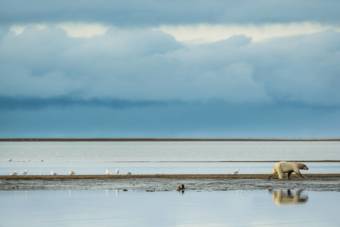
A polar bear walks along the beach in Kaktovik, Alaska on Sept. 10, 2012. (Loren Holmes/ADN archive)

With climate change expected to continue melting the sea ice polar bears use for hunting seals and bearing cubs, a new review by the U.S. Fish and Wildlife Service will consider whether its status as a threatened animal under federal law is sufficient.

The federal agency listed polar bears as threatened under the Endangered Species Act in 2008.
The agency on Monday announced it will accept scientific and commercial information for 60 days in a new review of the animals’ status.

The reviews are conducted every five years for animals listed under the act. The review will determine if the polar bear should receive an endangered status with stronger protections, be delisted or if its threatened status should continue, the agency said in a statement.

The assessment could lead to a recommendation for a new status, but with an opportunity for public comment before any final decision is made, said Andrea Medeiros, a spokeswoman with Fish and Wildlife.

The Alaska Oil and Gas Association is reviewing the notice from the U.S. Fish and Wildlife Service and will determine whether to provide comments, said Kara Moriarty, president of the group. The group represents oil companies with operations on the North Slope where polar bears live.

The review is critical, said Nicole Whittington-Evans, with Defenders of Wildlife’s in Alaska. “Climate change is already jeopardizing the future of the polar bear,” she said in a statement.

This story was originally published by the Anchorage Daily News and is republished here with permission.

‘Today is about her, and only her’: Kotzebue man sentenced to 99 years for sex abuse and murder of 10-year-old Ashley Johnson-Barr

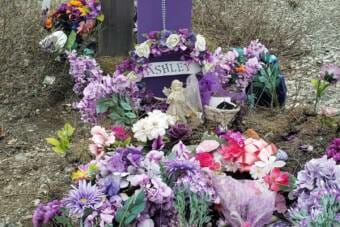
Ashley Johnson-Barr’s grave marker in the Kotzebue graveyard, May 2019. (Photo courtesy of Scotty Barr)

An Alaska judge sentenced the man who killed 10-year-old Kotzebue girl Ashley Johnson-Barr in 2018 to a 99-year sentence Tuesday.

The sentence ensures that Peter Vance Wilson will likely spend the rest of his life in prison and ends the criminal legal case in one of the most notorious recent homicides in Alaska.

Wilson kidnapped 10-year-old Ashley Johnson-Barr from a Kotzebue playground on a September evening three years ago, sparking a frantic citywide search in the Northwest Arctic community. The fifth grader’s body was found eight days later. Police said she had been sexually assaulted and strangled to death.

Johnson-Barr’s death attracted national attention and sparked a new level of public conversation about sexual violence in Alaska.

Tuesday’s sentencing was held in Kotzebue, with Utqiagvik judge Nelson Traverso presiding.

In June, Wilson had entered into a plea agreement with prosecutors that called for a total 198-year sentence with 99 years suspended and 99 to serve, according to state attorney Jenna Gruenstein, who prosecuted the case and is now the head of the Office of Special Prosecutions.

The court also found four aggravating factors: that Wilson demonstrated deliberate cruelty, that the victim was vulnerable due to her age, that the murder was among the most serious in the class of offenses and that Wilson had engaged in other sexual offenses with other victims.

Gruenstein wrote that the defendant’s behavior was “among the most vicious and predatory” of cases seen in Alaska courts, she said.

Tuesday’s sentencing was about Ashley, her father, Scotty Barr, said in an interview.

“Today is about her, and only her,” Barr said.

This undated photo provided by Scotty Barr shows his daughter Ashley Johnson-Barr, who was killed in Kotzebue in September 2018. (Courtesy of Scotty Barr via AP)

Family members attended, and Barr brought along a large blown-up photo of Ashley from her funeral, he said. Everybody wore purple, her favorite color.

During his statement to the court, Wilson asked for forgiveness, according to Barr.

Barr’s own statement in court talked about forgiveness, too.

“I said, ‘I’ve asked Jesus Christ and Father God to help me forgive you for what you’ve done to our daughter,’” Barr said.

Barr said he accepted the sentence. It was a tough day, but the criminal case against Wilson coming to an end is a step toward one kind of closure, Barr said.

“I feel a heavy burden off my shoulders, off my heart.”

This story was originally published by the Anchorage Daily News and is republished here with permission.

Site notifications
Update notification options
Subscribe to notifications