Jennifer Canfield, KTOO

Alaska Supreme Court rules in favor of Kookesh, Angoon subsistence fishermen

Charges against three Southeast subsistence fishermen — including former Sen. Albert Kookesh — have once again been dismissed. In an opinion issued Friday, the Alaska Supreme Court found that because the regulation used to cite the men was not created lawfully, it’s unenforceable. The decision could have a major impact on Department of Fish and Game bag limits across the state.

Estrada v. the State of Alaska concerned three men accused of taking more fish than their permits allowed. A fourth man, Scott Hunter, eventually pled guilty to an amended charge of fishing without a permit.

Hunter, Rocky Estrada, Stanley Johnson and former Angoon Sen. Albert Kookesh were cited in July 2009 for harvesting 148 fish; their permits only allowed for 15 sockeye salmon harvested per family from Kanalku Bay near Angoon. Kookesh — who’s served in both bodies of Alaska’s Legislature and as chairman of Sealaska — says he wasn’t even fishing that day.

“When I saw Fish and Game come in and start giving them citations, I was looking for something that would challenge the bag limit,” Kookesh said. At the time of the citations, he was representing Senate District C, which included a number of Southeast villages. “When I saw them giving my brothers a citation, I went over and said, ‘Here’s my permit; I want to get a citation, too.’”

The charges were dismissed by a judge at first, but the state appealed.

The fishermen saw the citations as unfair. Kookesh said no one in Angoon recalled the Department of Fish and Game consulting with locals informally — which the department claims it did — let alone officially. If they had, Kookesh says the resulting regulation that set the bag limit may have been more agreeable to locals. He says the department erred in not establishing a definition for “family” or explaining how they decided on 15 fish.

“Less than a mile away from where we got cited, commercial fishermen were fishing, catching all the fish they wanted,” he said.

In 2013, the Alaska Court of Appeals reinstated the charges. Their reasoning was that because the Legislature knew the Board of Fisheries was enacting this kind of regulation, their inaction to amend or clarify the board’s power indicated that they believed the board acted within its authority.

That’s a conclusion the Supreme Court found to be beside the point.

For the justices, the question wasn’t about the authority to create regulations; it was about whether those regulations were established according to the Administrative Procedures Act — a law that defines the process for creating a regulation.

How extensively this decision will affect bag limits across the state is still unknown.

“This may not just be for the bag limit in Angoon. There are bag limits for everything in the state — for moose, for deer, for everything. And we don’t think that this is going to be such a small Angoon case; it’s going to be an Alaska case,” Kookesh said.

Fish and Game Deputy Commissioner Kevin Brooks says the department is also trying to figure out what the decision means for their subsistence management regime.

“We’re going to pull together our directors on Monday morning and with the Department of Law just walk through it,” Brooks said. “It has resource management implications and they’re pretty varied. It’s commercial, sport, subsistence and wildlife. We’ve got to spend some time and figure it out.”

A spokeswoman for the governor said the Walker administration is still reviewing the case.

Kookesh says this is just one of many issues surrounding subsistence management in the state that will be challenged over the coming years. He says this case was really about making the department consult with people in rural Alaska.

“We intended to fight this,” he said. “We intended to challenge it and we did. And today after all those years and all that heartache and all that stress, we finally got a result that we think is right.”

Correction: The Alaska Supreme Court opinion issued Friday states that the fishermen were arrested at the time of their citations. A previous version of this story included that detail, which is not true.   

Brother-in-law reflects on life after Anthony Choquette’s death at AFN

Anthony Choquette’s brother-in-law said the family did everything they could to help him before he committed suicide last month at the Alaska Federation of Natives convention in Anchorage. 
Roger Holmberg said he and his wife first learned about last month’s suicide at the Dena’ina Center while watching TV. He said no one called him or the family to tell them it was Anthony Choquette.

“When we heard the news that someone had committed suicide at the AFN, immediately you think, ‘That’s tragic in a meeting like that.’” Holmberg said later that evening they learned through the news who it was. “It was like a spear went through me and I was numb.”

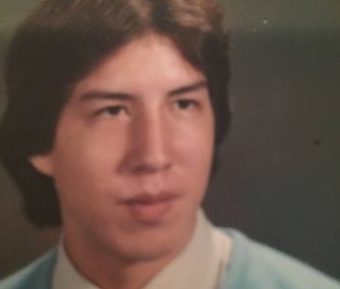
Anthony Choquette. (Courtesy of Roger Holmberg)

Other family members — many still live in Sand Point where Choquette is from — spoke highly of him on Facebook posts of news stories and in private messages, but wouldn’t say anything on the record. Holmberg was asked to speak on behalf of the family.

He wouldn’t say what kind of problems Choquette was facing, just that he and the family had done everything they could to help but he “walked away from it.” They’d gotten him into housing, but he left it and eventually ended up at the Brother Francis Shelter in downtown Anchorage.

“We still continued to try to work with him,” Holmberg said. “The response was not good.”

Friends who were near Choquette before he jumped said he wasn’t acting normal that day. Everything happened so fast, Holmberg said, that no one was able to stop him, though they tried.  

“He was facing some major things in his life. When people reach the bottom, they’re desperate. There’s signals people send that we’re not sensitive enough to see sometimes,” he said.

The family came together and grieved. Holmberg got to thinking. There had to be something he could do.

“It’s the most traumatic because it’s so sudden, and it’s not normal,” he said. “You’re left with ‘What happened? Why did it happen? What was going through the person’s mind?’ We can’t answer those questions.”

As an Evangelist pastor, singer and songwriter, Holmberg travels frequently to places such as Guatemala and Haiti. He’d just returned from Honduras the morning of his brother-in-law’s death.

A few years ago, Holmberg said he had an idea to bring together members of the faith community to offer support to either those thinking about suicide or the family and friends who are ultimately left behind. He saw that while suicide prevention organizations were doing as much as they could, the spiritual aspect of suicide wasn’t addressed very much, and he wanted to change that.

But the idea fell by the wayside as his travels claimed more and more of his time.

After Choquette’s death, he decided to finally act and about a week later he met with a group of pastors and suicide prevention workers in Anchorage. He’s still looking to connect with people interested in the effort.

“It’s comforting to know that people care, but it can’t be a one-time thing,” Holmberg said.

Life is short, he said, and often our priorities are not what they should be. His priority today is to find a way to help families cope with the sudden loss of a loved one to suicide, and to offer spiritual guidance to those who may be considering it.

“You’ve got to have a priority list. People are important. You can go broke, but people are still important. Friends and relatives, you can’t replace them,” he said.

If Holmberg could turn back the clock and say anything to his brother, it would be this:

“I’d say life is valuable and when you lose that in life you’re walking on dangerous ground. We are connected together and anything like that would impact those who are left behind in a very, very, very bad way. I would say we need you to seek professional help.”

Contact Roger Holmberg at rhea@gci.net.

There are people to talk to if you or someone you know is thinking about suicide. The Alaska Careline can be reached at 877-266-HELP; you can also text 907-2LISTEN.

SEARHC also has a help line for residents of Southeast Alaska at 877-294-0074.

Juneau fisherman, aka ‘Shrimp Guy’, pleads no contest to out-of-season crabbing

A Juneau man known to some locals as the “Shrimp Guy” pled no contest Friday to one count of operating commercial Dungeness crab gear out of season.

According to a trooper dispatch, Dennis J. Capua, 60, was investigated by Juneau wildlife troopers. He was charged for failing to remove at least 64 commercial Dungeness crab pots near Stephens Passage after the season had closed Aug. 15.
It’s not the man’s first violation for fishing out of season.

In 2001, Capua was found guilty of negligently storing a shrimp pot. He was fined $3,000 with all of it suspended, and was fingerprinted and put on probation for one year.

In 2011, Capua was found guilty of illegally storing commercial shrimp pots. Capua had left 88 commercial shrimp pots near Endicott Arm, south of Juneau, after the district was closed to commercial shrimping. Capua was told not to commit any more fishing violations and was given one year of probation and a $6,000 fine with $3,000 suspended.

He got nearly the same punishment for his most recent violation; this time he’ll be on probation for 18 months.

According to the Department of Commerce, Capua had a business license for Coronation Seafoods from 1996 until 2005. The Juneau Empire has profiled Capua at least twice — in a 2001 story he was called the “Shrimp Guy.” In both stories he says he first started selling live prawns at Harris Harbor during the Thanksgiving storm of 1984. His most recent commercial fishing license was issued in October.

One plane crash victim medevaced to Seattle, three discharged

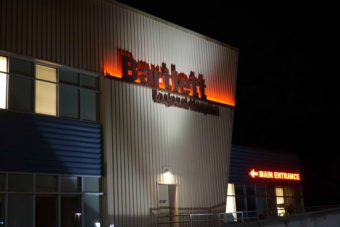
Bartlett Regional Hospital. (Photo by Jennifer Canfield/KTOO)

A private plane crashed near Eldred Rock on Wednesday afternoon, carrying three passengers and a pilot. Lt. Greg Isbell said it was reported by Alaska Seaplanes to the U.S. Coast Guard.

The plane was returning to Haines from Juneau.

“District 17 Command Center received a phone call from Alaska Seaplanes saying they had overheard a mayday, and the aircraft was a Cessna, and they are going to attempt to land on the east side of Lynn Canal, and they are on the east side of Eldred Rock,” Isbell said.

One person was helicoptered directly to Bartlett Regional Hospital. Isbell said emergency responders picked up the other three survivors at Juneau’s airport.

Hospital spokesman Jim Strader said the first patient arrived around 4 p.m. and was taken immediately to the emergency department.

“Shortly thereafter, three additional patients arrived by land. We began treatment,” Strader said.

Strader said one patient was in critical condition and medevaced to Harborview Medical Center in Seattle. The other three were treated for minor injuries and discharged from Bartlett. Those names have not been released yet.

Harborview staff identified their patient as Martha Mackowiak.

The Federal Aviation Administration registry lists Michael S. Mackowiak of Haines as a certified single engine pilot.

The Coast Guard didn’t know why the plane crashed but was told it could have been an “engine malfunction.”

Editor’s note: Our original incremental breaking news updates follow. 

Update | 8:30 p.m. 

Harborview Medical Center staff identified their patient as Martha Mackowiak.

The Federal Aviation Administration registry lists Michael S. Mackowiak of Haines as a certified single engine pilot.

Update | 6:56 p.m.

Eldred Rock Lighthouse
Eldred Rock Lighthouse in Lynn Canal in May. (Photo by Jeremy Hsieh/KTOO)

Bartlett Regional Hospital spokesman Jim Strader has updated the status of the four plane crash victims.

“At this point in time, we are preparing the patient who was brought here in critical condition for a medevac to Seattle. The other three patients are being prepared for discharge,” Strader said.

TEMSCO Helicopters also helped with the rescue, according to the Coast Guard. TEMSCO could not be reached for comment.

Update | 5:24 p.m.

Bartlett Regional Hospital spokesman Jim Strader said the first plane crash patient arrived just after 4 p.m.

“And that patient was taken immediately to our emergency department. Shortly thereafter three additional patients arrived by land. We began treatment and currently one patient is in critical condition and three patients are being treated for what appear to be minor injuries,” Strader said.

Original story | 4:59 p.m. 

Eldred Rock is south of Haines. (Google Maps)

A private plane crashed near Eldred Rock Wednesday afternoon. It was carrying three passengers and a pilot. The crash was reported by Alaska Seaplanes to the U.S. Coast Guard, according to Lt. Greg Isbell.
“District 17 Command Center received a phone call from Alaska Seaplanes saying they had overheard a mayday and the aircraft was a Cessna and they are going to attempt to land on the east sign of Lynn Canal and they are on the east side of Eldred Rock,” Isbell said.

Isbell said three people were met by emergency responders at the airport. One person was taken to Bartlett Regional Hospital.

This is a developing story. Check back for updates. 

How researchers use traditional place names and knowledge

Dr. Fred Sharpe gives a presentation on the importance of traditional knowledge and place names in ecological research. (Photo by Jennifer Canfield/KTOO)
Behavioral ecologist Fred Sharpe, Ph.D., gives a presentation on the importance of traditional knowledge and place names in ecological research. (Photo by Jennifer Canfield/KTOO)

Using traditional knowledge to support ecological research was the focus of two presentations Saturday at the “Sharing Our Knowledge” Tlingit clan conference.

Behavioral ecologist Fred Sharpe, Ph.D., of the Alaska Whale Foundation, explained to attendees how researchers were using Tlingit place names to help better understand the historical ecology of Southeast.

Sharpe is most concerned about the eastern North Pacific right whale, a highly endangered species with an estimated population of about 30. He said the names of traditional sites or clan houses can indicate that a particular species once populated the area; that’s information that could help researchers understand why a species is in decline.

“Place names can be very instructive,” Sharpe said. “We learned that there’s a place on Chichagof island called Sea Otter Point. And that’s super cool because sea otters aren’t there (now) but it does suggest that they were there in the not-too-distant past.”

Sharpe said Tlingit traditional knowledge has influenced how he thinks about whales.

“I think that gaining some insight into the Tlingits’ perspective has really helped me see how a people can live for centuries, millennia, perhaps even longer with these animals and appreciate them in a nonconsumptive context,” he said. “We see that they loved them and were very proud of them. We take incredible inspiration from that to see how you can intelligently manage species.”

Using Tlingit perspective and knowledge as a guide, Sharpe said he hopes to find ways to return to a more equitable relationship with Southeast’s whales.

Another presenter, Allyson Olds, focused her master’s thesis on hooligan run times in the Chilkat and Chilkoot rivers. The main goal of her research was to establish a baseline for the annual arrival of the fish. Aside from other forms of research, Olds interviewed 20 people in the area to understand how the population has changed.

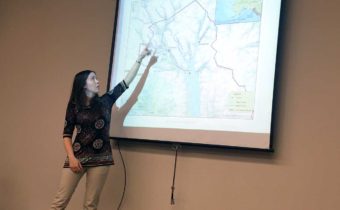
Allyson Olds points to the area where she focused her research on hooligan run times. (Photo by Jennifer Canfield/KTOO)

Little research has been done on the fish, which are not currently harvested commercially.

Hooligan is a subsistence food source in Southeast and parts of Southcentral. The small, oily fish usually arrive in Alaska streams and rivers in early summer to spawn, making them one of the first fish available for harvest by subsistence users and wildlife.

Understanding how climate change may impact run times could be key to sustainable management of the fishery, Olds said.

“There’s big implications on the influence of climate change, which not only affects run timing of course,” Olds said. “It affects everything else since so many wildlife predators rely on these. … They’re not just there, they migrate and they show up for these runs. If that run timing is changing, it can also affect their migrations as well.”

Olds said there is some concern that hooligan population decline is making its way north. On the Pacific coast, the once-prolific forage fish was listed as threatened under the Endangered Species Act in 2010. The following year, British Columbia listed the fish as endangered. Earlier this year, the Alaska Department of Fish & Game closed the Ketchikan area fishery.

Ideally, Olds said, her research would be replicated in other spawning areas to help paint a more accurate picture of the health of the hooligan populations.

Reflecting on an unexpected tragedy

I’ve been going to the Elders and Youth conference or the Alaska Federation of Natives convention off and on since I was in middle school. These two annual events are like holidays — a weeklong opportunity to celebrate with old friends and far-flung relatives.

It’s an opportunity for Alaska Natives to build consensus on issues and determine the AFN’s agenda for the coming year.

But there are also some very difficult and emotionally draining conversations.

Suicide is an issue, among others, that’s typically addressed in some way each year. This year John Baker, the musher, announced an initiative to address social problems in rural Alaska.

The Dena'ina Convention Center concourse. (Original photo by Mikko Wilson/KTOO. Illustration by Jennifer Canfield/KTOO)
The Dena’ina Convention Center concourse. (Photo illustration by Jennifer Canfield/KTOO)

“When we look into the eyes of another person and can plainly see that their passion for life is missing, or lacking for some reason, we must ask, ‘How have we allowed this to become acceptable, or even commonplace?’ We must ask, ‘How can we help make things right?’”

Baker wants to recruit what he calls “wellness ambassadors” in every community across the state to offer help to those dealing with domestic violence, suicide, or drug and alcohol abuse.

The day after Baker’s announcement, something happened.

I’m going to tell you the story of how I experienced the suicide that took place at the Dena’ina Convention Center, not because I want to, but because I feel like I need to.

The first thing I heard was what sounded like a gun going off, and then cries. I was on the third floor preparing for an interview.

I ran over to the railing with everyone else to see what had happened. I saw a man face down on the first floor. I still thought he must have been shot, until I overheard someone say that he’d jumped.

A moment later, I turned my recorder on and pulled out my phone. I walked halfway down the stairs to a landing overlooking the scene below and took a picture.

Dena’ina Center and AFN staff went after a photojournalist, trying to take away his camera before a police officer intervened.

“Take the camera and the film! No! Take it!” a man yelled.

A few minutes later, another reporter told me that a woman had collapsed on the floor after the man had jumped.

I called my co-worker in Juneau and told him what had happened.

“Oh my god, it’s so f—ed up right now.”

I asked for help writing the story about a man who’d fell from the third floor. I wasn’t sure at the time that he’d actually jumped, and I didn’t really want to believe it, either.    

That night I visited with a few close friends, including one who was also there. She said she heard someone desperately scream, “No!” as the man mounted the railing.

Later, I watched the video of what was happening onstage at the time. AFN co-chair Ana Hoffman interrupted the speaker onstage to make the announcement.

“There’s been, um, a tragic accident and, um, let’s just stay very calm and if we can stand and have a moment of silence,” she said.

Hoffman then led the audience in prayer.

“Holy God, Holy Mighty, Holy Immortal, have mercy on us.”

I returned to my hotel early that night. I had work to do, but instead I fell into bed with my shoes and jacket on and closed my eyes. I awoke suddenly a few minutes later, jolted by a dream that the man was standing in front of me — this man whose face I’d never seen, whose voice I’d never heard — and I worried that maybe he’d changed his mind a second too late.


Alaska CARELINE
1-877-266-HELP

National Suicide Prevention Lifeline
1-800-273-TALK (8255)

Alaska Community Mental Health Centers

Site notifications
Update notification options
Subscribe to notifications