KMXT - Kodiak

KMXT is our partner station in Kodiak. KTOO collaborates with partners across the state to cover important news and to share stories with our audiences.

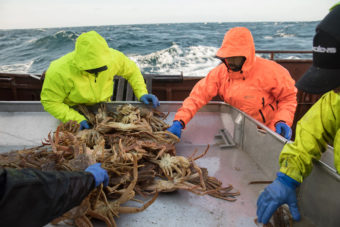
Bering Sea king and snow crab seasons canceled amid population declines

Red king crab from the Bristol Bay fishery. (KUCB file photo)

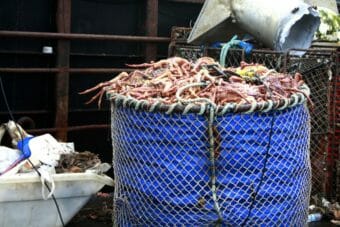
For the first time ever, the Bering Sea snow crab fishery will not open for the upcoming season. Alaska’s Department of Fish and Game announced the closure Monday afternoon. The Bristol Bay red king crab fishery will also be closed this year — for a second year in a row.

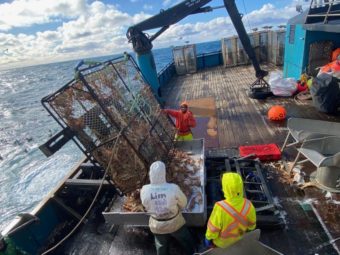
Gabriel Prout co-owns the F/V Silver Spray with his dad and brothers. The Silver Spray is a 116-foot steel crabber that’s homeported in Kodiak.

He said he wasn’t surprised that Fish and Game closed the king crab fishery — in a normal year, he’d go out for king crab, too. But numbers have been on the decline and that fishery didn’t open last year, either.

“The real shocking part is the total and complete collapse of the snow crab fishery which no one expected last year when it happened, and a complete closure this year was equally as shocking,” Prout said.

Miranda Westphal, an area management biologist with Alaska’s Department of Fish and Game, said the sudden decline in snow crab came as a shock to biologists as well.

Back in 2018, there was record recruitment in the Bering Sea snow crab stock. Those numbers started to go down in 2019, and there was no survey in 2020 due to the pandemic.

“And then in 2021 when they surveyed, we saw the largest decline we’ve ever seen in the snow crab population, which was very startling, I think, for everyone,” Westphal said. “It wasn’t something we expected, we were expecting to have this record recruitment come through the population.”

The quota was down about 90% from 2020. This year’s population numbers were even worse, according to Westphal, prompting the fishery’s closure.

Westphal said they’re not totally sure what caused the snow crab collapse, but they suspect warmer ocean conditions caused by climate change may be partly to blame.

About 60 boats normally go out for Bering Sea snow crab, according to Westphal.

Prout, the Kodiak fisherman, said a deckhand might make $50,000 to $80,000 in a good year, with a boat’s overall catch typically worth $1.2 million to $1.5 million.

There is a small tanner crab fishery slated to open on Oct. 15 in the Bering Sea. Prout said that’s a Band-Aid, though.

“It really has been in the past a kind of a bonus when you have to fish that alongside the snow crab,” he said. “But seeing as there’s no snow crab this year with the closure, we’re contemplating whether or not we should even make the trip out west with the high fuel prices.”

He estimates that right now it costs about $100,000 in fuel roundtrip to make it to the Bering Sea fishing grounds.

The price of steel – needed to maintain the Silver Spray’s more than 200 crab pots – has also jumped. He and his family are still waiting on fishery disaster payments to come through from the federal government for past poor seasons and closures.

Prout said his family tenders in Prince William Sound during the summers – they’re already eyeing that season to make up some of the financial loss from the crab closure. But others won’t have many options.

“People are really going to have to make some hard calls here, whether that’s selling out completely of their quota shares, selling their vessels, looking for other opportunities in other fishing sectors which is few and far between,” Prout said. “Fishermen are really going to be hurting the next year.”

Challengers fillet Dunleavy’s fish policies at Kodiak debate

Democrat Les Gara and independent Bill Walker are two progressives in the 2022 race for Alaska governor. (Mizelle Mayo and Valerie Kern/Alaska Public Media)

Kodiak’s fisheries debates kicked off Monday night with two challengers in the governor’s race, Les Gara and Bill Walker.

The need for more science to manage Alaska’s fisheries came up early and often during Monday’s debate. So did climate change. And both candidates say incumbent Gov. Mike Dunleavy’s budget has hamstrung the state’s ability to do its own research on changing ocean conditions.
“On one flight here, I sat next to a young lady who was a fisheries research biologist who was laid off because of budget cuts. We need the best available information in making decisions, we need the best available research,” said former governor and independent candidate Bill Walker.

Democrat Les Gara immediately ripped into Dunleavy’s budget cuts. He said the commercial fishing industry is just one area where Alaskans are suffering from the consequences.

“We can’t retain teachers, we can’t retain police,” Gara said. “I want a strong Department of Fish and Game that does studies. You know what our Department of Fish and Game commissioner does now? He testifies and talks about all the studies he’s asked the feds to pay for.”

Bycatch – the incidental catch of nontarget species, like salmon – also came up early and often.

Dunleavy created the Bycatch Review Task Force last year, but Gara called it “powerless.”

“And he put it together so its recommendations would come out after the legislative session was over, so they couldn’t do anything with it,” Gara said.

Gara said picking the right people for Alaska’s seats on the North Pacific Fisheries Management Council is a better way to address the issue of bycatch.

Walker also says the timing of the task force was convenient for Dunleavy as he runs for reelection, but he’d keep it around if he were elected. He says the work the group is doing is important for both commercial fishermen and subsistence harvesters in areas where salmon populations are crashing.

“I like the idea of it being a year-round, not just ‘It’s going to expire in November.’ This issue is not going to expire in November,” Walker said.

Dunleavy didn’t attend Monday’s fisheries debate, which is held in Kodiak every election year. He wasn’t at the last one in 2018 either.

The conversation between Walker and Gara was amicable, and at times lighthearted.

Both candidates say they’re tentatively in favor of hatcheries – as long as they don’t harm wild fish. They talked about the significance of the federal Bipartisan Infrastructure Law for working waterfronts in coastal communities.

Mariculture also came up.

Walker said the industry could be a boon for Alaska, but it needs more support and investment – and he claims seaweed makes pretty good beer, too. Gara said he’d favor small business loans for fishermen to get started in kelp farming.

“I would like to do everything we can to expand this industry,” Gara said. “It’s a shoulder-season industry, so if you’re fishing in the summer you can still do mariculture when you’re not out fishing.”

Both candidates were asked about their long-term visions for Alaska’s seafood industry. Walker identified barriers to entry for new fishermen as one of the biggest challenges he sees for the industry.

“Every fishing boat in my world is a small business and many times it’s a family business, and I want to make sure that is carried on and on for generations,” Walker said.

When asked who they would choose for Alaska’s Fish and Game commissioner, both Walker and Gara said they want someone who is passionate and has management skills. Gara said he’s looking for someone who can talk fish.

“It would be someone who was not selected because of their politics,” Gara said. “I want someone who will make decisions based on science.”

Monday’s debate was the first of three fisheries debates in Kodiak, held over two nights. Congressional debates start Tuesday at 6:30 p.m, first with candidates for Alaska’s U.S. House seat, followed by two candidates for U.S. Senate – Democrat Pat Chesbro and incumbent Sen. Lisa Murkowski – at 8:15 p.m.

Members of the public can attend Tuesday night’s debates at the Gerald C. Wilson Auditorium. KMXT will also be airing the debates and streaming them on its website.

Sen. Sullivan announces legislation targeting illegal foreign fishing

Sen. Dan Sullivan in Anchorage in July 2021. (Photo by Jeff Chen/Alaska Public Media)

Sen. Dan Sullivan is introducing legislation that goes after illegal Chinese fishing operations in federal waters off the coast of Alaska. Sullivan announced the Fighting Foreign Illegal Seafood Harvest Act — also known as the FISH Act — on a visit to Kodiak Thursday.

Sullivan says Democratic Sen. Sheldon Whitehouse of Rhode Island helped author the bill.

“This is a very bipartisan bill, and a very needed bill,” said Sullivan.

The FISH Act directs the National Oceanic and Atmospheric Administration to compile a list of foreign vessels that have engaged in unsanctioned fishing and ban them from U.S. ports. It also beefs up the Coast Guard’s ability to inspect foreign ships and calls for more regular reports to Congress on illegal fishing activities.

The legislation cites all foreign ships, but Sullivan says it specifically addresses current transgressions by Chinese boats in federal and international waters. He says it was drafted with input from NOAA and officials from the Coast Guard and has broad support in Washington, D.C.

“Senators who are very hawkish against China are focused on this, people who want to keep our fisheries strong and sustainable are focused on this. This unites all different kinds of stakeholder groups,” he said.

Sullivan and Sen. Lisa Murkowski were in Kodiak for a meeting with fisheries managers and officials from NOAA. Members of congress are currently on summer recess, and there is no timeline to vote on the bill.

NOAA publishes blueprint for mariculture research in Alaska

Employees check a line ribbon kelp, or Alaria marginata, in March at Seagrove Kelp’s Doyle Bay Farm, six miles outside of Craig, Alaska. (Photo by Nick Jones/Seagrove Kelp)

Earlier this month, the National Oceanic and Atmospheric Administration released its first-ever strategic science plan for mariculture in Alaska.

NOAA’s Aquaculture Strategic Science Plan covers five years’ worth of goals and priorities for Alaska kelp and oyster farms — and other niche forms of mariculture, like the cultivation of sea cucumbers and abalone. It identifies areas where it expects the industry to grow and where the agency needs to expand its own research. It also identifies partnership opportunities with other organizations.

Jordan Hollarsmith is the mariculture and macroalgae lead research biologist for the Alaska Fisheries Science Center. She helped author the report. She says it’s kind of like a research blueprint for the road ahead.

“This document was sort of our guiding document of: how do we see NOAA’s role in mariculture research in Alaska?” said Hollarsmith.

That could be a major question for the state in the years to come. Gov. Mike Dunleavy has said he wants to make Alaska “the mariculture capital of the world,” and he put together a mariculture task force to develop a five-year plan detailing how to turn Alaska aquaculture into a $100 million industry. That report was published in May of last year.

According to NOAA, there are 82 kelp farms operating in Alaska, and 24 more have permits pending approval. Most are in Southeast Alaska and in the waters off Kodiak Island. Those farms are valued at $1.5 million.

Other areas of the country — like parts of coastal New England — have also experienced a mariculture boom. But there isn’t a lot of research on kelp farming that’s specific to Alaska.

Hollarsmith says one area that NOAA is interested in as the industry continues to grow is how kelp farms might affect fish habitat.

“We really want to know how do those species respond to these farms? Some may be helped by the presence of the farms, it might create habitat, it might create food sources, some might be deterred by the presence of these farms,” said Hollarsmith.

Similarly, as mariculture expands in Alaska — and ocean conditions change — Hollarsmith said future NOAA research could help create a kind of bumper crop for coastal communities.

“We can pick where we’re growing, where we’re setting these farms and target areas where they may have more stable conditions, and what species are farmed,” she said.

Hollarsmith says there’s a lot to learn. But the fact that NOAA is asking those questions indicates an enthusiasm for mariculture — and exciting future for the industry in Alaska.

Kodiak’s bats studied for the first time during Bat Week

Against a dark background, someone holds a bat in their blue-gloved hands. The bat's wings are spread out over their fingers.
Bat biologist Jesika Reimer holds a little brown bat at the Kodiak National Wildlife Refuge’s headquarters. It’s the first time researchers have studied the island’s bat population. (Pam Foreman/KMXT)

More than 30 people gathered at the Kodiak National Wildlife Refuge’s headquarters near the Buskin River for a Bat Week event. The first bat of the evening made an appearance — a brown myotis, more commonly known as the little brown bat. Little brown bats can live to be 40 years old, and hibernating females give birth to one pup per year.

Among the group gathered to watch them emerge from their roost were researchers who are studying the island’s bat population for the very first time.

Biologist Jesika Reimer caught a female pup with a fine net stretched between two poles. She held it between her latex gloved hands and recorded everything about it — weight, wing length, sex. It was then then banded with an ID number.

“So now we’re going to put her band on, and we basically, we just pop it over her forearm and we squeeze it with our fingers, and it’s tight enough that it’s not going to slip over her wrist or her elbow,” said Reimer. “So, this one is AP-0764. That’s her new name.”

The event was one of four organized through the wildlife refuge and open to the public to watch scientists count and tag the local colony.

Natalie Velez-Suarez is the wildlife refuge specialist for the Kodiak National Wildlife Refuge. She said the list of what they don’t know about Kodiak bats is long — and basic.

“Our biggest question and what we wanted to know is where these bats go during winter and what do they do when we’re not seeing them?” said Velez-Suarez.

Bats play an important role in the ecosystem, according to Reimer. They help control insect populations, and she said Southeast Alaska is home to seven species of bats, and is the state’s hotspot of bat biodiversity.

But there’s less food and habitat further north, making the little brown bat the resident species in the Interior. And Reimer said Kodiak is one big question mark.

“We don’t know if there are more species here,” said Reimer.

Bat studies in Alaska are a burgeoning area of research — largely spearheaded by the Northern Bat Working Group, a coalition of researchers from state and federal agencies and academic programs that formed nearly a decade ago to study bats in Alaska. Group members meet annually to discuss their work.

A big push to understand the species is the spread of a fungal disease called white-nose syndrome that’s decimated bat populations in the Lower 48. The disease has a 90% mortality rate in the little brown bat colonies studied, according to the U.S. Geological Survey. It similarly affects several other species of bat populations native to North America.

Reimer said white-nose syndrome hasn’t arrived in Alaska yet, but it’s a matter of time.

“We know it’s going to arrive here eventually, we’re just not sure how much damage it’s going to do because we don’t know where the bats are spending the winter here,” she said.

That’s why the research happening in Kodiak is so important. Fish and Wildlife staff from other refuges in Alaska were on hand for Bat Week in Kodiak to learn more about bat monitoring. And the Kodiak National Wildlife Refuge plans to expand their monitoring programs to the island’s villages — and enlist any local homeowners who want to help with the count.

Kodiak resident Clara Mieres said it was her 6-year-old son Jackson’s idea to come to the event.

“Bats are super cool, but to him they were always associated with vampires and Halloween and it’s so cool, and here he’s like, ‘We can see them in person?’ And I’m like, ‘Yeah,’ and he’s like ‘Alive bats? We have to do this,'” she said.

Reimer said that excitement could be key for answering bigger questions about the local population. She’ll return to Kodiak next summer to continue gathering data.

Tustumena spends week in Homer due to staffing shortage

The M/V Tustumena in Unalaska. (Photo by Hope McKenney/KUCB)

The M/V Tustumena had been in service for less than two weeks when it docked in Homer on July 26. Due to a crew shortage, that stop in Homer lasted a full week.

According to the state Department of Transportation, the Tustumena had operated with more or less the same crew since it started its 2022 schedule. And Kodiak Republican House Speaker Louise Stutes says there weren’t enough replacement crew available to keep running the ferry.

“Like everybody else, they’re feeling an employee pinch,” Stutes said. “But in my conversations with the commissioner of D.O.T., he actually had said to me that they were going to be able to staff up the Tustumena, but the problem is COVID.”

The Tustumena is slated to resume regular service on Aug. 2, departing from Homer and bound for ports around Southwest Alaska. It’s the only state ferry that serves all ports out the Aleutian Chain.

The Alaska Marine Highway System has been struggling to hire new staff this year, even with $5,000 hiring bonuses. Stutes says that irregular service makes it harder to attract candidates.

“When you don’t know if you’re going to be working from week to week, and you have a family to feed, it makes it pretty tough,” Stutes said.

The Tustumena entered a refit and maintenance period last December to extend its nearly 60-year service life even further. The Alaska Department of Transportation is planning to replace the ferry in 2027 at an estimated cost of $250 million.

Stutes says that the Department of Transportation Commissioner has told her that the staffing shortage shouldn’t result in more ferry cancellations this season.

Site notifications
Update notification options
Subscribe to notifications