KSTK - Wrangell

KSTK is our partner station in Wrangell. KTOO collaborates with partners across the state to cover important news and to share stories with our audiences.

This rare, historic boat could get a new life in Wrangell

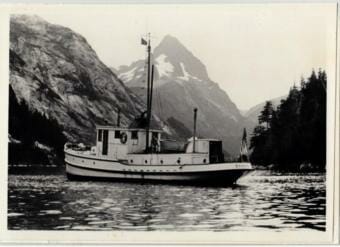
The M/V Chugach near Baranof Island. (Photo Courtesy of the U.S. Forest Service)

A rare wooden ranger boat once used by the U.S. Forest Service in Alaska’s national forests may soon be on display in Wrangell.

The M/V Chugach is 62-feet long and was originally assigned to the Chugach National Forest. It was built in Seattle in 1925 and spent its life up in Alaska from territorial days onward.

It’s been described as a floating office, when it was complete with a duplicate set of records. For three decades, it would travel around issuing permits in coastal Alaska. Back in the day, it was the way forest service got around.

“That was well before the ferry system was here that connected all the communities and even before reliable air service,” said Austin O’Brien, Wrangell Ranger District Forester.

The 95-year-old vessel was listed in the National Historic Register back in the 1990s.

The boat routinely traveled over 12,000 miles of the Alaska coastline. Starting from Kodiak or Prince William Sound it would head all the way south to Ketchikan where it regularly had work done.

The Chugach was called on by other state and federal agencies. The Coast Guard didn’t have much presence in the winter months. So the Chugach routinely responded to emergencies in remote coves or on the water. It delivered mail. It transported doctors, nurses, scientists, anthropologists to remote villages and field work sites. These folks would use the boat as their research lab, as it often served better than pitching a camp on shore. The Chugach even acted as a floating courthouse on Prince William Sound.

By 1953, the boat was transferred full-time to the Tongass National Forest.

“The long-term timber sale contracts started in the 1950s, and it required a lot of crew movements to access all these remote sale areas,” O’Brien said.

But three engines and four captains later, the workhorse boat is no longer in use. It was never officially retired, but the last regular season trip was in 2014. O’ Brien says smaller steel boats serve the feds just fine, but the Chugach is a part of Alaska’s history and should be on display.

“We’re also trying to preserve it without having to spend a lot of maintenance money over the years on it, which keeping it in the water would definitely require,” O’Brien says.

The Forest Service and the City of Wrangell have reached an agreement on what this could look like. The feds would loan the boat to Wrangell’s city museum.

“It would be a wonderful way to expand the marine heritage component of the museum,” says Carol Rushmore, the city’s economic development director.

She notes the museum already houses former Gov. Frank Murkowski’s boat. Just behind the museum is the marine service center. Rushmore says the Chugach could bridge the gap between Wrangell’s boat yard and tourists.

“Visitors have always been interested in what’s happening in that yard, so this is one element of trying to interpret not only the history but the current marine industry structure and the repair of boats going on there,” she says.

The feds have put aside $100,000 for this project. The Chugach could be on display as early as next summer.

Fake, play money circulates around Southeast town

Wrangell police recovered a few fake $100 bills that were given to local stores. (June Leffler/ KSTK)

Some funny money has been circulating in the Southeast city of Wrangell. Authorities aren’t calling it counterfeit, since the fake Benjamins were likely purchased online as play money. Still, the c-notes were realistic enough to dupe a few cashiers in this island town.
Shelby Smith works as a gas station attendant at the Alpine Mini Mart in Wrangell. On a Monday, she said a guy came in and paid cash — or so she thought.

“We were busy at the time. People give us hundreds all the time. He got gas, got cigarettes,” she recalled.

But after a closer look, the bill did seem suspicious. Once business slowed down she had a look with her boss.

“We get bills all the time that have stamps on it — it had Chinese writing, but if you held it up it didn’t have a line through the bar. So it was clearly fake,” Smith said.

Word of the fake hundred dollar bills has since spread through town almost as quickly as the funny money. Businesses and the banks managers put the word out.

So, grocery store manager Jake Hale made sure his cashiers knew what to look for. Still, at least one got through.

“The Chinese letters printed on it basically say ‘THIS IS FAKE,’” Hale said. “But if you don’t read Chinese you can’t read the stamp.”

The fake money wasn’t a local product. Like most things it was imported. Wrangell police suspect it was bought online.

“Looking at the internet you can buy them in stacks of $10,000 a face,” said Wrangell Police Lt. Bruce Smith. So far less than 10 bills have been pulled from circulation.

“That means there’s probably about 90 plus more of these around town, at a minimum,” he said.

There are numerous potential sources. Some websites sell fake money — ostensibly for entertainment or theatrical purposes. Hale said he’s been researching potential origins over the past week.

“There are a lot of fake bills on there that look really well done, but they supposedly get away with it because they have a small print on it that said ‘movie money’,” he said.

Other sites are more suspicious, marketing counterfeit bills designed to dupe folks.

Wrangell police haven’t said whether they have any suspects. And if they do, prosecutors could charge anyone passing funny money with either forgery or theft.

Now don’t get any ideas but in case you’re wondering… and you must be… $10,000 worth of these funny bills only cost about $25 online.

To reduce staff turnover, Wrangell hospital takes homegrown hiring approach

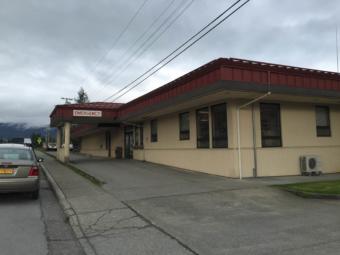
Wrangell Medical Center. (Photo by KSTK)

Wrangell’s hospital is funding professional training for local community members. The idea is to reduce staff turnover in the Southeast Alaska hospital by empowering — and ultimately hiring — people with roots in the community.

For about a month now, Isabella Crowley has been working as a nursing assistant in Wrangell’s long-term and acute care units.

“It’s a very rewarding job. I don’t look at it as a way to earn income, that’s a plus. But we’re helping people,” she said.

She’s got ties here. Her wife’s from Southeast Alaska, so the couple moved back to be with family. Then Crowley’s own mother, step-mom and sister joined in, moving to Wrangell all the way from Tennessee.

“(The program) was a really excellent opportunity to get into something without having to leave the island,” Crowley said. “We don’t have to be apart from our families.”

She’s one of a half-dozen recruits for Southeast Alaska Regional Health Consortium’s cohort program. It’s a six-week course that trains entry-level candidates to become certified nursing assistants. CNAs work under the direction of registered nurses to help take care of patients at Wrangell Medical Center.

Across Alaska, staff turnover at hospitals and clinics is high. And Wrangell is no exception. Gloria Burnett is the director of Area Health Education Centers, which connects University of Alaska Anchorage students with job training in the field across the state.

She said to become a nurse or a doctor, rural Alaskans often leave their town to get the degree, and then stay even longer for the experience critical access hospitals often require. By that time, the professionals are less likely to be able to return to their hometown hospital.

“After they’ve already been out of their home community for four years through their undergraduate studies. Now they’re licensed, they’re practicing, that’s six years out, right? What’s the likelihood they’re going to come back after they’ve already established their own sense of community in this new location?” Burnett said.

But she said this homegrown initiative means they don’t need to leave in the first place.

It also saves the cost of relocating people to rural towns like Wrangell, or relying on traveling nurses who take short-term, 13-week assignments in a community — a model that Wrangell’s hospital administrator Leatha Merculieff isn’t fond of.

“It costs a lot of money. It could be potentially double for a CNA,” said Merculieff.

She told KSTK last summer she’s trying to end the practice. The new initiative not only saves the hospital money, it’s a way to hire people who will stick around long enough to be a familiar face to patients.

“I think it’s unfair to our residents and our patients to have someone who is changing over all of the time,” Merculieff said.

With the first CNA cohort certified and working, that will cut the number of traveling CNAs at the clinic in half. SEARHC has committed to only hiring local CNAs at Wrangell’s hospital by early next year. Another CNA training should start next year.

Alaska mariners raise concerns about Coast Guard’s emergency radio outages

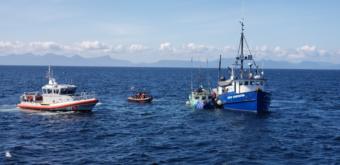
Coast Guard Station Ketchikan and Coast Guard Cutter Adelie boat crews assisted in dewatering and towing a fishing vessel that began taking on water near Ketchikan, Aug. 28, 2019. (Courtesy photo from U.S. Coast Guard)

Mariners in distress are without a decades-old means of contacting the Coast Guard in much of coastal Alaska.

The federal search-and-rescue agency said its VHF signal is experiencing outages, making communication on channel 16 unreliable. The issue has been ongoing since this summer.

As Sitka fishers go, Matt Donohoe is somewhat of a veteran. This summer he was trolling for salmon when he heard a distress call over his VHF radio.

“A boat called mayday, but it was on channel 16, and I expected the Coast Guard to respond and they didn’t,” he said.

It turns out it wasn’t too serious — the skipper had broken down and was drifting. Donohoe continued to try and reach the Coast Guard over his radio as well, with little luck. He was relieved that nobody’s lives were at risk that day.

“But there’s a problem with the infrastructure, and it needs to be addressed before somebody dies,” he said.

His story isn’t unique. In fact, fishers across Southeast Alaska have been reporting similar problems. The Coast Guard first publicly acknowledged the problem last month, but it has been broadcasting automated notices this summer to mariners — guys like Joe Donohue, who trolls around Sitka.

“I wrote down where the outages were, and it was from Yakutat all the way down to Cape Edgecumbe,” Donohue said. “I had a bunch of friends that were just finishing up with seining, were getting ready to go longlining, and I thought, ‘Boy I hope they get that fixed.’”

It hasn’t been fixed. At least eight Coast Guard towers are down in Alaska. The outages are affecting Prince William Sound all the way down to Sitka and other Southeast communities.

Some of these repeaters have been completely down since June.

Coast Guard Lt. Scott McCann said repairing these remote towers isn’t a simple task.

“In most cases these towers are only accessible by helicopter. And in that case, the helicopter can only fly when the weather is conducive to flying up to the top of the mountain and dropping off personnel and parts,” he said.

But this is the Coast Guard, isn’t flying helicopters in remote stormy conditions what they do?

“True, the Coast Guard has a reputation for flying in nasty weather, but these tower maintenance contracts are with other agencies. So they have different flight standards, and you want them to be safe when they go out there,” McCann said.

That contractor is Lynxnet, LLC, a Virginia-based subsidiary of NANA Regional Corp., the regional Native corporation based in Kotzebue. Neither the company nor the Native corporation responded to requests for comment.

But if inclement weather held up the contractor in the summer, the dark and frigid winter certainly won’t help.

In the meantime, the Coast Guard has been advising mariners to carry backup communication devices, like satellite phones and high frequency radios.

Those are much more expensive. The industry wants assurances if they need the Coast Guard they can use the radio that’s found on every deck of every boat in the fleet — not to mention anglers and hunters with only handheld equipment.

“VHF radios have been for decades the primary go-to source to get a hold of the Coast Guard,” said Jerry Dzugan, the director of the Alaska Marine Education Safety Association in Sitka. “That’s what we’ve taught everyone in our classes for decades, so what they’re saying is ‘Well you’re going to have these other things instead,’ and that’s unacceptable.”

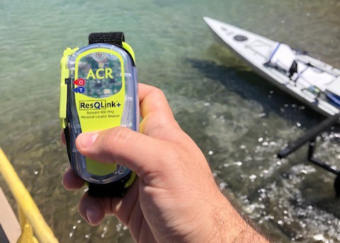
The Coast Guard also recommends mariners have working emergency position indicating radio beacons, or EPIRBs. But Dzugan said that’s a last resort option.

“Fishermen don’t want to hit the panic button if you don’t really have to. Which means that it’s going to delay a problem,” he said.

An EPIRB sends a continuous radio signal to search-and-rescue units in order to provide the exact location of the vessel in distress. But VHF radios allow mariners to check in with the Coast Guard before a situation gets to that point.

“The Coast Guard’s always saying ‘if you have a problem let us know, even if it’s not an emergency yet, so we can keep an eye on you’,” Dzugan said.

McCann urges mariners to be patient. He said they’ll be fixed — eventually.

“These towers are here to stay. VHF is here to stay,” he said.

Fishers and industry groups have been in contact with U.S. Sen. Lisa Murkowski’s office to try and speed up the process. Murkowski’s office released a short statement saying it’s aware of the issues.

With additional reporting from KCAW’s Katherine Rose in Sitka.

Wrangell’s cemeteries are running out of space

This hand-tinted photograph shows Wrangell's cemetery circa 1930.
This hand-tinted photograph shows a cemetery in Wrangell circa 1930. (Photo by H.A. Ives/Courtesy Alaska State Library, ASL-P345-006)

Wrangell is about the last place anyone would consider crowded — unless you’re no longer among the living. In that case, the town has just about run out of room for you. Wrangell is coping with a shortage of burial space for residents who’d like to remain in the community after death.

In Wrangell, there’s no mortuary. The deceased are sent to Ketchikan for embalming and cremation. Caskets are purchased from a funeral home or retailer off the island.

So pastors like Kem Haggard of Wrangell’s Harbor Light Church don’t just provide the religious services, he often walks families through the final arrangements as well.

“I love our small community, but it really does provide some challenges, especially at a time when we’re all grieving,” he said.

Haggard and the families do manage it — they have to. But those final arrangements now have an added challenge: The city is running out of burial plots. Haggard is aware of this, and it’s why he encourages cremation. But he wouldn’t want any family to have to go against the final wishes of a parent or spouse, if they preferred their body be intact.

“We don’t want to put additional burdens on the family. They’re already dealing with the loss, not on top of, ‘OK we’re going to have to change those wishes of someone we love,’ that can be really difficult,” Haggard said.

There are only five burial plots remaining in Wrangell’s two city-owned cemeteries, according to City Clerk Kim Lane. Once they’re gone, the alternatives are not looking promising.
At Sunset Gardens Cemetery, there’s extra land for up to a dozen plots. But Lane said the land can’t be excavated. Areas have large roots that would be difficult to dig through.

Then there is the older Memorial Cemetery. The city acquired the cemetery in the 1940s, but folks were buried there long before that. When the city went looking for more grave space there, it wound up in an awkward situation.

“When the crew in the past had gone to dig a plot, there were some times when they would find the plots are occupied,” Lane said.

She said plenty of burials don’t have markers in that cemetery. Wooden crosses could have very well deteriorated over the years with no one to replace them.

“So there are quite a few plots that are marked unknown because there was no marker or headstone there before the city took it over,” Lane said.

The city continues to discuss developing other land parcels for more space. The former Wrangell Institute property is at the top of its list, but nothing has been decided on.

Cremation is becoming more common and could ease pressure on Wrangell’s few remaining burial plots. Lane said the last body burial was one year ago. But since the start of the year, seven urns of ashes have already been placed in plots or in the niches of the columbarium, leaving 22 niches available for purchase. Anticipating a shortage there, the city recently bought another columbarium for $50,000. That structure should be available for interment this spring.

While city officials are hopeful that these new facilities will accommodate everyone who wants to remain eternally in this tiny island town, a final answer to Wrangell’s burial problem remains to be seen.

Signal down for Coast Guard VHF stations in Southeast Alaska

A Coast Guard service member holds an emergency position-indicating radio beacon, or EPIRB,
A Coast Guard service member holds an emergency position-indicating radio beacon, or EPIRB, that had been activated near Oahu on May 31, 2019.  The Coast Guard advises mariners in Southeast Alaska use EPIRBs or satellite phones if they’re in distress while their VHF communications are disrupted. (Photo by Petty Officer Second Class Mario Villani/U.S. Coast Guard)

The Coast Guard is reporting widespread disruption of its VHF radio communications across Southeast Alaska.

It warns that VHF Channel 16, which is monitored by the Coast Guard for distress calls and other emergencies, is not considered reliable until further notice.

Chief Petty Officer Mike Haselden said Tuesday that technicians are trying to pinpoint the issue. He said the stormy weather could have caused the outages.

The first outage was reported Oct. 11 and has since affected areas including the Gulf of Alaska south of Yakutat, Hoonah Sound, Cross Sound and the west side of Prince of Wales Island.

In the meantime, the Coast Guard is advising mariners to use other communications when available. That includes satellite phones or an emergency position-indicating radio beacon if in distress.

The Coast Guard said high frequency radio communications are unaffected.

Site notifications
Update notification options
Subscribe to notifications