Nat Herz, Alaska Public Media

For decades, the government stood between the Unangan people and the seals they subsist on. Now that’s changing.

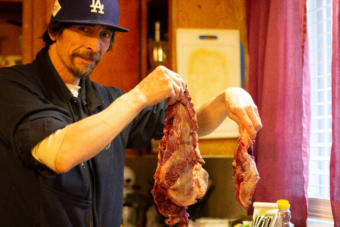
Robert Melovidov holds up fur seal meat that he’s preparing to cook in his home on St. Paul island in January. Unangan people on St. Paul like Melovidov have been pushing the federal government for more than a decade for more freedom to harvest the fur seals they share the island with.
Robert Melovidov holds up fur seal meat that he’s preparing to cook in his home on St. Paul island in January. Unangan people on St. Paul like Melovidov have been pushing the federal government for more than a decade for more freedom to harvest the fur seals they share the island with. (Photo by Nathaniel Herz/Alaska’s Energy Desk)

On the remote Bering Sea island of St. Paul, where groceries have to be barged or flown in, Serafima Edelen and her boyfriend still eat meat most nights. For the past several years, they’ve almost never had to buy it: The island and ocean provide them with an abundance of reindeer and fur seal.

“It was always nice knowing I didn’t have to go and buy any meat from the store — just because of how expensive everything is, living in the village,” said Edelen, 25. “I still refuse to move away. This is home. This is where I want to be.”

Plastic-wrapped chunks of meat fill the chest freezer in a back room of Edelen’s house. Her boyfriend shoots as many as 10 reindeer a year. And in the summer, you can find them both near St. Paul’s beaches, killing and processing fur seals in a subsistence harvest open to the island’s Alaska Native residents, who call themselves the Unangan people.

The seal harvest connects Edelen to her heritage, and to St. Paul. But it also makes a material difference to whether she can afford to live on the island, a 10-mile-wide volcanic speck more than 250 miles from the mainland.

At the island’s grocery store, it’s $6 for a pound of ground beef. A 12-ounce package of Oscar Mayer beef bologna costs $10.

Serafima Edelen stands in front of her house on St. Paul island in January, 2019.
Serafima Edelen stands in front of her house on St. Paul island in January, 2019. (Photo by Nathaniel Herz/Alaska’s Energy Desk)

But last year, health problems kept Edelen’s boyfriend from hunting. And even though fur seals are on or near the island year-round, federal regulations only allow a 47-day subsistence harvest in the summer. Edelen’s job and other obligations left her with little time to participate.

Eventually, she had to go to the store. It felt like crossing a line, she said: “To have to break down and realize: ‘I’m out of meat. I don’t have anything to cook.’”

St. Paul’s tribal government has been petitioning the federal government to relax the regulations governing the seal harvest for more than a decade. And now, the National Marine Fisheries Service is finishing a rewrite — one that would allow seals to be taken more than 11 months a year, and loosen restrictions on which animals can be killed.

Federal managers say the proposed revisions, released in August, will make a healthy, culturally relevant food source more accessible on the island, while granting the island’s tribal government more local control. A scientific analysis accompanying the rule change says it will have no significant effect on the fur seal population.

“There is no doubt that this is an important item, culturally and nutritionally, for the communities,” said Mike Williams, the fisheries service official overseeing the rule changes from Anchorage. “This is real food security.”

A view of Otter Island, just off St. Paul.
A view of Otter Island, just off St. Paul. (Photo by Nathaniel Herz/Alaska’s Energy Desk)

But the proposal faces opposition from the Humane Society of the United States, which has a decades-long history of activism in the Pribilofs.

The source of the organization’s concern: St. Paul’s fur seal population has been declining for years, and scientists don’t know why. Some 600,000 northern fur seals now return each summer to the Pribilofs, which include St. Paul and its sister island, St. George; that’s down from an estimated 2 million in the 1950s.

The federal government’s proposal leaves an annual 2,000-seal harvest limit in place — it’s designed to make it possible for St. Paul residents to get closer to the cap, since the current rules have had the effect of keeping harvests at far lower levels.

But it still doesn’t make sense for the government to loosen restrictions on the harvest until more is known about the population decline, said Sharon Young, the Humane Society’s marine issues field director.

“We don’t fully understand why there is a decline ongoing,” Young said in a phone interview from Massachusetts. “But there is a decline ongoing, and we’re very concerned that this is not the time to increase the number of animals that are being killed, or to use a way of killing them that is more indiscriminate.”

Some 600,000 northern fur seals, nearly half the global population, return each summer to the Pribilofs.

The U.S. government used to run a commercial harvest on the island, taking about 25,000 seals for their furs each year and sending profits to the treasury.

That harvest long depended on forced labor from St. Paul’s Unangan people — Alaska Natives originally relocated from the Aleutian Islands by Russian fur traders. After Alaska was sold, the U.S. government, for decades, compensated workers with little more than food and housing.

While the commercial harvest ended in the 1980s, the government left behind a legacy of tight regulation of the subsistence harvest — which has effectively limited it to no more than 400 seals a year for the past decade.

Ground beef at St. Paul’s tribally run grocery store on Wednesday, Jan. 23, 2019.
Ground beef at St. Paul’s tribally run grocery store on Wednesday, Jan. 23, 2019. (Photo by Nathaniel Herz/Alaska’s Energy Desk)

Many of St. Paul’s 500 residents don’t have time to participate because the harvest is limited to seven weeks in mid-summer — when they’re working as commercial halibut fishermen, earning cash to spend on groceries in winter.

The tender meat from the fur seal pups, known as laaqudan, is a favorite of Unangan people on St. Paul. But under the current federal regulations, the pups are off-limits year-round.

Some St. Paul residents still risk criminal penalties by harvesting them illegally, which in the past has drawn federal enforcement agents to the island. Under the proposed revisions, harvesting pups would be allowed.

Tribal leaders leaders say it doesn’t make sense for the seal harvest to be controlled by federal managers in Anchorage and Washington, D.C., when Unangan people live on the island and have a long history of working with the animals. The tribe has its own ecosystem conservation office that does subsistence research and runs the harvest in accordance with federal rules, under a co-management agreement with the fisheries service.

Sitting in the cab of his pickup truck on a dirt pullout overlooking the Bering Sea, Amos Philemonoff, the tribal president, fumed at the government’s restrictions, and the slow process of changing them.

“The harvest of fur seals is ingrained in us out here. It’s a part of who we are,” Philemonoff said, as a sea lion swam by in the ocean below. “To be severely restricted in expressing who we are is just a darn shame. We want nothing more than to live off the land, live off the sea. But unfortunately, we’re regulated out of that.”

‘A sacrifice a lot of guys can’t make’

When the Pribilofs were first occupied by the Russians, explorers described St. Paul’s beaches as so covered with marine mammals that they looked golden from the sea. They could hear the sound of the seals through the fog.

The Pribilofs were uninhabited until Russian colonists were first drawn there in the late 1700s. But Unangan oral traditions hold that they had discovered the islands long before, and used them as hunting grounds.

Before colonizing the Pribilofs, the Russians swept down the Aleutian Island chain in search of furs to sell to Asian markets. They found the Pribilofs while searching for seals to keep supplying those markets, after their harvest of Aleutian sea otters reduced the population to near-extinction.

The Russian Orthodox church on St. Paul island, a legacy of the Russian colonization of the Pribilofs.
The Russian Orthodox church on St. Paul island, a legacy of the Russian colonization of the Pribilofs. (Photo by Nathaniel Herz/Alaska’s Energy Desk)

The ensuing commercial seal harvest in the Pribilofs lasted 200 years and depended on the Unangan people, who were forcibly resettled on the islands and conducted the harvest under Russian, then American management. The relationship between the managers and the Unangan people evolved over time, but through the start of World War II, the power dynamics were stark. One government agent, in a 1916 report, wrote that St. Paul’s residents were “living in actual slavery,” under the “immediate control and direction of the United States government.”

Unangan workers were paid largely in goods and services, not cash. The government controlled the distribution of food; only heads of household could pick up groceries at the store. Federal officials tried to pressure Pribilof men out of marrying women from the Aleutian Islands. Visits to the islands were restricted through the 1960s.

The commercial harvest continued through 1984, with about 25,000 seals taken on St. Paul each year. It ended when the U.S. Senate, under pressure from animal welfare groups, failed to renew an international treaty that governed the harvest.

At the time, seal meat was a staple of the Unangan people’s diet: Each St. Paul household ate about 13 pounds a week, according to a 1981 estimate. But when the federal government authorized Pribilofs residents to continue taking seals for subsistence, the regulations largely modeled the harvest on the commercial one, without accommodations for Unangan culture or the Pribilofs’ transition to a cash economy driven by commercial fishing.

Today, the St. Paul subsistence harvest looks much the same as it did 30 years ago. Tribal members meet in the mornings, then drive out to a spot above one of the rookeries where seals have hauled themselves out of the ocean.

Several men will sneak up on a group of seals, cutting off their path to the water, then herd the animals into the uplands — slowly, to keep them from overheating, which taints the meat. The seals are stunned with a long, wooden club, then killed with a cut to the heart and skinned. Participants can take meat home to process and freeze themselves, or deliver it to elders, friends and family.

The basic framework of the system works, according to tribal members. But the strict federal regulations surrounding present several unneeded obstacles, they argue.

Timing is a central problem.

On St. Paul, the subsistence season is only open between June 23 and Aug. 8, posing a dilemma for the island’s many commercial fishermen. Halibut fishing is one of the best cash-paying jobs available on St. Paul, but the peak season comes during the summer. And a single day off the water can cost a boat as much as $30,000, said Philemonoff, the tribal president and a commercial fisherman.

Philemoneff describes fishing as his means of paying for the expensive groceries that replace subsistence foods when they’re off-limits. If it’s the middle of winter and you need cash to buy food at the store, you can’t get it by fishing then, he said — the season is closed. That leaves the summer.

“So, the seal harvest is a sacrifice that a lot of guys just can’t make,” he said. “I’ve got my wife — she goes out and gets us a few seals every year from the harvest. But I can’t expect her to get a dozen for me and my family to put away for the winter.”

Because the harvest is typically held Thursdays and Fridays, Edelen, who works in accounting for the tribe, said she has to take a full day off to participate. She can only take so much time away from her job during the summer, which is a busy time of year. And sometimes, she’s arrived at the tribal office only to have the harvest canceled because too few people show up.

Edelen values the tradition of the seal harvest, she said, and it’s frustrating that it’s scheduled for such a short window.

“I’m stuck. I’m needed at my desk. There’s no one to replace me. I can’t go,” she said. “It’s kind of hard to accept. But I have to keep the roof over my head.”

The tribe also wants more latitude in the harvest timing because of the potential for climate change to affect when seals return to the rookeries each summer. St. Paul residents are particular about the size of the seals they harvest, and they don’t always arrive at the same time of year.

“I’ve seen, after the deadline, up to 1,500 animals that are perfect size, just, bam, show up. And you’re like, ‘Man, where were those?’” said Robert Melovidov, a tribal council member who was foreman of the subsistence harvest last summer. “We have no control over when spring is going to start and when winter is going to start. And those play a very big role in when the animals are here.”

The village of St. Paul.
The village of St. Paul. (Photo by Nathaniel Herz/Alaska’s Energy Desk)

The new rules would also allow tribal members to hunt fur seals with guns between January and May. At that time of year, the animals aren’t hauled out on the rookeries, but individual seals can occasionally be spotted swimming just off shore. Tribal members say the swimming seals could be a source of fresh meat during the winter and spring — but the current regulations make it illegal to hunt the animals during those months.

Also banned year-round is harvesting the laaqudan, or seal pups. The Unangan people describe the taste of pup meat with longing, paired with deep frustration that they can only get it if they risk of being caught.

“If I hear somebody say there’s laquudan, I’m in line right away,” said Edelen. “And I will be that greedy person that grabs a little more than, maybe, I should.”

Elders, at a recent afternoon gathering for tea and cookies at St. Paul’s medical clinic, recalled threats and intimidation as part of the federal government’s enforcement efforts. Families would hide traces of the pups by burning their bones, said Zee Melovidov, 70.

“I remember my mom telling me: ‘Don’t throw ‘em out! Put ‘em in the stove,’” said Melovidov.

Both tribal leaders and federal officials said the ban on harvesting pups is a problem because it happens anyway, and unlike the organized and regulated summer harvest, government and tribal scientists get no data on the number of pups killed. If people are hunting hurriedly or while it’s dark to avoid detection, they’re are also more likely to lose track of an injured pup, or to accidentally kill a female — which has a far more negative effect on the overall population.

“A legal, monitored, reported harvest allows us to ensure that it’s sustainable, it’s meeting conservation goals and it’s being responsive to the fact that fur seals are a public resource,” said Williams, the fisheries service official. “Everything’s better in the light of day.”

‘A public trust resource’

Tribal leaders said the government did not actively police the pup harvesting ban until about a decade ago, when authorities discovered a number of uneaten carcasses left on a beach. That prompted a crackdown, with enforcement agents making trips to the island, which in turn pushed the tribe to work more closely with the federal government to change the regulations.

The tribe’s first request came in 2007. After several years of back and forth, the fisheries service formally opened the revision process.

After the release of a draft environmental review in 2017 and the proposed revisions last year, tribal leaders hoped there might be a legal pup harvest last fall. And after more than a decade of back and forth, Philemonoff, the tribal president, said he’s left with a sense that the federal government is not respecting the tribe’s sovereignty.

He also objects to one idea the fisheries service is considering as part of the revised regulations: hiring an independent contractor to make sure St. Paul residents are following the rules.

The Unangan people have been hunting fur seals for thousands of years, and it would be “insulting” to have the harvest monitored by someone who’s not from St. Paul, Philemonoff added.

“I think we’ve got pretty humane means of harvesting our subsistence resources here on the island,” he said. “And we don’t do it in a wasteful manner.”

Williams said he’s sensitive to the needs of the tribe and the importance of access to subsistence foods. While he works in Anchorage, he lived on St. Paul’s sister island, St. George, for three years, and he still travels to the Pribilofs regularly for research. At an interview last month, his forearm sported a scar that a fur seal pup bite inflicted last summer.

Williams has been working on the rule change since the process started in 2007. He said the he, too, is frustrated about how long it’s taken.

“I would have never predicted it would take 10 years to get through the process — to come to agreement on fundamental issues related to people on St. Paul wanting to eat,” he said.

But, Williams added, the federal government’s obligations are complicated by the seals’ precarious and protected status.

There were an estimated 2.1 million fur seals in the Pribilofs in the 1950s. Today, the population is one-fourth of that and designated as “depleted.” Federal scientists estimate that the number of fur seals born on St. Paul — home to the vast majority of the Alaska population — has been falling 4 percent a year for two decades.

There’s no scientific consensus on the cause of the decline. Researchers, and some St. Paul residents, have eyed industrial-scale fishing in the Bering Sea that targets a species called pollock — one of fur seals’ primary foods — but that link has not been definitively established.

Robert Melovidov holds a plate of fur seal and rice.
Robert Melovidov holds a plate of fur seal and rice. (Photo by Nathaniel Herz/Alaska’s Energy Desk)

The decline, and the uncertainty about its cause, meant the fisheries service had to be especially careful in its drafting and justification of the rewritten harvest rules, Williams said.

The agency’s actions are being carefully scrutinized by the Humane Society, which is concerned about the fur seal population’s overall health, said Young, the organization’s marine issues field director.

The group’s involvement in the Pribilofs dates back more than 45 years, to when it sent an observer to document what it called the “brutality” of the commercial harvest.

Young said she hasn’t seen a “strong justification” for the proposal to change the subsistence regulations — though she acknowledged that she’s never been to St. Paul or engaged its tribal leaders in direct dialogue. Broadly, Young said, her organization’s Pribilofs advocacy is part of its mission to ensure that wildlife management is “humane and sustainable.” In its nine-page formal comment letter to the fisheries service, the group called the government’s proposal to deregulate the subsistence harvest “impermissibly risk-prone.”

“This is a public trust resource. All of the marine mammals of the United States are the property of all the citizens of the United States,” Young said. “The harbor seals here in Massachusetts are not simply the property of the citizens of Massachusetts, any more than the fur seals are the property of the folks in the Pribilofs on whose islands they breed.”

The Humane Society went to court in the 1990s in a failed effort to try to limit the harvest of the Pribilofs’ fur seals; Young said her organization won’t decide on its next steps until it sees the final version of the new rules.

Williams acknowledged that more seals will be killed if the proposed rule change is adopted. But the fisheries service, supported by an 11-page statistical analysis, said in its proposal that even harvesting all 2,000 seals allowed under the cap will not have “significant, negative population consequences,” whether those seals are juveniles or pups.

That’s largely because of the way the seals reproduce. The harvest is restricted to male seals, and because one male can breed with as many as 100 females in a single summer, fewer males are needed to sustain the overall population.

The male pups are even less important from a population standpoint, according to the fisheries service, since the pups already have a higher mortality rate: More than half are predicted to die before they turn two years old.

“We are confident in the biological consequences even if the community needs that full 2,000 animals for food security and subsistence. That is still safe for the population,” said Williams. He added: “The potential impact on the population is barely detectable.”

Williams said he hopes the proposed rule change can take effect in time for St. Paul to harvest pups before the end of 2019.

Residents are excited for year-round access to fresh meat, said Philemonoff, the tribe’s president — in part because it’s much healthier than the processed food at the store.

Philemonoff said he’s a “case in point.” He has diabetes, high blood pressure and high cholesterol, and rather than eating frozen food from the store, he said he’d like more fur seal. His favorite is when it’s cooked in a pot roast, with gravy, over rice or potatoes.

“If I got back to a totally traditional diet,” he said, “I probably wouldn’t have half the issues I have right now.”

Regulators: Top Dunleavy administration official can’t conceal consulting firm’s clients

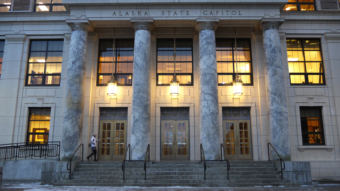
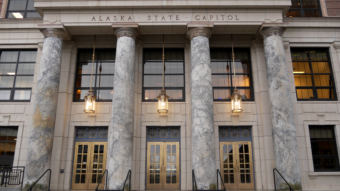
Alaska State Capitol main entrance. Jan. 23, 2017. (Photo by Skip Gray/360 North)

State regulators have rejected a bid by a top official in Gov. Mike Dunleavy’s administration to hide key details about a second job that paid her more than $200,000 last year.

Staff at the Alaska Public Offices Commission this week said Mary Ann Pruitt, Dunleavy’s contract communications director, is required to disclose the clients of PS Strategies, an advertising and political consulting firm.

Pruitt is being paid $15,417 a month, or about $185,000 over the course of a year, even as she remains the sole owner and president of PS Strategies.
Pruitt has said she’s working full-time for the government and now holds only a minor, supervisory role at the company. Dunleavy administration officials have said Pruitt is not getting benefits through her state job and that she will only be on the job temporarily, though her contract does not have an end date.

Pruitt, who’s married to Anchorage Republican Representative Lance Pruitt, had asked for an exemption from Alaska’s financial disclosure laws, which are designed to guard against undisclosed conflicts of interest.

Pruitt’s attorney wrote the public offices commission in January to say PS Strategies’ clients’ identities and payments were trade secrets, and that Pruitt’s right to privacy far outweighed the state’s interest in transparency.

The public offices commission’s staff, in a letter Monday, disagreed.

The letter, written by paralegal Madeline Sholl, said there’s ample information about PS Strategies’ clients already available online, undercutting the argument that their identities are a trade secret.

And because state law allows officials to disclose income from clients within broad ranges, rather than identify an exact amount, the company can still safeguard information that would be valuable to competitors, like how much it charges for specific services.

Given Pruitt’s job within the highest state executive office, the commission’s letter says, the public has the right to know what ties PS Strategies has with corporate and political entities.

Pruitt has one month to either add the information to her financial disclosure, or appeal the staff ruling to the commission’s politically-appointed commissioners.

Pruitt referred questions to her attorney, Stacey Stone, who declined to comment.

As Dunleavy’s budget looms, two Alaskans see diverging futures for Mat-Su

Farmland in the Mat-Su, as seen from Lazy Mountain.
Farmland in the Mat-Su, as seen from Lazy Mountain. (Photo by Emily Russell/Alaska Public Media)

Gov. Michael Dunleavy’s proposed budget presents Alaskans with a tough question: whether they want to slash spending on education, health care and other programs to pay for larger Permanent Fund dividends.

How people answer that question depends a lot on how they make their living, and their views about the size of government. And in the Matanuska-Susitna Valley, north of Anchorage, you can find Alaskans on both sides of the budget debate.

One person who’s alarmed about Dunleavy’s proposed cuts is Amy Pettit, who runs an organization that conserves farmland, the Alaska Farmland Trust.

On a driving tour near the town of Amy Pettit, Pettit pointed out prime glacial soil that’s covered by snow now, but that by September would be filled with Alaska-grown produce.

“It will be beautifully straight, impeccably straight rows of different colors of cabbages, and broccoli, cauliflower,” she said. “And there will likely be a tractor in it every single day, doing some harvesting or weeding, cultivating around all those beautiful vegetables.”

While agriculture is a tiny industry in Alaska, its supporters are adamant about its benefits — which is why Pettit is worried right now.

Dunleavy, in his budget released earlier this month, proposed to eliminate an array of government programs that support the industry. No more state marketing of Alaska-grown vegetables and meat. No more state-sponsored loans for buying land or livestock, or for financing yearly purchases of seed and fertilizer.

As she drove past one of the state’s only commercial dairy farms, Pettit said the budget could be a big hit to the industry.

“Farming is a difficult enough endeavor as it is. Farming in Alaska is, like, ten-fold that. And then you wipe out these support programs that the Division of Agriculture provides,” she said. “It would be a lot easier, a lot cheaper, to go produce food somewhere else.”

It’s not just farmers who would be affected. Dunleavy’s budget, as proposed, would eliminate more than 20 state agricultural jobs from Palmer, most of them full time. That’s just one way the plan would affect the town of 7,000 — teachers are also likely to lose jobs if Dunleavy’s proposed schools cuts are enacted, as would healthcare workers.

But there’s also a silver lining — a $1.9 billion silver lining, to be specific. That’s how much money Dunleavy wants to inject back into the state’s economy through a larger PFD, and a big chunk of that money would go to people in the Mat-Su.

The cash would boost business for people like Joe Hand, who owns a small used car dealership near Wasilla called Harvest Motors. (The “harvest” is a biblical reference.)

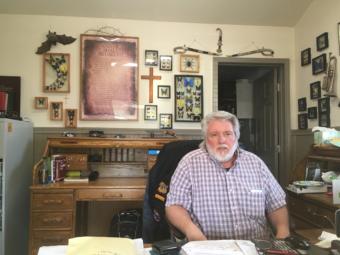
Joe Hand sits at his desk at Harvest Motors, the used car dealership he owns near Wasilla. (Photo by Nat Herz/Alaska Public Media)

Hand voted for Dunleavy and said he supports the direction the governor is moving, though he said it might be better if the changes were phased in over time, rather than in one fell swoop.

For Hand’s business, he said, there’s a real difference between a $1,000 PFD, like in 2016 and 2017, and one that’s double that — or even triple, which is what this year’s could be. He put it in the context of a family of four.

“If it comes out at three thousand bucks, like what we’re hearing, $12,000 is huge,” he said. “Especially for used cars.”

The cost of that larger dividend, at least in the context of Dunleavy’s budget proposal, is sharp reductions in government services. But Hand said he isn’t sure whether Alaska is spending its money as efficiently as it could be.

When it comes to the state’s agricultural programs, he said, he appreciates the history and culture that’s grown up around farming in the Mat-Su. But, Hand added, it’s not like his car dealership gets the same type of support from the state.

“Nobody helps me. I had one car when I started and now I have 50,” he said. “At some point in time, we as a community have to say, ‘The money needs to go to the greatest need.’”

One big question looming over the debate is about the broader economy — whether the larger PFD boosts businesses like Hand’s enough to make up for the lost state jobs and programs that would come from a smaller budget.

The answer depends in part on how you measure those effects. A 2016 study by the University of Alaska Anchorage’s Institute for Social and Economic Research said boosting the PFD produces more income than more spending on state government. But you get more jobs by raising government spending than by raising dividends, the study said.

The study only covers the short-term — there’s relatively little scholarly work that can help make long-term economic projections.

Plus, economic data can only guide politicians so far, said Mouhcine Guettabi, one of the study’s authors.

“Is that the only dimension that people should be considering in making these decisions? Probably not,” he said. “It’s a question of values. It’s a question of what they think matters most, and what their constituents value. And I’m not qualified to speak to any of those things.”

It’s the state Legislature, working with Dunleavy, that will determine whose values win out.

Dunleavy disbands Alaska climate response team

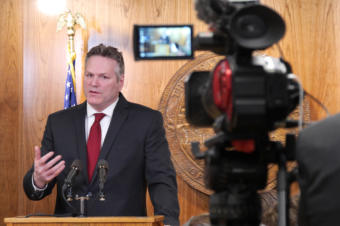
Gov. Michael Dunleavy introduces his amended state budget to reporters at a press availability at the Capitol in Juneau on Feb. 13, 2019.
Gov. Michael Dunleavy introduces his amended state budget to reporters at a press availability at the Capitol in Juneau on Feb. 13, 2019. (Photo by Skip Gray/360 North)

Alaska Republican Gov. Michael Dunleavy has formally disbanded the task force formed by his predecessor to guide the state’s response to global warming.
In an administrative order this week, Dunleavy revoked a separate, 2017 order by former Gov. Bill Walker, an independent, establishing the task force and a state climate change strategy.

Dunleavy’s order was not publicly announced. The governor’s office sent letters to task force members around 5 p.m. Friday informing them that their work for the task force “has ended.” The state’s website dedicated to the task force and strategy also appears to have been taken down.

In his administrative order this week, Dunleavy also revoked six other orders issued by Walker. Two relate to state workplace safety and employee privacy; another established a task force to explore commuter rail service between Anchorage and the Mat-Su; and another directed state agencies to stop discretionary spending on six big infrastructure projects because of Alaska’s substantial budget deficit.

In a prepared statement, Dunleavy spokesman Matt Shuckerow said the Walker administrative orders “are no longer needed: They are no longer relevant, have fulfilled their intended purpose, are not aligned with the governor’s policy direction, and/or appear to have been made primarily for political or public relations purposes.”

“No governor should be tied to a previous administration’s work product or political agenda, and nobody should be surprised to see Gov. Dunleavy make this decision,” Shuckerow said. “Gov. Dunleavy’s focus continues to be on making Alaska safer, protecting the Permanent Fund dividend, encouraging economic growth and opportunity and putting Alaska on the path towards a permanent fiscal plan.”

The 20-member climate task force had been chaired by Walker’s lieutenant governor, Democrat Byron Mallott. In his order establishing the group, Walker described global warming as threatening the state’s natural resources and posing risks to residents’ “health, safety and economic future.”

Alaska has warmed at twice the rate of the global average since the mid-20th century, and the cost to the state between 2008 and 2030 could range from $3 billion to $6 billion, according to a federal climate report released in November.

Dunleavy, in an interview on the campaign trail, downplayed climate change’s effects on Alaska.

“I think we have a lot of issues that, in my opinion, are quite frankly and bluntly more important than the climate task force,” Dunleavy said. “And I’ll be focusing on these immediate issues for Alaska instead of focusing on the issues in this task force.”

Two veterans of Alaska politics land contract jobs with Gov. Dunleavy

Alaska State Capitol Building, Juneau, Alaska, January 23, 2017. (Photo by Skip Gray/360 North)

Two veterans of Alaska politics have signed contracts to work with GOP Gov. Mike Dunleavy, and one of them is maintaining ownership of her advertising, marketing and political strategy firm even as she works as the governor’s acting communications director.

Mary Ann Pruitt’s one-page contract calls for her to be paid $15,400 a month, which equates to $185,000 a year. The contract calls for her to work 37.5 hours a week, without benefits or vacation. In a phone interview Friday, Pruitt said she’s working 12 hours a day.

Her contract does not have an end date, but Pruitt does not intend to keep the job permanently, said Matt Shuckerow, a spokesman for the governor.

In an emailed statement, Shuckerow said, “Her contract is focused on building out the governor’s communications team and the messaging behind his agenda.”

Pruitt also remains the sole owner and president of Anchorage-based PS Strategiesaccording to documents filed with the state Division of Corporations. Pruitt said she still has “some involvement,” but that it entails limited oversight work like approving payroll.

“My main focus right now is in the governor’s office,” said Pruitt, who is married to Anchorage Republican Rep. Lance Pruitt.

PS Strategies creates advertising campaigns and helps clients decide where and how to broadcast them.

It worked for a super-PAC type group that spent hundreds of thousands of dollars on ads on Dunleavy’s behalf during the gubernatorial election, with support from the Washington D.C.-based Republican Governors Association.

The firm’s website also lists past clients with interests that intersect with state government — from the Alaska Support Industry Alliance, an oil and mining industry group, to telecommunications firms GCI and Alaska Communications, as well as environmental and health-care organizations.

Pruitt said most of PS Strategies’ clients are from outside of Alaska. She added she does not see her outside work as conflicting with her state job.

She did not include a list of her firm’s clients on her official financial disclosure. Officials at the state agency that gathers the disclosures, the Alaska Public Offices Commission, said they are assessing a request by Pruitt’s attorney that she be exempted from identifying those clients.

State ethics law bars public employees from holding second jobs that present a conflict of interest. But state officials did not answer questions Friday about how or if that prohibition extends to contract workers.

The state ethics attorney didn’t immediately respond to a request for comment.

The other contractor is Mike Nizich, who once worked as chief of staff to Republican governors Sarah Palin and Sean Parnell.

Nizich lost his job when Parnell lost to independent Bill Walker in the 2014 election.

After Dunleavy replaced Walker last year, Nizich was hired by the governor’s office in December under a two-month contract capped at $34,500.

The contract called for Nizich to review the Alaska Constitution and state laws and regulations, consult with Dunleavy and senior staffers and analyze budgets and organizational structures.

Nizich declined to comment.

Clarification: This story has been updated to clarify that Dunleavy replaced Walker last year; the story previously said Dunleavy beat Walker in the election, but Dunleavy’s leading opponent was Mark Begich, as Walker suspended his campaign before the election took place.

Where Dunleavy wants to spend more cash: tourism, courts, pensions, oil tax credits

Gov. Mike Dunleavy leaves the House chambers in Juneau after delivering the annual State of the State address to the Alaska Legislature on Jan. 22, 2019.
Gov. Michael Dunleavy leaves the House chambers in Juneau after delivering the annual State of the State address to the Alaska Legislature on Jan. 22, 2019. (Photo by Skip Gray/360 North)

You’ve probably heard a lot about the programs that Gov. Michael Dunleavy is proposing to cut from his budget, like education, health care and state ferries.

But you might not have heard about how Dunleavy is also proposing to increase spending on a handful of projects and programs.

His plan released last week still found room for budget boosts for a handful of items. They represent some of the governor’s core priorities, like public safety and criminal justice, along with non-negotiable obligations, like the system that pays pensions to retired teachers and other public employees.

There was even a big new project in the state capital budget: a $25 million, 15,000-square-foot visitor center for Denali State Park.

It’s designed to give people better access to the southern part of Denali, so they don’t have to drive from Anchorage all the way to the national park entrance in Healy.

“It would be a day trip from Anchorage for people to come up and experience the Denali country,” said Matt Wedeking, a top state parks official.

In the operating budget, Dunleavy proposed a slight spending boost for the state court system. Alaska’s courts, in response to the state’s huge deficit, have been closing on Friday afternoons. The proposed spending increase would allow them to reopen.

But that $3 million boost pales in comparison to a couple of the other increases in Dunleavy’s proposal.

One is spending $37 million more, or about 14 percent, on Alaska’s public employee pension systems. Those pensions are constitutionally promised to retirees, and the payments needed to fulfill those promises are forecast to nearly double over the next decade.

Gov. Michael Dunleavy introduces his amended state budget to reporters at a press availability at the Capitol in Juneau on Feb. 13, 2019.
Gov. Michael Dunleavy introduces his amended state budget to reporters at a press availability at the Capitol in Juneau on Feb. 13, 2019. (Photo by Skip Gray/360 North)

Another proposed spending boost is for cash tax credit payments owed to oil companies — reimbursing them for expenses they racked up while looking for oil and developing projects.

Dunleavy proposed to retroactively spend $84 million in the current year’s budget, on top of $100 million dollars that’s already set aside. Then, he proposed to spend $170 million more next year.

“This is our obligation. There’s a number of things that happen if we don’t do this. So we’re going to continue on with making the statutory minimum,” said Matt Shuckerow, a spokesman for Dunleavy.

Shuckerow is right that there’s a state law setting out how much the oil and tax credit payments should be each year. But there’s also a law that dictates how much money the state should set aside to pay for each student at Alaska’s schools — and Dunleavy’s budget did not follow that law.

Maintenance of the state school system is also a constitutional requirement, just like the payment of promised pensions. But Shuckerow said that there’s a clearer process for determining the size of the annual pension payments.

“Those are not, necessarily, negotiated. The number is not something that is arbitrarily found,” Shuckerow said. “There’s actual calculations done on an annual basis based on participation, beneficiaries, actuarial analysis. If the cost of health care goes up, then the spending increases.”

Shuckerow was suggesting that the payments to the pension system are typically guided by nonpartisan analysts and aren’t the subject of much debate in the Legislature. Schools spending, by contrast, is typically more political and subject to negotiations between lawmakers and the governor.

One other wrinkle to Dunleavy’s proposed oil tax credit payments: He wants to make them with money from the Alaska Industrial Development and Export Authority, the state’s economic development arm.

That means the payments wouldn’t show up as an increase in spending from the unrestricted general fund — the category that state lawmakers and experts typically use to measure the state budget. It’s effectively “invisible money,” said David Teal, the Legislature’s head budget analyst.

“It appears as savings or a budget reduction,” Teal said.

Asked about the use of money from AIDEA, Shuckerow said Dunleavy is being “open and up front and honest about where we are.”

“I don’t think there’s any secret that the governor’s budget is speaking honestly about our financial standing,” he said.

But when Dunleavy served in the state Senate, he was skeptical of similar proposals to reduce general fund spending by using other sources of money.

As for the Denali visitor center, which would also be paid for primarily with AIDEA money, Shuckerow said the project aligns with a Dunleavy administration priority of encouraging growth. It also leverages a donation from Princess Cruises, and it’s projected to generate cash for the state.

Walt Monegan, former commissioner of Public Safety.
Walt Monegan, former commissioner of Public Safety. (Photo by Graelyn Brashear/Alaska Public Media)

But not everyone was convinced that the new project is the best use of limited state money for capital projects. Walt Monegan was the public safety commissioner for the previous governor; he resigned when Dunleavy was sworn in.

Monegan said in a phone interview that he was disappointed to hear that Dunleavy cut some of the previous administration’s ideas out of the capital budget, like a new plane for first responders.

“Our tourists can’t enjoy all that Denali has to offer if we can’t get them there safely. Or if there is an issue that happens up there, how do we respond to get them out of there?” Monegan said. “I would put that enhanced visitors center as a nice-to-have, as opposed to a must-have.”

The Legislature is currently reviewing Dunleavy’s budget plan in committees, and lawmakers have the power to boost or reduce his proposed spending levels.

Site notifications
Update notification options
Subscribe to notifications