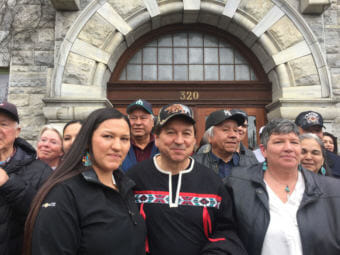
Rick Desautel of Inchelium, Washington, center, was accused of illegal hunting after he crossed into Canada in 2010 to hunt for elk on the traditional hunting grounds of the Sinixt tribe in Canada. (Photo by Emily Schwing/Northwest News Network file photo)
British Columbia is taking the next step in a decade-long battle over Native tribal rights. The province has filed paperwork to appeal a decision that granted Washington state tribal members rights to their ancestral lands in Canada.
Back in 2009, Rick Desautel was charged for hunting without a permit and as a non-resident in British Columbia. He is one of roughly 4,000 Sinixt tribal members on the Colville reservation in northeastern Washington.
Sinixt traditional lands extend from the reservation north into British Columbia. Canada deemed the tribe “extinct” in 1956.
But Desautel said he has a right to hunt on his ancestral lands and a trial court and the Supreme Court of British Columbia agreed last year.
But the provincial government has filed an application to appeal the case for a second time.
In an email, a spokeswoman for the province’s Prosecution Service, explained that the appeal application will be considered within 60 days. A justice of the court of appeal will decide if a full appeal should be heard.
In a statement, Michael Marchand, chairman of the Confederated Tribes of the Colville said he was not surprised by this latest move to appeal. He also expressed confidence.
“We are certain we will win in the end, wherever this case leads,” Marchand said. “It is a simple fact that the Sinixt people exist, both in Canada and on the Colville Reservation.”
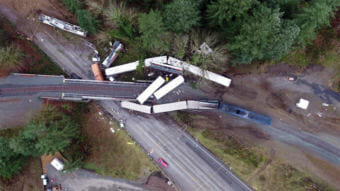
Amtrak Cascades Train 501 was going more than twice the posted speed limit when it derailed at a sharp turn near DuPont, Washington, on December 18, 2107. (Photo courtesy Washington State Patrol)
Federal investigators have interviewed the engineer who was at the controls of Amtrak Cascades Train 501 that derailed last month south of Tacoma. The interview summary points more strongly to human error as the cause of the deadly wreck.
The locomotive engineer told investigators from the National Transportation Safety Board that he knew a sharp curve was coming up, but as filtered through the NTSB, he said he “didn’t recall” seeing the advance speed limit sign.
The first of such warning signs is posted two miles before the curve in question.
When the engineer recognized looming danger, he testified he applied the brakes. But by then it was too late, just seconds before the speeding train launched off an overpass and crashed onto adjacent Interstate 5.
The train entered the 30 mph curve traveling 78 mph according the data recorder retrieved from the lead locomotive.
The derailment killed three passengers and injured more than 60 of those onboard along with an eight motorists whose vehicles crashed into derailed train carriages.
Numerous injured passengers and a driver on the freeway have since sued Amtrak. They allege inadequate crew training and negligence in not activating automatic speed control technology on the line.
On the topic of training, the unnamed locomotive engineer said he would not have gotten behind the throttle if he had any reservations about his readiness to operate the train on the new, higher speed routing alongside I-5.
The 55-year-old engineer suffered serious injuries in the wreck on December 18. His interview with federal crash investigators didn’t take place until last week.
“In the five weeks preceding the derailment, the engineer had qualified on the Point Defiance Bypass section of track following the completion of seven to 10 observational trips in the locomotive as well as three trips operating the equipment, two northbound and one southbound,” said the NTSB investigative update released Thursday.
The union representing the engineer, the Brotherhood of Locomotive Engineers and Trainmen, said it could not comment on the NTSB’s account of the interview because the union is a party to the ongoing investigation.
The engineer also said he was not distracted by a conductor-in-training who was riding with him in the cab during Amtrak’s inaugural run with paying passengers from Seattle to Portland using the Point Defiance Bypass.
The NTSB investigators interviewed that conductor, Garrick Freeman, last week as well. Freeman corroborated the engineer’s statement that he was rested when he began his shift.
“He (Freeman) told investigators that the engineer appeared alert during the job briefing and while operating the train,” the NTSB wrote in its update Thursday. Freeman has also sued Amtrak for negligence and is seeking unspecified damages.
The NTSB reiterated that its full investigation will take 12-24 months to complete.
Their idea is to boost salmon hatchery production by 10 million to 20 million more fish per year to provide more food for the iconic killer whales.
No one wants to see orcas starve, but reliance on fish hatcheries leaves some whale advocacy groups uneasy.
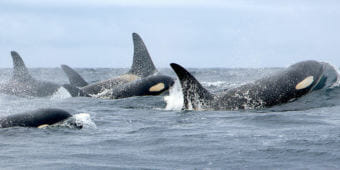
There are just 76 orcas left in the pods that call the inland waters of the Northwest home. That’s the lowest number in more than three decades. Numerous factors take the blame for the dwindling population, but one of the biggest according to biologists is lack of prey.
Chinook salmon are the preferred food for these orcas.
Sport fisherman Greg King can relate.
“The science is there. They’re dying,” he said. “We’re on a world stage here right now. The whole world is watching us. Are we going to let these orca whales die and have that blood on our hands? I don’t think we want that.”
King trooped to the Washington Legislature this month to support spending tax dollars to increase hatchery production of Chinook—also known as king—salmon.
The Washington Department of Fish and Wildlife first proposed this idea and the governor is running with it.
On one level, the idea is pretty simple; rear more salmon at maybe a half-dozen existing hatcheries throughout the state with spare capacity and release them.
Some of that could happen at the Hoodsport salmon hatchery on Hood Canal.
“We want to see if we can add to that prey base here from Hoodsport,” said Rob Allan, state Fish and Wildlife Regional Hatchery manager
Asked whether he thinks this will work, that enough of the fish will survive to grow big enough to interest the killer whales, Allan said he hopes so.
“All we know is that we release fish, they go out to the salt (water) and then they come back,” Allan said. “So then it’s up to the whales to go ahead and eat ’em. We think it’s going to help.”
But potential complications abound.
The federal government will need to give the OK because both the Puget Sound orcas and many wild salmon runs they used to feed on are listed as endangered.
“Hatchery fish has been identified as a bit detrimental to recovery of wild stocks,” Allan said. “They want us to put the reins on it a bit.”
Hatchery fish could compete for resources with wild stocks and they might interbreed. It’ll be a challenge to identify the right salmon stocks, hatchery locations and run timing.
“Where do we emphasize, you know a chinook or a chum salmon? Where do they need to be when the whales are there?” Allan said. “Also where are we not going to have this impact on wild fish? So it’s a real juggling match.”
The federal government’s Southern Resident killer whale recovery coordinator said she is in discussions about how to make this work.
“We need to come up with creative solutions,” said Lynne Barre of NOAA Fisheries. “There is kind of a sense of urgency around the whales with the recent losses.”
Environmental groups are the most wary of the orca food pantry concept as it proceeds through the Legislature, though not opposed.
“Given the urgency with orcas and the critical need for food to be available to sustain orca populations, everything is on the table,” said Darcy Nonemacher, who handles government affairs for the Washington Environmental Council. “At the same time, we do not want have hatcheries done in a way that undermines listed salmon and other species that orcas eat, in particular chinook salmon.”
The president of the Orca Conservancy, another group, said using hatcheries to feed the orcas should only be a “short-term” solution until wild runs rebound.
The governor’s office says it may take years to figure out if the supplemental feeding strategy works so they’ve penciled in indefinite funding.
One way to measure results would be to collect and dissect orca poop to see what they ate, which is easier said than done.
Environmentalists have long favored breaching dams on the lower Snake River to boost salmon numbers and are now directly linking that to creating food for orcas.
However, breaching those federal dams appears to have minimal support in Congress.
Separately, the Washington Legislature is debating a bill to reduce noise impacts on orcas by imposing a 7 knot vessel speed limit within 400 yards of an endangered resident killer whale.
Additionally, the governor and state Senate have proposed to increase spending on marine patrols to enforce such a speed limit and existing rules for boaters to stay at least 200 yards away from whales.
Both the governor’s office and legislators are talking about creating a Southern Resident killer whale task force to focus on securing more public and private resources and support for orca recovery efforts.
Gov. Jay Inslee included nearly $4 million for various orca recovery initiatives, including increased hatchery production and vessel enforcement, in his 2018 budget requests now pending before the state Legislature.
Canada is working on its own orca protection plan with many similar elements.
The Southern Resident killer whales routinely cross the maritime border between Washington state and British Columbia.
In 2014, state Department of Fish and Wildlife hatcheries released around 145 million juvenile salmon and steelhead, about one-third of which were Chinook.
A 10 million increase in king salmon production for the purpose of feeding hungry orcas would equate to a 20 percent increase in annual releases of that species.
Hatchery fish not eaten by the killer whales may provide increased fishing opportunities for humans.
The proposed budget authorization to rear the first cohort of Chinook salmon to feed the orcas comes in at $1.5 million.
(Editor’s note: This story has been revised with minor editing.)
File photo. Rick Desautel of Inchelium, Washington, center, was accused of illegal hunting after he crossed into Canada in 2010 to hunt for elk on the traditional hunting grounds of the Sinixt tribe in Canada. (Photo by Emily Schwing/Northwest News Network)
Tribal members are waiting for the next move from British Columbia’s provincial government in a long-running battle over sovereign rights.

Last month, a British Columbia Supreme Court judge ruled against the province, siding with a Washington man in an illegal hunting case.
Rick Desautel is one of roughly 4,000 Sinixt tribal members who live on the Colville reservation in northeastern Washington state.
Sinixt traditional lands extend from the reservation north into British Columbia.
Desautel was charged after he hunted elk illegally in British Columbia, where the tribe has been declared extinct.
He argues he has a right to hunt on his ancestral lands.
The case has dragged on for nearly a decade.
Two courts have sided with Desautel, including the provincial Supreme Court in December.
Defense Attorney Mark Underhill hopes it’s the end of the legal fight.
“I think what the courts have said at least indirectly, if not directly, is it’s time to sit down and talk about reconciliation with the Sinixt rather than furthering a legal battle that in my respectful view is a losing one,” Underhill said.
British Columbia’s Prosecution Service says “no decision has been made regarding an appeal.” The government has until Jan. 28 to decide.
The price of a typical single family home in Seattle rose twice as fast as the national average this year—nearly 12 percent. In Portland, home prices increased more than 6.5 percent. (Photo by Kevin Mooney/Northwest News Network)
Home prices continued to climb in Seattle and Portland at some of the fastest rates in the country this year. The latest data show Seattle is still the nation’s hottest market.
According to the Case-Shiller Home Price Index, the price of a typical single family home in Seattle rose twice as fast as the national average this year — nearly 12 percent. In Portland, home prices increased more than 6.5 percent.
David Blitzer is with S&P Global, which oversees the index. He said migration to Seattle and Portland and economic growth are pushing up prices.
“Both cities, but particularly Seattle, have strong economies,” Blitzer said. “The Seattle area is benefiting from a lot of technology development, as well as, I guess, more traditional industry.”
Housing prices rose particularly fast in the West. Las Vegas, Nevada, was the second hottest market, after Seattle. And many cities in California also saw high growth.
Blitzer said he expects interest rates to rise next year and the national housing market to cool.
Seattle real estate agent Sol Villarreal said rising prices come from a combination of factors that cause high demand and low supply, such as rapid migration to the region and not enough condominium construction in Seattle.
“You’re not building enough new units, people are afraid to sell their existing units, so every year the supply-demand imbalance gets a little bit worse,” he said. “We have more buyers into the system and fewer people want to sell their places if they have any option to stay there because they’re afraid of what the market is going to be.”
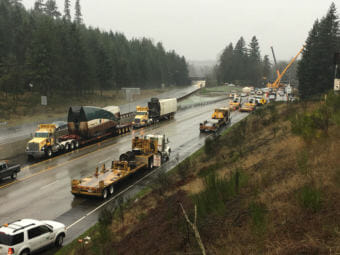
The rail cars that were dangling from a railroad overpass were loaded onto flatbed trucks. (Photo by Tom Banse/Northwest News Network)
Heavy lift cranes have removed the two Amtrak rail cars that were dangling over the lanes of southbound I-5 from a railroad overpass in DuPont, Washington. (Photo by Tom Banse/Northwest News Network)
Railroad contractors are making slow progress at the scene of Monday’s deadly derailment on Interstate 5, in Dupont, Washington.
Heavy lift cranes have removed the two Amtrak rail cars that were dangling precariously over the lanes of southbound I-5 from a railroad overpass, they’re now loaded on flatbed trucks.
Half a dozen more flatbed trucks with trailers are lined up to haul away some of the remaining mangled train cars. The lead locomotive is still blocking the roadway.
At the current pace, the southbound freeway is clearly not going to reopen today and there’s no estimate as yet when that might happen. All lanes of northbound of I-5 are open, but rubberneckers are slowing things down there.
Close
Update notification options
Subscribe to notifications
Subscribe
Get notifications about news related to the topics you care about. You can unsubscribe anytime.