Syndicated

Shareholders consider shrinking Sealaska board

Sealaska Building
Sealaska corporate headquarters is in Juneau. The Southeast regional Native corporation will hold its annual meeting June 24 in Hydaburg. (Photo by Casey Kelly/KTOO)

Should Southeast’s regional Native corporation shrink its governing board? That’s a question before Sealaska’s more than 22,000 shareholders. Management opposes the change.

Juneau-headquartered Sealaska has 13 members on its board of directors.

Shareholder Karen Taug thinks that’s too many — and costs too much.

“I believe that if we were a moneymaking machine and we were just rolling in successful corporations and we had a lot to manage, I think it’s justified to have more board members,” she said.

But, she said, that’s not the case.

Taug, who works in finance, is one of 12 shareholders running for four seats on Sealaska’s board of directors this spring.

She’s also the author of a resolution to shrink the board from 13 to nine members.

Sealaska opposes the measure, though it would not grant an interview on the topic. A statement on its website said a smaller board would result “in decreased representation of shareholder interests.” It also said fewer seats would lessen the chance of independent candidates being elected.

Part of the resolution would make it harder for longtime board members to win re-election, by prohibiting a management endorsement. Taug reads from her proposal.

“The longest-serving directors will not be eligible for the board slate. However, (they) will be able to run as an independent candidate to begin in the year 2018 and each year thereafter until there are nine members,” she said.

Sealaska opposes the measure, saying it would damage the corporation.

On its website, officials wrote “The resolution as written targets longest-serving directors for removal to accomplish the reduction, regardless of their experience.”

Nicole Hallingstad, also an independent board candidate, said that’s the point.

“I think the current resolution is one more way that shareholders are trying to deliver their message that there are directors who have served far too long on Sealaska’s board,” she said.

Previous resolutions proposed term limits or changes in discretionary voting. All failed.

To pass, a resolution needs to attract more than 50 percent of all shares that could be cast. That’s a higher standard than a majority of just the shares cast that year.

There’s no standard board size for Alaska’s 12 regional Native corporations. Sealaska is one of three with 13 members. Another three have nine. The others range from 11 to 23.

Edgar Blatchford is a former regional Native corporation CEO. He teaches journalism and Native studies at the University of Alaska Anchorage. Blatchford said reducing board size just puts more power in a few shareholders’ hands.

“In my experience in dealing with Chugach Alaska Corp., I think it has left holes in the argument that it has created efficiencies. I think what it has created is a lack of transparency and it has put more corporate control, more board control, in the board of directors,” he said.

Most Sealaska shareholders have already cast their ballots, called proxies, by mail or online. The final deadline is at Sealaska’s annual meeting, June 24, in Hydaburg on Prince of Wales Island. Results will be announced there.

The ballots also list the names of those shareholders running for four board seats.

Here are brief summaries of the the candidates, in alphabetical order, condensed from http://www.sealaska.com/election-connection.

Doug Chilton, 51, independent, Juneau.

  • Profile: http://www.sealaska.com/election-connection/independent-nominees
  • Occupation: Business owner, operator of Chilton Silver & Gold.
  • Education: Graduate of Juneau-Douglas High School.
  • Directorships: LaPeruse AK Association.
  • Affiliations: One People Canoe Society, Juneau Tlingit & Haida Community Council, Tlingit & Haida Central Council, ANB Camp 2.

Jon Duncan, 45, independent, Colorado Springs, Colorado.

  • Website: www.jonbduncan.com
  • Occupation: Vice president, sales & marketing, Endowance Corp.
  • Education: Master of Business Administration, St. Mary’s College of CA; Bachelor of Arts, Politics, University of California, Santa Cruz.
  • Sealaska positions: Former president and CEO, Managed Business Solutions, LLC and Managed Business Solutions Systems, LLC.
  • Directorships: Chairman of the Board, Taku, Inc.; Chairman of the Board, One Nation Walking Together.
  • Affiliations: One Nation Walking Together; Colorado Springs Diversity Forum (Chairman).

Sidney Edenshaw, 54, incumbent running on the management slate, Hydaburg

  • Profile: http://www.sealaska.com/election-connection/board-slate/sidney-edenshaw
  • Occupation: Commercial Fisherman, owner of the F/V Jerilyn, and the Walking Boss Dispatcher for Southeast Stevedoring.
  • Education: Graduate of Hydaburg High School.
  • Sealaska positions: Served on the Sealaska Board since March 2005, manager on the Haa Aaní LLC Board.
  • Directorships: Former Haida Corp. Board member.
  • Affiliations: President of Hydaburg’s Tribal Association. Member of Hydaburg ANB Camp 6, president of the tribe’s nonprofit foundation, XKKF, Tlingit & Haida Hydaburg Delegate. Shell Fish Preservation Alliance.

Bradley Fluetsch, 54, independent, Lamy, New Mexico.

  • He has withdrawn from the race but his name remains on the ballot.

Nicole Hallingstad, 51, independent, Arlington, Virginia

  • Profile: http://www.sealaska.com/election-connection/independent-nominees
  • Occupation: Director of Operations, National Congress of American Indians.
  • Education: Bachelor of Arts in History, University of AK Fairbanks; Master of Arts in European History, University of CA Berkeley.
  • Sealaska positions: Former Sealaska VP & Corporate Secretary, VP of Human Resources, VP of Communications; former Director of Alaska Coastal Aggregates and Haa Aaní Community Development Fund, Inc.
  • Directorships: Board service for Cancer Connection, Capital Community Broadcasting Inc., Bartlett Hospital Foundation, United Way of SE Alaska.
  • Affiliations: Member ANS Camp 16 Petersburg; Member of Tlingit & Haida Indian Tribes of Alaska; Individual Member of NCAI.

Morgan Howard, 48, running on the management slate, Kirkland, Washington.

  • Profile: http://www.sealaska.com/election-connection/board-slate/morgan-howard
  • Occupation: Owner of Morgan Howard Communications, LLC.
  • Education: Bachelor of Arts in Film Production from Columbia College – Hollywood; Bachelor of Science in Communications from Northern Arizona University.
  • Sealaska positions: Provided communications and public relations services to Sealaska in 2016. Consulting, creative and design services, writing, advertising and media support.
  • Directorships: Tlingit Haida Tribal Business Corp. (8 Years); Yak-tat Kwaan Inc. (10 years from 2006-2016)
  • Affiliations: Seattle Chapter of CCTHITA, Treasurer and Delegate; Alaska Native Village CEO Association, Founding Member; Alaska Innovation and Entrepreneurship Group, Founding Member; and Fledge.Co start-up mentor.

Adrian LeCornu, 38, independent, Anchorage

  • Profile: http://www.sealaska.com/election-connection/independent-nominees
  • Occupation: Self-employed.
  • Education: B.A. Philosophy from University of Alaska Anchorage and M.L.S. Indigenous Peoples Law from University of Oklahoma.
  • Directorships: Director of Haida Corp., Chair of Shaan Seet, Inc.
  • Affiliations: Shaan Seet Inc. and Haida Corp.

Cory Mann, 47, independent, Juneau.

  • Profile: http://www.sealaska.com/election-connection/independent-nominees
  • Occupation: CEO Stories & Legends, Inc. owner; Juneau Marketing owner; Juneau Guesthouse owner.
  • Education: Attended Northern Arizona University Business School; Attended University of Athens, Greece; Internet Marketing; and UAS-AA degree.
  • Directorships: Secretary of Kaudli Nutz Productions Corp.

Michael Roberts, 54, independent, Longmont, Colorado.

  • Profile: http://www.sealaska.com/election-connection/independent-nominees
  • Occupation: President and CEO, First Nations Development Institute.
  • Education: MBA, Finance & Operations Management, University of Washington’s Foster School of Business.
  • Directorships: Sustainable Agriculture & Food Systems Funders; Three Affiliated Tribes – the Mandan, Hidatsa, and Arikara; Center for Native American Public Radio; The National Center for Family Philanthropy; Native Americans in Philanthropy; First Nations Development Institute; chair of First Nations Oweesta Corp.; and Four Times Foundation.

Ross Soboleff, 65, incumbent running on the management slate, Juneau

  • Profile: http://www.sealaska.com/election-connection/board-slate/ross-soboleff
  • Occupation: Writer, small business owner, commercial fisherman.
  • Education: Bachelor of Science in Community Service and Public Affairs from the University of Oregon.
  • Sealaska positions: Former VP Corporate Communications of Sealaska. Member of the Sealaska Board of Directors since June 2014. Trustee of the Elders’ Settlement Trust.

Karen Taug, 62, independent, Juneau

  • Profile: Profile: http://www.sealaska.com/election-connection/independent-nominees (scroll down)
  • Occupation: Controller, Bartlett Regional Hospital.
  • Education: BBA – Accounting, University of Alaska Southeast.
  • Sealaska positions: Former Senior Accountant, Sealaska Corp.
  • Directorships: University of Alaska Southeast Advisory Board, Goldbelt Heritage Foundation, former Director of Goldbelt, Inc.
  • Affiliations: Juneau Community Foundation, Juneau Planning Commission and Alaska Native Sisterhood Camp 70.

Ed Thomas, 75, incumbent running on the management slate, Kingston, Washington.

  • Profile: http://www.sealaska.com/election-connection/board-slate/edward-k-thomas
  • Occupation: Retired. Former President of Central Council of the Tlingit and Haida Indian Tribes of Alaska (27 years), President Emeritus.
  • Education: Associates in Science from Sheldon Jackson College; Bachelor of Science from the University of Alaska Fairbanks; and a Master of Education Administration from Pennsylvania State University.
  • Sealaska positions: Sealaska Board member since October 1993. Member of the Haa Aaní, LLC Board of Managers, director of the Spruce Root, Inc. Board (formerly known as Haa Aaní Community Development Fund, Inc.).
  • Directorships: Former director and chairman of Shaan Seet, Inc. (Craig Village Corp.). Former President of Ketchikan Indian Community.
  • Affiliations: Former president of Ketchikan ANB Camp 14, a former 1st vice-president ANB Grand Camp and the parliamentarian of the 2016 ANB Convention; former executive director of the Ketchikan Indian Education Program; elected secretary of the National Congress of American Indians (NCAI) and parliamentarian; former board member of the Alaska Federation of Natives, member of the Council for the Advancement of Alaska Natives.

No bids for retired ferry Taku, again

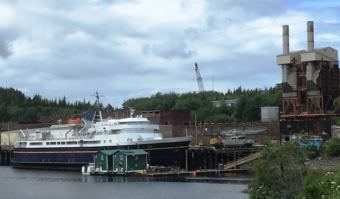
The Alaska Marine Highway System ferry Taku is in storage at Ketchikan's Ward Cove. The former Ketchikan Pulp Co. mill site, including ferry headquarters, is in the background. (Photo by Leila Kheiry/KRBD)
The Alaska Marine Highway System ferry Taku is in storage at Ketchikan’s Ward Cove. The former Ketchikan Pulp Co. mill site, including ferry headquarters, is in the background. (Photo by Leila Kheiry/KRBD)

The price is dropping for the state ferry Taku.

No one submitted a bid during the most recent sale attempt, which ended May 31, Alaska Marine Highway System General Manager John Falvey said.

The minimum bid was $700,000. An earlier attempt priced the ship at $1.5 million.

“We’ve had quite a bit of interest. We’ve probably had upwards of 25 calls or emails with interest,” he said. “But no bids.”

Falvey said the Taku will be put out to bid one more time at a lower, yet-to-be-determined price. That should happen this week.

He said it could be sold for scrap if no one buys the ferry.

The ferry system took the 54-year-old ship out of service about two years ago. It’s been moored at Ketchikan’s Ward Cove.

Falvey said a buyer would have to accept the ferry as-is, where-is.

It’s in pretty good shape, he said. But it would need some upgrades and permits before it could carry passengers again.

“The boat was certified by our Coast Guard. … It was operational. It was safe,” he said. “I would have to assume that it shouldn’t need anything more than minor maintenance to get it running again because it sat so long.”

The Taku has been advertised on the state’s website and through the Passenger Vessel Association, a trade organization.

The Taku is about 350 feet long. It can carry up to 50 vehicles and 350 passengers. It has 40 staterooms, a cafeteria, observation lounges and a covered solarium.

It sailed mostly Southeast routes.

No budget? Ferry cuts would hit communities hard

Drivers move their cars and trucks off the ferry LeConte at the Angoon terminal in 2010. The marine highway used to send the larger fast ferry Fairweather, but replaced its stops with the LeConte.
Drivers move their cars and trucks off the ferry LeConte at the Angoon terminal in 2010. The marine highway used to send the larger fast ferry Fairweather, but replaced its stops with the LeConte. (Photo by Ed Schoenfeld/CoastAlaska News)

State ferry service would be severely reduced if the Legislature fails to pass a budget in time to avoid a July 1 government shutdown. Here’s what that would mean for one small, isolated city.

An Alaska Marine Highway shutdown would hit a lot of people in Angoon.

“The ferry system is our lifeline. People use it all the time, myself included. So it would be devastating to not have that option available to us,” said Albert Kookesh III, the Southeast island community’s city clerk.

Angoon is an approximately 500-resident town on the west side of Admiralty Island (Photo by Ed Schoenfeld/CoastAlaska News)

Residents sail twice-weekly summer roundtrips to Juneau to shop for groceries, household items and other essentials. Kookesh says Angoon merchants would be left with empty shelves if there’s no service.

“We do have the one store and they utilize the ferry system as well,” he said. “If they have to start shipping their groceries in via a plane or getting their own barge, that definitely hits us in the wallet also.”

The state Department of Transportation has released a list of services that would be curtailed should the budget go unfunded. Other state departments have done the same.

Spokeswoman Meadow Bailey doesn’t expect a total shutdown. But there would be cuts.

“It might be some closures or some reductions,” she said. “It might be fewer hours. Really, we’re not sure what the impacts will be yet. That’s what we’re working through with the Department of Law right now.”

They’re considering what services are required by the Alaska Constitution. Others might have to continue in some form because of federal requirements.

Transportation cuts also would hit road maintenance, state-run airports, the Whittier Tunnel and numerous building repair and other capital projects.

Ferry cutbacks would also hurt lodges and guides, as well as personal travel, Kookesh said.

“The ferry system is the most economical way for many of us to travel to and from. And with the summer months coming up, a lot of traveling’s going to be taking place, either from us leaving or from our family coming in,” he said. “Not only does that hurt us getting out of Angoon, it hurts people getting into Angoon also.”

The ferry system sails 10 vessels to and from 35 coastal communities, many without a road connection.

About two-thirds of its budget comes from state general funds. The rest is from ticket sales and other revenues.

Correction: In an earlier version of this story, the caption to the ferry photo misidentified the vessel pictured. It’s the LeConte, not the fast ferry Fairweather.  

Race to Alaska boating contest attracts no Alaskans

Dan Blanchard's Team UnCruise Adventures competes in 2016's Race to Alaska on board the 25-foot trimaran Un-Screwed. The team can't race this year. (Photo courtesy Dan Blanchard)
Dan Blanchard’s Team UnCruise Adventures competes in 2016’s Race to Alaska on board the 25-foot trimaran Un-Screwed. The team can’t race this year. (Photo courtesy Dan Blanchard)

No Alaskans are competing in this year’s Race to Alaska.

The Washington state-to-Ketchikan competition will have close to 40 motorless watercraft. But the only team from the contest’s namesake destination has withdrawn.

Dan Blanchard is CEO of UnCruise Adventures, which sails small tour ships in Southeast Alaska, the Pacific Northwest and some other parts of the world.

He’s also captain of a three-person team that’s sailed a 25-foot trimaran sailboat during the 2015 and 2016 Race to Alaska contests.

As a part-time Juneau resident, and a major race sponsor, he was the only Alaskan entered to sail in this year’s event. But, he had to withdraw.

“Like everyone, sometimes family life and work life and race life all collide at the same time,” he said. “So this year it was just a time constraint. But I certainly plan on being back.”

Past races have attracted a few teams from Ketchikan and elsewhere in Alaska. But most are from Washington state or British Columbia.

Organizer Daniel Evans used to live in Alaska.

While Southeast and Southcentral coasts attract sailboats, he doesn’t think they have much opportunity to prepare for a 750-mile, unsupported journey.

“By and large, the wind in Alaska is blowing too hard or it’s snowing or it’s too cold,” he said. “It’s just a much, much shorter cruising window.”

Blanchard said it’s also a question of timing.

“It’s challenging for Alaskans, particularly when we are very seasonal … in our work life, to bring a boat down to Port Townsend, Washington, and the commitment of what usually ends up being well over a month, even if you have a fairly short passage like we’ve had. It’s just tough to do” he said.

His team finished in about 10 days the first year and five days the second.

While most racers sail the route, others paddle kayaks, row boats or travel by sailboard.

Evans said about half the teams are in vessels of 20 feet or less. Fifteen will travel solo.

“I would describe the people who race as huge adventurers,” he said. “(They’re) people who just decided they wanted to kind of live in their skin and experience something that they would never be ever fully prepared for.”

And it’s not easy. Racers face strong winds, high seas, tidal currents, cold rain and, in some places, narrow passages.

“It’s the most painful thing Blanchard ever done, he said.

“I’ve described it like living inside a clothes washer on full spin for anywhere from six to 20 days. It’s not for the meek” he said.

The Race to Alaska is actually two contests.

The first is a 40-mile qualifying voyage from the Olympic Peninsula to Victoria, on Vancouver Island. About 60 vessels are signed up for that run.

The second is 710 miles from Victoria to Ketchikan. Thirty-seven teams plan to make that journey.

The winner gets $10,000 in cash. The runner-up gets a set of steak knives. Other finishers just get to say they made it alive.

Top state ferry manager resigns

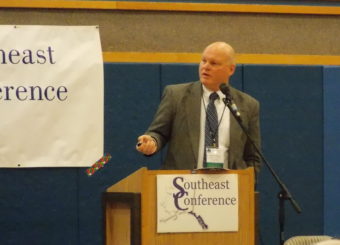
Alaska Marine Highway System Capt. Mike Neussl addresses the Southeast Conference Mid-Session Summit in Juneau on March 15, 2016.
Alaska Marine Highway System Capt. Mike Neussl addresses the 2016 Southeast Conference in Juneau. (Photo by Ed Schoenfeld/CoastAlaska News)

The man overseeing the Alaska Marine Highway System is leaving his post.

Capt. Mike Neussl said he’s departing for personal, not professional reasons. He needs to leave the state for a while to care for an ailing family member.

He said he’ll miss his co-workers, but not the long hours.

“It’s an important job and I clearly enjoyed doing it. But it is a stressful job and these are very challenging times and it’s not been easy,” he said.

That’s because state budget cuts have forced the ferry system to reduce sailings, cut amenities and reorganize some of its services. It’s happened as costs have risen and the aging fleet has needed significant repairs.

“We still provide ferry service to 35 communities and have a fleet of not quite 11 ships, we’re down a couple. But we’ve kept the system going despite some very significant budgetary challenges,” he said.

His final day on the job will be Friday, May 12.

Transportation Commissioner Marc Luiken said a replacement won’t be chosen right away.

“I’m still working with the governor to kind of lay out the plan for leadership of the marine highway system. But at least for the near term, we’re going to operate with the folks we have in the leadership positions,” he said.

Neussl has been a Department of Transportation deputy commissioner for a little more than two years. He also ran the ferry system in 2011 and 2012. He’s a retired U.S. Coast Guard captain who left that post in 2010 after 30 years of service.

Robert Venables, who chairs the state’s Marine Transportation Advisory Board, said Neussl will be missed.

“He obviously had a firm grip on what was happening and he ran the operation as well as one could expect under the circumstances,” he said.

His departure comes as a panel of stakeholders considers alternative approaches to ferry management. So far, it has recommended the marine highway change from a state agency to a public corporation.

Venables staffs that effort. He said Neussl’s resignation could impact the project.

“Perhaps there’s an opportunity to take a look at that position and see what could be done structurally to bring about some changes that have been looked at in this AMHS reform project,” he said.

It’s being done under the auspices of the regional development group Southeast Conference, with support from the state and other entities.

Neussl said changing the organization of ferry management is worth considering if it helps the system survive.

Cultural landscape conference focuses on Native education

James White teaches a lesson on halibut fishing during Sealaska Heritage Institute’s Open the Box Math and Culture Academy in July 2016. (Photo by Nobu Koch/Sealaska heritage Institute)
James White teaches a lesson on halibut fishing during Sealaska Heritage Institute’s Open the Box Math and Culture Academy in July 2016. (Photo by Nobu Koch/Sealaska Heritage Institute)

Teachers from around Southeast Alaska will gather in Juneau next month to discuss culturally responsive education.

A conference called Our Cultural Landscape will focus on helping educators better teach Native students.

Jackie Kookesh is education director of the Sealaska Heritage Institute, which is organizing the event.

“We think that teachers, when they understand, they begin to understand they’re a part of the cultural landscape here as well. Then they get grounded. And I think it provides a shift for educators to look at their relationship as a teacher in the classroom,” she said.

The conference is June 1-3 and is open to teachers, administrators, classroom aides and those working in early childhood education.

Kookesh said the approach is of use to more than Native students.

“We feel it benefits all the students when you have a culturally responsive classroom and you have a culturally responsive teacher who is aware and knows. We hope that that approach will engage kids,” she said.

Guest speakers include Christopher Blodgett, a Washington State University faculty member and clinical psychologist. He’s known for developing a system to better understand and track childhood and family trauma.

James White shows traditional fishing techniques during a aath and culture academy in July 2016. (Photo by Nobu Koch/Sealaska Heritage Institute)
James White shows traditional fishing techniques during a culture academy in July 2016. (Photo by Nobu Koch/Sealaska Heritage Institute)

Other speakers are Zaretta Hammond, Larry Merculieff and Libby Roderick.

Hammond is a national education consultant and author of “Culturally Responsive Teaching and the Brain: Promoting Authentic Engagement and Rigor for Culturally and Linguistically Diverse Students.”

Merculieff was chosen by elders to serve as a bridge between traditional Aleut culture and the outside world. He established the University of Washington’s first indigenous student education program.

Roderick is associate director for the Center for Advancing Faculty Excellence at the University of Alaska Anchorage and director of its Difficult Dialogues Initiative. She is the editor of “Alaska Native Cultures and Issues: Responses to Frequently Asked Questions.”

Retired Juneau teacher and principal Carmen Mastronardo Katasse, a conference planner, said educators need to know Native culture is not a thing of the past.

“The culture isn’t gone. It’s still here. And so our hope is that teachers leave this conference with a better understanding of not only the local culture, but the art, the history and how place-based education does increase student achievement, decreases dropouts and engages students because they feel connected,” she said.

The conference is an outgrowth of an intensive training program for Juneau teachers.

It will be held at Juneau-Douglas High School and the Heritage Institute’s Walter Soboleff Building.

Site notifications
Update notification options
Subscribe to notifications