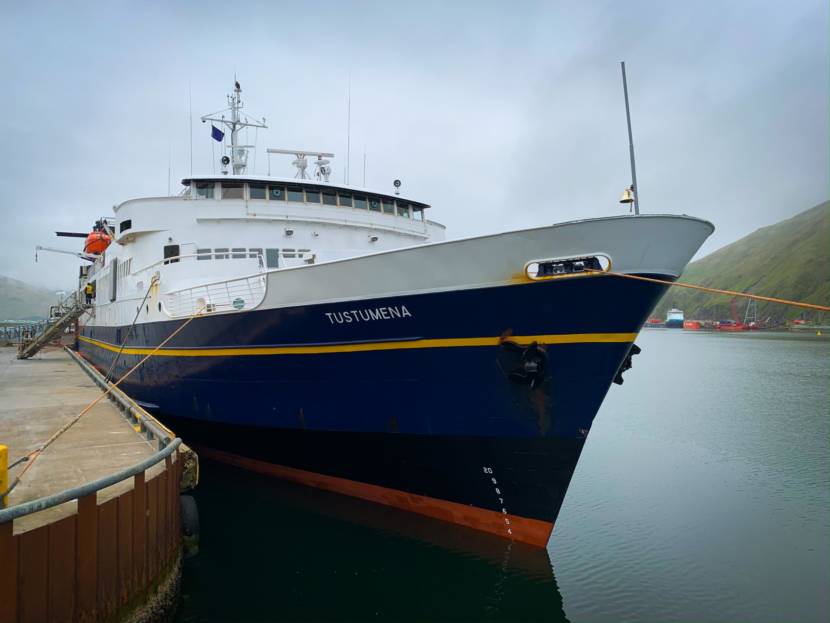
The M/V Tustumena in Unalaska. (Photo by Hope McKenney/KUCB)
The M/V Tustumena had been in service for less than two weeks when it docked in Homer on July 26. Due to a crew shortage, that stop in Homer lasted a full week.
According to the state Department of Transportation, the Tustumena had operated with more or less the same crew since it started its 2022 schedule. And Kodiak Republican House Speaker Louise Stutes says there weren’t enough replacement crew available to keep running the ferry.
“Like everybody else, they’re feeling an employee pinch,” Stutes said. “But in my conversations with the commissioner of D.O.T., he actually had said to me that they were going to be able to staff up the Tustumena, but the problem is COVID.”
The Tustumena is slated to resume regular service on Aug. 2, departing from Homer and bound for ports around Southwest Alaska. It’s the only state ferry that serves all ports out the Aleutian Chain.
The Alaska Marine Highway System has been struggling to hire new staff this year, even with $5,000 hiring bonuses. Stutes says that irregular service makes it harder to attract candidates.
“When you don’t know if you’re going to be working from week to week, and you have a family to feed, it makes it pretty tough,” Stutes said.
The Tustumena entered a refit and maintenance period last December to extend its nearly 60-year service life even further. The Alaska Department of Transportation is planning to replace the ferry in 2027 at an estimated cost of $250 million.
Stutes says that the Department of Transportation Commissioner has told her that the staffing shortage shouldn’t result in more ferry cancellations this season.
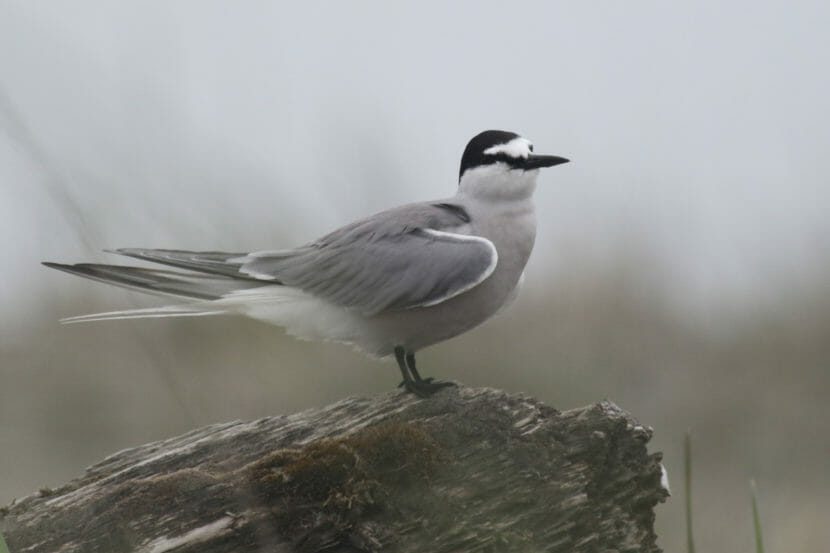
An Aleutian tern. Biologists say Alaska’s known population of Aleutian terns has declined more than 90% since 1960. (Photo by Nate Catterson/USFS)
Biologists say Alaska’s known population of Aleutian terns has declined more than 90% since 1960. The data they have says it’s the fastest decline of any seabird species in the state, but they want to make sure they have that right. Now a coalition of scientists is working on a statewide count to make sure they aren’t overestimating the decline.
“It certainly feels like we are watching the species slowly disappear,” said Heather Renner, a biologist for the Alaska Maritime National Wildlife Refuge. “Really, the problem has been that nobody’s been studying them.”
Renner’s research from 2015 showed only about 5,000 Aleutian terns in the state. It helped prompt a collective effort to understand and conserve the threatened species.
Studying a migratory bird in a place as big as Alaska is not easy. Aleutian terns spend only three-to-four months here, and their range extends nearly 10,000 miles to places like Indonesia, the Philippines and Borneo.
“Aleutian terns are notoriously hard to study because they nest in pretty small colonies,” Renner said. “We also know that they tend to move around, so our little short-term snapshots are challenging to interpret.”
The same characteristics that make them hard to study also make them a sought-after find for birders and outdoor enthusiasts.
“Aleutian terns are a really special bird that not everybody gets to see. They’re not well known to many Alaskan birders because many of the colonies are off of the road system,” Renner said.
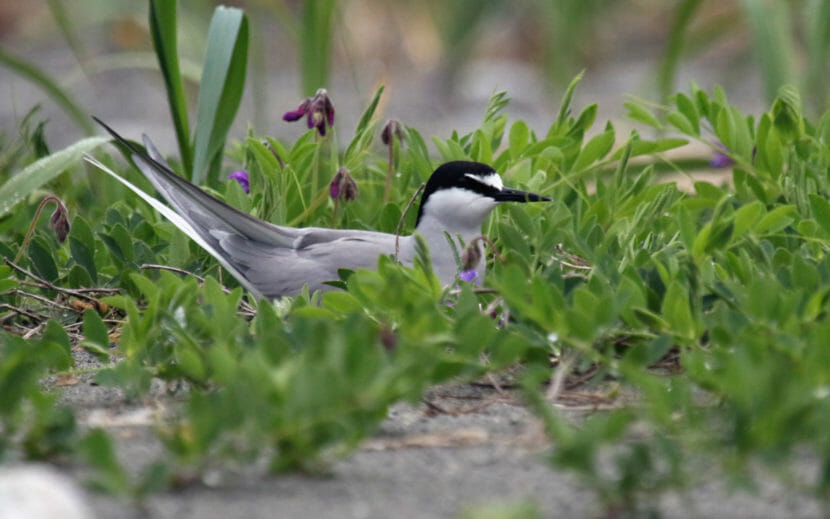
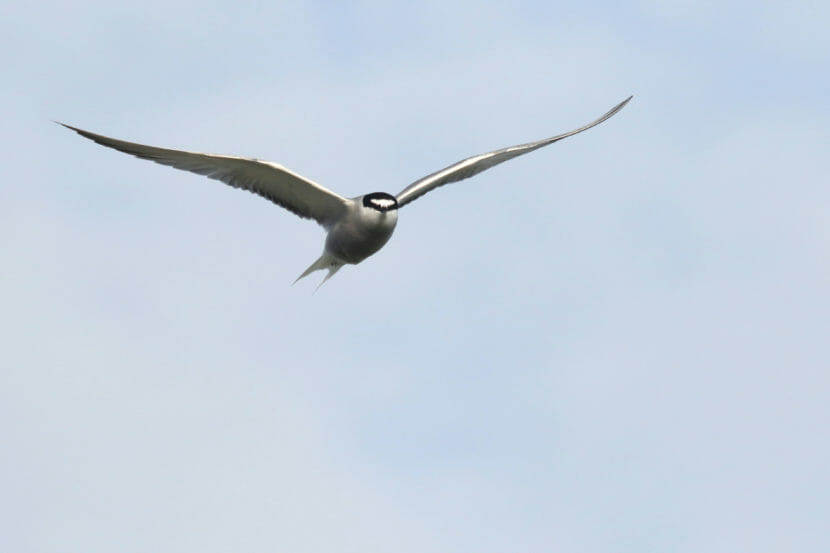
Aleutian terns only breed in Alaska and the Russian far east. They’re coastal birds that feed by plunge-diving into the sea after small fish, with a global population estimated at just 30,000 birds. They look a lot like Arctic terns, with silver-gray bodies and a black head, but Aleutian terns have a distinctive white patch on the forehead. Most tern calls are harsh; birders say the Aleutian tern’s call is softer.
“The challenge is that we don’t have a local threat that’s known, a single thing that we can fix,” said Heather Renner, a biologist for the Alaska Maritime National Wildlife Refuge. (Photo by Nate Catterson/USFS)
Renner says biologists don’t know what’s causing their precipitous decline. But it isn’t unusual anymore for a bird species’ population to crash. One study says that the bird population in North America has declined by about a third since the 1970s. The National Audubon Society reports that about two-thirds of the continent’s bird population face major challenges, including extinction.
“The challenge is that we don’t have a local threat that’s known, a single thing that we can fix. My best guess is that it’s related to something in the marine environment,” Renner said.
One study pinned a die-off of Arctic terns to algal toxins that get to terns through the fish in their diet. Renner says even though Aleutian terns also eat those fish, it’s hard for her to imagine that could account for such broad-scale, range-wide declines over several decades.
Yakutat has the largest known breeding colony of Aleutian terns in the state, at Black Sand Spit.
Susan Oehlers is a biologist for the U.S. Forest Service there. She says there’s a lot of variability in the yearly population count, even at what’s considered a stable nesting area.
“In 2013 we had 2,000, and then in 2019-2020, we had 1,000. And then the last couple years, it’s been only several hundred,” she said.
Oehlers says when numbers drop, it could mean that some of the birds are nesting elsewhere. But the dramatic downward trend has spurred action among bird biologists statewide.
A statewide working group has members from several different state and federal agencies. They’re doing direct counts, but also using tools like drones and song meters to get a better count. They plan to have a solid population estimate in the next couple of years.
Yakutat has the largest known breeding colony of Aleutian terns in the state, at Black Sand Spit. (Photo by Nate Catterson/USFS)
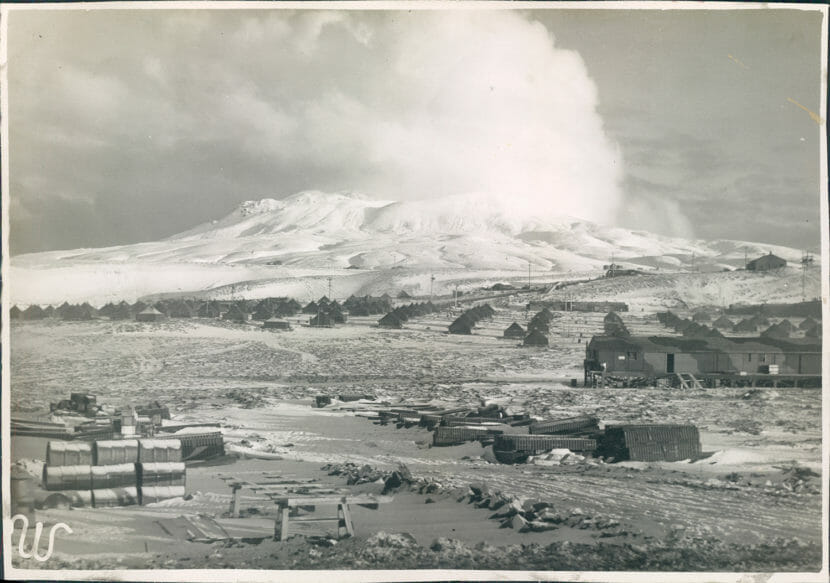
The U.S. Army and Navy base on Adak Island is seen in 1943, during World War II, in this National Park Service photo. Adak is now home to dozens of contaminated sites, and the state of Alaska has filed a lawsuit that seeks to have the federal government take responsibility for cleaning sites on Adak and across Alaska. (Photo provided by the National Park Service)
The state of Alaska has sued the U.S. Department of the Interior in an attempt to hold the federal government responsible for the identification of thousands of polluted sites on land given to Alaska Native corporations.
A complete inventory is a first step in the state’s ongoing efforts to hold the federal government responsible for cleaning the sites.
In many cases, the state argues, pollution left by the U.S. military and other federal agencies has prevented the development of land transferred from the federal government under the Alaska Native Claims Settlement Act.
The state filed its lawsuit July 15 in U.S. District Court in Anchorage, with the state represented by a large private firm, Kelley Drye & Warren.
In its complaint, the state argues that three prior acts of Congress — in 1990, 1995 and 2014 — require the Department of the Interior to make a full accounting of contaminated sites in Alaska and to come up with plans for their cleanup.
The suit asks a judge to issue an order compelling the department to conduct surveys and draft plans for cleanup.
Though the suit does not explicitly ask for an order requiring the federal government to clean the sites, the survey process typically includes the identification of a “potentially responsible party” who could be liable for cleanup.
“The federal government has a moral and legal responsibility to address these contaminated sites, which have already languished for far too long,” said Jason Brune, commissioner of the Alaska Department of Environmental Conservation, in a 2021 letter to the secretaries of Defense, Interior and Agriculture.
In a separate letter, Brune asked Interior Secretary Debra Haaland to direct the cleanup of known contaminated sites.
The Interior Department responded later in 2021 with a letter saying in part that the “DOI has no statutory authority to compel or conduct the cleanup of lands that have been conveyed out of federal ownership, nor is it able to impose liability for contamination that is reported on those lands.”
After that exchange, the state threatened a lawsuit in December 2021 and followed through with its filing this month.
The federal government has yet to formally respond to the lawsuit, which could take years to resolve.
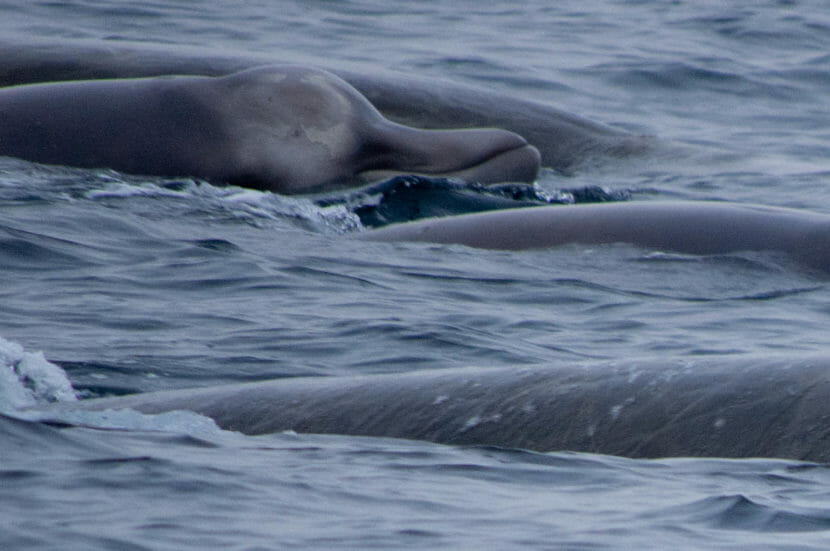
Baird’s beaked whales seen off Monterey in 2014. The whale found dead off Unalaska may have been a Baird’s beaked whale, but it’s not certain yet. (Creative Commons photo by Fred Hochstaedter)
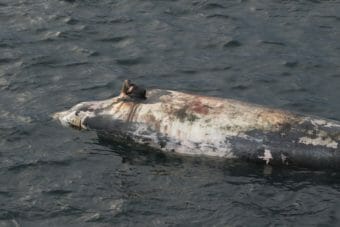
The U.S. Coast Guard had an unusual wildlife spotting off the coast of Unalaska last month: the body of a beaked whale.
The whale was found floating near Makushin Bay.
Researchers say it’s rare to see beaked whales, so even spotting a dead one provides an opportunity to learn more about the animals. The whales live in the cold ocean waters and dive more than 3,000 feet down to feed on fish and squid.
“They’re very deep divers, and we don’t know a lot about them,” said Mandy Keogh, the Alaska regional stranding coordinator for the Marine Mammal Stranding Network. “When they’re done diving, they might sit at the surface for a little while, but then they’re gone again.”
The beaked whale’s carcass floating near Makushin Bay. (U.S. Coast Guard photo)
Keogh said it appears the whale spotted last month was a Baird’s beaked whale, but it hasn’t been confirmed yet.
The hotline is part of a statewide program run by the National Oceanic and Atmospheric Administration. People can call in to report animals that are caught in fishing nets or stranded on beaches. Or, in the case of the beaked whale, floating in the water.
When possible, a team of local volunteers responds. If the animal is injured, they do what they can to help. If it’s dead, they take measurements and samples. The data helps researchers learn about individual animals and monitor populations.
In the case of the beaked whale, the stranding network was unable to send out volunteers due to the location of the animal. But Keogh said researchers are using photographs of the whale to determine information such as species, sex and whether there are any signs of trauma.
Keogh underscored the importance of people reporting stranded mammals to the hotline. Stranding reports can act as an early alarm system that something is wrong with an entire population. Keogh said this helped NOAA realize ice seals were dying in huge numbers in the Bering Sea in 2018.
“We saw an unusually large number of ice seals being reported stranded dead along the shores. And that is particularly concerning because those animals are of subsistence importance,” she said.
You can report stranded, injured, and dead marine mammals to the 24-hour Stranding Hotline at 877-925-7773.
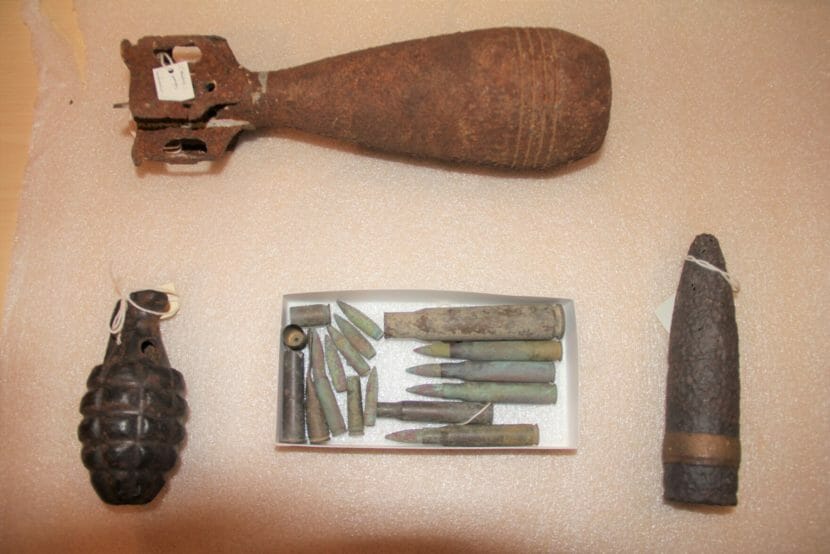
Grenades, chemical weapons and other munitions have been turning up on the island’s hiking trails and beaches for decades. (Photo by Theo Greenly/KUCB)
The U.S. Army Corps of Engineers visited Unalaska in late June to teach Unalaskans about unexploded munitions.
The U.S. military left lots of unexploded ordnance when they were stationed in the Aleutian Islands during World War II. And grenades, chemical weapons and other munitions have been turning up on the island’s hiking trails and beaches for decades.
Brian McComas put in 20 years as an explosive ordnance master blaster and is now a safety specialist with the corps. He taught the class participants about the 3 R’s of explosives safety: recognize, retreat and report.
“So you want to recognize, ‘Hey this might be an ordnance item, let me get out of the area,’” McComas said.
McComas stressed the importance of leaving the same way you came in because there may be more explosives in the area.
“And then you call the police department, or the local authority that responds to your area,” McComas said.
But recognizing ordnance isn’t always so easy. McComas said things can change appearances after sitting outside for years or decades. Even he’s been fooled.
McComas said he once responded to a call on an Air Force base, where they found a shell.
“I just looked at it, and I said, ‘That’s a VW muffler.’ Because that’s what it looked like. And after contacting my office and doing research, it was a 1900s projectile, or mortar, called a Stokes mortar,” McComas said.
Rylee Lekanoff attended one of the Unalaska trainings. The 11th-grader grew up in Unalaska, and despite such a prevalence of unexploded ordnance in the area, she said she didn’t learn about proper protocol in school. Rather, it was her family who taught her.
“I heard a little bit about it growing up from my family. From my grandparents. One time my dad and a couple of his friends were out hiking, and they found a live grenade,”Lekanoff said.
The U.S. Army Corps of Engineers has made several trips to Unalaska lately to clean up old military sites. They plan to clean up petroleum contamination early this fall. But it’s a long and slow process, and Unalaskans will likely be dealing with military debris for many decades to come.
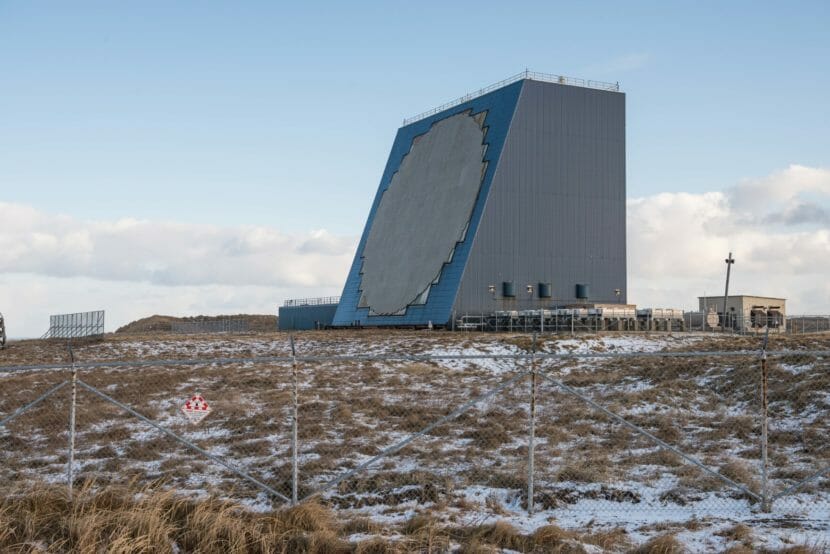
The COBRA DANE radar at Eareckson Air Station on Shemya Island. The U.S. military began activities on Shemya during World War II. In the 1990s, the Air Force built a more modern station and has maintained a presence there since. (Photo by Chief Petty Officer Brandon Rail/Alaskan NORAD Region, Alaskan Com.)
The United States Air Force has agreed to pay more than $200,000 in fines for mismanaging hazardous waste on Shemya Island in the far Western Aleutians. Shemya is about 500 miles from mainland Russia and about 1,500 miles west of Anchorage.
The U.S. Environmental Protection Agency wrote in a June 23 statement that the Air Force had stored hazardous waste without a permit at Eareckson Air Station, improperly storing tons of toxic waste fuel and oil, hazardous paints, hydrochloric acid and other chemicals as well as waste items like batteries and aerosol cans.
The Air Force agreed to pay $206,811 in penalties, as well as to properly dispose of around 55,000 pounds of hazardous waste by the end of June 2022.
Ed Kowalski, a spokesperson for the EPA, said he’s “grateful that the Air Force has acknowledged its mistakes and stepped up to its responsibilities to fix the problem.”
The U.S. military presence began on Shemya during World War II. In the 1990s, the Air Force built a more modern station and has maintained a presence there since.
Close
Update notification options
Subscribe to notifications
Subscribe
Get notifications about news related to the topics you care about. You can unsubscribe anytime.