North Slope

Economists say the loss of BP jobs will be significant, but ‘not disastrous’ for Alaska’s economy

BP’s operations center at Prudhoe Bay. BP announced in late 2019 that it was selling its Alaska operations to Hilcorp. (Photo by Elizabeth Harball/Alaska’s Energy Desk)

Economists say the loss of hundreds of oil jobs tied to the sale of BP’s Alaska business will be significant, but not devastating, for the state’s fragile economy.

“There is enough happening from a lot of different sectors to where this is not disastrous by any stretch,” said Mouhcine Guettabi, an economist with the Institute of Social and Economic Research at the University of Alaska Anchorage.

BP, which has been a major employer in Alaska for decades, is planning to sell all of its assets in the state to Hilcorp, a smaller, private company, in one of the state’s biggest oil industry deals.

Regulators still need to approve the $5.6 billion deal. Last week, Gov. Mike Dunleavy announced the creation of an oversight committee to monitor the transaction.

In the meantime, a sketch of Hilcorp’s future workforce is beginning to take shape, and it appears there will be fewer employees in Anchorage and Prudhoe Bay in 2020.

BP Alaska officials said earlier this month that about 750 of the company’s nearly 1,600 employees had accepted job offers from Hilcorp.

That leaves hundreds more who won’t be transitioning from one company to the other.

Some have resigned for other jobs. Some will transfer out of Alaska to stay with BP after the sale goes through. Some will retire early. Some will be laid off.

In notices sent to the state Department of Labor and Workforce Development on Dec. 19, BP said it expected 632 of its Alaska employees to lose their jobs next year — 345 who work in Prudhoe Bay and 287 who work in Anchorage.

About three-quarters of those workers are Alaska residents, according to a BP Alaska spokeswoman.

The employees will lose their BP jobs in three waves: The first group in February, the second group when the sale closes and the third group within six months after that, the notices say.

BP and Hilcorp say they’d like the sale to go through by the middle of 2020. But it could take longer, state officials have said.

The deal includes BP’s stakes in the giant Prudhoe Bay oil field and the trans-Alaska pipeline, plus the rest of its Alaska assets.

Guettabi said the employment losses expected to stem from the sale could erase the modest job growth Alaska’s oil and gas sector has seen over the past year.

Last month there were an estimated 9,700 oil and gas jobs in Alaska, up from 9,300 in November 2018, according to state employment data. That’s down about 4,500 jobs compared to 2015.

“It’s been a really long recession,” Guettabi said. “This year, it seems like the state has turned the corner, but the growth has been modest and it’s been largely driven by oil and gas and construction, so this certainly slows things down a little bit.”

Next year’s expected oil job losses will likely impact Anchorage the most, said Neal Fried, an economist with the state labor department.

He said it’s also important to remember that the oil jobs are among the highest-paid positions in Alaska. That means the impacts of their elimination will likely be far-reaching.

“It doesn’t stop at laying off one BP engineer,” Guettabi said.

That engineer “spends money at retailers and restaurants and pays bills and has a mortgage and if that person leaves the state, all that spending halts. There’s another house on the market,” he said

Nobody knows for sure exactly how many laid off BP employees will end up leaving the state.

Earlier this month, BP and the state said they would work with the employees to help find them new jobs.

Bill Popp, president and chief executive of the Anchorage Economic Development Corporation, said he’s hopeful most will decide to stay in Alaska. He said he’s heard from some BP workers who have already found new jobs with other oil companies in the state.

Popp described this period in Alaska’s employment landscape as a transition.

“It’s not the end of the world as we know it,” he said.

Popp said he’s also waiting to see if Hilcorp decides to hire more employees after the sale goes through.

In a statement earlier this month, Hilcorp Alaska said it expected to post more than 150 additional jobs in the coming months, growing its workforce to around 1,500 employees. (That includes the BP workers making the transition.)

That still means it would operate with hundreds of fewer workers. Popp said he expects Hilcorp to hire more contractors.

“It’s going to be a new dynamic for us,” he said.

Alaska governor creates oversight committee for BP sale

Gov. Mike Dunleavy waits for guests at the annual Christmas open house on Tuesday, Dec. 10, 2019 in Juneau, Alaska.
Gov. Mike Dunleavy waits for guests at the annual Christmas open house on Tuesday, Dec. 10, 2019 in Juneau, Alaska. On Friday, Dec. 27, he announced the creation of a committee to oversee the sale of BP Alaska’s business to Hilcorp. (Photo by Rashah McChesney/KTOO)

Gov. Mike Dunleavy on Friday (Dec. 27) created an eight-member oversight committee to monitor the sale of BP Alaska’s business to Hilcorp, a smaller, private oil company.

“The purpose is to make sure the State of Alaska and its people are represented as this transaction moves forward,” said a statement from the governor’s office announcing the new group.

BP is planning to sell its entire Alaska operation to Hilcorp for $5.6 billion. The deal includes BP’s stakes in the giant Prudhoe Bay oil field and the trans-Alaska pipeline.

The sale still needs to clear several regulatory hurdles.

The new committee will provide Dunleavy with updates as the sale moves forward, including advising him on whether it’s meeting regulatory requirements, according the statement from the governor’s office.

Department of Natural Resources Commissioner Corri Feige will chair the committee, said Jeff Turner, Dunleavy spokesman. Dunleavy’s senior policy advisor Brett Huber will also serve on the committee. The other six seats will be filled by five state commissioners or their designees, plus the attorney general or his designee.

More information on the group and its schedule “will be announced in the near future,” according to the governor’s office.

Related: Lawmakers quiz state regulators on $5.6 billion Hilcorp, BP deal

Q&A: Washington Post correspondent talks about reporting on climate change on the North Slope

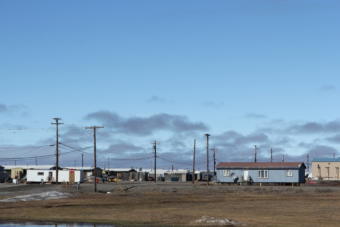
Nuiqsut in June 2018. The village is near a growing number of oil developments in the western Arctic.
Nuiqsut in June 2018. The village is near a growing number of oil developments in the western Arctic. (Photo by Elizabeth Harball/Alaska’s Energy Desk)

The Washington Post made the North Slope village of Nuiqsut front page news earlier this month, under a provocative headline: “Alaska’s warming, but can’t quit big oil.”

Nuiqsut is at the edge of the National Petroleum Reserve in Alaska, and it’s surrounded by and benefits from oil development — a predicament Alaska’s Energy Desk covered in an episode of our podcast Midnight Oil earlier this year.

Post reporter Juliet Eilperin looked at the village through a different lens, exploring its place in the global debate over climate change. She started by talking about the village’s relationship to the oil industry.


Nuiqsut is inextricably linked with oil development. And the reason I say that is because after it was resettled in the 1970s, there was a period where it was able to subsist largely on a combination of federal and state funds for a couple of decades. But starting in the early to mid 1990s, it became clear that the community would need another source of revenue. And really, it was oil drilling that saved Nuiqsut and brought it in to the modern era. It was a deal that was struck even before oil drilling began in the late 1990s, with first ARCO, and later ConocoPhillips, that provided a share of oil royalties to the tribal corporation. And also by extension, a slew of benefits to community residents. The heating that keeps every Nuiqsut home warm and comfortable for $25 a month is supplied by ConocoPhillips. When you visit almost any major building or site in town, it has been supported by the oil firm. It has become the economic lifeblood of this community.

You actually wrote in your story, people in Nuiqsut don’t talk much about climate change. I wonder what it was like for you to go to the place that you described as one of the fastest warming places in the entire world and have people not really talking about it there.

It was illuminating, that climate change is not as central to the discussion there, even among the folks who are raising the issue of whether there should be limits on oil drilling. And it was interesting people would certainly describe a lot of the impacts of climate change and how it affected them. But they were much more hesitant to bring it up and frame it in terms of this larger debate that folks are having on climate change and global warming.

You also described Martha Itta, who is the head of Nuiqsut’s tribal government in your story. It says, “She has opted to fight further drilling, even though it is unclear what could sustain the economy in place of oil.” And I’m curious what you make of Nuiqsut’s options here, when we think about the village’s place in the global debate about climate change, and how to transition away from fossil fuels.

I asked almost everyone, what would be another economic route, Nuiqsut could pursue in order to achieve say, independence from oil drilling revenues. And folks really struggled to offer answers on this. And I actually thought that people approach the question with an open mind and very few people offered concrete ideas of what could take the place of oil drilling revenue, and that’s certainly a hurdle that Nuiqsut would face. If it chooses to go another way.

You’re talking about Martha Itta as someone who’s sort of trying to convince the village of the need to maybe transition away from fossil fuels or to reconsider the village’s relationship to the oil industry. And then you write that, “The question is not only whether she can convince her own neighbors, it’s whether Alaskans with the signs of climate change all around them are ready to make some tough choices.” What is that choice between?

I think it’s a choice between a certain present and an uncertain future. And so in other words, there is no question that what Alaska has known since statehood is exploitation of its natural resources. I don’t think anyone should minimize the extent to which — whether it is mining or drilling or logging — has helped bring prosperity to this state. And so that is foundational to Alaska’s trajectory from statehood to the present. And so the question is, going forward, is this the path that Alaska will continue to pursue? Or is there another route? And what would that look like? And I think the real question is, is there an alternative that Alaskans could get behind, that they would feel confident enough that it offered them an economic alternative that they could pursue it? And that’s again, it really is obviously a question for Alaska. But to me, grappling with that uncertainty and trying to devise an alternative is really one of the choices that lies ahead for the state.

You know, I got a couple folks after the story published who kind of said, you’re making it sound like it’s the Inuit’s job to quit oil and like, you’re making it sound like, you know, the Inupiat are oil-addicted. And part of what I really tried to make clear is that, you know, this is a super intense version of the choice that we all face while it’s crystallized in Nuiqsut, it’s kind of every Alaskan, every American, every person needs to recognize that this is a system we all take part in and that we all face the ramifications of it some disproportionately to others.

Longstanding tensions underlie Arctic Slope Regional Corporation’s withdrawal from AFN

The Arctic Slope Regional Corporation’s corporate headquarters in Utqiaġvik, Alaska. January, 2018. The corporation announced its withdrawal from the Alaska Federation of Natives in December, 2019. (Ravenna Koenig/ Alaska’s Energy Desk).

Long before Arctic Slope Regional Corporation (ASRC) announced its withdrawal from the Alaska Federation of Natives (AFN) last week, there were signs of a schism between Alaska’s largest Native corporation and most influential Native advocacy group.

At the center of it: oil, ASRC’s responsibilities to its shareholders, AFN’s wider responsibilities to its member groups and growing pressure caused by climate change’s impacts on infrastructure and subsistence.

Tensions between ASRC and AFN appeared to be building in recent years. In a hard-fought U.S. Senate race in 2014, AFN took the rare step of endorsing a candidate: incumbent Democrat Mark Begich, who delegates praised for his connection to rural Alaska and his support for Natives’ subsistence traditions.

Board members of ASRC, meanwhile, endorsed Begich’s Republican opponent, Dan Sullivan, citing his support for “responsible energy development.” And while AFN endorsed Democrat Hillary Clinton in 2016, ASRC’s executives celebrated at the Trump White House a year later, after Congress approved the legislation opening part of the Arctic National Wildlife Refuge to oil development.

ASRC is charged with representing the business interests of some 13,000 Inupiat shareholders. It explained its withdrawal from AFN last week by saying only that the corporation intends to focus on the needs of the North Slope. An ASRC spokesman, Ty Hardt, declined to be interviewed or answer questions about the decision.

Since the corporation’s announcement, some have speculated that the split stems from AFN’s convention in October, where an ASRC leader clashed with delegates who were pushing for more action on climate change.

But ASRC says the decision was under consideration for more than a year. And in fact, North Slope Native organizations have long had a fraught relationship with AFN, stemming in part from members’ unique homeland, which lies atop billions of barrels of oil.

A more complete explanation of ASRC’s decision, according to people who have worked with the corporation, is that global warming has put new pressure on the existing fault lines among the different institutions that look out for Alaska Natives’ well-being.

Alaska’s 12 regional corporations, including ASRC, are big for-profit businesses, with a relatively narrow focus on generating revenue to support cash dividend payments to shareholders. Tribal governments and nonprofits, meanwhile, are more focused on providing services and supporting Natives’ social welfare.

Climate change threatens to pit those interests against each other in new ways. Tribal governments and nonprofits say they’re being saddled with climate change’s costly impacts, while some regional corporation leaders see greenhouse gas regulations as a potential threat to their bottom line.

“On one side, you have monetary impact, and on the other side you have even greater impact on the planet itself,” said Roy Huhndorf, the former chief executive for Cook Inlet Region Inc., the Native regional corporation for Southcentral Alaska.

“I think Native corporations are the same, in a microcosm, as the Exxons and BP’s of the rest of the world who don’t want to abandon oil production now because it hurts them financially,” he said. “On the other hand, you can understand where the rest of the world is wanting to go.”

Native corporations are some of Alaska’s largest and most influential businesses, with ASRC at the top of the heap.

ASRC’s revenues last year exceeded $3 billion, with dividends of $7,000 paid to each shareholder with 100 shares, according to the corporation’s annual report. It has more than 13,000 employees spread across Alaska and beyond, working in six major areas of business.

Among ASRC’s holdings is PetroStar, which owns oil refineries in Valdez, and near Fairbanks in North Pole. It sold a record 356 million gallons of oil products last year and generated $885 million in revenue. ASRC also owns an oilfield services company, with more than 2,300 workers in Alaska, that does engineering, construction and permitting for some of the world’s largest oil and gas companies, in both Alaska and the Gulf of Mexico.

The corporation also benefits directly from oil development on its own land entitlement of nearly 5 million acres on the North Slope — an area almost the size of New Jersey. It collects royalties from oil production in the Colville River Unit, home of ConocoPhillips’ Alpine field, and reported natural resource earnings averaging $50 million a year over the past three years.

ConocoPhillips’ Alpine facility on the North Slope. Conoco’s Scott Jepsen said a new processing facility in NPR-A would be about the same size. (Photo by Elizabeth Harball/AED)
ConocoPhillips’ Alpine facility on the North Slope, which pays oil royalties to Arctic Slope Regional Corp. (Photo by Elizabeth Harball/Alaska’s Energy Desk)

At AFN’s convention in October, when two teenage delegates were pushing for approval of a statement declaring an emergency on climate change, ASRC’s board chair, Crawford Patkotak, pushed back. He asked to add language to preserve Natives’ “rights to the resources,” saying that the declaration risked inviting “unnecessary regulation” with devastating economic effects.

Patkotak wasn’t the only regional corporation leader who was concerned: Gail Schubert, chief executive of the Nome-based Bering Straits Native Corp., also urged delegates to be cautious. Native corporations, she said, “were charged with creating economies, delivering dividends and other benefits to our shareholders.”

“I understand and accept and have said publicly that we are experiencing climate change,” Schubert said. “But I also want to make sure that we don’t do something, as a body, that allows outside groups to come in and basically dictate what we can do and can’t do in terms of both our natural and our subsistence resources.”

Several other delegates argued against Patkotak’s proposed language before it was rejected, including Esau Sinnock, a young man from the village of Shishmaref, on the Chukchi Sea coast in western Alaska. Rising sea levels are forcing residents there to consider relocation.

“My one and only home is being eaten by the sea,” Sinnock said. “It’s very important to talk about climate change urgently, right now, because it affects so many indigenous people.”

Diverging interests among regional corporations like ASRC and other Native organizations are not new — they date back to the 1971 Alaska Native Claims Settlement Act, which created the corporations.

But in addition to those institutional fissures, the North Slope is also unique as a region. When AFN voted overwhelmingly to urge President Richard Nixon to sign the 1971 legislation, representatives of the Arctic Slope Native Association vehemently disagreed.

They objected to the settlement because it allowed the state of Alaska — not ASRC — to keep the North Slope’s most valuable oil-bearing lands. And it also required ASRC to share its oil revenues with other regional corporations, though those other corporations would also have to share their resource revenue with ASRC.

“They’ve got a righteous argument in saying they should have been able to select lands that they traditionally used ahead of the state, but they weren’t — the state had already finished selecting the land by the time ASRC had come into existence,” said Huhndorf, the former CIRI executive. “They feel that they were used from all sides.”

ASRC, in its announcement last week, said it intends to focus “on the various needs within Alaska’s North Slope, where there is an increased degree of alignment as well as additional efficiencies related to shared geography and other interests.”

The corporation’s perspective won’t be completely lost from AFN, because some of the corporation’s shareholders will still belong to the federation, as delegates from the North Slope’s regional nonprofit, village corporations and tribal councils.

“They’re still Native people, so it doesn’t end cooperation and talking or working together on things,” said Julie Kitka, AFN’s president. “We don’t second guess them, we don’t attribute motives to them — we take them at face value.”

Karlin Itchoak, an ASRC shareholder who directs the Anchorage office of The Wilderness Society, an environmental organization, said that the urgent challenge posed by climate change makes it an especially important time for Alaska Native organizations to work together.

“Stopping all dialogue at AFN is not being a part of the solution,” he said. “It would be better if folks could just get along and work together and agree to disagree. Stay at the table and continue to have a dialogue on how we can mitigate the adverse environmental impacts of climate change that are directly related to extraction.”

No corporation goes forward with development without considering the environmental consequences and impacts on villages — and without doing everything possible to make sure it’s safe, said Georgianna Lincoln, a board member of Doyon Ltd., the regional corporation for Interior Alaska.

But the debate around climate change will “absolutely” force other Native corporation boards to have similar conversations to the one ASRC’s must have had before its decision to withdraw from AFN, she added.

“We have to reassess where we are,” Lincoln said, “because times have changed.”

Arctic Slope Regional Corp. to leave the Alaska Federation of Natives

The Arctic Slope Regional Corp. corporate headquarters in Utqiaġvik in January 2018. (Photo by Ravenna Koenig/Alaska’s Energy Desk)

A powerful Alaska Native corporation is withdrawing from the Alaska Federation of Natives at the end of this year.

In a news release sent out late Friday afternoon, Arctic Slope Regional Corp. Director of Communications Ty Hardt wrote that the organization’s board of directors voted unanimously to end its membership in AFN on Dec. 31.

“With this decision, ASRC intends to focus on the various needs within Alaska’s North Slope, where there is an increased degree of alignment as well as additional efficiencies related to shared geography and other interests,” Hardt said.

According to the release, the corporation had been in talks about withdrawing “for more than a year.”

The statement does not include specific issues or areas of divergence between ASRC and AFN, and Hardt did not answer multiple phone calls Friday evening. The Utqiaġvik-based company serves Iñupiat shareholders living primarily in Alaska’s North Slope. It is the largest corporation based in Alaska.

Particularly on issues around climate change and government regulation, fissures have emerged between ASRC and other influential tribal and corporate entities in Alaska. During the most recent AFN convention in Fairbanks, a resolution on whether to declare a climate emergency stalled for more than an hour, with many of the most vocal opponents hailing from the North Slope region.

ASRC would be the only Alaska Native corporation in the state not to be a member of AFN, which is the state’s largest Native organization. All 11 other Alaska-based regional corporations, along with 12 regional nonprofit organizations and 171 village corporations, are part of the federation.

A spokesperson for AFN did not return calls Friday evening.

A Colorado wildcatter found a huge new North Slope oil field. Now it’s buying up new federal leases in Alaska.


A map of the Dec. 11, 2019, lease sale shows North Slope Exploration’s winning bids, in blue. (Courtesy Bureau of Land Management)

Armstrong Oil and Gas, the Denver-based independent oil company, is pushing into a big new swath of federal oil leases on the North Slope, after making one of Alaska’s biggest discoveries in years.

North Slope Exploration, a newly-formed company managed by Armstrong, was the biggest bidder in a federal lease sale Wednesday in the National Petroleum Reserve in Alaska, the Indiana-sized area west of Prudhoe Bay.

North Slope Exploration bid roughly $10.5 million to win more than 80 leases in a swath across the middle of the reserve. They total roughly 1 million acres, an area larger than the state of Rhode Island.

ConocoPhillips and another company, Emerald House, each bid on a few more tracts. The total area bid on by companies was the most since 2004.

Critics blasted the sale as a “carbon bomb” that would worsen global warming while granting companies cheap access to federal resources. But President Donald Trump’s administration, which has pushed aggressively to increase oil production on the North Slope, praised the results.

“This, we believe, reflects the continuing interest in developing resources in the largest single block of federally-managed lands in the United States,” said Ted Murphy, a top Alaska official with the Bureau of Land Management, which conducted the lease sale.

The reserve had been neglected by industry for years until a pair of major new discoveries were announced in 2017 in a rock formation, the Nanushuk, that extends across the reserve. Companies had drilled dozens of wells into the Nanushuk but largely missed its potential until those two fields were found — one by ConocoPhillips that it’s calling Willow, and another by Armstrong known as Pikka.

The search for Pikka was recounted in a recent Wall Street Journal profile of the company’s chief executive, Bill Armstrong, which described him as the last of a dying breed — one of the “wildcatters” who search for new and undiscovered oil fields.

Bill Armstrong, president and CEO of Armstrong Oil and Gas, testifies at a state legislative hearing in 2016. (Photo by Skip Gray/360 North)

While wildcatters were the “longtime stars” of the industry, today’s oil companies are now spending less on exploration and are discovering fewer new deposits, the profile said. It labeled Armstrong “the last prospector” — a quirky Texan who wears jeans and Armani shirts, and dribbles a basketball around an indoor court in his Denver office. He sold his stake in the Pikka field for $850 million to a Papua New Guinea company, Oil Search, that’s now trying to bring the project into production.

Pikka is projected to produce up to 120,000 barrels of oil a day, or about one-fourth of the trans-Alaska pipeline’s current flow.

Armstrong didn’t respond to a request for comment Wednesday.

Trump administration critics quickly attacked the lease sale results on both environmental and fiscal grounds. The left-leaning, D.C.-based Center for American Progress noted that Alaska is already the country’s fastest warming state, and pointed out that the leases were sold for an average of roughly $11 an acre.

“Oil speculators are getting a sweetheart deal and taxpayers are getting the shaft,” Senior Fellow Matt Lee-Ashley, who worked in the U.S. Interior Department during the Obama administration, said in a statement. “Today’s bargain basement lease sale is just the latest example of the Trump Administration selling off America’s public lands for pennies on the dollar.”

Lee-Ashley also noted that the bid amounts undercut predictions about how much oil revenue will come from development in the Arctic National Wildlife Refuge, to the east.

When lawmakers passed the 2017 tax reform package that opened the refuge’s coastal plain to development, the Congressional Budget Office said it expected $1.8 billion in gross revenue from leasing over the following decade.

With roughly 1.6 million acres available for leasing, as the Trump administration has tentatively proposed, meeting the CBO’s projections would require the average price per acre to exceed $1,000.

Site notifications
Update notification options
Subscribe to notifications