North Slope

Don’t count on oil to bail out Alaska’s budget soon, says unpublished state tax memo

BLM_NPRA
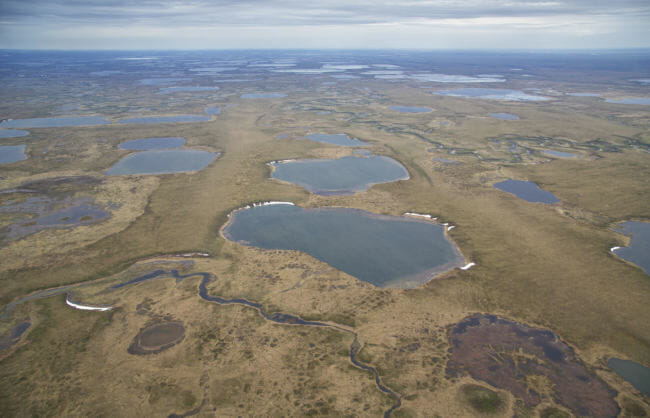
Part of the National Petroleum Reserve in Alaska. (Photo by Bob Wick, image courtesy Bureau of Land Management)

The National Petroleum Reserve in Alaska is a hot area for oil development right now. But don’t count on new production there to bail out the state budget any time soon.

That’s the takeaway from a previously unpublished, two-month-old analysis drafted by former independent Gov. Bill Walker’s administration.

The analysis, which is disputed by the major oil company in NPR-A, points out that at certain per-barrel prices, large-scale development in the reserve could cost the state hundreds of millions of dollars a year in the short-term, before adding billions to the state’s bottom line in the long-term.

Those short-term losses would accrue because Alaska law allows oil companies to deduct 35 percent of their investments from taxes they pay on existing oil production.

The analysis also notes that future state revenue from projects in the federal petroleum reserve won’t be the same as from projects on state lands. That’s because half of the royalties on federal land are paid to the federal government, while the other half go into an account that’s traditionally been set aside for grants to North Slope communities.

Anchorage Democratic Rep. Geran Tarr co-chaired the House Resources Committee last year. She said in a phone interview that the analysis counters arguments that new oil production could quickly fill the state’s big budget deficit.

“These headlines which have been in the news recently about this ‘North Slope renaissance’ – people are probably thinking, ‘Oh, wow, what’s going on? Is this going to be very positive, can this fix the problem?’ Well, it’s just not going to,” Tarr said.

The Walker administration’s analysis incorporates three big projects in the reserve – Greater Moose’s Tooth 1 and 2, and Willow – that are part of the portfolio of oil company ConocoPhillips. Oil is already flowing from GMT-1 and Conoco has started building GMT-2, but it’s still in the preliminary phases of developing Willow.

If all the projects are completed, the analysis says they could end up reducing state revenue by about $250 million a year for the next six years or so. Over the next 10 years, it says, the projects would reduce expected state revenue by about 6 percent, or $1.6 billion, if oil prices hover around $75 a barrel. Prices have fallen from $85 in October to $62 this week, and if they stay that low, the cost to the state of the new projects would be lower – because Conoco would have lower tax bills to apply its deductions against.

Oil company investment boosts Alaska’s economy in many ways outside the state budget, like through jobs, local property taxes and the grants to North Slope communities. Total revenue from the projects over the next 10 years would be about $3 billion when local, federal and private income is considered, the analysis says.

That figure rises to $18 billion over 20 years, of which the state share is $3.8 billion.

A Conoco executive, Scott Jepsen, said in a phone interview that it’s hard to judge the analysis without seeing the underlying data. Nonetheless, he thinks the analysis is “misleading,” adding that oil investment in the reserve “is not a drain on the state.”

“If you had no investment, yeah, for a year or so, you might have higher tax revenue. But long-term, you’re going to see significant shortfalls versus what you would have had if those investments were made,” said Jepsen, vice president of external affairs and transportation for ConocoPhillips Alaska. “You’ve got to be careful about how you try to characterize this as being negative on the budget. It’s actually going to be positive in terms of the revenue the state is going to have to spend as time goes by.”

The analysis was sent to key lawmakers Dec. 2 – the day before Republican Gov. Mike Dunleavy was sworn in.

The Dunleavy administration still stands behind its conclusions, said Chantal Walsh, director of the oil and gas division at the Department of Natural Resources.

The document is a “technical analysis” done by DNR and the Department of Revenue, she added, “and we feel it’s a pretty thorough technical evaluation.”
With spring whaling around the corner, sinew thread makers are hard at work

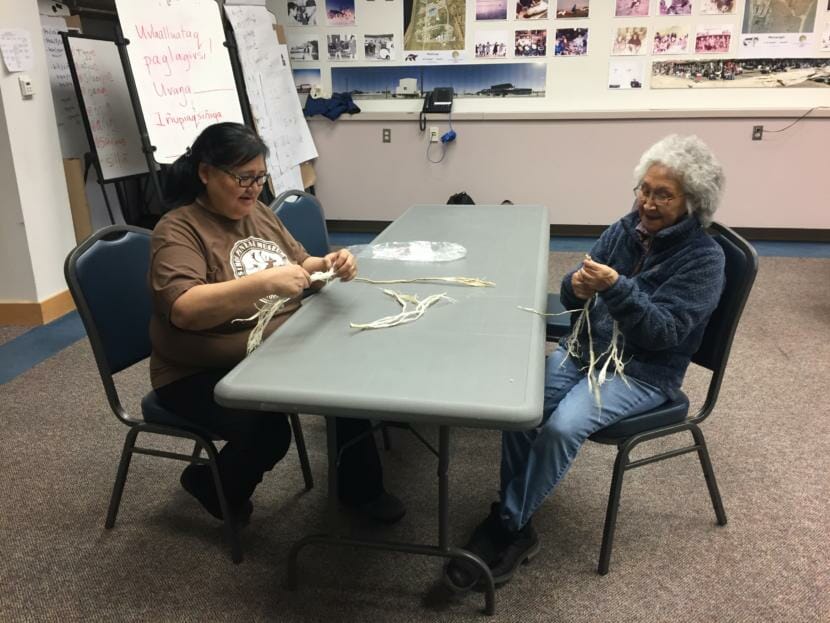
Diana Martin (left) and Nancy Leavitt (right) at the start of an ivalu workshop, where people can come learn how to make thread from caribou sinew. Feb. 2, 2019. (Photo by  Ravenna Koenig/Alaska’s Energy Desk)

In Utqiaġvik, spring whaling is still about two months away, but preparations are already in high gear.

That includes making a traditional thread called “ivalu” from caribou tendons, which are used to sew together the sealskin boats that whalers take out on the ice.

Diana Martin was the first to arrive at the Iñupiat Heritage Center for an ivalu workshop that would go on for most of the day. She’s a curator at IHC and led the way back to the artifact storage area, where she keeps the sinews she’s working on.

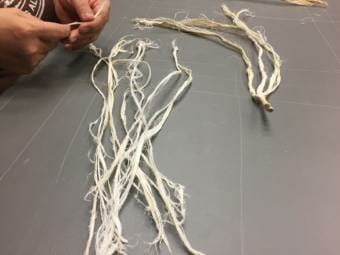
Diana Martin splits caribou tendons. Eventually the split strands will be made into a braided thread used to sew together the sealskin boats that whalers take out to hunt the bowhead whale. Feb. 2, 2019. (Ravenna Koenig/ Alaska’s Energy Desk)

“I have my sinews on the floor because they need to stay cool,” she said, taking several caribou tendons out of a plastic bag.

The work actually started months ago — collecting tendons from family members who brought home caribou.

Then they had to be dried outside in the cold for several weeks. Now they almost look like stalks of a plant: beige and kind of stringy. They crunch when you split them apart.

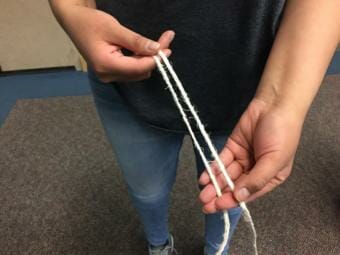
After they’re split, the strands will be braided into thread.

This whole process takes a ton of time and energy. One skin boat can require over 50 tendons. And some years there are a lot of boats to make thread for.

“At one time there was 17 … that were sewn in one spring,” remembered Martin.

Five of Martin’s 12 siblings are whaling captains, so for the past two decades she’s had her hands full almost every year making sinew thread for their skin boats. She also lends a hand to other captains when they ask her.

She was one of the teachers at the workshop. The other was Nancy Leavitt, an elder and a whaling captain’s wife.

Flora Patkotak, who attended the workshop led by Diana Martin and Nancy Leavitt, holds a braided thread made from caribou sinew. Feb. 2, 2019. (Ravenna Koenig/ Alaska’s Energy Desk)

Workshops like this one have been held for the past few years to teach those who are interested in how to make the thread.

“We learn how to split the sinew, we learn how to clean it, for the ladies who would like to learn,” said Leavitt.

Leavitt said the splitting stage is especially difficult because the tendons are tough. Sometimes it takes two people to pull them apart.

“It builds up your muscles,” said Leavitt. “It’s like you go to the gym, except your arms work a lot and your feet work a lot.”

That raised the question: How do your feet work?

“Like this,” said Leavitt, stepping on one part of the tendon and using her arms to work on splitting a part of it away.

She actually enjoys the work, in part because it’s so all-consuming.

“Everything just falls into place,” she said. “The problems, the stress, the thoughts you have. Most of them just disappear.”

And all the effort pays off when whaling crews get home safely with a new season of whale to feed the community.

So far, seals are adapting to shrinking sea ice

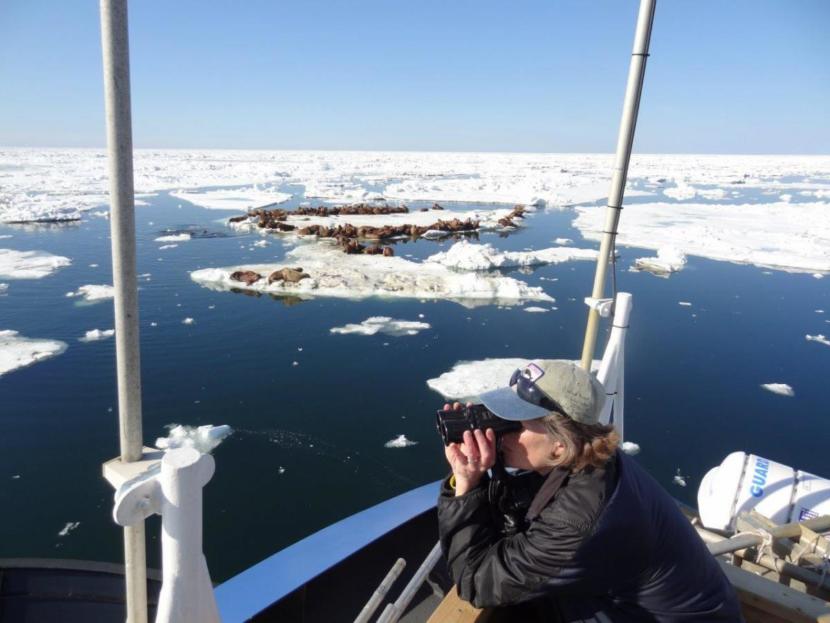
Biologist Lori Quakenbush monitoring arctic marine mammals.
Biologist Lori Quakenbush monitoring Arctic marine mammals. (Photo by USFWS, permit MA220876-1)

Ice seals thought to be most affected by the disappearance of Arctic sea ice seem to be doing well, according to data presented at the Alaska Marine Science Symposium last week.

The two species of ice seals that were declared “threatened” under the Endangered Species Act are, so far, doing well with less sea ice.

“We’re seeing fat seals,” said Lori Quakenbush, a wildlife biologist with the Alaska Department of Fish and Game’s Marine Mammals Program. “They are reproducing earlier than they have in the past, which says they are getting enough nutrition at this point to grow quickly and become reproductive at an earlier age.”

Quakenbush studies marine mammals and monitors their condition. She said that so far, the evidence indicates that ice seals are getting plenty of food.

“We’re looking at stomachs and we’re seeing pretty similar diets to what they have done in the past. So we’re not seeing those big changes either. They’re still eating arctic cod. They’re still eating saffron cod,” said Quakenbush.

Bearded and ringed seals were listed as “threatened” because the Arctic is warming so fast that their ability to use sea ice to raise young could all but disappear by 2100, setting the stage for being “endangered.” Quakenbush is among the biologists watching for warning signs to show up in the seals.

Along the North Slope, ice is forming a month later in the fall and disappearing earlier in the spring. Both ice seals in “threatened” status raise their young on the ice, but ringed seals have a unique behavior. They build snow caves above the ice to protect their pups from polar bears. It was thought that without thick ice for snow caves, ringed seal numbers would plummet. But now Quakenbush is not so sure. She points to populations that are now making do without snow caves in Russia’s Sea of Okhotsk.

“It’s far enough south that the ringed seals don’t build lairs. They pup on top of the ice, so they don’t have to have snow caves to produce pups. There are no polar bears there, so there may be some reasons why they are successful in doing that. We’re starting to see ringed seals haul out on land. We know how they behave when there’s lots of ice, and we’re just beginning to see what they are capable of without that. And I think they might be more flexible in that behavior than we’ve given them credit for,” said Quakenbush.

Quakenbush said that her data for the ice seals has only been analyzed up to 2016. This was before a spike in warm water two winters ago, which does seem to have made more major changes in the region, according to data presented at the Alaska Marine Science Symposium.

“So we might see something upcoming here soon in the data that we have that might make us change our minds about how they are responding, but right now, up through 2016, we’re not seeing any major alarm bells,” said Quakenbush.

Ice seals are not the only marine mammals adjusting to changes in the ice, according the Quakenbush: Pacific walruses are doing so as well. They also used to raise their calves on sea ice, but recently started coming to Alaska’s shores to haul out in record numbers. New haul-outs include Point Lay on the Chukchi coast, which historically didn’t have many walruses. Now there are thousands there most summers, and initial predictions expected that would be bad news for those animals. At first it was not pretty. Walruses spook easily, and they stampeded over everything in their path to get to the safety of the sea — including small calves. The first few years there were lots of dead calves on the beach.

“And we were worried about that going into the future, and after a few years there were less calves that got trampled,” said Quakenbush. “So either females with young calves figured out where in the herd to haul out or not to, we don’t know. But there were fewer calves after the first couple of years of that.”

The other prediction was that hunters would have more access to walruses, but apparently near-shore ice and stormy seas are a bigger problem for humans than walruses, and harvests have declined.

“So two predictions that we made about what could be bad for walruses, just within a couple of years turned around and were sort of the opposite.”

Quakenbush has been watching marine mammals throughout her long career, and she has given up predicting the future for these animals. She said that biologists know what the animals do with ice because they have studied that. But they don’t know what those animals do without it.

“It’s an absolutely fascinating time to be an Arctic marine mammal biologist,” Quakenbush said. “Things have changed so much since I started. So, right, that makes you think all over again about what might be going on, and it wasn’t even in the list of possibilities last year.”

Interior: No 3D seismic exploration in Arctic National Wildlife Refuge this winter

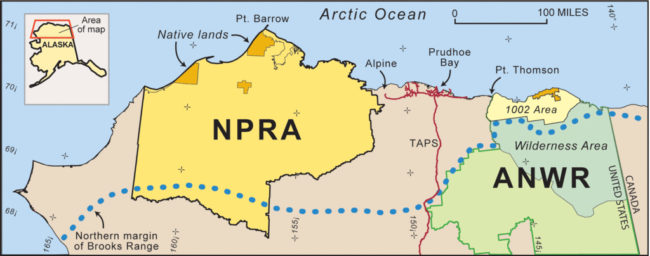
Map of northern Alaska showing location of Arctic National Wildlife Refuge, ANWR-en:1002 area, and the National Petroleum Reserve-Alaska (NPRA).
Map of northern Alaska showing location of Arctic National Wildlife Refuge, ANWR-en:1002 area, and the National Petroleum Reserve-Alaska (NPR-A). (Map courtesy USGS)

An Interior official has confirmed that there will be no 3-D seismic exploration in the Arctic National Wildlife Refuge this winter.

Steve Wackowski, Interior’s senior advisor for Alaska affairs, made the announcement at a public meeting held Tuesday in Kaktovik.

That means although Interior still aims to hold an oil lease sale in the Refuge’s coastal plain this year, companies will have less information about where the most promising acreage might be.

Originally, a company called SAExploration, partnered with Native corporations, Arctic Slope Regional Corporation and Kaktovik Inupiat Corporation, had applied to shoot seismic across the Refuge’s entire coastal plain, encompassing 2,600 square miles.

Seismic exploration can only be done in winter, and the company needed approvals from Interior to do the work. Originally, the agency had hoped to get the project permitted last summer.

But in November, top Interior official Joe Balash acknowledged the agency was pressed for time to complete the approvals. Balash said it was taking time for the company to work with the Fish and Wildlife Service on compliance with the Marine Mammal Protection Act.

And according to a report in the Anchorage Daily News, the government shutdown further delayed the work. Before the shutdown started, the Bureau of Land Management had yet to publish a notice on its environmental review on the seismic program, which would have kicked off a weeks-long public comment period before the final approval could be issued.

However, that process is still moving forward.

“The status of the application is still pending,” an Interior spokesperson said in a text message. “The applicant has asked us to amend both permits to reflect a December 2019 start date, and it should be coming out in the coming weeks.”

Like almost everything to do with oil development in the Refuge, the seismic exploration proposal is controversial. A number of environmental groups had raised concerns about seismic exploration in the Refuge’s coastal plain, saying they were concerned it could disturb the population of polar bears that den there. In January, Alaska Native groups and environmentalists staged a protest at SAExploration’s offices in Houston.

Those groups celebrated the news that this winter’s seismic exploration program has been delayed — Sierra Club executive Director Michael Brune called it a “victory.”

“Any oil company foolish enough to ignore the writing on the wall and pursue leasing in the Arctic Refuge will be pursuing a risky investment and drawing the condemnation of both the American public and the financial industry,” Brune said in a statement.

This story has been updated.


Interior Dept. kicks off new round of meetings on drilling in the Arctic National Wildlife Refuge

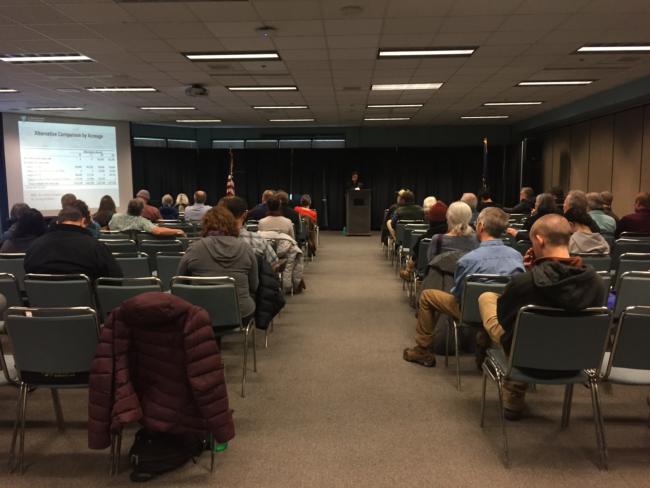
The early part of a public meeting held in Fairbanks yesterday on the Bureau of Land Management’s draft environmental review for leasing in the Arctic National Wildlife Refuge. (Ravenna Koenig/ Alaska’s Energy Desk).

On Monday in Fairbanks, the Bureau of Land Management kicked off its latest round of public meetings on the planned oil and gas program in the Arctic National Wildlife Refuge.

The meeting focused on the draft environmental review released by BLM in December. The final version will include the details of where and how leasing will happen.

Sydney Deering, a student at the University of Alaska Fairbanks studying petroleum engineering, came to put forward a positive voice for exploration and development.

“This is a very important event in Alaska’s history,” Deering said. “We’ve been trying to get this area open for a very long time.”

Others expressed concern about the process. Lisa Baraff with the Northern Alaska Environmental Center said that the timeline BLM has been using for their environmental review is too short.

“It’s hard to imagine that this is sufficient time to really do the in-depth analyses that are necessary,” she said.

Joe Balash, a high level official with the Department of Interior who is overseeing the environmental review process, disagrees.

“The contention by some of the critics that we’re rushing this I think is misunderstood,” Balash said. “In fact, we’re prioritizing this. It is a big deal to this administration to get this done and to get it done sooner rather than later.”

He says the speed can be attributed to the fact that Department of Interior has a core team whose only job is to work on this.

There were also people at the meeting who are opposed to the idea of drilling in the refuge altogether. Sarah James, a Gwich’in elder and leader from Arctic Village, says she’s concerned that drilling in the refuge would negatively affect the Porcupine Caribou Herd.

“We’re a caribou people, we use every part of the caribou from time beginning,” said James. “And we’re proud to be caribou people. And we don’t want to change that.”

Balash says the initial legislation passed by Congress in late 2017 requires that an oil and gas lease sale be held in ANWR, so not holding a lease sale is not an option. But he encourages those who are opposed to drilling to provide detailed comments with their concerns.

“The commitment I made to the Gwich’in people when I’ve met with them previously is: I can’t change what Congress said to do, but I can listen,” he said. “And the more they tell me, the more feedback we get from them, the better we can execute this law and this program and the more we can protect the things that matter most.”

Additional meetings are planned over the next two weeks in several Interior and North Slope villages, as well as Anchorage and Washington D.C.

Interior delays public comment deadline for ANWR oil leasing

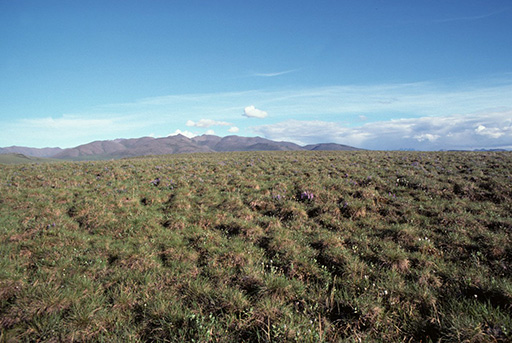
Tussock tundra on Arctic Refuge coastal plain. (Photo courtesy USFWS)

Following the government shutdown, the Interior department is giving the public an additional month to weigh in on its controversial plans to allow oil leasing in the Arctic National Wildlife Refuge.

In a statement, top Interior official Joe Balash said the comment period is being extended from February 11 to March 13, in response to requests from Alaska communities and tribes, as well as nonprofits from across the U.S.

Democrats in Congress who oppose drilling in the Refuge had also written letters urging Interior to extend the comment period, arguing the shutdown limited the agency’s ability to provide information to the public.

During the government shutdown, Interior was continuing to plan meetings about oil leasing in the Refuge, leading to outcry from Democratic lawmakers and environmental groups. The agency later announced it was delaying the meetings, although the dates and locations had never been publicly announced.

Interior finally released the meeting schedule today. The first takes place in Fairbanks on February 4. Other meetings are scheduled in the following days in Kaktovik, Utqiaġvik, Fort Yukon, Arctic Village, Venetie, Anchorage and Washington, D.C.

Site notifications
Update notification options
Subscribe to notifications