Northwest

After mishandled investigations, advocates are cautious as Nome police try to rebuild trust

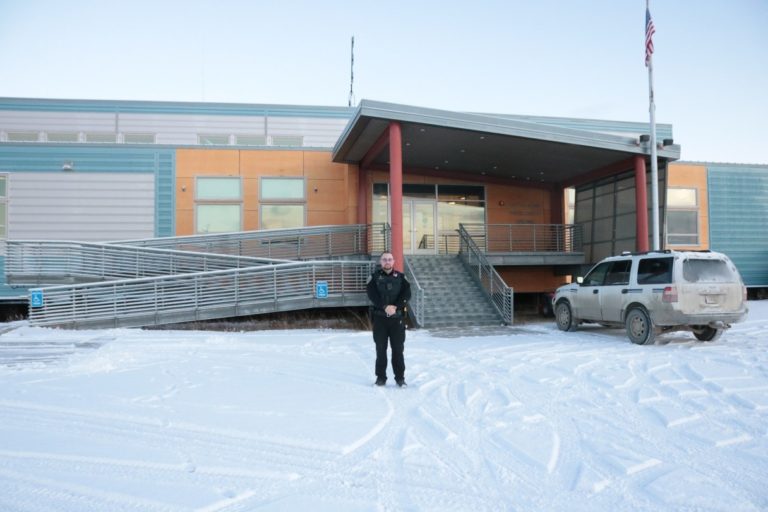
NPD Officer in Front of Public Safety Building in Nome (Jenna Kunze/KMOM)

Content warning: This story features sensitive subject matter.  If you need to talk with someone while reading this or need help, here are some resources.

  • Bering Sea Women’s Group: 907-443-5444; toll-free: 1-800-570-5444
  • Behavioral Health Services at the Norton Sound Health Corporation: 907-443-3344, emergency number: 907-443-3200.
  • STAR Alaska: 907-276-7273; toll-free 1-800-478-8999
  • Alaska Network on Domestic Violence and Sexual Assault: 907-586-3650

If you are outside of the Bering Strait region, visit the Alaska Network on Domestic Violence and Sexual Assault website for a list of resources.


Under new leadership, the Nome Police Department says it is changing practices in response to a call for reform from a local advocacy group after past mishandlings of sexual assault investigations.

Survivors, advocates, and community members say the department is headed the right direction but has a long way to go to repair broken trust, especially among Alaska Natives.

Cold Cases in Nome

Over two years ago, the Nome Police went through their records and found they had 460 “cold case” sexual assaults dating back to the year 2005. They re-opened those cases. As December of 2020 drew to a close, Nome police investigator Scott Weaver addressed the Nome City Council on his findings.
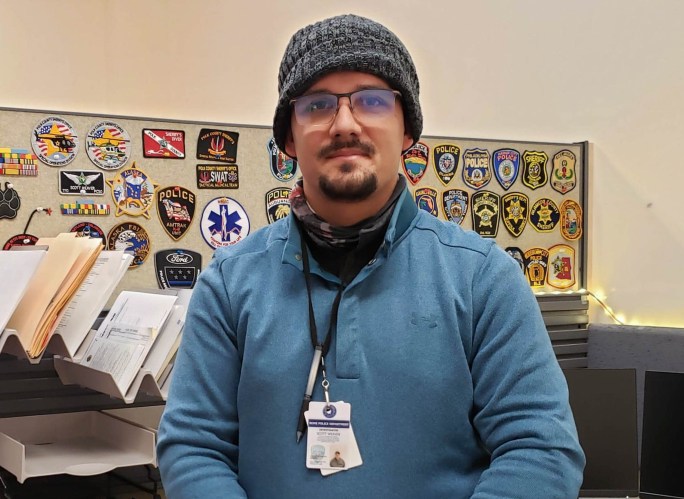
Nome Police Investigator Scott Weaver. (Emily Hofstaedter/KNOM)

“There were a good amount of cases that had been investigated by police officers that were here at the time and simply the case just needed to be put together and sent over to the district attorney’s office,” said Weaver.

That means that in some cases, NPD failed to finish the process of gathering and sending the evidence that would have allowed the district attorney to make a decision about whether to charge an assailant.

Weaver told the city that almost all 460 cases for audit have been reviewed.

“Some cases just needed to be classified appropriately. But there were many cases that needed work,” he said.

Some of that work has included additional interviews and DNA evidence.

In order to get closure and justice for some of those survivors, Weaver had to locate people who moved out of the state and in many instances, had to re-open wounds that were nearly a decade old.

“15 years ago, they may have had an injustice here, there may have been the police officer here or somebody that was working here that didn’t do what maybe they should have done or followed all the steps,” he said. “But did they want to start that over now? Because some [survivors] have [been] scarred from that or put a band-aid on it, and they don’t want to talk about it. And that’s understandable.”

As of December, Weaver, along with the Nome district attorney and others in the police department, have identified 29 cases from that audit that could move on for potential prosecution, pending DNA evidence, and more interviews.

That sexual assault case audit has been part of a big effort by the police and City of Nome to rebuild trust between law enforcement and the rest of the community over the last couple years.

But how did Nome get to the point where so many sexual assault cases needed to be potentially reinvestigated?

The answer goes back to before 2018.

Bringing the Problems to Light

Lisa Ellanna is a Nome community member whose kitchen table became a safe space for women, and sometimes men, to eat dinner and talk. The group soon came to realize that many of them had a shared experience: they were reporting their sexual assaults to the Nome Police and then they would hear nothing about the investigation.
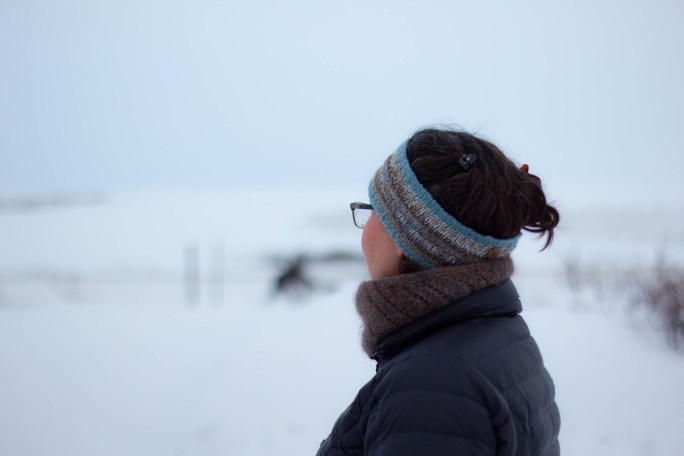
Resident Lisa Ellanna gazing towards the distant mountains in Nome. (Brisa Alarcon/KNOM)

“It turned into a situation of ‘wait a second, if this is happening to all of our cases, it’s probably happening to everybody’s cases, and what do we do about it?’ You know, this is unacceptable; this won’t do,” said Ellana.

Over the years, Ellanna says they worked with other groups to create change for sexual assault survivors.

“Over the course of between 2015 and 2018, there was meeting after meeting after meeting, people coming together to support each other initially, and then turning into this advocacy kind of movement. We came to kind of an understanding of what would make things better. And through the process of working with the different agencies and trying to push for changes to procedure and policy, and not making any headway,” She said. “We decided to come forward in the form of a public complaint.”

In May of 2018, a group of mostly Alaska Native women, including Ellanna, introduced their own resolution on sexual assault to the Nome City Council. It alleged that the local police were not forwarding evidence for prosecution.

Ellanna told the council at the time that survivors would go to the police department and get no help; they would be turned away from the police with no answers about their sexual assault. Some didn’t know if an investigation was even taking place.

“That was really frustrating for us,” she said. “For crimes that are so violent and demeaning and dehumanizing — sexual assault pulls, just pulls at you.”

Over the next few months, the council heard more concerns about uninvestigated sexual assaults and then learned the department had re-hired a community service officer in the summer of 2018, one month after he pleaded guilty to assaulting an Alaska Native woman in his care.

Then, more women began to go public in statewide media outlets with stories of their own uninvestigated sexual assaults. One of those was a former NPD dispatcher, Clarice Bun Hardy, who says her own colleagues didn’t investigate her rape after she reported it. After she reported her rape, she began to notice patterns among some of the Nome officers, particularly Nick Harvey.

“The victims would call in and ask to speak to him. But he would avoid those kind of phone calls … avoid it, and he would tell me, ‘Just tell them, I’m still working on it.’ You know, and then after a few months of him doing that, I’m like, seeing it with my own eyes, you’re not doing anything to investigate these cases of these people who are faithfully calling every day,” said Hardy.

Nome residents and others came forward with their own allegations of policy violations and potentially criminal behavior from other officers.

Kawerak, the local tribal consortium, joined the City of Nome in asking the FBI and Department of Justice to investigate potential civil rights violations by the Nome Police.

“You should be seeking an audit of your own police force. If you’re being presented with information that your officers did not follow through on investigations, you should try to clean house here, hold yourselves accountable. Let’s jointly call for this investigation because whether you join in this request with us or not, it’s going out,” said Kawerak’s CEO and President, Melanie Bahnke.

As all of these issues came to a head, in September of 2018, Nome Police Chief John Papasodora quietly retired, and a new chief from Virginia took over.

Defense Against Mishandlings

When Chief Robert Estes arrived in Nome, public trust in the police department was fractured. Part of Estes’ goal was to audit hundreds of sexual assault cases and look at every call for a sexual assault that came in.

Estes declined to be interviewed for this report. But in 2019, he and Investigator Jerry Kennon spoke with the Associated Press and KNOM about their findings. Kennon explains that plenty of the sexual assault cases were handled appropriately but some had significant problems.

“So what I was finding in these is that there were just no narratives done to them at all, so much less than an investigation that was done … And some of these cases have really been bad, serious cases that just were never investigated,” said Kennon.

The Nome Police blame inefficient policies, a lack of staffing including not enough experienced investigators, and high turnover as the reasons why so many cases went uninvestigated.

“If an officer was working on a case, and he decided I’m leaving, I’m gone, I had enough. Well, if someone didn’t look into his assigned cases, that case just went cold,” said current chief Mike Heintzelman.
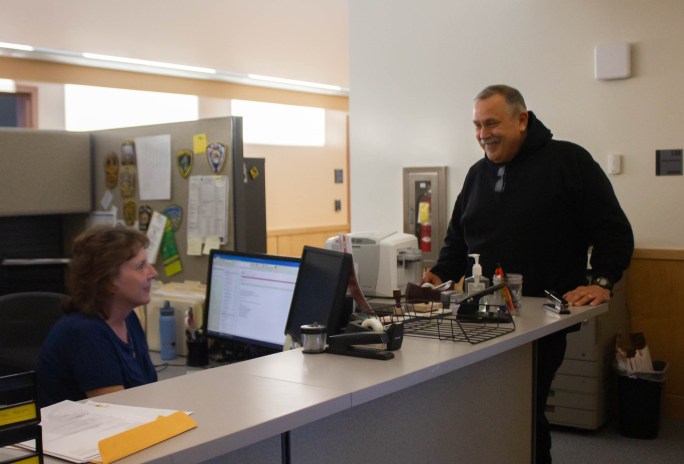
Chief Mike Heintzelman of Nome Police Department.(Emily Hofstaedter/KNOM)

For a region with some of the country’s highest rates of sexual assault, the Nome police didn’t have regular full-time investigators in their department. Heintzelman says the average sexual assault case can take 30 hours or more to complete. And those calls were done by regular patrol cops who weren’t specialized in investigations.

“They would have to be responding to calls doing their normal stuff that they would have to do, in addition to working on cases that were assigned to.”

But others say, the reason that so many sexual assault cases were not handled properly is due to racial bias.

The Nome Police were unable to provide KNOM with racial data on the survivors involved in the audited cases. But in June of 2019, the police chief wrote to the city manager in an email obtained by KNOM, “We have identified 51 historical cases with 100% native Alaskan women victims where there has been zero to poor follow-up at best.”

For the predominantly Alaska Native survivors and their loved ones, it was clear that something was wrong when they would never hear about their cases. Advocates, like Darlene Trigg of Nome, pushed to have a citizen’s oversight committee. After months of contentious city discussions and compromise, the Nome Public Safety Advisory Commission was finally formed and coded into city ordinance in 2019. It’s a step in the right direction for accountability, says Trigg.
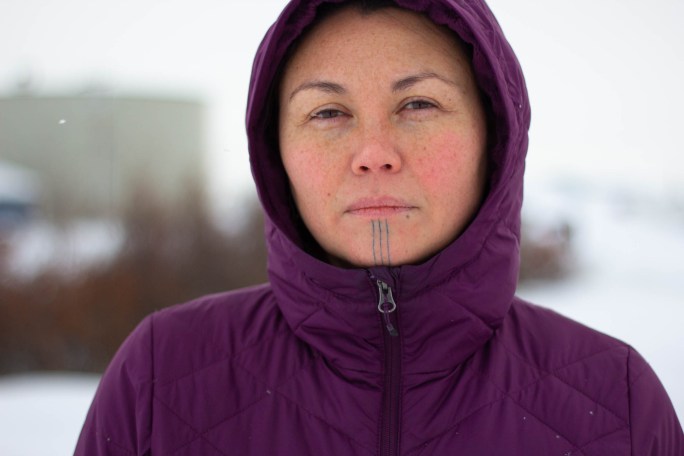
Nome resident Darlene Trigg. (Brisa Alarcon/KNOM)

“And when something goes sideways, to look into it, and to check to see whether or not the police department acted within its own policies,” said Trigg.

Trigg, Ellanna and fellow community activists suggested several additional concrete policies for the police to consider, including a requirement for officers to undergo trauma informed sexual assault training and hiring an investigator to handle backlogged sexual assault cases.

Looking for Permanent Accountability

Some of those changes have already happened. The department hired Investigator Scott Weaver in the fall of 2020 to deal full-time with sexual assault cases. There’s also a domestic violence coordinator currently hired by NPD, Sharon Sparks, who helps survivors work through their cases but the department can’t always keep that role filled.

But as the survivors demanded change for policing in Nome, it became clear that many in city leadership didn’t know what had been brewing. And many of those leaders had been in charge of passing budgets and policies for years.

“I’m embarrassed that I wasn’t aware of it prior to three or four years ago. It just, for whatever reason, wasn’t on my radar,” said Jerald Brown a city councilmember

Brown has sat on the city council for about 15 years. Turnover is high in many aspects of Nome life from the police department, hospital, and the school — but city government is not one of those areas.

For example, current Mayor John Handeland has previously served as mayor, interim city manager, city manager, and the head of the Nome Joint Utilities System — sometimes holding two of those roles at once. He says he gets involved more in the local level to help serve his home community where he grew up and has lived for most of his life, but others say Handeland and others maintaining these leadership positions for so long is part of the problem.

And within NPD, current Chief Mike Heintzelman says there are more efficient systems in place.

“We recognize there’s a shortfall. Some of the things weren’t done the best. There were some procedures that weren’t in place like checks and balances, but we’re in the right direction right now. Everything that is called in is something that is investigated fully,” said Heintzelman.

But another call from activists has been a review of the department’s operations and procedures manual. That’s from 2012 and still largely redacted to the public, including the sections on sexual assault investigations. When Greg Russell, an outside auditor, conducted a review of the department, he found that most of the officers were not even familiar with the manual.

“It’s something that’s kind of like a ‘how-to’ so that an officer in the field would have a policy manual to reference that would say, ‘this is how my department wants it to be done.’ And since it is a ‘how- to’ manual, that’s why it’s so important to update it,” said Russell.

He found no indication that NPD was regularly updating or reviewing its policy manual.

Part of Russell’s job is to suggest improvements for police department management but also steer departments away from practices that could lead to lawsuits. He says that could be done through getting the department certified through a national policing accreditation. Right now, he explains that some places like Nome are largely dependent on good leadership.

“Do you think an incompetent, bad, unprofessional, unethical, police chief could take his department to a position of excellence? I think the obvious answer is no, they cannot.”

But locals who have watched administrations come and go want firm systems in place that guarantee the actions of old officers and police chiefs won’t happen again.

“I see positive changes happening. I really hope that we can institutionalize these changes so that it’s not beholden to the goodwill of who’s currently in a position of authority,” said Bahnke, the president of Kawerak.

Bahnke feels encouraged that the city regularly reaches out to the tribal consortium to discuss public safety issues, but she also says many of those changes have come with new leadership at the police department.

Nome City Manager Glenn Steckman says the city is doing what it can with its resources to create lasting change.

In the last budget cycle, the City Council increased funding for more officers and supported officer housing in a community where housing is often scarce. But those additional officer positions still remain vacant, and the department still has police officers who haven’t committed to living in Nome full-time. Instead, they prefer to live elsewhere and fly in to work their two-week shifts. The exception is during the COVID-19 pandemic in 2020 when Steckman says many officers stayed in town to work for longer periods of time.

“But we’re trying to figure out how do we get stability in this department? That’s the challenge that we face: stability,” said Steckman.

But Steckman doesn’t want to dwell in the past.

“We have the history up here, these officers weren’t involved in it. And they are being heavily criticized, but they weren’t involved.”

Yet community members point out that the current officers and city leaders responsible for hiring them are part of an institution.

And until institutional change is complete, advocates and longtime Nome residents like Darlene Trigg say a public apology, some acknowledgement of what has happened is needed for the community to heal.

“Well, it’s necessary. That’s the truth. You know? Some level of acknowledgement that harm has been done is probably not something that an attorney would want the city to do. However, there are people who are owed that in this community; their families and their livelihoods and their ability to walk in our town, in a healthy, safe way is forever changed…,” said Trigg.

But for now, neither the City of Nome nor the police department have issued such an official statement.

Reporter Davis Hovey contributed to this report.

This story is part of the “Seeking Protection, Wanting Justice” series by  Alaska Public Media and KNOM, with funding in part provided by the Alaska Center for Excellence in Journalism.
Selawik issues disaster declaration after outage leaves homes, water treatment plant without power

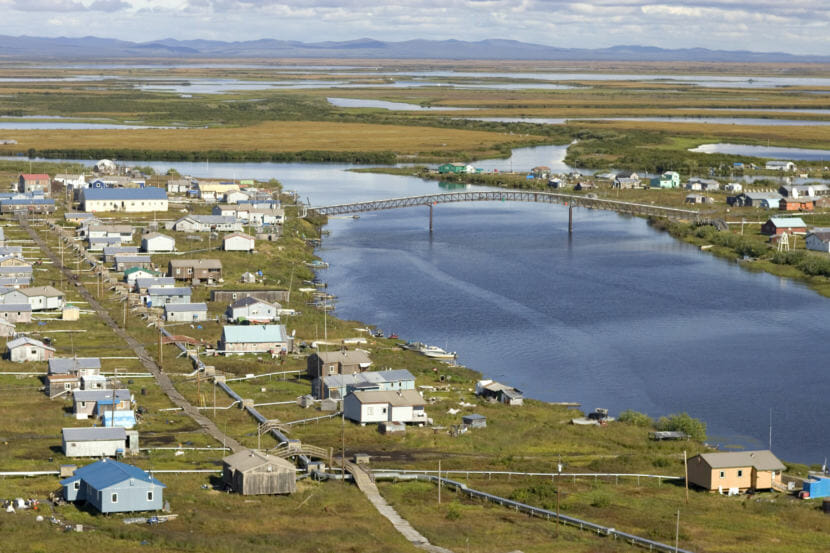
The village of Selawik lies near Kotzebue Sound in northwest Alaska, pictured here on Aug. 24, 2006.
(Public domain photo by Steve Hillebrand/USFWS)

The water treatment plant and dozens of homes in the Northwest Arctic village of Selawik are without power after an outage hit the community Sunday night.

The City of Selawik declared a local disaster on Tuesday afternoon. As of Wednesday morning, state officials said the water treatment plant is on back-up power.

Northwest Arctic Borough officials said the outage occurred just before 5 p.m. on Sunday. Repair workers from the Alaska Village Electric Cooperative were deployed to the village on Monday and temporarily restored power to part of the community.

State emergency officials said as of Tuesday morning, 150 homes, an apartment complex and the water treatment plant don’t have power.

While many residents said they have a secondary heat source at home, four families stayed overnight at the local school.

Selawik officials have ordered a temporary water supply from Kotzebue. The village has a population of about 850 people and is roughly 70 miles southeast of Kotzebue.

Editor’s note: This story has been updated with information about the local disaster declaration. 

State investment authority joins mining company to put $35M towards controversial Ambler Road

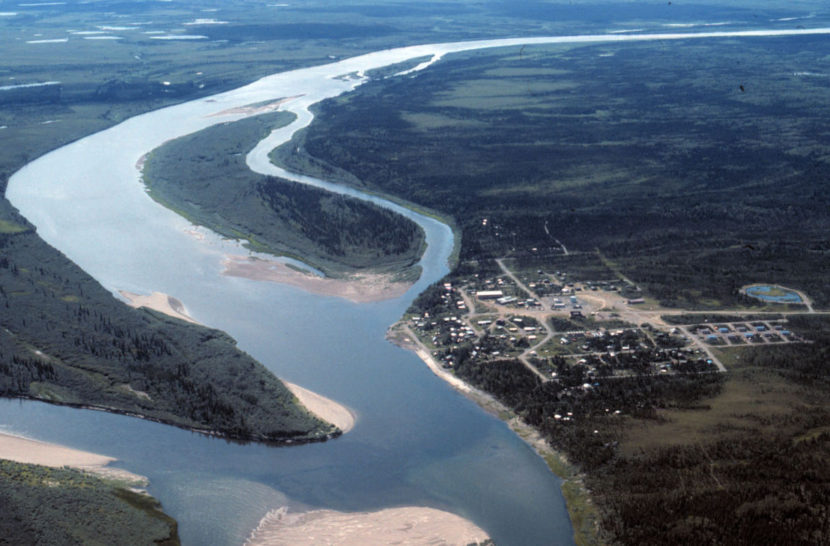
Aerial view of Ambler and the Kobuk River in the summer. (Photo courtesy of the National Park Service via UAF Gates of the Arctic Research Portal)

The state of Alaska’s investment authority board has agreed to put $35 million towards the controversial Ambler Road project. The funding is matched by Ambler Metals, the mining company looking to use the road to access mineral deposits in the region.

With the $35 million match from Ambler Metals, the $70 million infusion signals a major advancement in the development of the Ambler Road. The proposed project would run roughly 211 miles from the Dalton Highway to the Ambler Mining District in the Northwest Arctic Borough.

Ambler Metals CEO Ramzi Fawaz said the funding is for pre-development work on the project. He said the permitting process will start sometime in the second half of the year, and anticipates the process will take two to three years.

“Permitting is one of those activities that gets done in addition to the feasibility study and surveys and so on,” Fawaz said. “And that’s part of that we need to do and the team needs to do before we get to an investment decision on the road.”

The development agreement approved unanimously between the Alaska Industrial Development and Export Authority and Ambler Metals goes through December 2024.

Subsistence advocates have filed lawsuits over the road, concerned that construction would impact the migration of caribou, a staple of the local Inupiaq diet in Northwest Alaska. In its environmental assessment released last March, BLM officials noted potential impacts to wildlife migration and erosion as well as local water and air quality.

The process of getting a mine in the Ambler Mining District has garnered support from the Dunleavy administration and mining advocates, who say the project means high-paying jobs for Alaskans. Fawaz said they anticipate hiring more than 80 people for the field season work. Additionally, should construction be approved, another roughly 600 people would be hired for the construction of the road, and then about 400 for operations at the mine. Fawaz said Ambler Metals has been working with the local NANA Regional Native Corporation and the Northwest Arctic Borough in order to get locals employed.

“Our hope and our aim is to train and recruit as many as we can from the borough, from the region, from our neighbors, to participate in this work — both before we get to an investment decision and after,” Fawaz said.

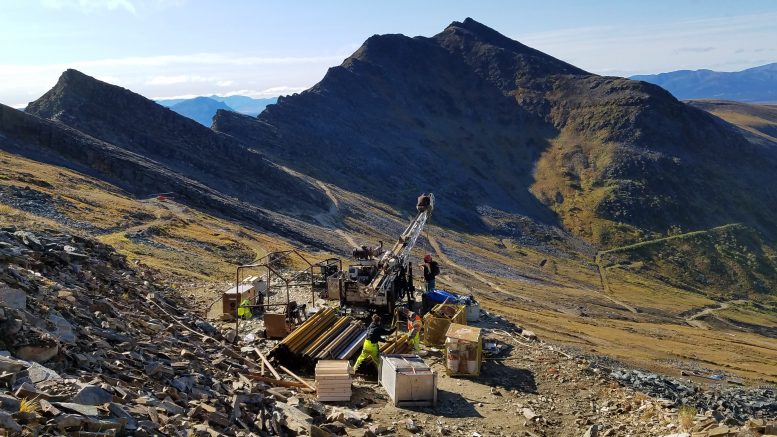
Drilling at the Trilogy Metals Inc. copper-rich Arctic polymetallic deposit in Alaska’s Ambler Mining District. (Photo courtesy of Trilogy Metals Inc.)

With large deposits of gold, silver, lead and other minerals, Fawaz said the current projection is that the mine would last for 12 years. He said Ambler Metals hopes to find additional mineral deposits in the region to extend its lifetime to over 20 years.

Lois Epstein is an engineer and Arctic program director for the Wilderness Society, a conservation group that is one of the plaintiffs in a lawsuit over the road. She said that AIDEA’s board of directors was not transparent in their process for approving the funding. During their meeting Wednesday, the board was in executive session for several hours to discuss the project ahead of the vote, but those sessions aren’t open to the public. Epstein said the board spent very little time discussing the move publicly before returning to an executive session.

“So if you’re interested at all what kind of questions were asked, what kind of details they focused on, did they even pay attention to the public comment period … you have no idea,” Epstein said.

Epstein said environmentalists and some Alaska Native organizations have also critiqued the timing of AIDEA’s focus on the Ambler Road project, considering the COVID-19 pandemic which has financially impacted thousands of Alaskans.

“We think the biggest issue right now for the state is the pandemic and all the economic impacts that have happened,” Epstein said, “and to the extent that AIDEA could help mitigate those impacts, that’s what they should be focusing on. Not a long term project like the Ambler Road.”

Fawaz of Ambler Metals wouldn’t comment on the pending lawsuits beyond saying the company is pleased with the federal permitting work thus far, and believe they can operate responsibly in the region.

Nome Native Youth Olympics team holds virtual event to promote traditional games

During an April NYO competition in Nome, local student Elden Cross participates in the two-foot high kick, in which athletes aim to touch with their feet a sealskin beanbag at increasing heights. In this photo series, Cross reaches a height of about eight feet. (Katie Kazmierski/KNOM)

Last week, the Nome Native Youth Olympics team hosted a virtual event to garner more interest region-wide in traditional games and to inspire kids to start practicing traditional games on their own.

During the Kawerak-hosted hour-long event, Vanessa Tahbone shared background information about each of the events while Nome athletes gave demonstrations.

“This game is used to strengthen leg muscles for jumping from ice floe to ice floe,” Tahbone said, explaining the traditional relevance of the kneel jump. “It’s for when you’re out hunting, and you need to get up and move fast.”

In addition to the kneel jump, the one-foot and two-foot high kicks serve a traditional purpose as “signaling kicks” for whaling communities to communicate, as Tahbone described for viewers.

“There’d be someone out on a tall lookout or a high point in the community, and they would use this to signal to the community that the crew was successful,” Tahbone said. “They would perform the one-foot high kick telling the community that they needed to get ready to help take care of and put away the food that was successfully hunted in the ocean.”

Other events, like the one-handed reach, require a considerable amount of athleticism and strength. Yet, Tahbone says of the young athletes, “they make it look easy – it’s not.”

The virtual event showcased eight out of the ten traditional events that encompass the Nome Native Youth Olympic Games.

Tahbone stressed the group’s desire to inspire other youth in the region to get involved with NYO. With the help of Kawerak, they will be sending out at-home kits for children and families to begin practicing on their own.

“The kit includes a ball, string, measuring tape, a hook to hang your ball from, and you’ll also have a log that tells you the starting heights for each event and then how you improve over time,” Tahbone said.

‘It brings back memories’: Northwest Alaska health provider cleared to make seal oil and serve it to elders

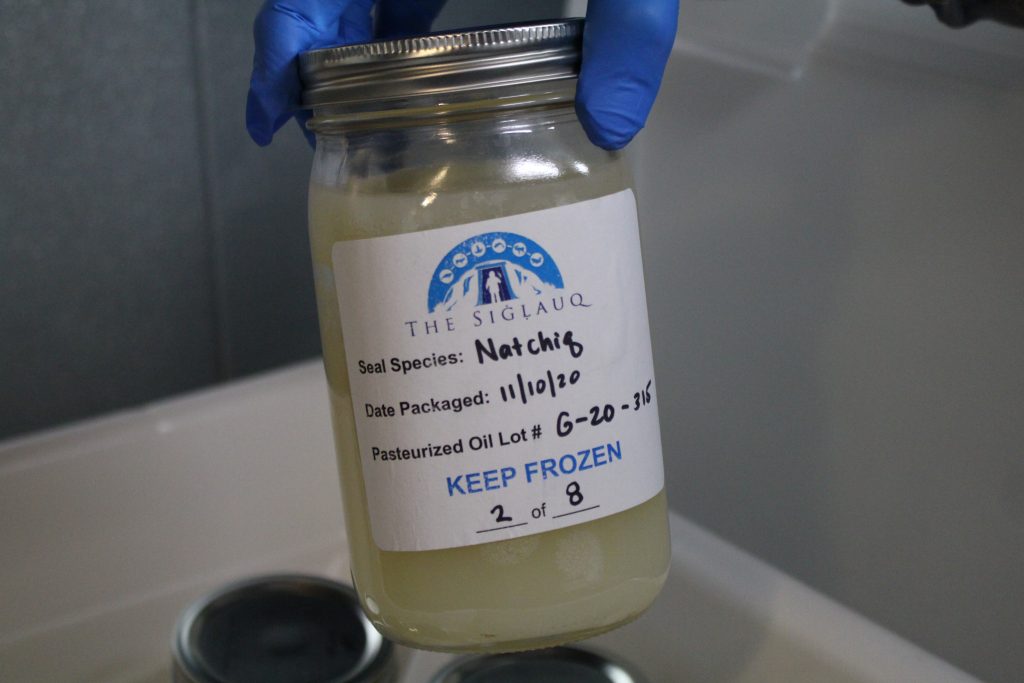
A jar of seal oil processed at the Siglauq building in Kotzebue. (Photo by Wesley Early, KOTZ – Kotzebue)

In Inupiaq communities, more than any other food, seal oil is a fixture.

“I had it for lunch today,” said Cyrus Harris. “I’ll have it for supper tomorrow.”

Like many Inupiaq people in the Northwest Arctic, Harris grew up eating traditional foods like seal oil, caribou and musk ox. When his relatives moved into Maniilaq’s Utuqqanaat Inaat long term care, he found they weren’t able to eat the same food they’d lived off for years.

“They didn’t choose to be living off the Western diet that they were being served every day,” Harris said. “So I found out I could cook a meal at home and take it to my ahna and taata over at the long term care, and serve it in that manner. But where does that leave the other 18 elders there?”

Seal oil has been a diet staple for Alaska’s Inupiat people for centuries. However, because of federal and state health regulations, you can’t buy it in stores and it can’t be served in restaurants.

Cyrus Harris is in charge of Maniilaq’s hunter support program. (Photo by Wesley Early, KOTZ – Kotzebue)

In 2015, Congress passed the federal farm bill which allowed people to donate wild game that they’ve hunted to certified non-profits, like hospitals or food banks. Since then, Harris has been in charge of Maniilaq’s hunter support program, which prepares traditional foods for elders at long term care.

The food is processed at the Siglauq, a state-certified meat processing building. The name comes from the Inupiaq word for the underground ice cellars used to store meat.

“Back in the day, everybody had their own Siglauq,” Harris said. “They had their own underground cold storage.”

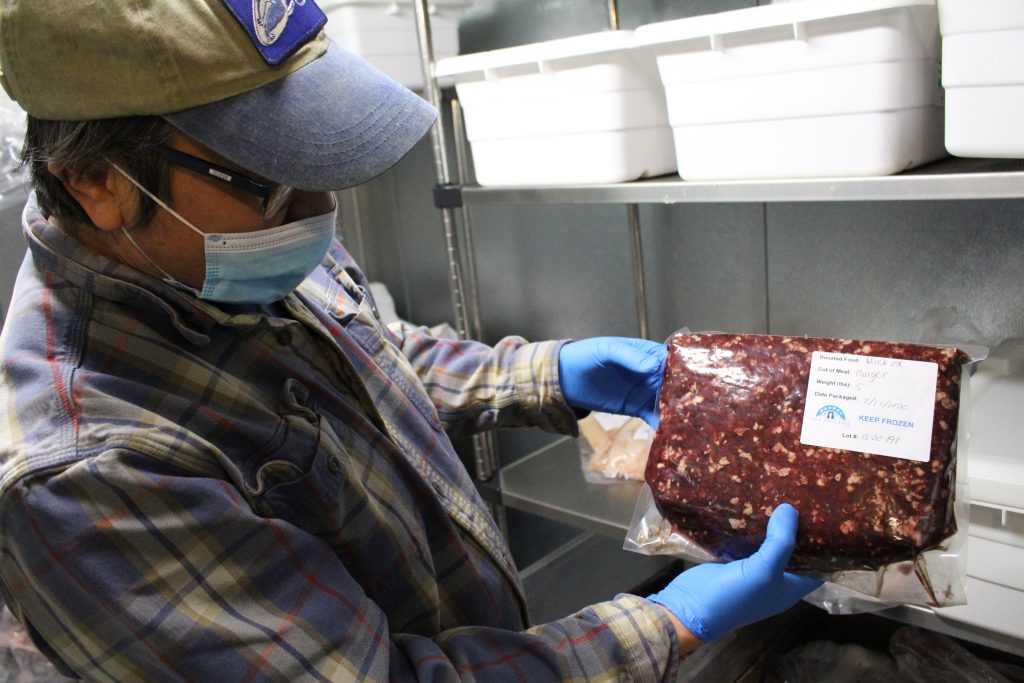
Cyrus Harris shows frozen musk ox meat to be served to elders at Maniilaq’s Utuqqanaat Inaat long term care. (Photo by Wesley Early, KOTZ – Kotzebue)

Walking in the Siglauq freezer, Harris described some of the donations.

“These are some products that we will most likely use for our certain potlucks,” Harris said. “This is sheefish filet. We do have moose burger. We do have some musk ox burger.”

While getting wild meat on the menu for elders has gone smoothly for about five years, Harris says seal oil remained prohibited. The only time it could be served was at a potluck, and it had to be brought in from home. It couldn’t be made and served by Maniilaq – until now.

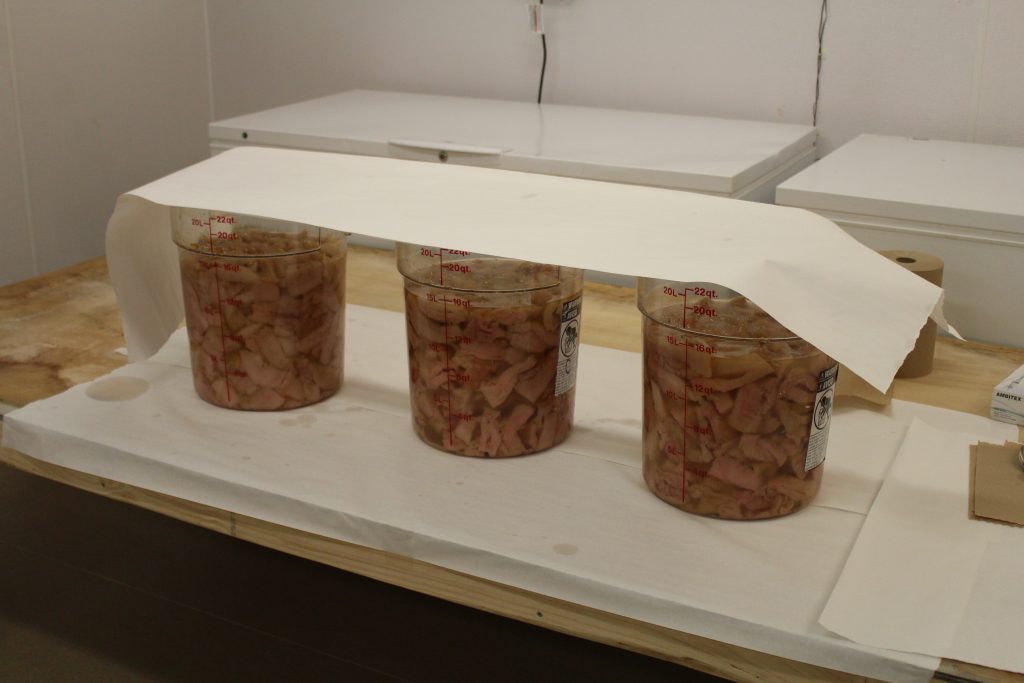
Just before the freezer in the Siglauq is the main processing room. And sitting on a table are three large drums with blubber floating in vats of seal oil. Harris describes the process for rendering the seal oil, which starts with separating the skin and blubber from the carcass.

“Then flesh the blubber from the skin,” Harris said. “And cut into maybe one inch by three inch pieces and set into containers like this.”

Three containers of seal oil being rendered by Cyrus Harris. (Photo by Wesley Early, KOTZ – Kotzebue)

Granted, Harris says most seal oil is made out in the field, and not under the strict lab requirements of the Siglauq.

“The best seal oil I ever had was stored in seal pokes,” Harris said. “Seal pokes have a long story behind it. It’s seal hides made into a container.”

While seal oil is generally ingested without incident, a major reason it was restricted was due to its connection to a foodborne illness called botulism, which can cause nausea, blurry vision, muscle fatigue, and in some cases, death. Since the 1950s, the Maniilaq service area has seen more than 15 outbreaks of the illness tied to eating traditional Native foods.

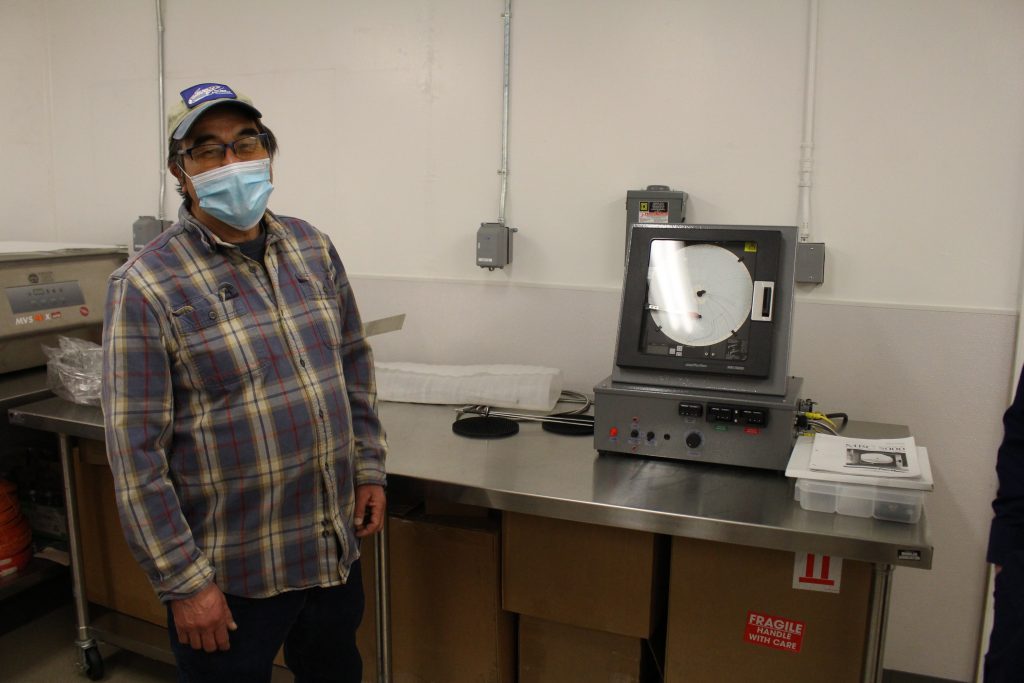
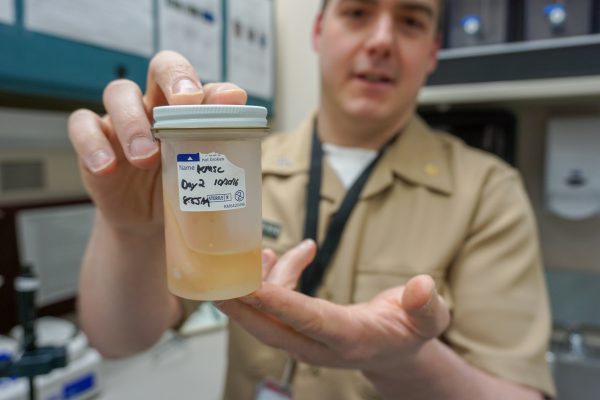
Chris Dankmeyer is environmental health manager for Maniilaq. For the past few years, he, Harris and others have been collaborating to develop a way to safely render seal oil. Those include food safety scientists at the Kodiak Seafood and Marine Science Center as well as microbiologists at the University of Wisconsin. After several years of running lab tests, they found that heating the seal oil to 176 degrees for 10 continuous minutes made seal oil safe.

“That completely destroys the toxin that may or may not be in the oil,” Dankmeyer said.

Dankmeyer stated that this heat treatment has only proven to make pure seal oil safe and not seal oil that contains other traditional additives.

“We’re not keeping blubber in there,” Dankmeyer said. “We’re not throwing in pieces of dry meat. And that’s a traditional thing.”

Chris Dankmeyer displays a sample of seal oil in 2018, when researchers were developing a method to heat treat the oil (Photo by Anne Hillman/Alaska Public Media)

Once the seal oil is heat treated, it’s rapidly cooled to prevent the toxin from reforming, and placed in the freezer where all the other traditional foods are.

“And we keep it frozen until it’s time to serve,” Dankmeyer said. “Basically, over there at the hospital, they’re going to dip it out frozen into a serving dish. It’s going to come up to room temp and be eaten.”

Dankmeyer says the last step is to make sure that Maniilaq’s kitchen staff are prepped on how to safely handle and serve the seal oil. For example, it can’t be left out for more than four hours, or it runs the risk of creating more toxin.

In the next few weeks elders can look forward to seeing plates filled with the traditional foods they’ve eaten their whole life.

One person excited to see the reactions from elders is Marcella Wilson, who heads Maniilaq’s long-term care facility. She says elders have been able to have seal oil during the occasional potluck, and she always sees an immediate reaction.

“It brings back memories,” Wilson explained. “Memories of when they were children and how they had the seal oil and traditional foods growing up. And that brings about storytelling. And then the storytelling starts bringing about laughter.”

Wilson says that she’s learned a lot about the Inupiaq culture from the elders, and she expects them to feel more lively as their traditional foods become more available.

“I’m not saying there’s magic in it, because there’s not,” Wilson said. “But there is such a nutritional value to it and such a cultural value to it, that the two together are just immeasurable.”

Dankmeyer says Maniilaq is the first organization in the nation approved to make and serve seal oil, and he’s excited to share their process with other organizations in the future.

Former Kotzebue mayor to lead National Park Service’s Native relations program for Alaska

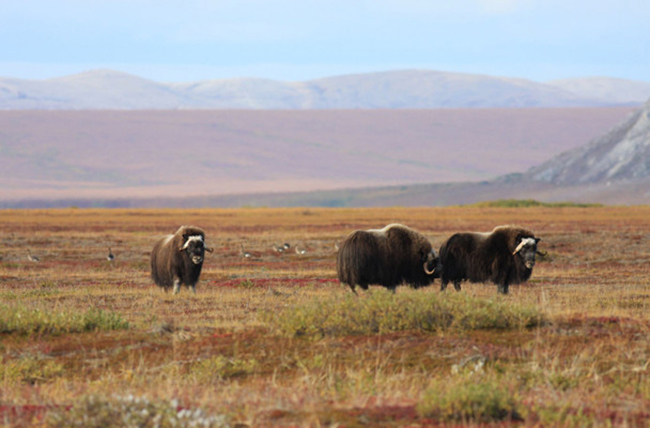
Musk ox grazing on the tundra by the Cape Krusenstern National Monument. (Photo by Doug Demarest/ National Park Service)
Musk ox grazing on the tundra by the Cape Krusenstern National Monument. Maija Katak Lukin has been superintendent of the Western Arctic Parklands since 2016, which includes Cape Krusenstern. (Photo by Doug Demarest/ National Park Service)

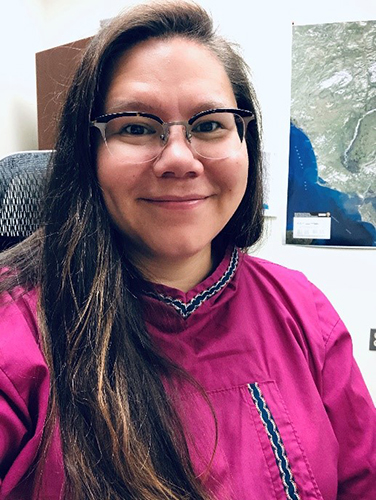
Maija Katak Lukin, a former mayor of Kotzebue, has been selected as the Native relations program manager for the National Park Service’s Alaska region.

She’s been superintendent of the Western Arctic Parklands since 2016, overseeing operations in 9 million acres that include Noatak National Preserve, Kobuk Valley National Park and the Cape Krusenstern National Monument.

Maija Katak Lukin (National Park Service photo)

Lukin says a lot of her job involves working with tribes living outside the national park boundaries

“The Park Service in the Alaska Region has really moved towards listening to Indigenous people and the first Alaskans in the management of that land because, if you look at history, we’ve been managing that land very successfully for 13,000 years,” Lukin said.

She is Inupiaq and grew up in Kotzebue and the Sisualik fish camp, where she’s spent her life subsistence hunting, fishing and gathering.

She says that her work balances the land stewardship of her ancestors with the more modern federal protections.

“We travel to all of the villages in Northwest Alaska to have these hard conversations about what land management looks like to them, and listen to what they have to say,” Lukin said. “And try to be honest about our policies at the National Park Service, and be honest about what we could and could not change.”

In her new position, Lukin hopes to take her success in working with Northwest Alaska tribal groups to tribes and Native corporations across the state.

“Giving a seat at the table to Indigenous people and the people who live around national parks, monuments and preserves,” Lukin said.

Lutkin has been a local leader in Kotzebue serving on the city council from 2013 to 2016. She was elected by her peers in 2014 and served a year as mayor. She’ll relocate from Kotzebue to Anchorage to begin her new position in March.

Site notifications
Update notification options
Subscribe to notifications