Northwest

Biden reinstates northern Bering Sea climate plan

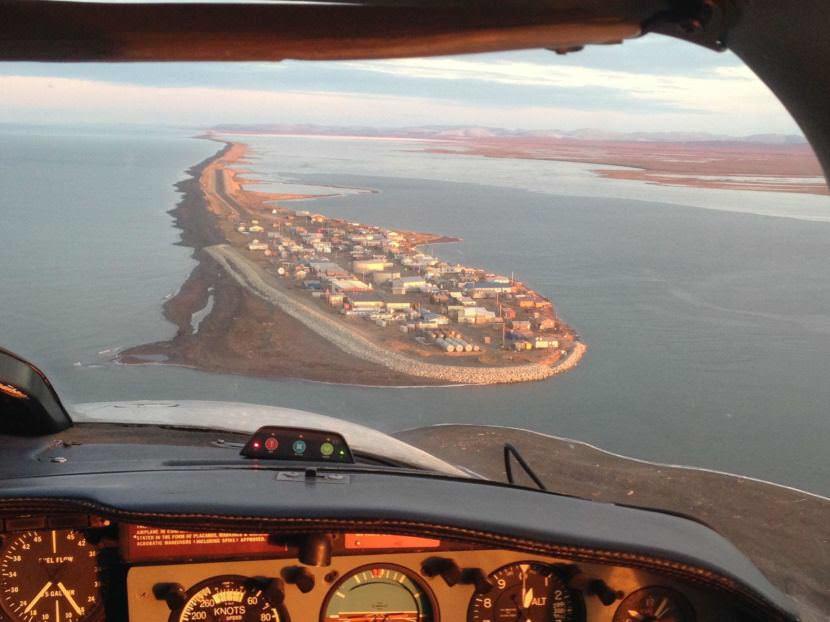
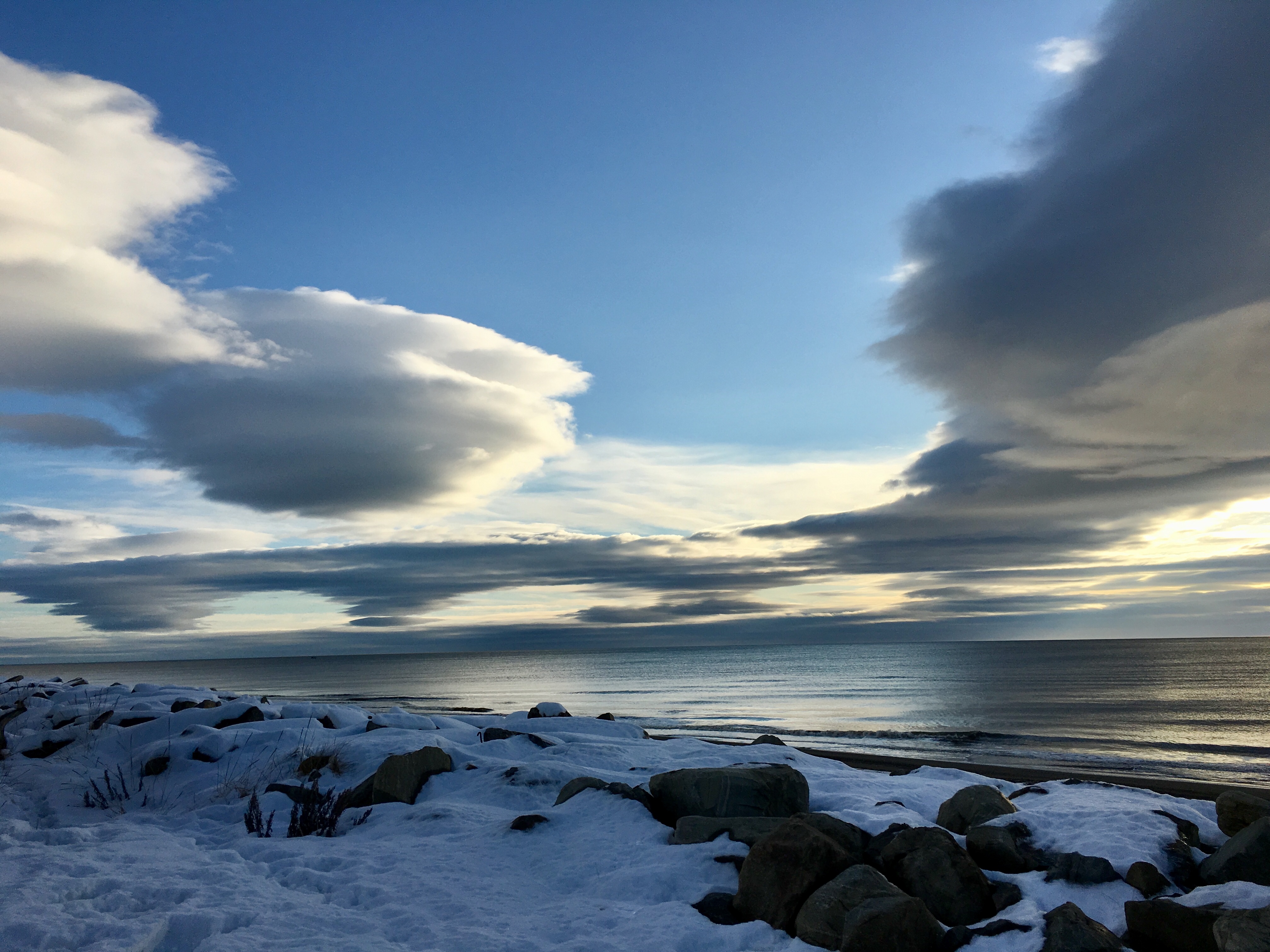
Bering Sea coastline near Nome, October 2017. (Photo by Zoe Grueskin/KNOM.)

President Joe Biden signed several climate-related executive orders on his first day in office. One of them reinstates the Northern Bering Sea Climate Resilience Area, an Obama-era executive order that includes protections from offshore oil and gas leasing in the Norton Sound as well as waters around St. Lawrence Island.

The original order was revoked during former President Donald Trump’s early months in office.

The reinstated order outlines policies on marine shipping, pollution, marine debris and oil spills, among other Arctic marine-related issues. The entire “resilience area” stretches over 112,300 square miles, from the Kuskokwim Bay to the southern border of the Chukchi Sea.

But for groups in Western Alaska, one of the most significant things about the order is that it acknowledges the importance of using local Indigenous knowledge. The federal task force responsible for the Northern Bering Sea Climate Resilience Area would include an intergovernmental tribal advisory council. The council has not yet been formed but would include between nine and eleven elected representatives from tribal governments.

Melissa Johnson, executive director of the Bering Sea Elders Group, called it a “milestone” for incorporating Indigenous people into federal conversations and policy on climate change.

“That council focuses on the matters that affect us as Indigenous people who live along the Bering Sea coast, who rely on the Bering Sea coast and who pass that knowledge on to future generations,” Johnson said.

Johnson and others emphasize that anything addressing climate change and activities in the Bering Sea should include local tribes. In 2016, the Elders group and 39 Tribes reportedly petitioned the Obama administration for additional marine protections. One of their primary concerns was that increased Arctic shipping could impact marine mammal migrations and subsistence hunting.

In a joint press-release from several Tribal groups, the Bering Sea Elders Group said the order “elevates” tribal roles in Bering Sea management and “provides a pathway for our Tribes to exercise self-determination.”
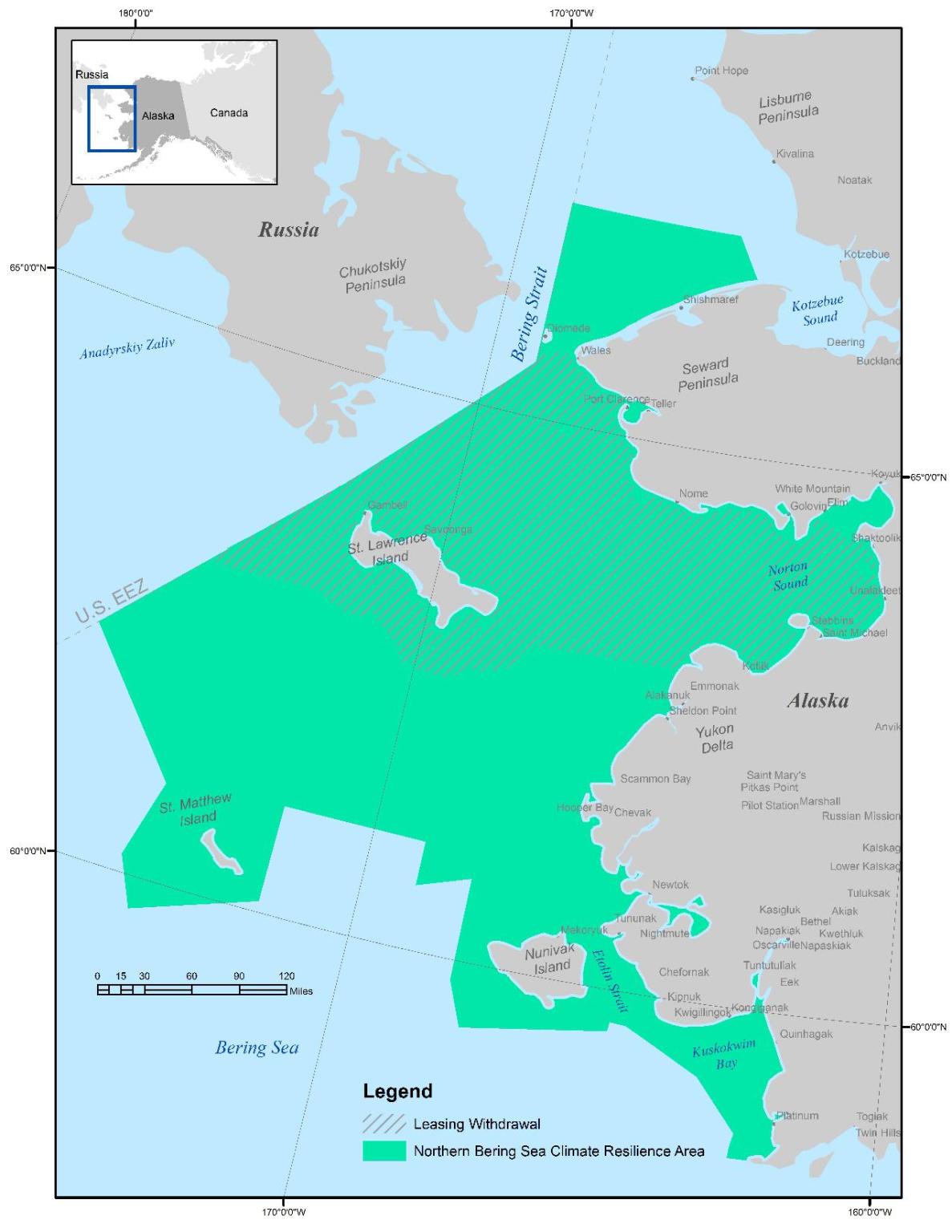
The “resilience area” stretches over 112,300 square miles, from the Kuskokwim Bay to the southern border of the Chukchi Sea. (map from the executive order)

Kawerak, Inc. marine advocate Austin Ahmasuk welcomed the new order after years of Arctic policy that he said has not adequately included the people most affected.

“A lot of Arctic policy is being proposed, decided upon, even written, by people who are not from this region,” Ahmasuk said. “We’re glad that it’s prohibited oil and gas leasing in those planning basins. We are of course glad about the prohibition of bottom trawling into the northern Bering Sea. And then we look very much forward to how communities will be involved as advisors in Northern Bering Sea management.”

The original 2016 executive order drew sharp criticism from the Alaska congressional delegation. Senator Dan Sullivan called it a “unilateral plan to harm Alaskans.” The delegation has not yet issued a statement or responded to requests for comment on Biden’s decision to reinstate the 2016 executive order.

The Dunleavy administration would not comment specifically on the reinstatement of the Northern Bering Sea Climate Resilience Area.

In a statement from the Alaska Department of Law, Assistant Attorney General Maria Bahr wrote that Biden’s executive orders are still being reviewed for their impacts on state agencies.

“These are complicated and evolving issues and will take some time to fully analyze,” Bahr wrote in a statement.
Federal mining authorities ID man who died working at Red Dog Mine

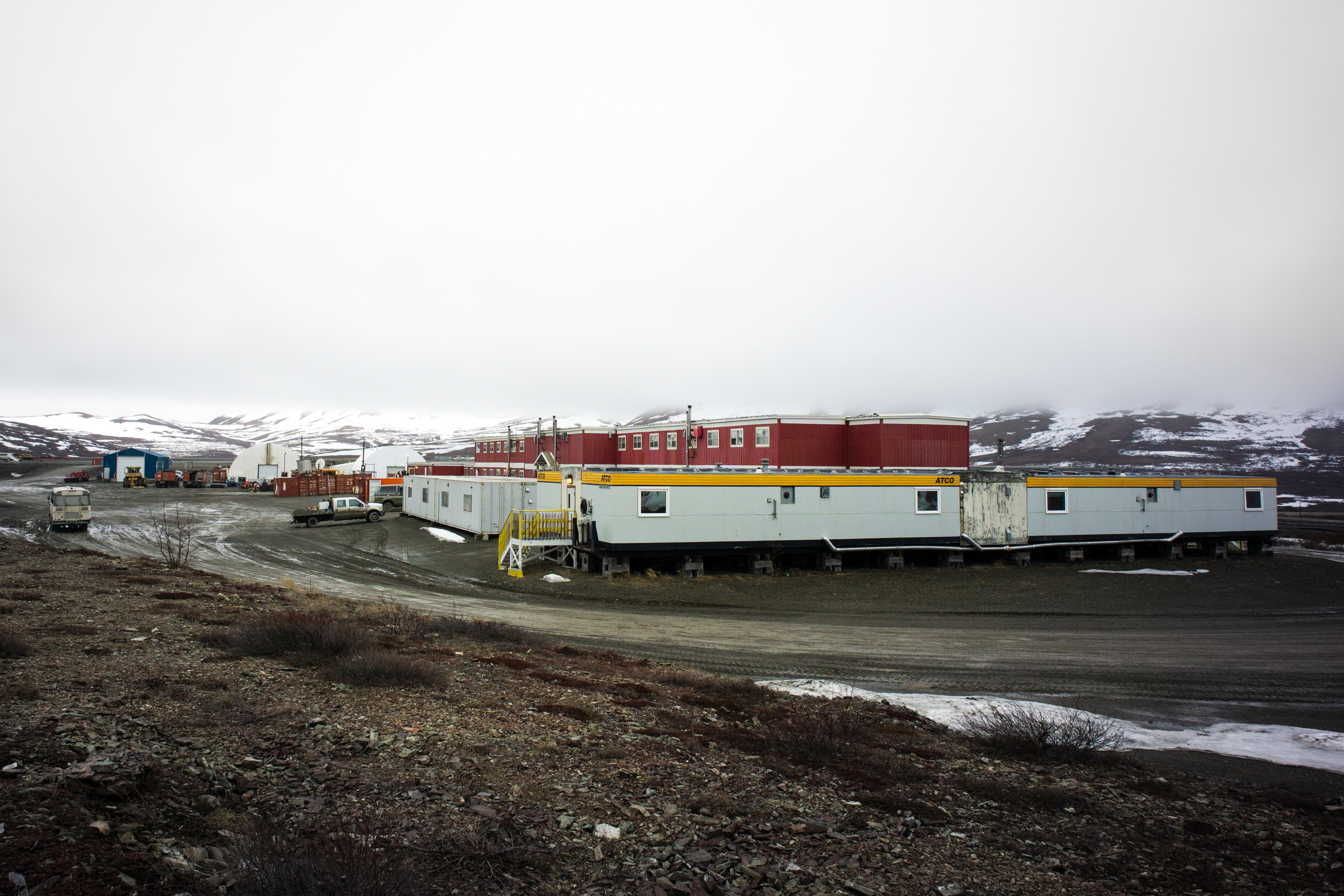
Secondary housing and offices at Red Dog Mine. Red Dog is 90 Miles north of Kotzebue, 50 miles inside the Arctic Circle. (Ian Dickson, KTOO)

Federal officials have identified the Red Dog Mine employee who died there on Saturday.

According to a preliminary report from the Mining Safety and Health Administration, 47-year-old driller Dustin Thomas was lowering the mast of a production drill to pack it up. During the operation, the drill turned and caught Thomas’s leg in some equipment.

Another employee reversed the drill rotation to free Thomas’s leg. He was transported to a mine clinic, where he died less than 90 minutes after the accident. Thomas had worked at the mine for more than seven years.

Teck Alaska, the operator of the mine, said no other employees or contractors were injured and that “there is no ongoing safety or environmental risk.”

A federal investigator is still at Red Dog Mine to determine the nature of the accident in their final report. To date, this is the sole fatality report the federal mining safety authority has filed on Red Dog.

A major employer in the Northwest Arctic Borough, Red Dog Mine is the largest zinc mine in the world, located about 90 miles north of Kotzebue.

Red Dog Mine employee dies in production drill incident, mine operators say

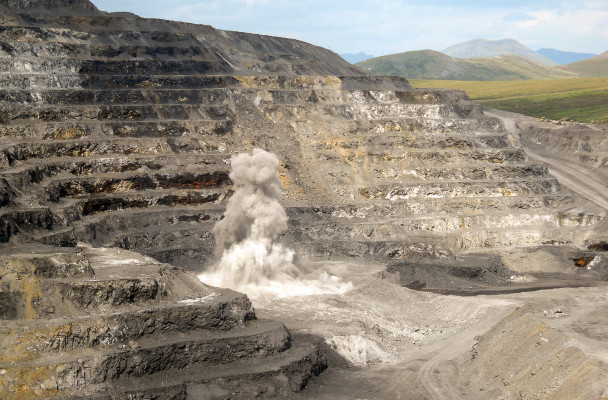
The Red Dog Mine in 2010. (Photo by Alaska Public Media)

An employee at the Red Dog Mine died during an incident at a production drill, mine operators say.

In a release Sunday, officials with Teck Alaska, the operators of the mine, say a 47-year-old employee died on Saturday. Teck says no other employees or contractors were injured and “there is no ongoing safety or environmental risk.”

A spokesman for Teck said the federal Mining Safety and Health Administration is investigating the incident, and the only information they could provide was that the employee was male.

A major employer in the Northwest Arctic Borough, Red Dog Mine is the largest zinc mine in the world, located about 90 miles north of Kotzebue.

There is an update to this story here.

Alaska Supreme Court rules in favor of critical Native corp. shareholder

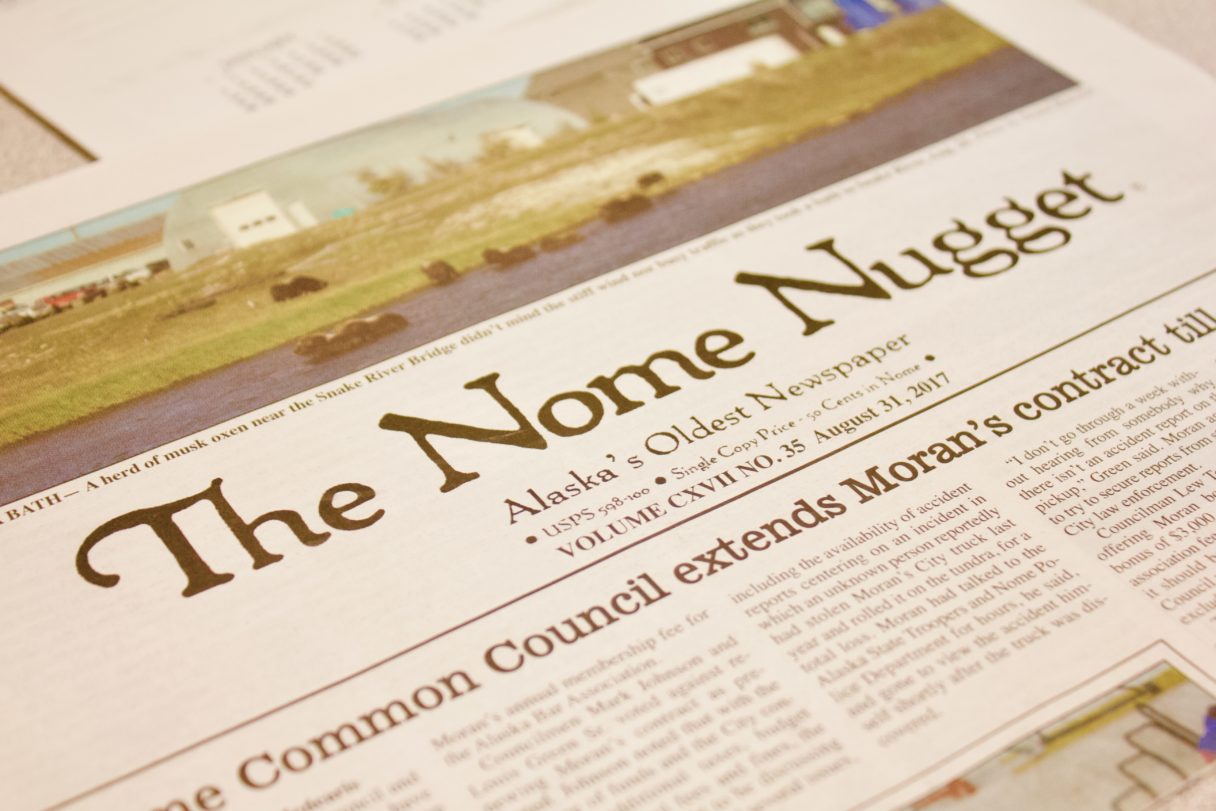
Austin Ahmasuk was fined $1,500 for a letter to the editor that the Nome Nugget published in 2017. (Photos courtesy of KNOM)

The state’s financial regulator fined Austin Ahmasuk $1,500 for a letter to the editor that the Nome Nugget published in 2017. They said he should have filed paperwork under regulations that require Alaska Native corporation shareholders to disclose their connections before soliciting votes called proxies.

Austin Ahmasuk argued that his letter wasn’t supporting or criticizing any individuals running to lead the Sitnasuak Native Corporation, of which he’s a shareholder. And that the regulations didn’t apply to his letter’s broad call to action.

The Alaska Supreme Court agreed.

“The (state financial regulator’s) interpretation and application of its proxy solicitation regulation are unreasonable on the facts of this case,” the justices ruled in a decision published on Friday.

Susan Orlansky argued the case on Ahmasuk’s behalf for the American Civil Liberties Union of Alaska. She told CoastAlaska on Friday when he wrote the letter nobody had even put their name forward to run and that troubled the Supreme Court.

“He really isn’t talking about votes for him or her,” she said.

Rather, he’d encouraged fellow shareholders with voting powers not to file discretionary proxies. Those are basically blank ballots that can later be used by a slate of candidates usually endorsed by the sitting board of directors.

Critics say blank ballots handed to the board slate give incumbents an advantage over independent challengers.

Some justices were skeptical when, under questioning last year during oral arguments, the state’s attorney conceded that even an open letter urging shareholders to attend a meeting technically falls under regulated speech.

Acting on complaints, state financial regulators routinely investigate and sanction shareholders for comments made in print and online that are perceived to sway a corporate board election — like an opinion piece in a newspaper. But more often it’s an online post in a Facebook shareholder forum.

Sitnasuak Native Corporation wasn’t party to the lawsuit. But some of the state’s regional Native corporations filed briefs supporting the state’s power to regulate shareholder speech. Doyon, Calista and the Bristol Bay Native Corporation were among them.

Orlansky says it’s good to have this decision to guide future actions.

“I would say that lawyers for other shareholders as well as lawyers for (financial regulators), or for Native corporations ought to read this decision very carefully, because I think the decision holds some suggestions,” she said.

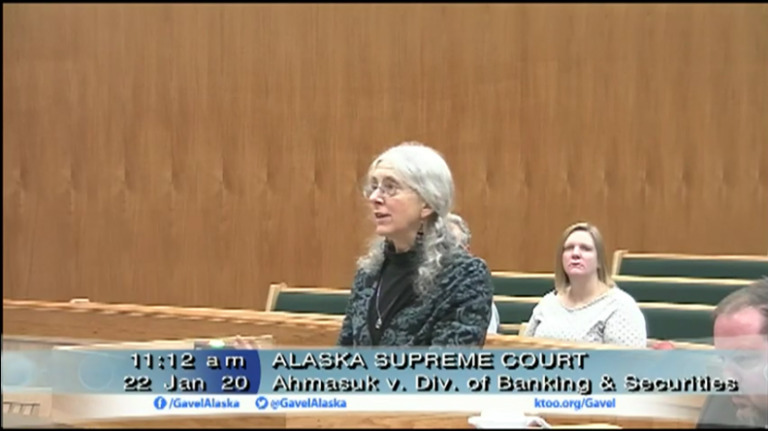
ACLU senior counsel Susan Orlansky argued the case on January 23, 2020. (Screenshot courtesy of Gavel Alaska)

That’s because the ACLU argues the state is stifling free speech. It’s suggested the state could look to the federal guidelines established by the federal Securities and Exchange Commission. Since 1992, the feds have opted to regulate shareholder speech less broadly out of constitutional concerns.

Orlansky says the Alaska Supreme Court ruling is a win for her client. And she says the justices’ decision outlines how the state’s regulations potentially fall afoul of the U.S. Constitution on free speech and due process grounds.

“But the Supreme Court very clearly didn’t decide those questions. It did what courts often do, and decided the issue in front of it and very specifically nothing further,” she added.

State attorneys say they’re reviewing the court’s decision.

“The court emphasized that its decision is limited to the particular facts and circumstances of this case and less about the medium used to communicate,” wrote Assistant Attorney General Charlotte Rand in a Friday email. “Communications might be proxy solicitations even if those communications are in mass media or social media.”

The Division of Banking and Securities welcomes questions about compliance with its regulations, she added.

Federal and state officials sign right-of-way permit for controversial Ambler Road

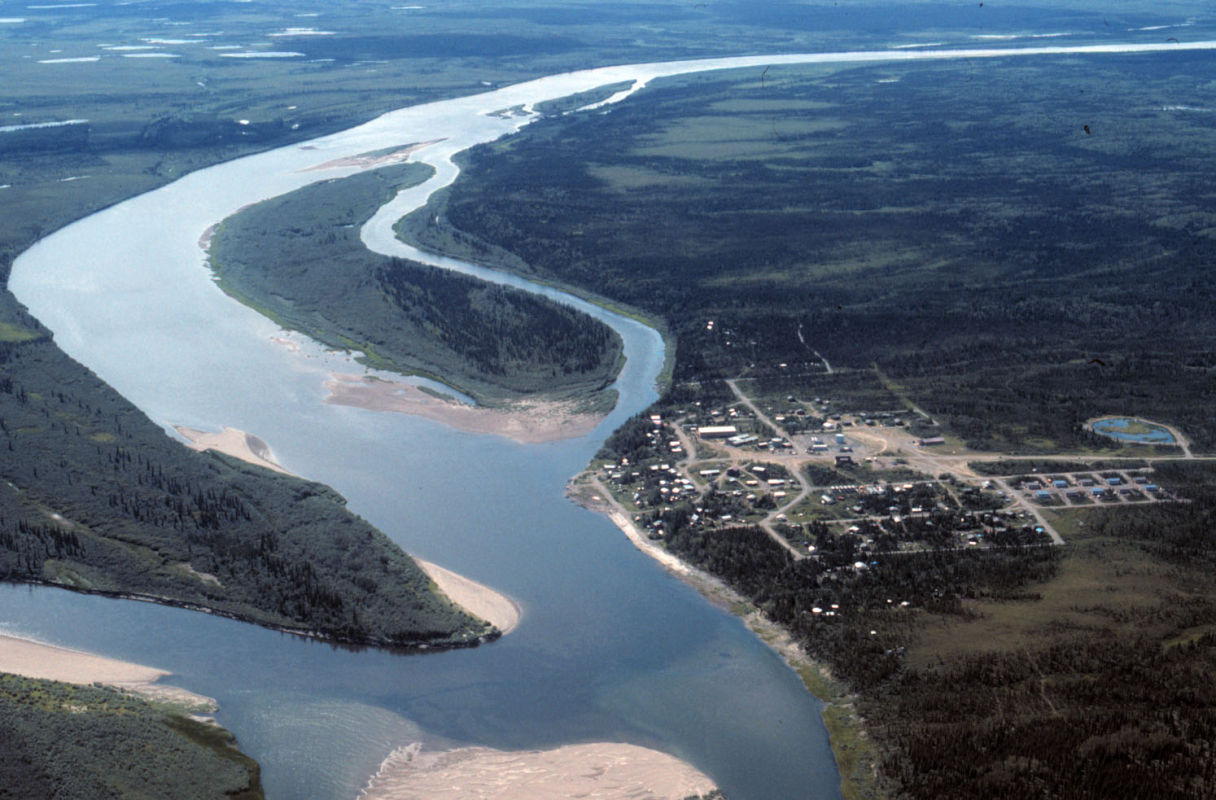
Aerial view of Ambler and the Kobuk River in the summer. (Photo courtesy of the National Park Service via UAF Gates of the Arctic Research Portal)
Aerial view of Ambler and the Kobuk River in the summer. (Courtesy of the National Park Service via UAF Gates of the Arctic Research Portal)

In the latest step in a longstanding dispute between mining advocates and environmentalists, federal and state entities signed a 50-year right of way permit for the controversial Ambler Road project on Wednesday, Jan. 6.

The permit was signed by the Bureau of Land Management, the National Park Service and Alaska’s state-owned development corporation — the Alaska Industrial Development and Export Authority. It allows the privately-owned road to pass through lands controlled by the federal government.

A company called Ambler Metals LLC, a subsidiary of British Columbia-based Trilogy Metals hopes to use the road to access copper, gold, zinc and other mineral deposits in the area, in cooperation with the NANA regional Native corporation.

The road would stretch 211 miles from the Dalton Highway to the Ambler Mining District east of Kotzebue along the Kobuk River. Environmentalists are most opposed to the part of the project that would cross Gates of the Arctic National Park and Preserve.

Bridget Psarianos is an attorney for Trustees for Alaska. The group has filed numerous lawsuits on behalf of conservation groups opposed to the project.

“Putting a gravel road through that area is going to really significantly and negatively impact the environment in that region,” Psarianos said. “The water quality, air quality, wildlife and the communities that are in that region.”

Subsistence advocates have also filed lawsuits over the road, fearful that construction of the project would impact the migration of caribou, a staple of the local Inupiaq diet in Northwest Alaska.

In its environmental assessment released last March, BLM officials flagged potential impacts to local water and air quality, as well as to wildlife migration and erosion.

The project has received millions of dollars in state support. In a statement, Gov. Mike Dunleavy described future efforts in the mining district as responsible resource development that is “key to providing high wage jobs to Alaskans and their families.”

The right-of-way permit came the same day that AIDEA also made the majority of oil lease bids on land tracts in the Arctic National Wildlife Refuge. Considering the pro-resource development attitudes of the waning Trump administration, Psarianos with Trustees for Alaska described these recent decisions as rushed.

“What we’re seeing right now is just a last-ditch, desperate effort by the Trump administration to rubber-stamp as many permits as it can before it leaves office,” Psarianos said.

Psarianos described the decision this week as one of many procedural steps in a lengthy process to get the road built. Construction would still be several years away at the minimum.

Northwest Arctic village of Kivalina on ‘high alert’ as 44 residents test positive for COVID-19

This week, 44 residents of the Northwest Arctic village of Kivalina have tested positive for COVID-19, according to regional health care provider Maniilaq Association.

In a release, Maniilaq officials say 30 residents tested positive on Monday, with another 14 testing positive on Tuesday. The village is on high alert, with officials describing the situation as “widespread community transmission.”

Locals are advised to hunker down and avoid contact with nonfamily members. The number of positive cases represents roughly 10% of the village’s roughly 440 residents.

This story is developing. Check back for updates.

Site notifications
Update notification options
Subscribe to notifications