Southwest

With no commercial interest in Togiak herring, Alaska looks to the Atlantic for inspiration

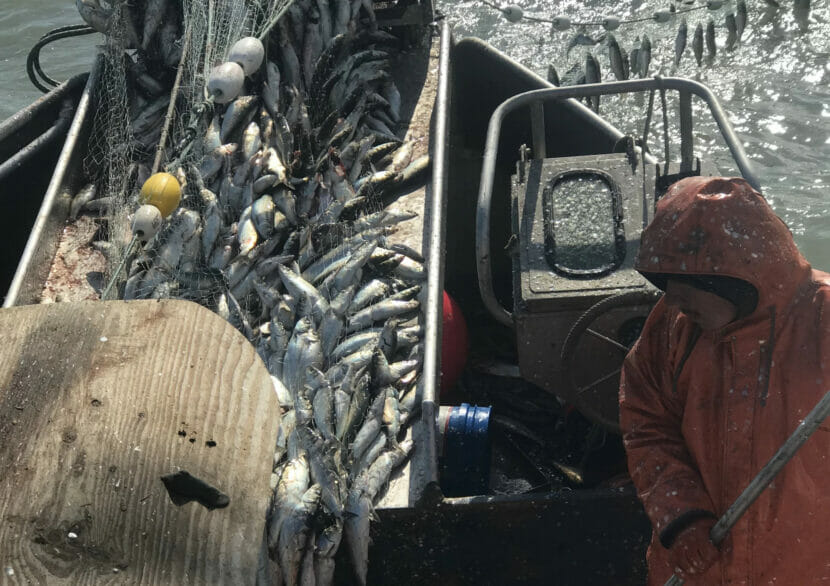
The season’s only gillnet boat harvests Togiak herring in 2018. (Courtesy of Frank Woods)

The Togiak sac roe herring fishery used to draw hundreds of fishermen.

“It was like a gold rush,” said Frank Woods, who lives in Dillingham and started fishing for Togiak herring in the mid-1980s. “The whole bay would fill up with industry. It would be a buzz, everybody would gear up to go. And everybody had not only fun doing it but made money at it.”

Fast forward to 2018, and Woods was the only gillnetter in the fishery.

“Going from that huge industry to down to one boat, I never imagined that even possible,” he said, referring to the gillnet fleet. “Let alone like now, no fishing at all, to where there’s no market for it and nobody’s targeting and changing that for us.”

Togiak is Alaska’s largest herring fishery. But as the market for roe has shrunk, the remote fishery has become financially unfeasible. This spring, no commercial fishing will take place.

Processing companies in Alaska primarily sell herring to Japan, which used to have a big market for the roe. But as Japanese tastes shifted, that market shrank, and the price for herring dropped.

For years, the Alaska Seafood Marketing Institute has worked to increase demand for herring in the U.S. The state bought a herring fillet machine for processors to use. It’s also tried to promote the culinary delights of the fish, hosting Alaska Herring Week three years in a row and working with chefs to develop recipes. But the demand for Alaska herring hasn’t budged significantly, and this year, processors opted out of Togiak.

“You can only lose money for the fun of it for so long,” said Bruce Schactler, a longtime herring fisherman who now directs the institute’s food aid program. “We’ve continued, over time, to lose more and more buyers out of Togiak, and herring buyers in general across the state,” he said. “So what that really tells you is there isn’t very much money in it.”

That’s why last year, Schactler and others at the institute published a report, the Alaska Herring Market Recovery Project. It said the goal was to bring new perspectives to an industry “stuck in the 1980s.”

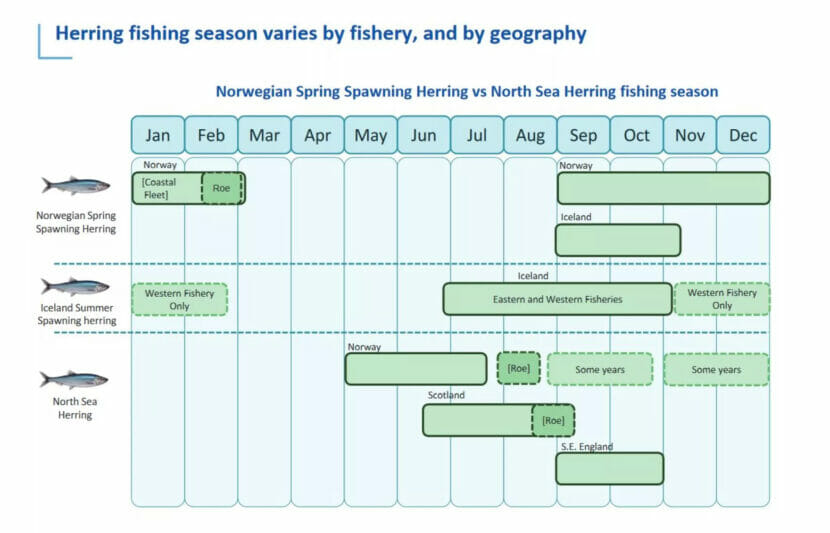
Examining European fisheries in the North Atlantic, Schactler found that fleets fish for herring throughout the year, so processors get a lot of different products based on when the fish are caught, unlike in Alaska, where most fisheries target runs during the spring spawning season. Among the key findings, it reported that some customers will pay more for specific products, like fish with a certain percentage of fat.

Herring from the North Atlantic are used to make fish meal and oil, but also for canning, pickling and smoking.

“They catch the fish in Norway, they ship it to Germany or Denmark. They smoke it, they can it, and next thing you know you’re buying it in Trader Joe’s in Seattle,” he said. “My question has always been, ‘Well, could we catch these big herring in Alaska? Can we catch ‘em in the wintertime in some of these other places when they have a different meat quality from the spawning phase, and then can we do something with them?’
Courtesy Of The Alaska Seafood Marketing Institute

Schactler said in order to market herring successfully, the American fishing industry needs to figure out a new way to sell it. But he said so far, they haven’t seen strong interest in doing so. And there are some key differences between herring fisheries in Alaska and in the Atlantic. For one, the European fisheries are closer to a big slice of their market than Alaska processors, which have to ship fish much further away. And he said herring fisheries in the North Atlantic are bigger.

“Some of the boats they’re fishing will bring in 10 million pounds aboard,” he said. “They’ll have a big week up there fishing and they catch 35,000 tons in just a week.”

The report highlights opportunities in the industry as well; some European herring stocks lost their sustainability certification from the Marine Stewardship Council in 2020, and the report says that creates openings for other fisheries to win new customers.

And even in Europe, the drive for herring has declined, as the customer base has aged. One expert said, “the challenge, which we are facing very soon, is that the herring eating population will die out.” So companies are trying to get younger people to be more enthusiastic about herring, like a Danish marketing campaign called “Vild med Sild,” or “Crazy about herring.”

Others say the demand is there in Eastern Europe, where Poland has successfully marketed herring as a snack food. But geopolitical factors like Russia’s war in Ukraine contribute to the “volatile” nature of the herring market, and it likely means those countries will turn to cheaper herring products.

“What’s happening in Ukraine will change the market totally for herring. I don’t think they will have the money to pay for it,” said one United Kingdom source in the report. “Poland is a big market, everybody wants it. The trouble is, herring is perceived as cheap. Everybody is trying to undercut everybody else.”

Courtesy Of The Alaska Seafood Marketing Institute

Back in Alaska, President and CEO of OBI Seafoods Mark Palmer said they couldn’t process herring this year because of plant renovations in Dillingham and Naknek ahead of the salmon season. And Japan’s floundering demand for herring is just one more reason not to pursue Togiak’s fishery more forcefully. Palmer said OBI has looked at alternative customer bases for herring before, but it’s hard to compete because unlike fisheries in other parts of the world, they mainly target roe-bearing herring. And he said they haven’t hit on the right product yet.

“I think once there’s a product out there, then it would be, you know, can we compete? Can we go out and produce and compete in the global marketplace?” Palmer said. “There’s been efforts to work on fillets, at one point we had equipment in our Kodiak plant, we were filleting herring, we’ve canned, we’ve made samples of canned.”

Schactler said that in order for things to change, management has to shift; Alaska’s herring fisheries are largely managed to harvest sac roe, but to get fish with higher oil content, for example, they would have to harvest them in the fall.

“If you don’t change — [the Alaska Department of] Fish and Game doesn’t change — management, then you don’t have access to those fish for those particular products that you’re going to try to address in some section of the market,” he said. “Management has to change if anything else is going to change in any significant manner.”

For this spring, Togiak’s herring run will return to spawn, unharvested by a commercial fleet.
Three Southwest Alaska Native tribes sue federal government, seeking to block gold mine

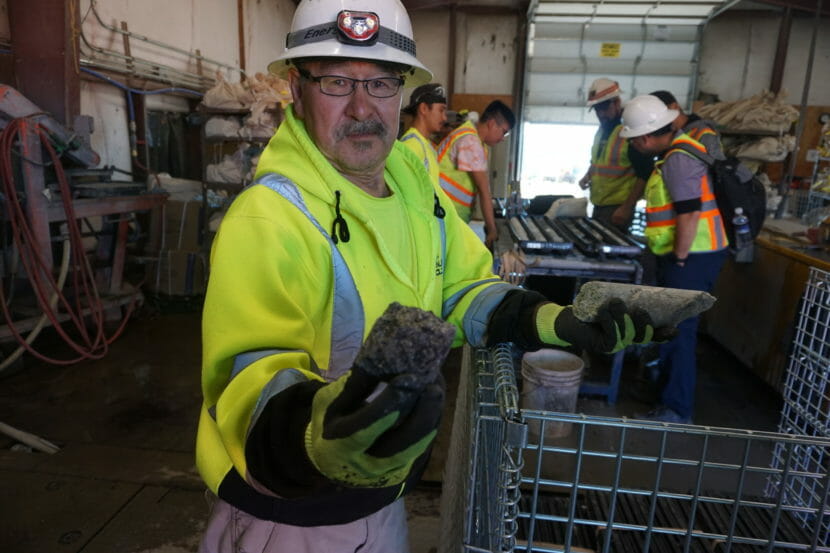
Yago Jacob of Napaskiak, one of the Calista shareholders employed at the Donlin Mine, holds up a sliced piece of a geological core on Aug. 11. (Photo by Yereth Rosen/Alaska Beacon)

Three Alaska Native tribes, with the help of the environmental law firm Earthjustice, sued the federal government on Tuesday, seeking to block development of a large gold mine in Southwest Alaska.

In a 29-page complaint filed in U.S. District Court, they claim various federal agencies improperly permitted the Donlin Gold Mine.

Specifically, they allege that officials failed to properly analyze the environmental impact if there were to be a failure of a planned dam that would hold back the mine waste, known as tailings.

In addition, they allege that officials failed to correctly determine the mine’s impact on the Kuskokwim River, and failed to take into account the effects of the mine on the health of area residents.

“Tribes up and down the Kuskokwim River and throughout the region are banding together because we do not want to see this mine, including the pipeline, materialize,” said Walter Jim, chairman of the Orutsararmiut Native Council, in a written statement announcing the lawsuit.

The Orutsararmiut Native Council, Organized Village of Kwethluk and the Tuluksak Native Community are the three plaintiffs in the case.

The federal government has not yet replied to the lawsuit.

Donlin is being developed by Donlin Gold, a joint project by two mining firms, NovaGold and Barrick Gold Corp., on land owned by the regional Native corporation, Calista, and the Kuskokwim Corp., the joint Native village corporation for 10 communities in the region.

At full capacity, the mine would produce about 1 million troy ounces of gold annually, Donlin Gold told the state in 2016. That would make it one of the largest gold mines in the world. The mine plan also includes construction of a natural gas pipeline from Cook Inlet and supporting infrastructure, including a large camp and airstrip.

In response to the lawsuit, Donlin Gold issued a written statement that said federal litigation “is ubiquitous and expected” on major projects.

“Donlin Gold’s stakeholders fully believe that this lawsuit is meritless and are confident the actual record will once again fully support the agencies’ decisions. In the meantime, the Donlin Gold team and the owners continue to advance remaining state permitting, as well as drilling and technical work,” the statement said in part.

It isn’t yet clear whether the state of Alaska will seek to intervene in the lawsuit. It has done so in defense of other major development projects within the state.

“As this was just filed, we are in the process of reviewing the case and will determine what sort of involvement the state should have,” said Patty Sullivan, a special assistant to Attorney General Treg Taylor and a spokesperson for the Alaska Department of Law.

This story originally appeared in the Alaska Beacon and is republished here with permission.

Y-K Delta women describe the realities of living with climate change for foreign dignitaries

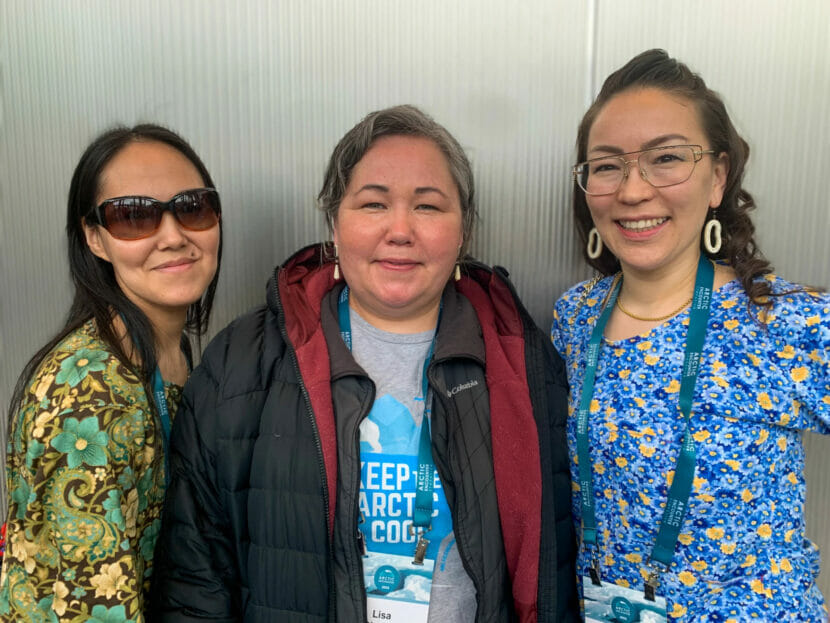
Della Carl, Lisa Charles, and Carolyn George spoke about the unsettling realities of living with climate change at the Arctic Encounter Symposium in Anchorage. (Emily Schwing/KYUK)

Three Alaska Native women from the Y-K Delta delivered a powerful story about the impacts of climate change and village relocation to hundreds of international dignitaries and federal officials gathered last week in Alaska for the Arctic Encounter Symposium.

Carolyn George is raising five young daughters in the small community of Newtok, which lies on the edge of the Ningliq River. She’s candid about what it’s like to live in a community that has been ravaged by a changing climate.

“We have flooding everywhere, every year and, you know — we don’t have sanitation, we don’t have plumbing, we don’t have running water,” George said to a crowd of hundreds. “We have honey buckets. It’s a bucket where you poop and pee and we dump it in the river. And when it floods, it comes back washing in. It’s gross!”

Residents in Newtok are supposed to be moving 9 miles across the Ningliq River to Mertarvik, but the process has been ongoing for more than two decades, complicated by politics and disagreements between local, state, and federal governments.

The largest hurdle to relocating out of Newtok is available housing. There simply isn’t enough in Mertarvik.

“Every year it seems to get worse,” George said. “And I can’t wait to move to the new site.”

But when George will have her chance to move is unclear. Some families started relocating back in 2019. To date, only 150 people have relocated permanently to Mertarvik. There are still nearly 200 people living in Newtok.

Last year, the U.S. Department of Interior announced a $25 million infusion of cash for relocation. The cost to fulfill the housing need alone is roughly a third of that, and it’s not clear that the new money can actually be used on housing.

Last fall, a massive storm fueled by Typhoon Merbok brought waves so fierce that the water claimed roughly half of the remaining land that stands between the village’s school and the Ningliq River. What’s left is about 30 feet of spongy, waterlogged land and George says that Newtok is out of time.

“I think if everyone works together, you know, the state, the federal [government], and all the companies work together, it will make it so much faster. We need help and this is America. We still don’t have running water. We’re Americans!” George said.

The women told their story to a crowd of officials from the U.S. Department of Interior as well as Arctic ambassadors from Finland, Norway and Germany.

After Lisa Charles’ 10-year old daughter relocated to Mertarvik in 2019, she wrote a letter as part of a school assignment.

“I have a dream for the workers to finish working on Mertarvik so that people can move here…” it reads. “… we have friends and families at Newtok that are split up from us… It is important that we need to be one village again, because we just want to be in Mertarvik and see our friends and family.”

Charles, who is raising seven children in Mertarvik, said that the separation is hard on them.

“When we first moved over, every weekend they would ask if they could go spend the weekend with everyone over in Newtok because they missed everyone over there,” Charles said.

There’s no store in Mertarvik, so residents often make the trip by boat or snowmachine back across the river to buy food at the store in Newtok.

When it was Della Carl’s turn to share her perspective, she talked about what her kids notice when they travel between the two communities.

“So we took the boat over and we were getting close to Newtok. And they were saying something like ‘oh what is that smell?’ Like it was… it smelled like muddy poop.”

She said that her kids were excited when they returned to Mertarvik and they noticed the stark difference. “As soon as we got to the barge landing, my daughter hops out and she goes ‘Mom. Mom, do you smell that? It smells like watermelon here!’”

After a decade away, dancers from St. Mary’s return to Cama-i

Moses Paukan Sr.’s wife receives a plaque in his honor from Cama-i Dance Festival organizer Linda Curda. (Katie Basile)

It’s the opening night of the annual Cama-i dance festival in Bethel, and most of the members of one of the featured dance groups aren’t here yet.

Inside the Bethel Regional High School green room, where dancers wearing qaspeqs and fur-lined headdresses gather to prepare for their performances, St. Mary’s dance group leader George Beans is trying to buy more time.

“The plane just got to St. Mary’s,” he tells festival organizer Linda Curda. Weather delayed the afternoon flight, which was scheduled to bring about half of the dancers from the Yukon River community.

Glancing at the printed schedule, Curda does some mental math. St. Mary’s was meant to be on stage already, but she moved up the Marshall dancers. Maybe she can move another?

“Ok, so guess what? I’m going to go talk to these guys and see if we can get them to move up,” Curda tells Beans.

St.Mary’s dancers perform at the 2023 Cama-i Dance Festival. (Katie Basile)

Travel hiccups are just another part of life on the Yukon-Kuskokwim Delta, and the St. Mary’s Dancers are used to delays at this point. Cama-i announcers said that they’re one of the oldest dance groups in the region, but it’s been over a decade since they’ve danced at the annual event.

This year’s event is the first full-scale festival since 2019, and it’s dedicated to Moses Paukan Sr., who helped start the St. Mary’s dance group about 50 years ago. He was also a former state representative and longtime school board member in St. Mary’s.

Paukan died in 2017 and was meant to be recognized at the 2020 festival, but it was canceled due to the COVID-19 pandemic. His wife, Martha, and some of his children traveled to Bethel to receive the dedication.

“We’ve been put off for five years, so now it’s got to be the real deal now,” Beans said.

Luckily, Cama-i’s organizers are no strangers to improvising. After rearranging the dancer schedule and inviting a few unplanned speakers to the stage, they’ve just about exhausted all their options when Curda takes the mic.

“Guess what? St. Mary’s is here!” she tells the packed auditorium. Applause erupts as dancers and drummers pour onto the stage. Without pausing, they take their places and the yuraq begins.

One of the songs they perform was written by Paukan Sr.: “Ataki Tang Wiinga.” He wrote many songs for children and encouraged the youth in his community to continue dancing. Today, the dance group he founded 50 years ago has more than 20 members, from youth up to Elders, including his wife and some of his children and grandchildren.

St.Mary’s dancers perform at the 2023 Cama-i Dance Festival. (Katie Basile)

Isabella Peterson is 16. This was her first Cama-i. She wasn’t on the plane that was delayed, but her grandmother was. Despite all the stress earlier in the day, she said that it was all worth it to step out on the stage in Bethel.

“It feels pretty amazing to dance in front of many other people and to see other dance groups dance and perform,” Peterson said.

Pausing from her dancing, Martha Paukan accepted a plaque for her husband and led the room in the Lord’s Prayer by way of thanks. The audience, young and old, joined in.

“Your legacy, Moses, your spirit lives on in the dances of St. Mary’s,” Curda said during the dedication.

Interior secretary rejects Izembek land exchange, commits to new process for King Cove road

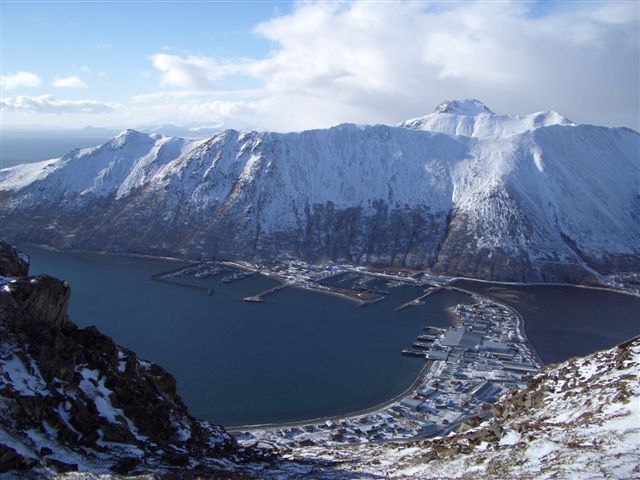
(King Cove. Photo: Aleutians East Borough.)

Interior Secretary Deb Haaland on Tuesday ended the government’s defense of a land exchange agreement that would have allowed the Alaska Peninsula community of King Cove to build a road to reach an all-weather airport. But she she also pledged to launch a new process to get a road for King Cove.

“I have instructed my team to immediately launch a process to review previous proposals for a land exchange,” Haaland said in an emailed statement.

Haaland’s action – essentially conceding in a lawsuit that aims to block the road – starts yet another phase in the decades-long effort by the people of King Cove to get a road to Cold Bay, which they say will save lives by allowing people to fly to a hospital even when the weather is bad.

Road proponents are hopeful that Haaland is sincere about trying to help.

“We have to believe that she is,” said King Cove Corp. CEO Della Trumble, who has lobbied for the road for decades. “We agreed to work with her on it.”

Trumble said that Haaland spoke to local leaders Tuesday with emotion in her voice.

It’s personal for Haaland. She is the first Indigenous secretary of the Interior, and the people of King Cove are primarily Indigenous, too.

The community of about 800 is at the end of the Alaska Peninsula, where the mainland gives way to the Aleutian Chain. It is only reachable by boat, or by its small airstrip, which is frequently weathered in. That can be said of many Alaska towns and villages. But King Cove is unique because it’s near a 10,000-foot runway, at the former Cold Bay Air Force Station, and residents would like to drive there.

The sticking point, as always, is that about 10 miles of the road will have to go through the Izembek National Wildlife Refuge, through land officially designated as wilderness — the highest level of protection.

Conservation groups highlight the area’s importance to migrating birds and call it “one of America’s most ecologically significant refuges.” They’ve repeatedly gone to court to block the road. The latest case is pending before the 9th U.S. Circuit Court of Appeals.

Sen. Lisa Murkowski has championed the project since her early days in Congress. She said she’s not sure what to make of Haaland’s announcement. Murkowski said the pledge to help King Cove was delivered “with a commitment and a resolve that I had not heard before.”

Still, the senator remains wary.

“The people of King Cove had been through so much and have been led down a road of false promises for far too long,” Murkowski said. “This cannot be a false promise.

The new process, Haaland’s email says, will be “rooted in a commitment to engagement in meaningful nation-to-nation consultation with tribes, to protecting the national wildlife refuge system, and to upholding the integrity of ANILCA’s subsistence and conservation purposes,” referring to the 1980 law called the Alaska National Interest Land Conservation Act.

The Interior Department says it intends to initiate an environmental analysis that will reconsider the 2013 land exchange that Sally Jewell, an Interior secretary in the Obama administration, rejected.

Haaland’s announcement is winning favorable reviews from environmental groups.

“We applaud Secretary Haaland for withdrawing the illegal, Trump-era land exchange that would have put at risk the lands, waters, and resources of Izembek National Wildlife Refuge in Alaska,” said League of Conservation Voters Senior Vice President Tiernan Sittenfeld. “Izembek is … home to world-class wetlands that support millions of migrating birds, fish, and caribou. It should be protected for future generations.”

The Alaska Wilderness League, one of the groups suing to block the Trump administration’s land exchange, also praised the announcement.

This story has been updated.

After EPA’s Pebble veto, public comment is open for another mining company to explore nearby

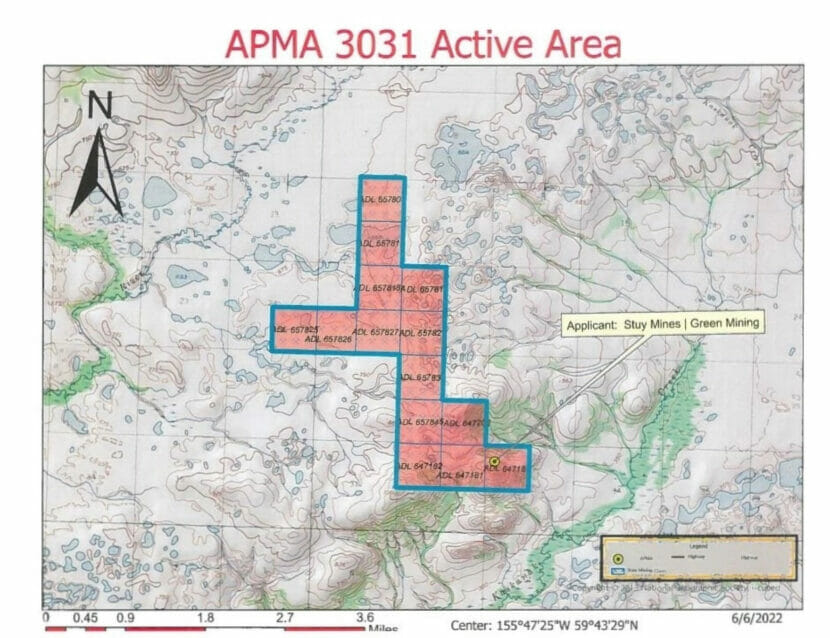
A map included in Stuy Mines application for a hardrock exploration permit. (Alaska Department of Natural Resources)

The Alaska Department of Natural Resources announced last week that Stuy Mines has applied for a hardrock exploration permit along Kaskanak Creek, southwest of the Pebble deposit.

The Stuy Mines company, registered in Washington state, is proposing a multi-year hardrock exploration program, which would include 12 holes a year. The activity could start after the state issues a permit and continue through 2027. To access the site, the company has plotted a pathway that it says mostly follows existing gravel bars along Iliamna Lake and that it would grade existing gravel only where necessary.

Stuy Mines’s primary owner is a company called Love and Above. Manager Greg Ellis has also worked as a screenwriter and a home developer in Washington state, according to his LinkedIn profile.

joint news release from the Bristol Bay Defense Fund cited the EPA’s recent decision to veto mining at the Pebble deposit. The coalition, which includes the United Tribes of Bristol Bay, SalmonState and Katmai Services Provider, says the decades leading up to that decision show that Bristol Bay residents don’t want mining in the region. They also reiterated calls for watershed-wide protections against mining.

“We have always opposed mining around Kaskanak Creek and will continue to be vocal in our opposition to projects like this that threaten our pristine waters, salmon, landscapes, and way of life,” Igiugig Village Council President AlexAnna Salmon said in the news release.

Salmon said the creek is the home of Igiugig’s ancient villages and is important for traditional hunting and fishing. She said the village council is counting on leaders in Washington to enact protections for the entire watershed.

The deadline for public comments on the Stuy Mines application is March 14.

Written comments, questions or requests to view the full application packet can be directed to Sara Church at (907) 458-6896, faxed at (907) 451- 2703 or e-mailed to dnr.fbx.mining@alaska.gov.

Correction: The exploration activity could start after the state issued a permit until 2027, not between 2024 and 2027 as originally reported.

Site notifications
Update notification options
Subscribe to notifications