Community

A Juneau family shares the price of burglary

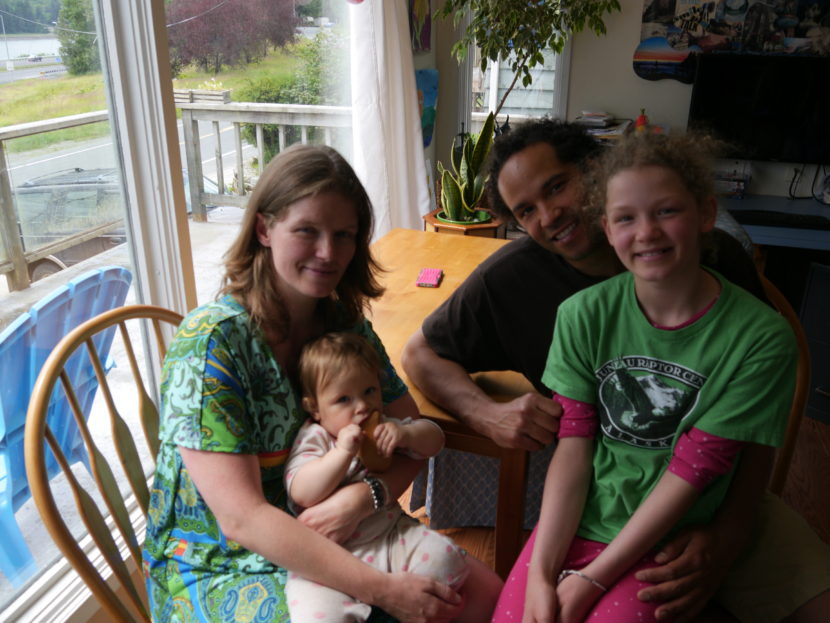
The Powells sitting at their kitchen table on Monday, July 11, 2016. (Photo by Quinton Chandler/KTOO)
The Powells sitting at their kitchen table on  July 11. (Photo by Quinton Chandler/KTOO)

The Powells are a family of four living in a home in downtown Juneau. There’s Pyper – wife and mother, Justin – the only man in the house, and their two daughters: Mahala, 11, and Juniper, a newborn.

Their house was broken into in June while they were away on a business trip.

“Yeah, we came home from our trip, saw the window open, our cats scurrying in through the open window. That was the red flag for me,” said Justin.

He said the house wasn’t vandalized, but it was obvious their privacy had been invaded. Their things were moved around and weren’t where the family left them.

Juneau residents are feeling the effects of multiple burglaries that police believe are, in part, a result of increased drug use. The cost to victims can be huge.

“They took our laptop with all of our account information on it, all of our pictures from birth to now of our newborn (Juniper),” said Pyper. “They stole over $550 worth of cash, several thousand dollars’ worth of jewelry – that dates back to stuff my mom has given me, stuff my sister gave me. And my biggest treasures: my daughter’s baby teeth (Mahala) and a swatch of baby hair. I put them in my jewelry box ’cause I said, ‘That’s my biggest treasure. I’ll keep it with my treasures.”

Pyper said her sister died earlier this year so losing her jewelry was especially painful.

Justin regrets losing a silver bracelet handcrafted by his late uncle, and he had a handgun that he believes was stolen a couple of weeks before the rest of the house was hit.

“That’s when we originally got cased, I think. Whoever stole that handgun, whether they came back or told a friend, ‘Hey if you want an easy place to hit …’” said Justin.

He said they were an easy target, that they were lulled into complacency by the belief that Juneau was a crime-free town.

“Oftentimes when I would take my daughter to school in the mornings I would purposely unlock the side door so when I was coming back with Juniper and all the baby gear, it was easy for me to get back in,” Justin said.

Pyper agrees they made the break-in too easy. Both parents were especially disturbed by the theft of a picture of their 11-year-old Mahala.

“Why would you take that?” asked Pyper. “It wasn’t in a frame … that bothers me,”

She hopes the thieves got the photo by accident when they were cleaning out her dresser.

“I’m a therapist, so I hear some of the most horrific stories that there are –”

Pyper gently shoos Mahala out of earshot before continuing.

“I know that there’s a human trafficking concern in Juneau. I know that there’s child pornography in every town, I know that there are kidnappings in every town.”

The Powells said the break-in has definitely changed their lives.

Justin said, “That’s probably the worst thing about being robbed. Immediately, you start pointing the finger at everybody. It erodes trust in the community.”

Pyper agreed, “I really had to catch myself because I was giving everyone the evil eye. ‘Are you the one? Did you do this to us? Are you coming back?’ That’s what it does, it leaves you feeling vulnerable,” she said.

The couple now watches for suspicious characters in the neighborhood and they’re putting a security camera in their daughter’s room. They have stronger locks on their windows and Justin has a new, bigger gun.

“When I was younger, I swore I’d never get a weapon for self-defense. I was all about hunting, but I never felt the need to have a handgun,” he said.

That’s changed now that he has a family.

Justin said they found two things the thieves took while checking local pawn shops, but the police are still investigating and no arrests have been made.
Juneau man’s thoughts drift home after Turkish coup attempt

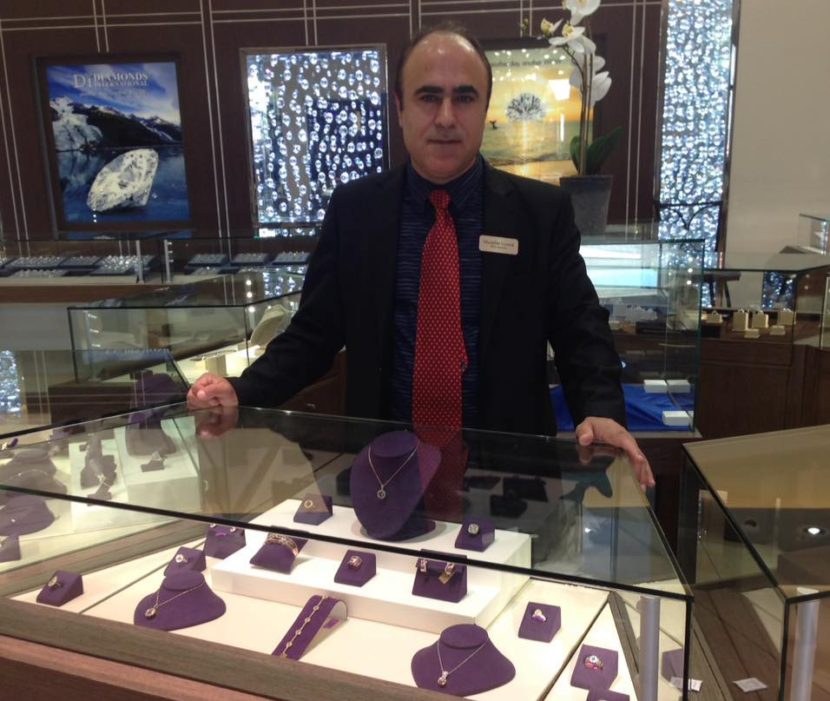
Muzaffer Uyanik at Diamonds International Wednesday, May 11, 2016. (Photo by Mary Uyanik)
Muzaffer Uyanik works at Diamonds International on May 11, 2016. (Photo by Mary Uyanik)

When members of Turkey’s military tried to seize control of their country last week, Turks living overseas – including in Alaska – weren’t immune to fear and uncertainty.

Muzaffer Uyanik is Kurdish and was born and raised in a town in eastern Turkey close to the Iranian and Iraqi borders.

“They call it Lake Van. We have the biggest lake in Turkey, so it makes it easy if you search Lake Van. My hometown is famous with lake and cats,” said Uyanik.

Now, Uyanik is a salesman for Diamonds International in downtown Juneau. He said he was caught off guard by the attempt to overthrow Turkey’s elected government.

“It’s like a shock, you know. It’s a big surprise for most of … Turks let’s say, I consider myself as a Turk,” said Uyanik.

Members of the Turkish military tried to seize control in the middle of the night while Turkey’s president, Recep Tayyip Erdogan, was away on vacation.

The failed coup left more than 290 people dead and more than 1,400 wounded, according to the Turkish Ministry of Foreign Affairs. The Turkish government has arrested more than 6,000 people in connection with the attempt and more than 100 of the people killed have been branded, conspirators.

Uyanik believes some members of his family are safe. His mother, brother and two of his sisters who live in Izmir, in western Turkey, were far from the fighting. He’s less certain about his two sisters and their families who still live in his hometown to the east.

“Their life is more difficult. Eastern Turkey … if you go to eastern Turkey and if you compare it with the center, they have really, really hard life in eastern Turkey,” said Uyanik. “They have big … marching and protests about what happened.”

Uyanik believes the coup was staged by supporters of the same cleric President Erdogan accuses of instigating the power grab – Fethullah Gulen.

Aykan Erdemir, a senior fellow with the Foundation for Defense of Democracy in Washington, D.C., has been following the situation in Turkey very closely.

“I’ve been up non-stop for the last 36 hours – only slept one hour. It’s really non-stop, it’s such a mess as we can see,” Erdemir said.

Erdemir also served in the Turkish Republican People’s Party as a member of parliament between 2011 and 2015. He said the cleric, Gulen, is the central figure of an international network of schools, charities, businesses and media outlets. Erdemir said Gulen and Erdogan were political allies up until 2013, but now they “are almost like archrivals”.

“For the prime minister and president, this is a Gulenist clique within the Turkish military. He calls them a parallel state and he thinks they are out to overthrow him,” he said.

Uyanik said he’s not a fan of president Erdogan, but he’d rather Erdogan’s government remains intact.

“Gulen is more dangerous than him actually. He’s very dangerous. He’ll do anything to have the power even if it’s going to cost people’s lives. He wouldn’t mind, he wouldn’t care,” said Uyanik.

Erdemir doesn’t know if a Gulenist faction was behind the coup. He stressed that he wouldn’t expect Gulen, a spiritual leader, to take a political post.

“The community is not a political movement, is not a political party, but over the course of their history they change allegiances, they support one party or another during their term,” he said.

Erdemir is more curious how Turkey will move forward after the failed coup. He said the president has an opportunity to move Turkish democracy forward by capitalizing on the country’s strong endorsement of the democratically elected government over a military takeover.

But, he doubts that will happen.

“He will probably use this coup d’état attempt, failed coup, as an opportunity to crackdown on dissidents, to consolidate his powers and to push for an executive presidential system which will give him unprecedented powers,” Erdemir said.

Uyanik thinks that, even before this latest crisis, Turkey has been steadily losing western countries’ respect, a trend he is afraid will continue.

“We’re losing it. Turkey is losing the good feelings that Europe and western countries had about Turkey,” said Uyanik.

Editor’s note: After this story was published, Aykan Erdemir downplayed the certainty of his analysis regarding Fethullah Gulen’s possible involvement in the coup. His comments have been revised to be more neutral and less absolute. 

Skagway Assembly proposes lease negotiations with railroad

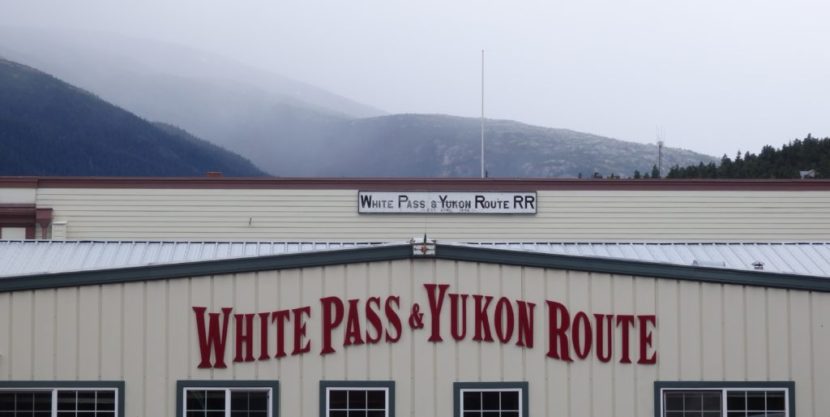
White Pass and Yukon Route Railroad controls much of the tidelands the municipality needs access to for port improvements. (Greta Mart)
White Pass and Yukon Route Railroad controls much of the tidelands the municipality needs access to for port improvements. (Photo by Greta Mart/KHNS)

Skagway leaders want to re-engage with White Pass and Yukon Route Railroad to discuss a tidelands lease agreement. The borough assembly came to that consensus after talking for more than an hour behind closed doors at a special meeting Wednesday.

It’s been about nine months since Skagway voters rejected a tidelands lease extension between the municipality and White Pass. In the time since then, the assembly met privately with railroad officials, exchanged letters, and held work sessions about the future of the port. There has been a lot of talk, but not a lot of progress.

Time and again, officials have expressed urgency about the tight timeline Skagway has to spend millions of dollars in state grant funding for the port and build a floating dock to accommodate larger cruise ships.

The lease extension that was shut down by voters would have given the municipality access to tidelands currently leased by White Pass. Without access, port improvements stalled.

After the executive session on Wednesday, the assembly unanimously voted to have a resolution come forward at the next regular meeting. The resolution would indicate that the assembly wants to re-engage in lease discussions with White Pass.

The port commission will review the proposed resolution on Friday. The next assembly meeting is July 21.

Electrical fire in downtown home extinguished

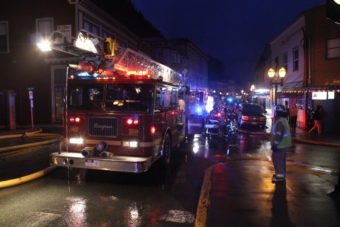
Capital City Fire/Rescue battles Saturday's fire at the Gastineau Apartments building. (Photo by Mikko Wilson/KTOO)
Capital City Fire/Rescue battles fire at the Gastineau Apartments building on Saturday, March 21, 2015. (Photo by Mikko Wilson/KTOO)

An electrical fire caused an estimated $2000 in damage at a home in downtown Juneau Saturday afternoon.

Capital City Fire/Rescue Assistant Chief Ed Quinto said the fire on Carrol Way started around an electrical plug in one of the home’s bedrooms. He said the homeowner put out the fire with a fire extinguisher and kept it from spreading.

All damage was limited to the bedroom.


A lesson in archaeology at the Dena’ina culture camp of Kijik

Archaeologist Randy Tedor shows kids how to sift through dirt at the “Quk Taz’Un” house site. (Photo by Hannah Colton, KDLG – Dillingham)

On the north shore of Lake Clark, there’s a place called Kijik. It’s the historic homeland of the Dena’ina Athabascans of the area, and also the site of a culture camp where youth and elders from the village of Nondalton came together last week. Dozens of abandoned homes dot the area.

“A little pushdown, flick out, and then you wanna keep going down the wall,” said Randy Tedor.

Tedor kneels in front of a 50-centimeter square of dirt. The bushy-bearded archeologist is showing a group of kids how to carefully excavate the quadrant.

“Excavation is an art,” he tells them, deftly pulling layers of soil loose.”

11-year-old Cordelle Balluta-Trefon puts down a metal detector he’s been playing with and gets to work in the dirt with a dustpan and a trowel.

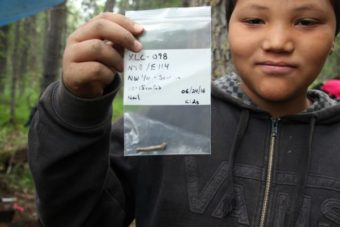
After a while, Balluta-Trefon puts down the trowel and hands something to Tedor. It’s a tiny red speck.

“Good eye, man! I can’t believe you saw that” Tedor said laughing. “A little baby bead.”

That little bead, Tedor explained, is a huge clue. This type of glass bead was only manufactured in Europe after a certain date, so it helps archaeologists like Tedor figure out how old the site is. They think this house was occupied between 1840 and the 1880s.

As he explores more into the site, Balluta-Trefon said he’s getting a picture in his head, visualizing what it might have looked like when people lived here

“I don’t see people, but I just see a house. There’s a fire pit, there’s a storage room, a bedroom, that’s the front door over there,” Balluta-Trefon mused. “I’m still kinda putting the picture together.”

This curiosity is exactly what Tedor is trying to inspire; he wants the kids to wonder how people lived back then, maybe to realize that the people living on this land were, in many ways, just like us.

But like many old village sites in Alaska, this land, and its people have a troubled history.

Fur hunters and explorers from Russia started plundering Lake Clark’s Dena’ina villages in the late 1790s. Next came the Russian Orthodox missionaries, who by the 1830s were traveling around regularly to baptize and hold services in villages.

Cordelle Balluta-Trefon holds up a square-sided nail, another clue as to when this house was inhabited. (Photo by Hannah Colton, KDLG – Dillingham)And of course, with this new contact came new diseases. Around 1900, measles and flu epidemics devastated the population at Kijik. The survivors moved down the lake to what is now the village of Nondalton, seeking better access to salmon runs and trading posts.

They left Kijik behind, along with a lakeshore full of graves and sad memories.

“They’re estimating up to 200 graves here,” said Karen Evanoff, a Dena’ina Athabascan cultural anthropologist with Lake Clark National Park. For five years she’s been working with the Nondalton Tribal Council and researchers to identify and mark the graves.

The work culminated in a blessing ceremony last summer.

“Close to a hundred people were here, and we combined the traditional way of spirituality and blessing with the Russian Orthodox way, so it was a huge celebration,” Evanoff said. “This is a healing place.”

There’s still controversy over the land at Kijik; parts of it are now owned by a Native allotment and a homesteader, who built structures on and around the church and grave sites. The Kijik Corporation has managed to buy a few acres back, and Evanoff said they hope to regain more of the land the people consider sacred.

“That’s part of the vision,” she said, “to clear this of the cabins and have some plaques here to identify who’s buried.”

Holding the culture camp here is another part of that healing process. Evanoff planned the camp along with Michelle Ravenmoon of Pope-Vanoy on Lake Iliamna

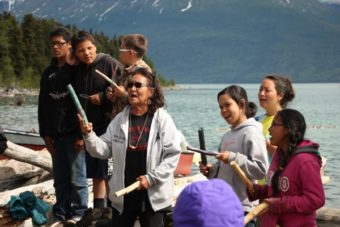
Michelle Ravenmoon (right), Nondalton elder Pauline Hobson (left) and kids sing a Dena’ina song at the end-of-camp potluck (Photo by Hannah Colton, KDLG – Dillingham)

“Of course, we want the kids to have a lot of fun and enjoy themselves and grow their self-confidence and pride,” Ravenmoon said. “But we also wanted to make sure they learn their history and their identity, where they come from, who they are.”

Each activity – from wood carving to caribou hide-tanning to language classes – is meant to help kids understand their Dena’ina culture.

“We’ve been very unsuccessful as Native people sending them out, preparing them for this outside world,” Ravenmoon said. “We give them computers, and we teach them (the) history of the United States, but we’ve taught them so little about who they are where they come from. I think it’s important for kids to know their history.”

A piece of that history lies in the ground at the archeological site, waiting for the kids to get their hands on it.

Up until recently, the archaeological site was known to scientists as “house pit XLC-098.” But Michelle and Karen were happy to share that the site is now being officially renamed: “Quk Taz’Un,” the same name as the culture camp.

It means “the sun is rising,” hopefully on a brighter future for the Dena’ina Athabascans of Lake Clark.


State crime bill makes reporting crimes safer for sex workers

(Creative Commons photo by Andreas Levers)

Late last month a woman who had been brutally murdered was found in the vehicle of 34-year-old Benjamin Wilkins of Anchorage. The deceased, 30-year-old Jacqueline Goodwin was laid to rest beside her mother in Kotzebue. Police are still investigating the relationship between Wilkins and Goodwin, but court records show in the past she was charged with prostitution.

Under current law, if a sex worker witnesses or is the victim of a crime, the person cannot report the crime without fear of being charged with prostitution or sex trafficking. But Senate Bill 91, the omnibus crime bill that passed this session, would change that.

Sex workers “can come forward, and they’re not going to be charged with prostitution for coming forward,” explained advocate and former sex worker Terra Burns. “And they’re not going to be investigated based on any information that was gained as a result of them making that report.”

Burns says the changes make it safer for both sex workers and the entire community because sex workers will be able to help police identify violent criminals. They will also be able to report things like sexual abuse of minors and distribution of child pornography without fear of reprisal.

“When you can catch those people right away [with the help of reports from sex workers] you can prevent so much other violence,” Burns said.

SB 91 has not been signed by Gov. Walker yet. He has until July 13 to sign the bill, let it become law without his signature, or veto it in its entirety. His staff said they are still reviewing the 125-page piece of legislation and are looking into concerns over Sections 39 and 40, which are related to sex trafficking.

Burns said she hopes that when the bill is signed, people will provide more information about crimes and about Wilkins and his past. He’s currently been indicted on charges of murder in the first degree, kidnapping, sexual assault, and other charges.


Site notifications
Update notification options
Subscribe to notifications