
Alaska Native Corporations

Goldbelt shareholder fined $1,000 over Facebook post accusing state regulator of inaction

The cover design of Goldbelt Inc.'s 2016 annual report was inspired by the late Clarissa Rizal, a Goldbelt shareholder and weaver. (Photo by Jeremy Hsieh/KTOO)
The cover design of Goldbelt Inc.’s 2016 annual report was inspired by the late Clarissa Rizal, a Goldbelt shareholder and weaver. (Photo by Jeremy Hsieh/KTOO)

State financial regulators have fined a Goldbelt, Inc. shareholder over a Facebook post complaining of inaction by the state agency responsible for financial oversight of the corporate board. This comes as the state’s broad powers over shareholder speech is under review by the Alaska Supreme Court.

Goldbelt shareholder Ray Austin complained to regulators in 2018 that board members were breaking the rules by not filing financial disclosures.

“It’s important that board members disclose any conflict of interest that they may have,” he said in a recent phone interview from his home in New Mexico.

But he says that the Alaska Division of Banking & Securities, which has oversight of the board of Juneau’s urban Native corporation, did nothing.

Then, in a Facebook forum in May of 2019, while running for a seat on the board he went public with that and another complaint he’d filed:  Goldbelt board member Richard Beasley, an accomplished Tlingit master carver, had signed a contract for work at the corporation’s Mount Roberts Tramway a month before the corporation’s annual meeting and board elections. But this wasn’t disclosed to shareholders.

Alaska’s Banking & Securities Division says “Facebook posts are ‘proxy statements’ as defined in 3 AAC 08.365(14) because they are communications that were made available to shareholders under circumstances reasonably calculated to result in the procurement, withholding or revocation of a proxy. In other words, they could help sway a shareholder with voting power in a Native corporation election. (Screenshot by Jacob Resneck/CoastAlaska)

Normally board members aren’t allowed to work for corporations they’re overseeing. But the board had made an exception for one of their own. Austin’s post also revealed the details of past complaints, none of which he believes were acted upon by regulators.

But it’s that public, online complaint that’s landed Austin in hot water. State financial regulators are empowered to regulate any public statement that could sway a board election in a Native corporation — which his post seeking support from shareholders arguably was.

The rules are designed to block misleading information that could affect projects and defraud investors. But critics like Austin say it’s more often used to silence dissent of shareholders of regional, urban and village Native corporations.

Freedom of speech is important. I think, shareholders or anyone should have the right for freedom of speech,” Austin said, “and it appears that we don’t.”

Regulators charged with enforcement say that’s not the case.

Every complaint is treated equally,” said Leif Haugen, chief of enforcement for the state’s Banking & Securities Division.  He wouldn’t comment on allegations against Goldbelt’s board of directors, as investigative files are confidential.

Most, though not necessarily all, enforcement actions are generated by complaints brought to the seven-member enforcement team. He says most orders and fines are against individual shareholders probably because they often don’t have the same access to professional legal advice.

“We see more complaints against shareholders maybe because they aren’t quite as knowledgeable about the regulations.”

Goldbelt’s CEO McHugh Pierre says the corporation didn’t try to silence Austin, a perennial candidate for the board and outspoken critic of the corporation’s management. And he denies that  board members band together to campaign for each other.

“We don’t have a board slate like Sealaska or other corporations do,” he told CoastAlaska News. “It’s a totally independent campaign cycle. And so the corporation doesn’t take a position one way or another and doesn’t take actions against candidates regarding Banking & Securities investigations.”

So why did regulators issue a June 16 enforcement action against Ray Austin?

  • He didn’t file disclosures of his own with the agency before publicly seeking support for his election campaign.
  • The Facebook post got a date wrong in his narrative about Richard Beasley’s disclosure requirement for working as a contractor at the corporation’s Mount Roberts Tramway.

“So, (Austin) was saying that it should have been disclosed in the 2018 proxy,” Pierre explained, “which, that was impossible because the work wasn’t for the previous year. The work was beginning in 2018. And in fact, began after the proxy was already printed (in April).”

And it’s on this basis that regulators say a “material misrepresentation” was made, and fined him $1,000.

There are differing views on whether Goldbelt should’ve disclosed one of its board incumbents had a paid side-gig with the corporation. But to date, regulators are silent on that point.

“I won’t speak about other matters that have been under investigation that didn’t result in an order or anything that may be currently being investigated,” Haugen said.

But back to the larger question: Are regulators overreaching by fining dissident shareholders? The Alaska Supreme Court has already heard arguments from the ACLU, challenging the state’s power to regulate any speech in print or online that could influence the governance of Native corporations.

Haugen says the courts have traditionally sided with the regulator. In fact, its broad powers aren’t limited to just shareholders of Native corporations created out of the Alaska Native Claims Settlement Act or ANCSA.

“Any person, theoretically, who gets involved in soliciting proxies could become a respondent in an ANCSA complaint,” Haugen said. “I can tell you that I haven’t seen that in my time here. But I guess it’s theoretically possible.”

That remains untested. Even so, the state’s authority over Native corporation elections violating free speech is a question now being weighed by Alaska’s Supreme Court justices.

Austin has the right to defend himself in an administrative hearing. But to do that, he’ll need to have forms notarized — in person — and he says that’s too risky in a pandemic. He lives in New Mexico, where as of early July 2, more than 500 people have died from COVID-19; there have been more than 12,000 confirmed cases in the state.

“We’re close to the Navajo reservation and my wife’s Navajo and we know people that have the virus right now,” Austin said. “My brother-in-law’s brother died from it and so I just didn’t want to jeopardize myself and my family.”

He’s now in touch with state regulators on the potential workarounds so he can defend himself in a hearing without coming into contact with people outside his household.

Neiman Marcus filed for bankruptcy, but lawsuit is moving ahead over ‘Ravenstail knitted coat’

Clarissa Rizal is an artist who specializes in the design and creation of Tlingit regalia, including Chilkat and Ravenstail robes and weavings. Rizal regularly conducts workshops and apprenticeships to help revive the Chilkat style of weaving. (Photo by Tripp J Crouse/KTOO)
Clarissa Rizal is an artist who specialized in the design and creation of Tlingit regalia and art, including Chilkat and Ravenstail robes and weavings. (Photo by Tripp J Crouse/KTOO)

Neiman Marcus is one of the clothing retailers that’s seen a decline in sales because of the coronavirus. The company filed for bankruptcy in early May — just weeks after it was sued by Sealaska Heritage Institute.

The company was selling a so-called “Ravenstail knitted coat” on its website, which the Institute alleges is a copy of a notable Alaska Native weaver’s design. 

Lily Hope remembers seeing her mother’s piece hanging at an art show at the Heard Museum in Phoenix. The robe was called “Discovering the Angles of an Electrified Heart,” and it won first place. 

Hope’s mom, Clarissa Rizal, died in 2016, and Hope’s family later had some of that work copyrighted. Not long after that, Hope got a message from some friends. They sent links to multiple websites, including Neiman Marcus. The company was selling a very similar-looking garment to the piece her mother wove. 

Hope’s immediate thought was “What are they thinking? What makes someone think that’s OK?”

“Discovering the Angles of an Electrified Heart” by Clarissa Rizal. (Photo courtesy of Rizal’s heirs and Sealaska Heritage Institute)

Ravenstail weaving has been practiced by Tlingit, Haida and Tsimshian people for hundreds of years. Rizal has been credited as an important influence on reviving the tradition. Hope was taught to weave by her mother and is now a weaver herself. 

The “Ravenstail knitted coat” — retailing for more than $2,500 dollars — features the same bold geometric patterns seen in Northwest Coast weaving. Hope says she also recognized flourishes that were distinctly her mother’s. As the website links to the coat kept filling up her inbox, she wasn’t sure what to do.

“With each one of them, I was like ‘yep, I’ve seen it’,” Hope said. “And then I was like ‘I wonder if there would be something to do about it?'”

 “Ravenstail Knitted Coat,” photos by Brian Wallace, courtesy of Sealaska Heritage Institute
The “Ravenstail knitted coat” sold at Neiman Marcus. (Photo by Brian Wallace, courtesy of Sealaska Heritage Institute)

Hope met on the phone with Sealaska Heritage Institute in Juneau, and she says they decided to take a stand. 

“It doesn’t feel good as an Indigenous artist to think that the work I make could be mass produced,” Hope said.

Sealaska Heritage Institute sued Neiman Marcus in the spring for alleged copyright infringement and violating the Indian Arts and Crafts Act — a law that ensures products marketed as Native American or Native Alaskan are authentic. 

President Rosita Worl called it “one of the most blatant examples of cultural appropriation” she’d ever seen. The case is thought to be the first time in the U.S. a business has been sued for copying a traditional Indigenous pattern. Though, it’s far from the first time there’s been concern over the issue

The Italian clothing company that makes the “Ravenstail knitted coat” is described as “paying homage to Native American iconography.”

“It doesn’t work that way because you’ve taken their property,” said Jacob Adams, Sealaska Heritage Institute’s lawyer on the case. “You’ve stolen it and that’s the end of the discussion.”

He says copyright law does allow for inspiration. 

“What is not allowed is copying,” he said.

And he thinks that’s what’s happening with the “Ravenstail knitted coat” and other Indigenous patterns and cultural property, which have been used to sell products. 

“This isn’t a call to end all external use of these patterns,” Adams said. “It’s a call to do things appropriately.”

Adams thinks there is an example of a corporation doing things appropriately: Walt Disney Animation Studios. 

The song “Vuelie” is in the opening of the princess saga “Frozen” and its sequel “Frozen 2.” It’s composed of Sámi chants. For the first film, Disney was accused of whitewashing Indigenous Sámi culture. For the second film, the company entered into a legal contract with Sámi leaders. 

Adams says that’s an important distinction. This isn’t some kind of soft law thing. It’s not passive, like asking for permission: It’s something you must do — recognizing Indigenous groups have the right to say, “no.” 

“Even if we want to do things appropriately sometimes it’s difficult to know how. So, just starting at that basic principle of recognizing these rights, it gives us a roadmap of how to properly engage,” Adams said.

Adams wants the Sealaska Heritage Institute lawsuit to further that discussion. He says the Neiman Marcus bankruptcy has complicated things, but the case is still moving forward.   

Sealaska Heritage Institute’s President, Rosita Worl, didn’t want to comment verbally on the ongoing case but added in writing:

“My hopes are that businesses will develop policies and practices to respect the cultural and intellectual property of Indigenous Peoples, and that they would be open to opportunities to collaborate with Indigenous Peoples.” 

Effort to have term limits for Sealaska board fails, and other news from the 2020 annual meeting

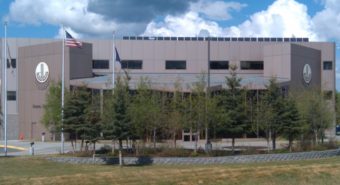
A Sealaska corporate logo adorns the roof of the Southeast Alaska Native corportation's headquarters in Juenau on May 2, 2018.
A Sealaska corporate logo adorns the roof of the Southeast Alaska Native corportation’s headquarters in Juenau on May 2, 2018. The logo has representations of the Eagle and Raven moieties of the Tlingit, Haida and Tsimshian cultures. (Photo by Jeremy Hsieh/KTOO)

An effort to institute term limits for Sealaska’s 13-member board of directors has failed despite receiving a majority of ‘yes’ votes from shareholders.

Similar term-limit measures also failed to advance in 2016 and 2012.

The longest serving member is former state Sen. Albert Kookesh of Angoon, who’s been on Sealaska’s Board of Directors since 1976.

This year’s measure faced a steep hill to climb. It needed more than 1 million shares directed by shareholders to succeed. But it still fell short with nearly 820,000 shares in favor compared to less than 520,000 against. And more than 600,000 shares weren’t counted either way.

Shareholders hold various amounts of shares. The more shares they own the more weight their vote carries.

Sealaska held its annual meeting on Saturday, June 27.

In the race for Sealaska’s board of directors, three of the four seats up for election went to board-endorsed candidates running on a joint platform. They were newcomers Lisa Lang of Hydaburg and Angela Michaud of Anchorage.
Morgan Howard of Kirkland, Washington was re-elected for a second term.

“Our path forward looks promising as we continue to protect our land, preserve our heritage, revitalize our languages, increase shareholder opportunities and improve communication to shareholders,” Howard said in a statement.

Independent candidate Karen Taug filled the fourth open seat. The Juneau resident touted her experience working in finance as an asset. Following her election, Taug told CoastAlaska she’d like to see the regional Native corporation partner with urban and village corporations, as well as tribal governments, to create job opportunities across Southeast Alaska.

“Because I believe that if we have a good economy, then we can help provide jobs for shareholders so that they can provide for their own families. I think that’s a bigger benefit than a once- or twice-a-year dividend,” she said in a phone interview. “The dividends are nice, don’t get me wrong. I think dividends are important. But I believe having a job is more important, because then you can provide year-round.”

Because shares, rather than shareholders, are counted as votes it’s nearly impossible to say which candidates received more support from individual shareholders.

Board Endorsed

  • Lisa Lang – 796,125
  • Morgan Howard – 793,141
  • Angela Michaud – 791,926
  • Michael Roberts – 239,056

Independents

  • Karen Taug – 788,133
  • Vicki Soboleff – 612,323
  • Richard Beasley – 482,692
  • Sidney Edenshaw – 396,273
  • Kimberly Strong – 207,412
  • Myrna Gardner – 188,947
  • Monico Ortiz – 101,225

The average shareholder has 400 shares.

Sealaska is based in Juneau and has more than 22,000 shareholders making it the largest of Alaska’s dozen regional native corporations. It reported more than $700 million in revenue last year.

At its annual meeting, the Sealaska board of directors reappointed its management team including CEO Anthony Mallott, COO Terry Downes, CFO Doug Morris and VP of Legal Affairs Jaeleen Kookesh.

According to a 2020 filing, Downes was the highest paid employee, making around $2.1 million in 2019; Mallott and Morris reported compensation totaling $1.14 million and $1.17 million respectively.

Board Chair Joe Nelson was paid nearly $250,000 in 2019. The other dozen board of directors’ compensation starts at $2,000 a month.

Note: This article has been corrected to reflect that Lisa Lang lives in Hydaburg, not Juneau.

Court rules Native corporations can receive CARES Act money intended for tribes

Alaska regional Native corporation Doyon, Limited, located in downtown Fairbanks, Alaska. (Creative Commons photo by RadioKAOS)

A U.S. District Court judge in Washington, D.C. has ruled that Alaska Native corporations are eligible to receive part of the $8 billion Congress set aside to help tribes respond to the coronavirus pandemic.

Judge Amit Mehta initially agreed with a coalition of tribes that tried to stop the payments. They argued that the corporations did not qualify for the money because they are for-profit corporations, not self-governing tribes. But, after hearing the case, Mehta decided Friday that “ANCs are ‘Indian Tribes,’ and that their boards of directors are ‘Tribal governments, for purposes of the [CARES] Act.”

The case highlights the unique position of Alaska Native corporations, entities created by the Alaska Native Claims Settlement Act of 1971. Congress charged them with making profits for their shareholders, but also with improving social and cultural well-being of Alaska Native people.

In the CARES Act, Congress allocated $8 billion to tribes and referred to previous laws to define what a tribe is.

The Treasury Department decided the definition included Alaska Native corporations. It developed a formula to distribute the money based in part on population, budget and on how many employees a tribe or corporation has.

The corporations say they serve some of the same purposes as Lower 48 tribes. Collectively, they’ve pledged more than $2 million to food security, protective equipment and other initiatives to help their communities cope with the pandemic.

“This disaster assistance will provide immediate support to Alaska’s rural communities suffering from COVID-19 and help repair the economic damage caused by the pandemic,” said Kim Reitmeier, executive director of the ANCSA Regional Association, which represents Alaska’s 12 regional corporations.

The decision is a blow to tribes leery of any delegation of their self-governance powers. Three Alaska tribes were among the plaintiffs in the case: the Akiak Native Community, Asa’carsarmiut Tribe of Mountain Village and the Aleut Community of St. Paul Island.

Alaska Federation of Natives celebrated the decision. In an emailed statement, AFN attributed the dispute to worry among “Lower 48 tribes and national tribal organizations” that including the corporations would “result in a windfall to Alaska Native peoples.”

AFN’s membership includes corporations and tribes. That duality was evident in its response to the decision.

“AFN understands that the powers of tribal self-governance rest exclusively with Alaska tribes,” the organization’s statement reads. “Only Alaska tribes have the power to govern their members. This inherent right is an attribute of tribal sovereignty.”

A new transportation route for the proposed Pebble Mine faces backlash from land owners

Map of the Bristol Bay region. The Pebble deposit location is indicated by the red box. (Photo courtesy U.S. EPA)

The Army Corps of Engineers plans to release its final environmental review for the proposed Pebble Mine later this summer. Last month, the Corps changed which transportation corridor it recommends. The route cuts through land owned by several Bristol Bay entities that refuse to grant Pebble access to their properties.

Known as the “northern route,” the transportation corridor is an 82-mile road along Lake Iliamna. A pipeline will carry copper and gold concentrates and trucks will transport other concentrates, materials and equipment through the area.

Trucks would use it to take copper and gold from the mine site in the north and drive along the lake to Diamond Point Port, where it would then be shipped off. A pipeline transporting minerals would run parallel with the road.

The Army Corps of Engineers announced last month that the northern route was its preferred alternative for the final environmental review. Pebble’s southern route was previously the preferred alternative. It would have used a ferry system to carry minerals across Lake Iliamna.

(Graphic courtesy Pebble Limited Partnership from the Pebble Project Environmental Impact Statement)

When Sen. Lisa Murkowski, R-Alaska, heard the news, she called the change “unsettling.”

“And that’s probably a mild word for many that we’ve heard from, because it was a new route in the sense that it was a change after completion of the EIS,” Murkowski said. “I know it may sound old, but I mean it: if this project can’t meet the high bar that it needs to meet, it should not be allowed to move forward”

The northern route was identified by the Environmental Protection Agency as the least environmentally damaging practicable alternative.  But it would still permanently impact the area’s wetlands. According to the EPA, the route could destroy 2,292 acres of wetlands and 105 miles of streams. It will also indirectly impact to another 1,647 acres of wetlands and 80 miles of streams used for “dust deposition, dewatering and aquatic habitats.

Pebble spokesperson Mike Heatwole says the partnership will have to overhaul its plans for compensatory mitigation, or offsetting the mine’s impacts to wetlands. Pebble originally proposed to make up for environmental damage by providing water and sewer upgrades, around Kokhanok, Newhalen and Nondalton.

“One of the other process thesis that we work through here will end up being the compensatory mitigation plan for the wetlands impact,” Heatwole said. “Obviously that changes a little bit going from the southern route to the northern route and we’ll continue to work on it.”

If the mine is permitted, Pebble has to complete any compensatory mitigation before construction of the mine can begin. But there’s another barrier Pebble will need to consider.

“We are the subsurface landowner under all of the transportation alternatives we have surface acreage over a couple of allotments that we have purchased that are specifically along the northern route and yes we’ve objected all along, since day one, to the use of either our surface or subsurface resources for the construction of the transportation corridor of this project.’

That’s Dan Cheyette, vice president of lands and resources for the Bristol Bay Native Corporation. BBNC has condemned the alternative transportation route, Cheyette said they will not be granting Pebble any right of way access to the land.

“PLP apparently doesn’t believe they need our permission and those issues will have to be addressed or litigated down the line,” he said.

The route also cuts through land owned by Iliamna Native Limited, Pedro Bay Corporation and Igiugig Village Council. Igiugig’s council is a majority owner of Iliaska Enviromental LLC, a subsidiary that oversees Diamond Point Rock Quarry.

It also plans to deny use of the property. In a letter they say:

“PLP’s plan for Diamond Point presented in the EIS does not fit with our plans for Diamond Point, and should not be considered an acceptable alternative.”

Iliamna Natives Limited, or INL, is one of the entities that supports construction of the mine and the new route. Lisa Reimers is the CEO of Iliamna Development Corporation and is an INL board member.

“We want roads,” Reimers said. “That to us is really important to the growth of Iliamna is to build roads.”

Pebble’s vice president of permitting, James Fueg, acknowledged in a memo that “all access corridors are subject to PLP’s ability to negotiate a mutually acceptable access agreement with the associated landowners.” Heatwole, the Pebble spokesperson, says that’s the partnership’s main focus at this time.

“We intend to work with each of the landowners on the northern corridor and believe we can gain that access,” he said.

The Army Corps of Engineers is on schedule to submit the final EIS this summer with the northern route in mind. Another recent development from PLP is introducing a revenue sharing incentive for residents in Bristol Bay.

Pebble expects to pay at least $3 million a year in dividends that would be distributed to those who register for the program. If the mine is permitted, PLP will payout 3% of its net annual profits each year.

Editor’s note: This story has been updated to clarify how minerals will be transported via trucking and the pipeline for the proposed Pebble Mine. 


Workers on Kotzebue’s solar project just hauled the last of 1,440 panels across the tundra

A man in an orange vest stands in front of a solar panel array
Edwin Bifelt, Founder and CEO of Alaska Native Renewable Industries, stands in front of the Kotzebue Electric Association’s solar project in June 2020. Tiffany Creed/KOTZ)

Since construction of Kotzebue Electric Association’s solar project began in May, a locally hired crew has clocked in ten-hour days, six days a week. They’ve hauled 1,440 solar panels across uneven tundra and installed the final one on June 18. The 576-kilowatt project is the second largest in the state, next to the Willow Solar Farm in the Matanuska-Susitna Borough.

The construction site is southeast of the local airport, at the end of a long, gravelly access road. The rows of panels bring new fixtures to a rolling landscape marked by an aging wind farm that began Kotzebue Electric Association’s run with renewable energy in the late 90s.

“When we first installed the first three wind turbines at the wind farm, as we call it, we thought that was the greatest thing ever in the world,” said Matt Bergan, an engineer with Kotzebue Electric Association.

The coast of Northwest Alaska proved to be a prime location for capturing wind energy, and Bergan says, over the years the project expanded.

“Now we have 900-kilowatt turbines, in addition to our fleet of smaller turbines which are aging and approaching end of life,” he said.

Bergan is overseeing the new solar project, which in a lot of ways offsets those obsolete turbines. He says it was made possible by a global drop in the price of solar hardware over the last several years. Installation costs in tundra and permafrost are still relatively high, however.

“It makes it somewhat more affordable, and that’s what we’re really going to see once it’s operational, is what the cost-benefit analysis looks like as far as what we’re producing vs. what it costs. It looks promising, though,” Bergan said.

Kotzebue Electric Association general manager Martin Shroyer says that initial costs have been absorbed by local entities that also have a stake in rural energy concerns. NANA Regional Corporation received federal money to split between Kotzebue and the villages of Buckland and Deering for solar, the Northwest Arctic Borough contributed funds to the project through a grant, and Kotzebue Electric Association contributed some funding of their own.

“So once we received that money, or grant, we hit the ground running,” Shroyer said.

Shroyer says that there have been some delays to the project, the most recent being the COVID-19 pandemic which put construction behind about five weeks and increased costs. Installation was supposed to begin in late February after a successful 2019 bid from general contractor Alaska Native Renewable Industries.

The company is based out of the Interior village of Huslia, which, like Kotzebue, is off the road system, but about ten times smaller in population. Founder and CEO Edwin Bifelt worked on a similar solar project in the neighboring village of Hughes, which has a population of about 75. His next bid is east of Kotzebue in Shungnak.

“You could do this with any community in the state, so we’re hoping to keep going with this for the next five, ten years,” Bifelt said.

Keeping in step with the goals of the Kotzebue Electric Association project, he wants to maintain a focus on local hire in rural sites.

“Growing up in the village, or rural Alaska, I knew that there was always a lot of talent in the community. A lot of skilled tradespeople,” Bifelt said.

Local employment is indeed another way these renewable projects allow for rural self-reliance. Along with local hire, Shroyer says the scale of the project is also driving interest from the community.

“I think the amazement is how big it is. How, it’s only 576 kilowatts, but how much land it takes. It’ll generate a good seven months out of the year and it’s pretty exciting; we’ve got our board excited, and locals,” he said.

Though the electric association will still rely on diesel generators, its goal is to get to about 50% renewables. Once the project is up and running, residents should see the fuel cost adjustment figure go down on their utility bills.

Site notifications
Update notification options
Subscribe to notifications